Featured Analysis
-

The Real Cost of Schedule III: What Small South Dakota Operators Are Actually Facing Right Now
For small operators trying to understand what federal changes actually mean: This piece breaks down the compliance costs and risks that are often glossed over. Knowledge is power — especially when the stakes are this high. South Dakota small cannabis operators are being told to relax. Federal rescheduling is here, the story goes, and everything…
-
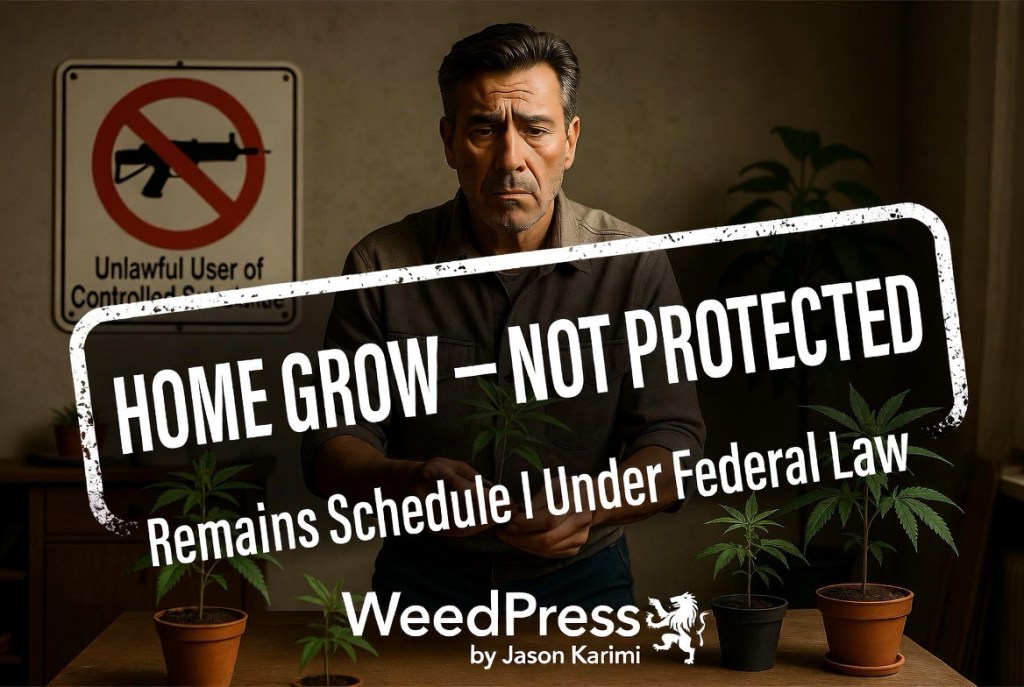
ILLEGAL: Homegrown Cannabis Remains Outside Federal Schedule III Protections — An Open Question With Real Consequences for Patients
The April 28, 2026 federal partial rescheduling order moved only two narrow categories of marijuana from Schedule I to Schedule III: certain FDA-approved products and marijuana produced under qualifying state-issued medical marijuana licenses.¹ Personal home cultivation was not included in either category. This creates a significant gap. In states that permit limited home growing for…
-

Tribal Operators Face Extra Risks Under Federal Rescheduling — And They Should Not Trust Reassuring Advice from People with Skin in the Game
Tribal operators face additional risks that many industry voices aren’t addressing. Independent analysis matters. Tribal and Indigenous cannabis operators are in a uniquely vulnerable position under the new federal Schedule III framework. They face all the same compliance burdens as other small operators — plus additional layers of jurisdictional complexity, disclosure risk, and uncertainty around…
-
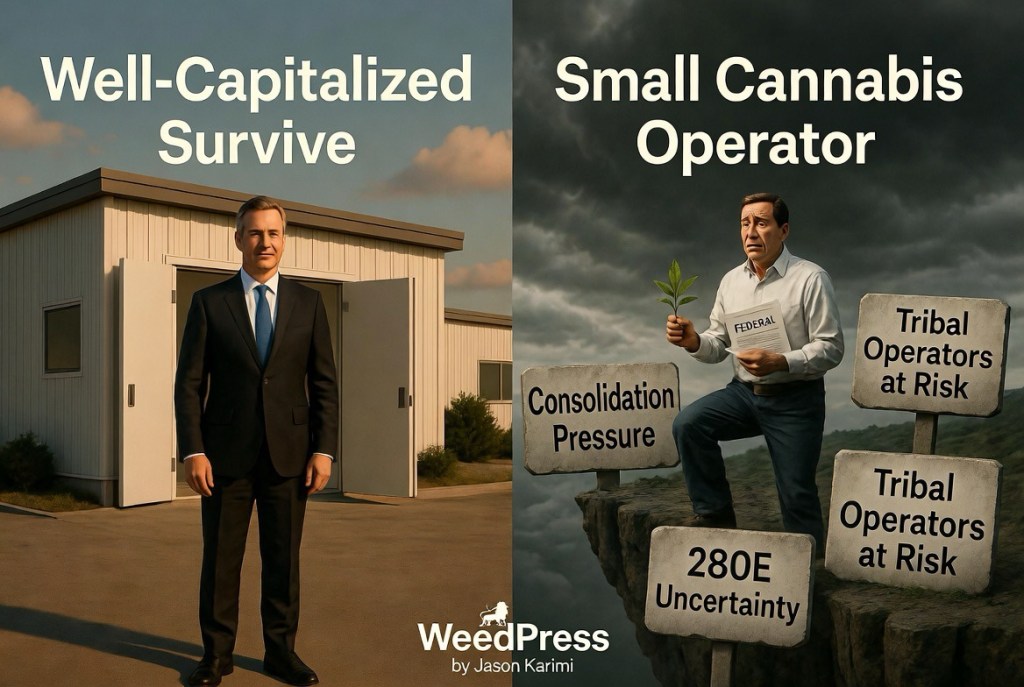
June 3: Beard Bros Webinar Warns Tribal And Small Cannabis Operators Are At Risk
Check out the warnings for small operators from this webinar: Core Warnings for Small Operators 1. Compliance Costs & DEA Registration Burdens Are Real and Disproportionate • Small operators face significant new costs for legal counsel, application preparation, security upgrades, recordkeeping systems, and compliance infrastructure that many legacy businesses were never built to handle. •…
-
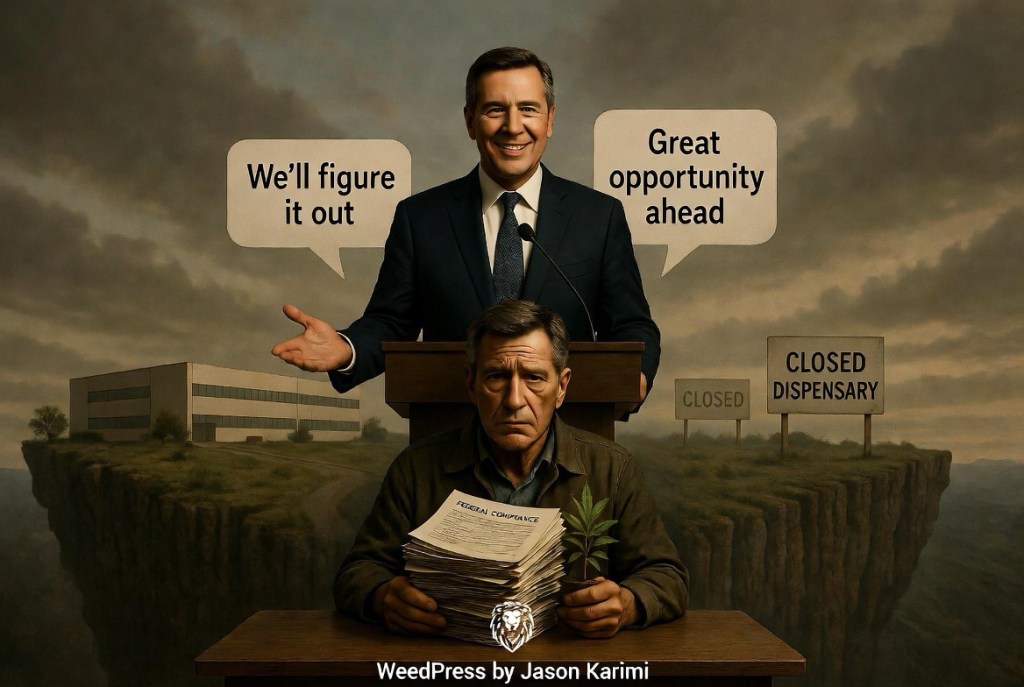
South Dakota Small Cannabis Operators Face a Compliance Cliff: Federal Rescheduling Likely to Drive More Closures and Force Consolidation
The collapse of recreational legalization efforts in South Dakota already triggered a wave of dispensary closures. At least eight licensed medical cannabis businesses shuttered in late 2024 and early 2025 amid falling cardholder numbers, intense price competition, and regulatory pressures.¹ “Then it was a race to the bottom on pricing,” one industry participant observed as…
-
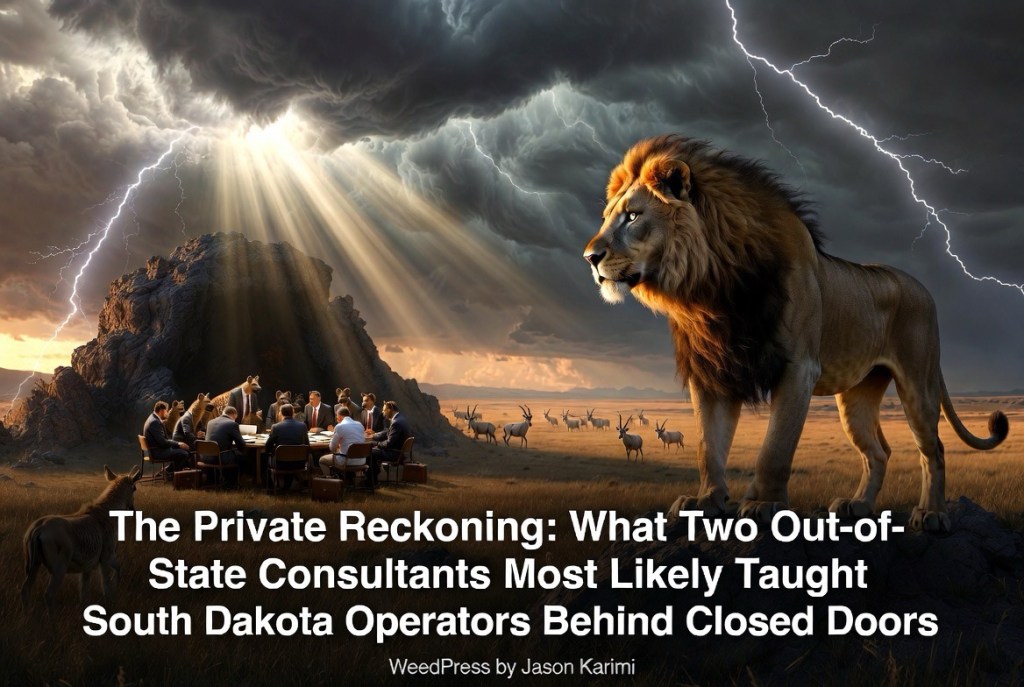
The Private Reckoning: What Two Out-of-State Consultants Most Likely Taught South Dakota Operators Behind Closed Doors
The April 28, 2026 partial Schedule III order (91 Fed. Reg. 22714) did not merely lower marijuana’s scheduling classification.¹ It imposed a new federal compliance regime that effectively ended the low-overhead, cash-only state-only model that defined South Dakota’s medical cannabis program.² Some public voices have offered vague assurances that “we’ll figure it out” for the…
Policy
-
ILLEGAL: Homegrown Cannabis Remains Outside Federal Schedule III Protections — An Open Question With Real Consequences for Patients
The April 28, 2026 federal partial rescheduling order moved only two narrow categories of marijuana from Schedule I to Schedule III: certain FDA-approved products and marijuana produced under qualifying state-issued medical marijuana licenses.¹ Personal home cultivation was not included in either category. This creates a significant gap. In states that permit limited home growing for…
-
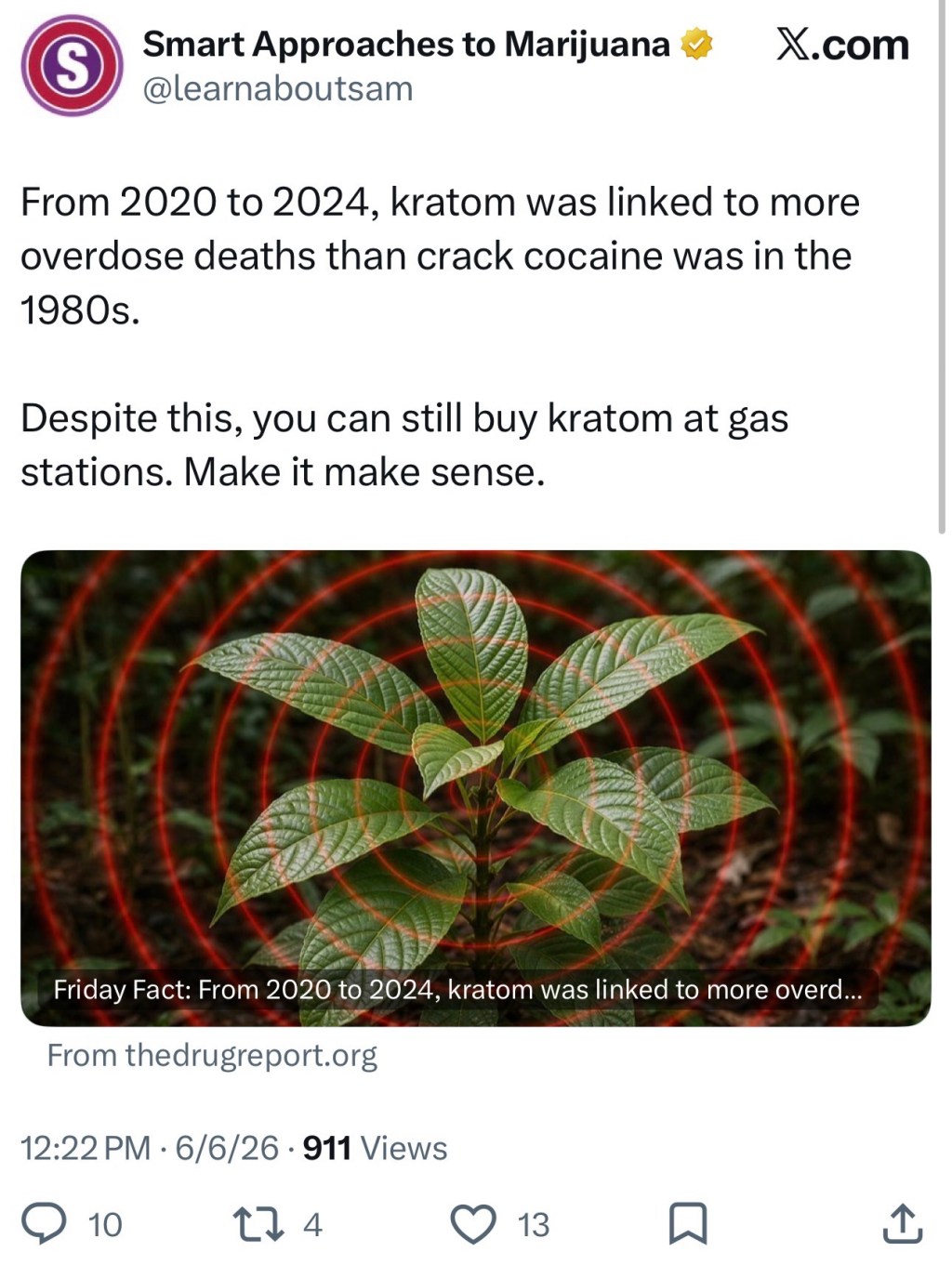
Drug Policy Liars Hurt Public Health And Safety, Kids
Hysterics and emotional performance do not help addicts. SAM made a ridiculous fallacy on twitter: Here is why this claim hurts evidence based policy decisions and damages SAM’s credibility: “Linked to” = detected on tox, not primary cause. 1980s testing was spotty. Crack epidemic brought massive violence/addiction in cities. Kratom deaths remain a tiny share…
-
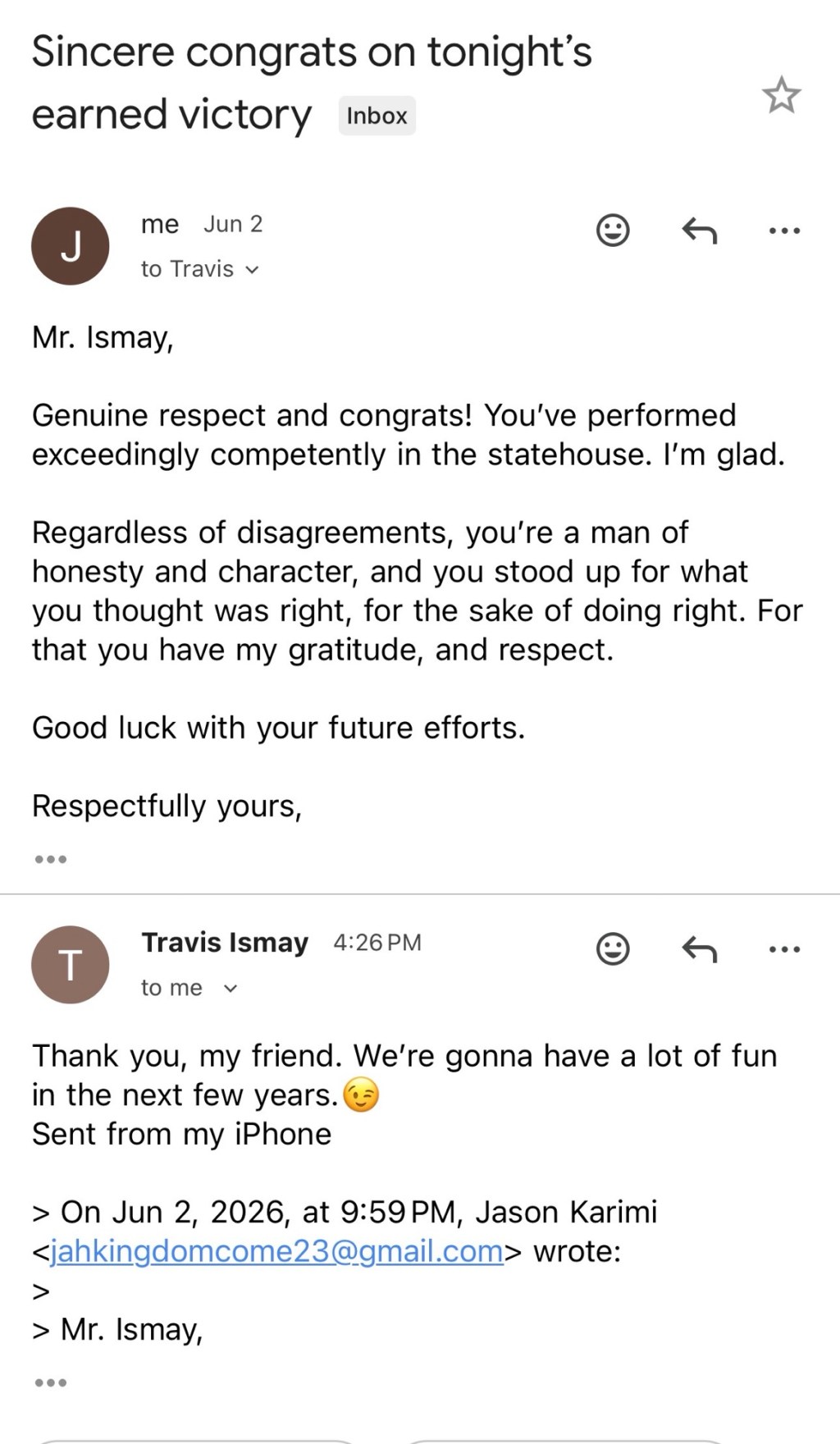
Travis Ismay Responds to My Congratulatory Email: A Small Step Toward Civil Discourse in South Dakota Politics
Yesterday, Rep. Travis Ismay (R-House District 28B) replied to the congratulatory email I sent him shortly after his decisive Republican primary victory on June 2.¹ For context, here is the full exchange: My email (June 2, 2026): For context, here is the full exchange: It’s a brief, gracious response — and one I appreciate. Background…
-
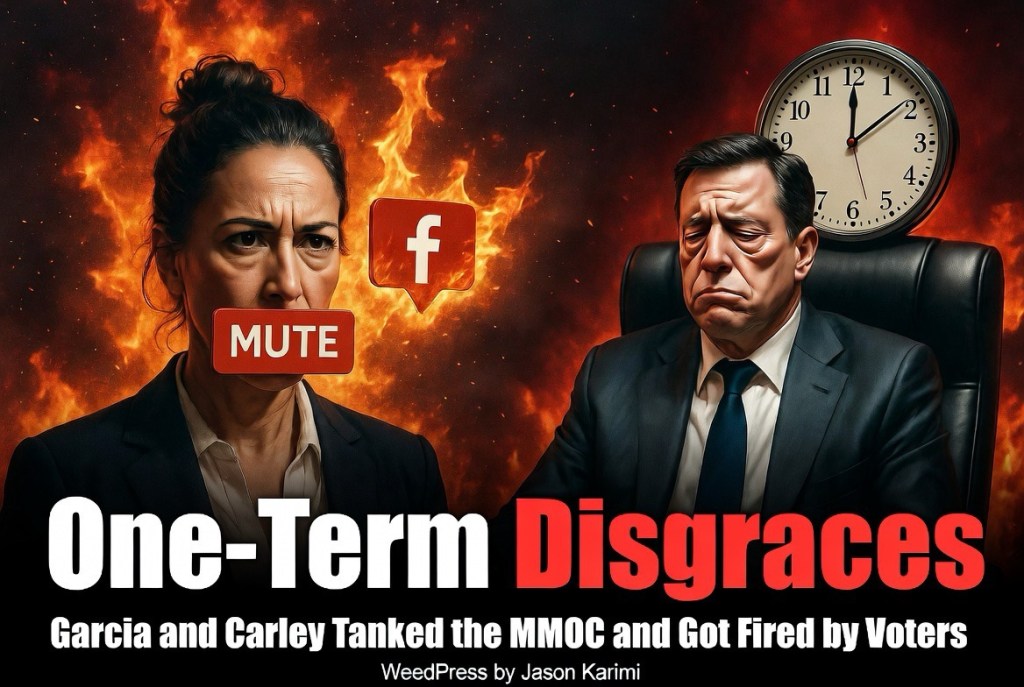
Garcia and Carley To Get the Boot from MMOC After Primary Losses; Won’t Attend Future Meetings
Josephine Garcia and John Carley are about to lose what little power they had left. Following their humiliating primary defeats on June 2, both are expected to be removed from the Medical Marijuana Oversight Committee (MMOC) in the coming weeks. This is standard procedure in South Dakota. When (shit talking) legislators lose their primaries, the…
-
One-Term Disgraces: Garcia and Carley Tanked the MMOC and Got Fired by Voters
Josephine Garcia and John Carley took office in January 2025. By June 2026, both were one-term has-beens who lost their Republican primaries in humiliating fashion. Their short tenures were marked by dysfunction on the Medical Marijuana Oversight Committee (MMOC), where Garcia served as Chair and Carley as Vice-Chair. Under their leadership, the committee became so…
-
Refusing to Fight And Play On “Nice Guy” Easy Mode Got Emmett Reistroffer Crushed In The Political Arena June 2nd in SD HD-35
Emmett Reistroffer finished last in the Republican primary for House District 35 with roughly 13% of the vote. In a four-way race for two seats, he was not competitive. He was rejected by a 20 point margin. He ran the campaign many (naive) people claim is the “right” way to do it. Clean. Positive. No…
Law
-
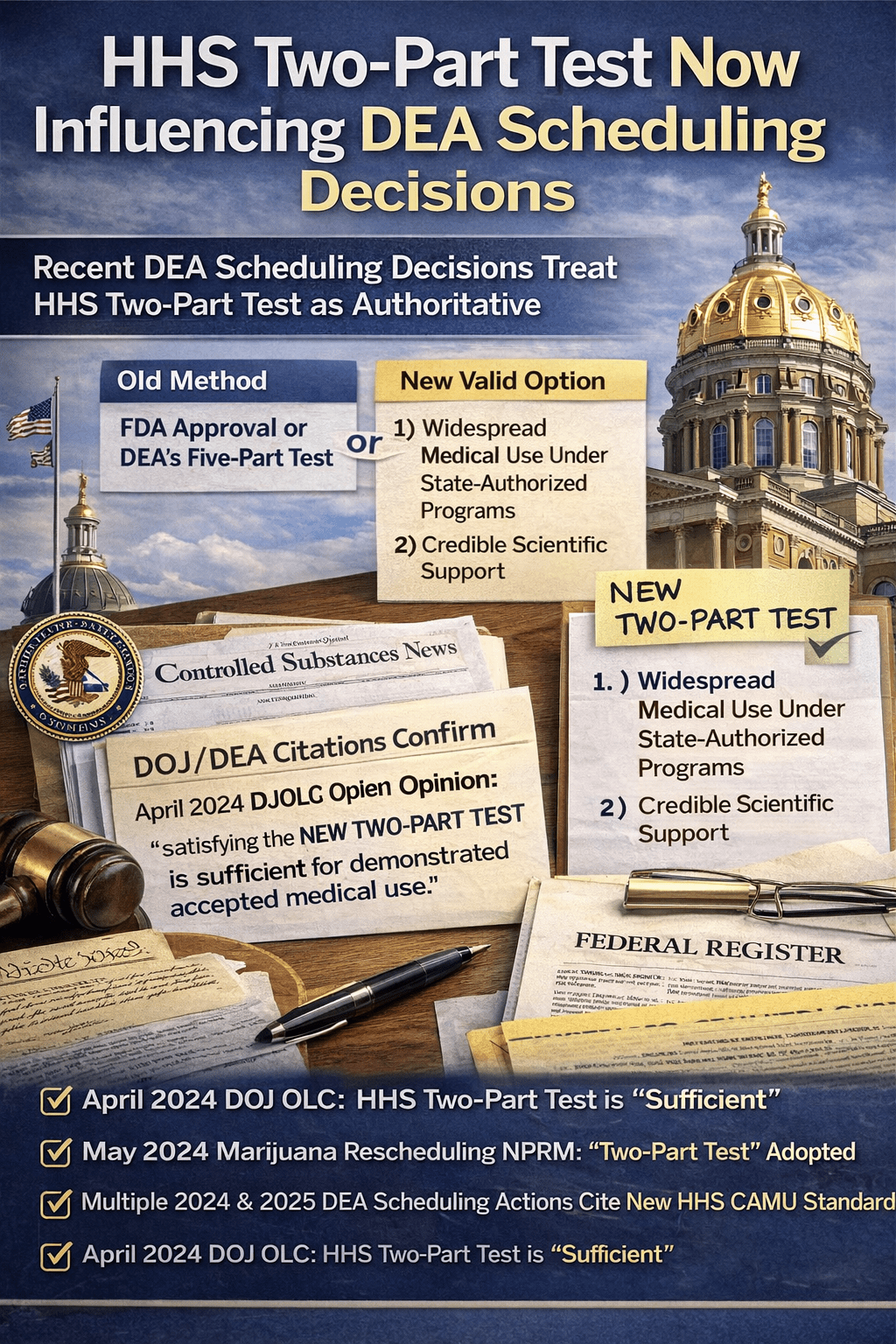
A New Legal Standard Emerges: How HHS’s Two-Part Test Is Reshaping DEA Drug Scheduling
Why the HHS Two-Part Test Is Now Influencing DEA Scheduling Decisions By Jason Karimi The Controlled Substances Act (CSA) has long required that a drug must have a “currently accepted medical use in treatment in the United States” before it can be placed outside of Schedule I. For decades, that determination was interpreted by the…
-
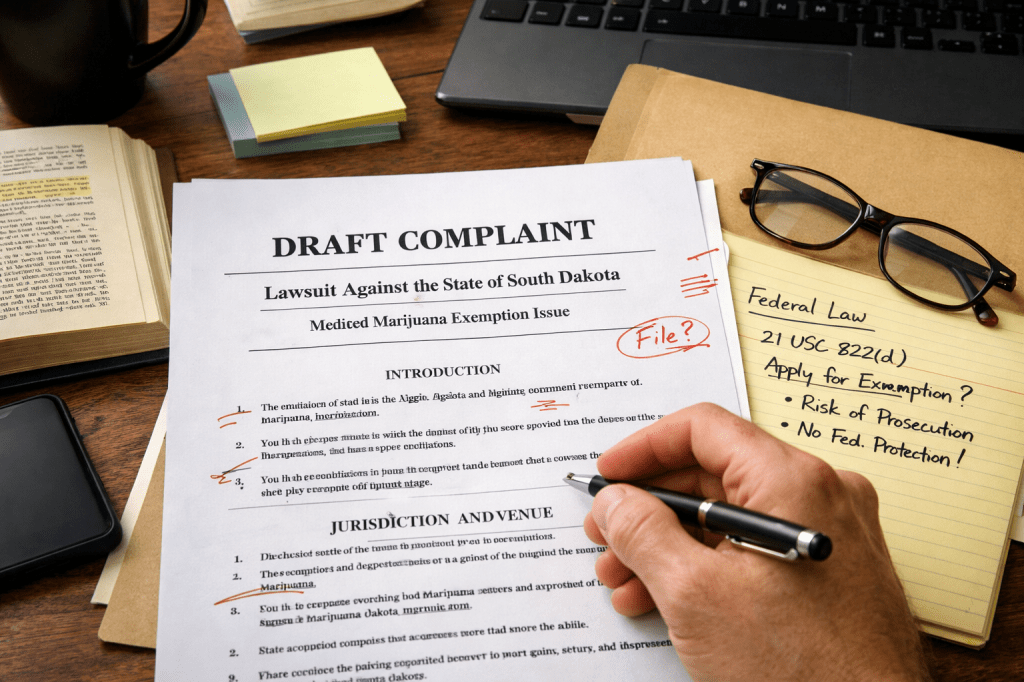
South Dakota Leaves Medical Marijuana Patients as Federal Criminals: Lawsuit Being Filed Over Refusal to Seek Federal Exemption
The following is a work in progress. UNITED STATES DISTRICT COURT DISTRICT OF SOUTH DAKOTA SOUTHERN DIVISION Jason Karimi, Plaintiff, v. State of South Dakota; South Dakota Department of Health; South Dakota Medical Marijuana Oversight Committee; [Director], in his/her official capacity; Defendants. Case No. ___________ COMPLAINT FOR DECLARATORY AND INJUNCTIVE RELIEF I. INTRODUCTION 1. This…
-
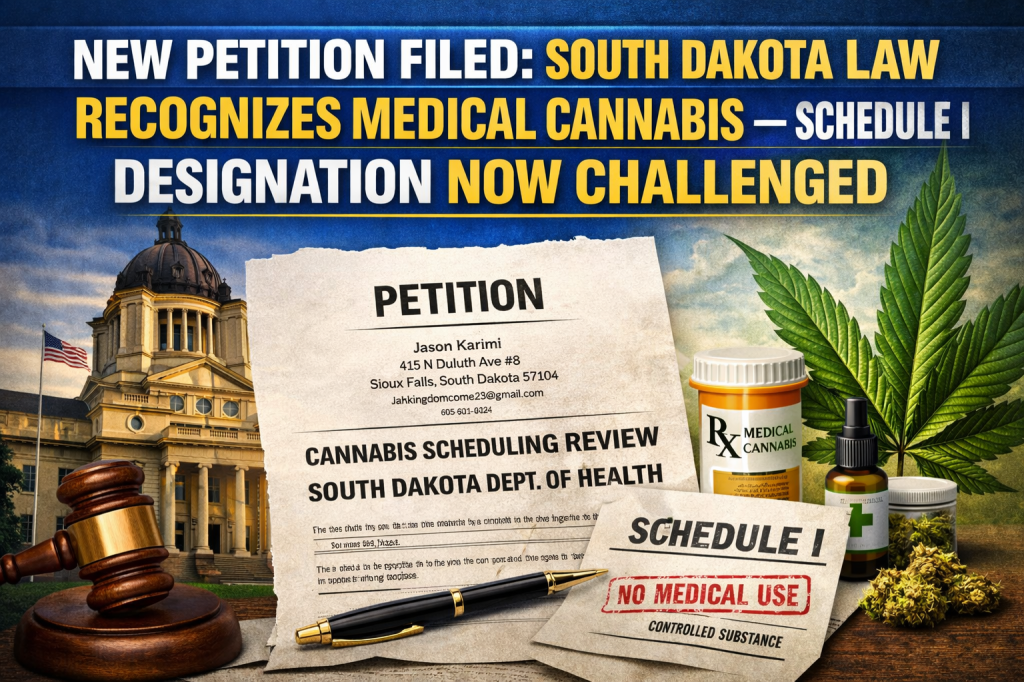
Petition: South Dakota Law Now Makes Schedule I Cannabis Classification Legally Impossible
The following is a work in progress. Draft of filing that asks Department of Health to acknowledge that medical cannabis laws contradict Schedule I definition. Update 2-1: I realized I was going about this all wrong. The following isn’t per se incorrect but there’s a much simpler stronger argument the court will prefer. I will…
-
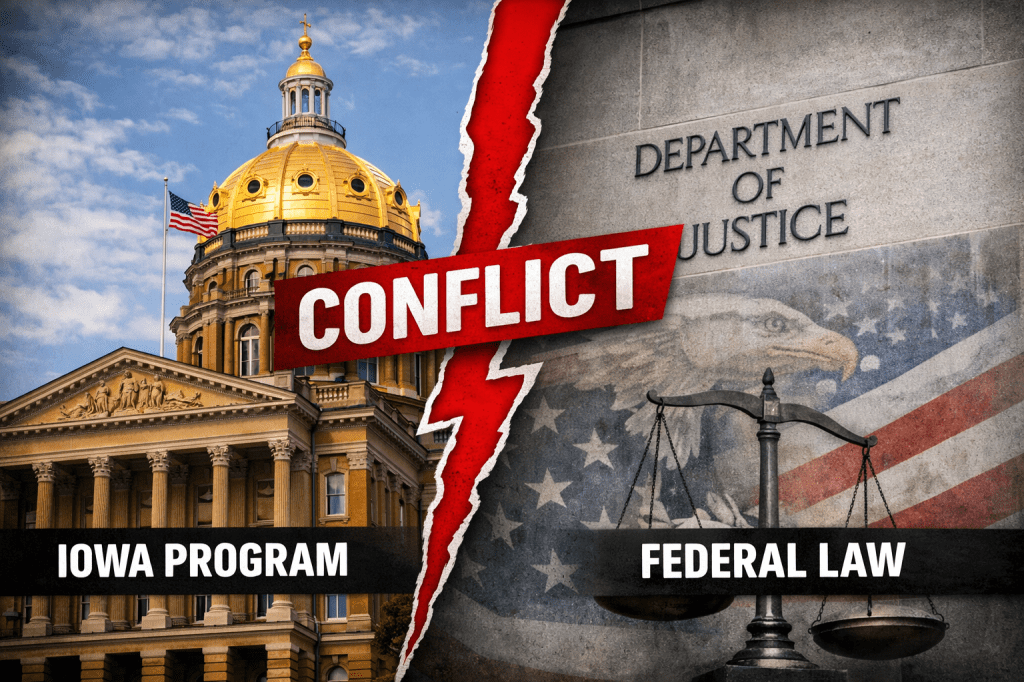
State Board Warns: Iowa Cannabis Users Break Federal Law
State Board Warns: Iowa Cannabis Users Break Federal Law Iowa’s medical cannabis program authorizes patient use at the state level but remains at odds with federal laws. Despite state authorization, Iowa’s medical cannabis program remains illegal under federal law, leading to ongoing legal risk and public safety implications — and lawmakers still haven’t acted on…
-
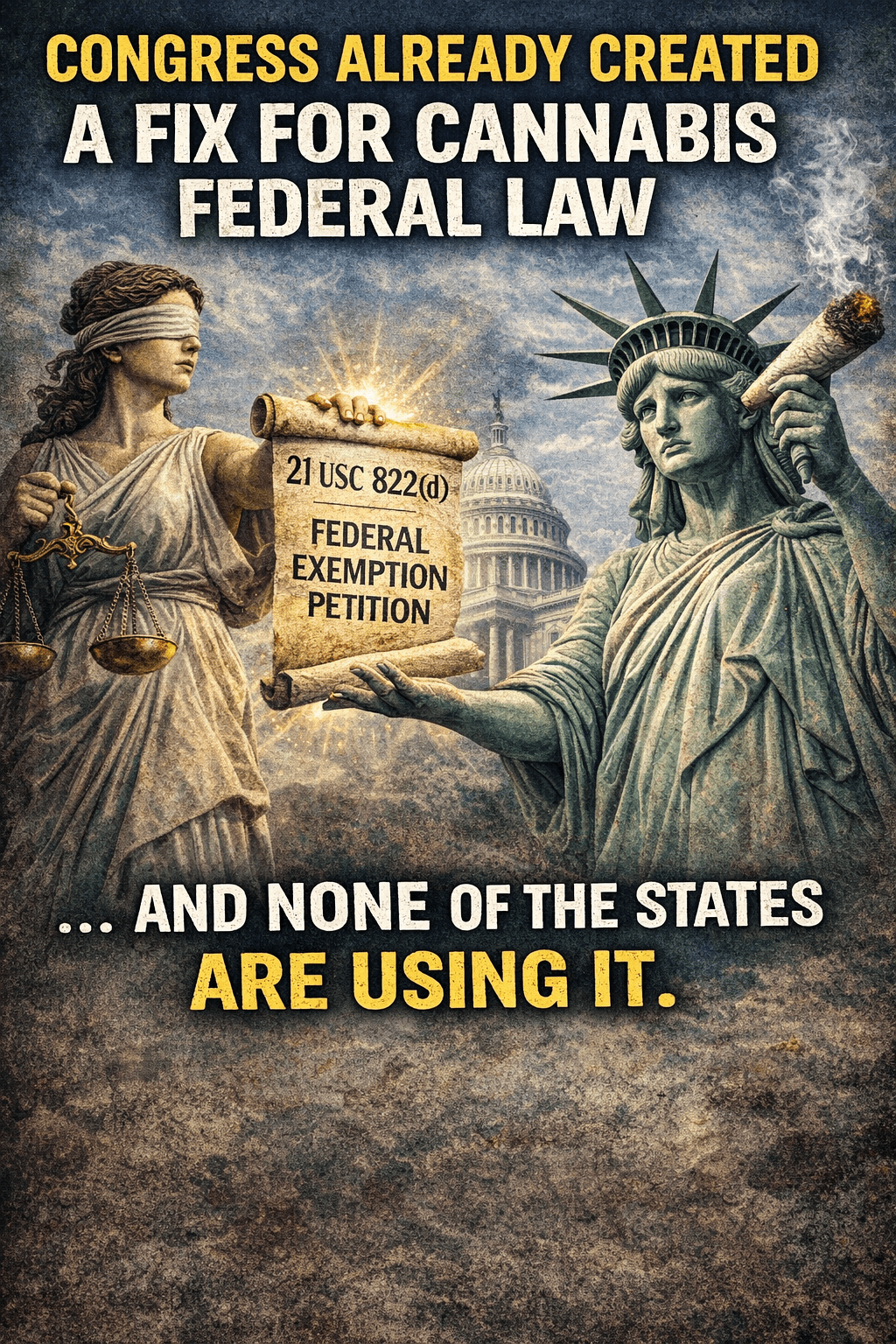
Marijuana Is Still Federally Illegal — And the Fix Already Exists in Federal Law
Executive Summary Marijuana remains illegal under the federal Controlled Substances Act. State legalization has expanded rapidly, but federal law has not changed. State cannabis systems now operate on enforcement tolerance rather than legal authorization, creating escalating compliance failures nationwide. However, Congress already created a lawful solution — and states are not using it. The Structural…
-
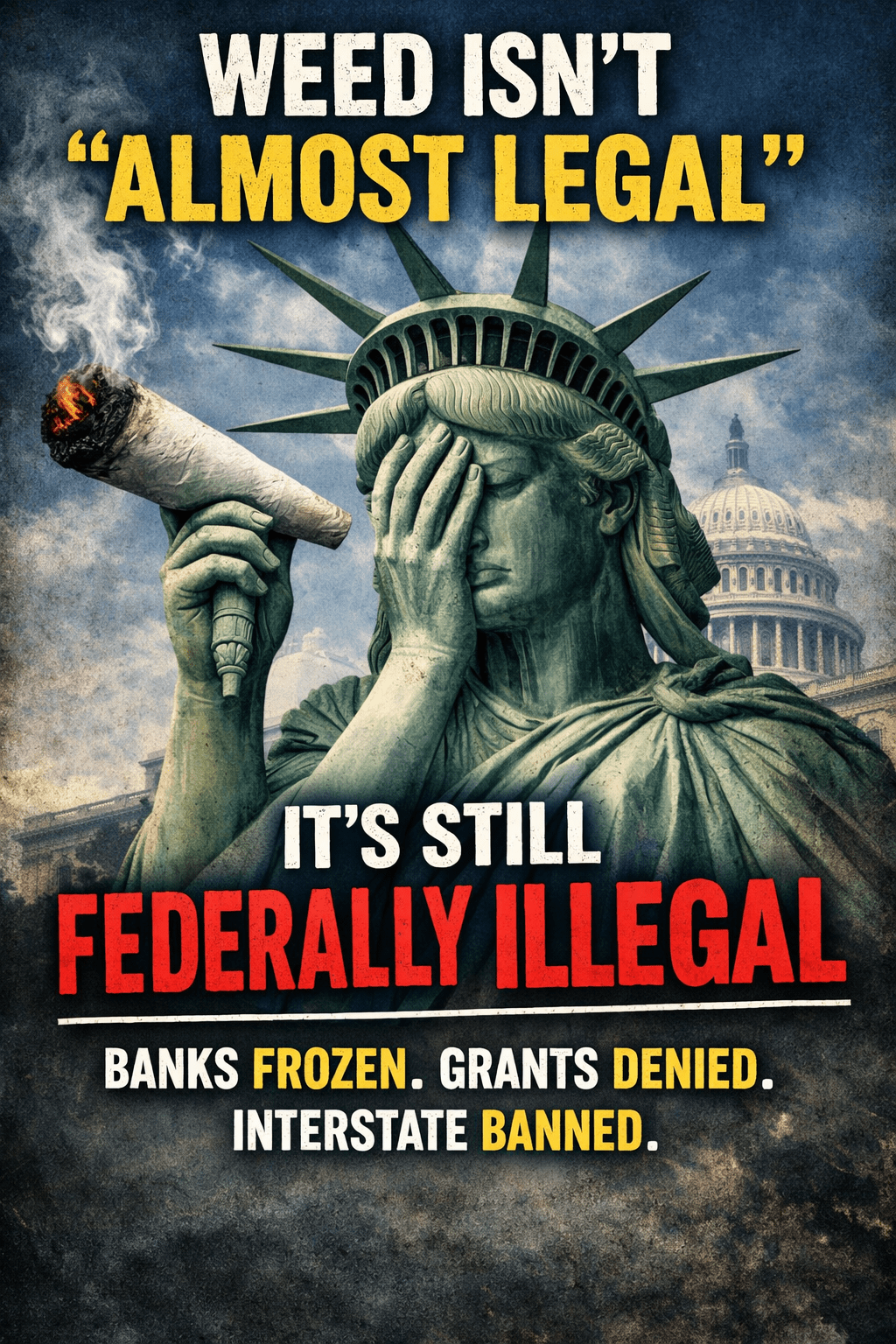
The Federal Marijuana Contradiction Is Now Structurally Unsustainable
For more than a decade, marijuana policy in the United States has existed in a legal twilight zone. State legalization expanded rapidly, political rhetoric normalized cannabis, and entire industries were built on the assumption that federal reform was “inevitable.” But that inevitability never arrived. Instead, federal law never moved — and now the contradiction is…
Science
-
Drug Policy Liars Hurt Public Health And Safety, Kids
Hysterics and emotional performance do not help addicts. SAM made a ridiculous fallacy on twitter: Here is why this claim hurts evidence based policy decisions and damages SAM’s credibility: “Linked to” = detected on tox, not primary cause. 1980s testing was spotty. Crack epidemic brought massive violence/addiction in cities. Kratom deaths remain a tiny share…
-
One-Term Disgraces: Garcia and Carley Tanked the MMOC and Got Fired by Voters
Josephine Garcia and John Carley took office in January 2025. By June 2026, both were one-term has-beens who lost their Republican primaries in humiliating fashion. Their short tenures were marked by dysfunction on the Medical Marijuana Oversight Committee (MMOC), where Garcia served as Chair and Carley as Vice-Chair. Under their leadership, the committee became so…
-
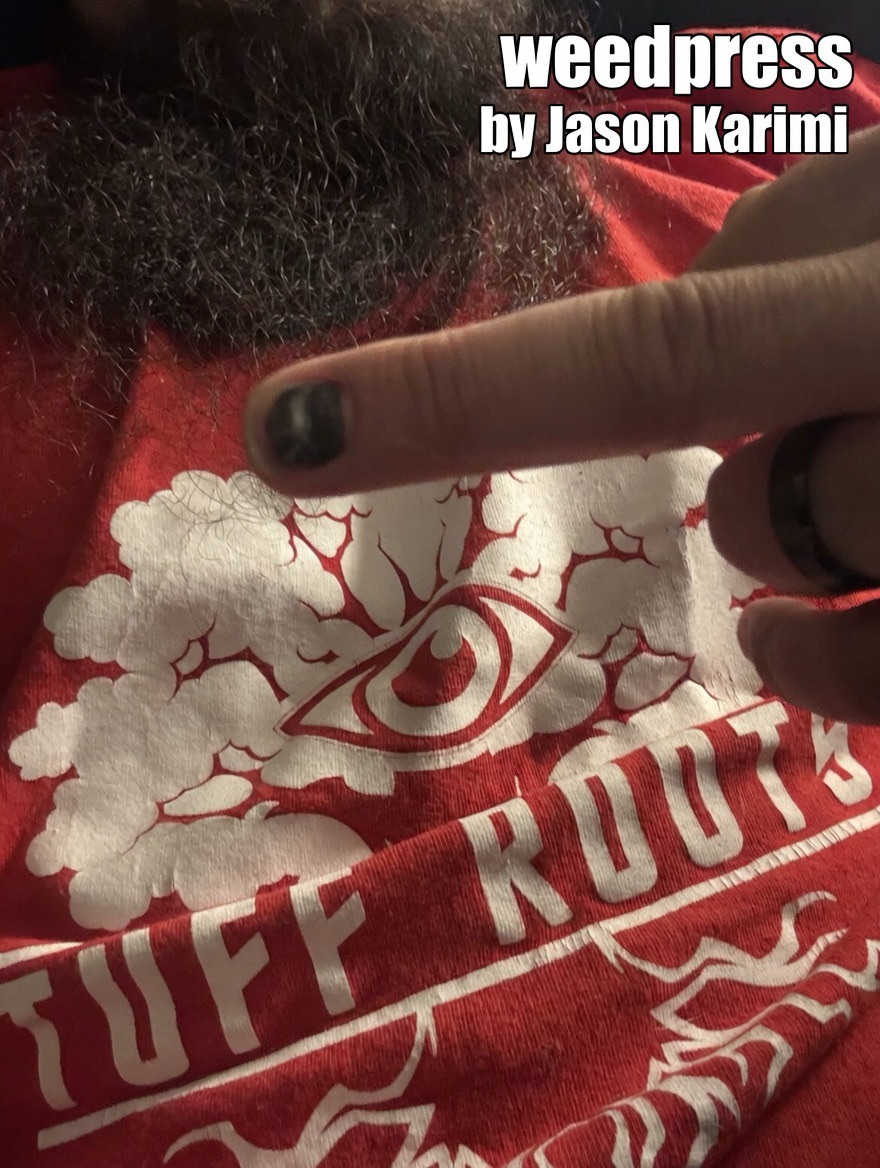
Reflections on a Bruised Nail: What My Left Middle Finger Injury Taught Me About Inner Worth and Boundaries
Two months ago, I slammed my left middle finger, resulting in a subungual hematoma—the dark pool of blood trapped beneath the nail that turned my fingertip into a visual reminder of sudden impact.¹ No longer painful, the nail still carries a mottled shadow of black and white as new growth slowly pushes the old damage…
-

Predators Don’t Debate — They Rig the Game: How Black-Market-Friendly State Cannabis Programs Created the Perfect Environment for Predators — and Why Federal Legitimacy Is Ending It
The drug laws were rigged for decades. Prohibition didn’t eliminate the black market — it protected it. Cartels and underground operators thrived while legitimate patients and small businesses were crushed. When states began legalization without federal exemption, they didn’t fix the problem. They simply moved the rigged game indoors and gave it a state license.…
-
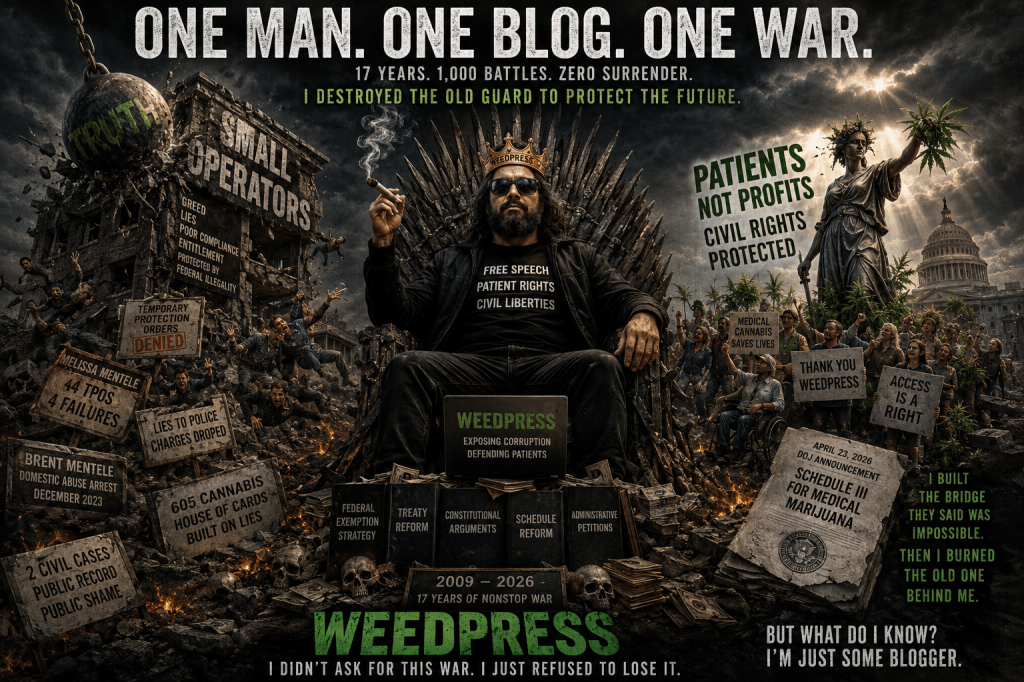
I Spent 17 Years Arguing for Federal Cannabis Legitimacy. Now Small Operators Are About to Learn What That Means.
I have spent most of my adult life arguing that state medical cannabis programs could not survive forever as legally tolerated gray markets.¹ They needed federal recognition. They needed treaty analysis. They needed administrative pathways. They needed constitutional pressure. They needed people willing to say the uncomfortable thing before the institutions were ready to admit…
-
Stork Just Sent a Researcher to WeedPress: What Academic Tools Mean for Cannabis Policy Analysis
Independent statutory deep-dives are showing up alongside peer-reviewed literature in researchers’ workflows. It’s not every day your analytics dashboard lights up with a referrer you’ve never seen before. Today, May 5, 2026, WeedPress received a visit from paper-box.co — the domain tied to Stork (storkapp.me), a specialized publication-tracking and research intelligence platform used by academics,…
Current Events
-
The Positive: Iowa Cannabidiol Board Public Statement Has Fantastic Humanitarian Positions For Felon Needs, Patient Dose Titration
This statement was made on April 16 2019 by the professionals on the politically charged Iowa Medical Cannabidiol Advisory Board:
-
Representative Axne Visited Iowa’s Marijuana Cultivation And Manufacturing Facility Yesterday
MedPharm Iowa Page Liked · 1 hr · A big thank you to Rep Axne for visiting our cultivation and manufacturing facility yesterday! We were happy to share our process and promote the progress of Iowa’s medical cannabis program. We appreciate that our representatives are open to the discussion. We look forward to working together…
-
[VIDEO] Press Conference With A Press Release Calling For Reasonably Regulated Marijuana In Iowa Instead Of Blanket Prohibition On Point | Iowa Senator Joe Bolkcom’s February Call To Action Unheeded So Far
Details below the video: Joe Bolkcom News Release For Immediate Release: 2/4/2019 Senator Joe Bolkcom: 319-337-6280 Iowa Should Regulate Marijuana like Alcohol Ending Iowa Marijuana Prohibition will reduce harm to residents, save tax dollars, and create Iowa jobs, businesses and additional revenue (Des Moines) State Senator Joe Bolkcom of Iowa City today announced he is…
-
Iowa Marijuana Dispensaries Now Accept Debit Cards | Credit Cards Not Accepted “Until Federal Restrictions Removed”
MedPharm Iowa has the latest From their Facebook page 15 minutes ago: Big news! We are now accepting debit cards at both of our dispensaries! 💳 🌱 As you may know, it is very difficult for cannabis companies to accept card payments due to federal restrictions. It has taken us longer than expected,…
-

Iowa Senate Passes Iowa Hemp Act 49-1 | Here’s What Registered Lobbyists Need To Know
Senator Tom Shipley floor managed this bill, Senate File 599. Fiscal note on Senate File 599 available here. The counterpart to this bill is House File 763. HF 763 is managed by Representative Brown. The sole no vote comes from Senator Whiting. Click here to see the vote results. Text of bill and lobbyist declarations…
-

BREAKING NEWS | Iowa Medical Cannabidiol Board Just Voted Unanimously To Approve Mother’s Petition To Add Adult Autism To Medical Marijuana Accepted Condition List
Iowa Mothers Advocating Medical Marijuana For Autism has the details. Don’t mess with mom. To petition the Board to add your condition please follow this link here. The moms must now convince the Board of Medicine to also approve this addition. The dual layered bureaucracy currently in place by the fake representatives falsifying science and…
Legislation
-
Travis Ismay Responds to My Congratulatory Email: A Small Step Toward Civil Discourse in South Dakota Politics
Yesterday, Rep. Travis Ismay (R-House District 28B) replied to the congratulatory email I sent him shortly after his decisive Republican primary victory on June 2.¹ For context, here is the full exchange: My email (June 2, 2026): For context, here is the full exchange: It’s a brief, gracious response — and one I appreciate. Background…
-
Request for NCSL Virginia Presentation On Fed Law Impacts For State Industry and Patients
Weedpress sent the following request via https://www.ncsl.org/health/state-medical-cannabis-laws Request for NCSL Presentation Slides – Federal Marijuana & Hemp Policy Implications (June 2026) Dear NCSL Staff, My name is Jason Karimi, and I publish WeedPress, an independent policy analysis site focused on cannabis regulation, federal-state issues, and legislative oversight. I am writing to request materials from a…
-
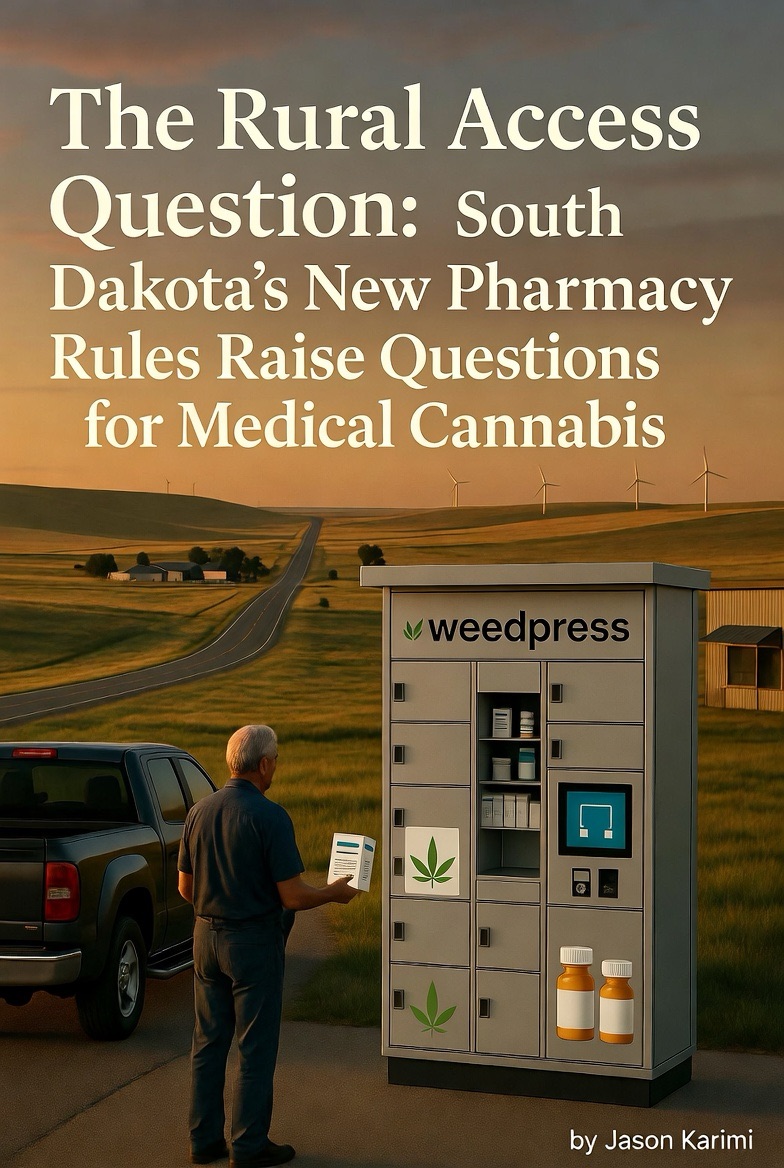
The Rural Access Question South Dakota’s New Pharmacy Rules Raise for Medical Cannabis
As regulators embrace telepharmacy and remote prescription pickup, policymakers may eventually face similar questions about medical cannabis access in rural communities. South Dakota’s Board of Pharmacy is advancing updated rules under Article 20:51 of the Administrative Rules of South Dakota (ARSD) that formalize the use of remote drop sites for prescription medications and introduce a…
-
Julian Garrett Retires: Will His Replacement Be More Pro-Marijuana in Iowa Senate District 11?
Last week, longtime Iowa State Senator Julian Garrett (R-District 11) announced he will not seek re-election due to a prostate cancer diagnosis.¹ For the first time in more than 13 years, Warren County (and part of Marion County) will have an open Senate seat in the June 2 primary and November general election. Julian Garrett…
-
I Spent 17 Years Arguing for Federal Cannabis Legitimacy. Now Small Operators Are About to Learn What That Means.
I have spent most of my adult life arguing that state medical cannabis programs could not survive forever as legally tolerated gray markets.¹ They needed federal recognition. They needed treaty analysis. They needed administrative pathways. They needed constitutional pressure. They needed people willing to say the uncomfortable thing before the institutions were ready to admit…
-
Stork Just Sent a Researcher to WeedPress: What Academic Tools Mean for Cannabis Policy Analysis
Independent statutory deep-dives are showing up alongside peer-reviewed literature in researchers’ workflows. It’s not every day your analytics dashboard lights up with a referrer you’ve never seen before. Today, May 5, 2026, WeedPress received a visit from paper-box.co — the domain tied to Stork (storkapp.me), a specialized publication-tracking and research intelligence platform used by academics,…
RFRA Updates
-
Nebraska RFRA Religious Liberty Case Advances: Supplemental Authority Filed Citing Federal Schedule III Rescheduling
Defendant Jason Karimi has filed a Notice of Supplemental Authority in Nebraska District Court while his motion to modify probation conditions under the Nebraska First Freedom Act remains under advisement. The filing notifies the Court of the recent federal Schedule III rescheduling action and Defendant’s participation in the ongoing DEA administrative proceeding (Docket No. DEA-1362)…
-
I Have Filed Notice to Participate in the DEA’s June 29 Rescheduling Hearing
Today I formally submitted my Notice of Intention to Participate in the DEA administrative hearing on the proposed rescheduling of marijuana from Schedule I to Schedule III (Docket No. DEA-1362), scheduled to begin June 29, 2026. This filing continues my 17-year record of cannabis policy advocacy and public commentary. It focuses on the interaction between…
-
Connecticut’s HB 5044 Is Not Just a Vaccine Bill. It Is a Legislative Rewrite of RFRA Mid-Litigation.
April 24, 2026 Connecticut’s HB 5044 is being sold as a vaccine-governance bill. In one sense, that is true: the bill deals broadly with immunization standards, the Department of Public Health’s authority, insurance coverage, and related vaccine-administration issues.¹ But buried inside that larger package is the provision that matters most for religious-liberty law: HB 5044…
-
West Virginia and Mississippi Tried to Move Marijuana to Schedule III. Both Bills Reveal the Same Structural Problem.
April 24, 2026 West Virginia and Mississippi each opened the 2026 session with a bill that would have done something their existing marijuana laws still refuse to do: move cannabis from Schedule I to Schedule III under state law.¹ ² Both proposals were straightforward on paper. West Virginia’s SB 809 would amend W. Va. Code…
-
The State of Religious Freedom in America in 2026: Strong but Uneven Protection Across the States
April 21, 2026 State-level protection for religious exercise in 2026 is both stronger and less uniform than many summary accounts suggest. Roughly thirty states are commonly identified as having enacted statutory Religious Freedom Restoration Acts (“RFRAs”), while a smaller additional set is often described as providing RFRA-like protection through state constitutional doctrine. The trend is…
-
No. 19 — Religious Accommodation in Medical-Only Cannabis States
No. 19 — Religious Accommodation in Medical-Only Cannabis States: Structural Litigation Risk and Legislative Design By Jason Karimi | WeedPress Policy Series No. 19April 20, 2026 ⸻ I. Introduction: The Unaddressed Gap Medical-only cannabis states operate within a tightly regulated framework. Cultivation is limited. Home grows require registration. Plant counts are capped. Inspections are authorized.…
Upcoming Events
-
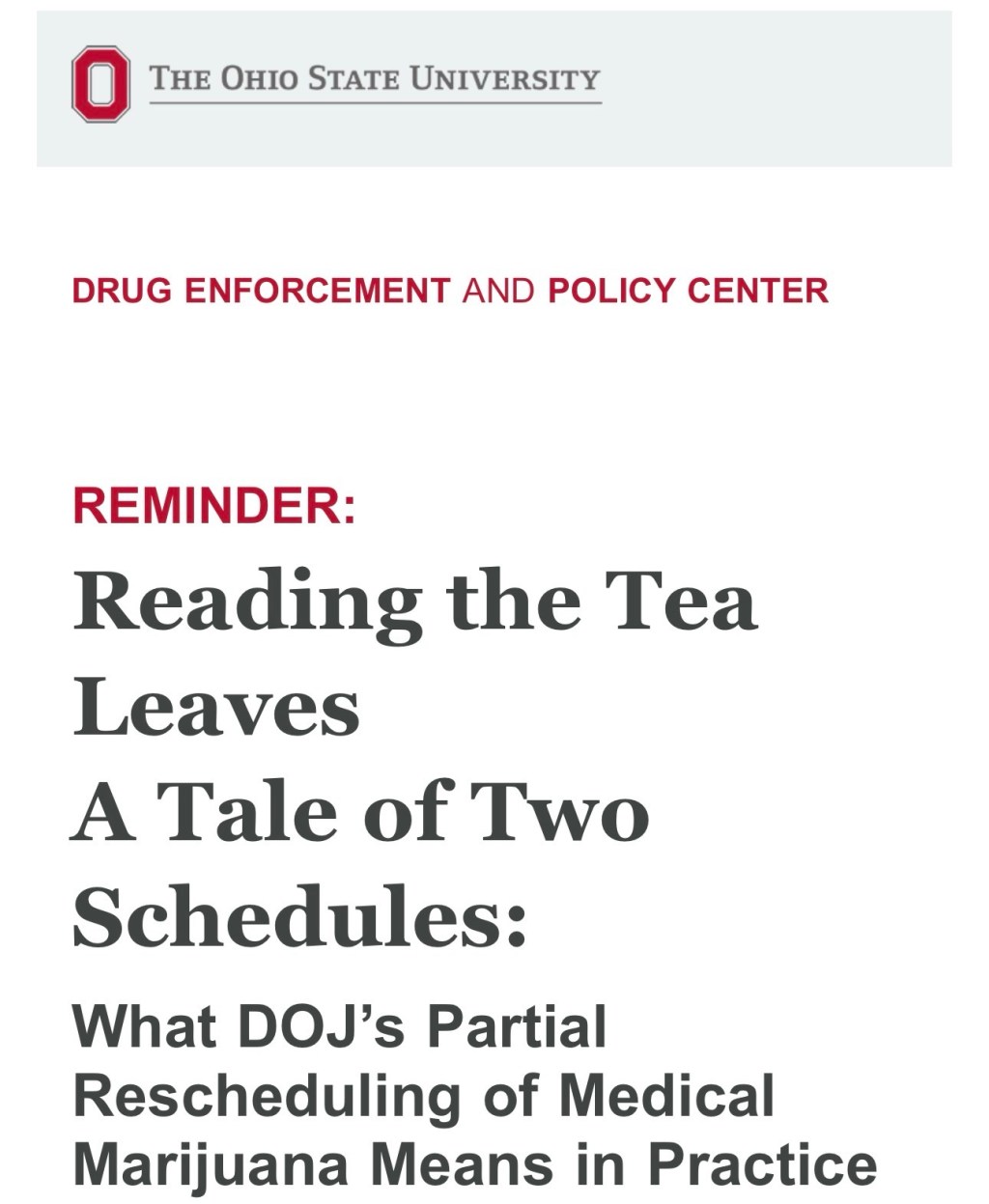
June 16 Zoom: What DOJ’s Partial Rescheduling of Medical Marijuana Means in Practice | OSU Moritz College of Law
Federal changes are real, but they are more limited and complicated than many people in the South Dakota space are claiming. Reading the Tea Leaves A Tale of Two Schedules: What DOJ’s Partial Rescheduling of Medical Marijuana Means in Practice Tuesday, June 16, 2026 noon-1:15 p.m. Zoom The recent U.S. Department of Justice’s order partially rescheduling…
-

The June 27 DEA Registration Deadline Is Coming Fast: South Dakota Operators Face a Compliance Cliff as the Safe Harbor Window Closes
With the June 27 DEA registration deadline approaching, the following analysis examines the practical timeline and compliance pressures facing South Dakota operators. South Dakota’s licensed medical cannabis operators now have roughly 29 days to secure critical federal protections before the expedited DEA registration window closes. On April 28, 2026, the Department of Justice and Drug…
-
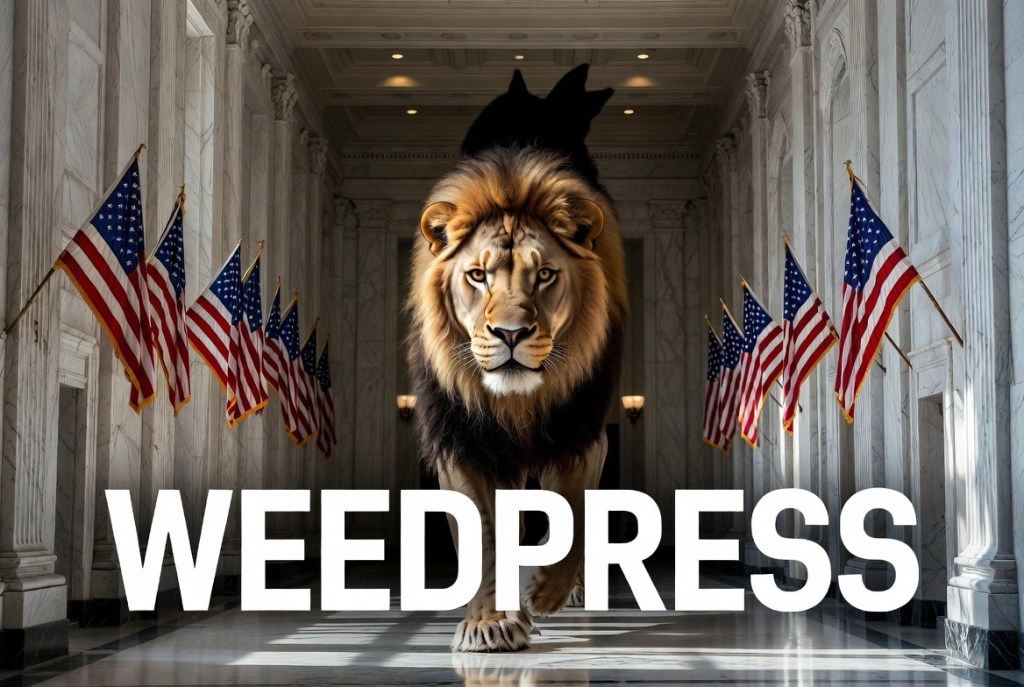
Advance Notice to South Dakota Department of Health: Petition for Scheduling Review Will Follow Federal Rescheduling Hearings
South Dakota’s medical cannabis program stands at a critical juncture following the federal partial rescheduling of certain marijuana products to Schedule III.¹ After the DEA’s June 29, 2026 rescheduling hearing concludes, the undersigned will formally petition the South Dakota Department of Health (DOH) to review and align the state’s Schedule I classification of marijuana with…
-
I Have Filed Notice to Participate in the DEA’s June 29 Rescheduling Hearing
Today I formally submitted my Notice of Intention to Participate in the DEA administrative hearing on the proposed rescheduling of marijuana from Schedule I to Schedule III (Docket No. DEA-1362), scheduled to begin June 29, 2026. This filing continues my 17-year record of cannabis policy advocacy and public commentary. It focuses on the interaction between…
-
I Spent 17 Years Arguing for Federal Cannabis Legitimacy. Now Small Operators Are About to Learn What That Means.
I have spent most of my adult life arguing that state medical cannabis programs could not survive forever as legally tolerated gray markets.¹ They needed federal recognition. They needed treaty analysis. They needed administrative pathways. They needed constitutional pressure. They needed people willing to say the uncomfortable thing before the institutions were ready to admit…
-
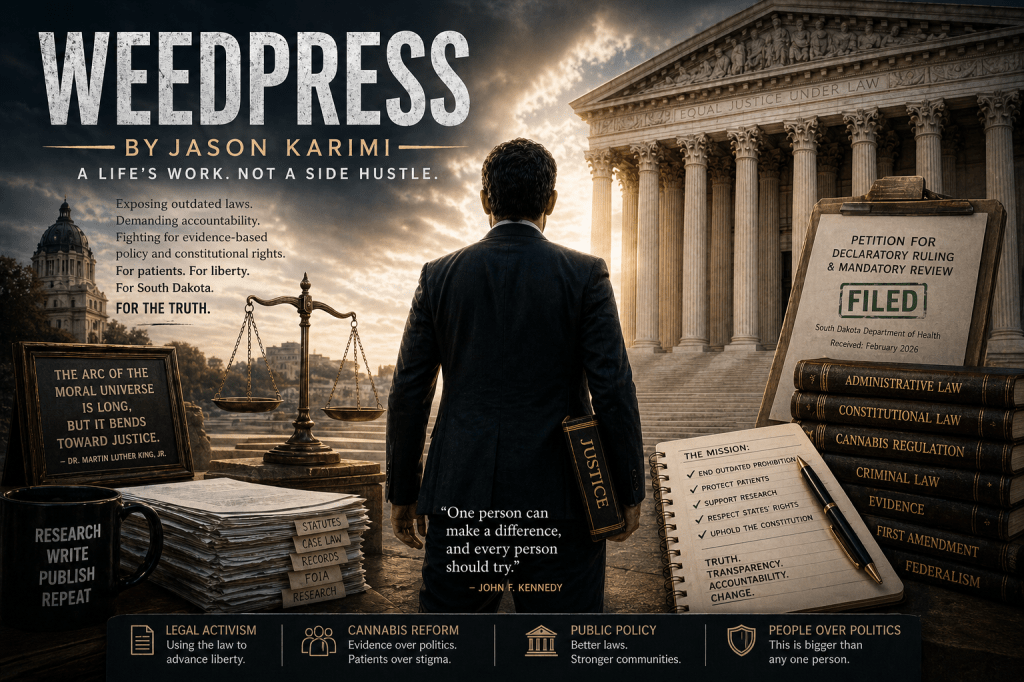
Why South Dakota’s Own Statutes Now Make Schedule I Marijuana Unlawful to Maintain
“Acting Attorney General Todd Blanche is placing both FDA-approved drug products containing marijuana, and medicinal marijuana products subject to a qualifying state-issued license in Schedule III under his authority to reschedule drugs to carry out the United States’ obligations under the Single Convention on Narcotic Drugs.”¹ South Dakota, however, is not automatically bound by that…
For The Record (2026), By Jason Karimi
-

Anonymous Speech Online: What the Law Protects — and Where It Stops
Anonymous speech has a long American pedigree, but anonymity is not the same thing as impunity. From the founding era forward, Americans have used unsigned pamphlets, pseudonymous essays, and concealed authorship to criticize power, test arguments, and protect dissenters from retaliation.² The Supreme Court has repeatedly recognized that anonymity can be part of the freedom…
-
Reflections on a Bruised Nail: What My Left Middle Finger Injury Taught Me About Inner Worth and Boundaries
Two months ago, I slammed my left middle finger, resulting in a subungual hematoma—the dark pool of blood trapped beneath the nail that turned my fingertip into a visual reminder of sudden impact.¹ No longer painful, the nail still carries a mottled shadow of black and white as new growth slowly pushes the old damage…
-
I Have Filed Notice to Participate in the DEA’s June 29 Rescheduling Hearing
Today I formally submitted my Notice of Intention to Participate in the DEA administrative hearing on the proposed rescheduling of marijuana from Schedule I to Schedule III (Docket No. DEA-1362), scheduled to begin June 29, 2026. This filing continues my 17-year record of cannabis policy advocacy and public commentary. It focuses on the interaction between…
-
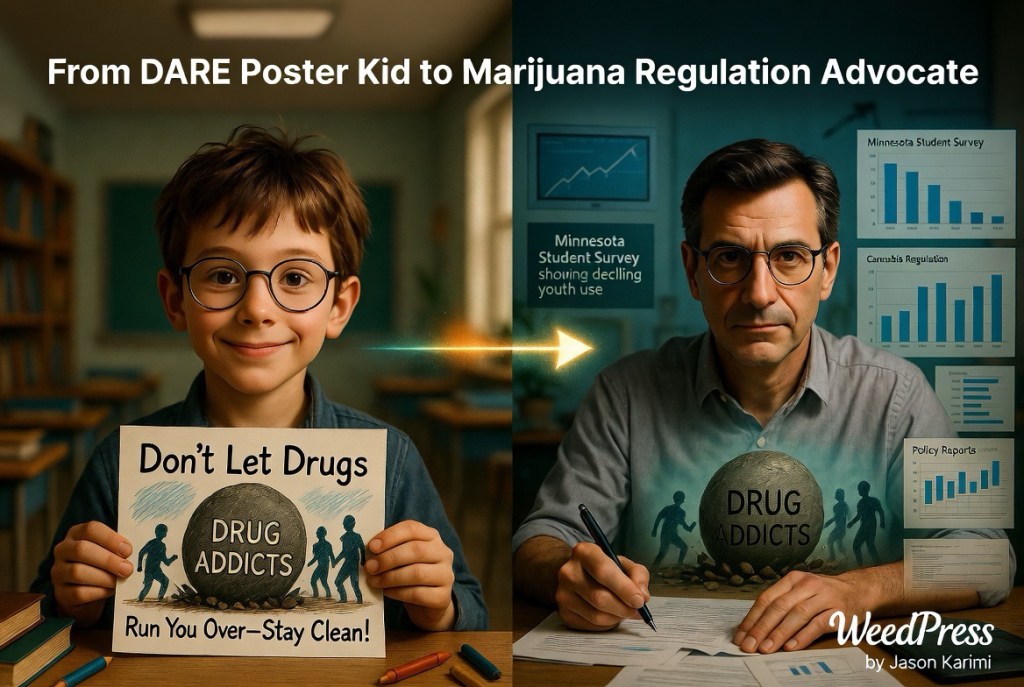
DARE Poster Kid to Marijuana Regulation Advocate: My Unchanging Fight to Protect Kids
When I was in elementary school, the DARE program left a lasting impression. Officers visited regularly, warning us about the dangers of drugs and pushing the “just say no” message. I took it seriously. So when the school announced an anti-drug poster contest open to elementary students, I threw myself into creating something impactful. My…
-

Chapter 10: What Remains
Table of Contents Preface Chapter 1 — The First ArrestEarly rupture, authority, and the beginning of resistance Chapter 2 — Before the File Was Opened Gifted education, faith, discipline, and early legitimacy Chapter 3 — Becoming a ProblemWork, exhaustion, collapse, and the cost of visibility Chapter 4 — Learning the Language of PowerCourts, probation, jail, campaigns, and proximity to decision-makers…
-

Chapter 9: The Record vs. the Narrative
Table of Contents Preface Chapter 1 — The First ArrestEarly rupture, authority, and the beginning of resistance Chapter 2 — Before the File Was Opened Gifted education, faith, discipline, and early legitimacy Chapter 3 — Becoming a ProblemWork, exhaustion, collapse, and the cost of visibility Chapter 4 — Learning the Language of PowerCourts, probation, jail, campaigns, and proximity to decision-makers…
-

Chapter 8: What the Media Gets Wrong
Table of Contents Preface Chapter 1 — The First ArrestEarly rupture, authority, and the beginning of resistance Chapter 2 — Before the File Was Opened Gifted education, faith, discipline, and early legitimacy Chapter 3 — Becoming a ProblemWork, exhaustion, collapse, and the cost of visibility Chapter 4 — Learning the Language of PowerCourts, probation, jail, campaigns, and proximity to decision-makers…
-

Chapter 7: Why I Never Left
Table of Contents Preface Chapter 1 — The First ArrestEarly rupture, authority, and the beginning of resistance Chapter 2 — Before the File Was Opened Gifted education, faith, discipline, and early legitimacy Chapter 3 — Becoming a ProblemWork, exhaustion, collapse, and the cost of visibility Chapter 4 — Learning the Language of PowerCourts, probation, jail, campaigns, and proximity to decision-makers…
-

Chapter 6: Staying Power
Table of Contents Preface Chapter 1 — The First ArrestEarly rupture, authority, and the beginning of resistance Chapter 2 — Before the File Was Opened Gifted education, faith, discipline, and early legitimacy Chapter 3 — Becoming a ProblemWork, exhaustion, collapse, and the cost of visibility Chapter 4 — Learning the Language of PowerCourts, probation, jail, campaigns, and proximity to decision-makers…
-

Chapter 5: The Apprenticeship
Table of Contents Preface Chapter 1 — The First ArrestEarly rupture, authority, and the beginning of resistance Chapter 2 — Before the File Was Opened Gifted education, faith, discipline, and early legitimacy Chapter 3 — Becoming a ProblemWork, exhaustion, collapse, and the cost of visibility Chapter 4 — Learning the Language of PowerCourts, probation, jail, campaigns, and proximity to decision-makers…
-

Chapter 4: Learning the Language of Power
Table of Contents Preface Chapter 1 — The First ArrestEarly rupture, authority, and the beginning of resistance Chapter 2 — Before the File Was Opened Gifted education, faith, discipline, and early legitimacy Chapter 3 — Becoming a ProblemWork, exhaustion, collapse, and the cost of visibility Chapter 4 — Learning the Language of PowerCourts, probation, jail, campaigns, and proximity to decision-makers…
-

Chapter 3: Becoming a Problem
Table of Contents Preface Chapter 1 — The First ArrestEarly rupture, authority, and the beginning of resistance Chapter 2 — Before the File Was Opened Gifted education, faith, discipline, and early legitimacy Chapter 3 — Becoming a ProblemWork, exhaustion, collapse, and the cost of visibility Chapter 4 — Learning the Language of PowerCourts, probation, jail, campaigns, and proximity to decision-makers…
Commentary
-

Haile Selassie and the Highest Art of Power: Winning Without Drawing the Sword
History remembers emperors for their conquests. Haile Selassie I is remembered for something rarer — for proving that the highest art of politics is not domination by force, but mastery of legitimacy, symbolism, patience, and law. His reign stands as one of the clearest demonstrations in modern history that enduring power does not come from…
-

Why Choosing Your Enemies Wisely Is Crucial in Politics
Politics is as much about strategy as it is about ideas. Whether you’re running for office, advocating for a cause, or steering public policy, the opponents you pick — and how you engage them — can make or break your efforts. This lesson is captured succinctly in The Laws of the Public Policy Process: “Choose…
-

Tribute To Ras Jamison Arend, Lion.
Jamison Arend Jamison Arend was my best friend, with a great view of life. We’ve taken the dogs to the river park in St.Paul. When I was lead lobbyist for medical cannabis in 2014, and getting screwed by a rigged legislature and a terrible medical bill and program, I made weekly pilgrimages to Jamison’s house…
-
All My Law Classmates Hate Being Lawyers
Lawyer note: This article is a personal reflection on my own experiences and beliefs, not a factual survey of anyone else. In two years of being the best student in 30 years at paralegal school (the programs assistant heads words, and unsolicited meritorious praise, were not mine) I learned that my next step, law school,…
-
Overdose Deaths Are Plummeting (Thank God)
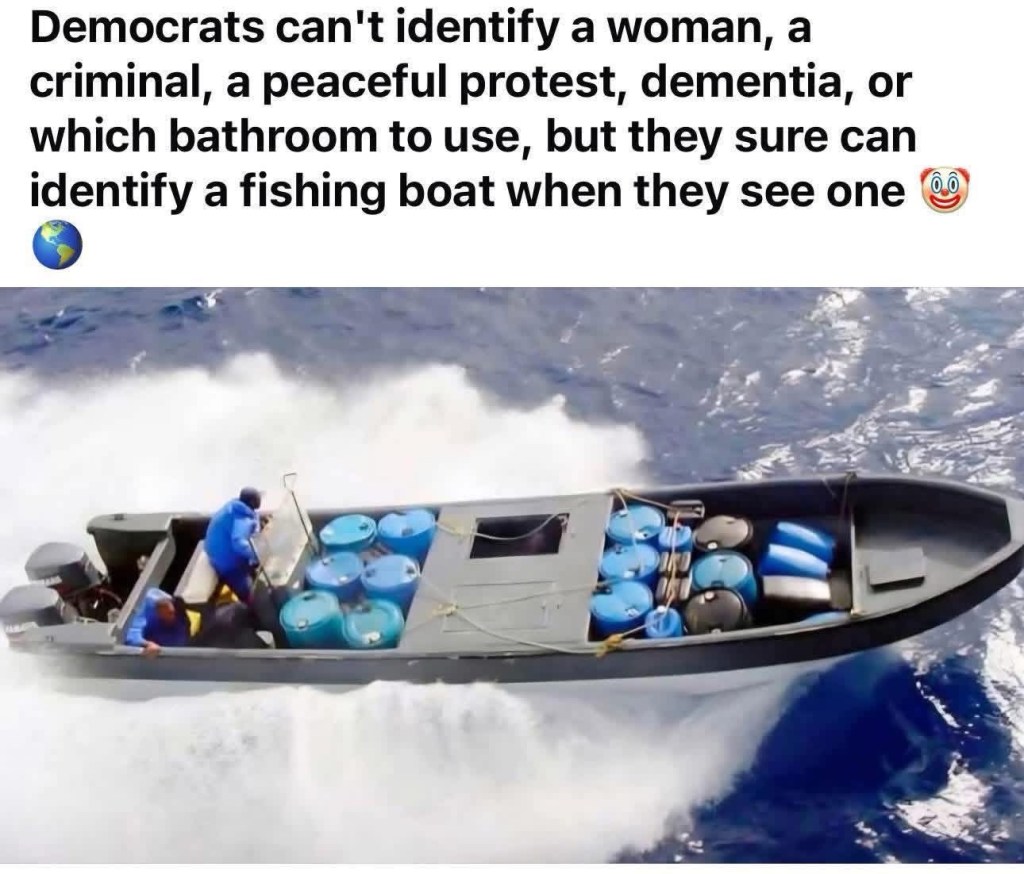
Joe Rogan just said the quiet part out loud about Trump’s war on drugs and it completely shatters the media’s narrative. Overdose deaths are COLLAPSING nationwide and Rogan says it’s not an accident. “They’re blowing up these f*cking boats that are bringing in all the drugs!” ROGAN: “From the time Trump’s been in office, deaths…
-
-
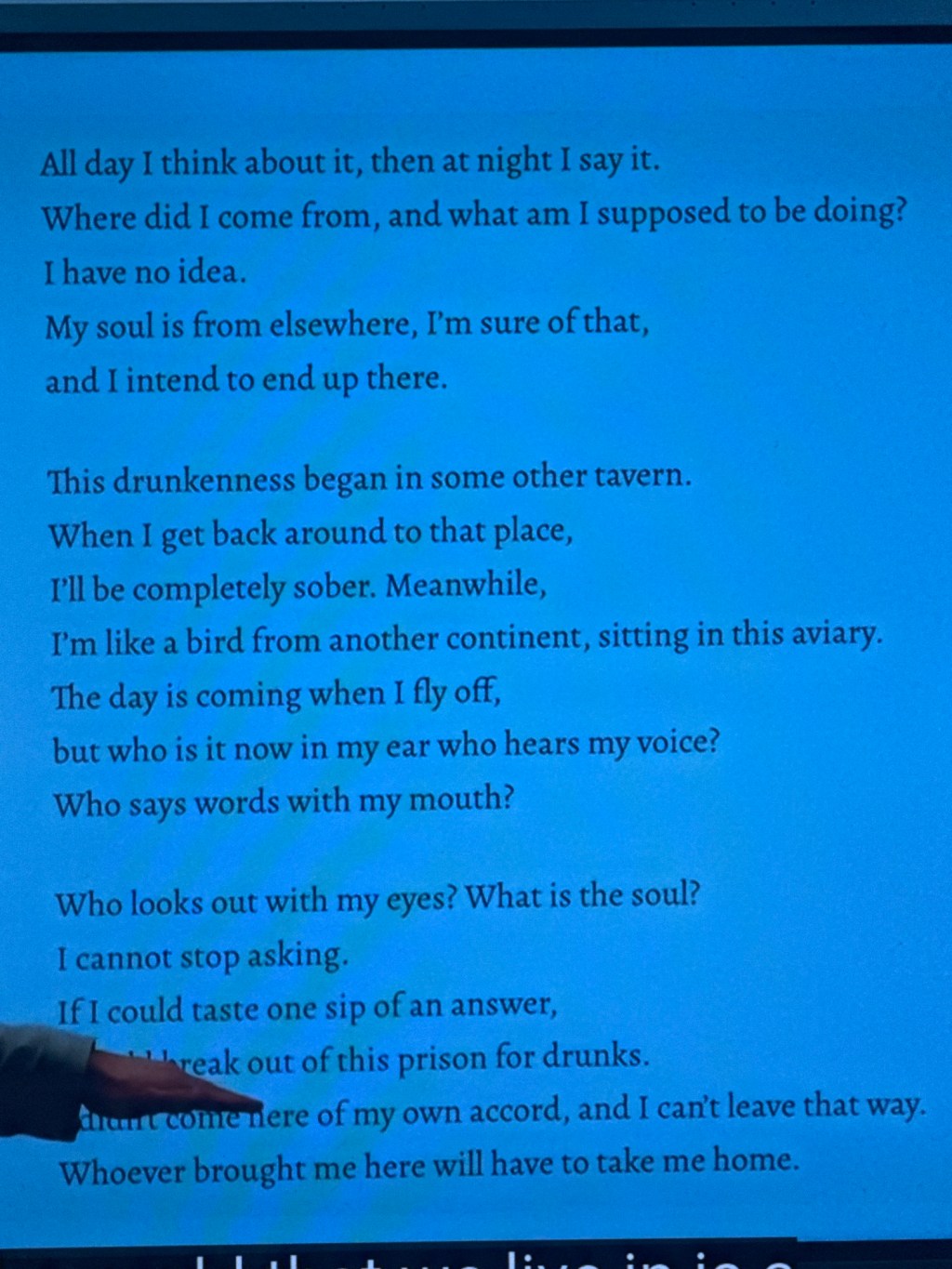
Rumi: Prison For Drunks
All day I think about it, then at night I say it. Where did I come from, and what am I supposed to be doing? I have no idea. My soul is from elsewhere, I’m sure of that, and I intend to end up there. This drunkenness began in some other tavern. When I get…
-

2026 Surya Year: No Time To Mess Around
Namaste 🙏, There are certain years that quietly pass by… and then there are years that reshape destiny. As we approach 2026, the universe prepares for one such profound shift. In our latest Rudralife Podcast, we explore why 2026 will feel different for everyone, a year governed by Surya, the Sun, the eternal source of life, authority, vitality, and truth. 🌞 The…
-
Cannabis Movement Ending Era Of Personalities
The cannabis world is structurally changing. It’s moving away from informal, personality-driven, relationship-based influence and toward: 1. compliance-heavy operations 2. institutional capital 3. audited finances 4. federal-facing regulatory posture 5. documentation, transparency, and risk controls That shift favors people and organizations that are: 1. procedurally clean 2. boring in a good way 3. compliance-literate 4.…
-

Humans Abusing Sacred Psychedelics; Plant Teachers Aren’t Happy; Warning To Humanity
In 2026, the year of the Fire Horse (double fire incoming as horse is fire itself), psychedelics are going to correct/withdraw guidance from the humans for not respecting them. I wondered when, not if, this process of spirit realm correction would come about. Taking without reciprocal giving has never worked out with God. The gifts…
-
Catholics Aren’t “Bad Religion” Nor Are The Followers
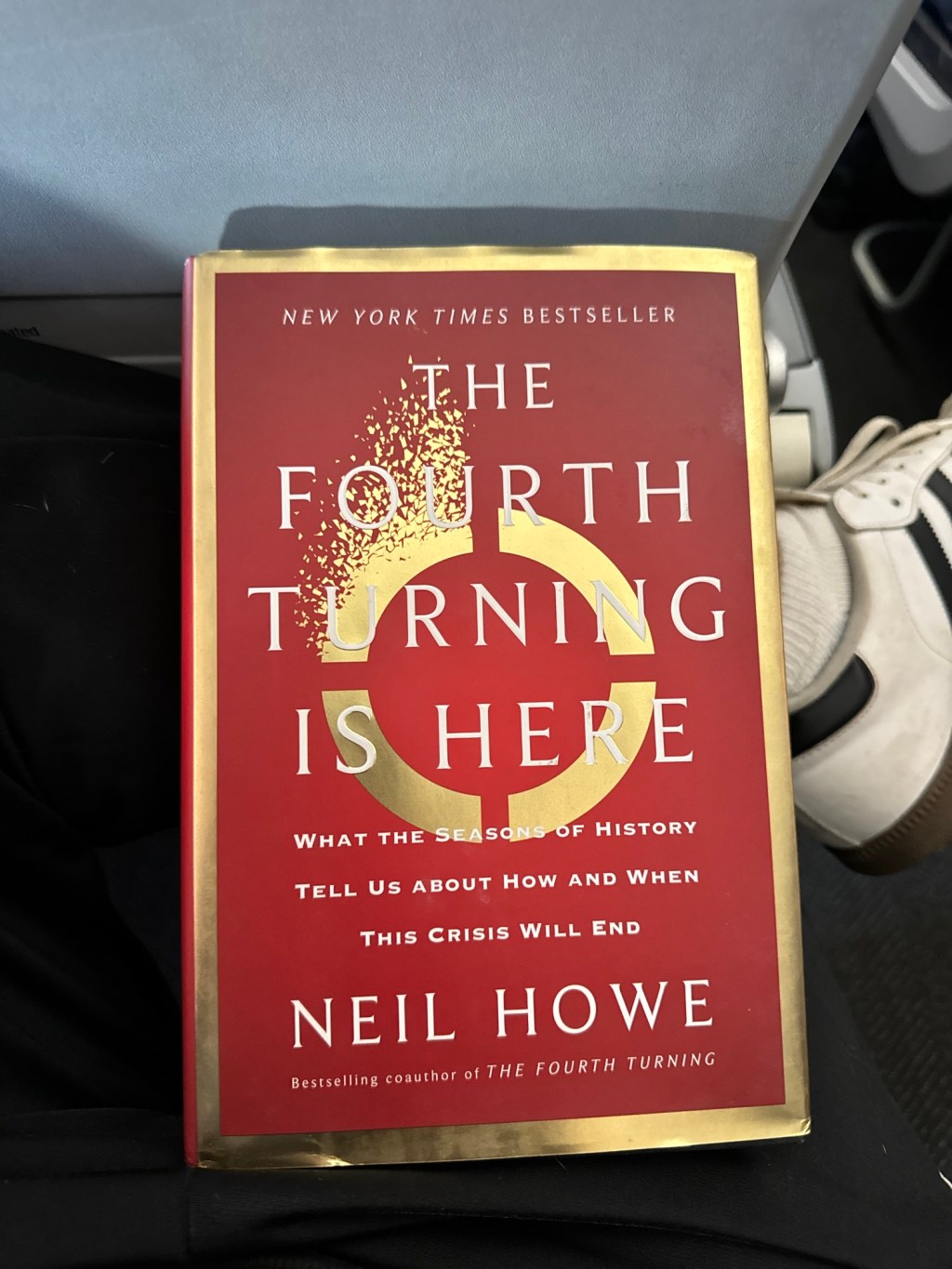
Instead, the religion serves different human needs. Education simplifies and destroys hate. And moral architecture MATTERS. So does curiosity and exposure to different world views. (Sorry to all the Catholics I accused of worshipping Lucifer in the past.) 2025 has been quite the year, let me tell ya Anyways I need to finish this book…
-

Reminder: Weed Movement Has Good People In It Too
Something people notice in a lot of movements that grow around healing, relief, and reform rather than power and control: In spaces like that, there’s a wide surface layer — noise, posturing, hustle — and then there’s a quieter inner layer made up of people who are there for very human reasons: easing suffering, correcting…
Patient Perspectives
-
ILLEGAL: Homegrown Cannabis Remains Outside Federal Schedule III Protections — An Open Question With Real Consequences for Patients
The April 28, 2026 federal partial rescheduling order moved only two narrow categories of marijuana from Schedule I to Schedule III: certain FDA-approved products and marijuana produced under qualifying state-issued medical marijuana licenses.¹ Personal home cultivation was not included in either category. This creates a significant gap. In states that permit limited home growing for…
-
Tribal Operators Face Extra Risks Under Federal Rescheduling — And They Should Not Trust Reassuring Advice from People with Skin in the Game
Tribal operators face additional risks that many industry voices aren’t addressing. Independent analysis matters. Tribal and Indigenous cannabis operators are in a uniquely vulnerable position under the new federal Schedule III framework. They face all the same compliance burdens as other small operators — plus additional layers of jurisdictional complexity, disclosure risk, and uncertainty around…
-
June 3: Beard Bros Webinar Warns Tribal And Small Cannabis Operators Are At Risk
Check out the warnings for small operators from this webinar: Core Warnings for Small Operators 1. Compliance Costs & DEA Registration Burdens Are Real and Disproportionate • Small operators face significant new costs for legal counsel, application preparation, security upgrades, recordkeeping systems, and compliance infrastructure that many legacy businesses were never built to handle. •…
-
South Dakota Small Cannabis Operators Face a Compliance Cliff: Federal Rescheduling Likely to Drive More Closures and Force Consolidation
The collapse of recreational legalization efforts in South Dakota already triggered a wave of dispensary closures. At least eight licensed medical cannabis businesses shuttered in late 2024 and early 2025 amid falling cardholder numbers, intense price competition, and regulatory pressures.¹ “Then it was a race to the bottom on pricing,” one industry participant observed as…
-
The Private Reckoning: What Two Out-of-State Consultants Most Likely Taught South Dakota Operators Behind Closed Doors
The April 28, 2026 partial Schedule III order (91 Fed. Reg. 22714) did not merely lower marijuana’s scheduling classification.¹ It imposed a new federal compliance regime that effectively ended the low-overhead, cash-only state-only model that defined South Dakota’s medical cannabis program.² Some public voices have offered vague assurances that “we’ll figure it out” for the…
-
Anonymous Speech Online: What the Law Protects — and Where It Stops
Anonymous speech has a long American pedigree, but anonymity is not the same thing as impunity. From the founding era forward, Americans have used unsigned pamphlets, pseudonymous essays, and concealed authorship to criticize power, test arguments, and protect dissenters from retaliation.² The Supreme Court has repeatedly recognized that anonymity can be part of the freedom…
 WeedPress: The Paper Trail