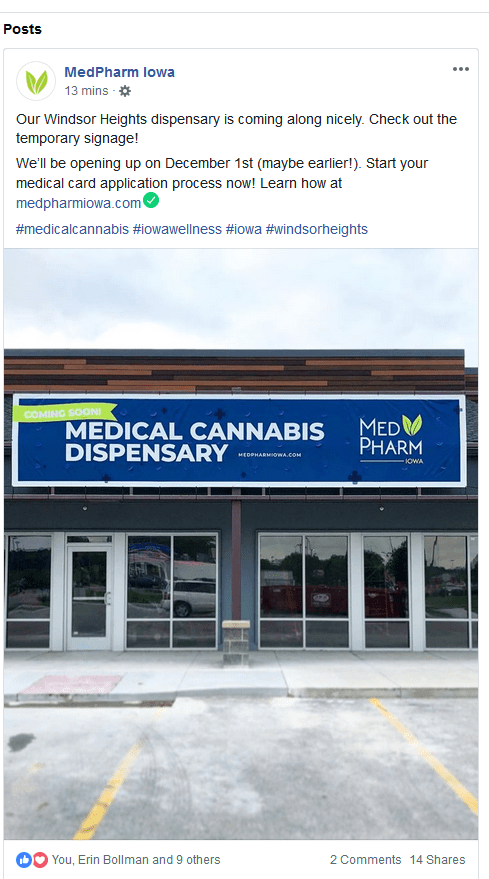
MedPharm Iowa responded to someone asking if their products were sativa and indica today with a link to this post. Essentially, that thinking should be dismissed altogether. Because science. Isn’t the endocannabinoid system fascinating?
Confused? Understandably so. As you can see, with the mass commercialization of cannabis, the taxonomical distinctions between cannabis species and subspecies got turned on its head and calcified. It seems the contemporary use of indica and sativa descriptors is here to stay, but as an informed consumer, it’s important to understand the practical value of these categories—which brings us to the research.
Indica vs. Sativa Effects: What Does the Research Say?
This three-type system we use to predict cannabis effects is no doubt convenient, especially when first entering the vast, overwhelming world of cannabis. With so many strains and products to choose from, where else are we to begin?
“The clinical effects of the cannabis chemovar have nothing to do with whether the plant is tall and sparse vs. short and bushy, or whether the leaflets are narrow or broad.”
Ethan Russo, neurologist and cannabis researcherThe answer is cannabinoids and terpenes, two words you should put in your back pocket if you haven’t already. We’ll get to know these terms shortly.
But first, we asked two prominent cannabis researchers if sativa/indica classification should have any bearing on a consumer’s strain selection. Ethan Russo is a neurologist whose research in cannabis psychopharmacology is respected worldwide, and Jeffrey Raber, Ph.D., is a chemist who founded the first independent testing lab to analyze cannabis terpenes in a commercial capacity, The Werc Shop.
“The way that the sativa and indica labels are utilized in commerce is nonsense,” Russo told Leafly. “The clinical effects of the cannabis chemovar have nothing to do with whether the plant is tall and sparse vs. short and bushy, or whether the leaflets are narrow or broad.”
RELATED STORYCannabis Anatomy: The Parts of the PlantRaber agreed, and when asked if budtenders should be guiding consumers with terms like “indica” and “sativa,” he replied, “There is no factual or scientific basis to making these broad sweeping recommendations, and it needs to stop today. What we need to seek to understand better is which standardized cannabis composition is causing which effects, when delivered in which fashions, at which specific dosages, to which types of [consumers].”
What this means is not all sativas will energize you, and not all indicas will sedate you. You may notice a tendency for these so-called sativas to be uplifting or for these indicas to be relaxing, especially when we expect to feel one way or the other. Just note that there’s no hard-and-fast rule and no determinant chemical data that supports a perfect predictive pattern.
So, I just learned today that indica and sativa don’t matter. And it makes instant sense. According to the full article at Leafly sativa was used for rope and indica was preferred for psychoactive effects. So, today, from my experience, sativa is almost never able to be found and indica is always plentiful, and when you do find sativa, it’s likely to be somebody’s homegrown ruderalis like the crap I used to pick up from Paul von Tersch when he was working as a realtor living over by the Ames High School before he tried to steal my dog.
MedPharm Iowa is out and about today educating family physicians throughout Iowa. If you ever get a chance to tell them thank you, please do so, as they most certainly deserve it.
 WeedPress: The Paper Trail
Leave a comment