Author: Jason Karimi, WeedPress Contributor
-
MMOC Agenda For October 13 2026 Meeting Includes Federal Rescheduling Discussion By AG Office
The discussion continues. Federal and international law matters. All of us need to work together to make the state regulate and implement its own program and laws and not be lead by the Feds without state input. To register to speak during public comment, go here: Register at https://sdlegislature.gov/testify/307903. The form is on the October…
-
Deep Dive: Legal Research On Federal Barriers For State Patients And Veterans
Re: How a federal rule locks a state patient out, and what the Committee can forward History of the state statuteThe South Dakota Controlled Substances Act was enacted in 1970, the same year as the federal Act. Schedule I still requires no accepted medical use. The Department recommends. The Legislature reschedules.https://weedpress.org/2026/03/24/the-south-dakota-controlled-substances-act-legislative-architecture-intent-and-institutional-design-in-a-potential-federal-rescheduling-context/ The treaty changeIn December…
-
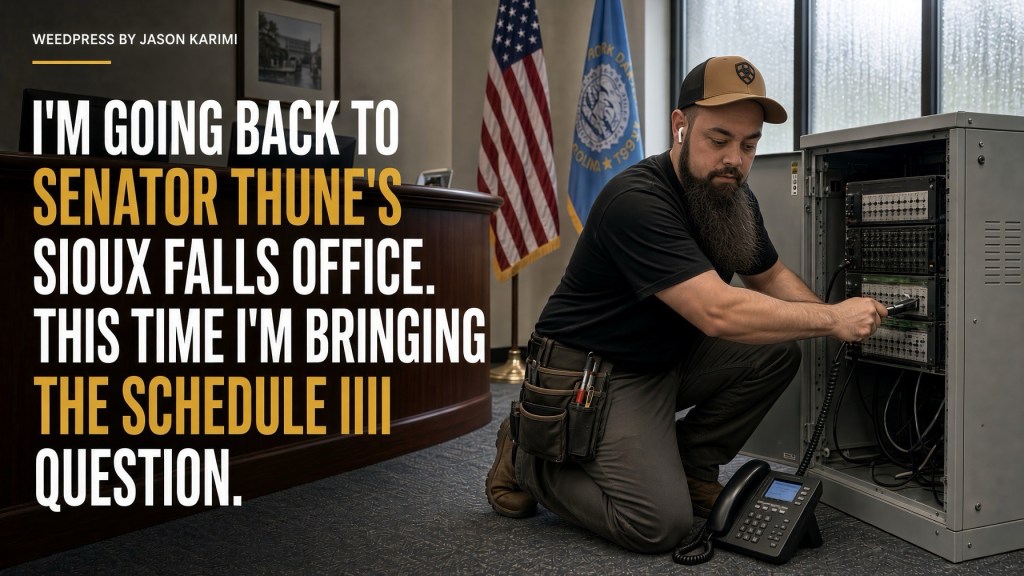
I’m Going Back to Senator Thune’s Sioux Falls Office. This Time I’m Bringing the Schedule III Question.
A new phone-installation job puts me back in the Sioux Falls office where I first asked about federal and state marijuana law. This time, Schedule III is already here. I was hired for another installation job at Senator John Thune’s Sioux Falls office. This time the job is phones.¹ The last time I was in…
-
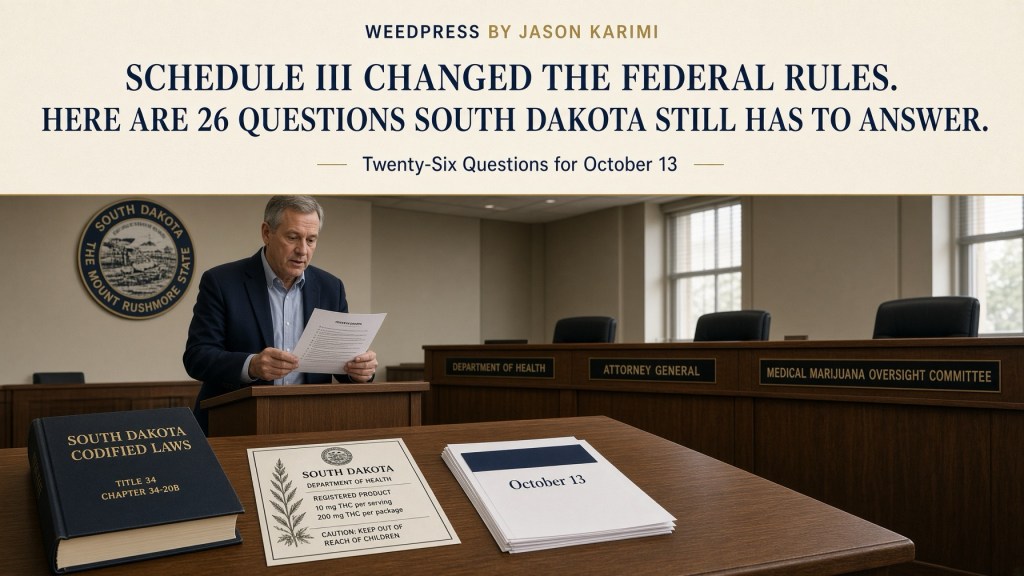
Schedule III Changed the Federal Rules. Here Are 26 Questions South Dakota Still Has to Answer.
Caregivers, patient transfers, Schedule I, DEA registration, home cultivation and state certification all converge at the October 13 Medical Marijuana Oversight Committee meeting. Twenty-Six Questions for October 13 The Medical Marijuana Oversight Committee meets Tuesday, October 13, 2026, in Room 362 of the State Capitol in Pierre. Confirm the hour on the posted agenda; the…
-
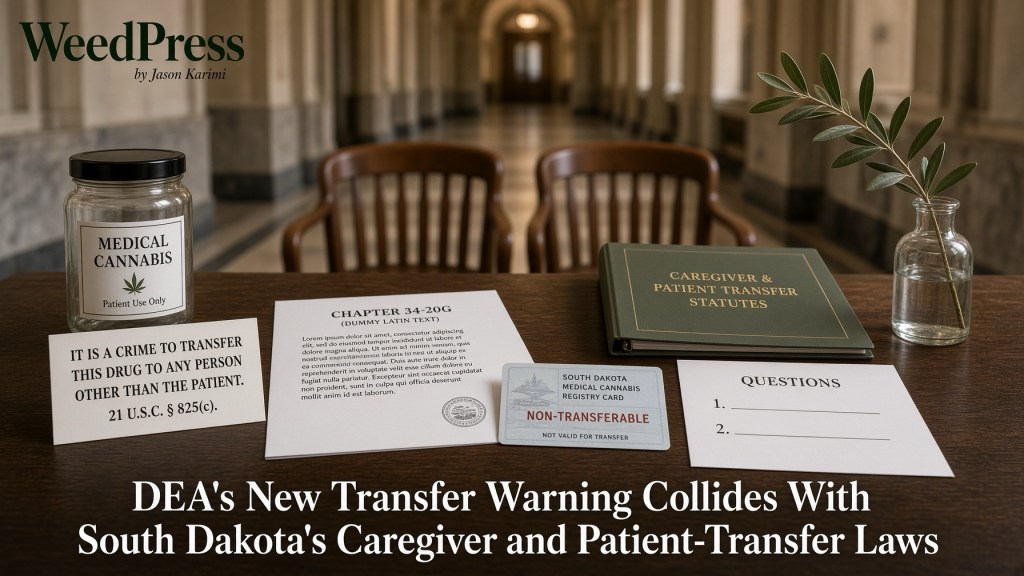
DEA’s New Transfer Warning Collides With South Dakota’s Caregiver and Patient-Transfer Laws
South Dakota still lets a designated caregiver buy and carry medical cannabis for a patient. It still protects specified no-value transfers from one cardholder to another under § 34-20G-2(6).¹ Federal Schedule III rules now put a different sentence on the jar: it is a crime to transfer the drug to anyone other than “the patient.”²…
-
Authorized Partnerships: Lay Participation in Administrative Process and the South Dakota Cannabis File
A July 2026 working paper by Anthony M. Bertelli treats lay participation in administration as more than a courtesy window on a proposed rule.¹ The claim is institutional, not sentimental. Carefully designed participation, he argues, can function as an “authorized partnership”: a legally structured encounter in which ordinary people help keep public administration tied to…
-
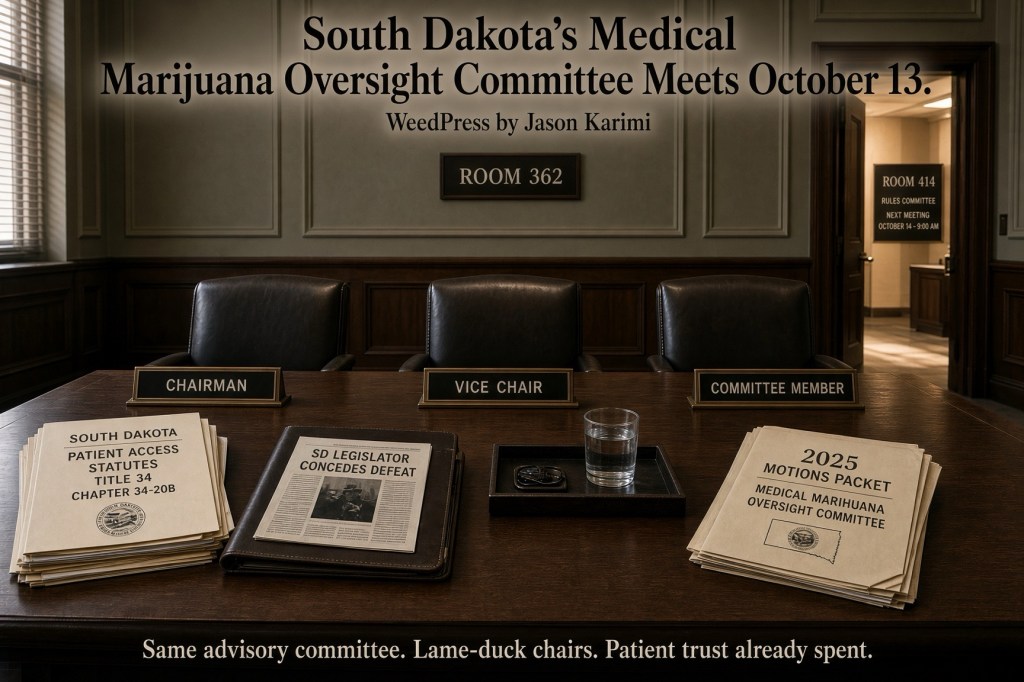
South Dakota’s Medical Marijuana Oversight Committee Meets October 13.
The South Dakota Legislature’s public schedule now lists a meeting of the Medical Marijuana Oversight Committee for Tuesday, October 13, 2026, at 11:00 a.m. in Room 362 at the State Capitol in Pierre.¹ For weeks the committee page showed the 2026 roster and the August materials and nothing else.² The date is now on the…
-

The Advantage Is Not Knowing More. It Is Knowing What to Do Next.
How mistakes, limited resources, and administrative law taught me to turn public information into decisions. There was a time when I thought the advantage was knowing something other people did not know. I do not think that anymore, after 17 obsessed years studying cannabis law and admin law as best as I can as often…
-
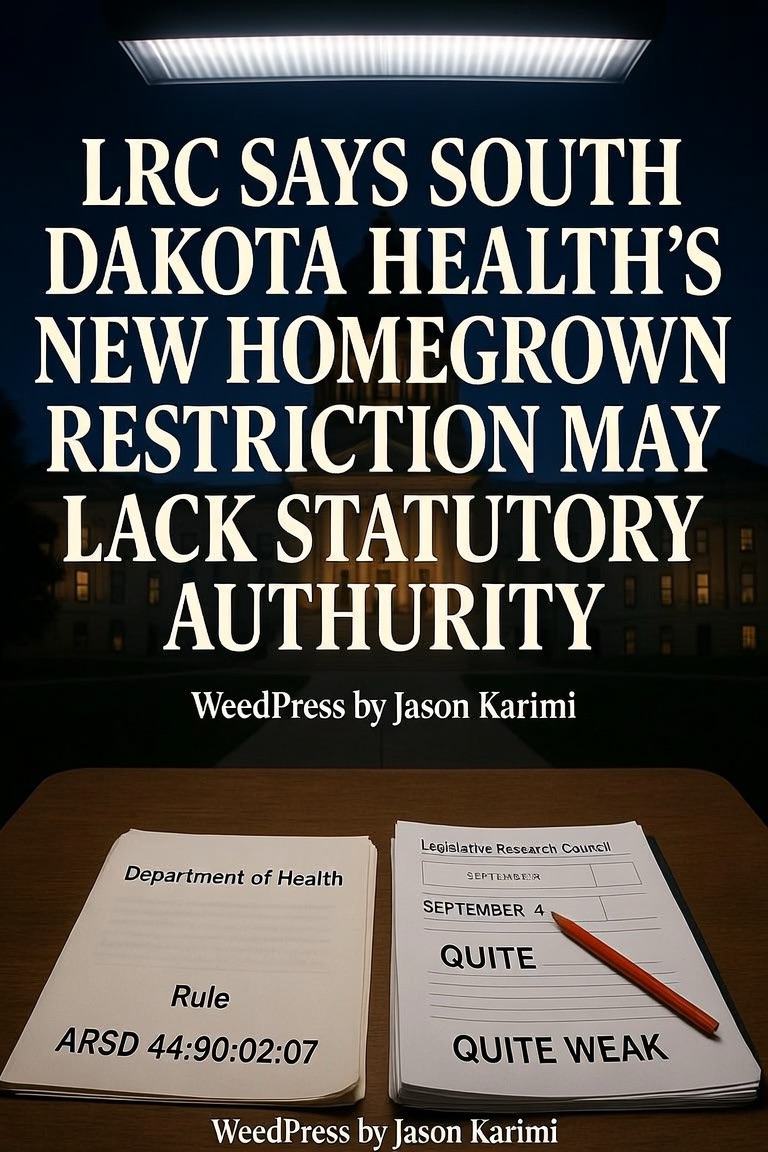
LRC Says South Dakota Health’s New Homegrow Restriction May Lack Statutory Authority
The Department proposes to end home cultivation for patients under 21. Legislative lawyers say the statutory support is “quite weak.” The same review never reaches the federal gaps already sitting in the rulemaking record. Read LRC review of the Department’s proposal to prohibit homegrown rights for South Dakota cannabis patients here: https://rules.sd.gov/Uploads/970_LetterLRCApproval.pdf The South Dakota…
-
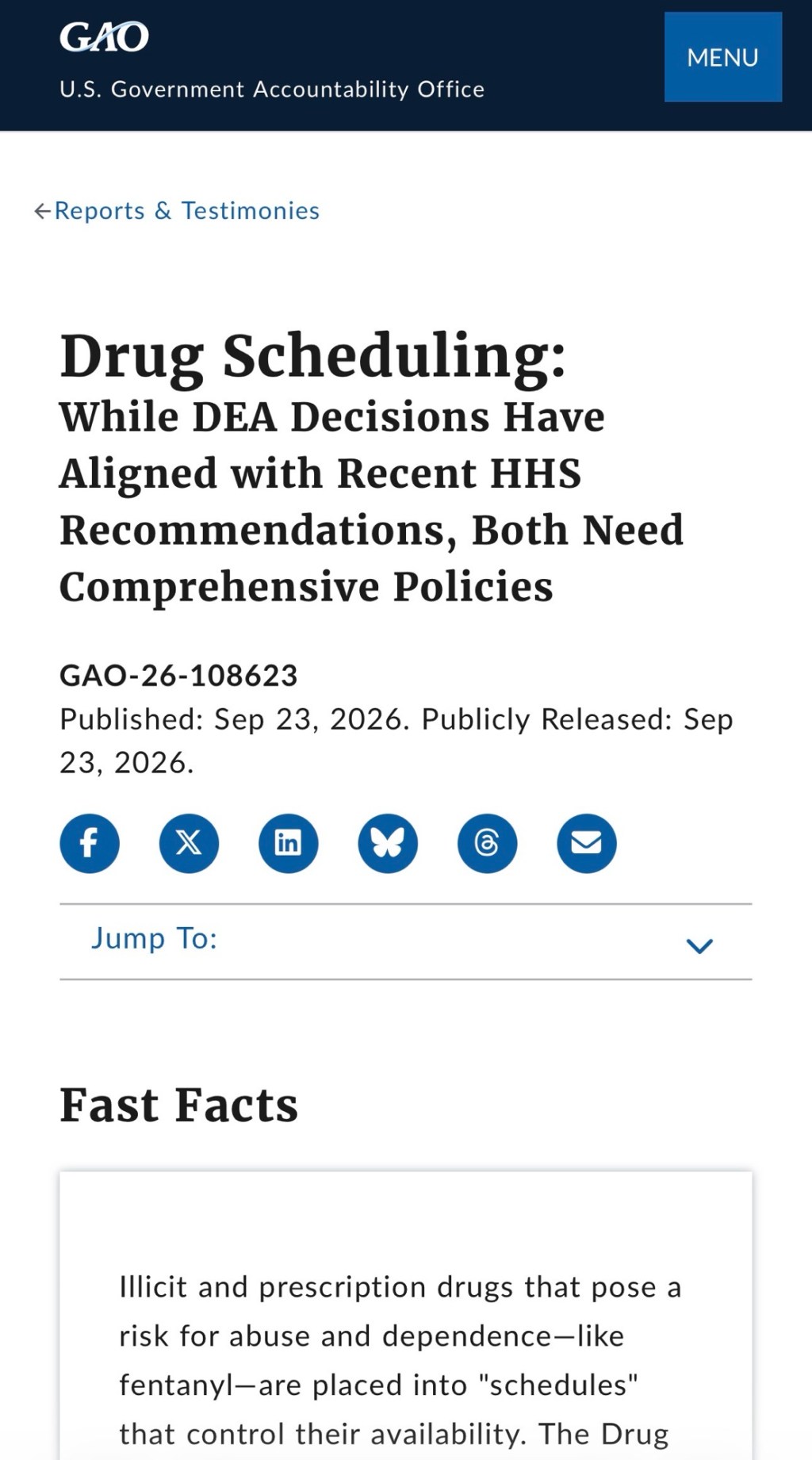
FDA Officials: New 2 Part CAMU Is Additional Test, Not A Replacement For Existing Scheduling CAMU Tests
Page 8 from today’s GAO report: https://www.gao.gov/products/gao-26-108623 “According to FDA officials, this test has not replaced other methods for determining currently accepted medical use; rather the two-part test is an additional framework. They stated that FDA approval of a new drug application remains the most straightforward way to establish that a drug has a currently…
-

South Dakotan Safety-Sensitive Jobs Sit on Two Desks. Schedule III Moved Neither One.
#9… The federal desk was built for transportation, not Pierre DOT’s transportation drug-testing regime predates South Dakota medical cannabis by decades. Congress enacted the Omnibus Transportation Employee Testing Act of 1991. The current commercial-driver testing statute directs the Secretary of Transportation to maintain controlled-substance testing requirements that incorporate HHS scientific and technical guidelines, including later…
-

South Dakota Already Requires Testing Labs to Register With DEA. The New Subsection (k) Does Not Name a Testing Class.
#8… The last two pages mapped the interfaces and named the automatic-suspension tether.¹ This page is the leftover establishment class. South Dakota treats a cannabis testing facility as its own certificate. Chapter 44:90:06 writes the lab. Chapter 44:90:09 writes the sampling and testing that cultivation, manufacturing, and dispensary shops must use.² The April 28, 2026…
-
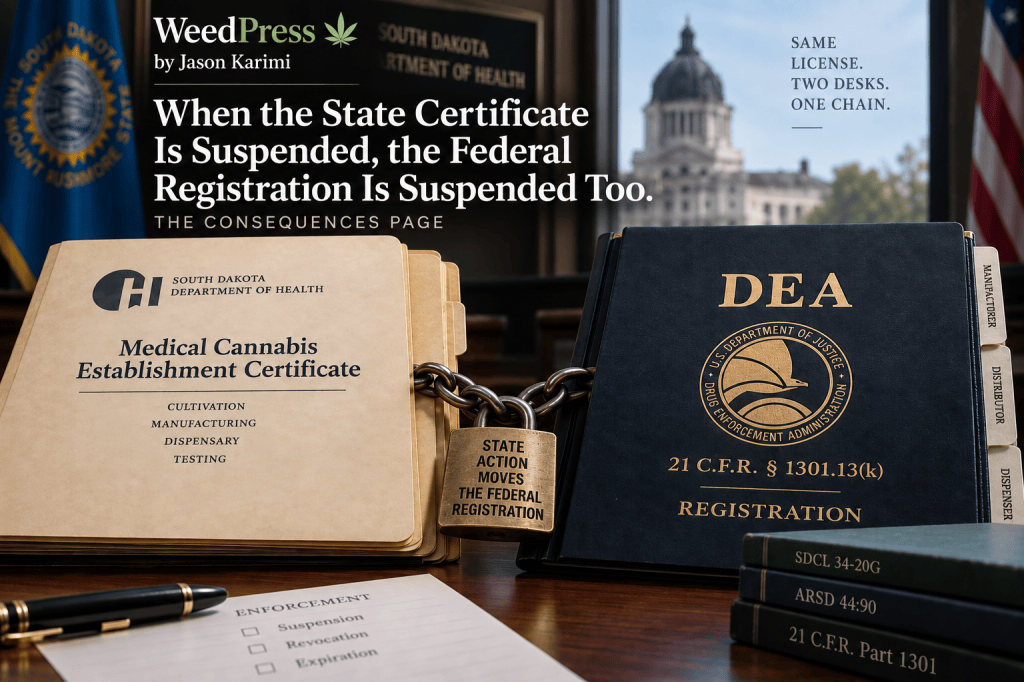
When the State Certificate Is Suspended, the Federal Registration Is Suspended Too.
#7… The Consequences Page The last page mapped the interfaces. This page names the one interface that already contains an automatic legal mechanism. There is no need to invent a DEA-versus-Health confrontation. A South Dakota administrative action can have an expressly specified consequence for a federal subsection (k) registration.¹ If the state medical-marijuana license is…
-
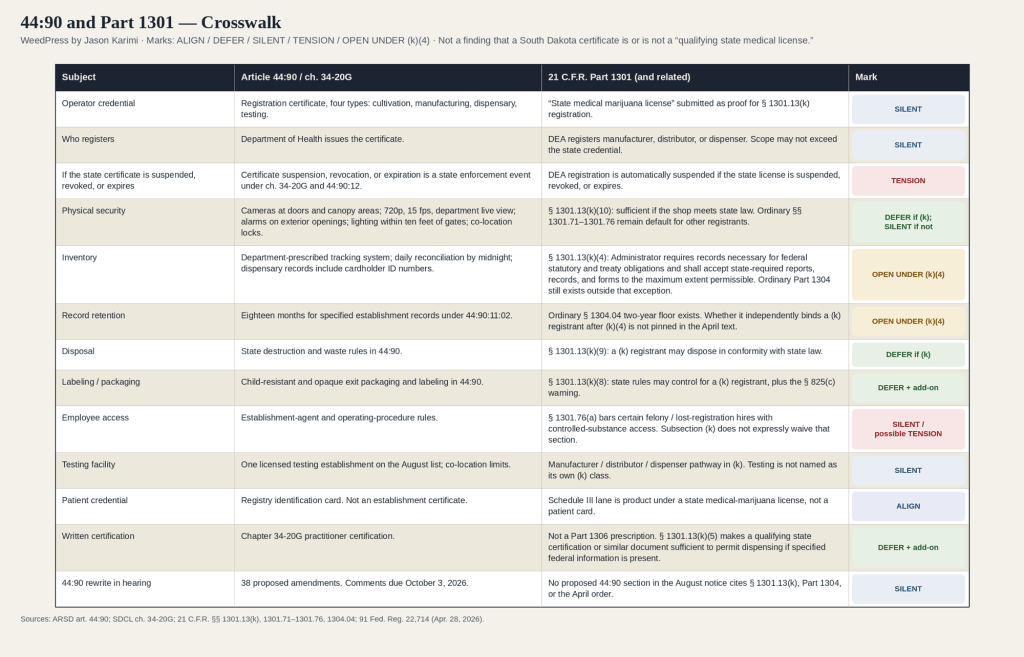
Part 1301 Defers Security to State Law. Article 44:90 Never Mentions Part 1301.
Part 6… The first four pages in this series mapped nouns and desks: cardholder and establishment, four certificates and one federal license, certification and Part 1306, Health and Pharmacy.¹ The emergency-rule page explained what Pierre cannot do with a ninety-day shortcut.² This page is the inspector document. The April 28, 2026 order did not rewrite…
-
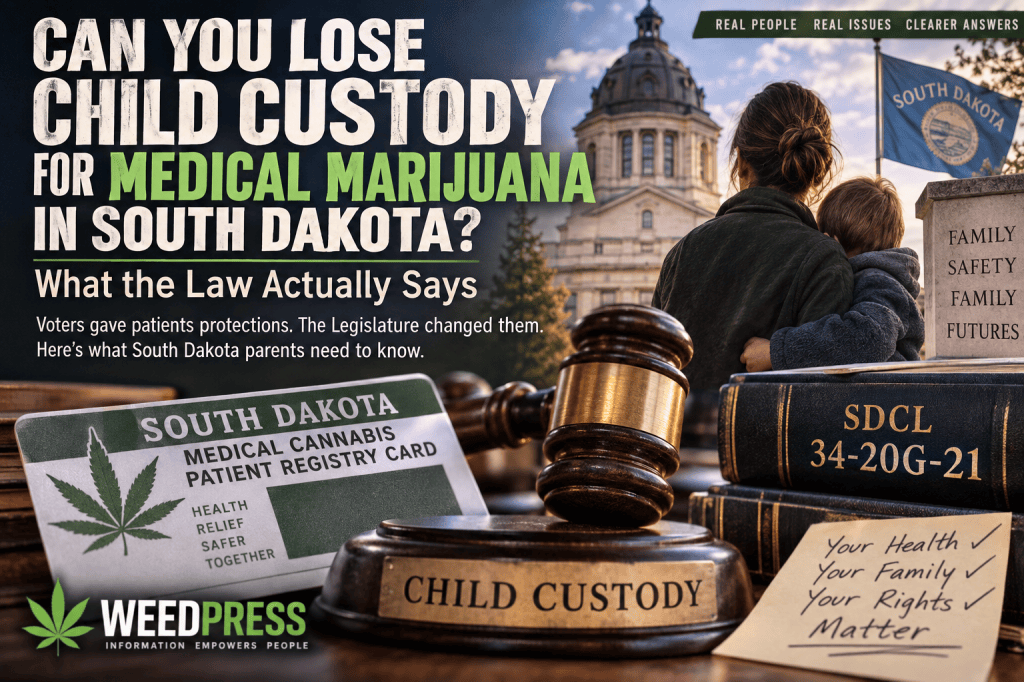
Can You Lose Child Custody for Medical Marijuana in South Dakota? What the Law Actually Says
Can a medical marijuana card be used against you in a South Dakota child custody case? South Dakota law specifically protects medical cannabis patients—but the Legislature changed an important protection that voters originally approved. By Jason Karimi | WeedPress A South Dakota medical cannabis patient recently asked a question on Reddit that many parents may…
-
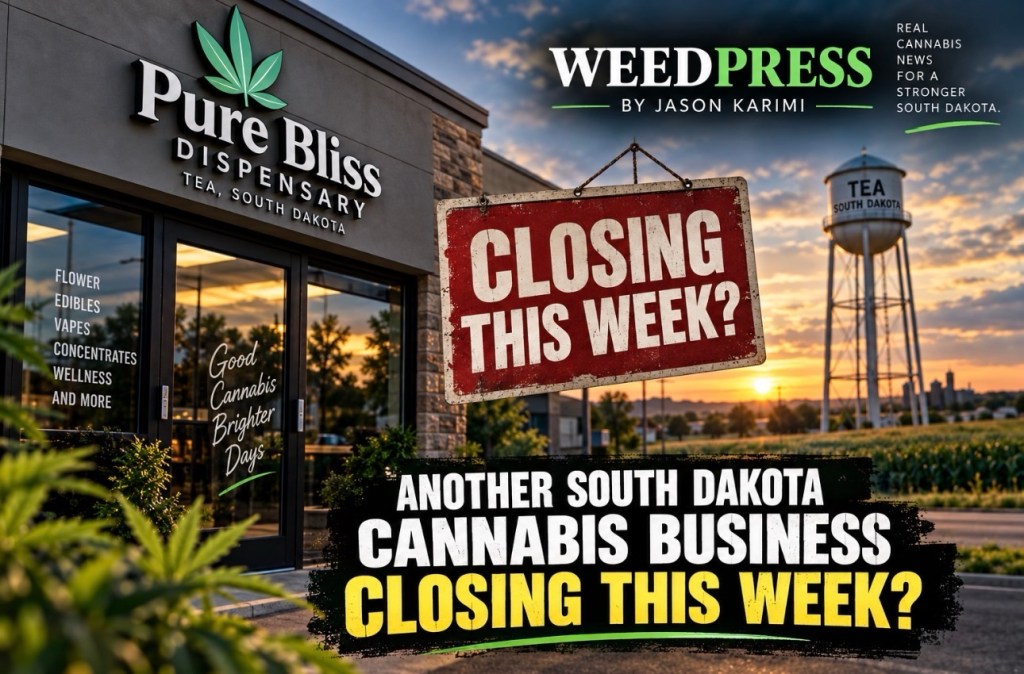
Pure Bliss Planned for Medical, Recreational and Expansion. Now Its Tea Dispensary Is Reportedly Closing.
Update 1: Pure Bliss confirmed via phone at the store on 9-27-26 is their last day and they are closing the dispensary permanently. A Reddit tip says the store will close September 27 while Pure Bliss Farms keeps growing. The closure is not yet confirmed—but the company’s original business plan raises a larger question about…
-

How to File a Written Comment on South Dakota’s 38-Rule Medical Cannabis Package
South Dakota is rewriting 38 sections of its medical-cannabis regulations. You do not have to be a lawyer, cannabis-business owner, lobbyist, or person sitting in the hearing room in Pierre to put something into the rulemaking record. You can file a written comment. The South Dakota Department of Health filed its proposed amendments to Administrative…
-
South Dakota’s Commissioner Could Add, Delete, or Reschedule Drugs in 1970. A 1976 Criminal-Code Revision Replaced That Power With a Recommendation to the Legislature.
Alabama’s health chief said the state’s medical program was already live while marijuana remained Schedule I there, explaining that the medical exemption statute protected people authorized to possess it.¹ South Dakota’s leftover question is different. SDCL § 34-20B-11 still says a substance belongs in Schedule I only if it has a high potential for abuse,…
-
Alabama’s Health Chief Said Schedule III Didn’t Change a Live Medical Program. South Dakota Still Has to Explain What “No Accepted Medical Use in the United States” Means After the April Federal Rule.
Alabama’s health chief just put a useful distinction on the record. Dr. Scott Harris said the July comments were not about the consequences of rescheduling. They were people who like medical marijuana and people who do not. Then he said this: “The program’s already live, even though it’s still Schedule I in Alabama. The reason…
-
What Does “Accepted Medical Use” Actually Mean? A 40-Year Legal Fight Now Matters in South Dakota
South Dakota law tells the Department of Health when a substance belongs in Schedule I. It does not tell the Department what the key words mean. To be included in Schedule I, a substance must have a high potential for abuse, “no accepted medical use in the United States,” and a lack of accepted safety…
-
After Reading South Dakota’s 54-Page Cannabis Rule Draft, I Filed a Supplemental Comment on What Form 14 Doesn’t Explain
September 14, 2026 Whitney Brunner Medical Cannabis Program Administrator South Dakota Department of Health 600 East Capitol Avenue Pierre, SD 57501 MCQuestions@state.sd.us Re: Supplemental written comments on proposed amendments to S.D. Admin. R. art. 44:90 Public hearing September 23, 2026; written comments due October 3, 2026 Subject: Proposed 44:90:12:03 and 44:90:12:11; Form 14 items 8,…
-
An Emergency Rule Lasts Ninety Days. It Is Not a Winter Session.
Previously in this series… SDCL 1-26-5 lists three reasons an agency may use the emergency procedure. Convenience and a closed legislative calendar are not among them. The first four pages in this series mapped nouns and desks: cardholder and establishment, four certificates and one federal license, certification and part 1306, Health and Pharmacy.¹ This page…
-
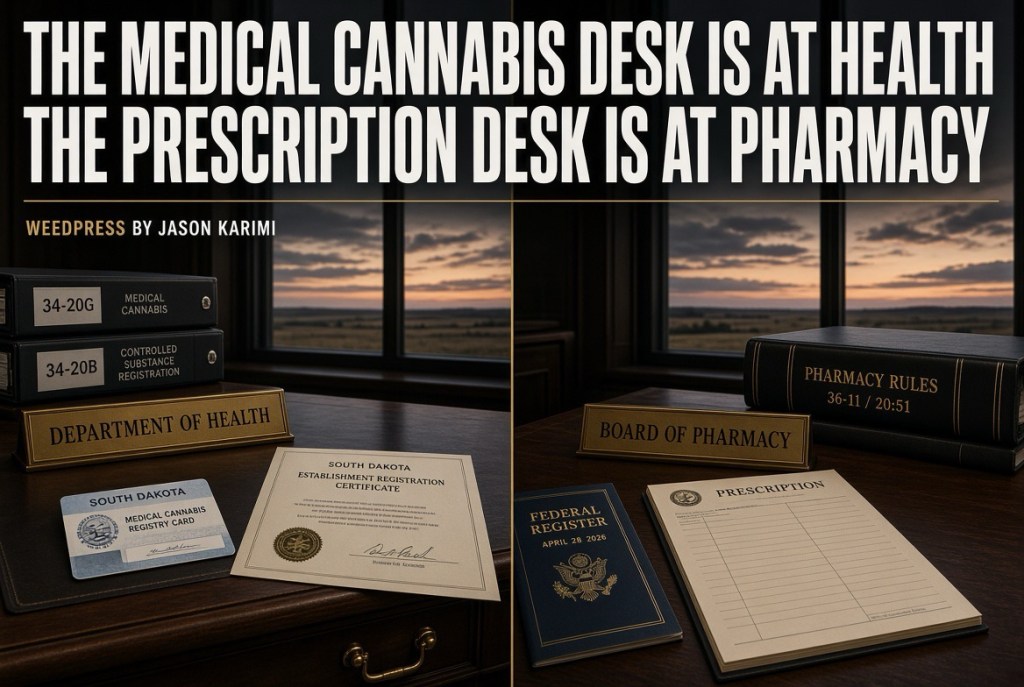
The Medical Cannabis Desk Is at Health. The Prescription Desk Is at Pharmacy.
Chapter 34-20G puts South Dakota’s medical cannabis program at the Department of Health. Chapter 36-11 governs the practice of pharmacy and prescription drug orders. Chapter 34-20B separately places state controlled-substance registration with the department. The April order did not publish a new assignment. The first three pages in this series separated the patient from the…
-

A Written Certification Is Not a Part 1306 Prescription
The April order says a state certification can be enough to dispense. It does not convert chapter 34-20G into the federal prescription rule. The first two pages in this series separated the patient credential from the shop credential, then asked which South Dakota establishment paper is the federal “license.”¹ This page is the clinic noun.…
-

The April Rescheduling Order Asks for a License. Pierre Issues Four Certificates.
“Qualifying state medical license” is a federal noun. South Dakota’s operator credential is a registration certificate, in four types. The unpublished work is the crosswalk. The first page in this series separated the patient credential from the shop credential.¹ A registry identification card is not the license the April 28, 2026 order uses to put…
-
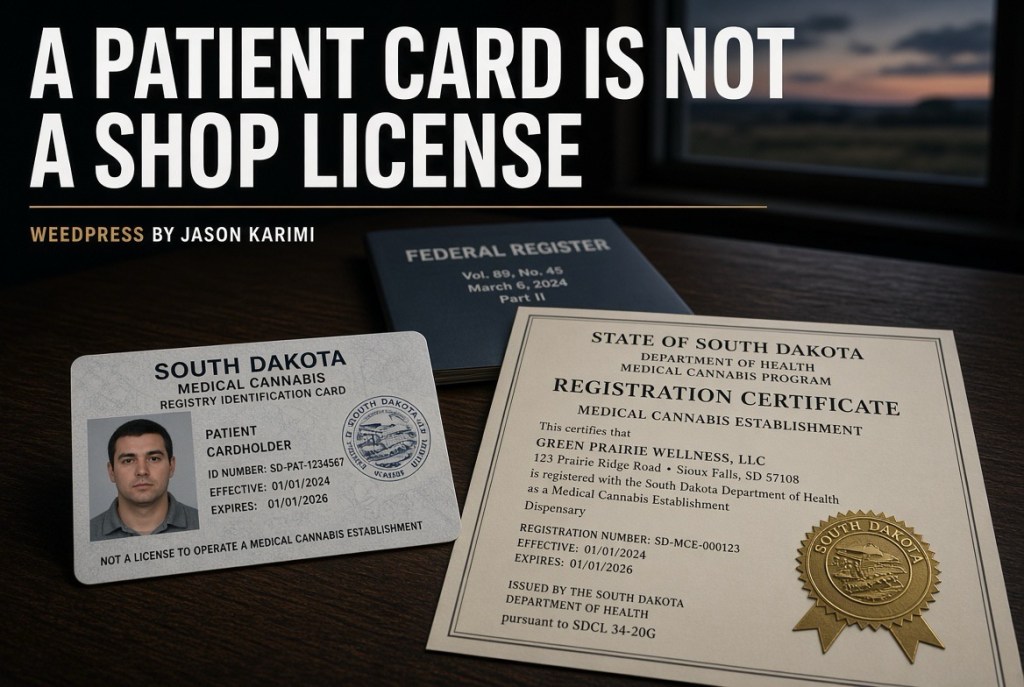
A Patient Card Is Not a Shop License
The April order licenses operators. Chapter 34-20G cards patients and certificates shops. Those are not the same legal credential. The April 28, 2026 final order rescheduling medical cannabis federally does not speak in South Dakota’s vocabulary.¹ It speaks in two federal nouns: an FDA-approved drug product containing marijuana, and marijuana “subject to a state-issued license…
-

South Dakota Wants to Rewrite Its Corrective-Action Rule. The Fine Can Still Come With It.
The first article counted the amendments. This one reads the two enforcement sections together. South Dakota’s Department of Health is proposing to replace the first-offense dollar amounts for two categories of medical-cannabis violations with corrective-action plans.¹ That sounds straightforward until the Department’s proposed enforcement provisions are read together. Proposed § 44:90:12:11 says a first Category…
-

Iowa Found a Religious Cannabis Claim Sincere — Then Denied the Injunction Because Hemp Already Sells THC
A Polk County judge found Carl Olsen’s religious cannabis claim sincere but held that Iowa’s legal hemp market meant he had not shown that marijuana enforcement substantially burdened the particular religious exercise he presented.¹ The September 10, 2026 order in Olsen v. State of Iowa is not a ruling that sacramental cannabis is unprotected. It…
-
What Did Charlie Kirk Teach Americans?
On the one year anniversary when peaceful, polite, kind, remarkably respectful public dialogue assassinated Charlie Kirk’s service to humanity, a new resolve: stop explaining to an indifferent and uninterested public, and just file paperwork. Put up and shut up saves energy. Some people cannot be reasoned with. Some are emotional wack jobs. I used to…
-
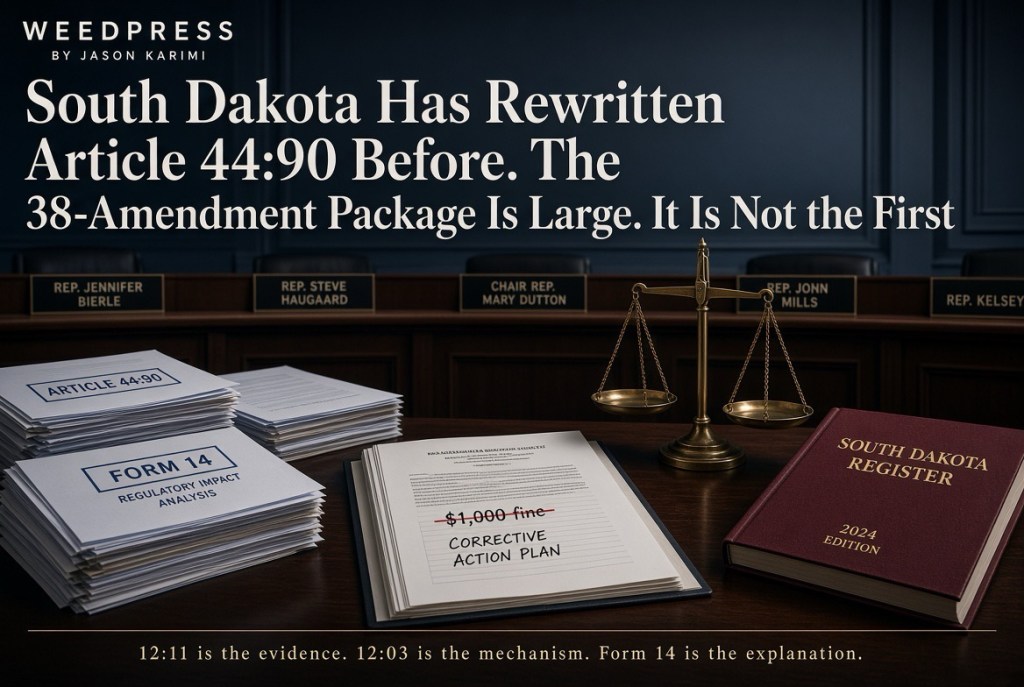
South Dakota Has Rewritten Article 44:90 Before. The 38-Amendment Package Is Large. It Is Not the First.
The June 26 draft shows that the Department is reopening a fine schedule adopted just one year ago — and replacing first-offense Category 4 and 5 fines with corrective-action plans. Its regulatory-impact analysis says the change has no implementation cost. South Dakota’s Department of Health filed 38 proposed amendments to Administrative Rules Article 44:90 on…
-
The Dunning–Kruger Effect Is Not a Meme. It Is a Warning About Who Gets to Talk With Certainty
The popular version of the Dunning–Kruger effect is a punchline: stupid people are loud, smart people are humble. That is not what the research says, and it is a sloppy way to run a public argument. The actual claim is narrower and more useful. In domains that require skill, the same gaps that produce bad…
-
My Written Comments to South Dakota Health: Put the Numbers in the Rulemaking Record
September 10, 2026Whitney BrunnerMedical Cannabis Program AdministratorSouth Dakota Department of Health600 East Capitol AvenuePierre, SD 57501MCQuestions@state.sd.us Re: Written comments on proposed amendments to S.D. Admin. R. art. 44:90Public hearing September 23, 2026; written comments due October 3, 2026 Dear Ms. Brunner: Please place this letter and the attached exhibits in the official written-comment record for…
-
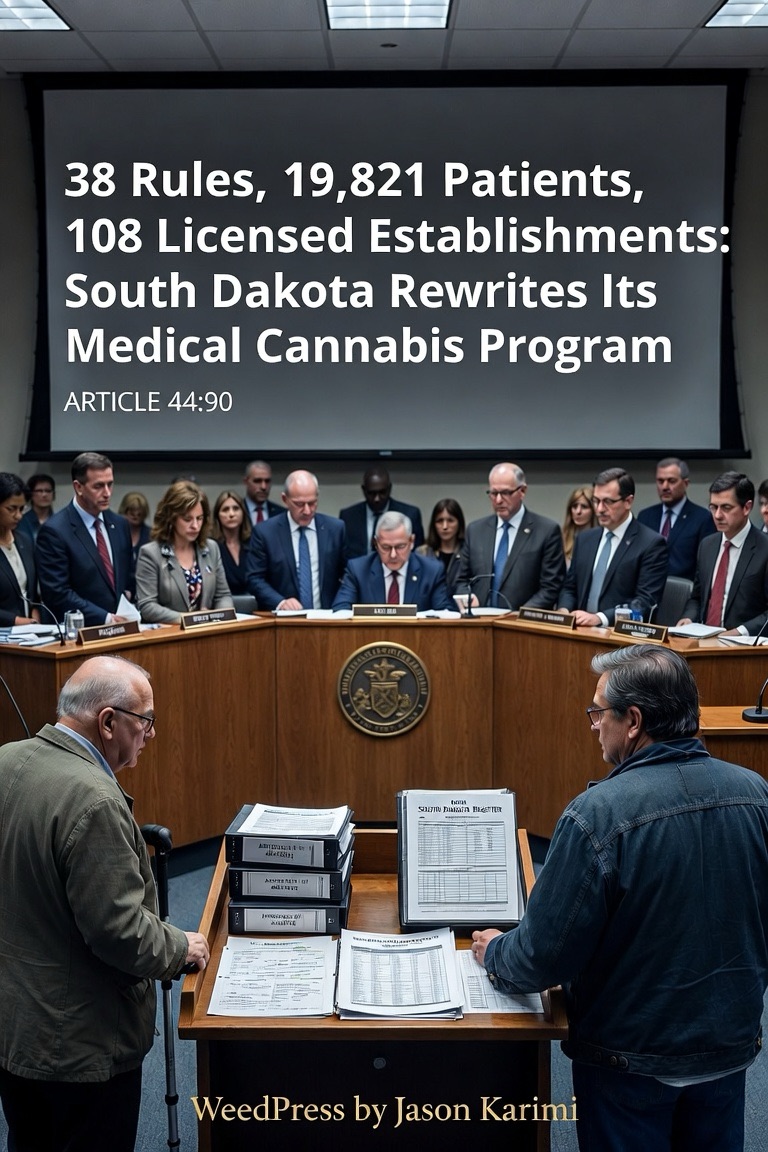
38 Rules, 19,821 Patients, 108 Licensed Establishments: South Dakota Rewrites Its Medical Cannabis Program
If anybody says to you that your voice doesn’t matter, don’t believe it. It’s a strategy to create a place of negativity. — Stevie Wonder, Minneapolis, October 14, 2016 The Department of Health filed proposed amendments to Article 44:90 with the Legislative Research Council on August 21, 2026.¹ The South Dakota Register published that notice…
-
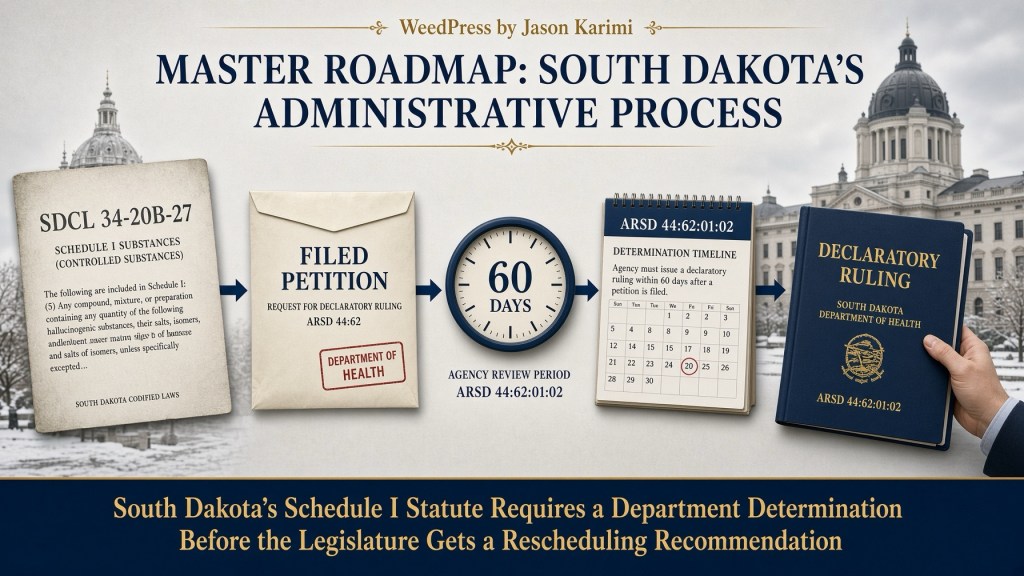
South Dakota’s Schedule I Statute Requires a Department Determination Before the Legislature Gets a Rescheduling Recommendation
SDCL 34-20B-27 does not amend the schedules by itself. It tells the Department of Health when a determination triggers a mandatory recommendation to the Legislature.¹ After the April 28, 2026 federal order placing certain state-licensed medical marijuana products in Schedule III, the unanswered Pierre question is not whether marijuana is still listed in chapter 34-20B.…
-
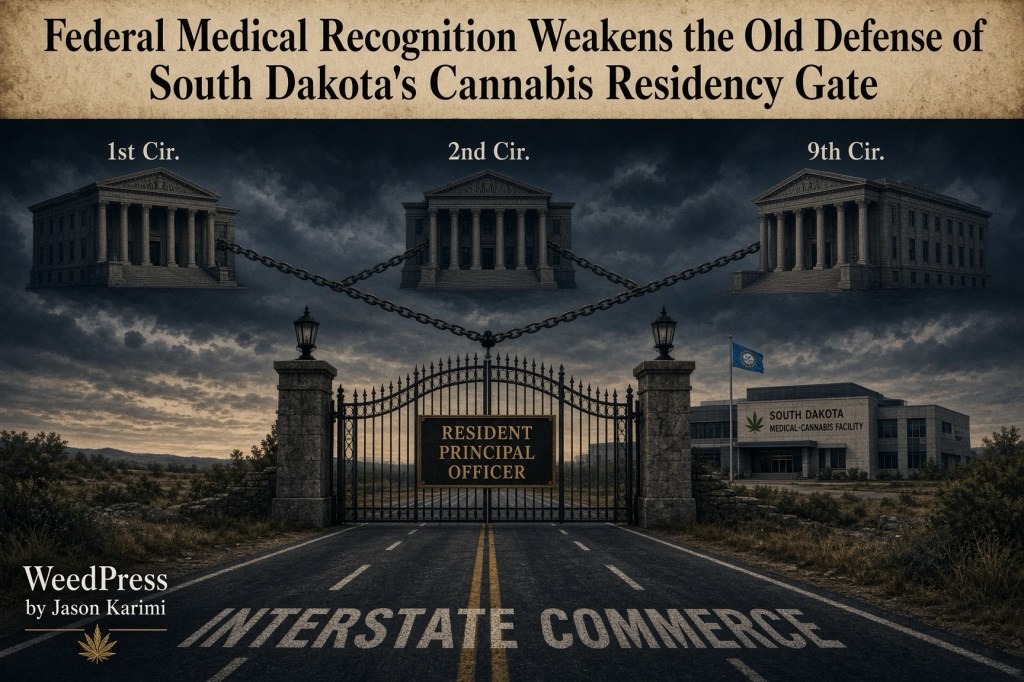
Federal Medical Recognition Weakens the Old Defense of South Dakota’s Cannabis Residency Gate
A federal shift in how medical marijuana is regulated is forcing states to confront an old constitutional question: can they still reserve cannabis licensing opportunities for residents when federal law no longer treats qualifying medical marijuana as entirely illicit? A Congressional Research Service legal sidebar issued September 3, 2026 maps a live circuit split over…
-
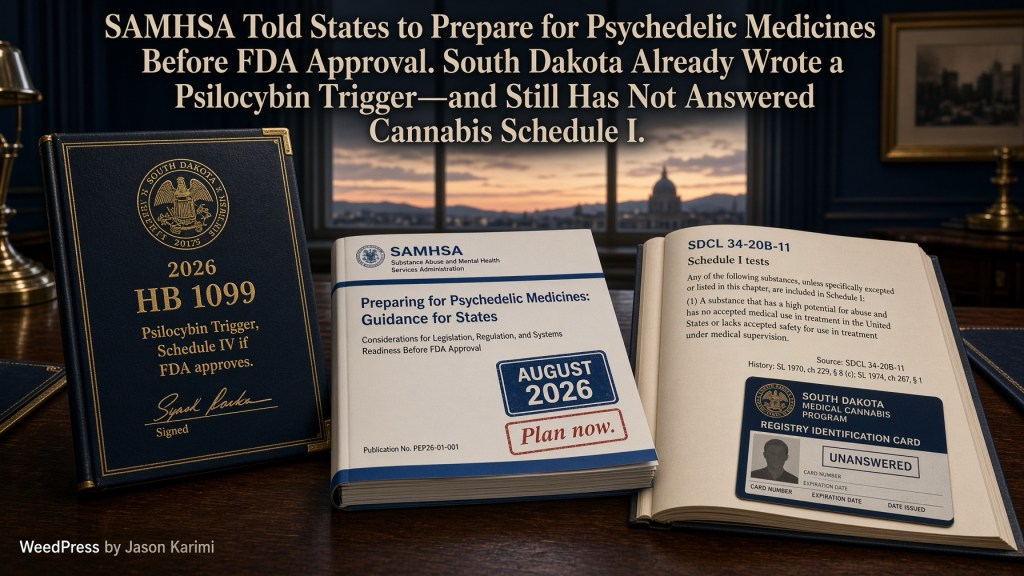
SAMHSA Told States to Prepare for Psychedelic Medicines Before FDA Approval. South Dakota Already Wrote a Psilocybin Trigger—and Still Has Not Answered Federal Cannabis Schedule III.
In August 2026, the Substance Abuse and Mental Health Services Administration published a policy paper telling state and territorial mental-health systems to start planning now for the fiscal, legal, and operational consequences of possible FDA-approved psychedelic therapies.¹ The paper is not a regulation. It does not approve psilocybin, MDMA, or LSD. It tells states to…
-

Zach Lahn Ran Against Corporate Ag. Then He Picked a Bayer-Backed Hog Operator Whose Farm a Judge Just Put in Receivership
Zach Lahn won the Iowa Republican nomination for governor by running as the outsider who would put family farms ahead of corporate agriculture.¹ On June 12 he named state Rep. Derek Wulf, a Hardin-area hog and cattle operator, as his lieutenant governor.² On September 1, a district court judge appointed Hertz Farm Management as receiver…
-
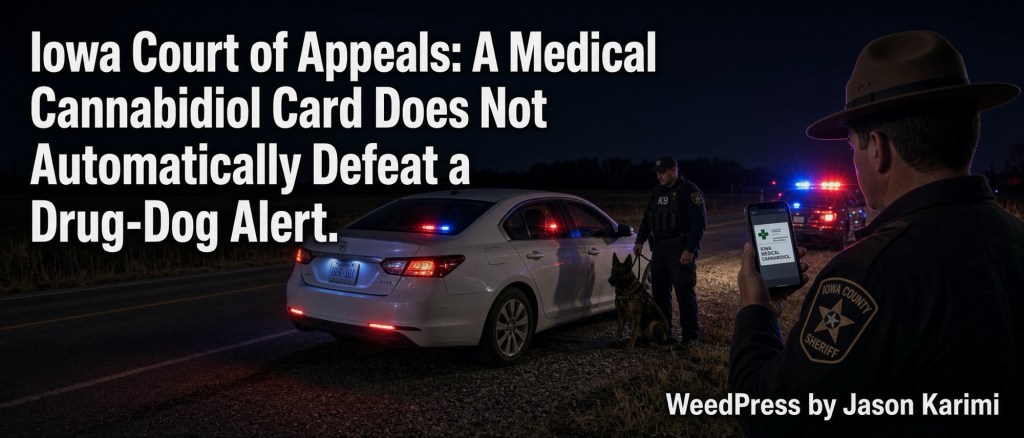
Iowa Court of Appeals: A Medical Cannabidiol Card Does Not Automatically Defeat a Drug-Dog Alert
Patients who carry a valid Iowa medical cannabidiol registration card often assume the card creates a meaningful shield during traffic stops. A new decision from the Iowa Court of Appeals shows the limits of that assumption. In State v. Leonard, the court held that officers had probable cause to search a vehicle after a drug…
-
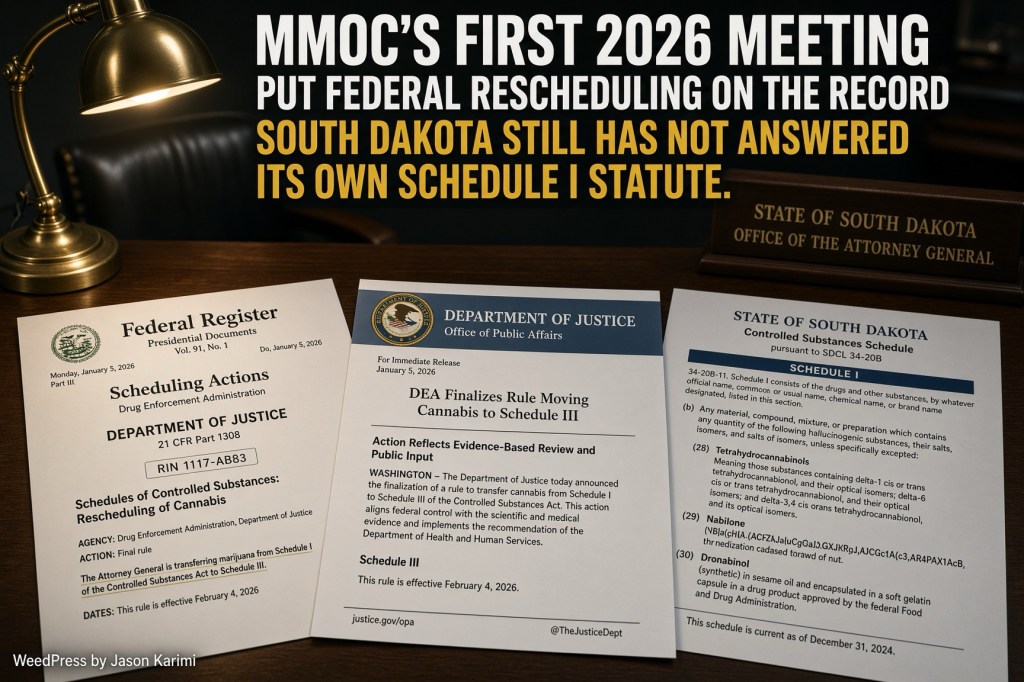
MMOC’s First 2026 Meeting Put Federal Rescheduling on the Record. South Dakota Still Has Not Answered Its Own Schedule I Statute.
The Medical Marijuana Oversight Committee’s first 2026 interim meeting did not decide whether cannabis still belongs in Schedule I under South Dakota law. It did something more limited, and more useful: it put federal classification, program scale, and the absence of a state legal answer onto the official packet.¹ That is not a committee endorsement…
-
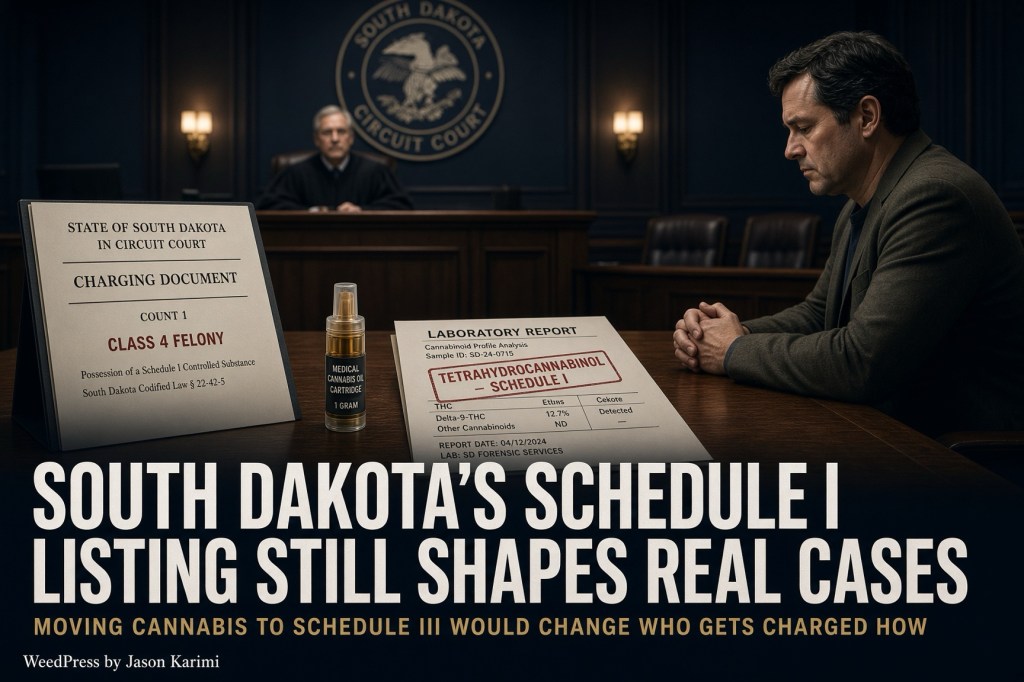
South Dakota’s Schedule I Listing Still Shapes Real Cases. Moving Cannabis to Schedule III Would Change Who Gets Charged How.
South Dakota already runs a medical cannabis program. It also still lists hashish, hash oil, and tetrahydrocannabinols in Schedule I. Those two facts sit in different titles of the code, and they do not cancel each other out. The medical statutes create a permission structure for qualifying patients and licensees. The Schedule I listing still…
-

Health Department Tells Lawmakers South Dakota’s $20 Home-Grow Law Is Too Thin to Police — and Tightening It Raises Safety Questions
The Department of Health did not need a ballot fight to put a warning on the medical cannabis statute. It used the August Medical Marijuana Oversight Committee.¹ Program administrator Whitney Brunner told the committee that licensed home cultivators rose from 61 in fiscal year 2022 to 715 in fiscal year 2026 — a 1,072 percent…
-

Four Pot Shops Five Minutes Over the Iowa Line Sell the Flower Iowa Still Won’t License
North Sioux City, South Dakota, is a town of a few thousand people on the Missouri River. Sioux City, Iowa, is across the water. Between them is a five-minute drive and a statutory mismatch Iowa has never closed.¹ South Dakota’s Department of Health currently lists four licensed medical cannabis dispensaries in North Sioux City: Dakota…
-
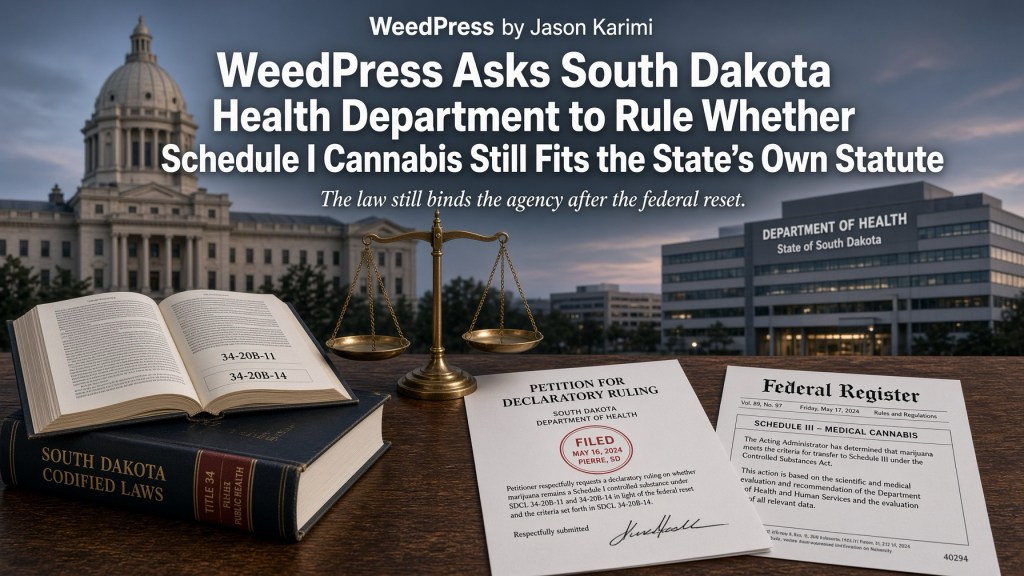
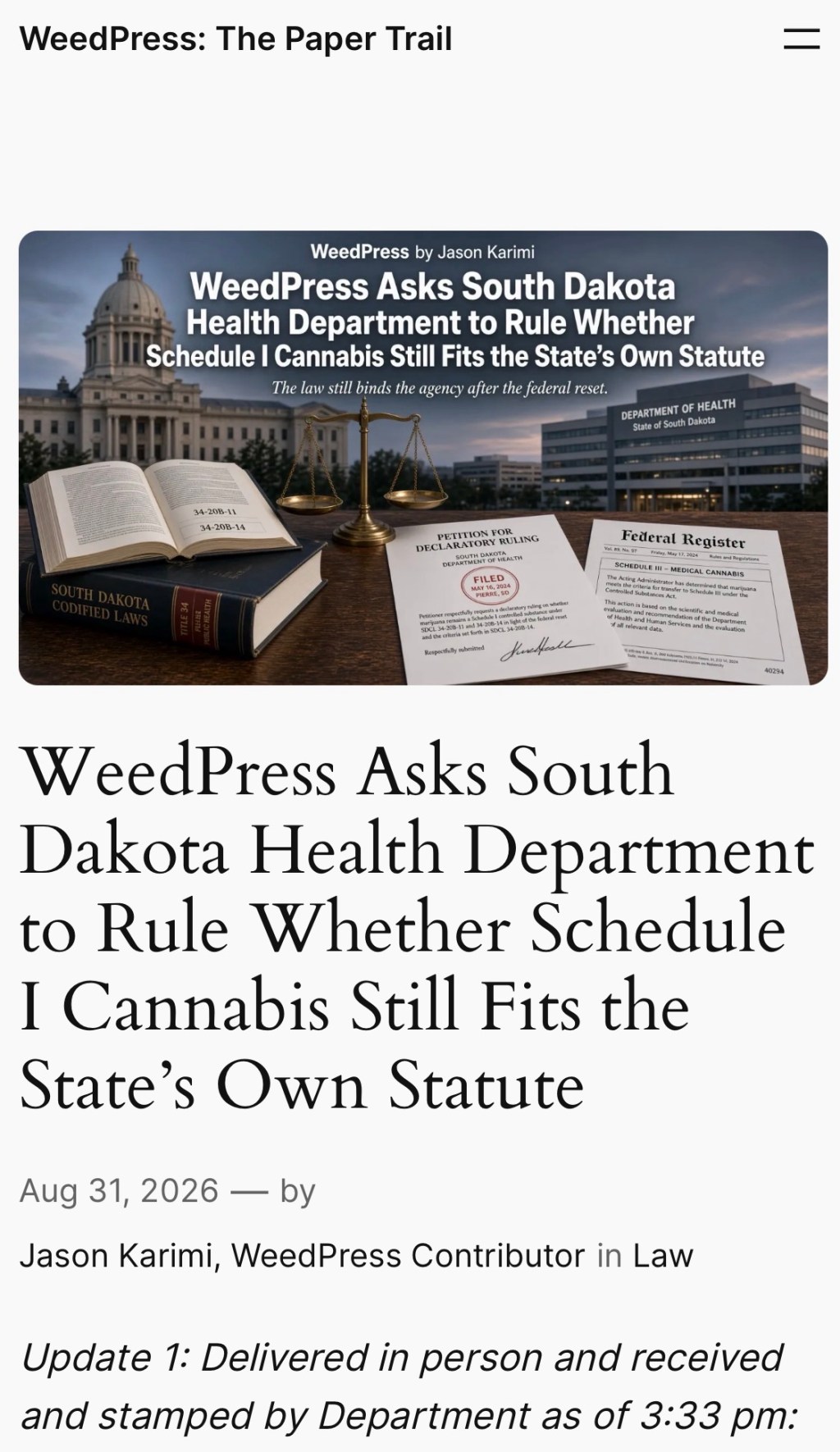
WeedPress Asks South Dakota Health Department to Rule Whether Schedule I Cannabis Still Fits the State’s Own Statute
Update 1: Delivered in person and received and stamped by Department as of 3:33 pm: South Dakota still lists tetrahydrocannabinol in Schedule I. The same Department of Health that runs the medical cannabis program is also charged with applying the Schedule I test in SDCL 34-20B-11. That test requires, among other things, “no accepted medical…
-

Nebraska First Freedom Act RFRA Appeal: Notes On General Language In Judicial Opinions
Türkiye Halk Bankası / Illinois v. Lidster: general language in an opinion is about the case then in front of the Court, not every later fact pattern. He is telling you not to treat a sentence from O Centro or a church case as a machine that prints a win for a lone probationer in…
-
SD AG WeedPress Questions: October’s MMOC Meeting
South Dakota’s August 17 MMOC meeting confirmed institutional uncertainty that WeedPress policy posts had already identified and documented in statutory detail. Those WeedPress posts do not replace official guidance, but they do supply usable legal architecture, prior administrative filings, and concrete policy questions that the Committee and DOH can employ as they move toward the…
-
$150: Paying for the Record in Nebraska’s First Freedom Act Appeal
On Wednesday, August 26, 2026, I mailed a $150 cashier’s check to the Thurston County District Court at P.O. Box 216, Pender, Nebraska 68047. The check covers the estimated cost of the Bill of Exceptions for the April 8, 2026 evidentiary hearing on my request to modify a probation condition under Nebraska’s First Freedom Act.¹…
-

DEA Brief To Judge…Use These DEA Quotes For Lawsuits
DEA brief to DEA Judge… Here are strong, usable quotes from the Government’s Post-Hearing Brief (August 17, 2026) in the DEA marijuana rescheduling hearing (DEA Docket No. 1362 / Hearing Docket No. 26-96), with page citations. These are drawn from the official DOJ/DEA brief arguing that marijuana no longer meets the statutory requirements for Schedule…
-
Michigan Promised Further Guidance On Federal Law. Months Later, Where Is It?
When the Department of Justice announced its historic federal medical cannabis rescheduling order on April 23, 2026, state cannabis regulators immediately faced a common challenge: determining how the new federal framework would affect their own licensing systems, regulatory programs, and compliance expectations. Michigan’s Cannabis Regulatory Agency (CRA) responded the same day with a measured and…
-
When States Respond Differently to Federal Medical Cannabis Rescheduling: The Growing Legal and Operational Risks Facing Cannabis Licensees
The Department of Justice’s April 2026 final order placing qualifying state-licensed medical cannabis into Schedule III of the federal Controlled Substances Act represented the most significant federal regulatory development affecting state medical cannabis programs since Congress first enacted the Controlled Substances Act in 1970.¹ Although the order did not legalize adult-use marijuana, nor eliminate federal…
-
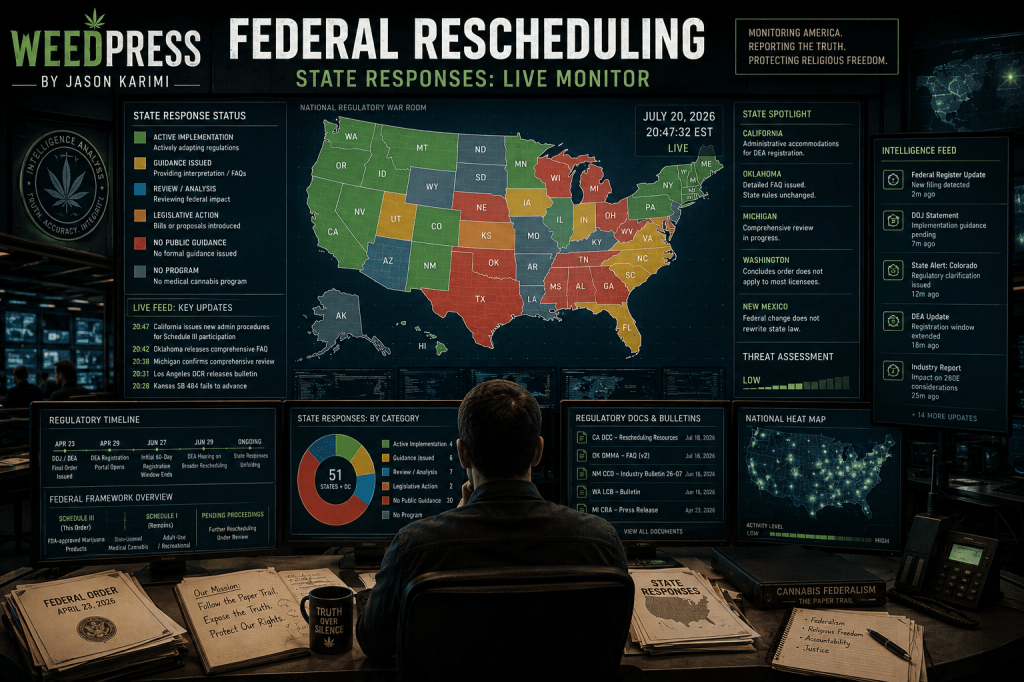
Federal Medical Cannabis Rescheduling Has Produced Four Distinct State Responses—But Most States Still Have Not Chosen One
On April 23, 2026, the United States Department of Justice and the Drug Enforcement Administration fundamentally changed federal cannabis policy by issuing a final order placing FDA-approved marijuana products and marijuana distributed pursuant to qualifying state medical marijuana licenses into Schedule III of the Controlled Substances Act while simultaneously initiating broader administrative proceedings regarding additional…
-
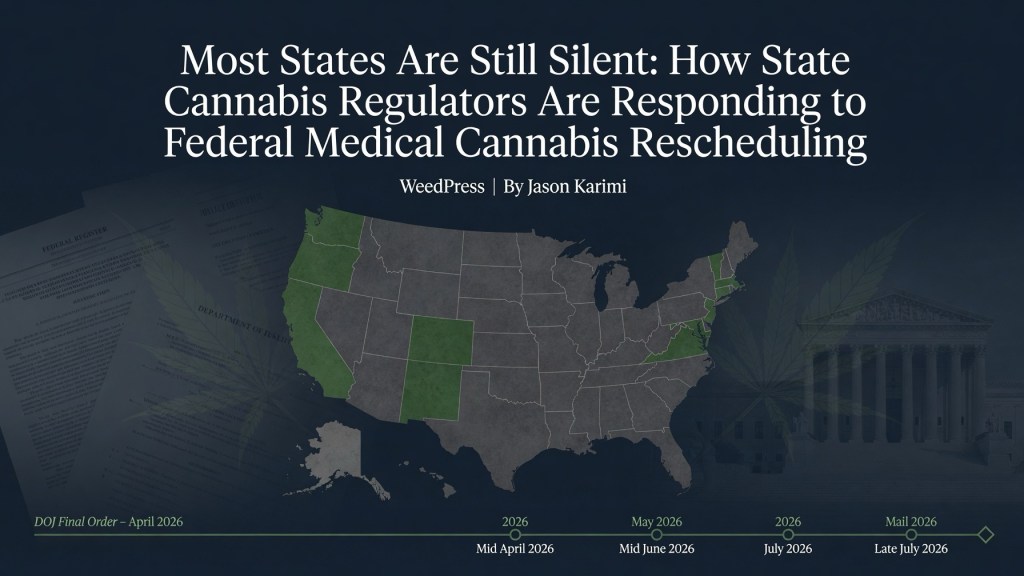
Most States Are Still Silent: How State Cannabis Regulators Are Responding to Federal Medical Cannabis Rescheduling
Three months after the Department of Justice issued its final order placing qualifying state-licensed medical cannabis into Schedule III, state cannabis regulators remain far from unified. A review of official guidance issued through late July 2026 reveals a fragmented national response: only a handful of agencies have formally interpreted the federal change, while most have…
-

South Dakota Reports Fewer Cannabis Businesses—but Not Why Their Licenses Disappeared
Welcome back to WeedPress, South Dakota’s only source for transparency and open public debate. South Dakota’s medical cannabis industry has lost 34 certified establishments since reaching its reported peak in state fiscal year 2023. The Department of Health reported 139 registered establishments in SFY 2023. That total fell to 124 in SFY 2024, 118 in…
-
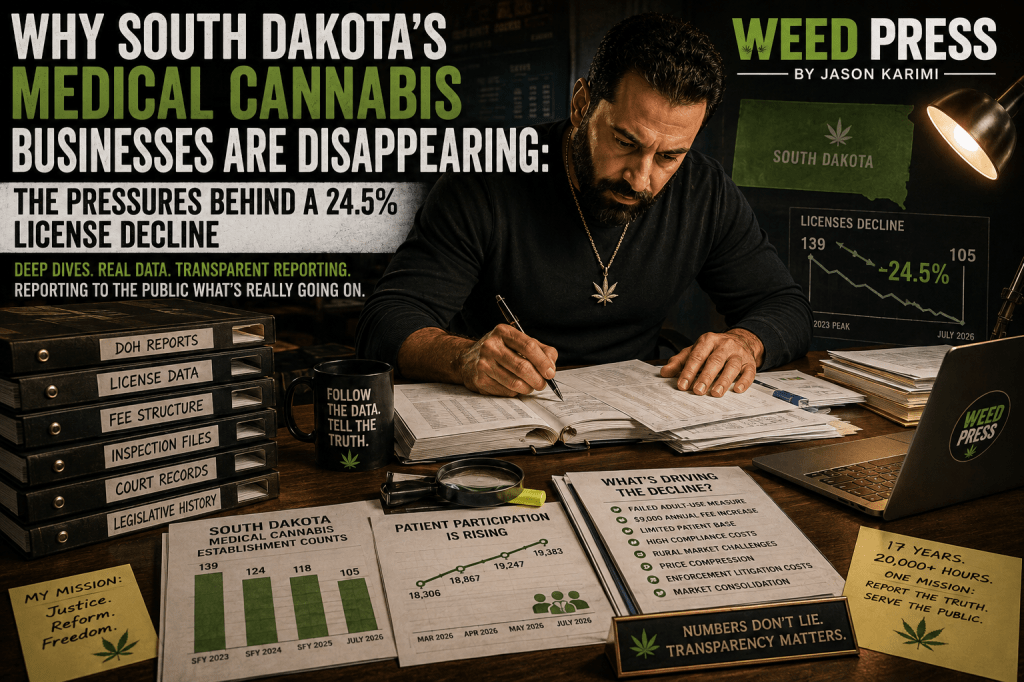
Why South Dakota’s Medical Cannabis Businesses Are Disappearing: The Pressures Behind a 24.5% License Decline
South Dakota’s medical cannabis industry has lost nearly one-quarter of its licensed establishments since reaching its high point three years ago. The state reported 139 certified medical cannabis establishments in state fiscal year 2023, including 79 dispensaries. By July 14, 2026, only 105 establishments remained: 60 dispensaries, 30 cultivation facilities, 14 manufacturing facilities, and one…
-
When Public Advocates Attack Motives Instead of Answering Evidence
Public policy debates should be resolved by evidence, not by assumptions about the motives of the people participating in them. Yet it is common for substantive criticism to be met with claims that the critic is motivated by jealousy, a desire for power, or some other personal grievance rather than by the merits of the…
-
Online Workshop – Candidate Vulnerability Assessment
Every candidate enters a race with potential vulnerabilities. These may include previous statements, professional history, financial records, social media activity, personal relationships, policy positions, or inconsistencies in the candidate’s public record. https://leadershipinstitute.org/event/701VL00000xvu8MYAQ Campaigns often devote significant time and resources to researching their opponents while failing to conduct the same level of research on their own…
-
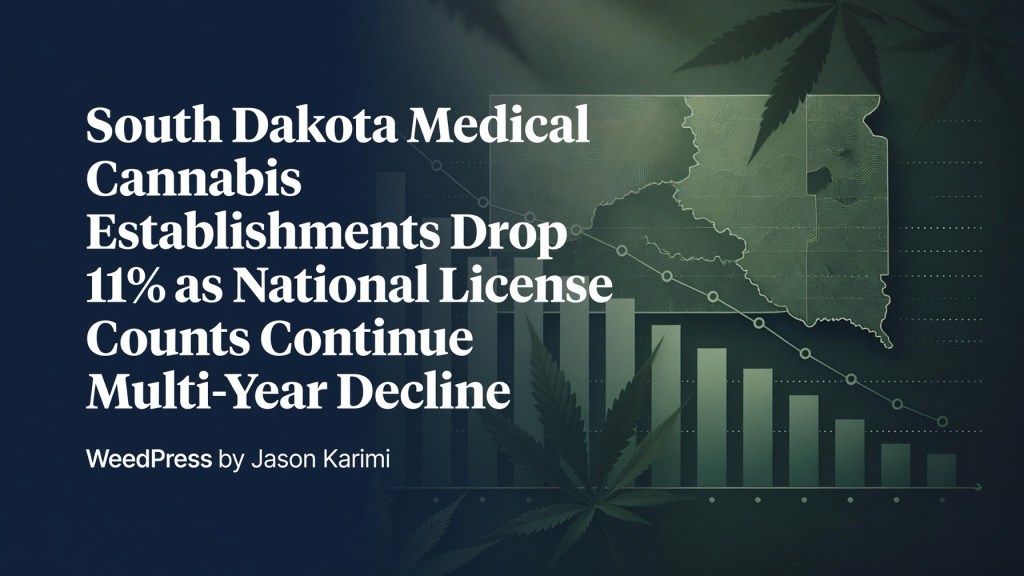
South Dakota Medical Cannabis Establishments Drop 11% as National License Counts Continue Multi-Year Decline
South Dakota’s medical cannabis industry continues to contract, extending a multi-year decline in licensed establishments. Official Department of Health figures show the total number of certified establishments fell from 118 in FY 2025 to 105 as of the July 14, 2026, public list—a decline of 11.0%, from 118 establishments to 105.¹ Measured from the SFY…
-
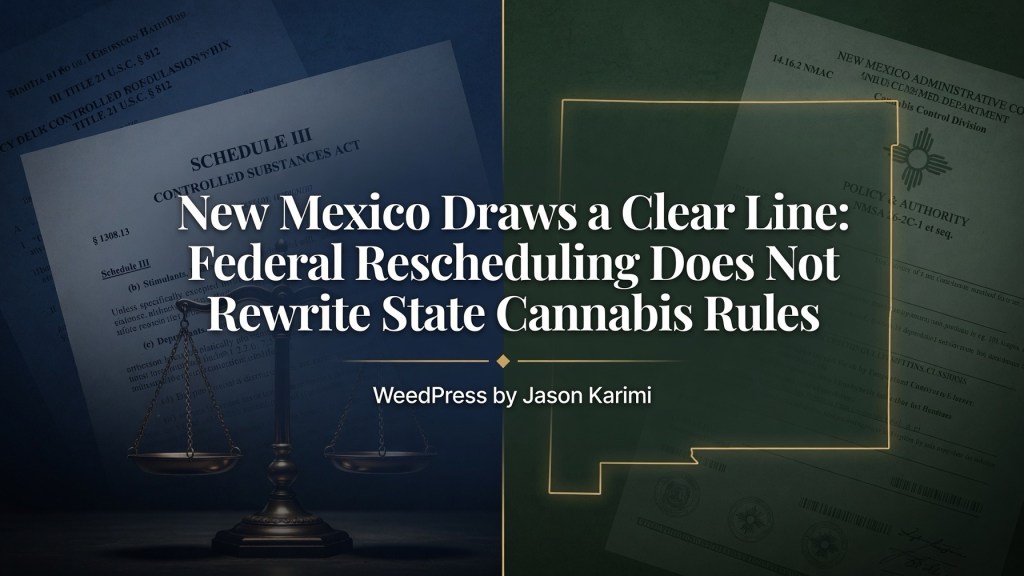
New Mexico Draws a Clear Line: Federal Rescheduling Does Not Rewrite State Cannabis Rules
While some states have challenged, delayed, or insulated themselves from the federal marijuana rescheduling order, New Mexico has chosen a different approach. In Industry Bulletin 26-07, issued June 16, 2026, the Cannabis Control Division made clear that the federal Schedule III order does not automatically alter New Mexico’s cannabis laws or the obligations of state…
-

Big Day for Cannabis Consolidation — and a Reality Check on Exports
The Dales Report Trade to Black podcast had a good show today. A wave of significant corporate moves landed on July 27, underscoring how quickly the U.S. cannabis industry is consolidating as companies position themselves for a post-rescheduling environment. At the same time, industry analysts are delivering a more sober message about what international export…
-
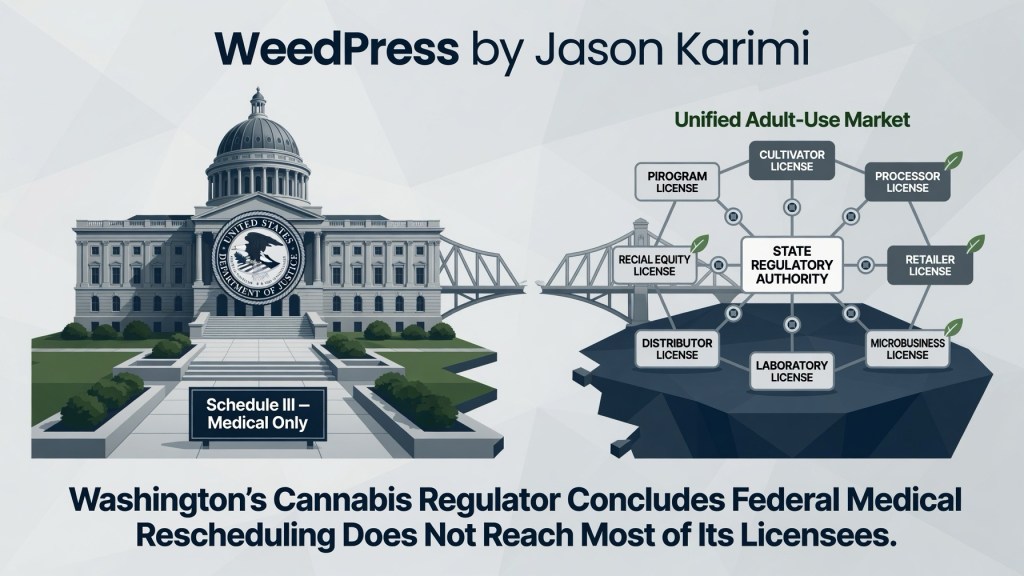
Washington’s Cannabis Regulator Concludes Federal Medical Rescheduling Does Not Reach Most of Its Licensees
Washington’s cannabis regulator became one of the first state agencies to publicly conclude that the federal medical marijuana rescheduling order does not appear to extend to most of its licensed cannabis businesses.¹ In a June 2026 bulletin, the Washington State Liquor and Cannabis Board stated that federal rescheduling “does not appear to apply” to the…
-
From Raich to Rescheduling: How State Medical Laws Changed the Legal Meaning of “Currently Accepted Medical Use”
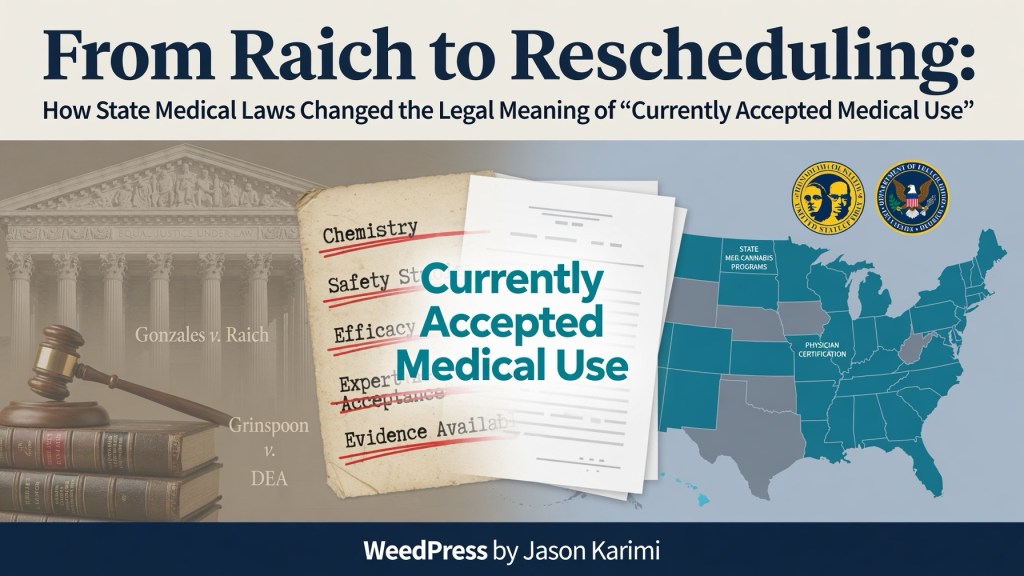
In Gonzales v. Raich, the Supreme Court upheld federal power to prohibit intrastate medical cannabis even where state law authorized it.¹ Although Raich did not prescribe a particular avenue for reform, its decision left intact Congress’s administrative scheduling framework under the Controlled Substances Act. As a practical matter, the ruling shifted reform efforts toward Congress…
-
Federal Rescheduling Increases ADA Scrutiny of South Dakota’s Medical Cannabis Policies
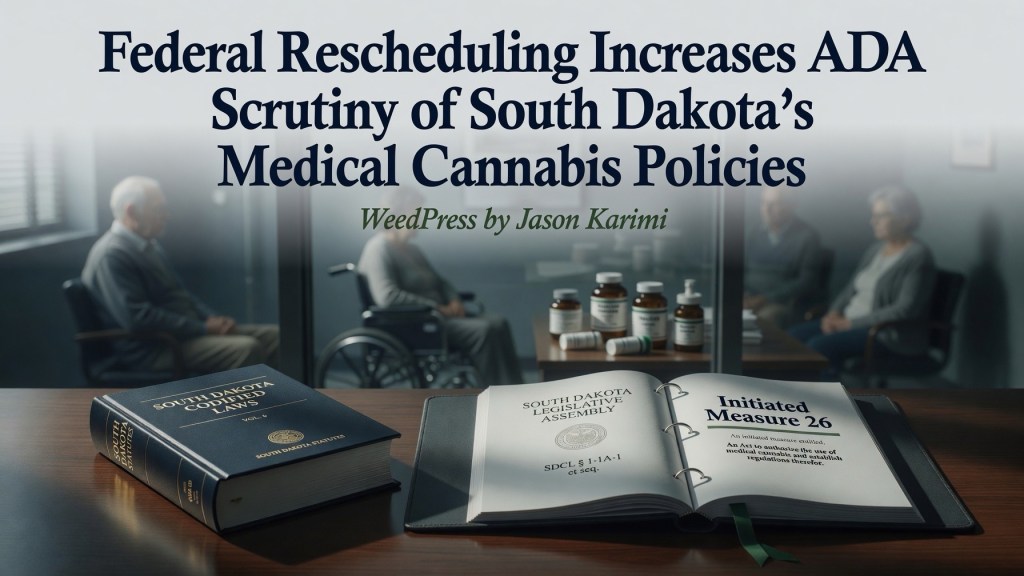
Federal rescheduling creates substantial new ADA questions for South Dakota policies that restrict medical cannabis use in nursing facilities and publicly supported recovery housing. Federal rescheduling of marijuana to Schedule III has changed the legal landscape. South Dakota officials and publicly funded providers should update their policies accordingly instead of continuing to treat state-registered medical…
-

The July 28 Runoff Is Small Enough for Cannabis Voters to Matter. Here’s the Math, South Dakota.
The Republican gubernatorial runoff is July 28. Toby Doeden faces incumbent Larry Rhoden. For people who care about the stability of South Dakota’s medical cannabis program, the question is straightforward: does a modest, targeted vote actually matter in this race? The numbers say yes — but only if the expectations stay realistic. What the June…
-

Court Said I Didn’t Prove My Religion Because I Didn’t Testify. I’m Appealing Under Nebraska’s Religious “First Freedom Act”
Today I filed a Notice of Appeal in Thurston County District Court challenging the July 1, 2026 Order that denied my motion to modify a probation condition under the Nebraska First Freedom Act. The motion I filed sought a narrowly tailored religious accommodation allowing sacramental cannabis use consistent with my practice of the Rastafari faith.…
-
Professional Eyes on WeedPress: What an Exiger Referral Means
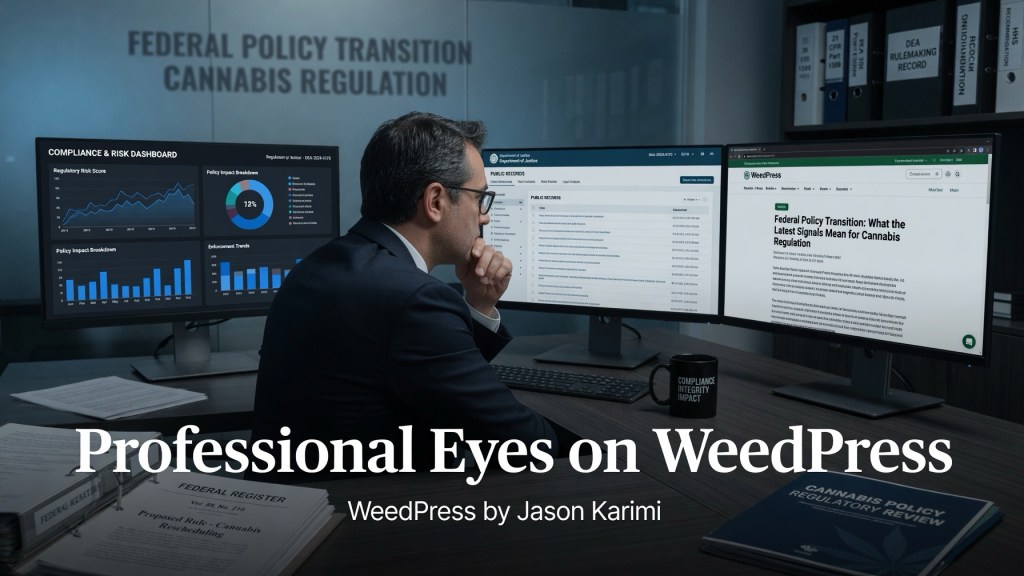
Analytics occasionally reveal more than pageviews. One recent referral to WeedPress came from insight.exiger.com. That domain belongs to Exiger, a global risk, compliance, and investigative intelligence firm. Their Insight platform is used by corporations, law firms, financial institutions, and investigative teams to conduct due diligence, monitor public information, and assess risk. When traffic arrives from…
-
Working in Huron’s Federal Building Today — and a Reminder of What Rounds’ Staff Said Last Summer
I’m in Huron today working at the federal building, troubleshooting and repairing an IT failure for the offices here. While on site, conversations with staff turned to cannabis policy and federal rescheduling. It brought back a discussion I had last summer while installing computers in Senator Mike Rounds’ offices in Pierre. During that work, staff…
-
High-Conflict Personalities and Covert Sadism: Overlapping Patterns of Persistent Targeting
Understanding patterns of prolonged personal conflict requires more than one analytical lens. Two frameworks that frequently intersect are the high-conflict personality model and the concept of covert sadism described by former FBI agent Joe Navarro.¹ When examined side by side, these frameworks reveal significant overlap in how certain individuals escalate disputes, externalize blame, and sustain…
-
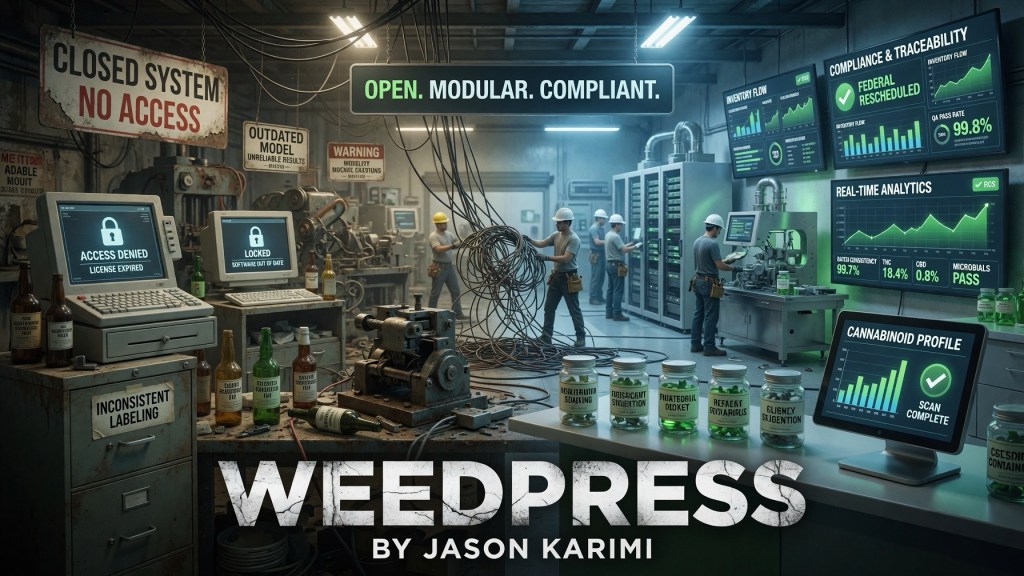
Cannabis Is Being Rebuilt From the Ground Up: Closed Technology Systems and Medical Gaps Force a New Foundation
The cannabis industry is still operating on incomplete infrastructure—both technological and scientific. That was the central message of a recent Trade to Black episode from The Dales Report, featuring Flowhub founder and CEO Kyle Sherman and Dr. Paul Shields.¹ The conversation made clear that many of the systems currently supporting cannabis retail and medical use…
-
Iowa Medical Cannabis Board Public Meeting This Friday July 24 (DETAILS) (YOUTUBE)
Update: video is linked below of this meeting: Meeting Information for July 24, 2026 Medical Cannabidiol Board Meeting Beginning at 10:00am on Friday, July 24, the second Medical Cannabidiol Board meeting of 2026 will be held virtually using the information below: Zoom Link Telephone: 669-254-5252 Webinar ID: 165-677-2462 * For those who wish to participate in the public comment period…
-
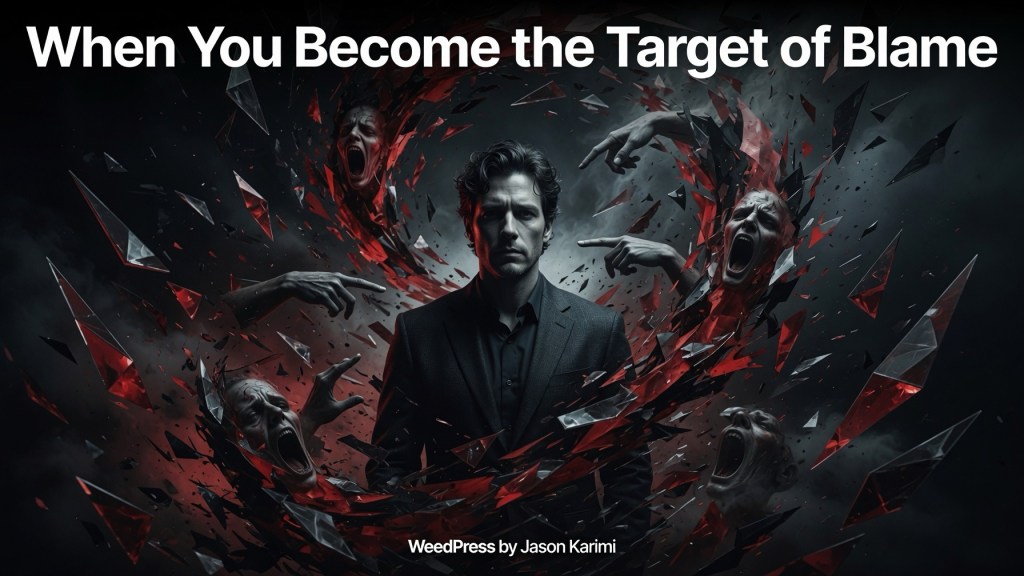
Understanding High-Conflict Personalities: When You Become the Target of Blame
High-conflict personalities are individuals who consistently turn disagreements into prolonged, intense, and destructive battles. Unlike people who simply disagree or become emotional during conflict, high-conflict personalities tend to escalate disputes, externalize blame, and struggle to resolve conflict in a healthy or proportionate way.¹ Over the past several months, nearly a year straight now, I have…
-
New Approach South Dakota Goes Quiet on Advocacy While Mentele Stays Active on a Blocked Profile
Here’s the transcripts front Mentele v WeedPress, where Mentele spent six months trying to silence WeedPress from advocating for federal law changes because she was afraid, in her own court testimony, I would replace her somehow as a leader in South Dakota cannabis. So desperate to maintain her delusions of self importance and leadership that…
-

Nebraska RFRA Appeal Argument, July 21, 2026
ARGUMENT I. The District Court Erred by Treating Defendant’s Personal Testimony as Effectively Indispensable to Establishing Sincerity Under the Nebraska First Freedom Act. The district court denied Defendant’s motion on the ground that he failed to establish a “sincerely held religious belief.” The court reasoned as follows: “There was no direct evidence of Defendant’s sincerely…
-
Email to South Dakota DOH: Expert Insights On Scheduling Impacts Requested! July 20, 2026
Update 2: July 26 11:11 pm I have decided to give the department one full business week to respond to the second email sent in update 1 below. I will email them and update for update 3 if there is no response by end of July/this Friday. Then I will simply request confirmation of prior…
-

DEA To Hit South Dakota Dispensaries Monday
Inspections to approve DEA licensing begins next week in South Dakota! Once the first federal DEA licensing applications are approved WeedPress will have the scoop. Cities DEA is expected to inspect include Huron and Aberdeen. WeedPress will be in Aberdeen Monday on site to get the details for South Dakota patients and industry thought leaders.…
-
Larry Rhoden’s Running Mate Has Opposed Cannabis Expansion. Here’s Who Says He Wants to Grow the Industry.
Another four years of repeal bills and resistance from the Governor’s mansion is not an option. The industry must show up on July 28. Look, the South Dakota cannabis industry is in a bad spot and it’s getting worse. We’ve already had two recreational ballot measures crash and burn because they were thrown together late,…
-

Rob Cool Raided Again, Denied Bail
Intake time this morning in the Minnehaha jail: 1:47 am. Neighbors report to WeedPress that Rob Cool was again raided last night in Sioux Falls. This time the judge has denied bail. Previous raid this year covered here: Stay tuned for updates as court docs come in.
-
WeedPress Appellee Brief, Melissa Mentele v. Jason Karimi, South Dakota Supreme Court, July 15, 2026
Transcript of May 12, 2026 hearing and DENIAL of Mentele TPO against WeedPress for blogging about federal law changes available here: IN THE SUPREME COURT OF THE STATE OF SOUTH DAKOTA MELISSA MENTELE, Petitioner-Appellant, v. JASON ROBERT BURHAM KARIMI, Respondent-Appellee. (Appeal from Minnehaha County Circuit Court, Second Judicial Circuit) TPO 26-343 APPELLEE’S BRIEF Jason Karimi…
-
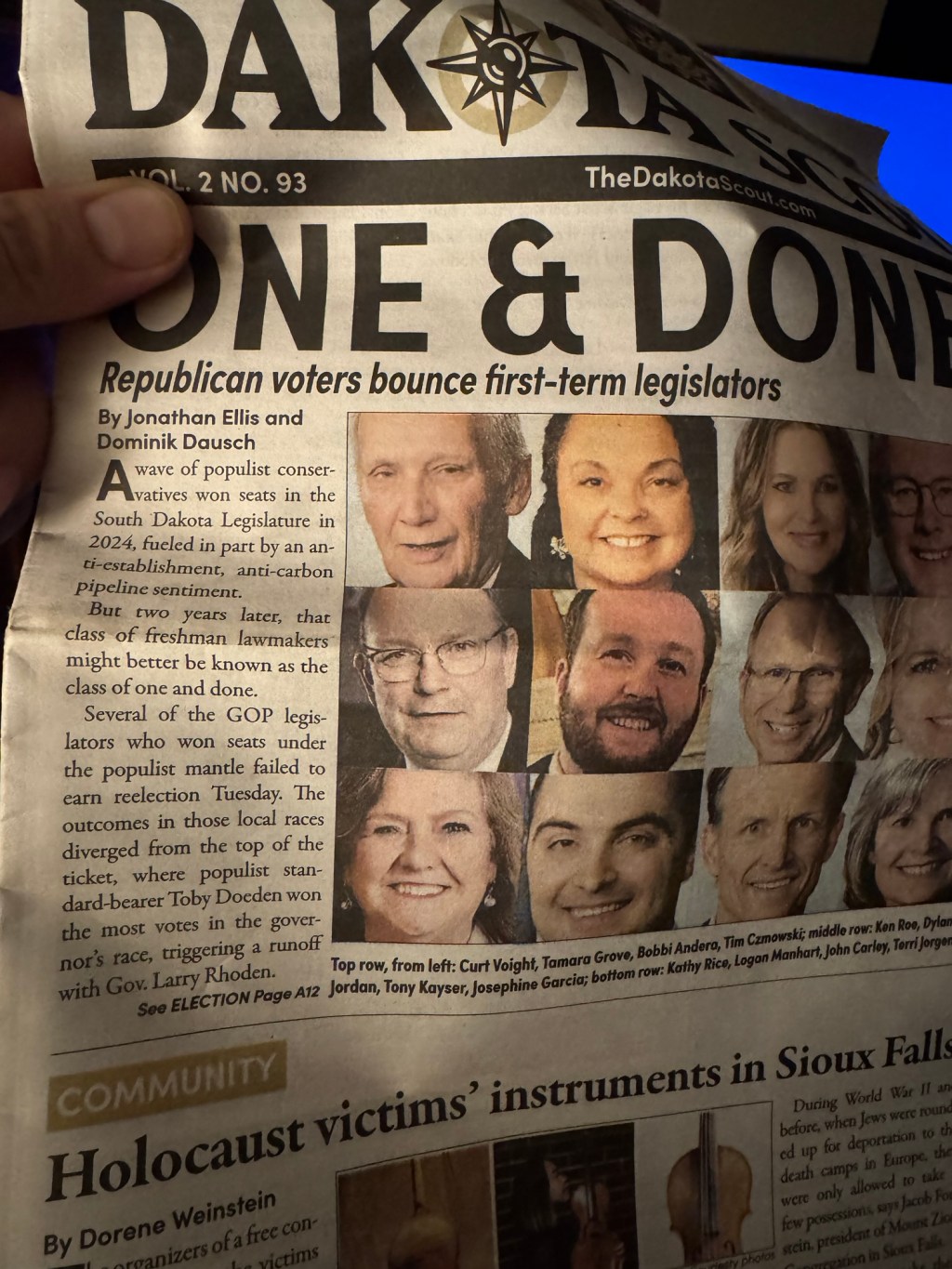
South Dakota: 3/8 of lawmakers lose every year says poli sci prof; Legislature now more mainstream, less populist
https://www.thedakotascout.com/p/one-and-done-gop-voters-scuttle-reelection Keeping this for later reference.
-
Clarifying the Burden of Proof on Religious Sincerity Under RFRA and the Nebraska First Freedom Act
This submission addresses the proper burden of proof regarding religious sincerity under the Religious Freedom Restoration Act (“RFRA”), 42 U.S.C. § 2000bb-1, and the Nebraska First Freedom Act, Neb. Rev. Stat. § 20-1701 et seq., in the context of a probation modification request seeking a religious exemption for the sacramental use of cannabis. Legal Standard:…
-

Curaleaf’s Spain Registration and Cannara Supply Deal Mark Shift Toward Pharmaceutical-Grade Medical Cannabis
In July 2026, Curaleaf Holdings, Inc. (TSX: CURA; OTCQX: CURLF) announced two developments that reflect the cannabis industry’s ongoing transition toward a more regulated, pharmaceutical-oriented model. The company announced that it had become the first company registered in Spain to supply standardized THC-dominant and CBD-dominant cannabis preparations for hospital-dispensed medical use.¹ At the same time,…
-
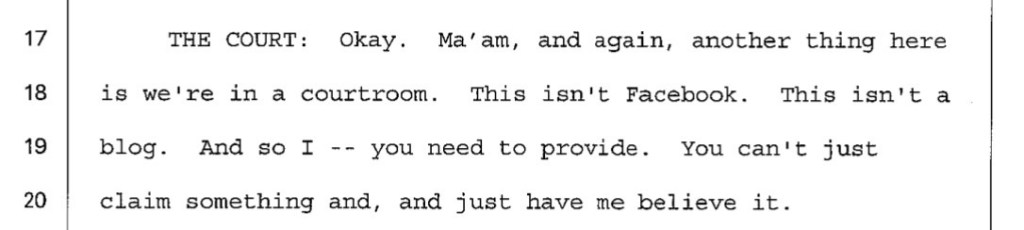
“We Are In A Courtroom. This Isn’t Facebook.” Judge Rejects Mentele’s Claims
During a Temporary Protection Order hearing, South Dakota Judge Andrew Robertson told the petitioner, “We are in a courtroom. This isn’t Facebook.” The comment came as Melissa Mentele attempted to frame policy criticism and public records as threats to her safety. The court record shows this was not an isolated moment. It reflects a broader…
-
Does the DEA’s New Prescription Rule Apply to State-Authorized Homegrown Medical Cannabis? An Unanswered Legal Question
The DEA’s revised definition of what qualifies as a valid “prescription” under 21 C.F.R. § 1301.13(k)(5)¹ does not expressly address whether that definition applies to, or alters the legal treatment of, non-commercial homegrown medical cannabis authorized under state law. Twenty-five states currently permit patients or caregivers to cultivate cannabis at home for medical use.² These…
-
Global Eyes on WeedPress: Yandex Traffic Shows Worldwide Interest in Federal & International Cannabis Policy as History Unfolds
This morning I noticed something humbling in the site analytics: Yandex — Russia’s primary search engine — has been sending readers to WeedPress, along with hits from many other countries around the world, including a noticeable spike from Israel. It’s a quiet reminder that this singular issue — federal and international drug law reform, rescheduling…
-
South Dakota’s Medical Cannabis Law Now Violates the ADA: Nursing Home Residents Are Being Forced to Choose Between Their Medicine and Their Dignity
After the federal government rescheduled marijuana to Schedule III, South Dakota’s restrictions on medical cannabis use in nursing homes and long-term care facilities have crossed a constitutional and statutory line. What was once defensible under outdated federal prohibition logic is now clear discrimination against people with disabilities. South Dakota’s medical cannabis program, like many others,…
-
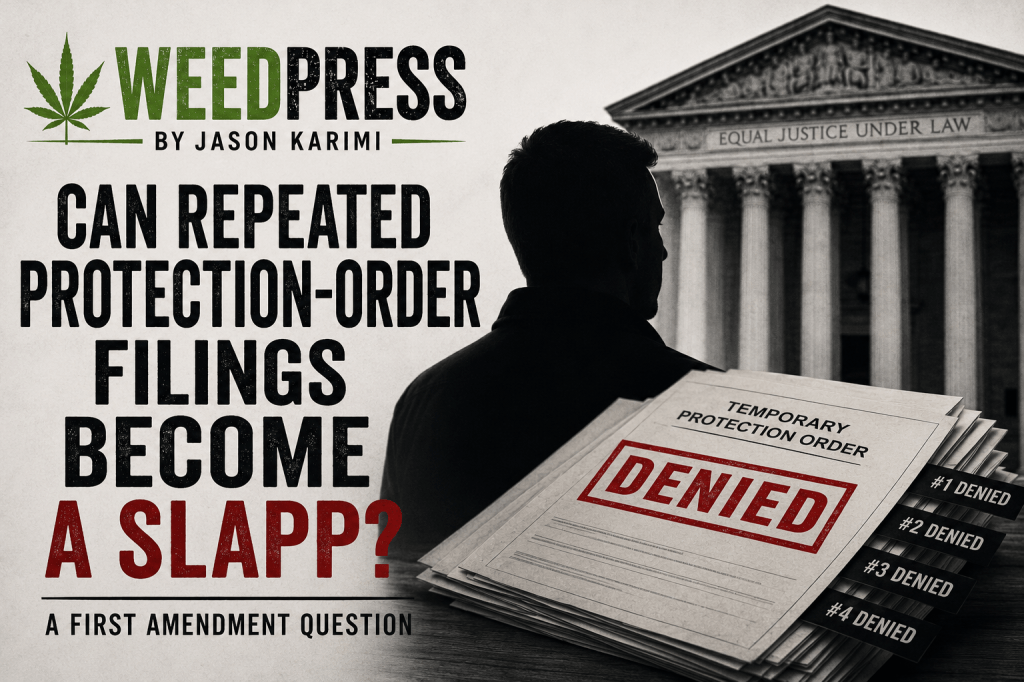
Can Repeated Protection-Order Filings Become a SLAPP? A First Amendment Question
Repetitive protection-order filings can become speech pressure when they are aimed at a critic publishing on public issues. WeedPress has faced four TPO-related filings in 2026 in two counties filed unsuccessfully by New Approach South Dakota leadership, and each time, publication was delayed, narrowed, or withheld rather than escalated. Most recently, on May 12, 2026,…
-

New Approach South Dakota’s Damaged Credibility, Lies To Judges To Get Political Competitor Arrested: Court Transcripts
Transcript PDF of Mentele v Karimi court hearing round 4 in full: You folks out there can do what you want. As for me, I’m going to go back to focusing on federal exemption advocacy as I have since 2009, before Mentele told me to stop and then got me arrested for continuing advocating, by…
-
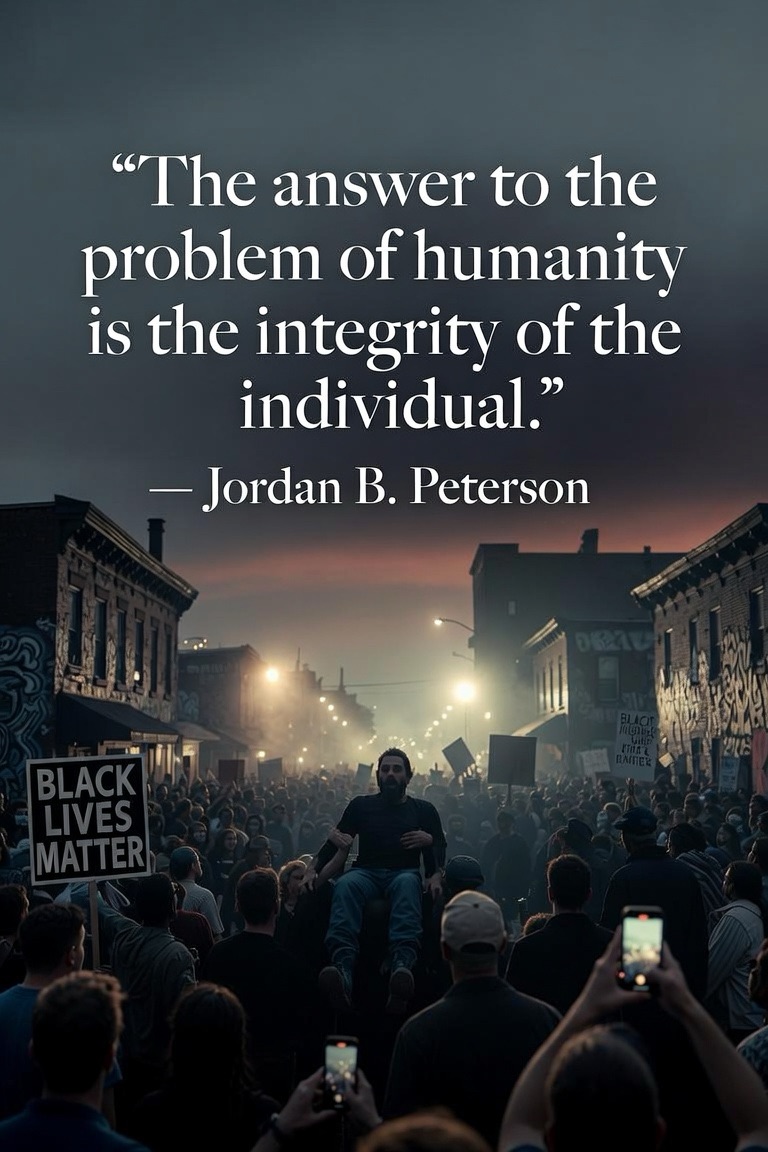
The Integrity of the Individual: Jordan Peterson’s Diagnosis of Societal Collapse and the Policy Failures That Turned a Minneapolis Arrest into Preventable Tragedy
In a lecture examining the psychology of those who embrace solitude as a forge for original thought and voluntary responsibility, Jordan B. Peterson returns to a recurring theme that cuts through every domain of human organization: “The answer to the problem of humanity is the integrity of the individual. That’s the answer. So states that…
-

New Approach South Dakota Pivots And Rebrands With New Leadership Amid Ongoing Concerns
Following publication of this article, New Approach South Dakota publicly clarified that the anticipated leadership changes referenced in an earlier discussion concerned the Marijuana Policy Project, not New Approach South Dakota itself. New Approach states it is adding partners and expanding resources but will remain under its current leadership. Multiple conflicting statements in 2026 about…
-

“Exorcism:” Why Spiritually Attuned Paths Reject Fear-Based Rituals of Casting Out
This article examines why exorcism, as commonly understood and practiced across traditions, often represents a spiritually mistaken approach. It externalizes power that belongs to the individual’s divine spark, frequently misattributes psychological or energetic imbalances, and can reinforce fear-based dualism instead of the living reality of “I and I”—the recognition that the Divine dwells within and…
-
Red States Were Sold Tainted Weed By Slapping Hemp Labels On Poison Products
This video is worth watching. In one minute, it explains the rise of ER visits for tainted and unregulated cannabis products sold by bad actors taking advantage of openings in prohibition. This is why the government must comprehensively regulate cannabis. Half ass federal gray areas leave too many consumers victims of profit seeking drug pushers…
-
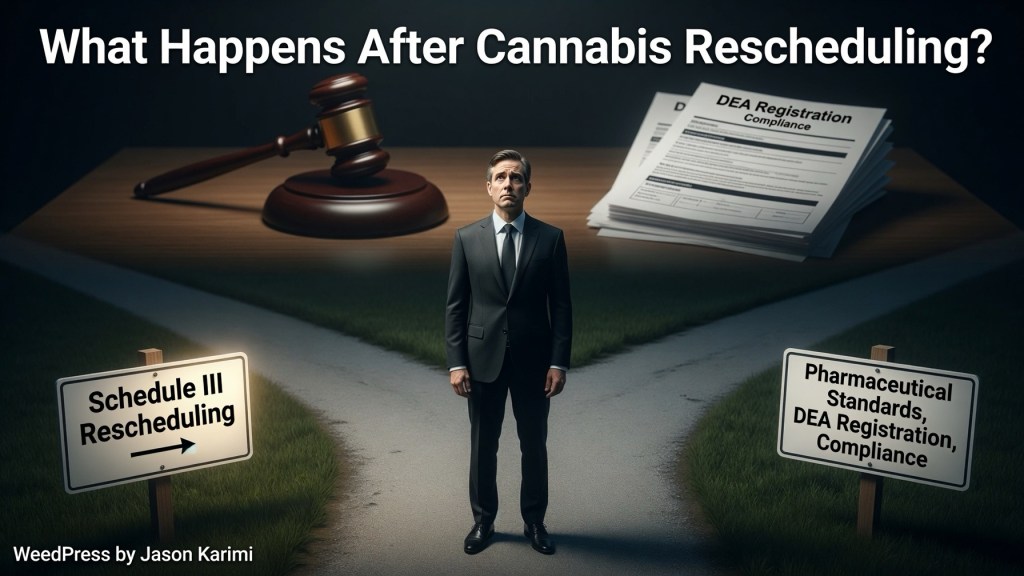
What Happens After Cannabis Rescheduling? Industry Experts Warn of Major Operational, Compliance, and Structural Challenges Ahead
While much attention has focused on the DEA’s Administrative Law Judge hearing regarding cannabis rescheduling, the more difficult work begins after any final decision. In a recent discussion on the TDR channel, industry and legal experts examined the practical implications if marijuana moves to Schedule III, warning that companies treating rescheduling as the finish line…
-
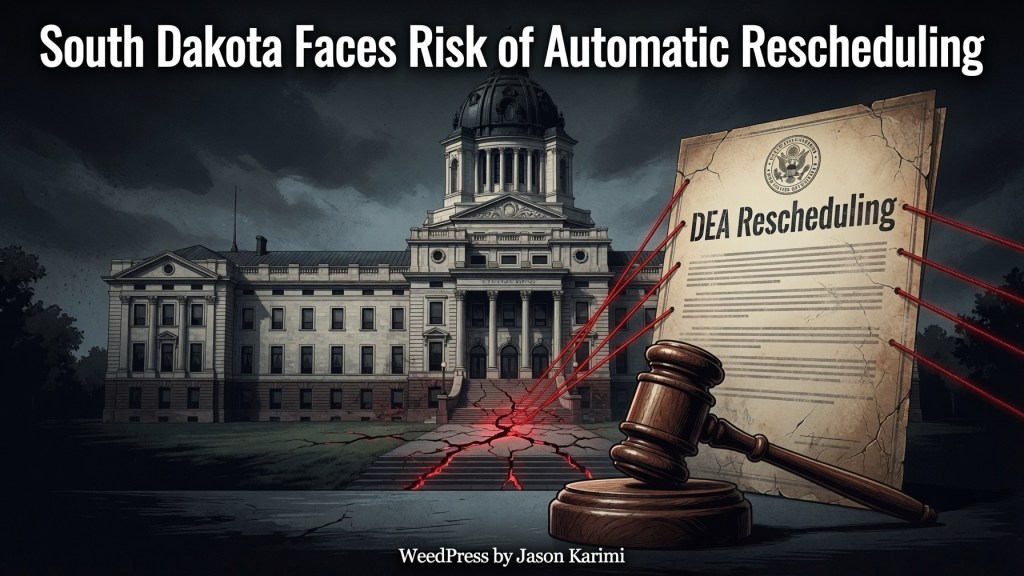
South Dakota Faces Risk of Automatic Rescheduling Under Existing Statutory Language
The recent action by Wyoming’s Attorney General demonstrates that states are increasingly recognizing the legal significance of federal marijuana rescheduling where state statutes incorporate federal scheduling decisions. South Dakota’s existing statutory language raises similar questions that should be addressed before federal reform takes effect. WeedPress has previously warned that South Dakota law contains automatic trigger…
-

Here’s What Happens If This Drama Queen Files Another TPO Against WeedPress Now That the Anti-SLAPP Law Has Changed
The filer doesn’t just lose again — she risks paying the costs, watching the public record of failed claims grow longer, and handing WeedPress even stronger structural protection under the new law. Over the past seven months, Melissa Mentele filed at least four protection order petitions against me across Hanson and Minnehaha counties, full of…
-
How South Dakota’s New Anti-SLAPP Law Would Have Ended Abusive SLAPP Filings From Melissa Mentele
For the Record — July 2026 Over the past seven months, Melissa Mentele has filed at least four protection order petitions against me across two counties. All four were denied after evidentiary hearings for failure to provide sufficient evidence of stalking or qualifying harassment under South Dakota law. One temporary order was granted in Hanson…
-

President Trump Tells John Thune: South Dakotans Want Marijuana Banking Voted On!
Told you we needed better banking for South Dakota marijuana industry: WeedPress has long advised to not just lobby lawmakers who get unelected frequently, but to use all three branches of government. Court filings in litigation is the way:
-

Calling Out A Lying Rat
Candace Owen’s writes to Andrew Kolvet today on X: I’m glad you finally came to the surface, rat. Your previous employees told me it was you and Erika that were teaming up with the YouTubers to put out the utterly fake narrative that Charlie and I were not friends and he had “anxiety”. You also…
-

South Dakota Protects Free Speech With New Anti-SLAPP Law
I’m a prisoner? locked up for what?Freedom of Speech? ain’t that all we’ve got? – Stephen Marley https://www.youtube.com/watch?v=zuGNzfXG9Gw April 17, 2026 For years, South Dakota had a hole in its legal architecture that should have embarrassed any state claiming to respect free speech. If someone with money, status, or institutional backing wanted to punish a…
-

Dark Night Of The Soul – Tricycle Day Newsletter
Click here to subscribe to Tricycle Day From today’s Tricycle Day Newsletter: Welcome to Tricycle Day. We’re the psychedelics newsletter that’s not obsessed. Not at all. We’re just moderation-challenged. 🙃 Roman Palitsky was told studying mysticism was career suicide. (Reader, he did it anyway.) Now he leads spiritual and existential research at Emory’s psychedelic center, where the work…
-

The 5 Signs You’re Dealing With a High-Conflict Opponent (Not Just a Difficult One)
Editors note: Mapping the battlefield is not about winning arguments online. It is about anticipating structural shifts before they manifest in enforcement, litigation, or administrative tightening. Movements that fail to understand structure are surprised by it. Movements that understand structure survive it. WeedPress exists for that purpose. https://weedpress.org/2026/02/14/weedpress-is-mapping-the-battlefield-while-others-debate-the-map/ I just watched Rebecca Zung break this…
-

Holy Shit. Was I Wrong? Homegrown May Be Federally Legal Now After All?
Just woke up to this idea: this section… …found here: https://www.ecfr.gov/current/title-21/chapter-II/part-1301/subject-group-ECFR0f5a129834f0129/section-1301.13#p-1301.13(k)(5) …may legally allow homegrown to be included under federal law after all. WeedPress previously warned homegrown may be illegal and to watch that closely: An absolute legend of the cannabis movement has filed with DEA to rule on the homegrown issue. No organization or…
-

Fixing A SD Courthouse Electrical Cabling For Gate Entrance
GSA, the General Services Administration, sent me out as an IT tech to troubleshoot a control panel issue at a gate for judges and attorneys to enter at a courthouse. Determined the electrical cable run at the gate was needing replaced. The GSA had me bend conduit and run a new cable which I didn’t…
-
Dumbest, Most Unliked South Dakota Cannabis Advocate Skipped 2 Of Last 4 Primary Elections, Didn’t Vote For Trump
Discussing politics with Republican insiders and leadership this week here in South Dakota. My multi million dollar advocacy org was involved in ten races here. Helps to know…well, everybody… I found something in my investigative reporting I shared with Republicans here in South Dakota. Apparently a former Democrat who the South Dakota Legislature passed a…
-

U.S. Attorney’s Office for the District of Wyoming Announces Rescission of Marijuana Charging Guidance
For Immediate Release U.S. Attorney’s Office, District of Wyoming CHEYENNE, WY – On September 29, 2025, the U.S. Department of Justice rescinded previous guidance concerning the prosecution of simple marijuana possession. U.S. Attorney Smith promptly notified federal law enforcement agencies that marijuana offenses occurring on federal land, such as national parks, will now be rigorously prosecuted. This…
-
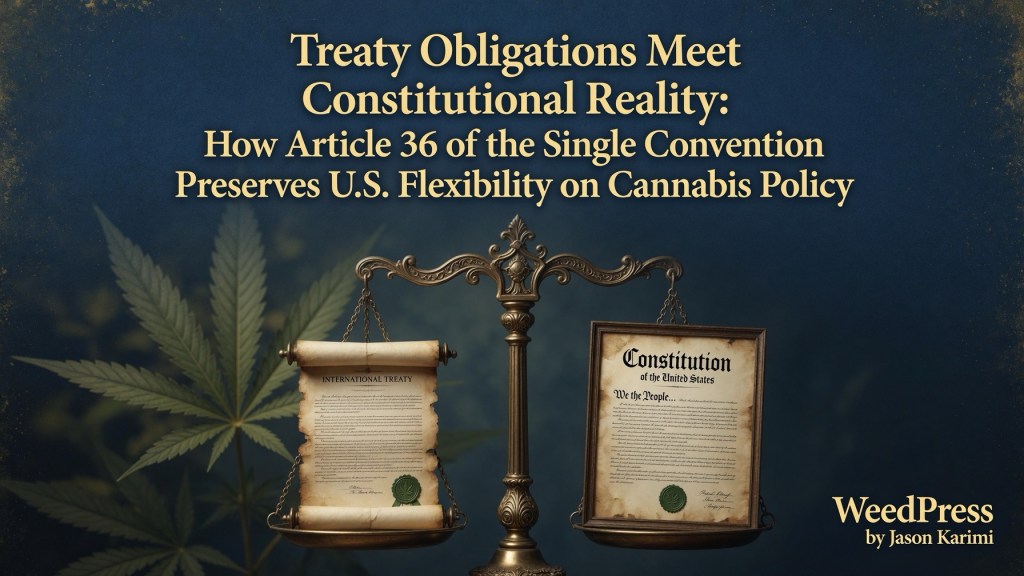
Treaty Obligations Meet Constitutional Reality: How Article 36 of the Single Convention Preserves U.S. Flexibility on Cannabis Policy
Editors note: WeedPress has studied this federal exemption and rescheduling issue for 17 years. The international drug control regime does not impose a one-size-fits-all criminal hammer. Article 36 of the Single Convention on Narcotic Drugs, 1961 (as amended by the 1972 Protocol) requires parties to criminalize intentional violations of the treaty’s controls on cultivation, production,…
-
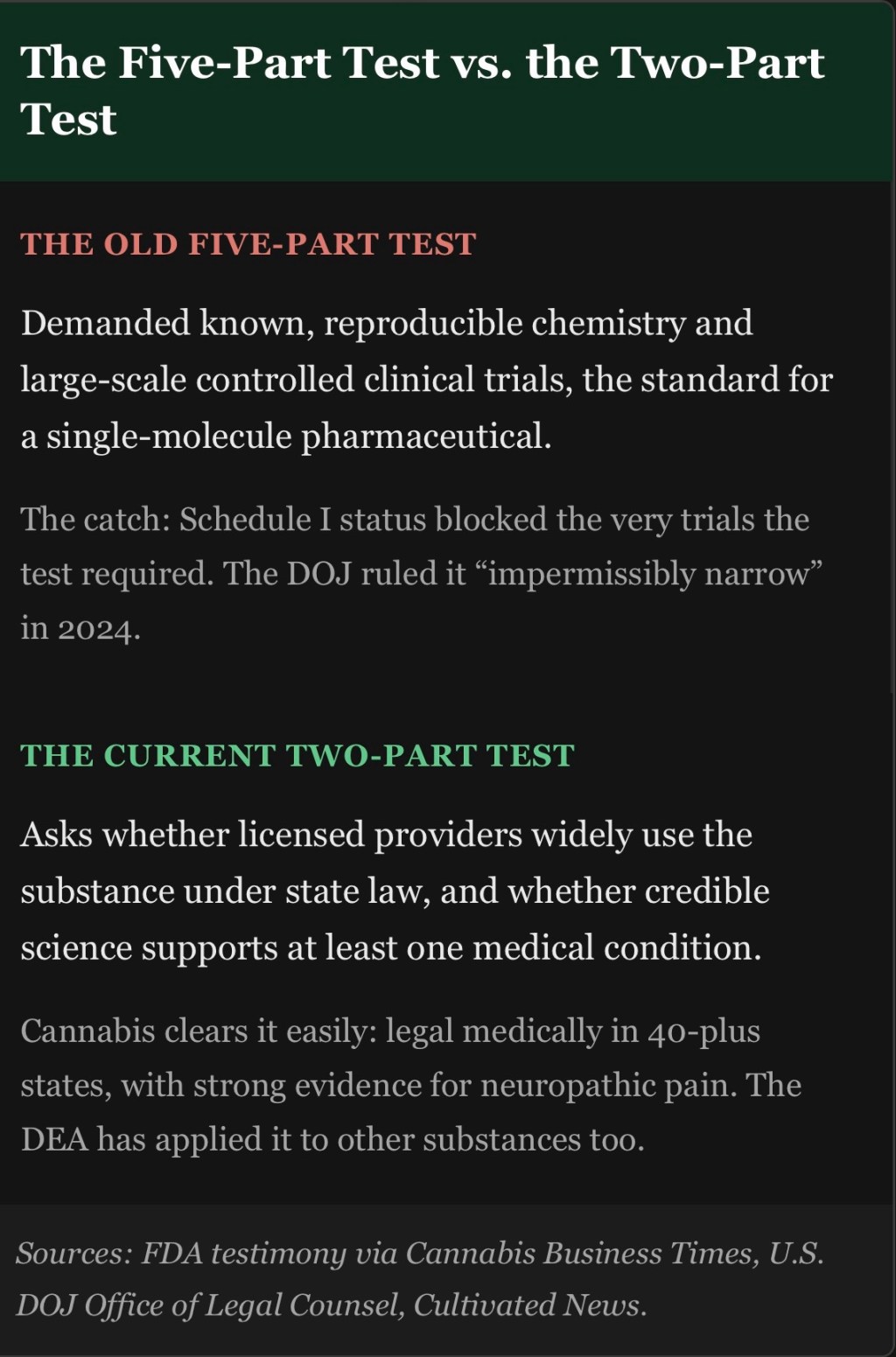
Legal Details: Understanding The New Two Part Test Wasn’t About Cannabis
From High Times Magazine: The Opponents Are Fighting the Test, Not the Plant Unable to dispute that cannabis is used medically across more than 40 states, opponents spent day two attacking the yardstick. For years, the FDA used a five-part test to judge accepted medical use, one that demanded known, reproducible chemistry and large controlled…
-

New York Launches Program to Educate Doctors About Cannabis
“The University at Albany and Albany Medical Center are supporting the initiative. SUNY Upstate Medical University, Stony Brook Medicine, University of Rochester Medical Center, New York Institute of Technology College of Osteopathic Medicine, CUNY School of Public Health, and New York State Office of Mental Health are also involved in the center.” Read: https://ganjapreneur.com/new-york-launches-program-to-educate-doctors-about-cannabis/
-

Iowa Court Filing Implicates South Dakota Banking Costs – No, South Dakota Banking Isn’t “All Good”
“Although banking access has improved in some respects, marijuana’s schedule I status has made many financial institutions, insurers, payment processors, lenders, secure-cash transporters, investors, and commercial vendors unwilling to work with state-licensed marijuana companies, including Intervenors, or willing to do so only at substantially increased cost,” the motion says. “Schedule I status also limits access…
-
Nebraska Judge: WeedPress Didn’t Provide Evidence Of Religious Sincerity
Time to appeal. DEFENDANT’S RENEWED PRO SE MOTION TO MODIFY PROBATION CONDITION PURSUANT TO THE NEBRASKA FIRST FREEDOM ACT IN THE DISTRICT COURT OF THURSTON COUNTY, NEBRASKA STATE OF NEBRASKA, Plaintiff, v. JASON KARIMI, Defendant. Case No. CR23-13 DEFENDANT’S RENEWED PRO SE MOTION TO MODIFY PROBATION CONDITION PURSUANT TO THE NEBRASKA FIRST FREEDOM ACT (Neb.…
-

Summer Business Applications For Nebraska’s Cannabis Program Now Open
Nebraskans don’t deserve good marijuana. Smugglers, dump your garbage weed in Nebraska. Summer 2026 Cannabis Licensing Opportunities: Nebraska and Missouri As this summer heats up, so are new cannabis licensing opportunities. Licenses for both Nebraska’s medical program and Missouri’s hybrid adult-use/medical program will be available this summer, with licenses slated to be awarded in the…
-

Iowa Injunction Petition 2025-2026 (Ongoing Updates Here)
Iowa District Court, Polk County Carl Olsen, Petitioner Case No. 05771 CVCV068508 File DateDocumentFiled By06/20/2026Motion for Judicial Notice United States v. Hemani, No. 24–1234, June 18, 2026 Carl Olsen06/17/2026Motion for Judicial Notice Federal Administrative Law Judge 1988 Federal Office of Legal Counsel 2024 Iowa Medical Cannabidiol Board Report 2026 Carl Olsen06/11/2026Motion for Judicial Notice United States Controlled…
-
Watch DEA Rescheduling Hearing Updates Here All Week
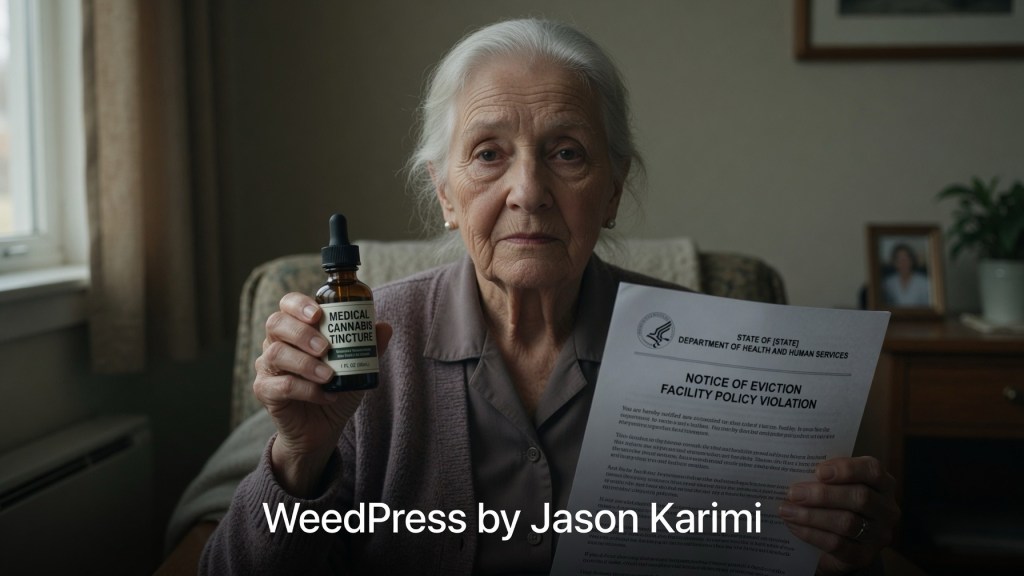
The Dales Report is covering the daily play by plays for the DEA hearings on cannabis as a valid medicine: Get the patients off the battlefield, especially those in South Dakota nursing homes being discriminated against, or those in Iowa nursing homes in court this month fighting eviction over medical cannabis use, and THEN cry…
-

Government Witness Tells DEA Five Factor Test Would Never Reschedule Marijuana – New Test Fixes That Problem
The new two part test the government created to declare marijuana is medicine was a big deal. Now, government witnesses tell the public the old five part test was never going to let marijuana be recognized as medicine. Prohibitionist group SAM shares the details: More details here at The Dales Report: Anthony Varrell says: This…
-
Seventeen Years of Federal Exemption Architecture: From 2011 Arizona Preemption Fights to Schedule III in 2026
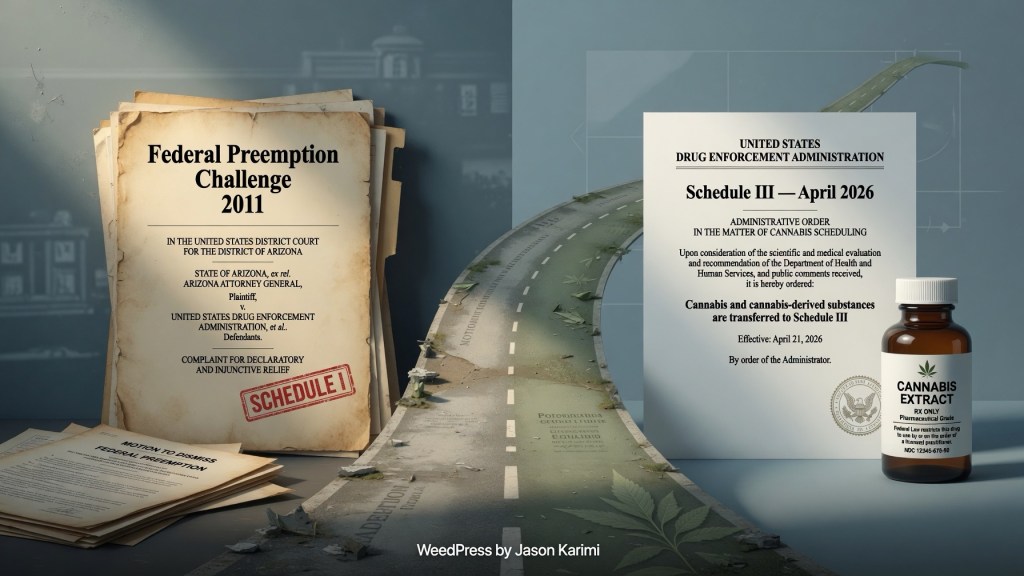
For more than seventeen years, the central argument advanced on WeedPress has been straightforward: medical cannabis cannot achieve real legitimacy or stability while operating in a permanent state of federal prohibition. State programs alone, no matter how well-intentioned, were always structurally limited by the Controlled Substances Act’s Schedule I classification and the absence of workable…
-

New Iowa Medical Cannabis Law Changes Explained
HF990 Implementation – What it Means On June 2, 2026, Governor Reynolds signed HF990 into law. This legislation impacts the issuance of medical cannabidiol registration cards by Iowa HHS, including removal of the Iowa residency requirement to become a patient. This FAQ is provided to help stakeholders understand these changes that will be in effect on July 1, 2026, and…
-
The Watchman’s Hour: 1 AM Reflections on Seventeen Years of Federal Exemption Vigilance
https://iowacapitaldispatch.com/2026/06/04/nursing-home-takes-regulators-to-court-over-residents-eviction/ Lately I wake up almost every night around 1 AM and stay awake for hours. Not from anxiety or restlessness in the ordinary sense, but with a clear, alert presence. The house is quiet. The world outside is sleeping. And my mind turns, as it has for years, to the intricate architecture of federal…
-
The Patients Left Behind: How South Dakota’s Medical Cannabis Law Still Punishes the Sickest Among Us
In Iowa recently, a 91-year-old woman was told she had to leave the nursing home she called home because she used medical cannabis to manage her pain and symptoms. The facility gave her an ultimatum: stop using the medicine her doctor supported, or move out. She refused. The case went to court. What should have…
-
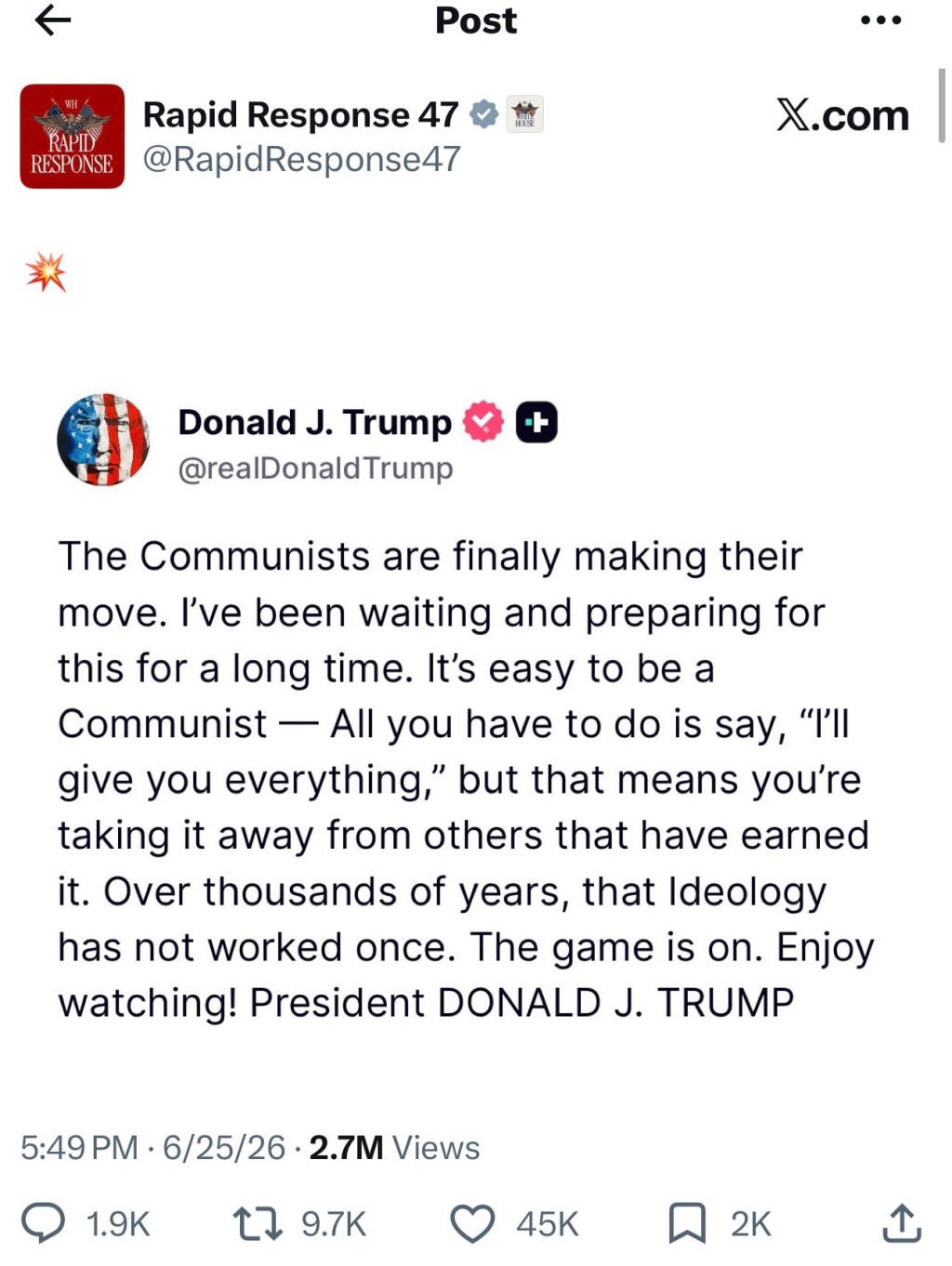
Charlie Kirk: Outsider Threats Don’t Hurt, Betrayal By Allies Does
Watched this clip, and had some thoughts: One month before the political assassination of a man to stop him from sharing ideas peacefully, I posted on Facebook that Kirk was an idiot for being so uninformed about cannabis policy failures. Since he’s been murdered, I’ve watched him a lot. Everyone should before forming an opinion…
-

South Dakota Cannabis Banking: The Persistent Cash Problem Behind the Claims
“If you’re gonna take the risk, you gotta do the frisk.” – ZipTrader Charlie South Dakota’s medical cannabis program has always operated under a difficult reality: while the state legalized medical access, the federal government still treats cannabis as a Schedule I substance (with only partial movement to Schedule III for state-regulated products in 2026).…
-

5 Things to Know About the June 29 DEA Cannabis Rescheduling Hearing
If you want to know how WeedPress became the smartest, best looking without filters, and best informed cannabis activist in South Dakota, it’s because of zoom meetings about federal exemption procedures with Vicente years ago. Use them. Retain them. They have unheard of knowledge on cannabis laws amongst lawyers in this country. Believe me, WeedPressers…
-
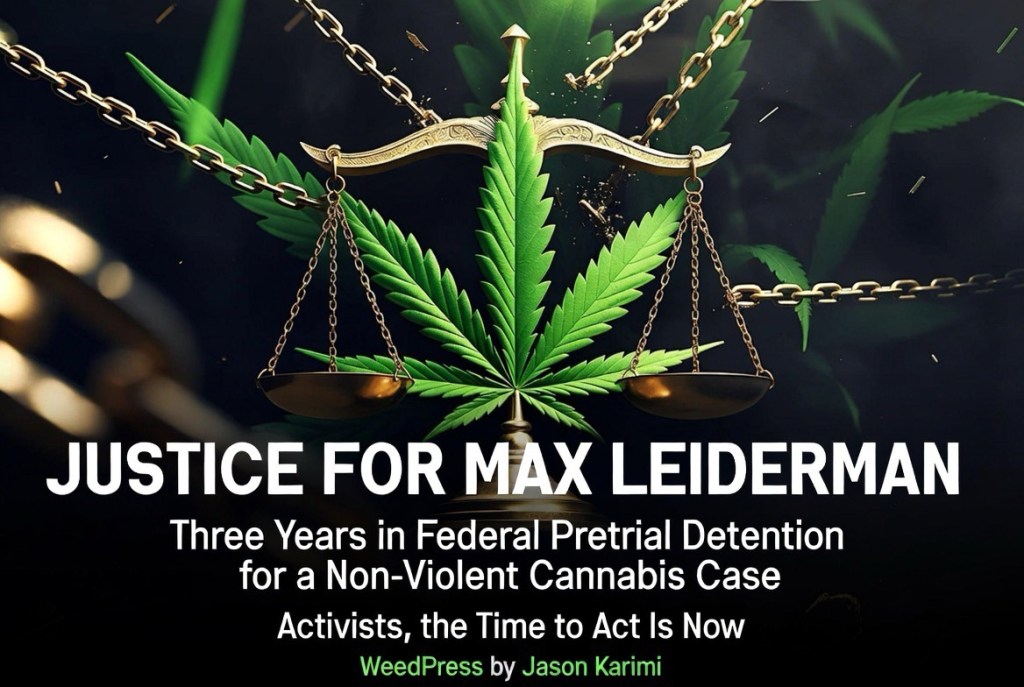
Justice for Max Leidermann: Three Years in Federal Pretrial Detention for a Non-Violent Cannabis Case — Activists, the Time to Act Is Now¹
This piece focuses on due process failures and pretrial detention, not a defense of the underlying allegations. David “Max” Leidermann, a 51-year-old California resident with no prior criminal record and no history of violence, has spent more than three years in federal custody in Nebraska — without a trial, without conviction, and without meaningful contact…
-

Letter To Court June 25, 2026
Jason Karimi June 25, 2026 Honorable [Judge’s Full Name] District Court Judge Thurston County District Court Pender, NE 68047 Re: State v. Jason Karimi Case No. CR23-13 Status Inquiry – Motion for Religious Accommodation Dear Judge, I am writing regarding the above-referenced matter. An evidentiary hearing on my Motion for Religious Accommodation under the Nebraska…
-
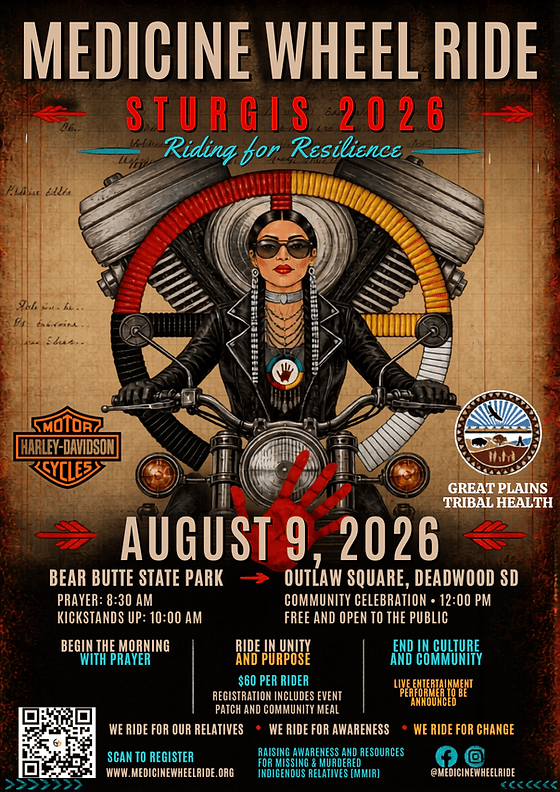
Indigenous Women’s Medicine Wheel Ride – August 9 Sturgis (Sign Up Here)
I’ll be on this ride at Sturgis this year on the marijuana Harley ultra glide. Go to the guy with the reggae blasting to link. Prayer at 8:30. Bring your safety gear as well. $60 registration. Follow Doodle On A Motorcycle on YouTube for updates. Ride starts at Outlaw Square. Register here: https://www.medicinewheelride.org/ Who We…
-
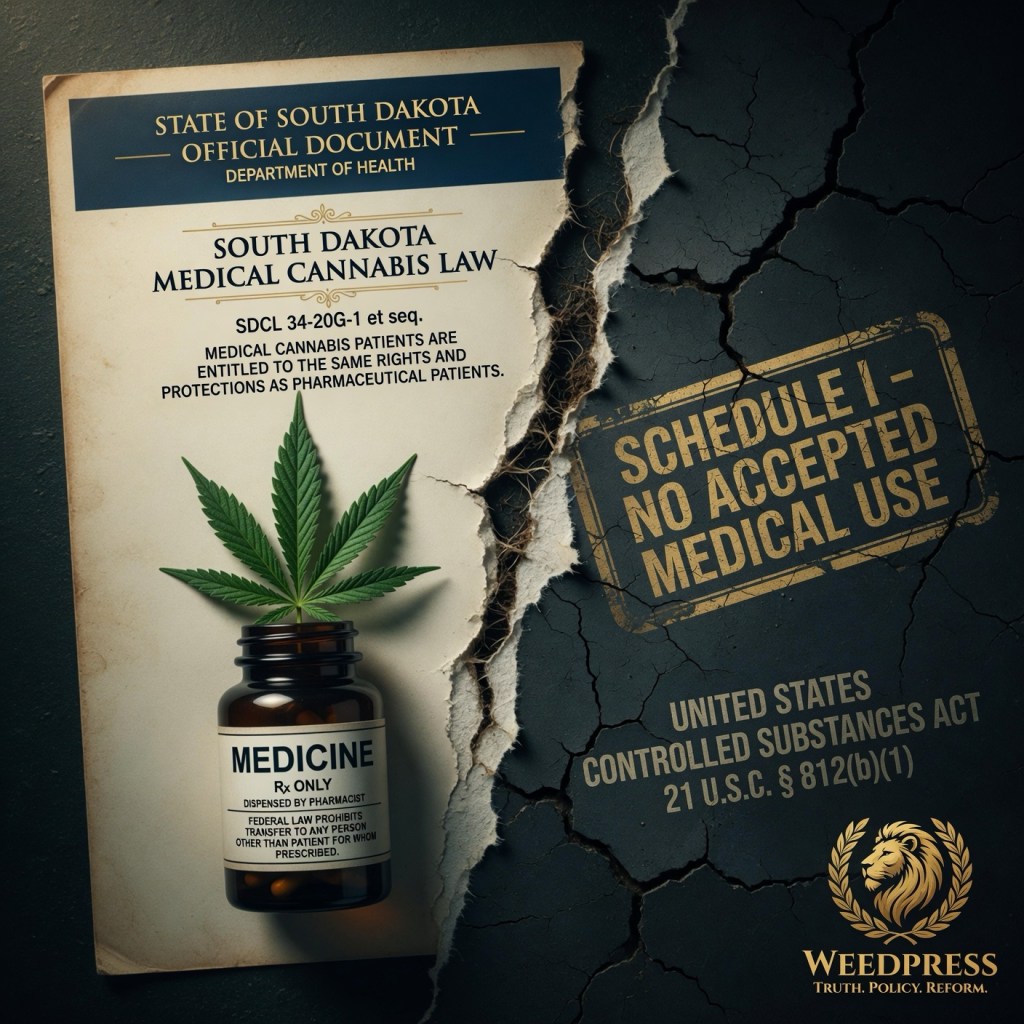
South Dakota’s Medical Cannabis Statute Creates a Direct and Unavoidable Conflict with Continued Schedule I Classification After Federal Rescheduling — The Department of Health Has a Duty to Review or Face Increasing Litigation Risk
South Dakota did not create an ordinary medical cannabis program. When voters passed Initiated Measure 26 and the Legislature enacted the Medical Cannabis Act, the state deliberately chose to treat registered patients’ use of cannabis as the legal equivalent of pharmaceutical medication in key areas of life. This was not symbolic language. It was written…
-

DEA ALJ Preliminary Order Confirms Medical Cannabis Rescheduling Is Already Done: June 29 Hearing Limited to the “Remainder” of Marijuana
On June 18, 2026, Chief Administrative Law Judge Derek C. Julius of the Drug Enforcement Administration issued a Preliminary Order that sharply narrows the scope of the upcoming expedited administrative hearing on marijuana rescheduling. The order makes clear that the rescheduling of FDA-approved marijuana products and state-regulated medical marijuana products has already occurred and will…
-

The Beautiful Game as Peacemaker: How the World Cup Is Revealing America’s Greatness to the World
In 2014, I was in Indiana at a national recruiting tournament for U.S. Soccer. I spent the week meeting MLS coaches and refereeing some of the best young players in the country. Between games I sat in a giant, air-conditioned referee tent with catered organic food and a massive screen tuned to the World Cup.…
-
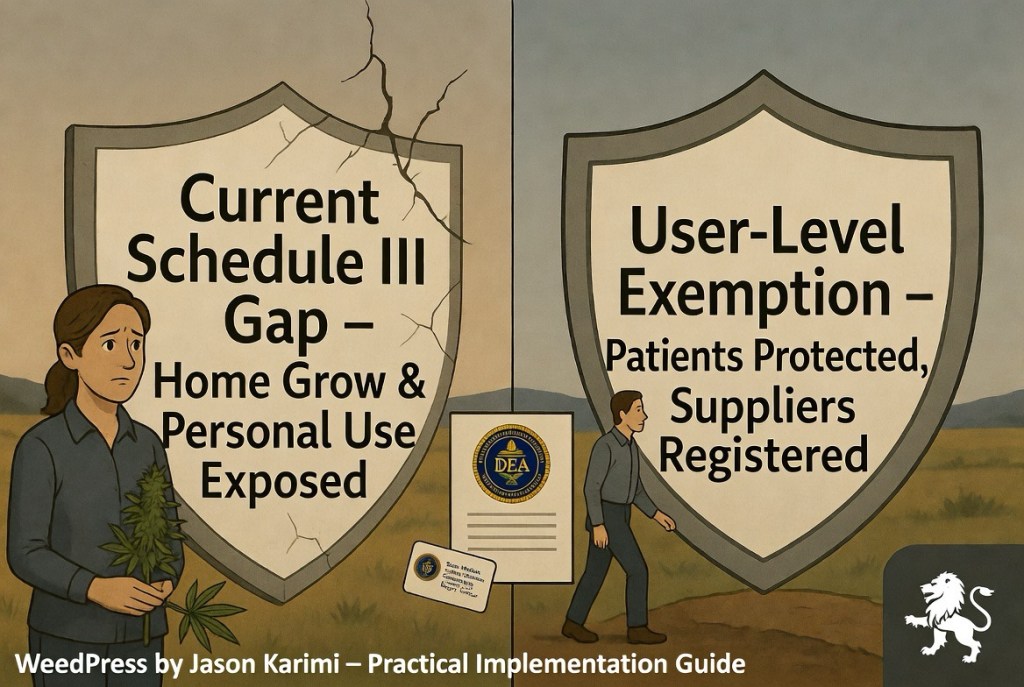
From Gap to Solution: A Step-by-Step Implementation Framework for a User-Level Medical Cannabis Exemption in South Dakota
The April 28, 2026 federal partial rescheduling order created a clear compliance burden for licensed operators while leaving patients who grow or use cannabis outside the commercial system in a federal gray area.¹ Reassuring public statements that “you’ll be fine” or that “state law is already strict enough” do not close that gap for home…
-
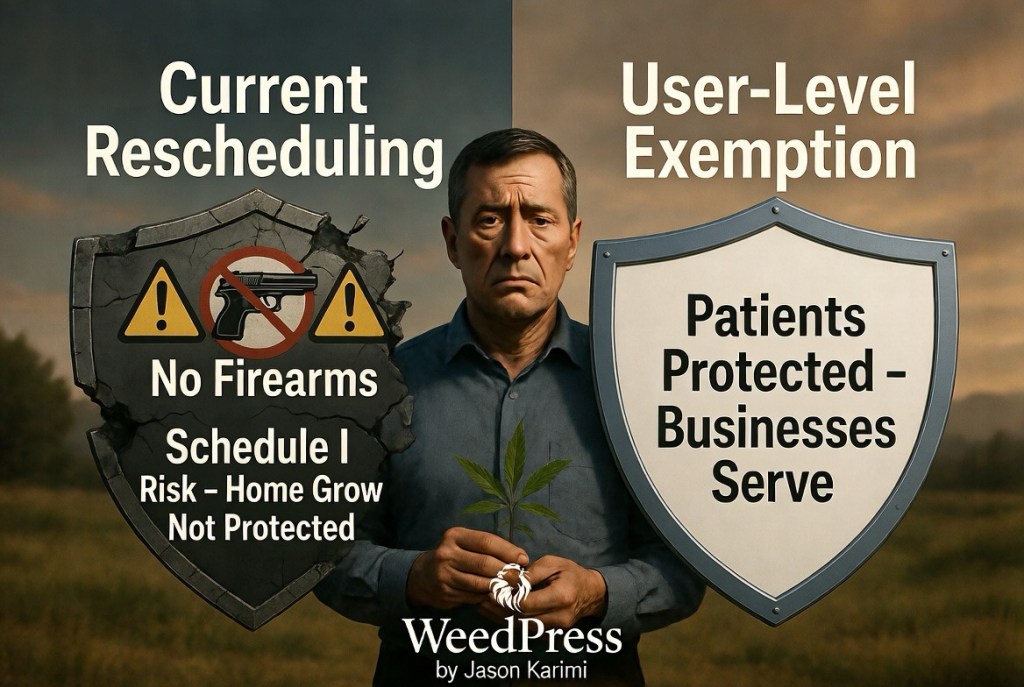
Patient Legal Risks Solved: A User-Level Exemption Model for Schedule III
The April 28, 2026 federal partial rescheduling order left a significant gap: personal home cultivation was not included in the narrow categories moved to Schedule III. Colorado attorneys Brian Vicente and Rachel Gillette have been direct about the practical consequences. Vicente noted that home grows do not qualify for the new federal registration pathway because…
-
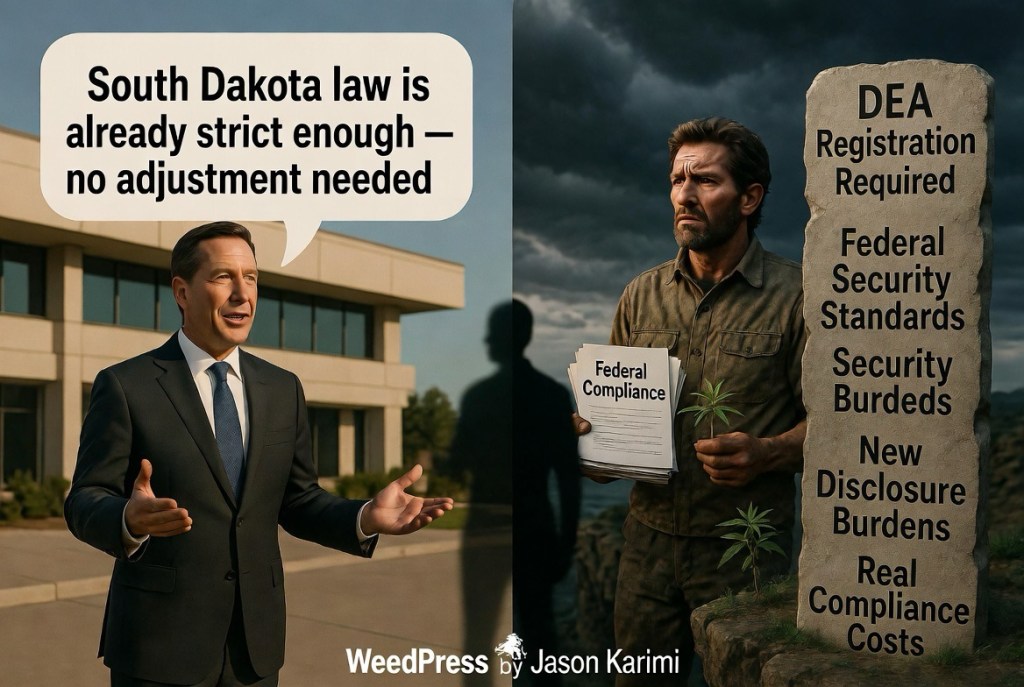
No, South Dakota’s Medical Cannabis Rules Do Not Satisfy Federal Schedule III Requirements — Operators Will Need to Make Real Adjustments
New analysis shows that South Dakota’s current licensing rules do not fully satisfy the new federal Schedule III requirements. DEA registration, security upgrades, and disclosure obligations represent real adjustments that many operators will need to make. Blanket claims that “everyone will be fine with little change” overlook these gaps. Some voices in South Dakota are…
-

The Real Cost of Schedule III: What Small South Dakota Operators Are Actually Facing Right Now
For small operators trying to understand what federal changes actually mean: This piece breaks down the compliance costs and risks that are often glossed over. Knowledge is power — especially when the stakes are this high. South Dakota small cannabis operators are being told to relax. Federal rescheduling is here, the story goes, and everything…
-
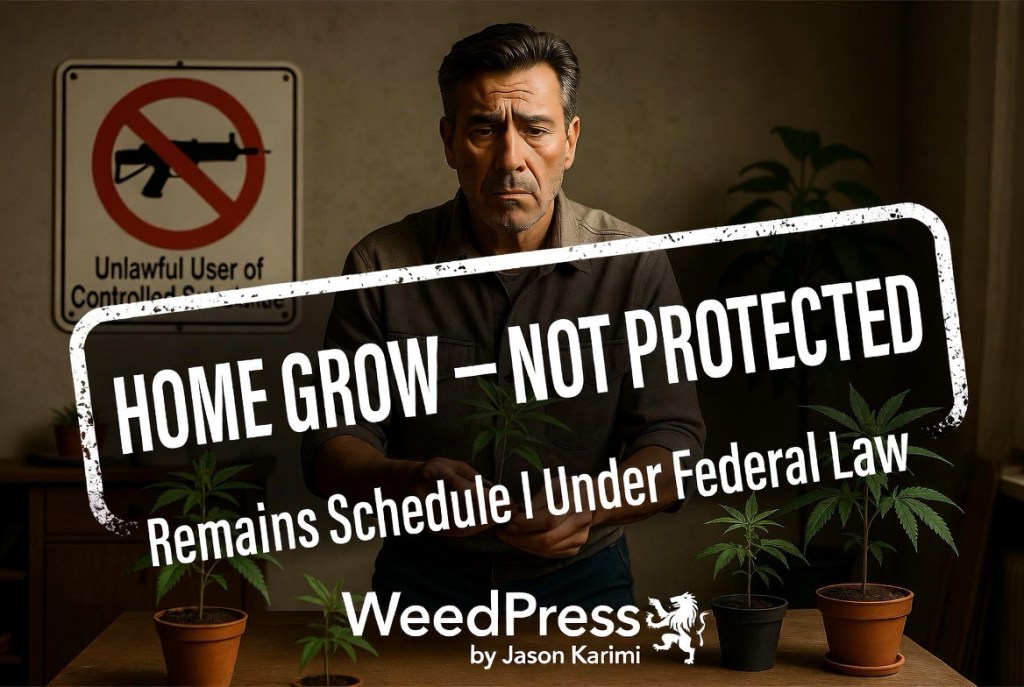
ILLEGAL: Homegrown Cannabis Remains Outside Federal Schedule III Protections — An Open Question With Real Consequences for Patients
The April 28, 2026 federal partial rescheduling order moved only two narrow categories of marijuana from Schedule I to Schedule III: certain FDA-approved products and marijuana produced under qualifying state-issued medical marijuana licenses.¹ Personal home cultivation was not included in either category. This creates a significant gap. In states that permit limited home growing for…
-

Tribal Operators Face Extra Risks Under Federal Rescheduling — And They Should Not Trust Reassuring Advice from People with Skin in the Game
Tribal operators face additional risks that many industry voices aren’t addressing. Independent analysis matters. Tribal and Indigenous cannabis operators are in a uniquely vulnerable position under the new federal Schedule III framework. They face all the same compliance burdens as other small operators — plus additional layers of jurisdictional complexity, disclosure risk, and uncertainty around…
-
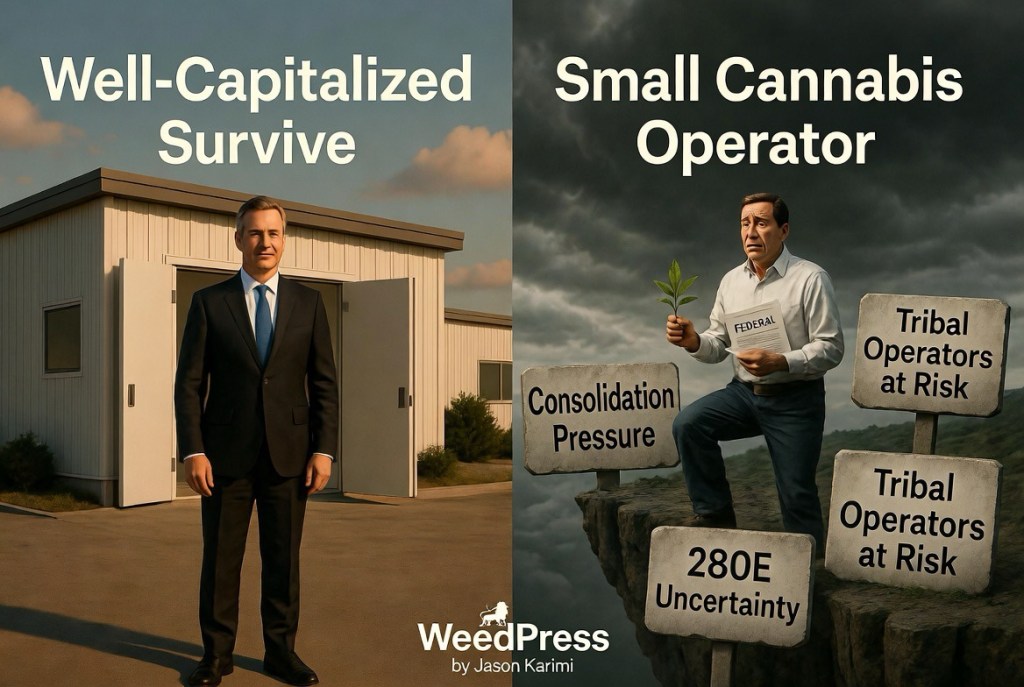
June 3: Beard Bros Webinar Warns Tribal And Small Cannabis Operators Are At Risk
Check out the warnings for small operators from this webinar: Core Warnings for Small Operators 1. Compliance Costs & DEA Registration Burdens Are Real and Disproportionate • Small operators face significant new costs for legal counsel, application preparation, security upgrades, recordkeeping systems, and compliance infrastructure that many legacy businesses were never built to handle. •…
-

South Dakota Small Cannabis Operators Face a Compliance Cliff: Federal Rescheduling Likely to Drive More Closures and Force Consolidation
The collapse of recreational legalization efforts in South Dakota already triggered a wave of dispensary closures. At least eight licensed medical cannabis businesses shuttered in late 2024 and early 2025 amid falling cardholder numbers, intense price competition, and regulatory pressures.¹ “Then it was a race to the bottom on pricing,” one industry participant observed as…
-

The Private Reckoning: What Two Out-of-State Consultants Most Likely Taught South Dakota Operators Behind Closed Doors
The April 28, 2026 partial Schedule III order (91 Fed. Reg. 22714) did not merely lower marijuana’s scheduling classification.¹ It imposed a new federal compliance regime that effectively ended the low-overhead, cash-only state-only model that defined South Dakota’s medical cannabis program.² Some public voices have offered vague assurances that “we’ll figure it out” for the…
-
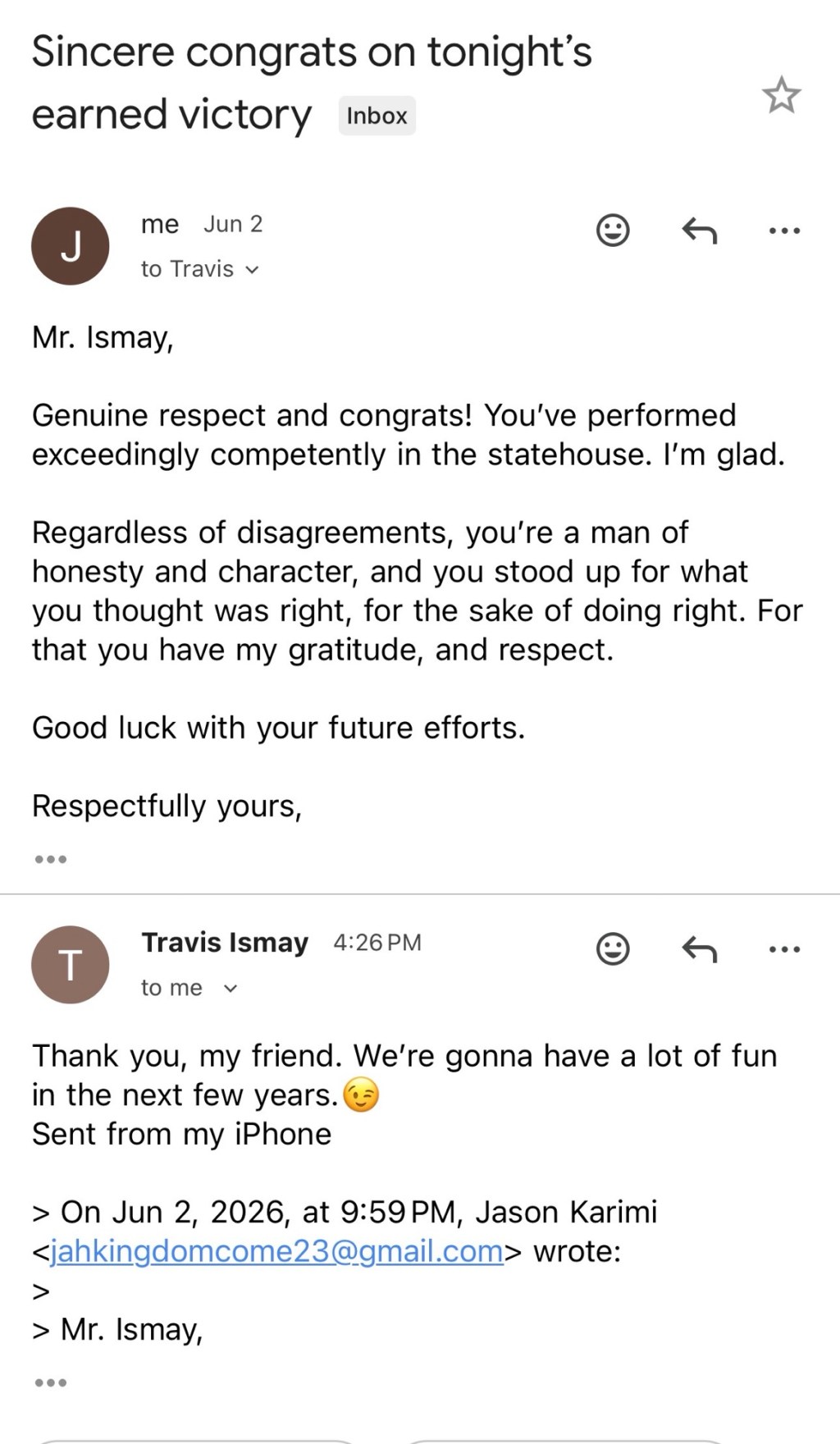
Travis Ismay Responds to My Congratulatory Email: A Small Step Toward Civil Discourse in South Dakota Politics
Yesterday, Rep. Travis Ismay (R-House District 28B) replied to the congratulatory email I sent him shortly after his decisive Republican primary victory on June 2.¹ For context, here is the full exchange: My email (June 2, 2026): For context, here is the full exchange: It’s a brief, gracious response — and one I appreciate. Background…
-

The Beauty of Going at Your Own Pace: Discussing Politics At Onida Post Office
Living in South Dakota has a way of resetting your internal clock. In a world obsessed with hustle, optimization, and constant urgency, the Mount Rushmore State quietly whispers a different philosophy: slow down. Let people move at their own pace. And nobody captures that spirit better than Calamity Jane in the HBO series Deadwood. There’s…
-

Federal Changes Do Not Mean South Dakota Will Simply Leave Cannabis Operators Alone
Some in South Dakota’s cannabis space appear to have viewed federal rescheduling primarily as a way to reduce state and local scrutiny while keeping existing arrangements in place. That is not what the April 28, 2026 federal order and the upcoming DEA registration process deliver.¹ Federal legitimacy brings new, federally enforceable compliance layers on top…
-
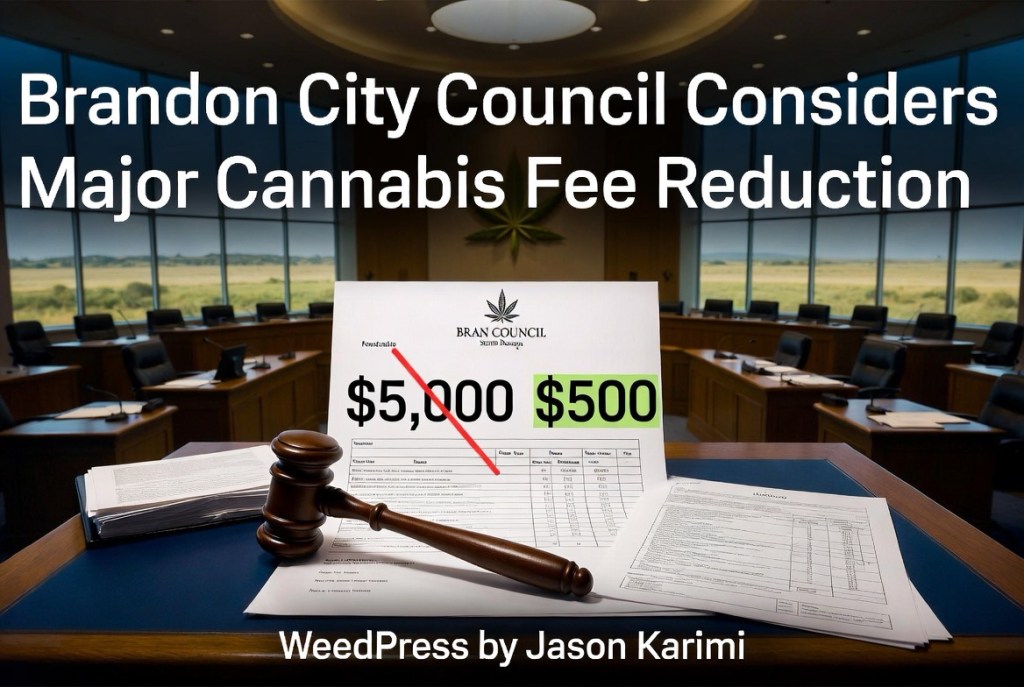
SD: Brandon City Council Considers Sharp Reduction in Medical Cannabis Renewal Fees at June 1 Meeting
On June 1, 2026, the Brandon City Council took up a proposal to significantly lower annual renewal fees for medical cannabis businesses operating inside city limits.¹ The measure, requested by local cultivator Cannanaut, would reduce the renewal application fee from $5,000 to $500.² While the council discussed the change and appeared supportive of advancing it,…
-
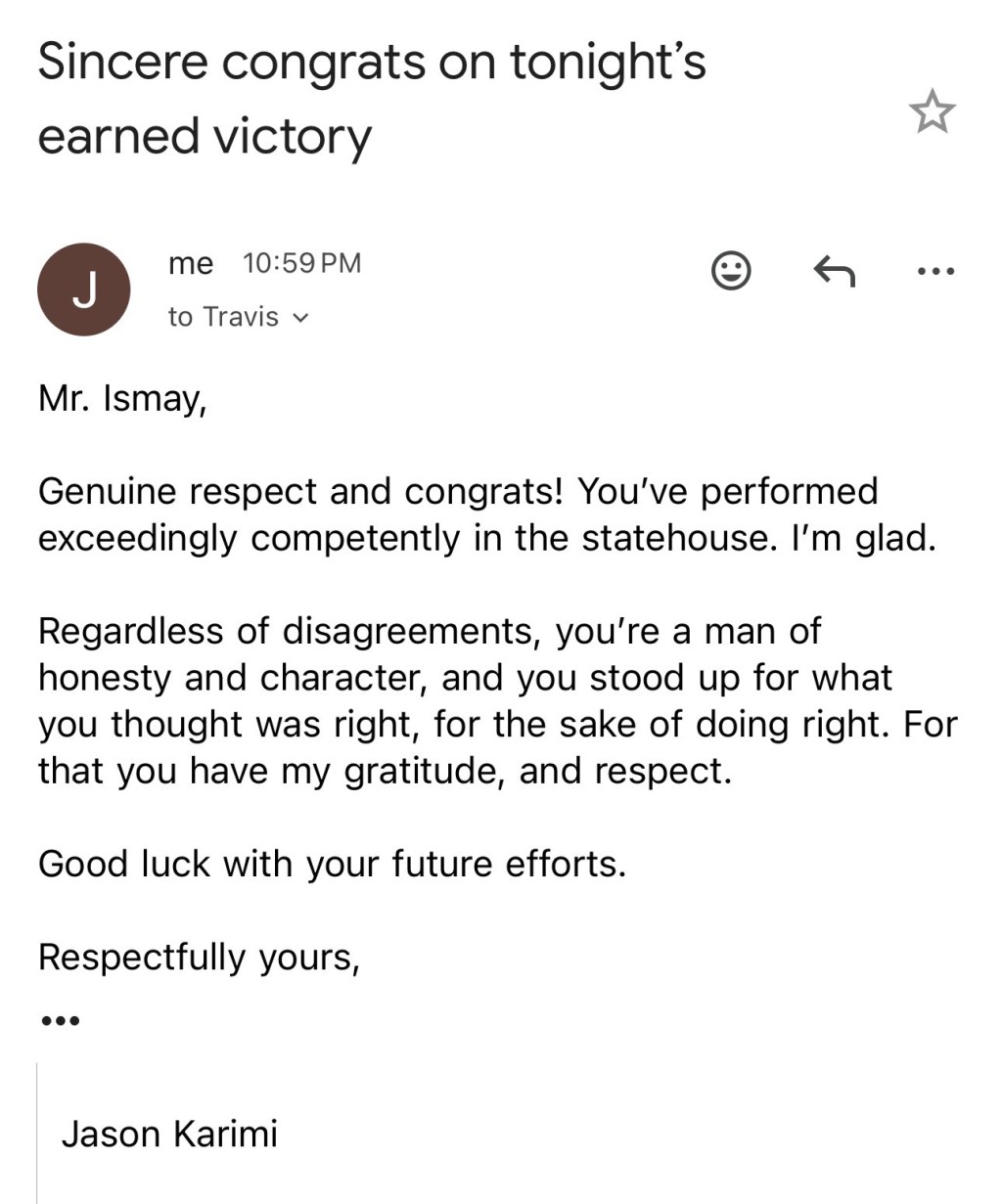
My Congratulatory Email to Rep. Travis Ismay After His Primary Win
Last night, Rep. Travis Ismay (R-House District 28B) defeated challenger Larry Schmaltz in the Republican primary, securing approximately 59% of the vote to Schmaltz’s 41%. I’ve had strong disagreements with Rep. Ismay — particularly over his sponsorship of legislation aimed at repealing South Dakota’s medical marijuana program. Those disagreements led to some heated emails in…
-

Medical Marijuana State Protections: The Full 12-Year History of the Appropriations Rider and Iowa’s Delegation Voting Record
Every year since 2014, Congress has included a critical appropriations rider — commonly known as the Rohrabacher-Farr Amendment (and its successors) — that prohibits the Department of Justice from using federal funds to interfere with states that have legalized medical marijuana. This bipartisan protection has been renewed in every major appropriations bill, ensuring that state…
-

Industry Analysts Agree: Interstate Cannabis Markets Are Inevitable
Part 2: Insider Look at State Resistance Strategies — Coming Next Weekend. Six months ago, WeedPress detailed how federal rescheduling of cannabis would interact with the Dormant Commerce Clause (DCC) to challenge state-level barriers to interstate commerce in state-regulated cannabis markets.¹ Now, the Marijuana Policy Project (MPP) has reached substantially the same conclusions in its…
-

Small Operators’ Last Stand: Actionable Pathways to Survive the Schedule III Compliance Cliff and Capture 280E Relief
The April 28, 2026 partial Schedule III order (91 Fed. Reg. 22714) has created a genuine compliance cliff for legacy small cannabis operators.¹ While the removal of the Internal Revenue Code § 280E deduction prohibition offers substantial after-tax cash-flow relief for qualifying entities, that relief is strictly gated behind expedited DEA registration and full compliance…
-
Small South Dakota Cannabis Operators May Never See the 280E Windfall
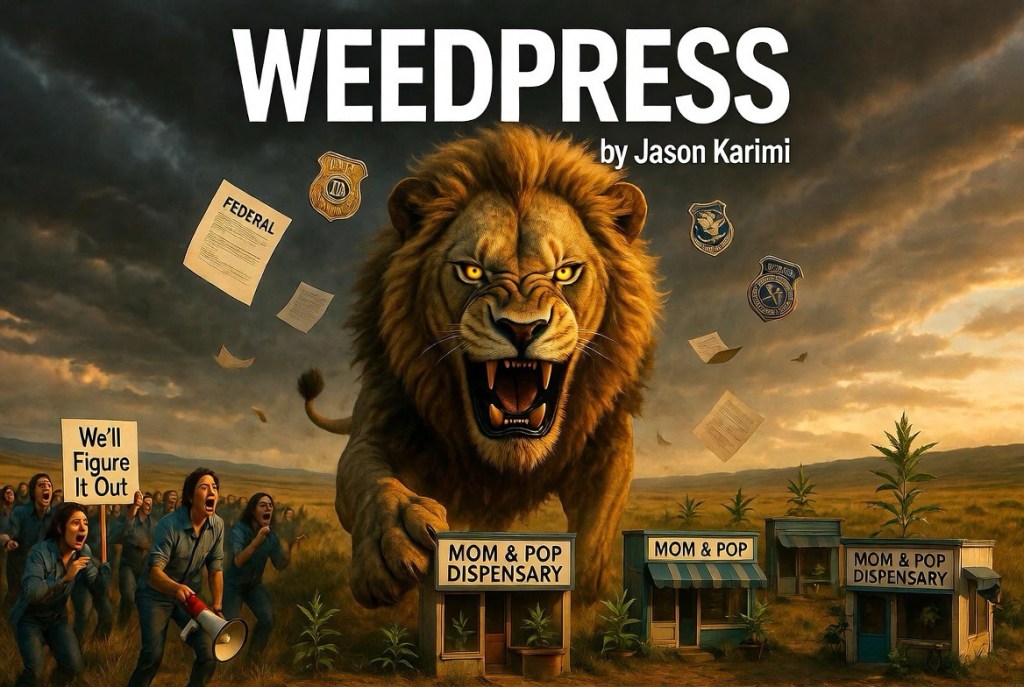
The April 28, 2026 partial Schedule III order (91 Fed. Reg. 22714) is being sold in some circles as an automatic cash-flow miracle for state-licensed medical cannabis operators. Remove 280E. Unlock billions in after-tax profits. “Figure it out” and keep operating. That narrative is dangerously incomplete. What the industry chatter is quietly admitting — and…
-
The Rural Access Question South Dakota’s New Pharmacy Rules Raise for Medical Cannabis
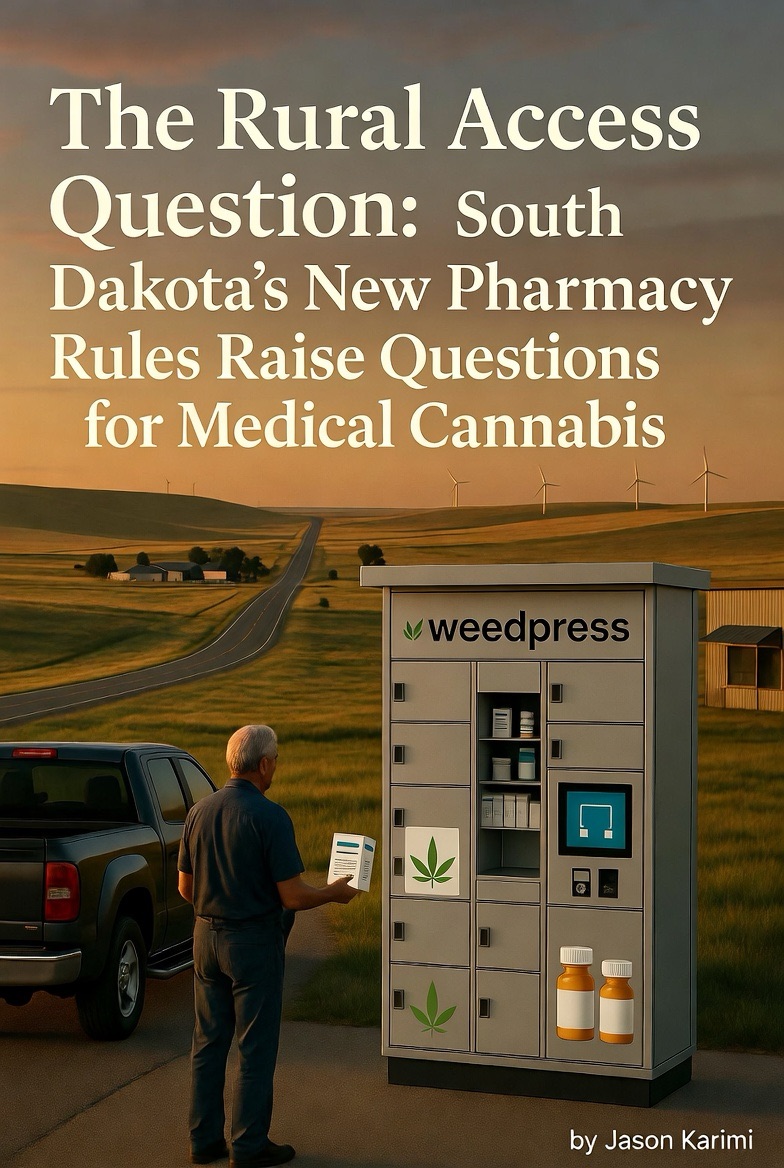
As regulators embrace telepharmacy and remote prescription pickup, policymakers may eventually face similar questions about medical cannabis access in rural communities. South Dakota’s Board of Pharmacy is advancing updated rules under Article 20:51 of the Administrative Rules of South Dakota (ARSD) that formalize the use of remote drop sites for prescription medications and introduce a…
-
Reflections on a Bruised Nail: What My Left Middle Finger Injury Taught Me About Inner Worth and Boundaries
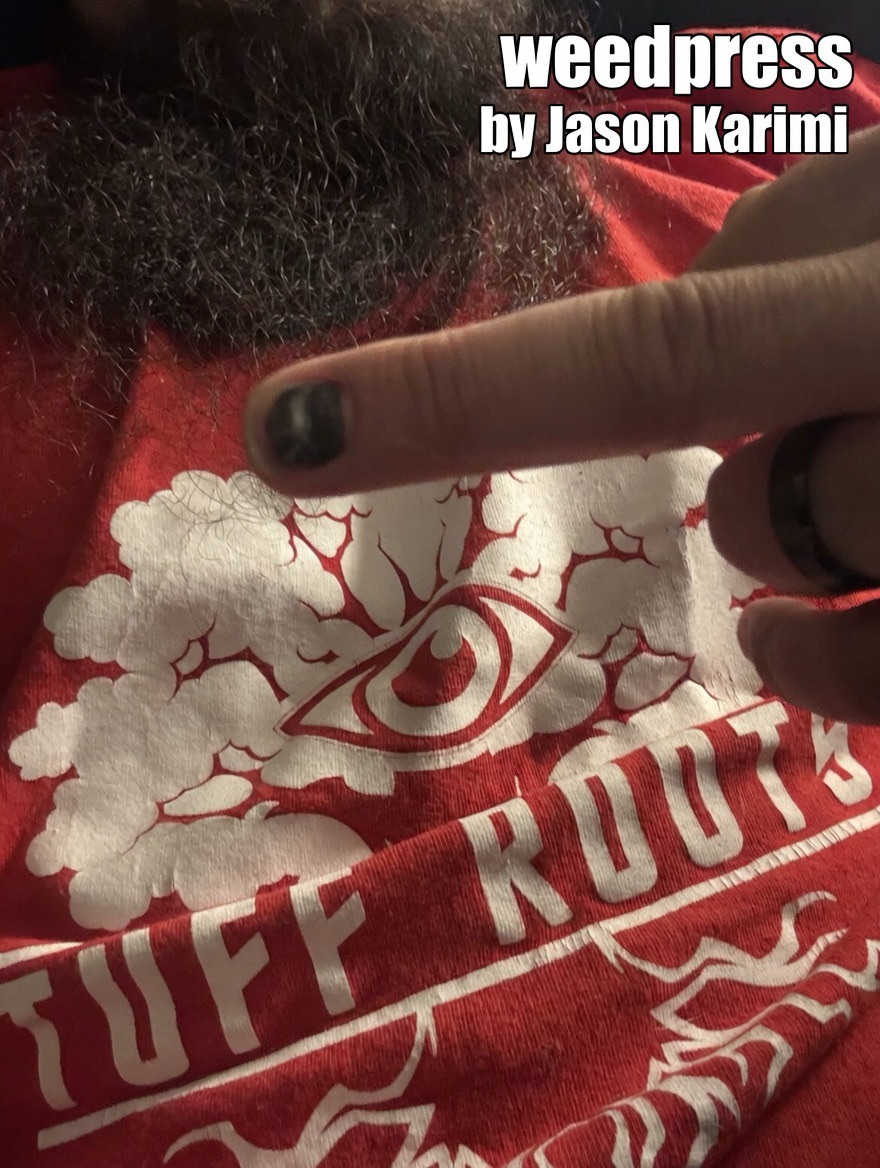
Two months ago, I slammed my left middle finger, resulting in a subungual hematoma—the dark pool of blood trapped beneath the nail that turned my fingertip into a visual reminder of sudden impact.¹ No longer painful, the nail still carries a mottled shadow of black and white as new growth slowly pushes the old damage…
-
The Federal Compliance Cliff: How Schedule III May Threaten Small Cannabis Operators Before 280E Relief Arrives
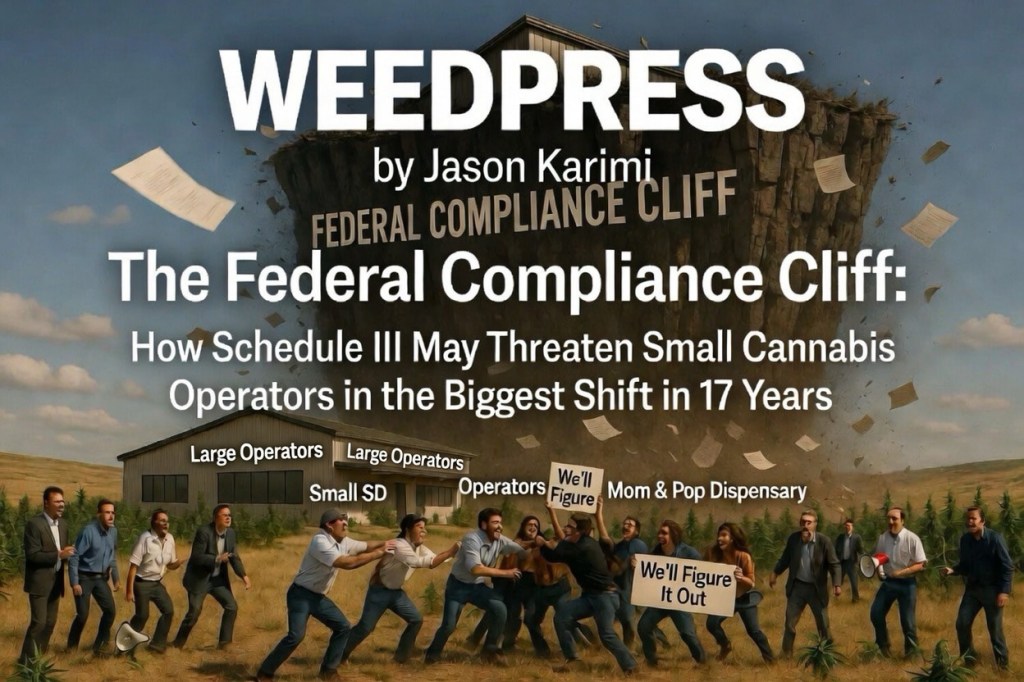
The April 28, 2026 partial Schedule III order (91 Fed. Reg. 22714) marks the most significant federal regulatory shift in cannabis policy in seventeen years.¹ For the first time, qualifying state-licensed medical cannabis operators have a clear pathway to 280E relief and expedited DEA registration. Yet the dominant public response from many legacy advocacy groups…
-

The June 27 DEA Registration Deadline Is Coming Fast: South Dakota Operators Face a Compliance Cliff as the Safe Harbor Window Closes
With the June 27 DEA registration deadline approaching, the following analysis examines the practical timeline and compliance pressures facing South Dakota operators. South Dakota’s licensed medical cannabis operators now have roughly 29 days to secure critical federal protections before the expedited DEA registration window closes. On April 28, 2026, the Department of Justice and Drug…
-
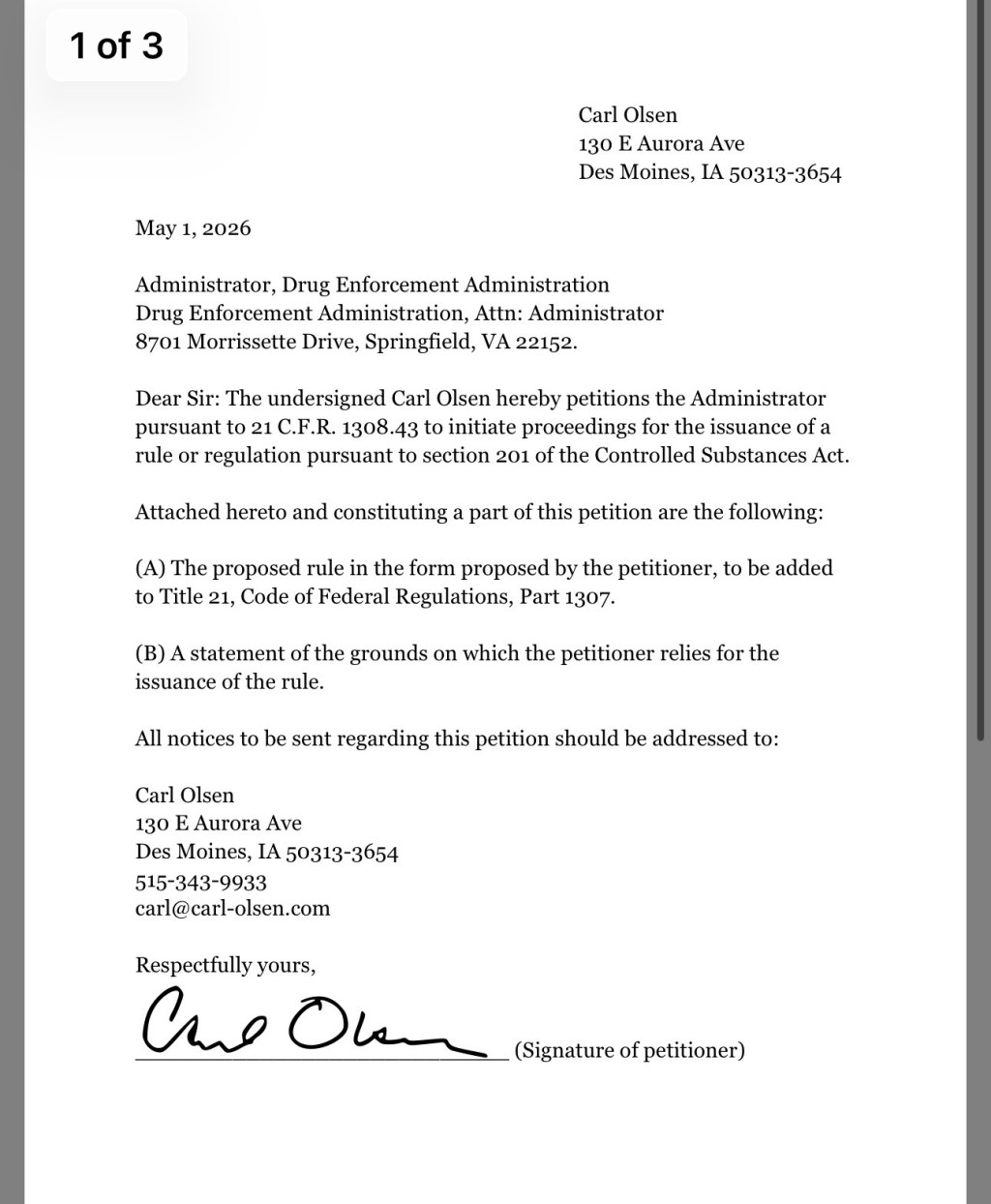
Petition for DEA Rule-making, Filed May 1 2026
Patients deserve federal alignment — not just corporate access. I’m two decades of obsessive non stop borderline unhealthy researched on federal exemption policies statutes laws and rules. Tell your local attorney general of your state hi. They’ll be subject to filings themselves over the next two years as well. Nobody cares about federal illegality injustice…
-

Predators Don’t Debate — They Rig the Game: How Black-Market-Friendly State Cannabis Programs Created the Perfect Environment for Predators — and Why Federal Legitimacy Is Ending It
The drug laws were rigged for decades. Prohibition didn’t eliminate the black market — it protected it. Cartels and underground operators thrived while legitimate patients and small businesses were crushed. When states began legalization without federal exemption, they didn’t fix the problem. They simply moved the rigged game indoors and gave it a state license.…
-
Advance Notice to South Dakota Department of Health: Petition for Scheduling Review Will Follow Federal Rescheduling Hearings
South Dakota’s medical cannabis program stands at a critical juncture following the federal partial rescheduling of certain marijuana products to Schedule III.¹ After the DEA’s June 29, 2026 rescheduling hearing concludes, the undersigned will formally petition the South Dakota Department of Health (DOH) to review and align the state’s Schedule I classification of marijuana with…
-
Sioux Falls City Council Member Says “Jason Karimi Is Smartest Person In Room” After This Speech On Federal Exemptions
This speech led a city council member to point out I was the most informed on marijuana laws in the city of Sioux Falls a few years ago. Enjoy. From 2021 in Sioux Falls: See also: Complex issues like this are best resourced for now at WeedPress. Thank you for your attention to these matters.…
-
WeedPress Proved Harvard Law Review Wrong: The Controlled Substances Act Is an Architecture of Exemptions — and History Just Proved It
For nearly two decades WeedPress has argued that the Controlled Substances Act is not a rigid prohibition statute but an architecture of exemptions — a flexible regulatory framework deliberately designed to allow medical, research, and other carve-outs while maintaining federal control.¹ A recent Harvard Law Review article largely missed this central feature of the statute.²…
-
The Policy Vacuum: What Happens When Leadership Steps Back During Federal Cannabis Rescheduling
South Dakota’s medical cannabis program is entering its most consequential phase just as federal partial rescheduling from Schedule I to Schedule III takes effect.¹ Yet at this critical moment, the state lacks clear, consistent public guidance on DEA registration deadlines, conformity triggers, testing requirements, and market consolidation risks.² The federal change creates both opportunity and…
-
Nebraska RFRA Religious Liberty Case Advances: Supplemental Authority Filed Citing Federal Schedule III Rescheduling
Defendant Jason Karimi has filed a Notice of Supplemental Authority in Nebraska District Court while his motion to modify probation conditions under the Nebraska First Freedom Act remains under advisement. The filing notifies the Court of the recent federal Schedule III rescheduling action and Defendant’s participation in the ongoing DEA administrative proceeding (Docket No. DEA-1362)…
-
The Refs May Be Wearing Green — Why the Cannabis Rescheduling Hearing Looks More Favorable Than It Has in Years
The June marijuana rescheduling hearing is not a guaranteed win for reform. But it is hard to deny that the current process looks more favorable to rescheduling than the federal government has looked in years. The reason is not secrecy or corruption. It is that the same administration that already moved FDA-approved marijuana products and…
-
I Have Filed Notice to Participate in the DEA’s June 29 Rescheduling Hearing
Today I formally submitted my Notice of Intention to Participate in the DEA administrative hearing on the proposed rescheduling of marijuana from Schedule I to Schedule III (Docket No. DEA-1362), scheduled to begin June 29, 2026. This filing continues my 17-year record of cannabis policy advocacy and public commentary. It focuses on the interaction between…
-

DARE Poster Kid to Marijuana Regulation Advocate: My Unchanging Fight to Protect Kids
When I was in elementary school, the DARE program left a lasting impression. Officers visited regularly, warning us about the dangers of drugs and pushing the “just say no” message. I took it seriously. So when the school announced an anti-drug poster contest open to elementary students, I threw myself into creating something impactful. My…
-

I Spent 17 Years Arguing for Federal Cannabis Legitimacy. Now Small Operators Are About to Learn What That Means.
I have spent most of my adult life arguing that state medical cannabis programs could not survive forever as legally tolerated gray markets.¹ They needed federal recognition. They needed treaty analysis. They needed administrative pathways. They needed constitutional pressure. They needed people willing to say the uncomfortable thing before the institutions were ready to admit…
-

Why Business Lawyers and Lawmakers Must Master the U.S. Reinterpretation of the Single Convention: Treaty Flexibility as the Foundation for Durable Cannabis Reform
The United States’ ongoing transformation of federal cannabis policy—from rigid Schedule I prohibition under the Controlled Substances Act (CSA) to a more nuanced regulatory framework—has long been cabined by claims of international legal constraint. For decades, the Drug Enforcement Administration (DEA) invoked the 1961 Single Convention on Narcotic Drugs as an absolute bar to any…
-
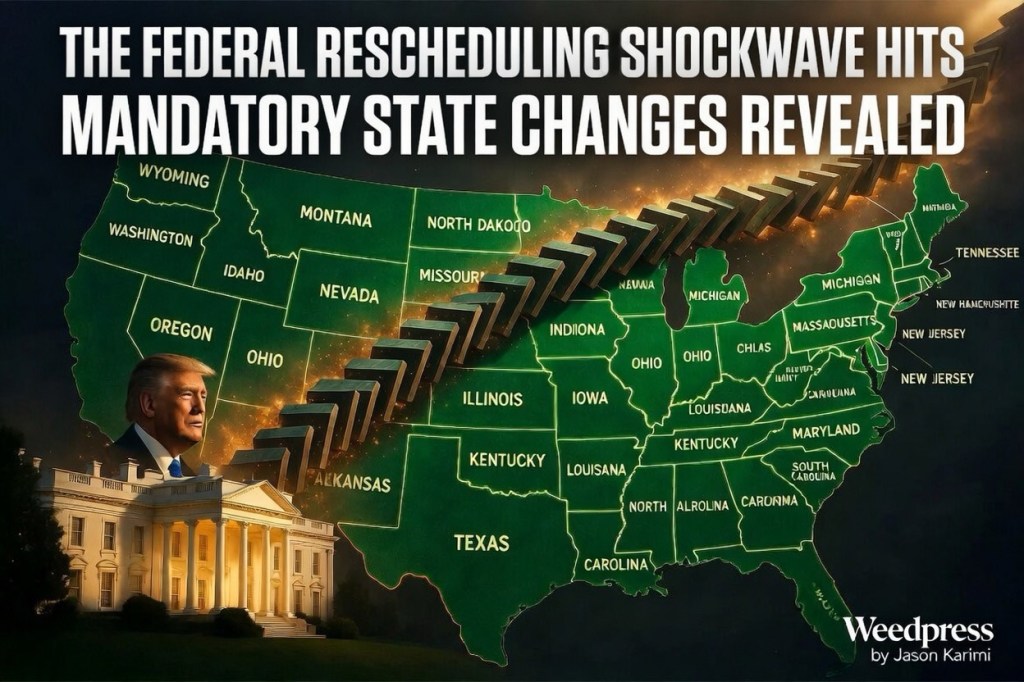
The Federal Rescheduling Shockwave Hits: South Carolina and 26 Other States Appear to Have Automatic or Mandatory Conformity Mechanisms for Federal Marijuana Scheduling Changes
Suggested citation: Karimi, Jason, The Federal Rescheduling Shockwave Hits: South Carolina and 26 Other States Appear to Have Automatic or Mandatory Conformity Mechanisms for Federal Marijuana Scheduling Changes (May 05, 2026). Available at SSRN: https://ssrn.com/abstract=6726361 In late April 2026, the Trump administration’s Department of Justice and DEA issued a final order moving FDA-approved drug products containing…
-
Stork Just Sent a Researcher to WeedPress: What Academic Tools Mean for Cannabis Policy Analysis
Independent statutory deep-dives are showing up alongside peer-reviewed literature in researchers’ workflows. It’s not every day your analytics dashboard lights up with a referrer you’ve never seen before. Today, May 5, 2026, WeedPress received a visit from paper-box.co — the domain tied to Stork (storkapp.me), a specialized publication-tracking and research intelligence platform used by academics,…
-
DEA Registration Decision Tree: 5 Questions Every Medical Operator Should Answer Before June 26
The June 26, 2026 deadline is not a suggestion. It is the cutoff for expedited DEA Schedule III registration under the new federal medical marijuana framework. File on time and you lock in six-month guaranteed processing, continued state-law operations during review, and the clearest path to improved banking and payments. Miss it and you fall…
-

Why Cannabis Operators Can’t Afford to Ignore the Federal Rescheduling Details — And What You Must Do Now
The federal government has split cannabis into two tracks. FDA-approved drug products containing marijuana and marijuana activity tied to a qualifying state-issued medical marijuana license under the new federal framework now occupy a different federal posture, while broader marijuana remains in Schedule I pending further proceedings.¹ That split is real, immediate, and carries tax, compliance,…
-

WeedPress Looked Deeper: Congress’ Quiet Move to Block Trump’s Cannabis Rescheduling — and Why It Threatens Operators
The quietest threat to the federal cannabis shift is not coming from DEA’s June hearing. It is coming from the House appropriations process. On May 13, 2026, the full House Appropriations Committee is scheduled to mark up the FY2027 Commerce, Justice, Science (CJS) bill after the CJS subcommittee approved its version on April 30. Buried…
-
The Federal Government Just Split Cannabis into Two Legal Tracks Overnight — and Congress Could Kill Both Within Weeks
Last week, the Department of Justice, acting through DEA, created a dual-track federal cannabis regime: state-licensed medical cannabis moved to Schedule III, while recreational cannabis remains in Schedule I.¹ This bifurcation is unstable. A single appropriations rider could functionally nullify the entire framework before medical operators stabilize and before the broader rescheduling process advances.² What…
-
The South Dakota Board of Pharmacy and the April 2026 Federal Partial Rescheduling: An Implementing Role in a Layered Statutory Framework
The federal government’s April 2026 partial rescheduling of marijuana—placing FDA-approved products and marijuana subject to a qualifying state-issued medical marijuana license into Schedule III while leaving most adult-use marijuana in Schedule I—has created new conformity pressures for mature medical cannabis states.¹ South Dakota illustrates one variant of this federalism challenge. Unlike states with a single…
-
Massachusetts and Arizona After the Partial Federal Schedule III Shift: Two Mature Markets, Two Different Conformity Problems
Summary: This article examines how Massachusetts and Arizona are responding to the federal government’s April 2026 partial move of state-licensed medical marijuana into Schedule III. It argues that mature cannabis states are now entering a post-announcement phase in which the central question is not whether federal policy changed, but how states must adjust licensing, compliance,…
-

Whistleblower Beacon: Submit Tips, Records, and Evidence to WeedPress
WeedPress exists to deliver sunlight on opacity — the lack of transparency, regulatory capture, and power abuses that undermine South Dakota’s voter-approved medical cannabis program (SDCL Chapter 34-20G and ARSD Article 44:90). Under our published Public Records Oversight Protocol, we now activate the Whistleblower Beacon. If you have: • Internal documents, inspection reports, compliance data,…
-
WeedPress Doctrine: Public Records Oversight Protocol
Public Version – May 2026 WeedPress: The Paper Trail WeedPress exists to document and scrutinize South Dakota’s medical cannabis program — a voter-approved, fee-funded, regulated industry governed by SDCL Chapter 34-20G and ARSD Article 44:90 — through public records, statutes, official filings, and verifiable facts. Our mission is patient-first program integrity, transparency, and accountability. Licensed…
-

Sunday Bible Reflection: 5-3-26
Hebrews 12 KJV 1 Wherefore seeing we also are compassed about with so great a cloud of witnesses, let us lay aside every weight, and the sin which doth so easily beset us, and let us run with patience the race that is set before us… 11Now no chastening for the present seemeth to be joyous,…
-
The Post-Announcement Phase of Cannabis Rescheduling: What the June DEA Hearing Means, What States May Have to Change, and What to Watch Next
The most important cannabis-law story in the country is no longer the announcement that part of the marijuana market has been moved into Schedule III. It is the implementation phase that follows. In April 2026, the Department of Justice and the Drug Enforcement Administration took the unusual step of immediately placing state-licensed medical marijuana and…
-

South Dakota Medical Cannabis Prices vs. Colorado and Washington: Why Patients Pay WAY More in the Mount Rushmore State
South Dakota’s medical cannabis program was designed to provide safe, legal access for qualifying patients. Yet current dispensary prices for flower — the most common form of medicine — remain dramatically higher than in mature recreational markets like Colorado and Washington. This price gap directly burdens patients, limits access, and undermines the voter-approved goal of…
-
Federal Rescheduling to Schedule III and the Emerging State Reckoning: South Carolina’s Statutory Trigger, Tennessee’s Legislative Blockade, and the Intellectual Lineage of Schedule I Nullification from Judge Francis L. Young’s 1988 Ruling Through Iowa Activism to Michigan Dismissals
Marijuana, in its natural form, is one of the safest therapeutically active substances known to man. It would be unreasonable, arbitrary and capricious for the DEA to continue to stand between those sufferers and the benefits of this substance.¹² The Department of Justice announced on April 23, 2026, the issuance of a final order immediately…
-

Quiet Outreach to Key Movement Leadership: Notifying Reform Voices of Incoming Schedule I Lawsuit
In the ongoing fight for a patient-first medical cannabis program aligned with science, law, and federal developments, transparency with allies matters. Today I quietly reached out to five respected voices in South Dakota’s cannabis reform and industry space to notify them of an impending lawsuit challenging South Dakota’s maintenance of marijuana in Schedule I under…
-
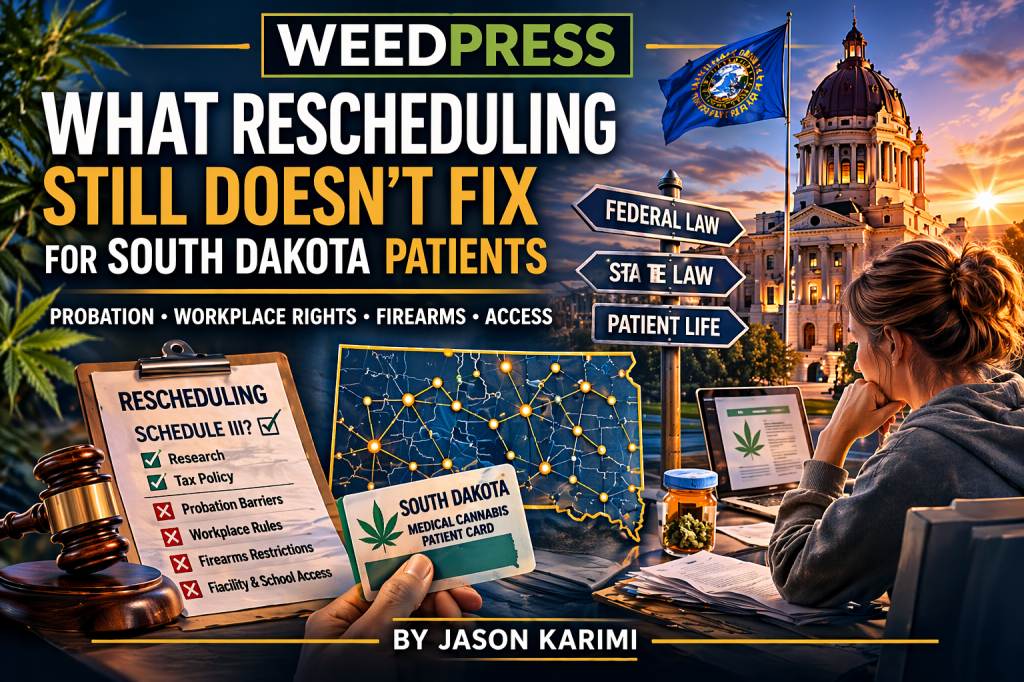
What Rescheduling Still Doesn’t Fix for Probationers, Workers, and Patients
Editors note: this article was written prior the the April 23 final order rescheduling cannabis products into federal Schedule III. Article is published unchanged as originally drafted for clarity. April 30, 2026 Too much cannabis coverage still treats federal rescheduling like a magic wand patients should uncritically celebrate. I’ve studied these laws more than anyone…
-

Why South Dakota’s Own Statutes Now Make Schedule I Marijuana Unlawful to Maintain
“Acting Attorney General Todd Blanche is placing both FDA-approved drug products containing marijuana, and medicinal marijuana products subject to a qualifying state-issued license in Schedule III under his authority to reschedule drugs to carry out the United States’ obligations under the Single Convention on Narcotic Drugs.”¹ South Dakota, however, is not automatically bound by that…
-

South Dakota’s Schedule I Marijuana Prohibition Heads to Court This Summer: Lawsuit Will Seek Declaration That State Law No Longer Satisfies Its Own Criteria
This summer I intend to file a civil action against the State of South Dakota seeking a judicial declaration that the state’s Schedule I classification of marijuana no longer satisfies the statutory criteria required for Schedule I placement under South Dakota law.¹ The claim is straightforward: once the factual predicate of “no accepted medical use”…
-
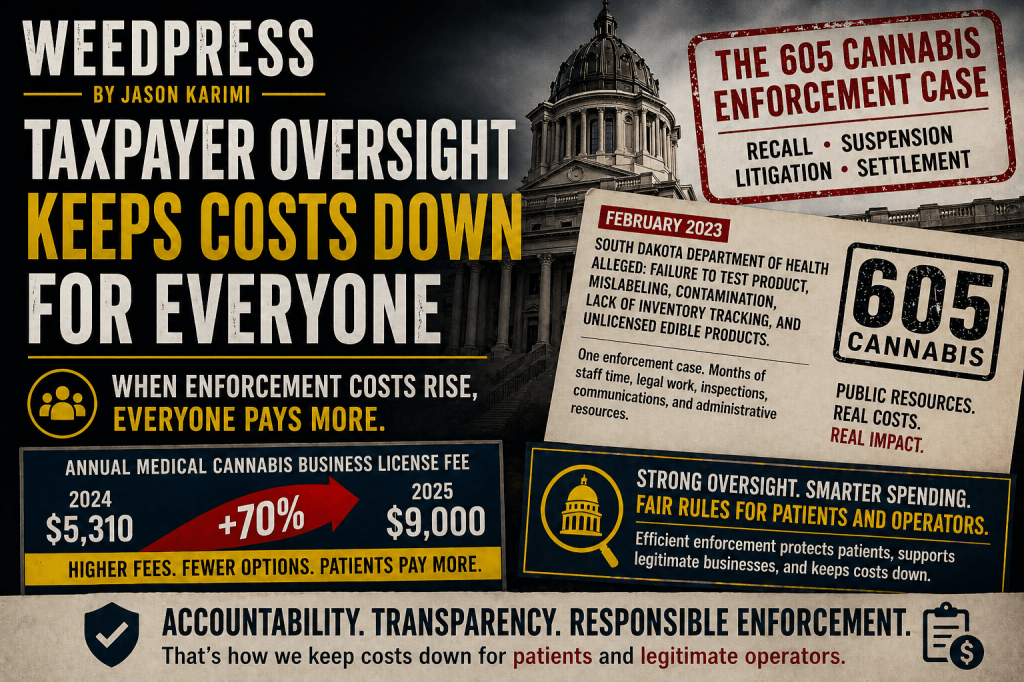
South Dakota Patients and Taxpayers Deserve More Transparency in Medical Cannabis Enforcement
As federal rescheduling advances, unresolved transparency gaps remain in South Dakota’s medical market. South Dakota’s Medical Cannabis Program is designed to operate through patient, caregiver, practitioner, and establishment fees rather than ordinary general-fund appropriations.¹ But a fee-funded program still creates public administrative costs. Enforcement actions require inspectors, lawyers, agency leadership, public notices, patient communications, litigation…
-
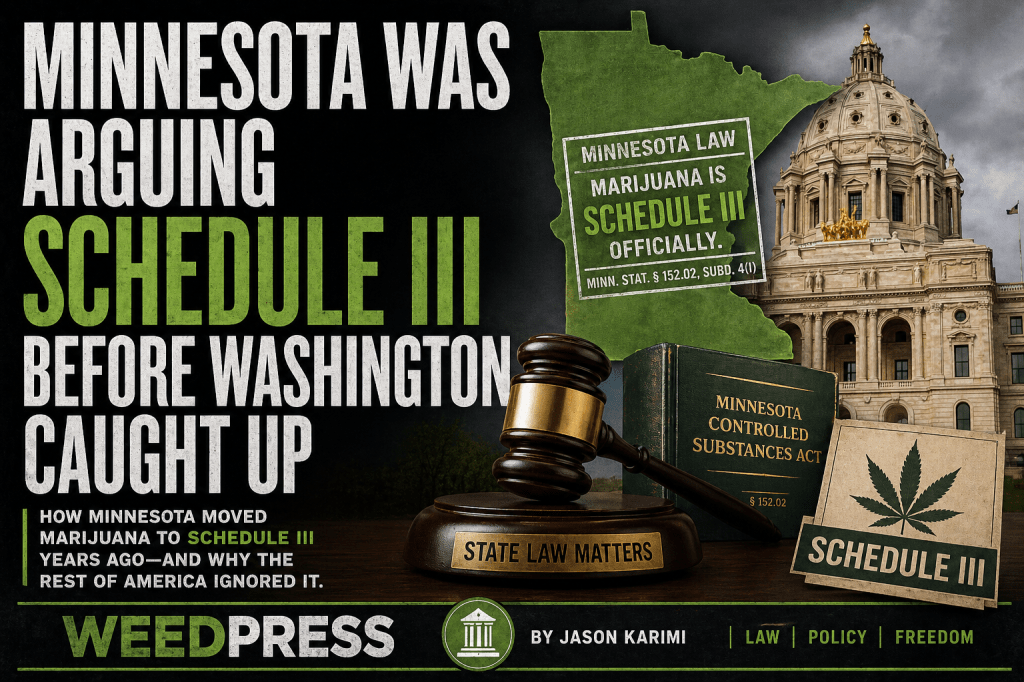
Minnesota Was Arguing Schedule III Before Washington Caught Up
April 26, 2026 Minnesota has already done what many cannabis lawyers, reformers, and national reporters still describe as hypothetical: it moved marijuana and naturally occurring tetrahydrocannabinols into Schedule III under state controlled-substances law.¹ The change has been sitting in Minnesota law quietly, without anything close to the national attention now surrounding federal rescheduling.² That matters…
-
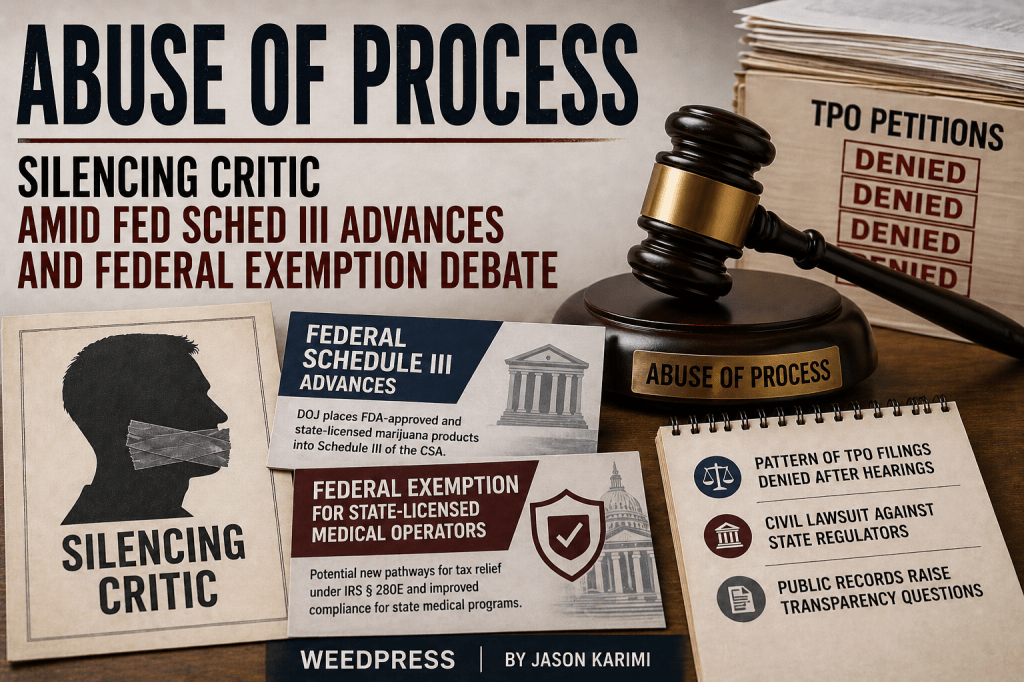
Public Records Show Two Active Civil Cases Involving 605 Cannabis Executive; Questions of Transparency Follow For Reform Leadership
Update: publicly available court records show a 605 Cannabis LLC COO has had a default judgment for failure to pay a $7500 loan entered by Hanson County Court November 2025, as well as a domestic assault charge for husband on wife assault and an arrest and jailing in the Alexandria South Dakota County jail for…
-

South Dakota Values Freedom More Than Security — And We Should Be Grateful for That
April 25, 2026 In an era when governments increasingly justify expanded surveillance, paternal regulation, and administrative control in the name of “public safety,” South Dakota often reflects an older constitutional instinct: that liberty is not a secondary value to be balanced away, but a primary political commitment. That instinct is imperfectly honored, and often contested.…
-
The Litigation Front of Cannabis Reform: Why Ryan Kolbeck’s Courtroom Work Matters Beyond South Dakota
April 25, 2026 While cannabis reform is often narrated through ballot initiatives, legislatures, and federal rescheduling debates, some of its most consequential work occurs in trial courts, where rights are defended one defendant at a time.¹ In South Dakota, attorney Ryan Kolbeck’s work illustrates that underappreciated litigation front.² Prohibition survives not merely through statutes, but…
-
Connecticut’s HB 5044 Is Not Just a Vaccine Bill. It Is a Legislative Rewrite of RFRA Mid-Litigation.
April 24, 2026 Connecticut’s HB 5044 is being sold as a vaccine-governance bill. In one sense, that is true: the bill deals broadly with immunization standards, the Department of Public Health’s authority, insurance coverage, and related vaccine-administration issues.¹ But buried inside that larger package is the provision that matters most for religious-liberty law: HB 5044…
-
West Virginia and Mississippi Tried to Move Marijuana to Schedule III. Both Bills Reveal the Same Structural Problem.
April 24, 2026 West Virginia and Mississippi each opened the 2026 session with a bill that would have done something their existing marijuana laws still refuse to do: move cannabis from Schedule I to Schedule III under state law.¹ ² Both proposals were straightforward on paper. West Virginia’s SB 809 would amend W. Va. Code…
-
Maryland Just Drew a New Line on Veterinary Cannabis
April 24, 2026 In a new development, Maryland has protected veterinarians from professional discipline solely for discussing or recommending cannabis or cannabidiol products for animals. House Bill 452 and Senate Bill 54, signed on April 14, 2026 as Chapters 47 and 48, bar the State Board of Veterinary Medical Examiners from suspending or revoking a…
-

Weedpress Email To South Dakota DOH, April 24, 2026
Ms. Jorgensen, Rereading this letter today. I wanted to express gratitude for the clarity and professional guidance on the laws in this state. Also, I have attached a file provided to me two years ago on state scheduling processes and laws. The laws are not up to date and have likely been adjusted from the…
-

Why Italian Wikipedia Cites an Old WeedPress Cannabis Science Article
April 24, 2026 Independent advocacy journalism rarely imagines itself entering the reference architecture of the internet. Most movement publishing assumes a shorter shelf life: intervention, argument, disappearance. But sometimes old work lingers. An older WeedPress article on the LD50 of cannabis—addressing the longstanding toxicology point that lethal overdose from cannabis is extraordinarily difficult to achieve—appears…
-
The Attorney General Just Said State Medical Marijuana Systems Work
April 24, 2026 The most important sentence in the new federal marijuana rescheduling order may not be the word “Schedule III.” It may be the Attorney General’s finding that state medical-marijuana systems, “taken as a whole,” have demonstrated a “sustained capacity” to achieve the public-interest objectives behind the Controlled Substances Act’s registration framework: public health,…
-

Nick Moser’s Role in the Hemp Quarters 605 Case
April 24, 2026 South Dakota’s 2024 hemp fight produced one notable federal case: Hemp Quarters 605 LLC v. Noem, filed in the U.S. District Court for the District of South Dakota on June 13, 2024. The plaintiff, Hemp Quarters 605 LLC, challenged House Bill 1125, South Dakota’s law restricting chemically derived hemp cannabinoids. Yankton attorney…
-
Marijuana’s Schedule I Original Sin: Nixon, Political Control, and Fifty Years of Failed Federal Rescheduling
April 23, 2026 Marijuana’s federal Schedule I status was never just a scientific judgment. It was born at the intersection of bureaucracy, racial politics, antiwar backlash, and executive power. The Controlled Substances Act placed marijuana in Schedule I in 1970, the most restrictive category in federal drug law, reserved for substances deemed to have a…
-

Five Structural Weaknesses Still Haunting South Dakota Cannabis
April 23, 2026 South Dakota’s medical-cannabis program is no longer a novelty. It is a real system with real patients, real establishments, real regulators, and real consequences. By April 2026, the state program had approved 18,759 patient cards.² That is large enough that the old excuses no longer work. We are past the stage where…
-
Lawyer Briefing Zoom Meeting On Rescheduling Happening This Monday Register Here
On Monday, April 27, at 11 AM MT / 1 PM ET, Vicente LLP and Marijuana Policy Project will convene for a timely online briefing, “What Happens Now with Cannabis Rescheduling? Industry Leaders on Medical vs. Adult-Use, June 29 Hearing and Expected Litigation”featuring cannabis attorneys, advocates and policy experts covering: An immediate analysis of the reclassification…
-
The Bifurcated Rescheduling Confusion: Why Cannabis and Psychedelics Lawyers Must Stay Alert
April 23, 2026 What the Justice Department did on April 23, 2026 is both progress and a warning. DOJ announced that FDA-approved marijuana products and marijuana products subject to a qualifying state-issued medical license are being placed into Schedule III immediately, while a separate administrative hearing beginning June 29, 2026 will consider the broader question…
-

WeedPress Blueprint Update 1
April 23, 2026 Tracker — newly surfaced / incremental developments since last sweep Rhode Island — Rhode Island Current / Marijuana Moment — Apr. 21, 2026: Regulators publicly discussed contingency paths after the federal injunction freezing the retail-license lottery tied to the residency requirement challenge; parallel legislation reportedly introduced to remove the residency requirement. Significance:…
-

The State of Religious Freedom in America in 2026: Strong but Uneven Protection Across the States
April 21, 2026 State-level protection for religious exercise in 2026 is both stronger and less uniform than many summary accounts suggest. Roughly thirty states are commonly identified as having enacted statutory Religious Freedom Restoration Acts (“RFRAs”), while a smaller additional set is often described as providing RFRA-like protection through state constitutional doctrine. The trend is…
-
Blueprint 2026
April 21, 2021 The architecture WeedPress is following to cover policy nationwide this year: Layer 1: Source monitoring Courts: CourtListener alerts for RFRA, free exercise, religious accommodation, controlled substances, marijuana scheduling, cannabis, sacramental use, etc. Legislatures: OpenStates API or LegiScan for all-state bill activity. News: Google Alerts plus AI search sweeps. Layer…
-
No. 19 — Religious Accommodation in Medical-Only Cannabis States
No. 19 — Religious Accommodation in Medical-Only Cannabis States: Structural Litigation Risk and Legislative Design By Jason Karimi | WeedPress Policy Series No. 19April 20, 2026 ⸻ I. Introduction: The Unaddressed Gap Medical-only cannabis states operate within a tightly regulated framework. Cultivation is limited. Home grows require registration. Plant counts are capped. Inspections are authorized.…
-

South Dakota Protects Free Speech With New Anti-SLAPP Law
April 17, 2026 For years, South Dakota had a hole in its legal architecture that should have embarrassed any state claiming to respect free speech. If someone with money, status, or institutional backing wanted to punish a critic, a journalist, a blogger, or an activist, the process itself could become the weapon. Even a weak…
-

Start Here: What WeedPress Is, What It Covers, and Why the Record Matters
April 16, 2026 WeedPress is a publication about records, policy, law, and power. It exists for one reason: in cannabis politics, if you do not document the record, someone else will rewrite it. For 17 years, WeedPress has tracked the gap between rhetoric and structure — between what movements say, what institutions do, and what…
-
Science Measures Outcomes. Patients Measure Survival.
April 16, 2026 Science likes clean variables. Patients rarely get that luxury. Pain is messy. Nausea is messy. Trauma is messy. Insomnia is messy. The body does not wait for the literature to become elegant. It does not wait for committees to grow comfortable. It does not wait for institutions to decide whether the suffering…
-

Why Cannabis Reform Keeps Winning Headlines but Losing on Structure
April 16, 2026 Cannabis reform has spent years winning the visible fight while losing too many of the structural ones: That is the contradiction at the heart of the modern marijuana debate. The headlines look triumphant. More states legalize. More politicians soften. More investors return every election cycle to promise that normalization is just around…
-

The Next Cannabis Boom Will Reward Operators — Not Amateurs
The real 2026–2027 unlock is not federal reform alone. It is the moment policy relief begins rewarding scale, infrastructure, experience, and real business discipline. April 15, 2026 For years, cannabis commentary has treated federal reform as the singular unlock. That was always too simplistic. The real 2026–2027 cannabis unlock is not just a policy shift…
-
No. 18 — Federal Question Preservation in State Cannabis Prosecutions
April 15, 2026 ⸻ I. Introduction: The Structural Risk No One Discusses Cannabis litigation frequently turns on constitutional arguments. Yet many disputes fail not because the constitutional theory is weak, but because the federal question was not properly preserved. In state prosecutions, litigation sequencing determines whether a federal issue survives long enough to reach meaningful…
-
The Record Is the Case: Religious-Cannabis Claims Are Won Long Before the Judge Rules
The Record Is the Case: Religious-Cannabis Claims Are Won Long Before the Judge Rules By Jason Karimi | WeedPress April 14, 2026 Religious-cannabis cases are not won on sympathy. They are not won on slogans. They are not won because a claimant sounds sincere in the hallway or because a cause feels morally compelling in…
-
The Next Religious-Cannabis Test Case: What Courts Will Actually Need To See
The Next Religious-Cannabis Test Case: What Courts Will Actually Need To See By Jason Karimi | WeedPress April 14, 2026 Religious-cannabis cases have been discussed as though the central question were whether a judge personally finds the practice unusual, controversial, or politically inconvenient. That is not the real question. The real question is whether a…
-

St. Kitts and Nevis Did What Most Governments Refuse to Do: It Put Rastafari Cannabis Rights Into Law
St. Kitts and Nevis Did What Most Governments Refuse to Do: It Put Rastafari Cannabis Rights Into Law By Jason Karimi | WeedPress April 10, 2026 For years, governments across the Caribbean and beyond have tried to posture as enlightened on cannabis while ducking the harder question: what happens when cannabis use is not merely…
-
WeedPress Has Tracked the RFRA Front Since 2009 — Now Google Scholar Is Sending Readers
WeedPress Has Tracked the RFRA Front Since 2009 — Now Google Scholar Is Sending Readers After more than fifteen years covering religious liberty, cannabis litigation, and the federalism problems created by Employment Division v. Smith, WeedPress is reaching a wider legal audience. By Jason Karimi | WeedPress April 10, 2026 WeedPress has consulted with and…
-
-
Wyoming Man Came To Court Talking RFRA And Left With A Discounted Fine
In Wyoming, He Came To Court Talking RFRA And Left With A Discounted Fine If you do not know the four-part religious-freedom test before you walk into court, do not expect the court to save you from your own lack of preparation. By Jason Karimi | WeedPress April 9, 2026 A Wyoming cannabis case recently…
-
Communication Mistakes During Campaigns: A Leadership Institute Training
Campaigns invest significant time refining how a candidate explains their values, their priorities, and their vision to the voters they need to reach. The expectation is consistency. The expectation is control. But discipline does not always hold in real time. REGISTER NOW For the first hour and a half, we will walk through several well-known…
-

Google Scholar Just Sent Traffic to WeedPress. That Matters More Than It Looks.
Google Scholar Just Sent Traffic to WeedPress. That Matters More Than It Looks. By Jason Karimi | WeedPress April 7, 2026 WeedPress just picked up a referrer that stood out from the usual traffic noise: Google Scholar. According to the Jetpack stats page, one of the site’s visits appears to have come from scholar.google.co.il, alongside…
-

No. 17 — Federal Rescheduling and State Statutory Insulation: Indiana as a Case Study in Vertical Federalism Design
No. 17 — Federal Rescheduling and State Statutory Insulation: Indiana as a Case Study in Vertical Federalism Design By Jason Karimi | WeedPress Policy Series No. 17April 7, 2026 ⸻ When the federal government signals that marijuana may be rescheduled under the Controlled Substances Act, public debate gravitates toward legalization politics. That is the wrong…
-
No. 16 — The Dormant Commerce Clause After Cannabis Rescheduling: Interstate Market Protectionism and Constitutional Pressure
Cannabis reform is not a culture war — it is the most active federalism stress test in modern constitutional law. No. 16 — The Dormant Commerce Clause After Cannabis Rescheduling: Interstate Market Protectionism and Constitutional Pressure Horizontal Federalism in Emerging Cannabis Markets By Jason Karimi | WeedPress Policy Series No. 16 April 7, 2026 ⸻…
-
South Dakota District 35’s Republican Primary: Who’s Best Positioned in the Four-Way Race?
South Dakota District 35’s Republican Primary: Who’s Best Positioned in the Four-Way Race? By Jason Karimi | WeedPress April 4, 2026 South Dakota House District 35 is one of the more interesting Republican primaries in the state this cycle because it is an open-seat race with four Republican candidates competing for two House nominations on…
-

The 10 Best WeedPress Articles So Far — And the Full Links to Read Them
The 10 Best WeedPress Articles So Far — And the Full Links to Read Them By Jason Karimi | WeedPress April 4, 2026 Every publication reaches a point where its strongest work stops feeling like a pile of posts and starts feeling like an identity. WeedPress is there. Its best articles do more than react…
-
Iowa Set The Example For Pressing The Feds. Hawaii’s Senate Just Backed The Same Approach.
Iowa Set The Example For Pressing The Feds. Hawaii’s Senate Just Backed The Same Approach By Jason Karimi | WeedPress April 4, 2026 For years, too many states have talked big about medical cannabis while acting like helpless subsidiaries of federal drug policy. Iowa challenged that weakness. Hawaii is challenging it again now. Hawaii senators…
-

Discernment, Not Drama: How to Carry Yourself When Evil Is Real
Discernment, Not Drama: How to Carry Yourself When Evil Is Real By Jason Karimi | WeedPress April 3, 2026 There are some subjects polite society would rather mock than confront. Spiritual darkness is one of them. Many modern people are willing to speak of “energy,” “trauma,” “vibes,” and “mental health,” but the moment anyone raises…
-

Rob Cool Reportedly Raided in Sioux Falls as Neighbors Describe Heavy Law-Enforcement Operation
Rob Cool Reportedly Raided in Sioux Falls as Neighbors Describe Heavy Law-Enforcement Operation By Jason Karimi | WeedPress April 2 2026 Something big went down Monday night on East 20th street in Sioux Falls. WeedPress has reached out to Sioux Falls Police and other relevant agencies for comment and will update if records are released.…
-
Indiana RFRA Abortion Ban Case
https://statecourtreport.org/our-work/analysis-opinion/religious-women-win-injunction-against-indianas-abortion-ban See especially: “The judge stressed that the Indiana RFRA protected those whose religious freedom was likely to be substantially burdened, not just those who had already experienced harm.”
-

They Don’t Get To License The Press
Recent reporting indicates a Florida judge extended a temporary restraining order involving James O’Keefe and also ordered firearm surrender pending further proceedings. Whether that order is a pure First Amendment prior-restraint problem depends on what it actually forbids. If it regulates threats, contact, or violence, that is one thing; if it blocks publication, reporting, or…
-
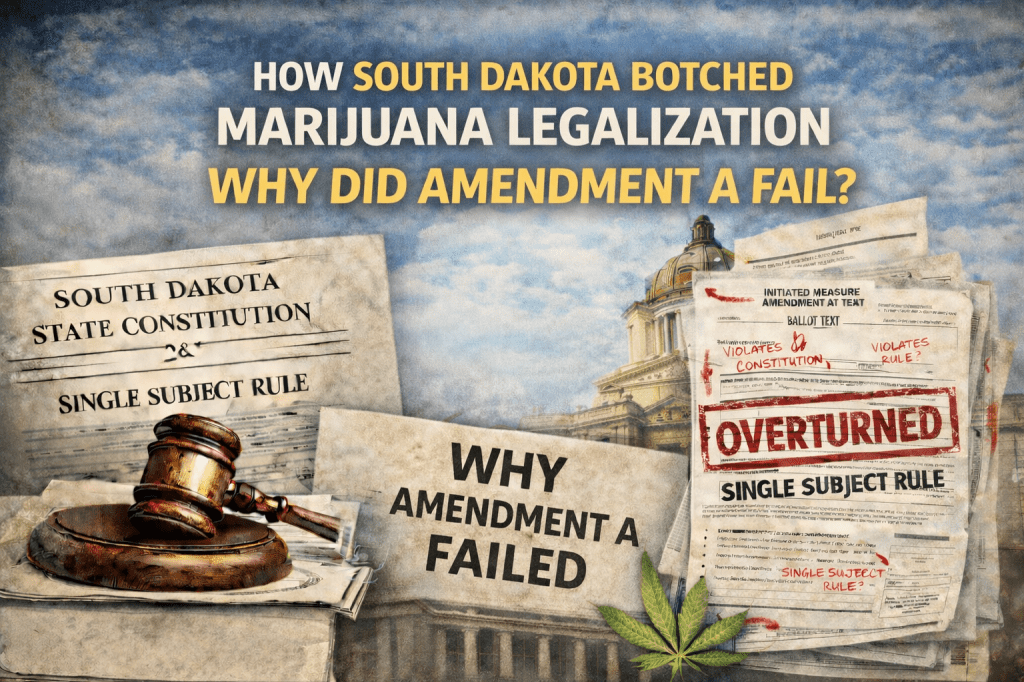
Leadership Matters: Strategy Failure — Not the Supreme Court — Doomed Legalization in South Dakota
Editors note: This piece analyzes past campaign strategy using publicly available court records and election results. When South Dakota voters approved Constitutional Amendment A in November 2020 to legalize, regulate, and tax marijuana, many supporters saw it as a historic victory for reform. But what followed — a legal challenge and a ruling from the…
-
No. 15 — The Uniform Controlled Substances Act and the Architecture of Modern Drug Scheduling
No. 15 — The Uniform Controlled Substances Act and the Architecture of Modern Drug Scheduling A Structural Analysis of State Scheduling Mechanisms in a Post-Medical Recognition Era By Jason Karimi | WeedPress Policy Series No. 15 March 1st, 2026 Note: The following notes were provided from Vicente LLP and are referenced in this article: I.…
-

Deadwood Was South Dakota’s Origin Story
Deadwood Was South Dakota’s Origin Story HBO’s western is not just about one outlaw camp. It is about the culture of theft, violated Lakota land, gold obsession, and rough power that helped shape the state By Jason Karimi | WeedPress March 26, 2026 HBO’s Deadwood is not a documentary. It is something more dangerous to…
-
Ziggy Marley’s “Racism Is A Killa” Uses Satire as a Public-Health Warning
Ziggy Marley’s “Racism Is A Killa” Uses Satire as a Public-Health Warning By Jason Karimi | WeedPress March 26, 2027 In the video for “Racism Is A Killa,” Ziggy Marley does not treat racism as a private flaw or a bad opinion. He frames it as a social sickness, and satire is the instrument that…
-
Court Rules
https://nebraskajudicial.gov/supreme-court-rules/chapter-6-trial-courts/article-11-nebraska-court-rules-pleading-civil-cases-effective-january-1-2025 https://nebraskajudicial.gov/external-court-rules/district-court-local-rules/district-6 priority: Rule 6-6 § 6-1505 § 6-1105 § 6-1107 Then the affidavit statutes §§ 25-1241 and 25-1245 8. Neb. Rev. Stat. § 29-2267 (probation revocation / increasing probation requirements) It says the court shall not revoke probation or increase probation requirements except after a hearing on proper notice where the violation is proved…
-
Iowa Medical Cannabis Board Hearing Friday March 27 (DETAILS)
Meeting Information: March 27, 2026 – Medical Cannabidiol Board Beginning at 10:00am on Friday, March 27 the first Medical Cannabidiol Board meeting of 2026 will be held virtually using the information below: Join this meeting using the following link: Zoom Link Passcode: 770850 Telephone: 669 –254- 5252 Webinar ID: 161-650-4929 * For those who wish to participate in the public comment…
-
No. 14 – The South Dakota Controlled Substances Act: Legislative Architecture, Intent, and Institutional Design in a Potential Federal Rescheduling Context
The South Dakota Controlled Substances Act: Legislative Architecture, Intent, and Institutional Design in a Potential Federal Rescheduling Context By Jason Karimi | WeedPress Policy Series No 14 March 24, 2026 I. Introduction As previewed in WeedPress White Paper No. 1, South Dakota adopted its Controlled Substances Act (“CSA”) in 1970 as part of a broader…
-
RFRA: A Case Law Survey
These RFRA cases show the recurring doctrinal questions courts ask: substantial burden, exhaustion, factual specificity, and whether courts—not agencies alone—may recognize exceptions. Oklevueha Native Am. Church of Haw., Inc. v. Lynch, 828 F.3d 1012, 1016–17 (9th Cir. 2016) (“RFRA itself provides no explicit definition of ‘substantial burden.’ However, we have held that the meaning of…
-
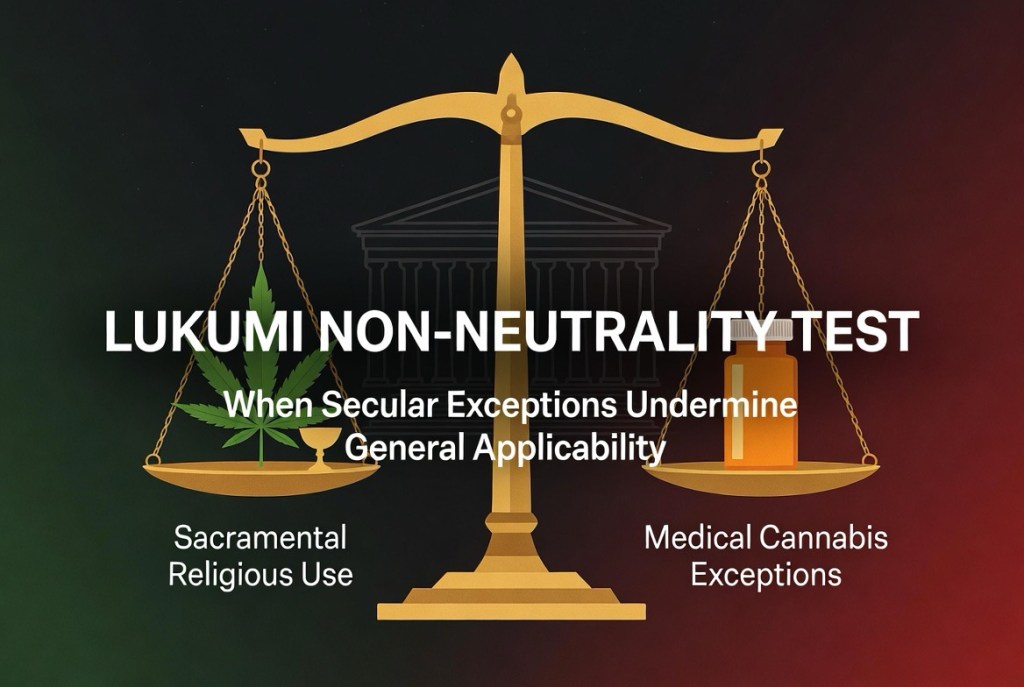
Why Medical Cannabis Programs Usually Don’t Trigger Lukumi Strict Scrutiny
Why Medical Cannabis Programs Usually Don’t Trigger Lukumi Strict Scrutiny Why take a detour to get to strict scrutiny when you don’t need to? State RFRA may be inferior to a world where Smith is overruled, but in actual cannabis litigation it is usually superior to relying on Smith exceptions alone. By Jason Karimi |…
-
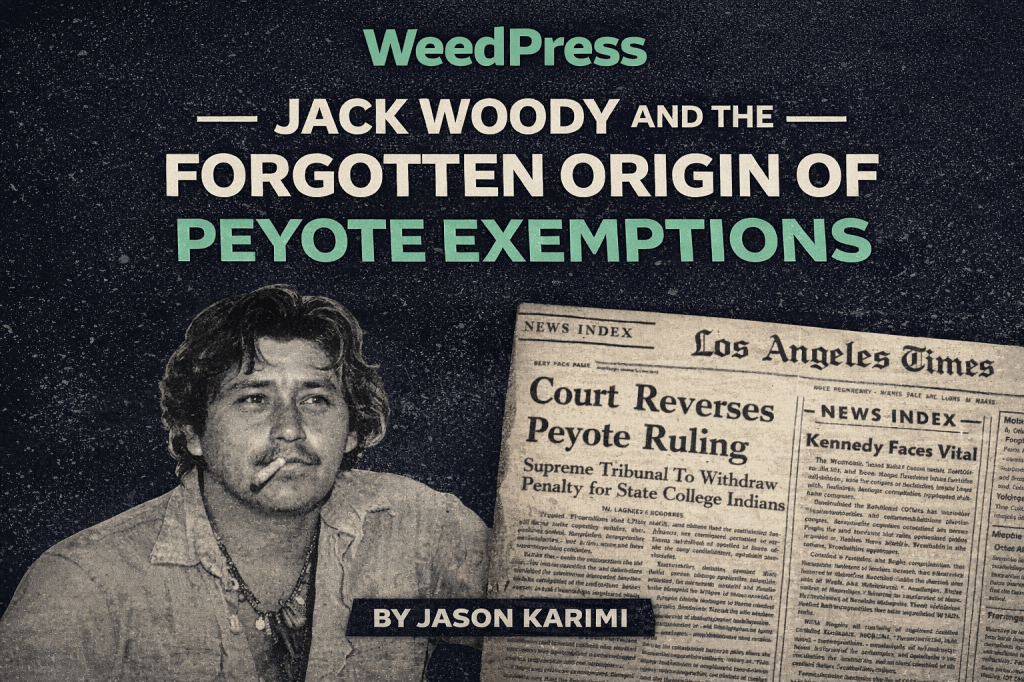
Jack Woody and the Forgotten Origin of Peyote Exemptions
Jack Woody and the Forgotten Origin of Peyote Exemptions By Jason Karimi | WeedPress March 23, 2026 Before peyote exemptions were narrowed into modern statutory categories, the issue was simpler: people were being prosecuted for practicing their religion. That is what People v. Woody was about. In 1964, the California Supreme Court reversed peyote convictions…
-
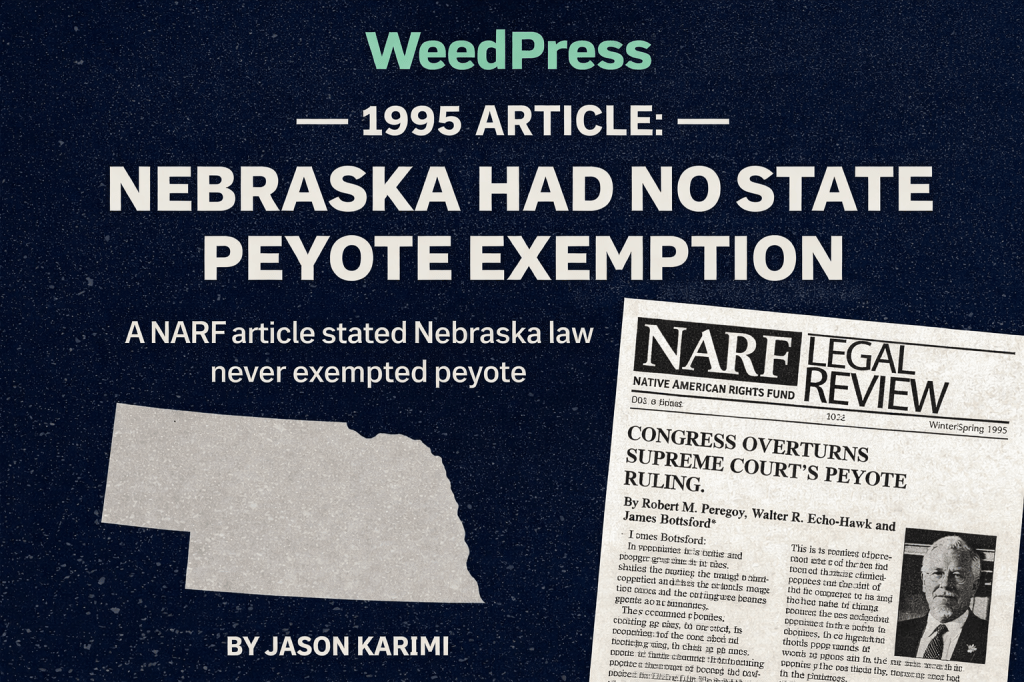
1995 Article: Nebraska Had No State Peyote Exemption
1995 Article: Nebraska Had No State Peyote Exemption By Jason Karimi | WeedPress March 23, 2026 A 1995 NARF Legal Review article states it plainly: “Nebraska state law never provided an exemption for the religious use of peyote by Indians.” The article explains that this created a practical problem in Nebraska. Native American Church members…
-

Freud’s Dirty Secret: How Candace Book Club Is Tearing Apart the Father of Psychoanalysis
Freud’s Dirty Secret: How Candace Book Club Is Tearing Apart the Father of Psychoanalysis By Jason Karimi | WeedPress March 22, 2026 The Assault on Truth and Sigmund Freud and the Jewish Mystical Tradition do not just question Freud’s legacy. They argue that modern psychoanalysis may have been built on suppression, repackaging, and intellectual disguise. Candace Owens’ book…
-

The Real Tactical Choice in Religious-Cannabis Litigation: RFRA or Section 1983?
The Real Tactical Choice in Religious-Cannabis Litigation: RFRA or Section 1983? A major strategic question is emerging in religious-cannabis litigation, and it is bigger than any one state. If a Rastafarian plaintiff is challenging marijuana restrictions as applied to religious use, what is the best vehicle: a state Religious Freedom Restoration Act, or 42 U.S.C.…
-
Today’s Probation Meeting Matters More Than It Looks
Today’s Probation Meeting Matters More Than It Looks Today’s meeting with probation may end up being one of the most important timeline entries in this entire case. At the meeting, my probation officer indicated that he had been planning to administer a UA. But once the pending religious evidentiary hearing was part of the picture,…
-
South Dakota DOH Avoids the Merits on Cannabis Scheduling, Hides Behind Procedure
South Dakota DOH Avoids the Merits on Cannabis Scheduling, Hides Behind Procedure The Department of Health did not defend cannabis Schedule I status on the merits. It said Jason Karimi used the wrong procedural vehicle, declined to resolve the statutory conflict, and left the core contradiction untouched. By Jason Karimi | WeedPress March 19, 2026…
-
Cannabis Federalism After Medical Recognition
Cannabis Federalism After Medical Recognition Administrative Record, Rational Basis, and Vertical Separation of Powers Jason KarimiWeedPress White Paper No. 1March 17 2026 ⸻ Executive Summary Federal acknowledgment that cannabis has “currently accepted medical use” under the Controlled Substances Act (“CSA”) would not merely reclassify a substance. It would recalibrate the constitutional and evidentiary framework within…
-
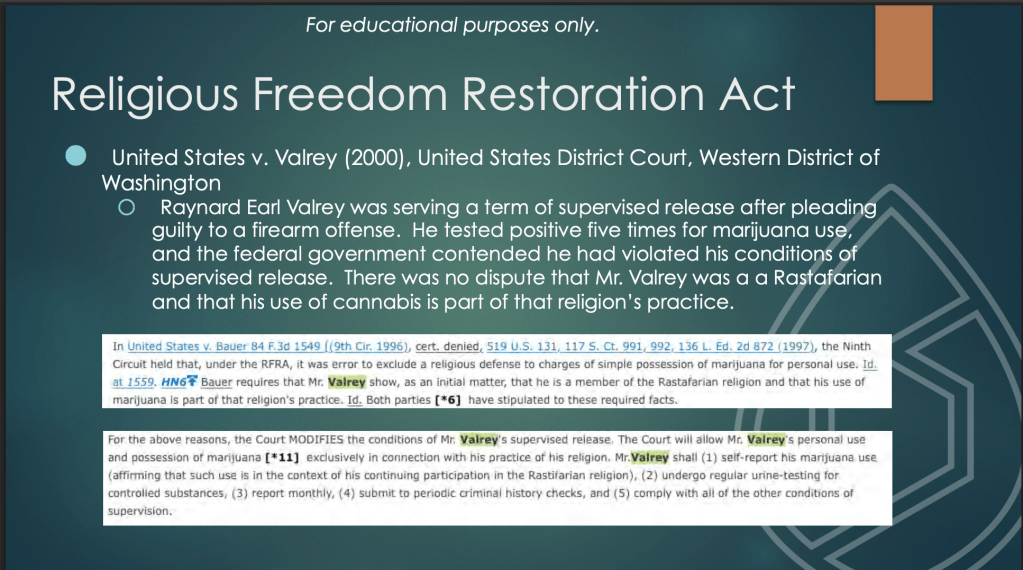
United States v. Valrey: Federal Probation Exemption Granted For Marijuana Use
United States v. Valrey (sometimes spelled Valery or Vairey in references, but most commonly cited as Valrey), decided on February 22, 2000, by the U.S. District Court for the Western District of Washington (case number CR96-549Z or similar). It’s an unpublished district court opinion (2000 WL 692647), meaning it’s not in the official Federal Reporter…
-
The Hidden Pattern Behind Religious Drug Exemptions: They’re Granted Because the Faiths Are Indigenous
The Hidden Pattern Behind Religious Drug Exemptions: They’re Granted Because the Faiths Are Indigenous By Jason Karimi | WeedPress March 16, 2026 In the decades-long “War on Drugs,” nearly every controlled substance is treated the same: illegal, dangerous, zero tolerance. Yet three high-profile exceptions keep popping up—peyote, ayahuasca, and cannabis in Rastafarian practice. Courts, legislatures,…
-
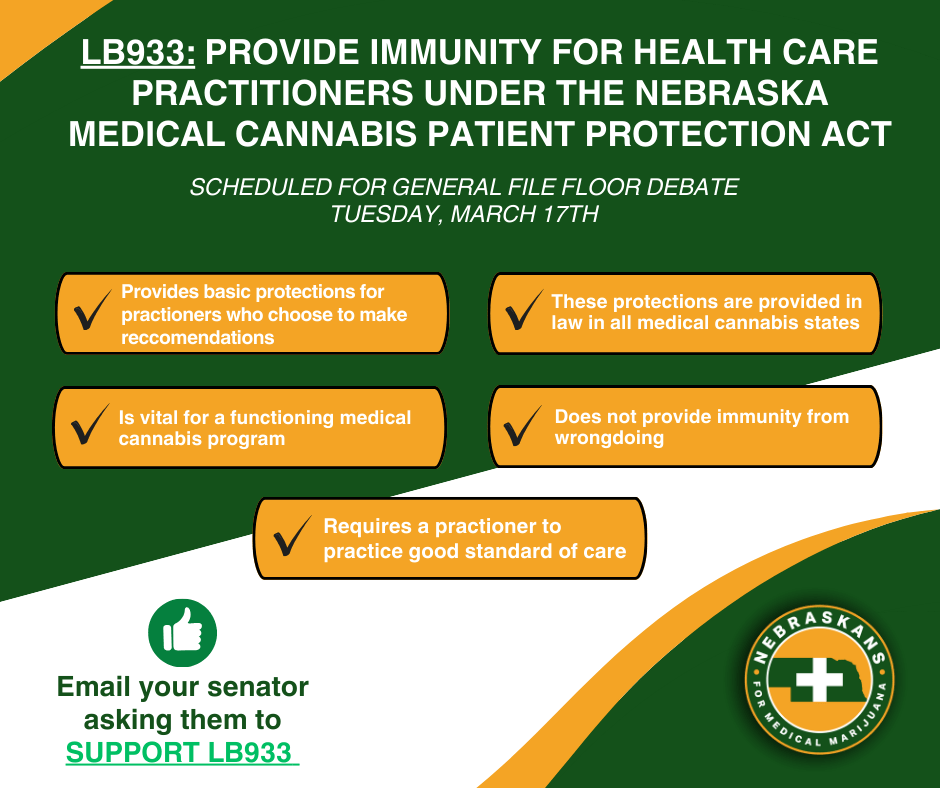
Nebraska Voters Approved Medical Cannabis. Now Protect the Doctors Who Make It Possible
Nebraska Voters Approved Medical Cannabis. Now Protect the Doctors Who Make It Possible Nebraska voters spoke when they approved medical cannabis. But a medical program cannot exist without doctors willing to recommend it. Right now, Nebraska law does not provide basic protections for physicians who choose to recommend cannabis to their patients. That means doctors…
-
HB 1160 Went Down in the Senate: South Dakota’s MMOC Repeal Bill Fails After Smoke-Out
HB 1160 Went Down in the Senate: South Dakota’s MMOC Repeal Bill Fails After Smoke-Out By Jason Karimi | WeedPress March 11, 2026 South Dakota’s effort to repeal the Medical Marijuana Oversight Committee has now stalled in the Senate. HB 1160 was first killed in Senate Health and Human Services on March 4, when the…
-
Iowa Advances HSB 687 as the State Starts Questioning Its Own Cannabis Tax Hypocrisy
Iowa Advances HSB 687 as the State Starts Questioning Its Own Cannabis Tax Hypocrisy By Jason Karimi | WeedPress March 11, 2026 On March 10, Iowa lawmakers moved HSB 687 forward when a House Ways and Means subcommittee recommended passage, advancing a bill that would let licensed medical cannabis manufacturers and dispensaries deduct qualifying business…
-

No. 13 — Criminal Prosecution After Federal Medical Recognition: Motions Practice, Rational Basis, and Schedule I Litigation Exposure
No. 13 — Criminal Prosecution After Federal Medical Recognition: Motions Practice, Rational Basis, and Schedule I Litigation Exposure By Jason Karimi | WeedPress Policy Series No. 13 | March 10, 2026 ⸻ Abstract Federal rescheduling of cannabis based on a determination of “currently accepted medical use” alters not only regulatory classifications but also the litigation…
-
Why Formal Process Matters in Cannabis Reform: My South Dakota DOH Petition
Why Formal Process Matters in Cannabis Reform: My South Dakota DOH Petition By Jason Karimi | WeedPress March 8, 2026 When I filed my petition with the South Dakota Department of Health, I already knew some people would hate it. Not because it was sloppy. Not because it was unserious. Not because it lacked legal…
-
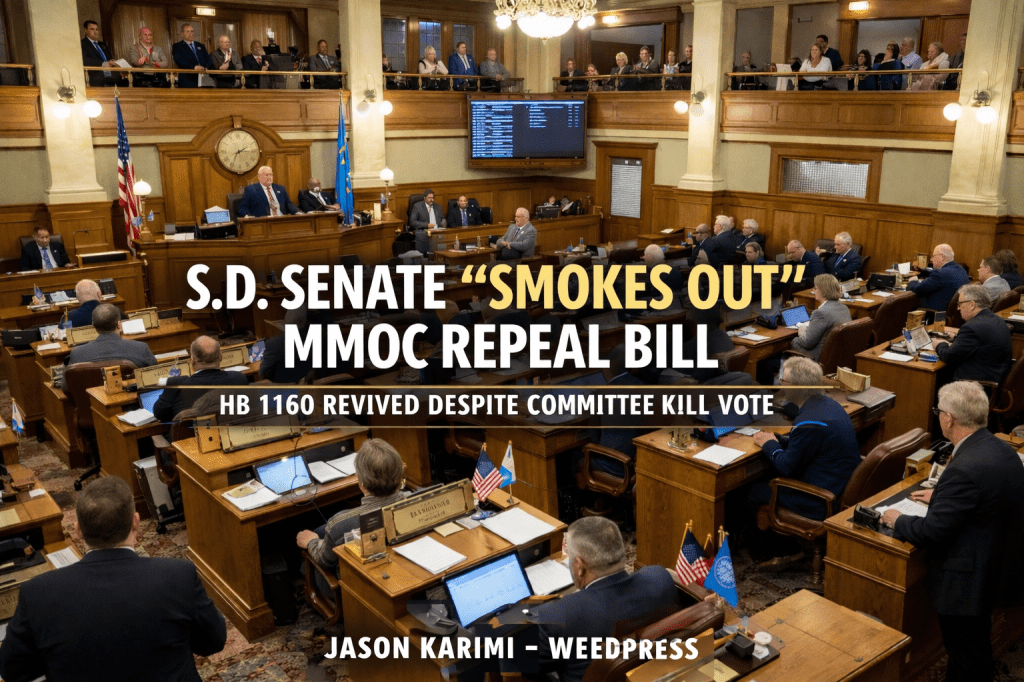
South Dakota Senate Uses “Smoke-Out” Procedure to Revive MMOC Repeal Bill
South Dakota Senate Uses “Smoke-Out” Procedure to Revive MMOC Repeal Bill By Jason Karimi | WeedPress March 6, 2026 In a procedural move that underscores how legislative strategy can override committee decisions, the South Dakota Senate has revived HB 1160, the bill that would eliminate the state’s Medical Marijuana Oversight Committee (MMOC). Just one day…
-

Iowa Moves to Give Medical Cannabis Operators State Tax Relief Under HSB 687
Iowa Moves to Give Medical Cannabis Operators State Tax Relief Under HSB 687 By Jason Karimi | WeedPress March 6, 2026 Iowa lawmakers have introduced House Study Bill 687, a tax measure that would let licensed medical cannabis manufacturers and dispensaries deduct ordinary business expenses on their Iowa tax returns even though those same deductions…
-
No. 12 – Federal Rescheduling as a Preemption Trigger — How Acknowledged Medical Use Constrains State Schedule I Enforcement
Federal Rescheduling as a Preemption Trigger — How Acknowledged Medical Use Constrains State Schedule I Enforcement By Jason Karimi | WeedPress | March 6, 2026 ⸻ Abstract Federal cannabis rescheduling premised on a finding of “currently accepted medical use” carries implications beyond regulatory reclassification. This Article argues that formal federal acknowledgment of medical legitimacy materially…
-
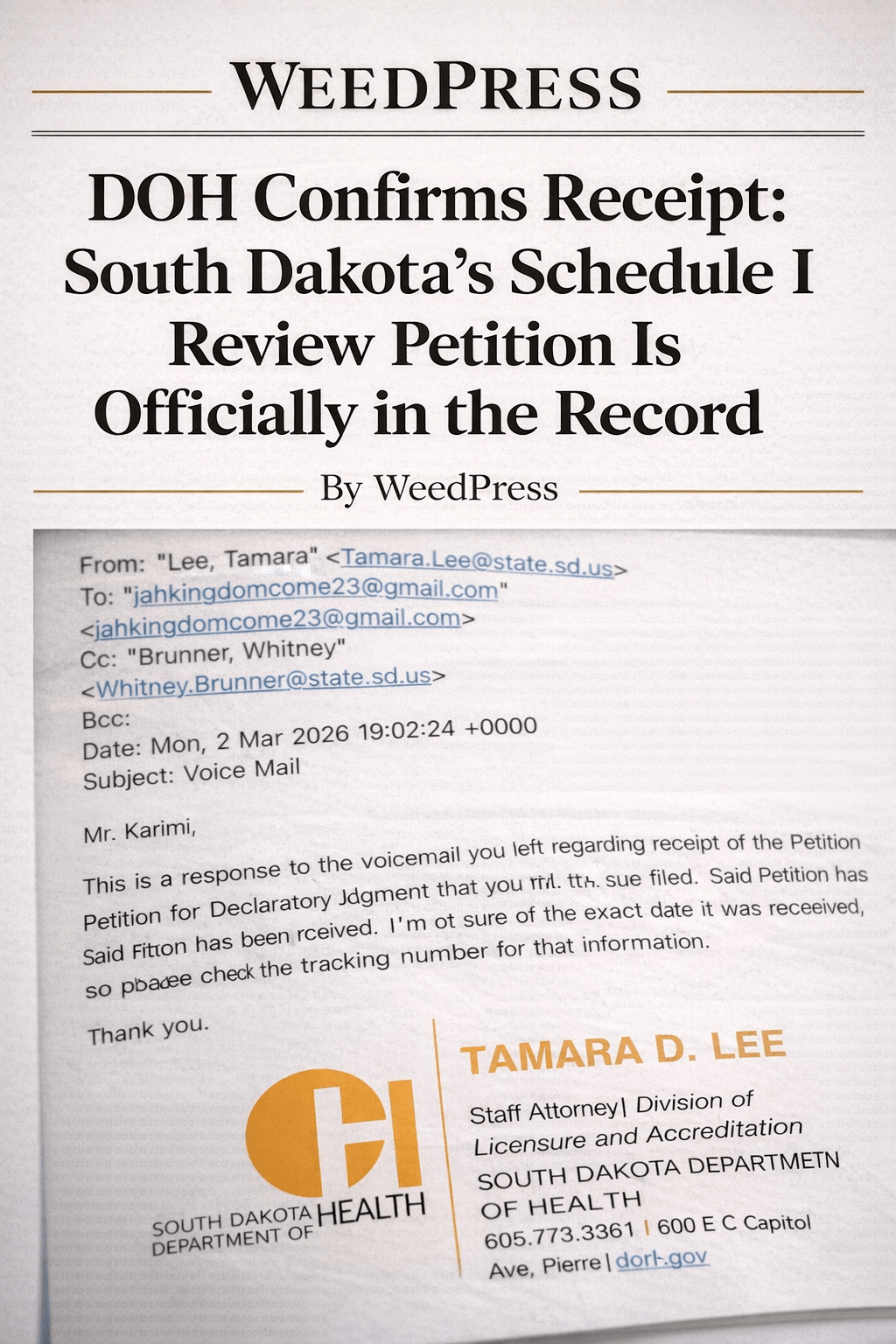
DOH Confirms Receipt: South Dakota’s Schedule I Review Petition Is Officially in the Record
DOH Confirms Receipt: South Dakota’s Schedule I Review Petition Is Officially in the Record By Jason Karimi | WeedPress March 5, 2026 Previously on WeedPress: The South Dakota Department of Health has now confirmed it received my Petition for Declaratory Judgment and Mandatory Scheduling Review of Cannabis. This matters for one reason: it removes any…
-
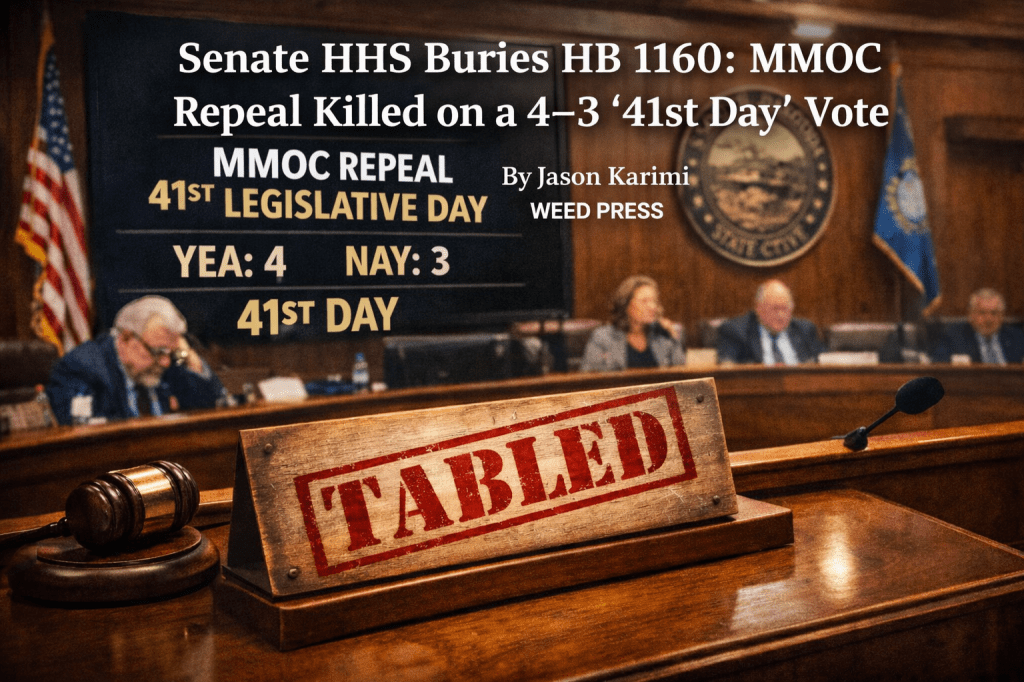
Senate HHS Buries HB 1160: MMOC Repeal Killed on a 4–3 “41st Day” Vote
Senate HHS Buries HB 1160: MMOC Repeal Killed on a 4–3 “41st Day” Vote By Jason Karimi | Weed PressMarch 5, 2026 South Dakota’s bill to repeal the Medical Marijuana Oversight Committee (MMOC) is effectively dead. On Wednesday, March 4, 2026, Senate Health & Human Services voted to defer HB 1160 to the “41st legislative…
-
South Dakota Tried to Cap Cannabis Patient Care: Inside the Senate Rebuttal That Exposed SB 194
South Dakota Tried to Cap Cannabis Patient Care: Inside the Senate Rebuttal That Exposed SB 194 By Jason Karimi | WeedPress March 4, 2026 During the South Dakota Senate Health and Human Services Committee hearing on SB 194—the bill to impose THC potency caps on medical cannabis products—Sen. John Carley used an unusual rebuttal tactic:…
-
Don’t Punish Patients for Federal Uncertainty: My Testimony Opposing SB 181
Don’t Punish Patients for Federal Uncertainty: My Testimony Opposing SB 181 By Jason Karimi | WeedPress March 6, 2026 Video record: https://youtu.be/3u0VY7OIvlI South Dakota Senate Health & Human Services Committee — February 11, 2026 On February 11, 2026, I spoke twice to the South Dakota Senate Health & Human Services Committee to oppose two bills…
-
No. 11 – Equal Protection and Economic Protectionism in Cannabis Licensing: Classification, Remedial Design, and Constitutional Limits
Equal Protection and Economic Protectionism in Cannabis Licensing: Classification, Remedial Design, and Constitutional Limits By Jason Karimi | WeedPress Policy Series No. 11March 3 2026 The prior essays examined how cannabis rescheduling may trigger Dormant Commerce Clause challenges and Supremacy Clause preemption disputes. But constitutional scrutiny does not arise only from interstate commerce or federal…

