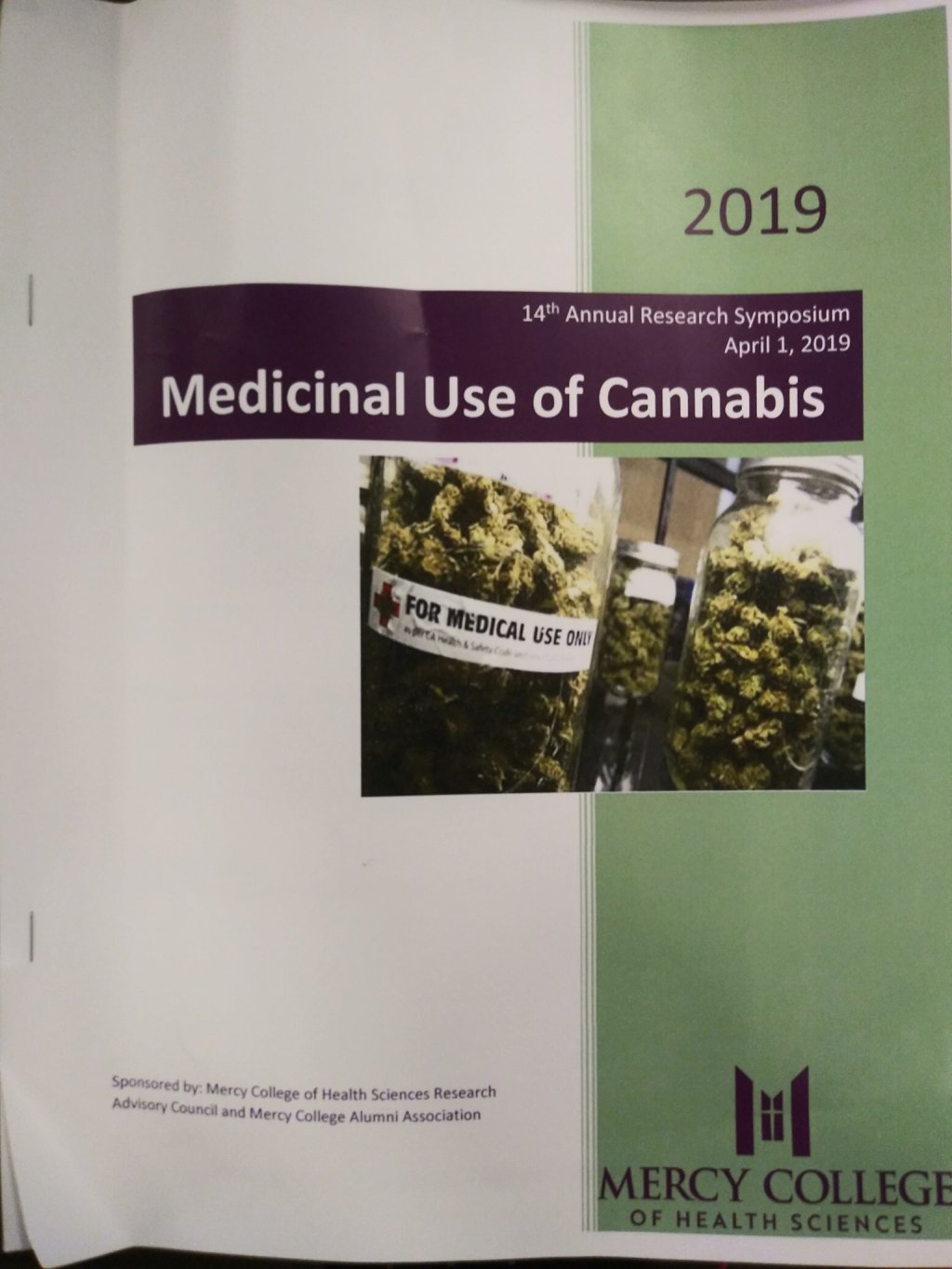
The following are my notes from today’s symposium. I arrived late, so here’s some of the information from the handout they had at every seat for people.
Page 1 of 8:
“It is my pleasure to welcome you to the 14th annual Research Symposium at Mercy College of Health Sciences. Knowledge is a core value of this institution and this symposium is a living example. We articulate the value of knowledge as “The ability to instill in our college community a thirst to continually study, observe, and investigate the world for facts and ideas that can improve the health and well-being of humankind, as well as create a love for learning.” Through this symposium, participants will be challenged to consider the medicinal use of cannabis to improve health and well-being for individuals as well as the implications for the larger community. We invite you to join in the dialogue with our presenters and each other as we investigate this important topic.
“This symposium would not be possible without the hard work and dedication of the Research Advisory Council. Thanks to Dr. Victor Babich, Linda Knowles, Dr. Robert Loch, Dr. Jeannine Matz, Dr. Joan McCleish, Dr. Truc Nguyen, Dr. Theresa Smith, Dr. Rebecca Steidl, Dr. Joelle Stolte, Jennie Ver Steeg, and Julie Weldon. Special thanks to our presenters Owen Parker, Dr. Karry Smith, Dr. Thorsten Rudroff, and Rebecca Lucas.”
Dr. Jennifer Miller
Mercy College of Health Sciences, Academic Affairs
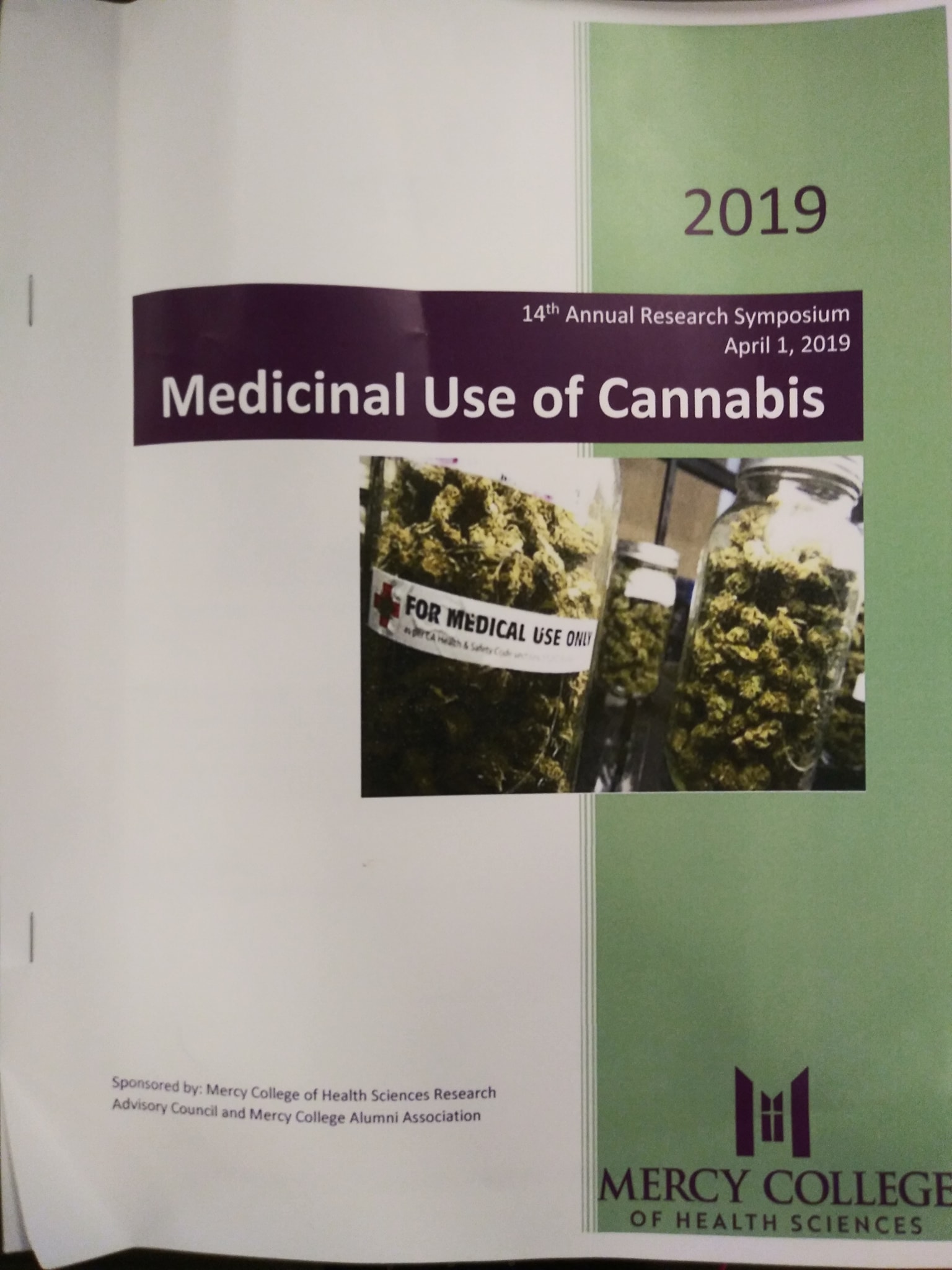
WeedPress notes follow Agenda Outline:
Agenda
11:30-11:45 am Poster Setup
12:00-12:30 pm Registration, Poster Viewing
12:30-12:35 pm Welcome
12:35-1:10 pm Owen Parker, MPH Iowa Department of Public Health Program Manager, Office of Medical Cannabidiol
Iowa medical Cannabidiol Law Implementation
Mr. Parker will review the medical cannabidiol law as it pertains to program stakeholders and identify educational materials provided by the department. He will review the history of Iowa’s medical cannabis program, and provide an overview of how Iowa’s medical cannabis program compares to those of other states. he will discuss how proposed expansion bills could impact Iowa’s program.
1:10 – 1:45 pm Karry Smith, PhD, MPH MedPharm Iowa Consultant
Technical Primer for Medical Cannabis
Dr. Smith will describe the basics of the endocannabinoid system, and the different classes of cannabinoids (THC, CBD, CBN, and others). She will analyze current pharmaceutical agents (Sativex, Marinol, etc) and discuss the current state of cannabinoid research (safety, toxicity, drug-drug interaction).
1:45 -2:15 pm Poster Session
2:15-3:15 pm Thorsten Rudroff, PhD, FACSM, University of Iowa Assistant Professor, Department of Health & Human Physiology
Research on the Effects of Cannabis Use in Multiple Scerosis – Dazed and Confused?
Dr. Rudroff will present information on the use of cannabis in treating patients with multiple sclerosis. He will analyze gaps in knowledge surrounding cannabinoid treatments for multiple sclerosis, and identify future directions for research.
3:15-3:45 pm Rebecca Lucas, BS, MedPharm Iowa Technical Development Manager
Medical Cannabis in Iowa – A Manufacturer’s Perspective
Ms. Lucas will describe the cannabinoid manufacturing process at MedPharm Iowa (growing of plants, extraction of oil, formulation of products, testing procedures). She will discuss the patient experience and the dispensary process, and the current challenges for MedPharm Iowa and other Iowa dispensaries.
3:45-4:15 pm Panel Q & A
Owen Parker, Karry Smith, Thorsten Rudroff, and Rebecca Lucas
4:15-4:30 pm Awards and Evaluations
**********************************************************************************

Seeing as I was late my notes begin here:
“Research on the effects of cannabis use in Multiple Sclerosis – Dazed and Confused?”
By Dr. Thorsten Rudroff
Outline:
1. What is Multiple Sclerosis
2. Medical Marijuana: THC & CBD
3. Medical Marijuana & MS
– Current status of marijuana use in MS
– What we know
– What we need to know
4. Medical Marijuana and what we need to know: the way forward
Went over symptoms, myelin sheath issues
– Pain symptoms: 63.2% of patients
– Emotional change: 53.9% of patients
Medical Marijuana & Neurological Disease
– Increasing legalization & availability
– Neurologically relevant studies
– But HUGE challenges for public and professionals
– Emotional responses
– Political/media/business interests
– Difficult to find objective safety & effectiveness
MMJ/Cannabis
– Complete plant has over 400 compounds
– 60 different compounds medically recognized (main ones: THC, CBN, CBD)
THC
– Broad therapeutic potential
– Putative deficiencies & problems
Adverse side effects
Acute effects:
– Anxiety, paranoia
– Harms are dose dependent, offset by CBD
Chronic effects:
– Dependence, psychosis, cognitive impairment
THC levels and THC/CBD ratios have increased in two decades
Case Report
– Marijuana lollipop-induced myocardial infarction
– Alexander Saunders, MD (author of study)
– 70 year old man w/CAD, painful Osteoarthritis
– After 75% of 90 mg THC lollipop, patient experienced heart pains, acute anxiety, more
– Psychoactive component responsible
Note on side: During speech, repeatedly referred to THC as “bad guy” or implied, explicitly referred to CBD as “good guy”
Cannabis as a cause of death — study by Olaf H Drummer, Noel Woodford
CBD Cannabidiol
– Not risk free, as it has both drug interaction and adverse potential
– Somnolence and fatigue coupled with gastrointestinal disturbances not uncommon
– Because CBD is effective anticonvulsant therapy, FDA is concerned might cause suicidal ideation
Medical Marijuana and MS
– Nothing of interest specifically, generic info
Research Studies/Issues
– Cannabis is a Schedule I
– Studies are short, two weeks average, ranging from a few hours to one year
Cannabis and MS – What We Know
– Class I studies are the best
– Marked or objective outcome assessment
– Concealed allocation
– Blinding
– Class II studies: lacks one criterion
– Class III studies: lacks a ton of criterion
Spasticity: 3 Class I studies
– Found no objective differences between orally ingested THC/CBD
– There were subjective differences usually in a visual rating scale (Varey et al, 2004; Zajieck et al 2003, 2012)
Pain for MS
– Same 3 studies above plus 1 other
– Each study showed that pain, measured as a subjective outcome in measurement
What We Know
Spasticity: oral cannabis is effective
Pain: CBD effective, THC probably effective — needs more good science studies
Bladder Symptoms: studies are not conclusive as to effectiveness
Tremors: Studies show zero effectiveness so far
Smoked Marijuana
– No Class I or II studies
– Class III does not show effectiveness
American Academy of Neurology Recommendations
– Main: CBD equal to or higher than THC with ratios
Adverse effects
– 1619 patients in study, 7% of patients stopped using due to adverse effects (ie, anxiety); 1% had severe effects (ie, suicidal ideation)
Study by Dr. Rudroff (the speaker giving presentation)
– Purpose: measure and compare resting brain glucose metabolism in non-users and users
– Hypothesis: Cerebral glucose uptake is lower in cannabis users than non-users
– Hypothesis 2: Cannabis users perform worse on clinical tests
– Used PET imaging
– PASAT test (cognitive tests) cannabis users performed worse than non-users
– MS patients already have cognitive deficits
– Cerebral Glucose Uptake
– Did not find differences in cerebellum anterior or posterior in spite of expecting differences
– Brain Stem Glucose Uptake
– No difference (I think… may be wrong on notes here)
Conclusions
– Lower cognitive performance consistent with scientific literature
– No difference in glucose uptake
– Made a point to say even with low use of THC, urine analysis tested positive
Chronic THC use increased cerebral glucose metabolism in PwMS
– Changes mostly lateralized in left temporal lobe
– Similar THC-induced hypermetabolism associated with executive dysfunction and psychosis
– Existent problems that may be exacerbated in MS patients
– Chronic CBD use decreased cerebellum glucose met in PwMS
– Changes mostly in left temporal lobe
– May positively impact of comorbidity anxiety and depression in MS
What we need to know/MS
– More studies that are objective (emphasis added)
Study on labeling – (Vandrey et al. 2015)
– 75 products purchased, 17% were accurately labeled, 23% were underlabeled, 60% overlabeled on THC content
– 84 products purchased online, 26% contained less CBD than labeled (Bown-Miller et. al 2005)
MS and Medical Marijuana – The Way Forward
– Research takes $$$ – Substantial increase in the number of research grants in medical marijuana required
– Online survey showed that 50% of PwMS already use cannabis without medical card and any scientific oversight or input
– National MS society and NIH hesitant to support further research into benefits of cannabis in MS
– Investigators required to possess DEA schedule I license in order to perform interventional studies, which is the biggest challenge
– Schedule I is why
– Shit tier quality cannabis a core issue
One last comment from Dr. Rudroff
– Painful lesson: are we repeating prior mistakes in pain management, ie, opiates for pain had weak evidence, lead to overdose crisis, etc
********************************************************************************

Medical Cannabis In Iowa: A Manufacturer’s Perspective
Presenter: Rebecca Lucas
Dr. Chris Nelson mentioned, owner, Kemin Industries, Iowa company
– 26 years experience growing plants and dealing with plant molecules in scientific setting
– Decided to start MedPharm
– “Kemin is an Iowa based company, so it’s really important to facilitate the needs of Iowans,” says Rebecca.
– “We weren’t impressed by what the patient experience was like”
– “For Iowa we expected better”
– “Wanted to get a program that set the standard around the nation”
MedPharm team listing, outline process from growing, to extraction, delivery, dispensing, and finally, the final process outlined was educating
Went through growing
– “People thought we were growing huge farms outside”
– Continuing “In reality it’s more controlled”
– Important: having strict biosecurity, controlling for pests and contaminants etc
– “In World War II Iowa was number one or two of the top hemp growing states”
– “Harvesting earlier in the growing cycle gets higher cannabinoid content”
– Claims 90% purity of product from multistep purification and distillation via super-critical Co2 extraction
– External testing @ Iowa City lab as well as internal testing by MedPharm happens to ensure product quality, safety
Security
– Limited access | Camera monitoring | Seed to Sale
– “Diversion and abuse of the program helps no one in the program”
– Dispensaries:
– Physicians come in to do mock consults to learn what patient experience is like
Our Process:
– Patient intake form
– Consultation
– Product suggestion
– Side effects explainer – Drug interactions, especially with drugs for anti-epileptics, generally have liver enzymes tested as well
– Titratin explainer (Ie, warfarin (sp?) medicated and see side effects stop using cannabis medications, etc)
– Patient journals (Ex: symptoms, severity of symptoms, doses taken daily)
Consults with patients take 15 minutes to a full hour depending on patient needs
Went through product lines Calm, Soothe, Harmony, Comfort (all have different THC/CBD ratios)
Calm 20:1 ratio based on Israel’s ratio for pediatric epilepsy
– Similar to Charlotte’s Web ratio
– Can be titrated for pediatric use
Harmony 1:1 – based on GW Pharmaceuticals “Sativex”
– Secondary base for adult seizure conditions
Comfort: 1: 20 – similar to Dronabinol
– Contains CBD for side effect cushioning
– Some patients use as “bolus dose” at night
Start-up struggles
– First state medical program to start on time
– More focus on getting off the ground than optimization
Challenges during startup
– Stigma
– CBD confusion
– Misinformation/ Non-information
Rebecca calls the name of the program (Iowa Medical Cannabidiol Act) “a little bit of a misnomer”
CBD through hemp farm bill is not legal in Iowa
Constructive feedback:
– Oral forms take too long for patients; expensive program; bottles are hard to open for weak patients, patients with pain issues in hands, etc
– Less than 200 to greater than 2100 patients
– Less than 100 to greater than 600 unique certifiable physicians for program
– Doses from 2.5 mg/day THC and up
– Average daily dose right around 40 mg THC
Response:
– On the whole: positive
– Increased buy-in from health care community
– Part of Windsor Heights Chamber of Commerce
– Advocacy event participation
– Improved quality of life for each patient
– Not so much improved quality for GI patients
– Increased understanding of program and laws
Success stories
– Female patient in Iowa able to play church organ again after using Harmony tincture
MedPharm’s Legislative Priorities
– THC Cap
– Formulation cap
– Increasd THC for vaporizer products needed
– THC cap needed
– Increased conditions
– PTSD
– Redefine pain
– Changes in MS definition
– Increased provider certification
– Open up to NP’s and physician assistants
Join the conversation:
– 1. Ask questions
– 2. Advocate
– 3. Stay informed
Resources
– WHO – Pre-review of cannabis (2018)
– National Academies of Science
– Israel
– Two others I missed
*****************************************************************************

Enter a caption
Panel Question and Answer with the four presenters
Rebecca mentioned petitioning to add conditions
Karry posits there’s a split in the addiction field
– Harm reduction vs just another problematic drug of abuse with no benefit
– Cannabis may be able to help patients get off harder drugs according to experts in the field but not everyone is open to that discussion currently
– No good double-blind placebo studies
Owen says average patient age in Iowa is 59 to 60 years old across all regions
Owen: “We can’t provide protection for those in government facilities (nursing homes that receive federal funding for example)
– “Those facilities are accountable to federal regulations”
– “It really takes federal rescheduling”
– Private facilities may allow at their discretion
Question from audience member who works in palliative medicine field:
– Can they test you if pulled over by police?
– Owen: No way to do that, whoever invents an accurate test will be very rich in this industry, nobody has achieved that thus far
– Rebecca says Hound Labs in Colorado is only lab aware of that does that, but can only tell if you smoked it, can’t tell from oral consumption
2nd question from palliative care worker: Worried about credibility, asks if there is a synthetic substitute for medical cannabis and if the synthetic substitute is an appropriate substitution for their patients.
Average cost to patient?
– Rebecca: 30 to 130 a month depending on dose needed
– Pricing research shows cost of Iowa program is below that of national average
WeedPress questions asked:
Dr. Rudroff emphasized need for objective studies during presentation. Have studies been biased in regards to Schedule I status or is there another reason for biased studies?
Why is NIH and National MS Society hesitant to research benefits?
– Opinion: “They don’t want to see the benefits of cannabis…this is my opinion. This is my impression.” – Dr. Rudroff
Did Rebecca say hemp is not legal in Iowa?
– Rebecca said while farm bill legalized federally Iowa outlawed all CBD and hemp products not available through medical formula.
**********************************************************************************
Will add rest of handout and literature given out at later time.



Editor’s note: Our original article inaccurately reported Kemin Industries having 26 years experience growing cannabis plants. A MedPharm representative commented to clarify and stated “Per Kemin’s growing experience, this is with non-cannabis plants, for molecules of interest. Plants Kemin grows include Rosemary and Marigolds.” Apologies for the inaccurate information.


 WeedPress: The Paper Trail
Leave a comment