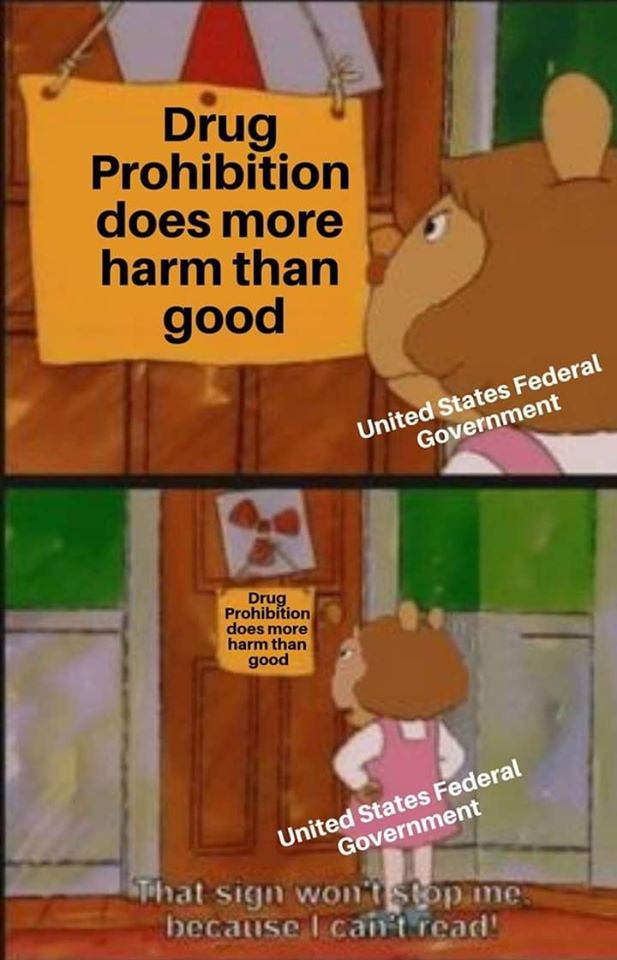
Judges applying the law sporadically and without consistency make the question of state vs federal marijuana laws a ripe issue for the US Supreme Court (SCOTUS). SCOTUS is likely going to have to resolve this issue by giving guidance to be applied equally in every state across the country. Right now, the law is being applied unequally — making challenges to probation drug testing laws under equal protection principles a worthy target for patients who cannot tolerate other medications but have to deal with probation, or parole.
Here is one story about a judge in NW Arkansas allowing medical marijuana to be used by people on probation:
https://www.ktlo.com/2021/11/15/probation-and-parole-a-problem-for-medical-marijuana-users/
At least one circuit judge in Northwest Arkansas has allowed a probationer with a medical marijuana card to continue to use his card.
The same judge denied another defendant’s request because the crime the person committed was based on inappropriate sexual behavior.
The judge said all such requests in his court would be handled on a case-by-case basis.
In Arkansas, enforcement of probation and parole terms and conditions is vested in the office of Arkansas Community Corrections (ACC).
A spokesman for ACC in Little Rock said the agency only enforces conditions set by a judge in the case of probation and the state parole board for parolees. The ACC spokesman said the agency “defers to the judge to determine if the individual probationer is permitted to use medical marijuana while under supervision.”
FEDERAL POLICY CHANGE WOULD SOLVE PROBLEM
As long as marijuana use is considered a crime by federal law, the issue of medical marijuana for those on probation and parole will leave courts in states where it is legal with no clear cut guidance as to how to proceed without violating federal law.
Unless a change is made in federal policy, a Little Rock defense attorney said that guidance from higher courts is needed to bring “clarity and consistency” to the issue.
Currently, the “look the other way approach” has come in for criticism because there is no guarantee all parts of the justice system will agree to avert their eyes from what is now clearly a federal crime.
In addition, according to some legal experts, a change in federal policy would also remove the threat that “when the political winds blow in a different direction, the feds might opt to throw the “look the other way’ approach out the window.”
The federal criminalization of marijuana also creates problems for those in the business of cultivating and selling the product.
Some financial institutions across the U.S., for example, won’t handle the accounts of businesses involved in growing and selling marijuana for fear they might be held criminally liable in some fashion under existing federal law.
If the federal policy isn’t changed, many legal experts believe the issue could go to the U.S. Supreme Court based on an equal protection question.
 WeedPress: The Paper Trail
Leave a comment