Here’s the fully footnoted draft and is worth downloading as the below text does not include formatting or footnotes:
And no, I do not present this as perfected nor even legally correct as I am not an attorney. All feedback welcome at this blog in the comments. I will edit and vet this – it still needs additional work obviously — in the coming weeks. Current time taken to type this up: 6.5 hours.
Motion to dismiss draft – Schedule One nullified as a matter of law and not science.
21 U.S. Code § 812 – Schedules of controlled substances
(a)Establishment
There are established five schedules of controlled substances, to be known as schedules I, II, III, IV, and V. Such schedules shall initially consist of the substances listed in this section. The schedules established by this section shall be updated and republished on a semiannual basis during the two-year period beginning one year after October 27, 1970, and shall be updated and republished on an annual basis thereafter.
(b)Placement on schedules; findings required
Except where control is required by United States obligations under an international treaty, convention, or protocol, in effect on October 27, 1970, and except in the case of an immediate precursor, a drug or other substance may not be placed in any schedule unless the findings required for such schedule are made with respect to such drug or other substance. The findings required for each of the schedules are as follows:
(1)Schedule I.—
(A)The drug or other substance has a high potential for abuse.
(B)The drug or other substance has no currently accepted medical use in treatment in the United States.
(C)There is a lack of accepted safety for use of the drug or other substance under medical supervision.
Cannabis has a currently accepted medical use both as a matter of law since California first accepted the medical use of cannabis in treatment in the United States in 1996 AND as a matter of science as of January 12th, 2024, when HHS released an unredacted 252 page ruling to the public:
Federal health officials said their review found that more than 30,000 healthcare professionals “across 43 U.S. jurisdictions are authorized to recommend the medical use of marijuana for more than six million registered patients for at least 15 medical conditions.” – Marijuana Moment
Nebraska, whose laws regarding the controlled substances act are verbatim copied from this federal statute, has failed to “update and republish” on a regular basis the scheduling of cannabis and, having been derelict in upholding the peace, security, and dignity of Nebraska’s public safety laws, today leaves this court no other choice but to rule in favor of the defendant’s motion to dismiss in this case, ordering the removal of cannabis from the Nebraska schedule one classification of Nebraska’s copycat state CSA, which is taken from the Uniform Controlled Substances Act at the federal level.
A critical case, Case number A-22-851232-W CANNABIS EQUITY AND INCLUSION COMMUNITY (CEIC), a domestic nonprofit corporation; ANTOINE POOLE, an individual,Petitioners/Plaintiffs,vs.STATE OF NEVADA ex rel. BOARD OF PHARMACY, a public entity of the State of Nevada, updated at the ACLU website at this URL, is summarized as follows and is critical for understanding why Nebraska’s schedule one classification of cannabis is nullified as a matter of law, since 47 states and jurisdictions statutorily define cannabis as having accepted medical use in the United States.
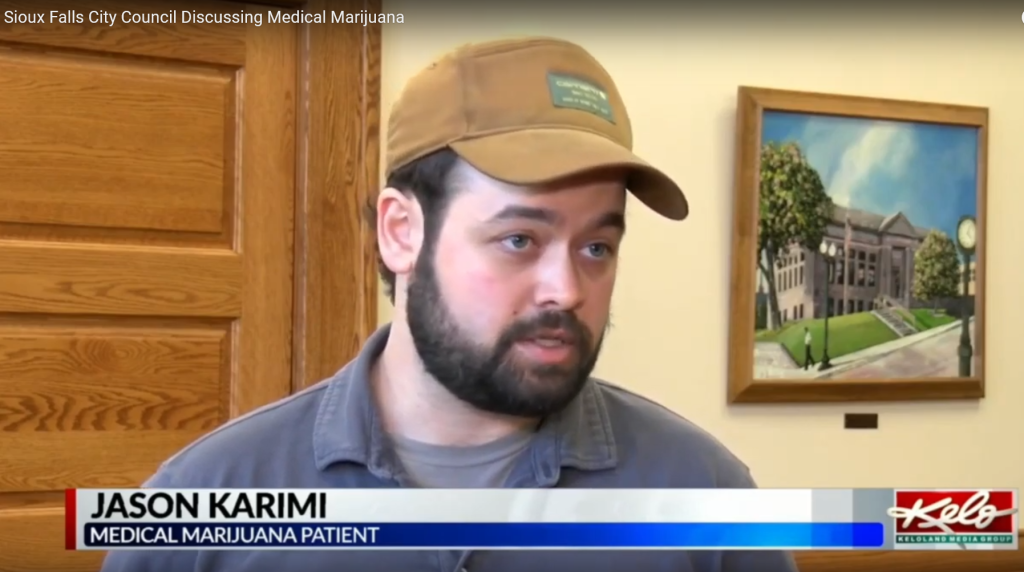
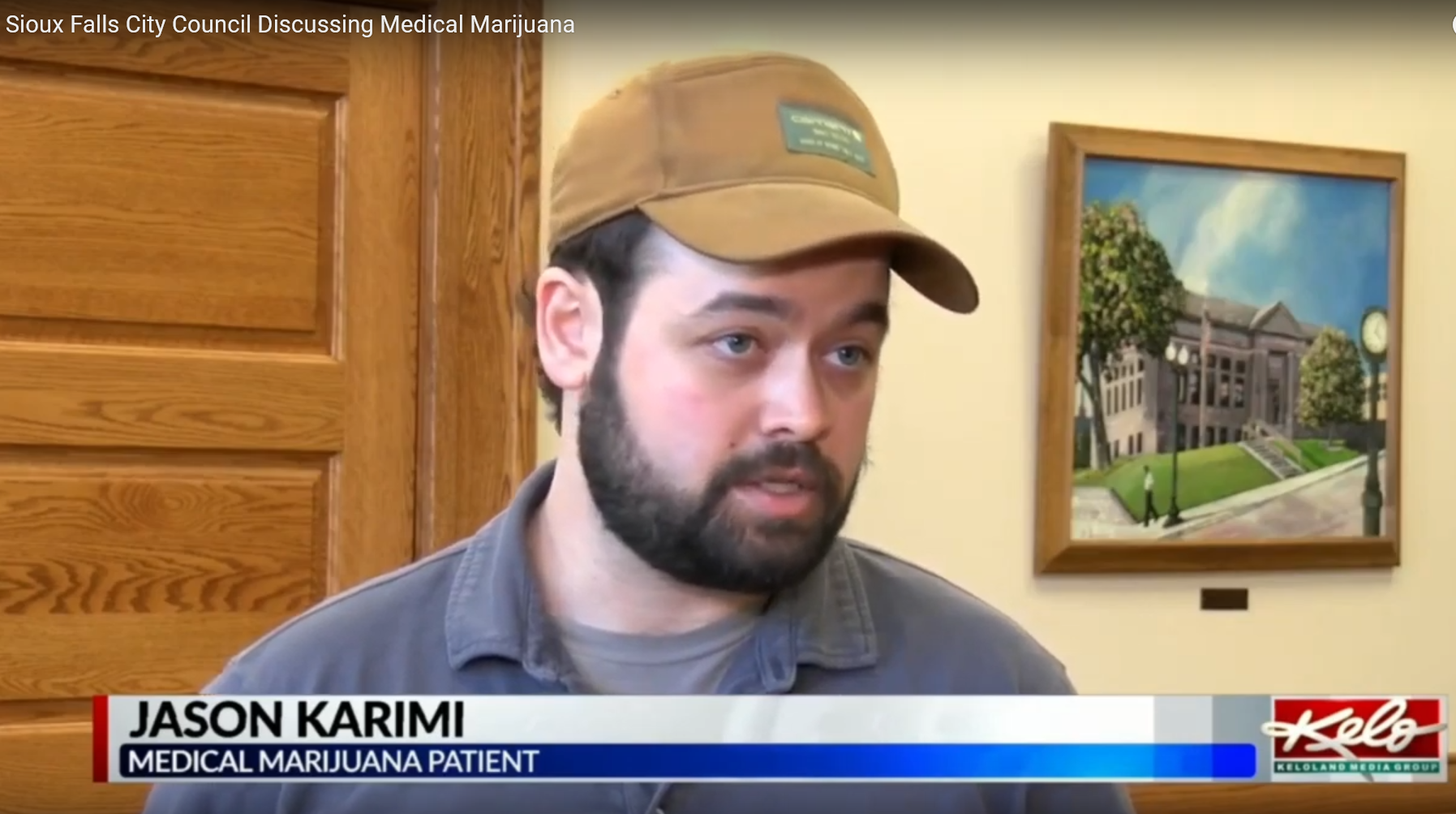
Jason Karimi, defendant, is among millions of Nebraska citizens – or non-citizens in the state for work like Mr. Karimi – who are harmed by the failure of Nebraska to remove cannabis from Schedule One or bother to review cannabis classification as mandated by the federal Uniform Controlled Substances Act which Nebraska’s state CSA is based off of. In order for Nebraska to properly and without impropriety classify cannabis or any other substance as a Schedule One substance, those schedule one substances must have, as a matter of law, “no currently accepted medical use in the United States.” 47 states and territories having defined cannabis as having currently accepted medical use, being in the United States, triggers the enforcement of the Controlled Substances Act statutory stipulation that substances cannot be properly classified in schedule one if those substances are found to have an “accepted medical use in the United States.”
In the ACLU sponsored case out of Nevada, Nevada’s constitution expressly defines marijuana as medicine, nullifying Nebraska’s statutory requirement that cannabis have “no accepted medical use in the United States” to be included in Schedule one classifications. Nevada’s constitutional definition of cannabis having “accepted medical use in the United States” is not the only statute or constitutional provision in the United States (emphasis added) defining cannabis as having “accepted medical use.” See citations in footnote HERE and cite to all state statutes in the footnote defining cannabis as medicine
More critically and timely, as of Friday, January 12th, the FDA and HHS released it’s fully unredacted findings determining that cannabis has accepted medical use in the United States in a massive and detailed 252 page ruling.
However, it must be noted two fold: chevron deference to administrative agencies rulings like FDA and HHS is under review and may be scaled back, returning power to the judiciary to interpret and enforce the rule of law instead of agencies; and two, in Grinspoon vs DEA 1988 case CITE HERE, federal administrators cannot overrule state medical laws. See also Gonzales vs Oregon; see further footnote on page 29 of Gonzalez vs Raich 2005 CITE HERE:
QUOTE FROM RAICH HERE CONCERNING DUE PROCESS FOR REMOVAL OF SCHEDULE ONE
19 years ago, the SCOTUS court told a medical cannabis patient – and personal acquaintance and friend of Jason Karimi – how to resolve the lack of accepted medical use in the United States as a matter of law issue, which was to initiate proceedings with HHS and FDA to review the classification. This advice from SCOTUS 19 years ago has now not only been followed but has resulted in the expected justifiable and proper outcome: a new finding, based on the most recent evidence since HHS last ruled on this issue in 2016, that cannabis has “accepted medical use in the United States” as a matter of science. This is an inferior argument, and is only persuasive evidence, inferior to Karimi’s pointing out that the statutory requirement of cannabis in Nebraska needing to have zero “accepted medical use in the United States” is no longer objectively met due to not only Nevada’s constitution defining cannabis as medicine, nor Karimi’s home state of South Dakota statutorily defining cannabis as medicine, and FDA and HHS now saying cannabis is accepted for medical use in the United States.
Therefore, this motion to dismiss the charge of a miniscule personal amount of cannabis in the state of Nebraska is brought with full force and intent to enforce the law as written on the book – NAMELY THAT CANNABIS MUST BE FOUND BY THIS COURT TO HAVE accepted medical use in the united states.
For further evidence, please note Mr. Karimi has a medical cannabis card, and so does his girlfriend and partner, whose cannabis was left in the car Mr. Karimi was pulled over in, without Mr. Karimi’s knowledge.
ARGUMENT
In the Nevada ACLU case CITE HERE, the last update was November 17, 2023. From the aclu URL above:
“Cannabis Equity & Inclusion Community (CEIC) and Antoine Poole are among those Nevadans harmed by the Board’s scheduling determination for cannabis. They sued the Board in Nevada state court, seeking a writ of mandamus requiring the Board to remove its designation of marijuana as a Schedule I substance, along with declaratory and injunctive relief. The Eighth Judicial District Court of Clark County granted relief. It concluded that the Board’s scheduling designation, which rested on the Board’s conclusion that marijuana has no accepted medical value, was inconsistent with the Nevada Constitution, which expressly recognizes marijuana’s medical use. Further, the court concluded that the statutory regime created by voters when they legalized recreational marijuana use had displaced any authority the Board once had to regulate marijuana. The Board appealed.”
This case has completed it’s briefings. A date for argument has not been yet set. The FDA and HHS ruling that cannabis has “accepted medical use in the United States” will certainly influence the court’s determinations in the Nevada case.
*************************************************************************************************************
AGGARWAL V. UNITED STATES DRUG ENFORCEMENT ADMINISTRATION, No. 22-1718 (9th Cir. 2023)
************************************************************************************************************
The federal government has also long recognized that cannabis has some level of accepted medical use in the United States. Mr. Karimi is Executive Director of Iowa Patients for Medical Marijuana representing roughly 20,000 medical cannabis patients in his childhood state of Iowa. Two Iowans have received for decades 300 marijuana cigarettes by mail from the federal government as part of a federal IND compassion program that was ended by Bush Sr. They were grandfathered in. Mr. Karimi witnessed personally one of these patients, George McMahon, smoke this marijuana on the news in 2009. This witnessing greatly impacted Mr. Karimi’s sense of justice and fairness – if two Iowans get medical cannabis, on the federal government’s dime, why can’t the other 20,000 Iowans? Mr. Karimi then spent 15 years attending paralegal classes, researching this issue, and trying to find a resolution to the law’s clearly contradictory classification of cannabis as a schedule one drug. Sacrifices were made, including removal as a top ten referee of soccer in his home state being forced on him when forced to choose between doing the right thing – fixing schedule one misclassification – or traveling the country refereeing soccer. No other citizen in any jurisdiction has brought this argument Mr. Karimi is presenting to the court today in any criminal case excepting one case in Michigan with lawyer Neil Rockind, a case Mr. Karimi is unable to locate today and a case that resulted in dismissal of marijuana charges, the argument of which Neil Rockind personally called Mr. Karimi and also credited Mr. Karimi’s Iowa work in being where Neil Rockind came up with the successful criminal defense case – however, Mr. Karimi’s argument is featured on the National Organization for the Reform of Marijuana Laws, an organization of lawyers, here at this URL: https://norml.org/wp-content/uploads/pdf_files/brief_bank/Carl_Olsen_v_DEA.pdf
The argument in the Olsen vs. DEA case presented years ago, and presented prior to the FDA and HHS ruling of January 12th, 2024, was this:
“Whether the Drug Enforcement Agency (“DEA”) may lawfully conclude that marijuana has “no currently accepted medical use in treatment in the United States” under the federal Controlled Substances Act, 21 U.S.C §§ 801-904 (“CSA”), when marijuana’s medical use is currently accepted by 20 states and the District of Columbia?”
Mr. Karimi personally served a lawsuit in 2011 on the state of Iowa addressing this question and documented his efforts on his personal blog at this URL : https://weedpress.wordpress.com/2011/06/07/lawsuit-filed-against-state-of-iowa-yesterday-weed-all-about-it/
Although the Nebraska Legislature does not have to listen to the FDA and HHS expert medical opinion, law controls, not science. The state prosecutor can ignore the FDA and HHS science, but not the law. The law requires that marijuana be removed from schedule I, even if the FDA and HHS had found that marijuana had no medical efficacy whatsoever.
The totality of these arguments has increased in importance as marijuana has been increasingly found to have accepted medical use in the majority of states in the United States. Additionally, 2.3 million marijuana convictions have been expunged – and the current Biden administration has instructed and advised Governors throughout the country to not only take note, but do the right thing and stop perverting the law. While the United States has the highest rate of incarceration in the world, a deep dive into the actual crime statistics shows the United States actually under incarcerates violent criminals compared to other developed economies. Thomas Sowell, an exceptional economist worth reading and studying by all citizens of all backgrounds interested in criminal justice effectiveness, points out this issue in his writings.
Prosecutors, more incentivized to get wins at any cost while grabbing easy financial revenue for their impoverished counties, have been incentivized to prioritize and pursue charges against non-violent citizens, subcontractors, business owners, and sick people seeking medicine, effectively ripping apart families and damaging communities for generations, while simultaneously being incentivized into letting violent criminals off the hook as those cases aren’t as financially rewarding and much harder to pursue, arrest, investigate and prosecute.
The result is a reduction in the respect for the rule of law in this country, as evidenced by the riots of 2020 and the current tragic ongoing crime wave of youths looting stores throughout the country that is common knowledge to anyone paying even a modicum of attention to the latest news reports.
FDA and HHS pointed out in their 252 page ruling:
QUOTE ABOUT LESS ABUSE AND SAFETY AND STUFF
In September, a report from the Congressional Research Service determined that the DEA is “likely” to approve the recommendation to reclassify marijuana under Schedule III of the CSA.
The National Institute on Drug Abuse (NIDA) agreed with the FDA and HHS scientific findings; however, even with this extremely persuasive if not conclusive evidence of HHS and FDA ruling marijuana now has “accepted medical use in the United States,” a recent case, AGGARWAL V. UNITED STATES DRUG ENFORCEMENT ADMINISTRATION, No. 22-1718 (9th Cir. 2023), clarifies that the “accepted medical use in the United States” statutory law requirement is not dependent on the opinion of FDA or HHS. As the court stated on page four, footnote 1 and 2 of the Grinspoon vs. DEA case:
“1 Moreover, the denial letter’s statement that “[a] prerequisite to transferring a substance from schedule I to schedule II under theCSA is for the Food and DrugAdministration (FDA) to determine that a substance has a currently accepted medical use in treatment in theUnited States” is contrary to 21 U.S.C.§ 812(b)(2)(B), which sets as a prerequisite to transfer to schedule II either “currently accepted medical use in treatment in the United States”or “a currently accepted medical use with severe restrictions.” Footnote 2 We therefore do not decide whether the five-part test for “currently accepted medical use” is a lawful interpretation of 21 U.S.C. § 812(b)(2)(B).
Mr. Karimi wishes to emphasize here that “currently accepted medical use” was defined years before the five-part test; therefore, the “currently accepted medical use” finding which Karimi urges the Nebraska court to find here today is not at all dependent on the five-part test.
If the federal government were allowed to overrule state findings that marijuana has “currently accepted medical use in the United States” it would be contrary to the guidance found in Grinspoon v. DEA, 828 F.2d 881 (1st Cir. 1987):
“The court found that there was no necessary linkage between failure to obtain FDA interstate marketing approval and a determination that the substance in question was unsafe and had no medical use, and as such, respondent erroneously applied an interpretation of the scheduling criteria that directly conflicted with congressional intent.
The Administrator argues correctly that we must review his interpretation of the CSA in light of the guidelines set forth by the Supreme Court in Chevron U.S.A., Inc. v. Natural Resources Defense Council, Inc., 467 U.S. 837, 81 L. Ed. 2d 694, 104 S. Ct. 2778 (1984). In Chevron the Court explained that [HN4] a reviewing court must employ a two-step analysis that focuses initially on the intentions of Congress:First, [**10] always, is the question whether Congress had directly spoken to the precise question at issue. If the intent of Congress is clear, that is the end of the matter; for the court, as well as the agency, must give effect to the unambiguously expressed intent of Congress.Id. at 842-43 (emphasis supplied). In the absence of congressional intent, however, the court must proceed to a second inquiry:[*885] If . . . the court determines Congress has not directly addressed the precise question at issue, the court does not simply impose its own construction on the statute, as would be necessary in the absence of an administrative interpretation. Rather, if the statute is silent or ambiguous with respect to the specific issue, the question for the court is whether the agency’s answer is based on a permissible construction of the statute.Id. at 843 (footnote omitted; emphasis supplied).It is undisputed that Congress has not directly spoken to the question at issue here, namely, the proper means of interpreting the second and third criteria of section 812(b)(1). The absence of express intent, however, does not compel [**11] us to proceed to the deferential second step of the Chevron scheme. As the Supreme Court indicated in a footnote to its Chevron opinion, “if a court, employing traditional tools of statutory construction, ascertains that Congress had an intention on the precise question at issue, that intention is law and must be given effect.” Id. at 843 n. 9. Recently the Supreme Court has reaffirmed this proposition, holding in INS v. Cardoza-Fonseca, 480 U.S. 421, 107 S. Ct. 1207, 94 L. Ed. 2d 434 (1987), that a court faced with a “pure question of statutory interpretation” should rely upon traditional methods of statutory construction in an attempt to determine the intent of Congress. Id. 107 S. Ct. at 1221; International Union, UAW v. Brock, 259 U.S. App. D.C. 457, 816 F.2d 761, 764-65 (D.C. Cir. 1987) (applying “traditional tools” of statutory construction to invalidate agency’s interpretation of statutory language as conflicting with intent of Congress).The Administrator contends that congressional intent favoring his interpretation of the CSA can be gleaned from the language of the statute, its legislative history, [**12] and the language and history of subsequent legislative enactments designed to enhance the regulatory system established by the CSA in 1970. In the alternative, he argues that if the intent of Congress is ambiguous, then his construction of the statute is permissible in view of the statutory scheme. 5 Our review of the sources identified by the litigants convinces us that Congress neither expressed nor implied an affirmative intent regarding how the second and third Schedule I criteria should be interpreted. Nevertheless, these same sources — the language and structure of the CSA and FDCA, the legislative history of the CSA, and the subsequent handiwork of Congress in the area of controlled substance regulation — lead us to conclude that the Administrator’s construction of subsections (B) and (C) of 21 U.S.C. § 812(b)(1) is contrary to congressional intent. 65 Contrary to the assertions of the Administrator, this is not a situation in which Congress has expressly vested the Administrator with authority to define general statutory criteria by issuing regulations. Were this such a case, such regulations would be controlling unless they were “arbitrary, capricious, or manifestly contrary to the statute.” Chevron, 467 U.S. at 843-44. Here, the CSA expressly delegates to the Attorney General only the authority to make “the findings prescribed by subsection (b) of section 812 of this title for the schedule in which [a] drug is to be placed.” 21 U.S.C. § 811(a)(1)(B) (emphasis supplied). This explicit delegation of authority to apply prescribed statutory criteria is not equivalent to an explicit delegation of authority to define those criteria.
…
The CSA clearly provides that a substance may not be placed in Schedule I unless it lacks both a “currently accepted medical use in treatment in the United States” and “accepted safety for use . . . under medical supervision.” The FDCA, on the other hand, provides that a substance may fail to obtain FDA interstate marketing approval (or exemption) for any of seven specific reasons. 21 U.S.C. § 355(d)(1)-(7). Although approval may be withheld because the substance lacks both “safety”, 21 U.S.C. § 355(d)(2), and “efficacy” for a particular use, 21 U.S.C. § 355(d)(5), it [**20] is equally possible for a substance to be disapproved for interstate marketing because it lacks only one of these attributes, or because the application fails to contain relevant patent information, 21 U.S.C. § 355(d)(6), or even because the labeling proposed for the drug “is false or misleading in any particular.” 21 U.S.C. § 355(d)(7). Thus, we find no necessary linkage between failure to obtain FDA interstate marketing approval and a determination that the substance in question is unsafe and has no medical use. Indeed, the FDCA does not even mention the term “medical use.” In short, it is plainly possible that a substance may fail to obtain interstate marketing approval even if it has an accepted medical use.Another possible reason for failure to obtain FDA new drug approval is that the manufacture, distribution, and use of a substance might not involve interstate marketing. 10 Unlike the CSA scheduling restrictions, the FDCA interstate marketing provisions do not apply to drugs manufactured and marketed wholly intrastate. Compare 21 U.S.C. § 801(5) with 21 U.S.C. § 321 [**21] (b), 331, 355(a). Thus, it is possible that a substance may have both an accepted medical use and safety for use under medical supervision, even though no one has deemed it necessary to seek approval for interstate marketing. Indeed, as Dr. Grinspoon argues, there is no economic or other incentive to seek interstate marketing approval for a drug like MDMA because it cannot be patented and exploited commercially. The prospect of commercial development, of course, is irrelevant to one…like Grinspoon.
It appears, instead, that blind reliance on the lack of FDA interstate [**22] marketing approval could cause a substance to be placed in Schedule I, even though one or two of the three requirements prescribed by Congress for placement of a drug in Schedule I have not been proven. Based solely on the language of the CSA and the FDCA, therefore, we find it unlikely that substituting the lack of FDA interstate marketing approval for the statutory requirements that a substance lack both an “accepted medical use” and “accepted safety for use . . . under medical supervision” is consistent with the intent of Congress in enacting the CSA.”
– Grinspoon v. DEA, 828 F.2d 881 (1st Cir. 1987)
So to repeat, as extrapolated upon in the above cited and quoted Grinspoon vs. DEA case, even though the FDA has now, as of January 12th 2024, released a 252 page critical ruling that marijuana does today now have “accepted medical use in the United States,” this opinion of the administrative agency is a matter of science and not law. The matter of statutory construction extrapolated upon in the case informs Mr. Karimi that “currently accepted medical use in the United States” is controlled by a superior matter of law, not science, and that the Nevada constitution, as well as 47 state law statutes DEFINING MARIJUANA AS MEDICINE meets this requirement, ingeniously set out as a fail safe by Congress when first passing the CSA, in order to prevent erroneous, capricious, and mistaken classification of important medical substances that may, like in the case of marijuana, be a treatment to curing cancer. Schedule one as a matter of law once nullified will, Mr. Karimi predicts, lead to research proving these initial findings that cannabis medicines can actually cure and prevent cancer – but Mr. Karimi is no doctor, and is merely a legal researcher.
Implications of the laws being enforced, respected, and upheld, have far reaching consequences for the updated and current peace and dignity of our civilizational infrastructures and institutions. Mr. Karimi’s efforts in submitting this brief are intended to show and update this respect for the law and institutions affected by the law.
One particular noteworthy statistic is worth bearing here. Rather than investing our resources in fighting violent crime, thereby protecting families, communities, and business owners, our judicial system is currently opting instead, due to certain incentives, to choose to pursue the ripping apart of families for marijuana crimes in some jurisdictions, and expunging records for marijuana crimes in other jurisdictions to the tune of 2.3 million expungements. This absurdity – and it is an absurdity – was addressed by Justice Clarence Thomas in the case Standing Akimbo LLC v. United States, U.S. Supreme Court, No. 20-645.:
“Thomas noted that the Supreme Court had upheld federal prohibition of marijuana even within states in its 2005 decision in Gonzales v. Raich, on the grounds that allowing local use would undermine a “comprehensive” federal regime.The justice said that reasoning may no longer apply.”Once comprehensive, the federal government’s current approach is a half-in, half-out regime that simultaneously tolerates and forbids local use of marijuana,” Thomas wrote. “This contradictory and unstable state of affairs strains basic principles of federalism (emphasis added by Mr. Karimi) and conceals traps for the unwary.”
************************************************************************************
The court may only remove schedule one as a matter of law and statutory interpretation. Replacing cannabis into a separate schedule, or leaving unscheduled, is the jurisdiction of the Executive and Legislative branches of the state of Nebraska.
Having failed to update cannabis scheduling in Nebraska – scheduling that Nebraska state code states comes verbatim from the federal controlled substances act (VERIFY THIS LEGAL RESEARCH), the court is left with no choice but to dismiss all cannabis charges and declare cannabis unscheduled in the state of Nebraska. This is not the court’s fault that the legislature and the Executive branches health agencies have been derelict in their duty to dutifully update the Nebraska scheduling laws.
Diving deeper into the 252 page ruling from FDA, and HHS, and approved by NIDA, exceptionally important findings are highlighted in this brief for purposes of further illuminating the court.
As part of the 252 page ruling, included is an August 28, 2023 report prepared by FDA’s Center for Drug Evaluation and Research (CDER) entitled “Considerations for Whether Marijuana Has a Currently Accepted Medical Use in the United States for Purposes of Section 202(b) of the Controlled Substances Act.” This report takes up the bulk of the 252 page ruling released January 12th 2023 and is found on pages 99-252. Nebraska has failed to recognize or respect 47 other state laws finding cannabis has accepted medical use in the United States – and as such, this court should dismiss these charges on cannabis today, and direct the other two branches of government to do their duty with diligence and integrity to update the outdated Schedule One classification, again ripped straight from the federal laws that are now being updated, and determine the proper scheduling or lack thereof moving forward. Any other ruling would be to find that schedule one as a matter of law does not need to take into account the other 47 state laws and will strain the basic principles of federalism that Justice Thomas so eloquently described.
The first 99 pages are also extremely instructful. Page 58 of the HHS report states:
“The risks to the public health posed by marijuana are low compared to other drugs of abuse (e.g., heroin, cocaine, benzodiazepines), based on an evaluation of various epidemiological databases for ED visits, hospitalizations, unintentional exposures, and most importantly, for overdose deaths. . . . For overdose deaths, marijuana is always in the lowest rankings among comparator drugs. These evaluations demonstrate that there is consistency across databases, across substances, and over time and that although abuse of marijuana produces clear evidence of a risk to public health, that risk is relatively lower than that posed by most other comparator drugs.”
Page 46 of the HHS report states:
“The most notable conclusion from an evaluation of various epidemiological databases related to the medical outcomes from abuse of selected drugs is that for all measures that were evaluated from 2015 to 2020, the rank order of the comparators in terms of greatest adverse consequence typically places alcohol, heroin, and/or cocaine in the first or immediately subsequent positions, with marijuana in a lower place in the ranking. This pattern was also observed for PC data with regard to serious medical outcomes, including death, where marijuana was in the lowest ranking group.”
Page 10 of the HHS report states:
“The most notable“Epidemiological data indicate that marijuana has the potential for creating hazards to the health of the user and to the safety of the community. However, as a relative finding on abuse liability, when comparing marijuana to heroin, oxycodone, hydrocodone, fentanyl, cocaine, ketamine, benzodiazepines, zolpidem, tramadol, and alcohol in various epidemiological databases that allow for some or all of these comparisons, marijuana is not typically among the substances producing the most frequent incidence of adverse outcomes or severity of substance use disorder.”conclusion from an evaluation of various epidemiological databases related to the medical outcomes from abuse of selected drugs is that for all measures that were evaluated from 2015 to 2020, the rank order of the comparators in terms of greatest adverse consequence typically places alcohol, heroin, and/or cocaine in the first or immediately subsequent positions, with marijuana in a lower place in the ranking. This pattern was also observed for PC data with regard to serious medical outcomes, including death, where marijuana was in the lowest ranking group.”
Page 7-8 of the HHS ruling states:
“Evidence shows that some individuals are taking marijuana in amounts sufficient to create a hazard to their health and to the safety of other individuals and the community. However, evidence also exists showing that the vast majority of individuals who use marijuana are doing so in a manner that does not lead to dangerous outcomes to themselves or others.”
HHS “updated” its approach to assessing “currently accepted medical use in treatment in the United States” recognizing a new two-part standard.
In it’s 252 page ruling on pages 80 and 252, HHS asks whether “[t]here exists widespread, current experience with medical use of the substance by Health Care Providers operating in accordance with implemented jurisdiction-authorized programs, where medical use is recognized by entities that regulate the practice of medicine.”
HHS Assistant Secretary of Health, Office of the Assistant Secretary of Health (OASH) found that more than 30,000 HCPs are certified to recommend cannabis for more than six million registered patients. OASH found this “constitut[ed] widespread clinical experience associated with various medical conditions recognized by a substantial number of jurisdictions across the United States.” OASH pointed out that “[f]or several jurisdictions, these programs have been in place for several years, and include features that actively monitor medical use and product quality characteristics of marijuana dispensed.” Mr. Karimi points out that the federal government has never once sued any single of the 47 state laws defining marijuana as having currently accepted medical use in the United States to overturn their medical marijuana statutes, an arguably tacit acceptance of state laws defining marijuana as having accepted medical use. “Taken together,” OASH “the findings from Part 1 warrant an FDA assessment under Part 2 of [HHS’s] currently accepted medical use approach to determine if there exists credible scientific support for the use of marijuana for at least one of the medical conditions [OASH identified during the Part 1 investigation].”
FDA concluded that “some credible scientific support for at least one of the medical uses for which Part 1 [was] met.” FDA assessed cannabis’s use as medicine for seven indications, “based in part on OASH’s findings under Part 1 of the CAMU test and in part on FDA’s own analysis of the landscape in which marijuana is currently used medically, including information from state-authorized programs on how and to what extent marijuana is being utilized for medical purposes.”
FDA concluded that “the totality of the available data,” supports a finding “that, for purposes of the drug scheduling criteria in 21 U.S.C. 812(b), marijuana has a currently accepted medical use in the United States for: anorexia related to a medical condition; nausea and vomiting (e.g., chemotherapy-induced); and pain.” FDA has concluded that cannabis has a currently accepted medical use for purposes of section 812(b)(1)(B) of the CSA, but FDA emphasized this factual finding of accepted medical use in the United States does not mean that FDA has approved cannabis as safe and effective for marketing as a drug in interstate commerce under the Federal Food, Drug, and Cosmetic Act, which is consistent with the ruling in Grinspoon vs. DEA that stated as quoted in this motion that accepted medical use and approved marketing in interstate commerce were two entirely separate issues and a finding, which FDA just made in the HHS ruling report, that a substance can both have accepted medical use in the United States – nullifying as a matter of law Schedule one classification requiring removal from the Schedule One in the courts – can be implemented as a matter of law, even though there is yet to be found an approved interstate marketing ruling from that very same FDA. This is the beauty of our institutions of law, that things are done orderly, timely, and thoughtfully without emotion or hyperboles, which the state and prosecutors frequently rely on to obfuscate and even in some case outright censor the current legal status and validity of the controlled substances act from objective and hypothetically unemotional finders of facts, or more precisely, judges and juries.
HHS emphasized the importance of the 2018 Farm Bill to the scope of its analysis, explaining that because that statute descheduled “hemp,” its analysis does not apply to hemp products or to “[p]roducts containing predominantly plant-derived CBD or marketed with the intent of offering consumers a plant-derived, CBD-containing product.” The HHS federal agency added, however, that “[i]t should be noted some hemp-derived CBD products may containΔ9-THC or other cannabinoids in amounts sufficient to produce drug effects more associated with marijuana, and may or may not be legally within the definition of marijuana.” As a result, “their widespread use may contribute to the epidemiological data on marijuana use that is discussed in Factors 4, 5, and 6 of this scientific and medical evaluation.”
As described at a legal blog: “In other words, unregulated intoxicating hemp products may, to some extent, be skewing the analysis to make the harms associated with cannabis abuse appear worse than they actually are.”
HHS emphasized the “variability” of cannabis, explaining that “[l]ike any other botanical substance, marijuana plants are heterogeneous in nature and contain a complex chemical profile.” In the past, HHS has treated this “variation in forms for [cannabis] consumption, composition of biologically relevant constituents, potency, and contaminants” as a barrier to assessing the appropriateness of rescheduling cannabis as a whole, encouraging petitioners to seek removal of a single strain instead. In this most recent review, however, HHS acknowledged the issue but chose to address it by “focus[ing] to greatest extent possible on wide-ranging cannabis plant derived substances that are vehicles for the self-administration of Δ9-THC as the key biologically active substance on which the CSA’s current definition of marijuana is based.”
HHS also lamented the lack of uniformity among state-level cannabis regulations and the total lack of regulation of the illicit market, describing it as a “safety” and “quality” problem. Nebraska is clearly, by failing to regulate cannabis and leaving it decriminalized instead of properly and safely regulated, leaving a monopoly power in the hands of black market actors. The court’s anticipated ruling on this motion to dismiss Schedule One classification of cannabis will force the Nebraska lawmakers to increase the peace and dignity of Nebraska by removing this public safety danger and begin properly regulating cannabis, rather than empowering criminals. Currently, the state is neglecting to update the latest science, and refusing to acknowledge that it’s Schedule one classification is void and nullified as evidenced as a matter of law the 47 state statutes defining cannabis as having accepted medical use in the country.
*************************************************************************************
CONCLUSION
Wherefore Mr. Karimi respectfully prays that the courts throw out this misdemeanor charge for cannabis possession on the grounds that cannabis can no longer be properly classified as a Schedule One substance as a matter of law, notwithstanding the additional persuasive evidence of the recent scientific update from the federal government’s 252 page ruling just released January 12th, 2024.
Footnotes
 WeedPress: The Paper Trail
Leave a comment