October 2nd began two years
October 22nd: state probation first meeting probation officer advised Nebraska probation was not allowing my active med card as an exemption. I advised I would file for a religious exemption with Nebraska to use federally lawful hemp so as not to be a federal criminal with medical cannabis.
Friday November 22nd: at 7 am in writing wrote probation officer the following via text:
“
Draft, emailing tomorrow
Comes now Reverend Jason Karimi, pro se, respectfully demanding an immediate in person hearing regarding the following:
The Nebraska First Freedom Act, Legislative Bill 43 signed by the Governor of Nebraska Wednesday March 27th 2024, forbids and precludes state enforcement of any law that burdens a sincerely held religious belief practiced in good conscience. Absent a showing of compelling interest and least restrictive means tests under the First Freedom Act, THC is not a violation of probation for Rastafarians, and is protected religious sacrament from lawfully obtained cannabis hemp legal under state and federal law.
Motion for a hearing requesting the special circumstances of my probation forbidding my sacramental mandatory church sponsored prayer practices involving cannabis hemp sacrament, so evidence can be shown that the states burden under Nebraska’s First Freedom Act – and state constitution – cannot be overcome and no objection can overrule the constitutionally protected, religious practice organizationally mandated as a member of the church Lion of Judah House of Rastafari.
An in person hearing to be assigned as soon as possible to review this constitutional claim is hereby demanded.
See also Nebraska’s Constitution Article I-4. Religious freedom. All persons have a natural and indefeasible right to worship Almighty God according to the dictates of their own consciences.
Relief requested includes changing the special substantial burden restriction the already easily available and provided checked box allowed for non-religious secular probationers in Reverend Karimi’s probation office intake paperwork, and permanently barring any state action continuing this substantially burdensome special restriction of Karimi’s probation terms.
All parties have been served in writing including probation and the county attorney’s office.”
At November 22nd meeting the following took place which I wrote down immediately after leaving:
Sent po draft today at 7. Went in to drop at 10. Told him I needed an injury, or else my med card won’t get renewed in a month and be blocked by probation. He said ok it says you have to go to jail immediately. Told him hemp thca used yesterday. I then said if you send me to jail before seeing a judge I will file suit immediately and need a hearing. He said ok hold on. Jesse called said he will sue the po said calm down everybody no need for lawsuits do you have your med card with you I said here you go he photocopied it and said I can leave he will be in touch and he will call Nebraska to see what they want to do and if my med card will exempt me as he knows South Dakota law allows that to happen
So Nebraska wrote in writing to override that and he let me walk anyways. I said if jailed I would file suit immediately in fed court under the first freedom act of Nebraska.
I received this text from my po two days later:
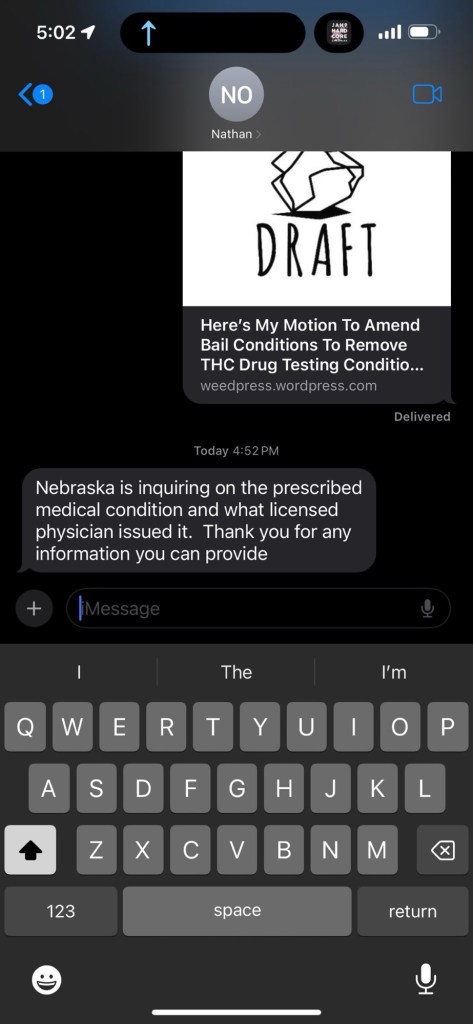
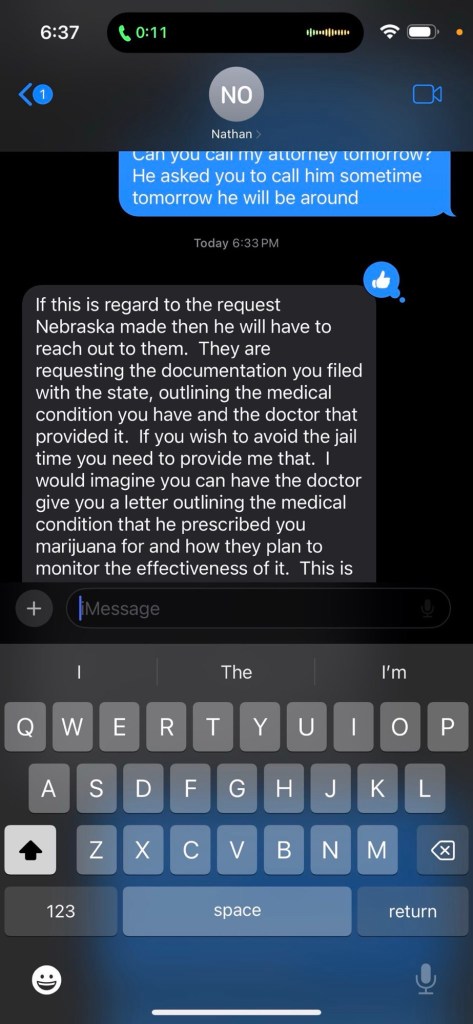
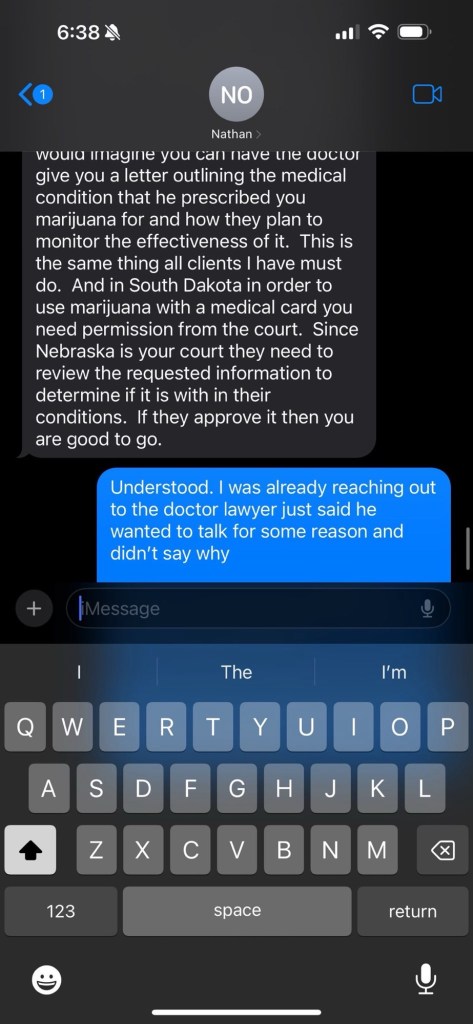
Before leaving my po office Friday the 22nd of November I advised I would request a hearing with the judge. My po instructed me not to request such a hearing and wait first for him to submit my medical marijuana card. My po then advised I needed a separate extra letter from my doctor violating hipaa outlining my private medical conditions an ethical dilemma addressed as a concern by the November 2024 report from the South Dakota medical marijuana oversight committee. As I left the office I called Nebraska clerk of court asked how to file a request for a hearing emailed a request per the clerk instructions.
Tuesday November 26: granted a hearing set for December 4th the following Tuesday.
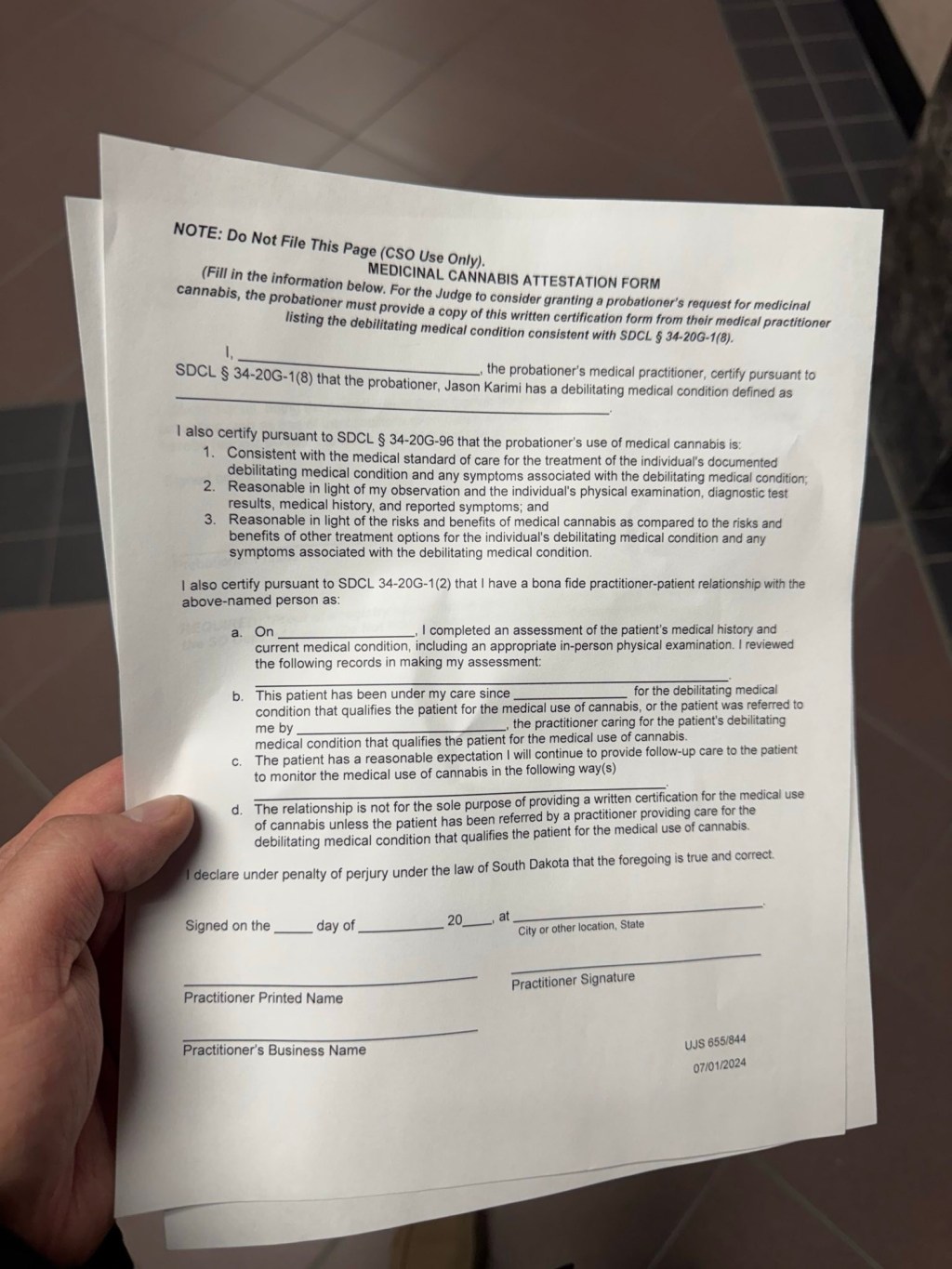
November 27th: Got probation medical cannabis exemption paperwork, saw po he was in office I told him I’m grateful for this he said well we just don’t want you having a negative outcome you get this you’re good that’s all we need it was a very positive and polite if not friendly interaction and I did mean it when I said thanks for getting this medical paperwork done so I have the docs now took pics of the docs:
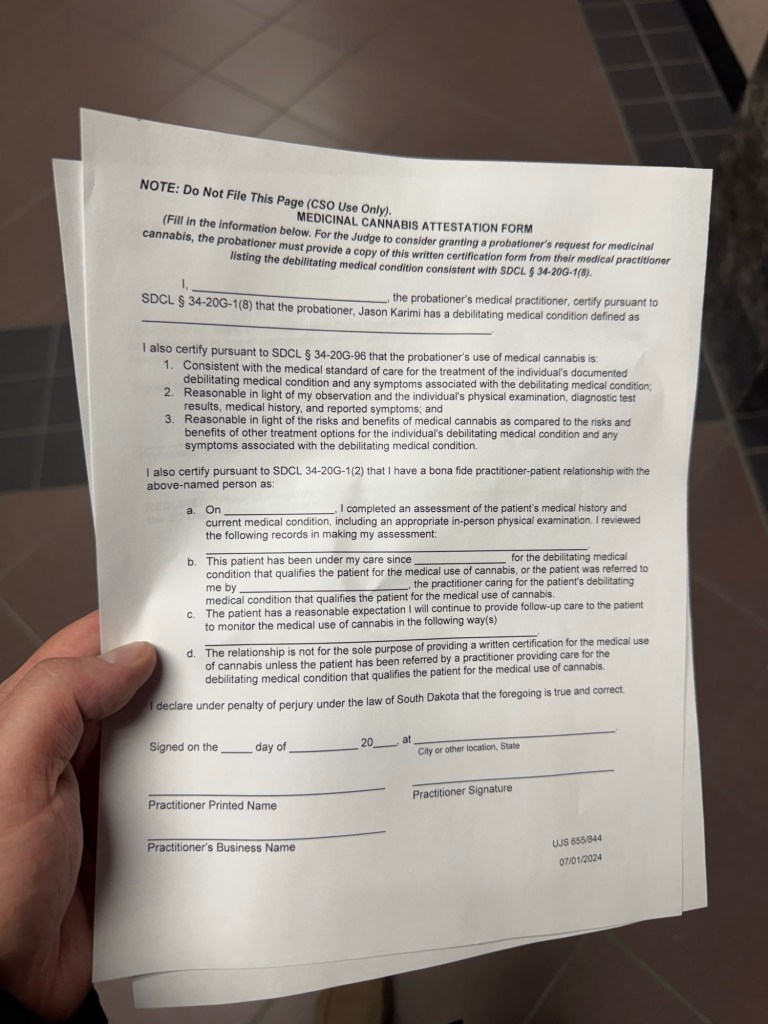
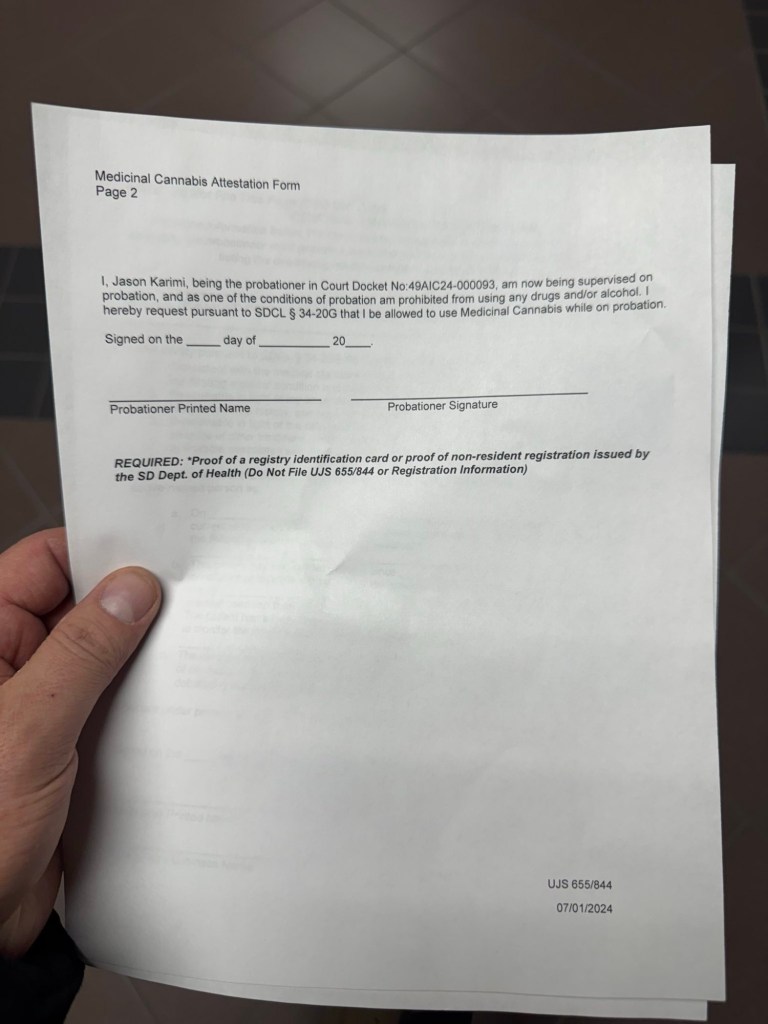
Po meeting December 5th at 8 am. Dropped for ua which had thc. Po advised he was waiting to hear from Nebraska and let me leave.
Doctor appointment for Thursday December 6 was set to renew med card, text from that day from po:
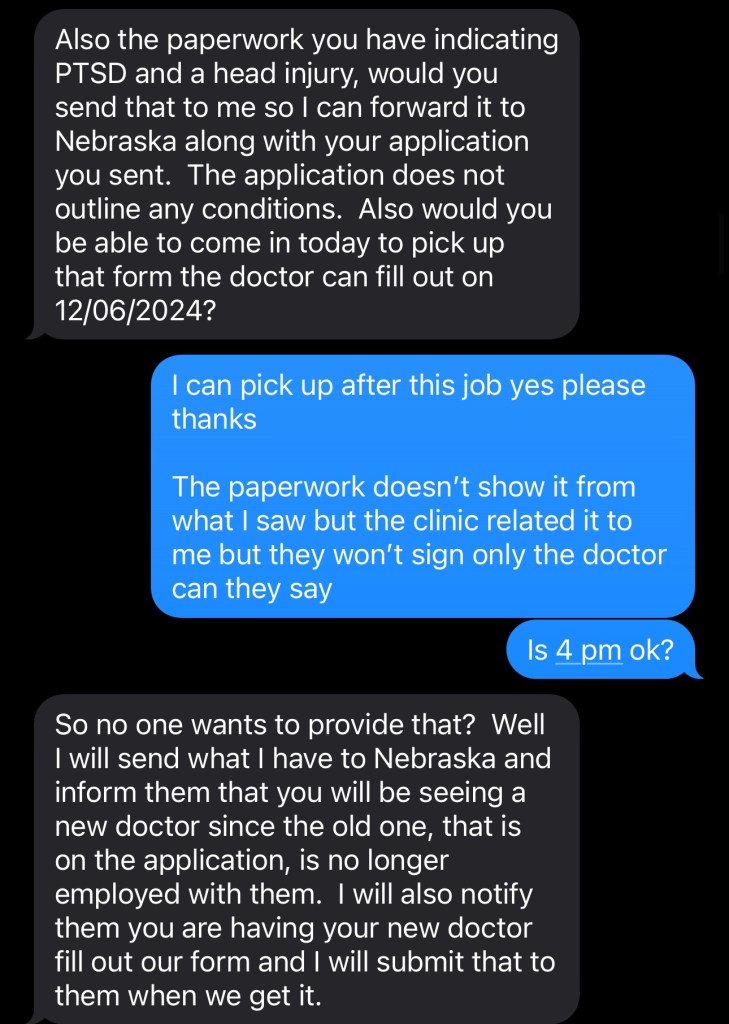
December 8: posted RFRA statute in SD on my apartment door
December 9: po advised Nebraska said go to jail establishing injury for lawsuit as I said would happen at my first probation meeting:
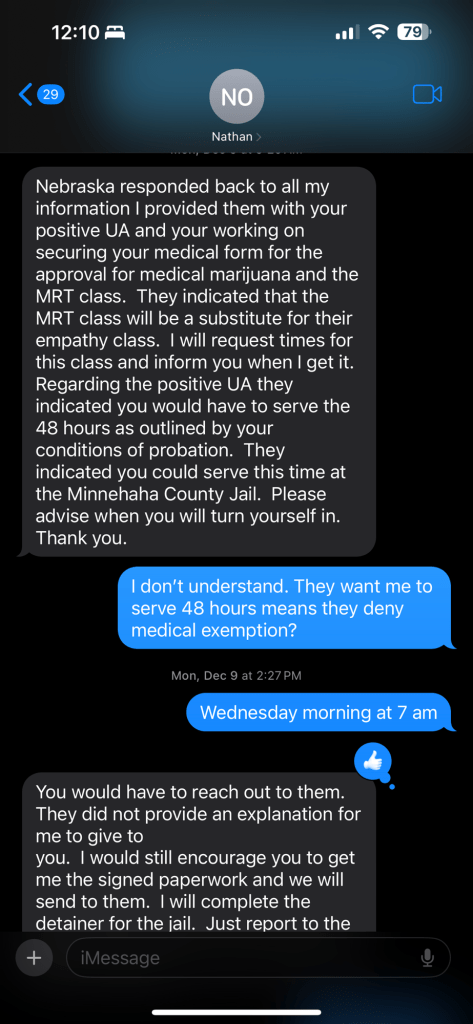
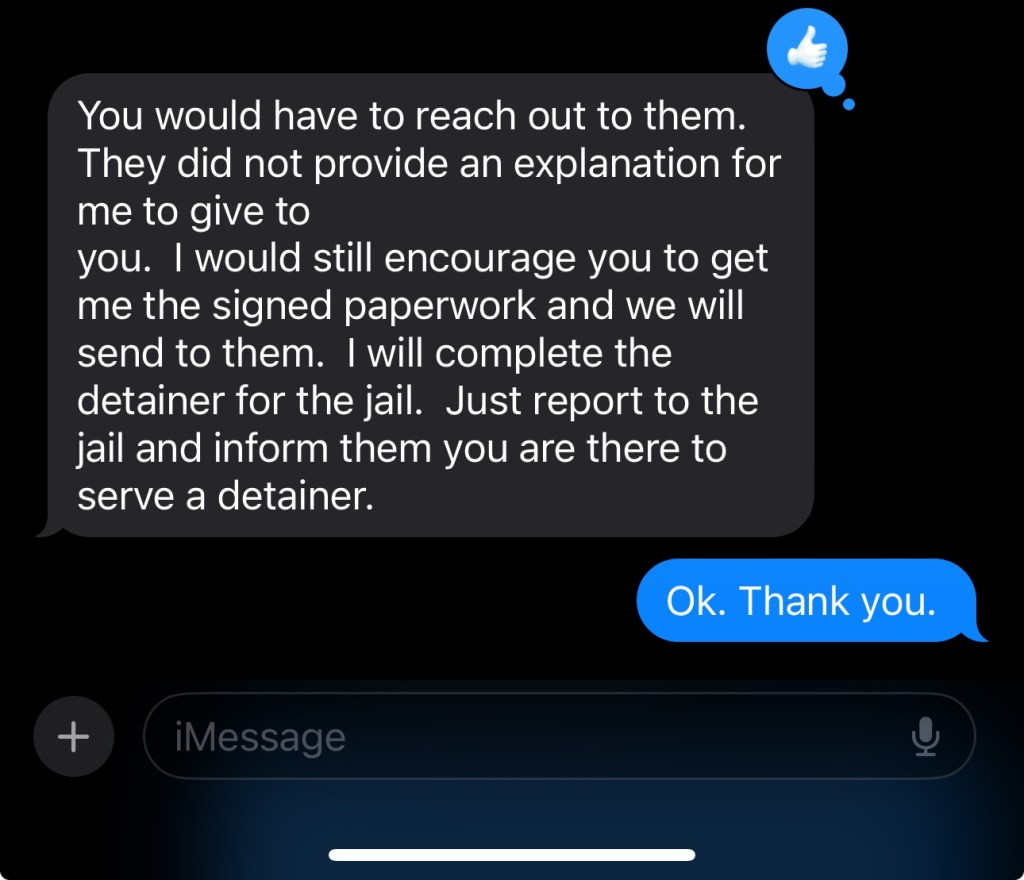
I then sat in jail from Wednesday December 11 to Friday December 13 ***this is the injury this lawsuit is adjudicating**
December 12: while sitting in jail, nebraskas medical cannabis law went into effect this day making it according to the media immediately legal to possess cannabis flower up to five ounces in Nebraska with a written doctors note
December 30: Recalling my probation officer had told me not to file to see the judge I emailed Nebraska probation the following in an attempt to get an updated implementation policy for probationers following or protected under nebraskas new medical cannabis law that went into effect December 12:
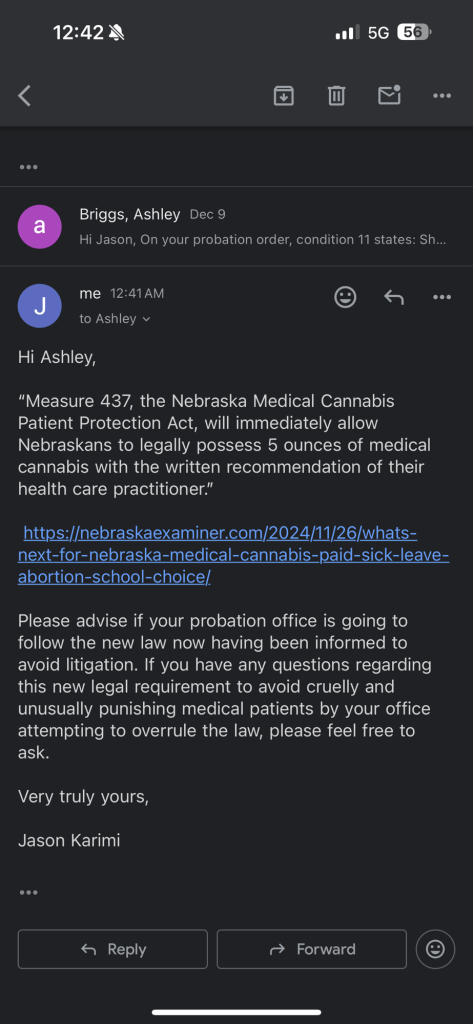
News in Nebraska at this time reported: “Measure 437, the Nebraska Medical Cannabis Patient Protection Act, will immediately allow Nebraskans to legally possess 5 ounces of medical cannabis with the written recommendation of their health care practitioner.” https://nebraskaexaminer.com/2024/11/26/whats-next-for-nebraska-medical-cannabis-paid-sick-leave-abortion-school-choice/
January 2 reason magazine: “
The Nebraska Supreme Court will have the final word on the validity of the medical marijuana initiatives. But in the meantime, patients with medical recommendations can possess cannabis without violating state law, and they will eventually be able to obtain it from state-licensed dispensaries unless Kuehn prevails on appeal.”
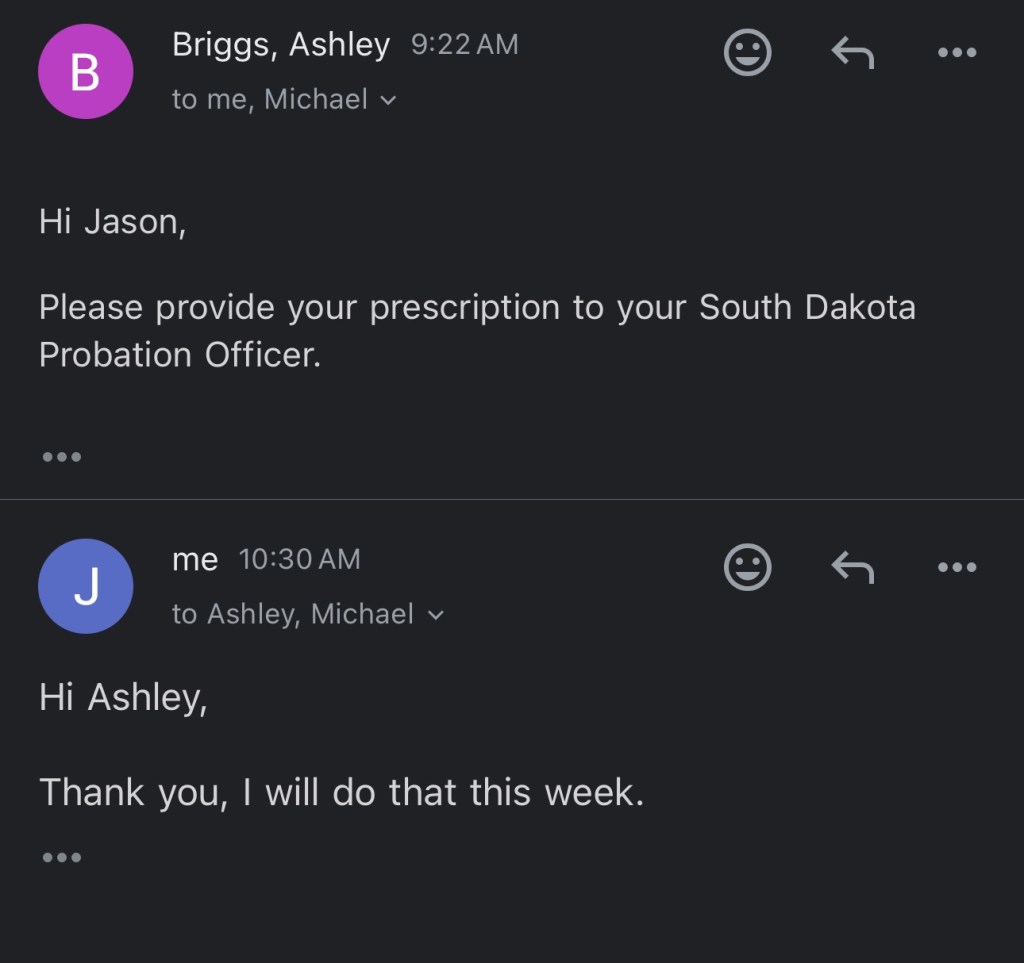
On Monday January 6 Nebraska probation emailed the following:
Thursday January 9: probation meeting see text:
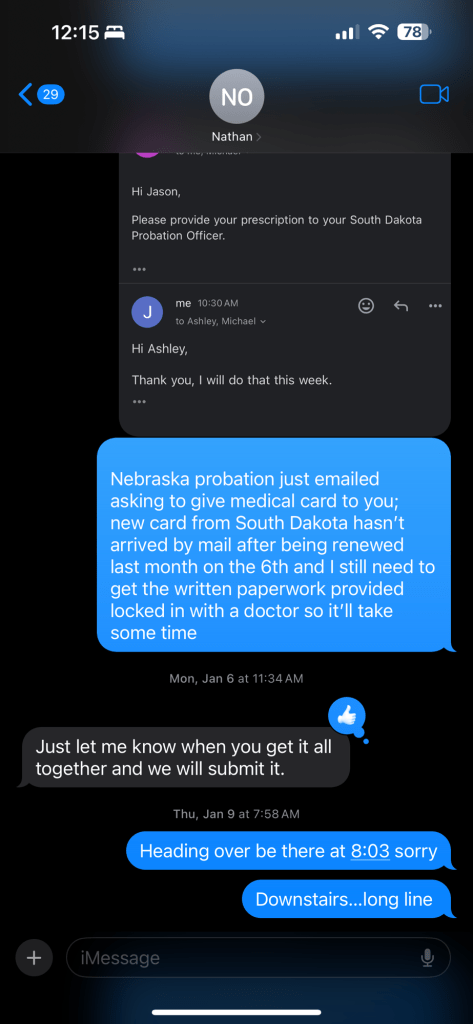
Notes from this meeting January 9 as I left I text my Rasta group message “
Last week: dirty ua, didn’t send it in said come back today
Today: po five minute meeting dropped dirty advised haven’t been consuming he said what’s this about an email to Nebraska I explained he said I won’t send this ua in either sounds like they’ll allow it he’s going to ask if med card is sufficient I advised likely they need a written recommendation and that’s being filled out this week and the doctor clinic has the paperwork to fill it out and promised in writing they would” adding on, he said he was going to send in ua to lab until Nebraska emailed him and said they’re going to now accept my med card he expressed surprise that the Nebraska probation had advised him of this given they had previously advised they would not allow medical cannabis exemptions; as my ua had thc, po said he was planning on sending ua into the lab but would dump it out instead as he’s not going to penalize or charge me money if Nebraska is going to approve medical thc exemption and to have a nice day I wasn’t dropped again for any uas for five months through June 2025
January 19: lawsuit filed in Iowa under RFRA for religious exemption to access medical dispensary products with a new statutory chapter in Iowa code created to establish guidelines and rules for religious cannabis registration an example of which looks like this:
124.401(5)(g) Religious exceptions. A provision of this chapter shall not be construed to substantially burden a person’s exercise of religion if the person is an adherent or member of a church or religious denomination and in accordance with the tenets or principles of the person’s church or religious denomination the person uses cannabis. However, persons supplying the product to a church shall register, maintain appropriate records of receipts and disbursements, and otherwise comply with all applicable requirements of this chapter and rules adopted pursuant thereto. For purposes of this paragraph, “substantially burden” means the same as defined in section 675.3(5).
Religious use will not be a federal racketeering scheme like the state cannabis programs.
Religious use is protected by both a state RFRA and a federal RFRA.
It’s easy to mis-understand that cannabis programs are not protected by the RFRAs.
Cannabis programs should be federally exempt under 21 USC 822(d) just like peyote, but nobody will bother to do the legal work to get one.
You know these Republicans are in control here and I seriously doubt they will try to nullify the RFRA they just created.
I think all the Republicans voted for it and all the Democrats voted against it, and our attorney general is a MAGA Republican.
We’ll be selling gold RFRA sneakers soon with MAGA on them.
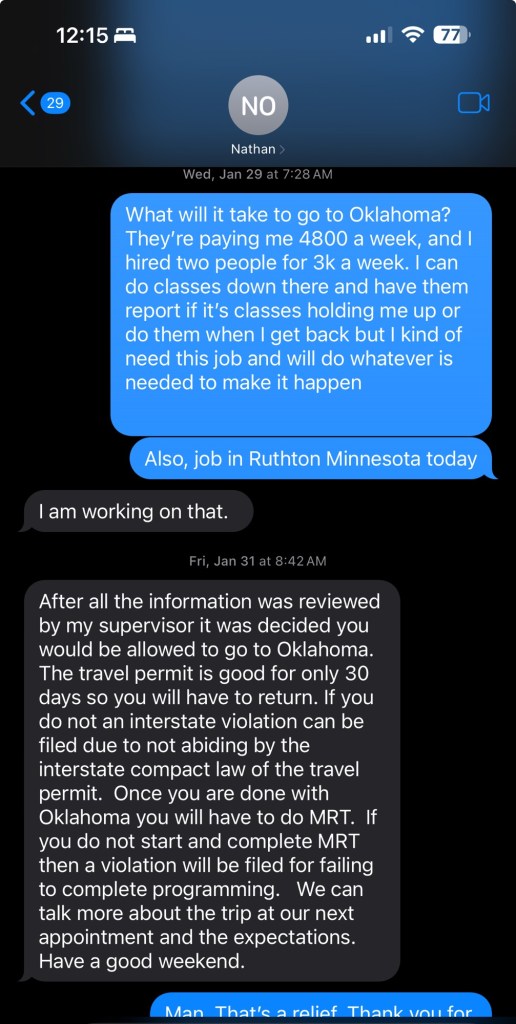
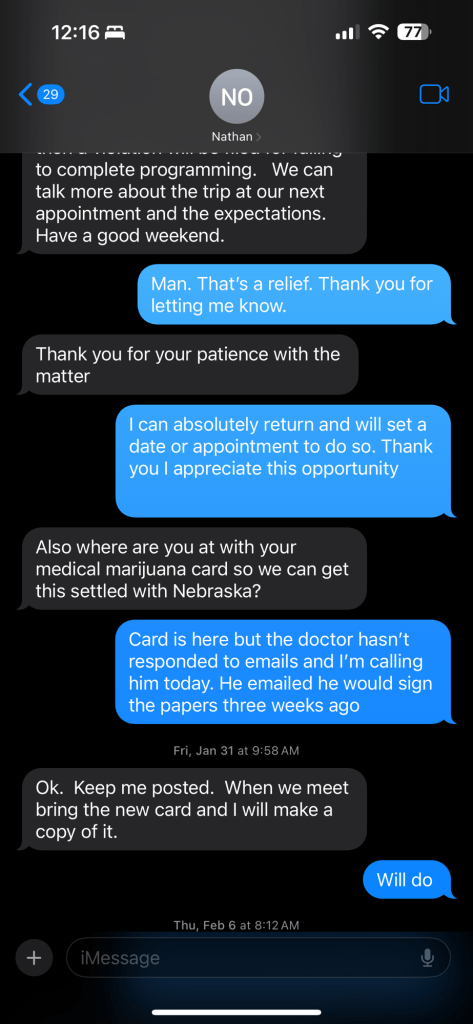
January 31: trip to Oklahoma approved
Feb 6: Executive Order No. 13798 and the February 6, 2025, Executive Order on Eradicating Anti-Christian Bias and Other Religions.
February 7: trump establishes executive order for White House faith office creation:
Section 1. Policy. Faith-based entities, community organizations, and houses of worship have tremendous ability to serve individuals, families, and communities through means that are different from those of government and with capacity and effectiveness that often exceeds that of government. These organizations lift people up, keep families strong, and solve problems at the local level. The executive branch wants faith-based entities, community organizations, and houses of worship, to the fullest extent permitted by law, to compete on a level playing field for grants, contracts, programs, and other Federal funding opportunities. The efforts of faith-based entities, community organizations, and houses of worship are essential to strengthening families and revitalizing communities, and the Federal Government welcomes opportunities to partner with such organizations through innovative, measurable, and outcome-driven initiatives.
The executive branch is committed to ensuring that all executive departments and agencies (agencies) honor and enforce the Constitution’s guarantee of religious liberty and to ending any form of religious discrimination by the Federal Government. (xi) identify and propose means to reduce burdens on the free exercise of religion, including legislative, regulatory, and other barriers to the full and active participation of faith-based entities, community organizations, and houses of worship in government-funded or government-conducted activities and programs.
March 8: met with po no ua given wrote this text upon leaving “Probation today: took my new medical card asked how getting the probation paperwork signed was going to dem he’d give me a month to get the paperwork signed by a doc to quote in his words “keep Nebraska from breathing down our neck and leave us alone”
March 12: letter sent to trump admin https://weedpress.wordpress.com/2025/03/12/letter-to-trump-admin-stop-harassing-religious-cannabis-users-or-see-you-in-court/
march 24: text po for new med exemption form for probation as I was switching doctors as prior doctor would not sign probation paperwork die to concerns with not being a legal expert on federal and state complex laws and wanting to be extra safe for his practice so I switched doctors
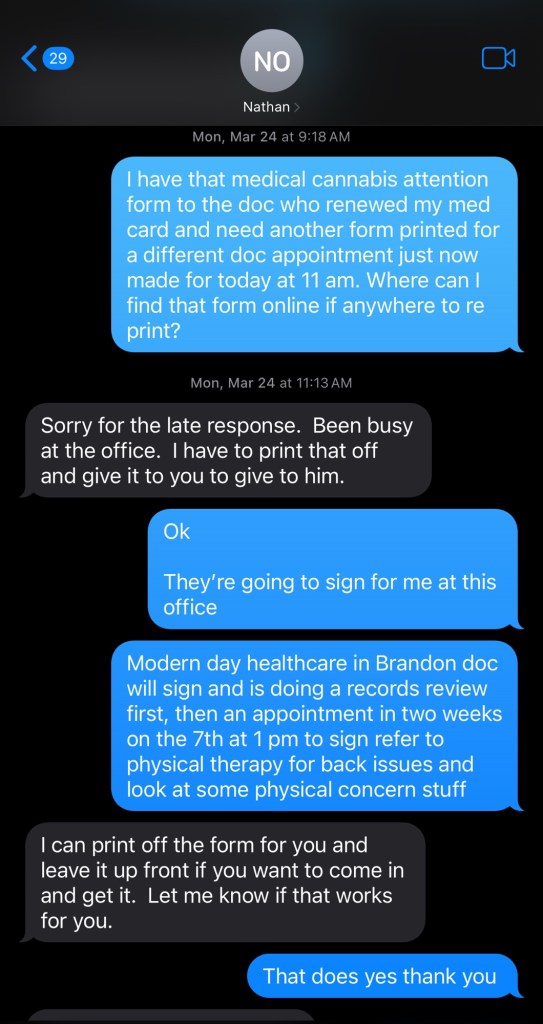
Friday April 11: meeting with po no ua giventext myself this when leaving for notes “Met po today he took card and doc papers to copy to send to judge made me a copy did not drug test again so that’ll be three months without being asked to do any UAs told me to find better ways to talk with politicians and let me leave after a two hour discourse over politics and “religion”
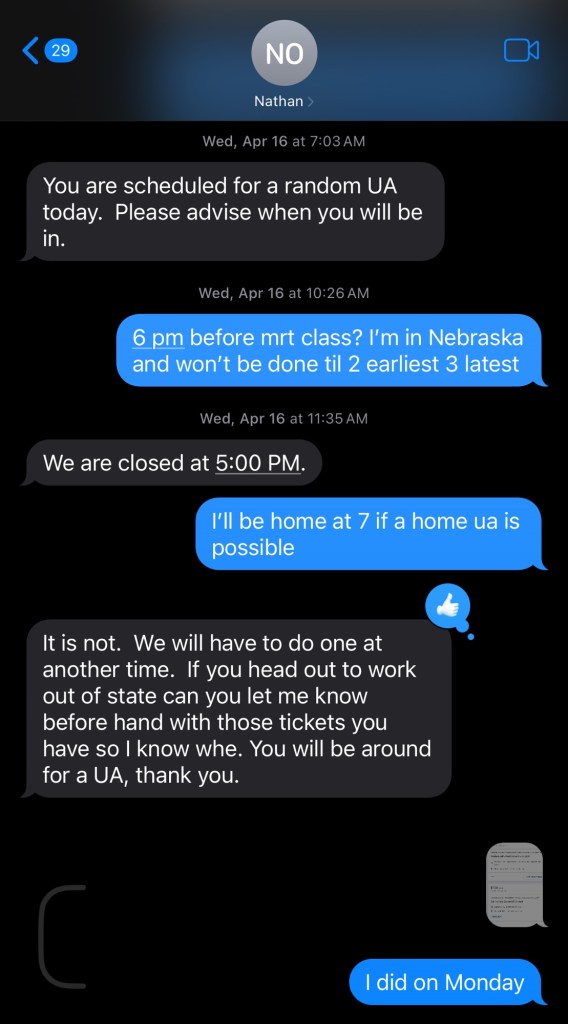
April 16: random ua request was unable to be met due to logistics:
Wednesday April 17: news article says
State senators say that since the ballot measure was self-enacting, if nothing gets passed this session, and there’s no funding for the regulatory commission, it could leave the state in a gray area because having five ounces with a prescription is now legal.
“It deserves its day on the floor. I think it deserves for lawmakers who represent the people to talk about this, to talk about the overwhelming support,” Crista Eggers with Nebraskans for Medical Marijuana said.
Lawmakers have 25 days this session if they want a say in implementing voter-imposed medical cannabis.
“Very important to get something on the floor. We don’t want this to be the wild west where people can start growing, you know, marijuana in their front yard and doing what they want with it, State Sen. Ben Hansen said.
https://www.ketv.com/article/nebraska-medical-marijuana-regulatory-bill-likely-dead/64516787
Thursday April 18th: met with po, no ua given gave him medical paperwork from doc thanked him for patience in me finding a new doc no uas given since January at this point showing lack of compelling interest or need
April 30: google ai says possessuonncurrently legal in Nebraska:
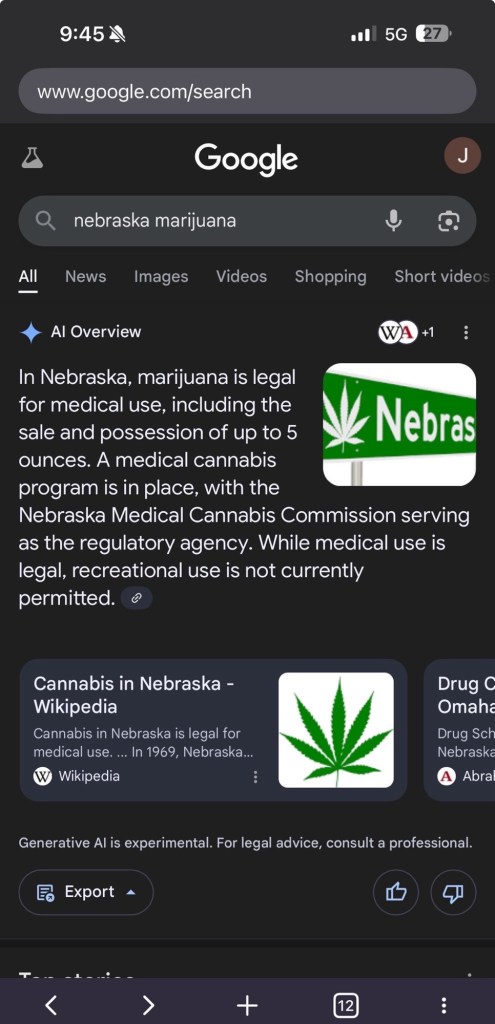
Tuesday may 6 article:
Medical marijuana has technically been legal in Nebraska since the ballot measures were approved by Nebraska Gov. Jim Pillen in December, but lawmakers have sought to make adjustments to the regulatory statute enacted by voters.
Friday may 16: met with po no ua given he advised he had given medical documentation paperwork to Nebraska but hadn’t heard from them on it in a month and would ask them for an update on their decision
Monday may 19th: Nebraska denied medical exemption triggering constitutional injury that while already established but was thought to be rectified is now ongoing and continual again after a five month reprieve of enforcement as my probation officer advised he was of the understanding Nebraska was going to approve the med exemption and therefore he wasn’t going to ua me for the four months it took Nebraska to get my med paperwork and deny the med paperwork now I have to file under RFRA with my established injury of two days bodily enslavement in jail with reparations for damages as invited by RFRA
*************************************************
Notes:
Look what we did already in 2024 (also 2023 and 2022):
Federal exemption for Iowa’s medical cannabis program (Iowa Code Chapter 124E) is on the
agenda for a Senate Judiciary subcommittee meeting Monday afternoon, February 13, 2023,
at 1:30 p.m. at the Iowa State Capitol.
Senate File 69 creates a legal task force to conform Iowa’s medical cannabis program with
federal drug law. Subcommittee members are Sen. Brad Zaun (sponsor of the bill and
Judiciary Committee chair), Sen. Mike Bousselot (former legal counsel for Gov. Branstad),
and Sen. Nate Boulton (attorney and ranking member of the Judiciary Committee).
21 U.S.C. § 822(d) allows the United States Department of Justice to waive registration
requirements for “manufacturers, distributors, or dispensers,” if the department finds it
consistent with public health and safety.
21 U.S.C. § 822(c)(3) protects end users if such a waiver is granted.
An existing exemption, created in 1966, 21 C.F.R. § 1307.31 waives the registration
requirements for distributors of peyote being supplied to members of the Native American
Church. Peyote, like cannabis, is a federal Schedule I controlled substance.
It goes without saying lawmakers thought it was in the best interest of public health and
safety to enact a medical cannabis program, so it’s impossible to avoid this federal mandate.
It’s the law!
The factors the department must consider are: (1) unauthorized use; and (2) adverse medical
reactions. Iowa’s medical cannabis program can easily pass both tests. There hasn’t been
any diversion or adverse medical reactions. Iowa’s program is well controlled, as the title of
the federal drug law, “The Controlled Substances Act”, implies.
There are adverse public safety factors, but they are all a consequence of federal drug law’s
civil enforcement. Failure by the department to grant a waiver promotes a significant risk to
public safety.
Medical patients, the same people the law was enacted to protect, are discriminated against in
housing, education, employment, healthcare, and insurance. Businesses providing medical
cannabis cannot deduct normal business expenses from state or federal income tax and must
operate in “cash only” to avoid federal money laundering statutes. And, these businesses can
be sued by anyone under federal statutes against racketeering.
Justice Clarence Thomas described it as “traps for the unwary”. States, 594 US _, 141 S Ct 2236, 210 L Ed 2d 974 (2021).
Standing Akimbo v. United
Beside the fact state lawmakers thought it was in the best interest of public health and safety
to create Iowa’s medical cannabis program, the department has issued guidance documents
stating it has better things to do than focus on state medical cannabis programs. Department
of Justice, Guidance Regarding Marijuana Enforcement, August 29, 2013. The following
year, Congress began blocking criminal enforcement for state medical cannabis programs:
Consolidated Appropriations Act, 2023 (H.R. 2617), Public Law 117-328, § 531 (December
29, 2022), H.R. 2617, § 531; Consolidated Appropriations Act, 2022 H.R. 2471), Public Law
117-103, § 531, 136 STAT. 49, 150 (March 15, 2022); Consolidated Appropriations Act,
2021 (H.R. 133), Public Law 116-260, § 531, 134 Stat. 1182, 1283 (Dec. 27, 2020);
Consolidated Appropriations Act, 2020 (H.R. 1158), Public Law 116-93, § 531, 133 Stat.
2317, 2431 (Dec. 20, 2019); Consolidated Appropriations Act, 2019 (H.J. Res. 31), Public
Law 116-6, § 537, 133 Stat. 13, 138 (Feb. 15, 2019); Consolidated Appropriations Act, 2018
https://carl-olsen.com/2023-02-13.php 1/2
2/12/23, 1:48 PM Senate File 69 – Feb. 13, 2023
(H.R. 1625), Public Law 115-141, § 538, 132 Stat. 347, 444 (Mar. 23, 2018); Consolidated
Appropriations Act, 2017 (H.R. 244), Public Law 115-31, § 537, 131 Stat. 135, 228 (May 5,
2017); Consolidated Appropriations Act, 2016 (H.R. 2029), Public Law 114-113, § 542, 129
Stat. 2241, 2332 (Dec. 18, 2015); Consolidated and Further Continuing Appropriations Act,
2015 (H.R. 83), Public Law 113-235, § 538, 128 Stat. 2129, 2217 (Dec. 16, 2014).
All of these factors tip the balance in favor of the state on whether to grant the waiver. The
department cannot point to any factor that would tip the balance against granting the waiver.
Congress has affirmed that it is in the best interest of public health and safety to waive
criminal enforcement. It would be impossible for the department to find any evidence that
supports continued federal civil enforcement. Problems associated with money laundering
(banking), tax penalties, insurance, housing, employment, education, and healthcare, would
all be resolved by granting the waiver.
Of course, it’s only a matter of time before Congress eventually comes up with a permanent
solution, but patients enrolled in these programs don’t have time to wait.
Most people will look at 21 U.S.C. 822(d) as a “grant” of federal authority by regulation rather than as an “acknowledgement” of state authority in a regulation.
It takes a much deeper understanding of constitutional law to look at it as question of state sovereignty.
Nobody does that. That’s why I do it.
And, I only know about it because I have an issue with state authority to deprive me of my personal sovereignty.
And The recent decision on Loper Bright Enterprises v. Raimondo, overturning deference to federal agencies, puts deference to state government ahead of arbitrary and irrational agency decisions.
I am the only one that would even bother to get a federal exemption, so that’s clearly an abomination to force participants in South Dakota on probation to agree to violate federal law just to get their medicine.
And, I’ve been making this same argument since 2021 when South Dakota law was created, and have that extremely well documented: https://youtu.be/en5IheMM3XQ?si=A-cV1z-xlbnoSLvE https://youtu.be/_7NzVN7Ivy0?si=tsuEpG_aTs4qPB3a https://weedpress.wordpress.com/2022/01/16/email-to-south-dakota-department-of-health-about-federal-marijuana-exemption-application-from-jason-karimi-january-16-2022/
The Iowa legislature even enacted my argument into law in 2020, HF 2589, Sec. 31, 2020 Iowa Acts ch. 1116, Sec. 31.
***
Roman Catholic Diocese of Brooklyn v. Cuomo, 592 U.S. 14 (2020):
Irreparable harm. There can be no question that the challenged restrictions, if enforced, will cause irreparable harm. “The loss of First Amendment freedoms, for even minimal periods of time, unquestionably constitutes irreparable injury.” Elrod v. Burns, 427 U.S. 347, 373 (1976) (plurality opinion).
Roman Catholic Diocese, 592 U.S. at 67.
****
I’ve never seen anyone make these exemption arguments I am making, and I thought that was a piece that was missing in the Raich case.
In Raich, page 28 footnote 37, the U.S. Supreme Court said she could have used 21 U.S.C. 811 (scheduling).
But, she could have used 21 U.S.C. 822(d) and the court said nothing about it.
21 U.S.C. 811 and 21 U.S.C. 822(d) both have one thing in common, they are administrative processes.
The so-called movement has 21 U.S.C. 811 covered in spades, and between that and federal legislation, that is where everyone is focused.
21 U.S.C. 822(d) was left entirely open for me to accept as a challenge.
***
I would always use a medical marijuana law inconsistent with federal law as evidence of undercutting compelling interest under the RFRA, for two reasons:
If Nebraska is like Iowa, cannabis is still classified as having no medical use. So now there is a huge inconsistency there.
And federal law says it has no medical use and Nebraska hasn’t file for an exception under 21 U.S.C. 822(d).
Both of those things undercut the compelling interest in schedule I, and the second one actually puts patients in federal jeopardy so it’s even reckless.
The whole idea behind schedule I is public health and safety.
So, now the UN reclassified it in 2020 because it has medical value, the state legalized it for medical use, and the federal government says it should be reclassified.
*****
Simple possession receives greater protection under strict scrutiny than distribution. See United States v. Bauer, 75 F.3d 1366, 1376 (9th Cir. 1996) (“As to the three counts on which the appellants were convicted of simple possession, the exclusion of the religious defense was in error”).
****
“Laws like these further instantiate the guarantee of religious freedom so central to our republic,” Parrish wrote in the ruling. “But for that guarantee of religious liberty to mean anything, the laws must protect unfamiliar religions equally with familiar ones, both in design and in practice.”
***
Gonzales v. O Centro Espírita Beneficente União do Vegetal, 546 U.S. 418 (2006):
This conclusion is reinforced by the Controlled Substances Act itself. The Act contains a provision authorizing the Attorney General to “waive the requirement for registration of certain manufacturers, distributors, or dispensers if he finds it consistent with the public health and safety.” 21 U.S.C. § 822(d). The fact that the Act itself contemplates that exempting certain people from its requirements would be “consistent with the public health and safety” indicates that congressional findings with respect to Schedule I substances should not carry the determinative weight, for RFRA purposes, that the Government would ascribe to them.
O Centro, 546 U.S., at 432-433
***
“Very reason congress enavted RFRA was to respond to a decision denying a claimed right to sacramental use of a controlled substance.”
***
In 2006, the U.S. Supreme Court applied the RFRA to the religious use of a
controlled substance. Gonzales v. O Centro Espírita Beneficente União do
Vegetal, 546 U.S. 418 (2006). “The well-established peyote exception also fatally
undermines the Government’s broader contention that the Controlled Substances
Act establishes a closed regulatory system that admits of no exceptions under
RFRA.” Id., at 434. “We do not doubt that there may be instances in which a
need for uniformity precludes the recognition of exceptions to generally
applicable laws under RFRA. But it would have been surprising to find that this
was such a case, given the longstanding exemption from the Controlled
Substances Act for religious use of peyote, and the fact that the very reason
Congress enacted RFRA was to respond to a decision denying a claimed right to
sacramental use of a controlled substance. See 42 U.S.C. § 2000bb(a)(4).” Id., at
436.
***
(“The very essence of civil liberty certainly consists of the right of every individual to claim the protection of the laws, whenever he receives an injury.” (quoting Marbury v. Madison, 5 U.S. 1 Cranch 137, 163, 5 U.S. 137, 2 L.Ed. 60 (1803)));
***
The court did not force O Centro to apply for anything with the DEA, so I forgot about that.
Gonzales v. O Centro Espírita Beneficente União do Vegetal, 546 U.S. 418 (2006)
But, they had to invoke the RFRA to get that.
Equal protection and due process will fail under Raich without the RFRA.
***
South Dakota constitution § 3. Freedom of religion--Support of religion prohibited. The right to worship God according to the dictates of conscience shall never be infringed. No person shall be denied any civil or political right, privilege or position on account of his religious opinions; but the liberty of conscience hereby secured shall not be so construed as to excuse licentiousness, the invasion of the rights of others, or justify practices inconsistent with the peace or safety of the state. No person shall be compelled to attend or support any ministry or place of worship against his consent nor shall any preference be given by law to any religious establishment or mode of worship. No money or property of the state shall be given or appropriated for the benefit of any sectarian or religious society or institution. § 4. Right of petition and peaceable assembly. The right of petition, and of the people peaceably to assemble to consult for the common good and make known their opinions, shall never be abridged. § 5. Freedom of speech--Truth as defense--Jury trial. Every person may freely speak, write and publish on all subjects, being responsible for the abuse of that right. In all trials for libel, both civil and criminal, the truth, when published with good motives and for justifiable ends, shall be a sufficient defense. The jury shall have the right to determine the fact and the law under the direction of the court. § 7. Rights of accused. In all criminal prosecutions the accused shall have the right to defend in person and by counsel; to demand the nature and cause of the accusation against him; to have a copy thereof; to meet the witnesses against him face to face; to have compulsory process served for obtaining witnesses in his behalf, and to a speedy public trial by an impartial jury of the county or district in which the offense is alleged to have been committed. § 18. Equal privileges or immunities. No law shall be passed granting to any citizen, class of citizens or corporation, privileges or immunities which upon the same terms shall not equally belong to all citizens or corporations. § 20. Courts open--Remedy for injury. All courts shall be open, and every man for an injury done him in his property, person or reputation, shall have remedy by due course of law, and right and justice, administered without denial or delay.
court. § 26. Power inherent in people--Alteration in form of government--Inseparable part of Union. All political power is inherent in the people, and all free government is founded on their authority, and is instituted for their equal protection and benefit, and they have the right in lawful and constituted methods to alter or reform their forms of government in such manner as they may think proper. And the state of South Dakota is an inseparable part of the American Union and the Constitution of the United States is the supreme law of the land.
- Maintenance of free government–Fundamental principles. The blessings of a free government can only be maintained by a firm adherence to justice, moderation, temperance, frugality and virtue and by frequent recurrence to fundamental principles.
***
Smith (1990)
Neutral and generally applicable state law means no First Amendment protection.
Lukumi (1990)
Lack of general applicability is lack of neutrality (they are the same thing, exceptions).
State RFRA does not change Smith, only federal RFRA does that.
And, even then, both RFRAs are statutory, not constitutional.
If they can use RFRA to avoid constitutional scrutiny, it would sink my boat (since we know state cannabis laws do not provide any federal protection).
I need to make sure my judge understands that RFRAs do not apply to Iowa, because Iowa has never been neutral or generally applicable.
RFRAs do provide consent for a civil action against the government, so that part is essential.
But, the strict scrutiny the RFRAs provide do not mean anything if you already have that from lack of neutrality or general applicability.
RFRAs do two things: (1) provide statutory strict scrutiny; and (2) a cause of action in a court.
But, if you already have constitutional strict scrutiny like I do, all you want is a cause of action.
I don’t want statutory strict scrutiny because it’s not as appealable as constitutional strict scrutiny.
Courts have a doctrine called constitutional avoidance, which means they will always go with a statute first before reaching the constitution.
No court in Iowa has ever seen a RFRA case before, and the last case in Iowa used constitutional analysis from Smith (Mitchell County v. Zimmerman).
I’m asking the court to understand I am only using RFRA for authority to sue, but I’m using Mitchell County v. Zimmerman as the strict scrutiny analysis, not the Iowa RFRA.
The court is not going to agree with me, but I need to preserve that for the U.S. Supreme Court, because the U.S. Supreme Court is still using Smith to evaluate state laws, not the Iowa RFRA or the federal RFRA.
***
Fulton v. Philadelphia, 593 U.S. 522, 141 S.Ct. 1868 (2021):
And “religious beliefs need not be acceptable, logical, consistent, or comprehensible to others in order to merit First Amendment protection.” Thomas v. Review Bd. of Ind. Employment Security Div., 450 U.S. 707, 714 (1981).
Fulton, 593 U.S., at 532, 141 S.Ct., at 1876.
A law also lacks general applicability if it prohibits religious conduct while permitting secular conduct that undermines the government’s asserted interests in a similar way. Church of Lukumi Babalu Aye, Inc. v. Hialeah, 508 U.S., at 542-546.
Fulton, 593 U.S. at 534, 141 S.Ct. at 1877.
Tandon v. Newsom, 593 U.S. 61 (2021):
First, government regulations are not neutral and generally applicable, and therefore trigger strict scrutiny under the Free Exercise Clause, whenever they treat any comparable secular activity more favorably than religious exercise. Roman Catholic Diocese of Brooklyn v. Cuomo, 592 U.S. 14, – (2020) (per curiam). It is no answer that a State treats some comparable secular businesses or other activities as poorly as or even less favorably than the religious exercise at issue. Id., at – (KAVANAUGH, J., concurring).
Tandon, 593 U.S. at 62.
Third, the government has the burden to establish that the challenged law satisfies strict scrutiny. To do so in this context, it must do more than assert that certain risk factors “are always present in worship, or always absent from the other secular activities” the government may allow. South Bay United Pentecostal Church v. Newsom, 592 U.S. , (2021) (statement of Gorsuch, J.); id., at _ (Barrett, J., concurring).
Tandon, 593 U.S. at 62-63.
… instead of requiring the State to explain why it could not safely permit at-home worshipers to gather in larger numbers while using precautions used in secular activities, the Ninth Circuit erroneously declared that such measures might not “translate readily” to the home.
Tandon, 593 U.S. at 64.
***
Kennedy v. Bremerton School District, 597 U.S. 507, 533 (2022):
It is true that this Court and others often refer to the “Establishment Clause,” the “Free Exercise Clause,” and the “Free Speech Clause” as separate units. But the three Clauses appear in the same sentence of the same Amendment: “Congress shall make no law respecting an establishment of religion, or prohibiting the free exercise thereof; or abridging the freedom of speech.” Amdt. 1. A natural reading of that sentence would seem to suggest the Clauses have “complementary” purposes, not warring ones where one Clause is always sure to prevail over the others. See Everson v. Board of Ed. of Ewing, 330 U.S. 1, 13, 15 (1947).
***
Uniform controlled substances acts do not embed religious exceptions in the statute, they embed a process for evaluating them, like 21 U.S.C. § 822(d). The general purpose of these acts, uniform and federal, imply regulation.
LESS RESTRICTIVE MEANS
State and federal law make a distinction between distribution and simple possession.
Mr. has not received a distinct constitutional analysis of simple possession for religious use. The U.S. Court of Appeals explained what possession and joint possession mean in United States v. Rush, 738 F.2d 497, 512 (first amendment does not protect intent to distribute), 738 F.2d at 513-15 (explanation of simple and joint possession).
***
As for assessing the character of the beliefs underlying the conduct for which the plaintiff
claims an exemption, district courts in the Tenth Circuit consider the following factors, known as
the Meyers factors after the leading case: (1) Ultimate ideas—“Religious beliefs often address
fundamental questions about life, purpose, and death.” (2) Metaphysical beliefs—“Religious
beliefs often are ‘metaphysical,’ that is, they address a reality which transcends the physical and
immediately apparent world.” (3) Moral or ethical system—“Religious beliefs often prescribe a
particular manner of acting, or way of life, that is ‘moral’ or ‘ethical.’” (4) Comprehensiveness of
beliefs—“Another hallmark of ‘religious’ ideas is that they are comprehensive[,] . . . provid[ing]
the believer with answers to many, if not most, of the problems and concerns that confront
humans.” (5) Accoutrements of religion—The presence of “external signs” like a founder or
prophet, important writings, gathering places, keepers of knowledge, ceremonies and rituals,
structure or organization, holidays, diet, clothing, and propagation to non-believers “may indicate
that a particular set of beliefs is ‘religious.’” United States v. Meyers, 95 F.3d 1475, 1483–84 (10th
Cir. 1996). No one factor is dispositive.3F
4 Id.
***
Iowa below but do same for South Dakota statutes
Religious Exception for Cannabis
Proposed Legislation
124.401(5)(g) Religious exceptions. A provision of this chapter shall not be construed to substantially burden a person’s exercise of religion if the person is an adherent or member of a church or religious denomination and in accordance with the tenets or principles of the person’s church or religious denomination the person uses cannabis. However, persons supplying the product to a church shall register, maintain appropriate records of receipts and disbursements, and otherwise comply with all applicable requirements of this chapter and rules adopted pursuant thereto. For purposes of this paragraph, “exercise of religion” means the same as defined in section 675.3(2) and “substantially burden” means the same as defined in section 675.3(5).
Existing Exceptions in the Iowa Code
Religious Exception for Peyote (1971): Iowa Code § 124.204(4)(p) references a statutory religious exception in Iowa Code § 124.204(8).
Secular Exception for Cannabis (2017): Iowa Code § 124.401(5)(c) references a statutory secular exception in Iowa Code Chapter 124E.
Secular Exception for Cannabis (2019): Iowa Code § 124.204(4)(m) references a statutory secular exception in Iowa Code § 124.204(7) referencing statutory secular exceptions in Iowa Code Chapter 204 and Iowa Code Chapter 204A.
Religious Exception for Vaccines (2020): Iowa Code § 139A.39 creates a statutory religious exception in Iowa Code Chapter 139A.
Religious Freedom Restoration Act (2024): Iowa Code Chapter 675 creates a statutory religious exception to every law and regulation, but the only means of enforcement is to file a complaint in an Iowa district court.
Text of Existing Exceptions
Peyote, § 124.204(8): Nothing in this chapter shall apply to peyote when used in bona fide religious ceremonies of the Native American Church; however, persons supplying the product to the church shall register, maintain appropriate records of receipts and disbursements of peyote, and otherwise comply with all applicable requirements of this chapter and rules adopted pursuant thereto.
Cannabis, § 124.401(5)(c): A person may knowingly or intentionally recommend, possess, use, dispense, deliver, transport, or administer cannabidiol if the recommendation, possession, use, dispensing, delivery, transporting, or administering is in accordance with the provisions of chapter 124E. For purposes of this paragraph, “cannabidiol” means the same as defined in section 124E.2.
Cannabis, § 124.204(7): This section does not apply to any of the following: a. Hemp as defined in section 204A.2, including hemp that is or was produced in this state, or was produced in another state in accordance with the provisions of the federal hemp law as defined in chapter 204A, with a maximum delta-9 tetrahydrocannabinol concentration that does not exceed three-tenths of one percent on a dry weight basis. b. A hemp product as provided in chapter 204 with a maximum tetrahydrocannabinol concentration, inclusive of any isomers, derivatives, and analogs, whether naturally occurring or synthesized, that does not exceed three-tenths of one percent on a dry weight basis.
Vaccines, § 139A.39: A provision of this chapter shall not be construed to require or compel any person to take or follow a course of medical treatment prescribed by law or a health care provider if the person is an adherent or member of a church or religious denomination and in accordance with the tenets or principles of the person’s church or religious denomination the person opposes the specific course of medical treatment. However, such person while in an infectious stage of disease shall be subject to isolation and such other measures appropriate for the prevention of the spread of the disease to other persons.
RFRA, § 675.3(2): “Exercise of religion” means the practice or observance of religion. “Exercise of religion” includes but is not limited to the ability to act or refuse to act in a manner substantially motivated by one’s sincerely held religious belief, whether or not the exercise is compulsory or central to a larger system of religious belief.
RFRA, § 675.3(5): “Substantially burden” means any action that directly or indirectly constrains, inhibits, curtails, or denies the exercise of religion by any person or compels any action contrary to a person’s exercise of religion and includes but is not limited to withholding of benefits; assessment of criminal, civil, or administrative penalties; or exclusion from governmental programs or access to governmental facilities
***
Jamaica (2015) Dangerous Drugs Act Amendment
added exception for possession of ganja for religious purposes as a sacrament in adherence to the Rastafarian faith.
***
124.401(5)(g) Religious exceptions. A provision of this chapter shall not be construed to substantially burden a person’s exercise of religion if the person is an adherent or member of a church or religious denomination and in accordance with the tenets or principles of the person’s church or religious denomination the person uses cannabis. However, persons supplying the product to a church shall register, maintain appropriate records of receipts and disbursements, and otherwise comply with all applicable requirements of this chapter and rules adopted pursuant thereto. For purposes of this paragraph, “exercise of religion” means the same as defined in section 675.3(2) and “substantially burden” means the same as defined in section 675.3(5). Persons are not required to register, but may optionally register if they pay a fee to cover the cost. The department shall issue registrations describing the terms of use if requested by a person and may charge a nominal fee to cover the cost. For purposes of this paragraph, “person” means the same as defined in section 675.3(3).
***
 WeedPress: The Paper Trail
Leave a comment