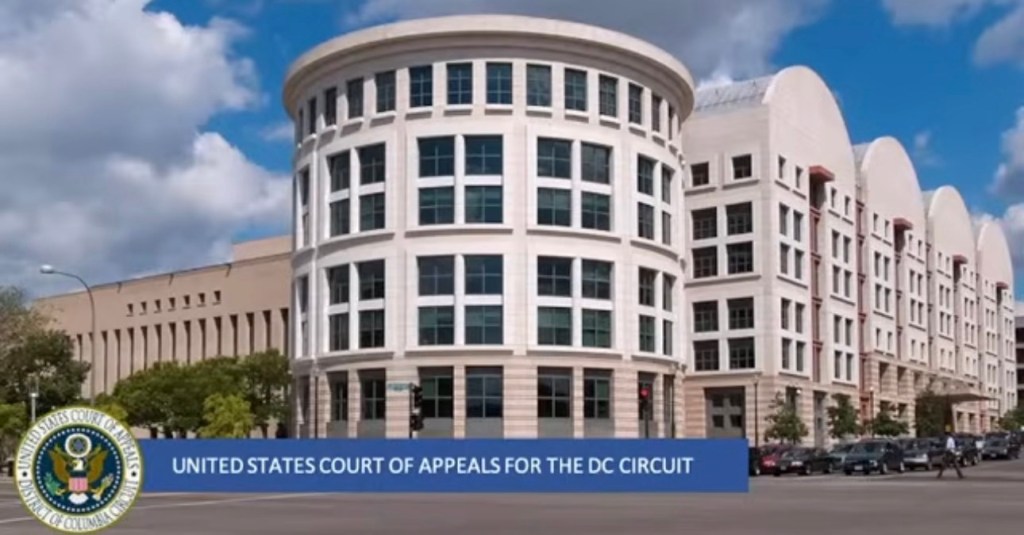
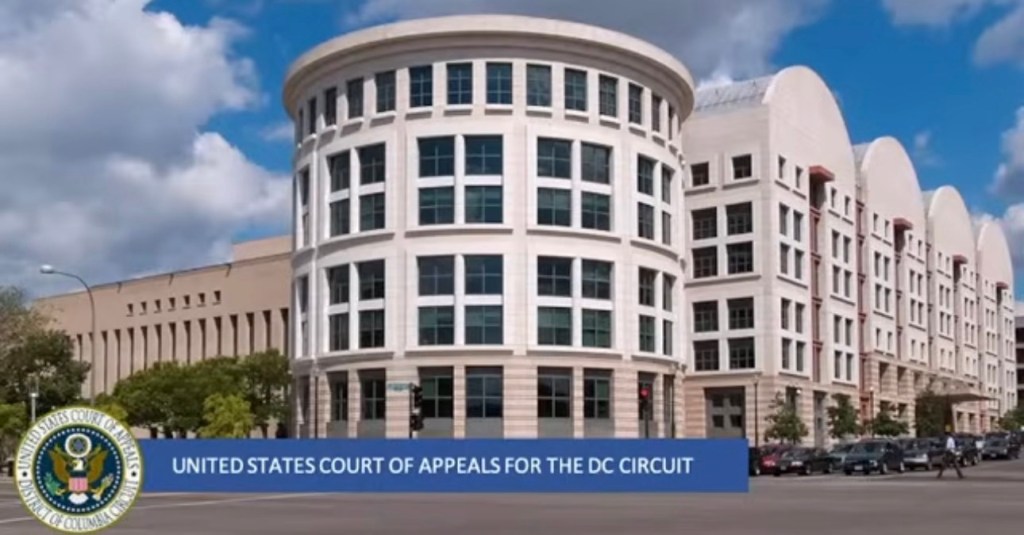
Case 2: 25-1140 In re: Iowaska Church of Healing
Friday, November 14, 2025 9:30 A.M. USCA Courtroom 31
Judges Henderson, Katsas, Garcia
Karen LeCraft Henderson
Gregory G. Katsas
Bradley N. Garcia
25-1140
In re: Iowaska Church of Healing
10 minutes per side
Arguing: Simon A. Steel, Lowell V. Sturgill Jr. (DOJ)
7:52 – 8:56
Judge Henderson said,
Let me ask you about 822(d), and unless I’m reading it incorrectly, it says the Attorney General may, by regulation, waive the requirement for registration, and so forth. Now it doesn’t say anything about guidance, it says by regulation. And if you had done what Native Americans have done with peyote, which was by a rule, and they had sat on your petition for a rule for six years, you’d be in a lot better position, at least in our ability to say, make a decision DEA. Why? Am I reading this wrong? In other words, when I read it I thought, well, I would think you’d say this was, maybe not ultra vires, but for the DEA to use the guidance procedure rather than what the statute itself requires, which is by regulation. – Judge Henderson
See also Weir v. Nix, 114 F.3d 817 (8th Cir. 1997) re 50:02 argument
https://scholar.google.com/scholar_case?case=17742512977527903107
https://scholar.google.com/scholar_case?case=6869453112144066805
Arizona Yage Assembly v. Garland, (D. Arizona, May 4, 2023)
The bulk of Defendants’ arguments stem from the fact that Plaintiffs have not sought an exemption from the applicability of the CSA. The DEA promulgated the “Guidance” in 2009 in response to the Supreme Court’s ruling in Gonzales v. O Centro Espírita Beneficente União do Vegetal, 546 U.S. 418 (2006). However, in 2012 the Ninth Circuit addressed a similar argument as Defendants make here, and the court refused “to read an exhaustion requirement into RFRA where the statute contains no such condition.” Oklevueha I, 676 F.3d at 838 (stating that “the Supreme Court has reviewed a RFRA-based challenge to the CSA without requiring that the plaintiffs first seek a religious use exemption from the DEA”) (citing O Centro, 546 U.S. 418). Both the Supreme Court and the Ninth Circuit have recognized that RFRA “plainly contemplates that courts would recognize exceptions [to the CSA]—that is how the law works.” Id. (quoting O Centro, 546 U.S. at 434).
The Court will not depart from that clear precedent. Accordingly, the Defendants’ alternative request that the Court stay the case to allow Plaintiffs to apply for an exemption is denied.
*************************************************
Arizona Yage Assembly v. Garland, 595 F.Supp.3d 869 (D. Arizona, March 30, 2022)
Though there is a valid regulation, 21 C.F.R. § 1307.03, requiring persons seeking exemptions to file a written request with the DEA Office of Diversion Control, the Ninth Circuit held persons seeking a RFRA exemption from the DEA are not required to exhaust the administrative remedy under § 1307.03.[Footnote 7] See Oklevueha I, 676 F.3d at 838 (“We decline . . . to read an exhaustion requirement into RFRA where the statute contains no such condition and the Supreme Court has not imposed one.”) (internal citation omitted).
[Footnote 7] Judge Orrick of the Northern District of California noted that even a new substantive agency rule might not be able to impose a binding administrative exhaustion requirement under Oklevueha I. (Doc. 57 at 14) (“[I]t is possible that regardless of any new regulations [DEA may promulgate], the plaintiffs will not have to seek an exemption from the DEA prior to seeking judicial redress.”).
To raise a claim under the APA, Plaintiffs are required to petition for an exemption or a new rulemaking. See 5 U.S.C. §§ 702, 704, 706; Madsen, 976 F.2d at 1220. Then, if the DEA denied the petition or refused to respond to it, Plaintiffs could argue they were harmed because the DEA failed to comply with the APA. See 5 U.S.C. § 706(1), (2) (setting forth the standard of review of agency action).
*************************************************
Okleveuha Native American Church v. Holder, 676 F.3d 829, 838 (9th Cir., 2012)
Likewise, we are unpersuaded by the Government’s assertion that Plaintiffs’ request for prospective relief is unripe because Plaintiffs did not request an exception to the CSA from the DEA. See 21 C.F.R. § 1307.03 (“Any person may apply for an exception to the application of any provision of this chapter by filing a written request with the Office of Diversion Control, Drug Enforcement Administration, stating the reasons for such exception.”). The Government argues that we should require Plaintiffs to exhaust this administrative remedy, because doing so would allow the DEA to apply its expertise to Plaintiffs’ claim, possibly moot the case if the claim is granted, and help build a record for judicial review.
We decline, however, to read an exhaustion requirement into RFRA where the statute contains no such condition, see 42 U.S.C. §§ 2000bb-2000bb-4, and the Supreme Court has not imposed one. Indeed, the Supreme Court has reviewed a RFRA-based challenge to the CSA without requiring that the plaintiffs first seek a religious use exemption from the DEA. Gonzales v. O Centro Espírita Beneficente União do Vegetal, 546 U.S. 418, 126 S.Ct. 1211, 163 L.Ed.2d 1017 (2006). In so doing, it recognized that RFRA “plainly contemplates that courts would recognize exceptions [to the CSA] — that is how the law works.” Id. at 434, 126 S.Ct. 1211.
*************************************************
The bulk of Defendants’ arguments stem from the fact that Plaintiffs have not sought an exemption from the applicability of the CSA. The DEA promulgated the “Guidance” in 2009 in response to the Supreme Court’s ruling in Gonzales v. O Centro Espírita Beneficente União do Vegetal, 546 U.S. 418 (2006). However, in 2012 the Ninth Circuit addressed a similar argument as Defendants make here, and the court refused “to read an exhaustion requirement into RFRA where the statute contains no such condition.” Oklevueha I (https://scholar.google.com/scholar_case?case=11005764894777770013#p838), 676 F.3d at 838 (stating that “the Supreme Court has reviewed a RFRA-based challenge to the CSA without requiring that the plaintiffs first seek a religious use exemption from the DEA”) (citing O Centro (https://ethiopianzioncopticchurch.org/cases/ocentro/), 546 U.S. 418). Both the Supreme Court and the Ninth Circuit have recognized that RFRA “plainly contemplates that courts would recognize exceptions [to the CSA]—that is how the law works.” Id. (quoting O Centro, 546 U.S. at 434).
The Court will not depart from that clear precedent. Accordingly, the Defendants’ alternative request that the Court stay the case to allow Plaintiffs to apply for an exemption is denied.
*************************************************
Though there is a valid regulation, 21 C.F.R. § 1307.03 (https://www.govinfo.gov/content/pkg/CFR-2021-title21-vol9/xml/CFR-2021-title21-vol9-sec1307-03.xml), requiring persons seeking exemptions to file a written request with the DEA Office of Diversion Control, the Ninth Circuit held persons seeking a RFRA exemption from the DEA are not required to exhaust the administrative remedy under § 1307.03 (https://www.govinfo.gov/content/pkg/CFR-2021-title21-vol9/xml/CFR-2021-title21-vol9-sec1307-03.xml).[Footnote 7] See Oklevueha I (https://scholar.google.com/scholar_case?case=11005764894777770013#p838), 676 F.3d at 838 (“We decline . . . to read an exhaustion requirement into RFRA where the statute contains no such condition and the Supreme Court has not imposed one.”) (internal citation omitted).
[Footnote 7] Judge Orrick of the Northern District of California noted that even a new substantive agency rule might not be able to impose a binding administrative exhaustion requirement under Oklevueha I (https://scholar.google.com/scholar_case?case=11005764894777770013#p838). (Doc. 57 at 14) (“[I]t is possible that regardless of any new regulations [DEA may promulgate], the plaintiffs will not have to seek an exemption from the DEA prior to seeking judicial redress.”).
To raise a claim under the APA, Plaintiffs are required to petition for an exemption or a new rulemaking. See 5 U.S.C. §§ 702 (https://www.govinfo.gov/content/pkg/USCODE-2020-title5/html/USCODE-2020-title5-partI-chap7-sec702.htm), 704 (https://www.govinfo.gov/content/pkg/USCODE-2020-title5/html/USCODE-2020-title5-partI-chap7-sec704.htm), 706 (https://www.govinfo.gov/content/pkg/USCODE-2020-title5/html/USCODE-2020-title5-partI-chap7-sec706.htm); Madsen (https://scholar.google.com/scholar_case?case=12802233750419241018#p1220), 976 F.2d at 1220. Then, if the DEA denied the petition or refused to respond to it, Plaintiffs could argue they were harmed because the DEA failed to comply with the APA. See 5 U.S.C. § 706 (https://www.govinfo.gov/content/pkg/USCODE-2020-title5/html/USCODE-2020-title5-partI-chap7-sec706.htm)(1), (2) (setting forth the standard of review of agency action).
Source:l of above: https://scholar.google.com/scholar_case?case=9343659534075893118
*************************************************
Likewise, we are unpersuaded by the Government’s assertion that Plaintiffs’ request for prospective relief is unripe because Plaintiffs did not request an exception to the CSA from the DEA. See 21 C.F.R. § 1307.03 (https://www.govinfo.gov/content/pkg/CFR-2021-title21-vol9/xml/CFR-2021-title21-vol9-sec1307-03.xml) (“Any person may apply for an exception to the application of any provision of this chapter by filing a written request with the Office of Diversion Control, Drug Enforcement Administration, stating the reasons for such exception.”). The Government argues that we should require Plaintiffs to exhaust this administrative remedy, because doing so would allow the DEA to apply its expertise to Plaintiffs’ claim, possibly moot the case if the claim is granted, and help build a record for judicial review.
We decline, however, to read an exhaustion requirement into RFRA where the statute contains no such condition, see 42 U.S.C. §§ 2000bb-2000bb-4 (https://www.govinfo.gov/content/pkg/USCODE-2020-title42/html/USCODE-2020-title42-chap21B.htm), and the Supreme Court has not imposed one. Indeed, the Supreme Court has reviewed a RFRA-based challenge to the CSA without requiring that the plaintiffs first seek a religious use exemption from the DEA. Gonzales v. O Centro Espírita Beneficente União do Vegetal (https://scholar.google.com/scholar_case?case=7036734975431570669), 546 U.S. 418, 126 S.Ct. 1211, 163 L.Ed.2d 1017 (2006). In so doing, it recognized that RFRA “plainly contemplates that courts would recognize exceptions [to the CSA] — that is how the law works.” Id (https://scholar.google.com/scholar_case?case=7036734975431570669#434). at 434, 126 S.Ct. 1211.
Source: https://scholar.google.com/scholar_case?case=11005764894777770013#p838 oklevueha case
*************************************************


 WeedPress: The Paper Trail
Leave a comment