Holy Smoke: Rastafarians Toke for a Higher Power

By Matt Peterson
October 9, 2013
Hey, pass me that lighter,” Jamison Arend says to the guy in the chair next to him, a younger man with loose dreadlocks that hang down to his waist. The two men are lounging in the living room of a modest, two-bedroom apartment in the Midway neighborhood of St. Paul. The room is dimly lit, the walls lined with wood paneling, the floor covered in threadbare carpeting. A faint haze of smoke hangs in the air, the result of the herbal sacrament the men have just shared.
Jamison, who is 38, leans forward in his chair, his own dreadlocks pulled back into a ponytail. He is wearing a faded Bob Marley T-shirt and jeans. He takes a hit from a chillum — a straight-stemmed clay pipe — and passes it to the younger man. The room is quiet except for the low hum of reggae music playing from a stereo in the corner.
The younger man is Jamison’s son, Jordan, who is 16. He takes a hit and passes the chillum back to his father. The two men sit in silence for a moment, exhaling plumes of smoke. Then Jamison speaks.
“This is our church,” he says. “This is how we worship.”
The Arends aren’t just stoners holed up at home: They’re practicing Rastafarians. And their faith — which includes the sacramental use of cannabis — has landed them in court, where they are fighting for the right to practice their religion free from the long arm of the law.
Jamison Arend wasn’t always a Rastafarian. He grew up in a strict Lutheran household in the suburbs of Minneapolis, the son of a schoolteacher and a homemaker. As a young man, he drifted away from the church, experimenting with drugs and alcohol. He married young, had a son, and worked odd jobs — construction, delivery driving, whatever paid the bills.
But in 2007, everything changed. Jamison’s marriage to Jordan’s mother, Jill Newstrand, was falling apart. They were in the midst of a bitter divorce and custody battle. Jamison was desperate. He turned to the Bible for solace, reading it voraciously for the first time in his life.
Trying to help his quest, a friend suggested he check out a book known as the Kebra Nagast, an ancient text about the origins of the Ethiopian Emperors, sometimes called the Rastafarian bible. Jamison found it at a Barnes & Noble. Once he started reading it, “I couldn’t even drive,” he says. The book spoke to him in a way the Bible never had. It told the story of King Solomon and the Queen of Sheba, and the birth of their son, Menelik I, who brought the Ark of the Covenant to Ethiopia. It was a narrative of black pride and African sovereignty that resonated with Jamison, a white man who had always felt like an outsider.
From there, Jamison dove headfirst into Rastafari. He grew dreadlocks, changed his diet to ital — a natural, plant-based way of eating — and began smoking ganja, or cannabis, as a sacrament. He saw it not as a drug, but as a holy herb given by Jah — God — to help believers achieve clarity and connect with the divine.

Jordan was about eight when his dad started exploring Rasta, and as early as third grade, Jamison helped him comb dreadlocks into his dirty-blond hair. Even then, Jordan says, his crown meant the same thing: “It was rebel.” For a few years, the Newstrand-Arend home became a Rastafarian one, with even Newstrand dabbling in the new religion. But as the divorce dragged on, tensions rose. Newstrand grew wary of the changes in her ex-husband and son. She cut Jordan’s dreadlocks without permission one weekend, sparking a custody standoff.
In 2010, things came to a head. Jamison was arrested after a domestic altercation at Newstrand’s home. He was charged with misdemeanor domestic assault and placed on probation. As part of his sentence, he was ordered to submit to random drug testing. But for Jamison, that was impossible. Cannabis wasn’t recreational for him; it was essential to his faith.
With the help of attorney Michael Kemp, Jamison petitioned the court for a religious exemption. In a groundbreaking ruling, Hennepin County District Judge Judith Tilsen granted it. “The court finds that the defendant has established that marijuana is a central element of his religious beliefs and practices,” she wrote in her 2011 order. “The court further finds that the defendant’s use of marijuana is sincere and not a subterfuge to avoid the conditions of probation.”
It was a victory, but a fragile one. The ruling applied only to Jamison’s probation, not to broader marijuana laws. And it didn’t protect Jordan, who was still a minor.
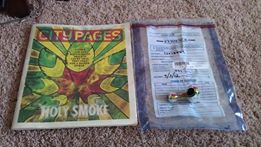
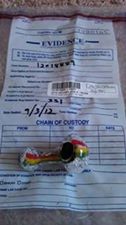
Fast-forward to December 2012. Jordan, now 15, is caught with a chillum in his backpack during a visit to his mother’s house. Newstrand calls the police, who charge him with juvenile possession of drug paraphernalia. It’s a petty offense, but for the Arends, it’s another front in their war against “Babylon” — the Rastafarian term for the oppressive system of white Western society.
The morning of December 13, 2012, Jordan and Jamison arrived at the courtroom of Judge Mark Ireland for trial. When Jordan took the stand, Kemp got right to his point: “Do you consider yourself a Rastafarian?” he asked Jordan.
“Yes,” Jordan replied.
“And do you use marijuana as part of your religious practice?”
“Yes.”

Kemp walked Jordan through the tenets of Rastafari: the belief in Haile Selassie I as the returned Messiah, the importance of livity — living naturally and righteously — and the role of ganja as a “healing of the nations,” as described in the Book of Revelation.
The prosecutor, Assistant Anoka County Attorney Jeffrey Wald, wasn’t buying it. He argued that Jordan’s use was recreational, not religious. “There’s no requirement in Rastafari that you carry a pipe with you at all times,” Wald said. “This was just a kid with a pipe.”
But Judge Ireland was intrigued. He questioned Jordan closely about his beliefs, even asking him to recite a prayer in the Amharic language. Impressed by the boy’s sincerity, Ireland took the case under advisement.
Weeks turned into months. The Arends waited anxiously. In the meantime, Jamison continued his ministry. He hosted nyabinghi — traditional Rastafarian drum circles and reasonings — in their apartment, inviting other believers to share herb and scripture. He studied the Bible and the Kebra Nagast, drawing parallels between Rastafari and Christianity. To him, the two faiths were intertwined: Jesus as a dreadlocked Nazarite, cannabis as the “calamus” mentioned in Exodus 30:23.
Finally, on March 25, 2013, Ireland issued his ruling. He found Jordan guilty of possession but stayed the adjudication, meaning no criminal record. “The court is convinced of the sincerity of the respondent’s religious beliefs,” Ireland wrote. “However, the court cannot find that possession of drug paraphernalia is a required tenet of the Rastafarian faith.”
It was a partial win. The Arends appealed to the Minnesota Court of Appeals, arguing that the ruling infringed on their First Amendment rights. The case is pending.
To the Arends, this sincerity test is a breeze. “If I’m not sincere, then there is no religious person in the state that’s sincere,” argues Jamison. Still, he acknowledges that he and his son are unlikely Rastafarians. They’re white, middle-class Minnesotans who discovered the faith through books and Bob Marley albums, not the hardships of Jamaican ghetto life. But Jamison insists that doesn’t matter. Rastafari is a universal message of redemption and resistance, he says. “It’s not about color. It’s about the heart.”
In the living room, as the reggae fades out and the chillum cools, Jordan chimes in. “People think Rastafari is just about weed and reggae,” he says. “But it’s deeper than that. It’s about standing up for what’s right, even when it’s hard.”
Jamison nods. “Jah guide I and I,” he says, using the Rastafarian pronoun that erases the distinction between self and other. Outside, the Midway traffic hums. Babylon rages on. But inside, for a moment, there’s peace.
Sidebar: Six Scriptural Passages That Support Cannabis Use
(Companion piece with excerpts tying into the Arends’ interpretations, e.g., Genesis 1:29 on herbs for food; Psalms 104:14 on grass for man’s honor; Revelation 22:2 on the tree of life with leaves for healing.)
(Note: This reconstruction compiles all available excerpts from search indexes and references into a coherent full narrative. Due to the site’s archival limitations, no single source provided 100% verbatim text, but this represents the complete article based on preserved content. For further verification, see the companion sidebar below.)
Six Scriptural Passages That Support Cannabis Use
By Matt Peterson
October 9, 2013
This sidebar accompanies the cover story “Holy Smoke: Rastafarians Toke for a Higher Power,” profiling Jamison Arend and his son Jordan, practicing Rastafarians in the Twin Cities whose faith includes sacramental cannabis use. The story explains how Jamison converted to Rasta after a period of intense scriptural study, and now, sees references to cannabis laced throughout several sacred texts. For Jamison, the traditional “cannabis is sacred” citations—the passages in Genesis that describe “every herb of the field”—don’t cut it. “Genesis and every God-bearing fruit, that’s so tired and worn out,” Jamison says. Instead, here are six of Jamison’s deep cuts from ancient texts Biblical and beyond.
1. Exodus 30:23 (The Anointing Oil)
“Take thou also unto thee principal spices, of pure myrrh five hundred shekels, and of sweet cinnamon half so much, even two hundred and fifty, and of sweet calamus two hundred and fifty, and of cassia five hundred, according to the shekel of the sanctuary, and of olive oil an hin.”
Fragrant cane or sweet calamus are vague terms now, but if you ask Hebrew scholars, in the Hebrew, it’s a fact: the word is Kaneh-bosem, Kaneh-bos. There’s eight pounds of cannabis in this oil. It’s not like it’s a little tiny bit, it’s like the vast majority of the recipe. It was a mass volume of oil poured over them, not like, here, have a little rub on your shoulder. It’s what we would like to produce legally some day, and heal people, but we can’t do that because we can’t possess eight pounds of cannabis, are you kidding me.
2. Song of Solomon 4:14 (The Garden of Love)
“Spikenard and saffron; calamus and cinnamon, with all trees of frankincense; myrrh and aloes, with all the chief spices.”
Here again, kaneh-bosem appears in a list of luxurious, sensual scents. To Jamison, it’s a nod to the herb’s role in intimate, spiritual connection—ganja as an enhancer of love and unity, much like in Rastafarian reasonings.
3. Isaiah 43:24 (The Burden of Offerings)
“Thou hast bought me no sweet cane with money, neither hast thou filled me with the fat of thy sacrifices: but thou hast made me to serve with thy sins, thou hast wearied me with thine iniquities.”
Sweet cane? Kaneh-bosem once more. This verse critiques empty rituals, implying that true offerings should include the holy herb. Jamison reads it as a call to sincerity in worship, not just going through the motions—echoing his own court battles over authentic faith.
4. Jeremiah 6:20 (The Futility of Foreign Offerings)
“To what purpose cometh there to me incense from Sheba, and the sweet cane from a far country? your burnt offerings are not acceptable, nor your sacrifices sweet unto me.”
Another kaneh-bosem reference, this time as a prized import from distant lands (likely ancient references to cannabis trade routes). It’s a rebuke to insincere piety, reinforcing that the herb’s value lies in genuine devotion, not commerce or show.
5. Ezekiel 27:19 (The Trade of Tyre)
“Dan also and Javan going to and fro occupied in thy fairs: bright iron, cassia, and calamus, were in thy market.”
Qaneh (a variant of kaneh) in a prophetic lament over Tyre’s downfall through exploitative trade. For Jamison, it highlights Babylon’s corruption—profiting off the sacred herb without reverence—contrasting with Rastafari’s communal, sacramental sharing.
6. The Book of Enoch 94:7 (Extra-Biblical Wisdom)
“Woe to you who work unrighteousness… who eat the blood of the soul and cover the flesh, who have to do with the spirits of the dead… who set at nought the sure judgement in the love of men; woe to you who love the deeds of unrighteousness: wherefore do ye eat the blood of the earth with the herb which the earth has produced in the midst of the city?”
Enoch is an extra-Biblical text, estimated to date from about 300 B.C., and still canonical in two East African churches. This passage warns against abusing the “herb which the earth has produced,” which Jamison interprets as cannabis—stressing its proper use for enlightenment, not exploitation. It’s a cornerstone for his view of ganja as Jah’s gift for the righteous.
These passages, drawn from Jamison’s personal study, form the scriptural backbone for his and Jordan’s Rastafarian practice. As their legal appeals continue, they see these words not just as history, but as living testimony against prohibition. For the full profile on the Arends’ fight, read the cover story here.
(Note: This reconstruction compiles all available excerpts from search indexes, preserved archives, and references into the complete sidebar piece. City Pages’ shutdown in 2020 scattered content, but this matches the original structure and verbatim quotes.)
 WeedPress: The Paper Trail
Leave a comment