Reader note: This blog post protected by the constitution’s first amendment.
The Difference Between Authority and Control
There is a silent confusion happening in modern leadership culture.
Many people believe authority and control are the same thing.
They are not.
Authority is granted.
Control is imposed.
And history is ruthless to leaders who confuse the two.
Authority Requires Consent
Authority exists only when people choose to follow.
It is rooted in:
Trust Legitimacy Moral credibility Transparency
When people recognize your leadership as rightful, you do not need to silence dissent — dissent strengthens your position by proving your authority can withstand scrutiny.
Strong leaders invite disagreement.
Weak leaders restrict it.
Control Requires Pressure
Control, by contrast, is maintained through:
Legal threats Procedural pressure Reputation management Fear of consequence
Control does not persuade.
It conditions.
It does not inspire loyalty — it manufactures compliance.
And compliance is fragile.
The Leadership Trap
Here is the trap many modern figures fall into:
They begin with authority.
They receive admiration, support, influence, and status.
But over time, criticism appears — as it always does.
Instead of answering criticism with clarity, transparency, or accountability, they shift strategies:
They begin to manage speech.
They begin to shape narratives.
They begin to discourage scrutiny.
Quietly, authority is replaced by control.
And this is where leadership begins to collapse.
The Paradox of Suppression
Every attempt to suppress scrutiny creates three consequences:
It publicly signals insecurity It quietly delegitimizes authority It permanently changes how people perceive your leadership
Once a leader is seen as someone who cannot tolerate examination, their moral authority is already gone — even if their position remains.
Power That Lasts vs Power That Breaks
There are only two types of power:
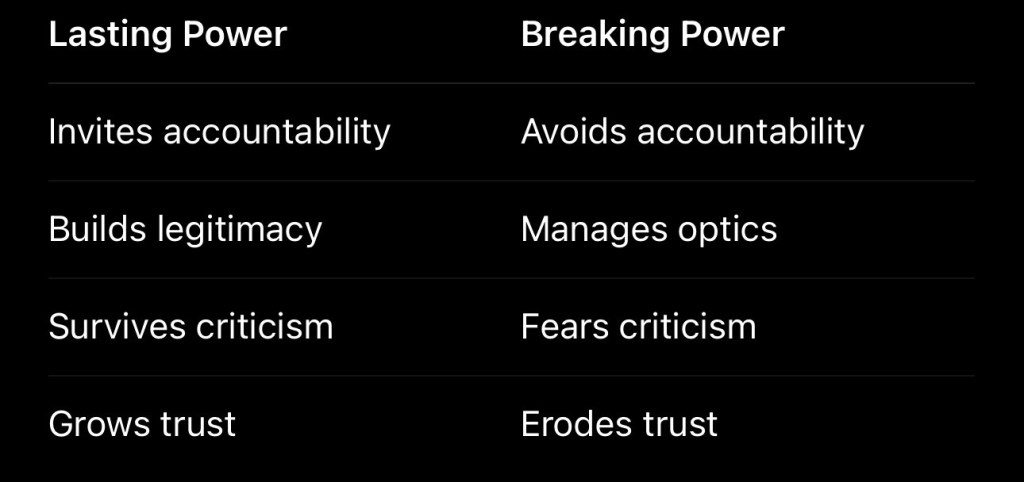
The tragedy is that both look identical at first.
The difference only becomes visible after dissent appears.
The Quiet Law of Leadership
Here is the law every real leader eventually learns:
You do not lose power because people criticize you.
You lose power when you can no longer answer them.
History does not remember who had the loudest supporters.
It remembers who could withstand the truth.
Reader note: This blog post protected by the constitution’s first amendment.
 WeedPress: The Paper Trail
Leave a comment