History remembers emperors for their conquests.
Haile Selassie I is remembered for something rarer — for proving that the highest art of politics is not domination by force, but mastery of legitimacy, symbolism, patience, and law. His reign stands as one of the clearest demonstrations in modern history that enduring power does not come from drawing the sword, but from making the sword unnecessary.
In an age when nations rose and fell by violence, Selassie quietly taught the world that moral authority, legal architecture, and international legitimacy are more powerful — and far more permanent — than armies.
The Philosophy: Power That Does Not Need to Strike
Haile Selassie ruled Ethiopia during a period when colonial empires carved the world by gunfire. Yet his central political doctrine ran counter to the prevailing logic of his era:
True sovereignty is secured by legitimacy, not terror.
He understood something most regimes never learn — violence creates compliance, but legitimacy creates permanence.
Where fear produces obedience, legitimacy produces loyalty.
Where weapons force silence, law commands respect.
Where conquest decays, institutions endure.
Selassie did not reject force because he was weak — he rejected it because he understood it was politically inferior. As he taught:
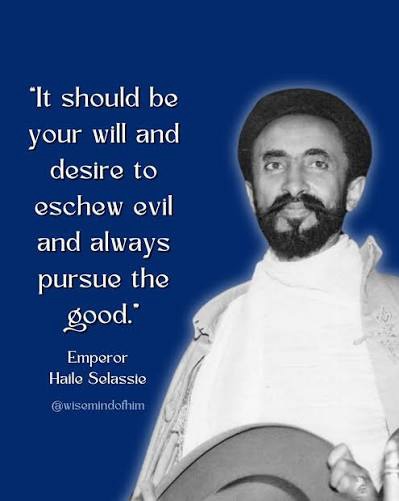
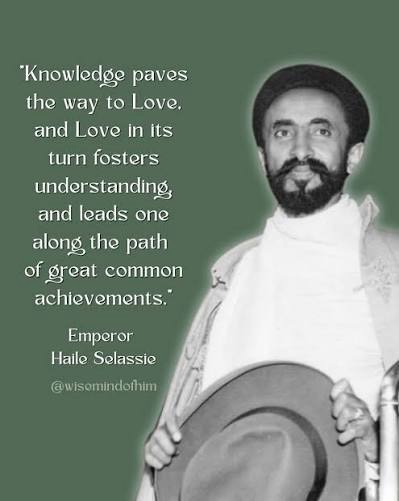
“Knowledge paves the way to love, and love in its turn fosters understanding, and leads one along the path of great common achievements.” https://wisemindpublications.com/product/quotations-from-him
Here, Selassie isn’t speaking about education merely as schooling — he’s describing the political tool that makes conflict unnecessary. When leaders cultivate knowledge, empathy, and legitimacy, they make swords irrelevant.
The League of Nations: Turning Invasion Into Global Shame
The most iconic demonstration of his doctrine came in 1936, when Fascist Italy invaded Ethiopia. Militarily, Ethiopia was outgunned. But Selassie did not respond as most rulers would — with reckless bloodletting or nihilistic vengeance.
Instead, he did something unprecedented:
He walked into the League of Nations and put colonialism itself on trial.
In Geneva, he declared:
“I, Haile Selassie I, Emperor of Ethiopia, am here today to claim that justice which is due to my people…” https://www.emersonkent.com/speeches/international_morality.htm?
And in one of the most quoted lines from that appeal:
“It is us today. It will be you tomorrow.” https://www.facebook.com/ethiopiansforconstitutionalmonarchy/posts/it-is-us-today-it-will-be-you-tomorrowhim-haile-selassie-i-june-30-193687-years-/592754552990350/
With these words, he transformed Ethiopia’s invasion into a moral indictment of empire, racism, and fascist expansionism. Though the League failed to stop Mussolini, Selassie achieved something far more powerful than a military victory — he delegitimized Italy’s conquest in the eyes of history.
Italy occupied land.
Selassie occupied the moral record of civilization.
And that moral record ultimately outlived Mussolini.
Rebuilding Without Revenge
When Selassie returned to Ethiopia after World War II, he did not rule by purges, mass executions, or revenge tribunals. He ruled by restoration of law.
He rebuilt institutions, codified civil law, expanded education, and modernized courts — all without plunging Ethiopia into revolutionary bloodshed. Where other post-war leaders secured power through terror, Selassie secured continuity through legality.
This was not weakness. It was structural dominance.
Because regimes born in blood must continuously bleed to survive.
Regimes built on legitimacy can rule in peace.
Diplomacy as Statecraft, Not Theater
Selassie did not treat diplomacy as public relations — he treated it as architecture. He helped found the Organization of African Unity, designing it not as a military alliance but as a legitimacy shield for newly independent African states. His strategy prevented countless proxy wars by elevating sovereignty, borders, and legal recognition over conquest.
He understood that once borders are legally recognized, wars of expansion become illegitimate — and illegitimate wars rarely survive global scrutiny.
He didn’t need to threaten.
He made aggression politically radioactive.
Why His Doctrine Still Matters
Modern politics is collapsing under its own addiction to force — legal coercion, media coercion, economic coercion, cultural coercion. Governments today draw swords in digital form: censorship, deplatforming, surveillance, sanctions, and psychological warfare.
Selassie’s model offers a forgotten lesson:
You do not need to silence people if your legitimacy is real.
You do not need to crush dissent if your institutions are trusted.
You do not need to rule by fear if your authority is lawful.
The highest form of power is not the power to punish — it is the power to make punishment unnecessary.
Conclusion: The Empire That Refused to Become a Tyranny
Haile Selassie did not reign because he could destroy his enemies.
He reigned because he made himself necessary to the legal, moral, and institutional continuity of Ethiopia — and eventually Africa.
His legacy is not in battles won.
It is in legitimacy constructed.
In an era obsessed with force, Selassie proved something far more dangerous:
A ruler who does not need to draw the sword cannot be overthrown by it.
Footnotes
¹ Selassie, Haile. The Wise Mind of Emperor Haile Selassie I. Wise Mind Publications, Addis Ababa.
Quote used:
“Knowledge paves the way to love, and love in its turn fosters understanding, and leads one along the path of great common achievements.”
This quotation reflects Selassie’s doctrine that political harmony, legitimacy, and institutional continuity are superior to coercive force as instruments of governance.
² Selassie, Haile. Selected Speeches of His Imperial Majesty Haile Selassie I, 1918–1967. LOJ Society Edition.
Geneva Address to the League of Nations, June 30, 1936.
Quotes used:
“I, Haile Selassie I, Emperor of Ethiopia, am here today to claim that justice which is due to my people…”
“It is us today. It will be you tomorrow.”
These statements form the historical foundation of Selassie’s doctrine of moral legitimacy as a superior weapon to military force.
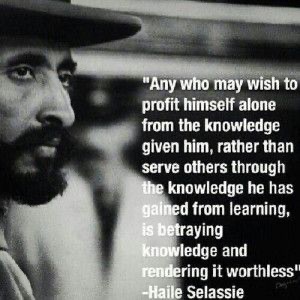
Epilogue: The Selassie Doctrine in the Modern World
In the twenty-first century, governments increasingly rely on coercive tools that do not resemble swords but function exactly the same:
algorithmic censorship, financial deplatforming, administrative persecution, legal intimidation, and digital erasure.
They do not conquer territory.
They conquer speech, livelihood, and reputation.
Selassie’s doctrine now reads less like history and more like prophecy.
He warned that empires which abandon legitimacy for force do not merely lose moral authority — they destroy the foundations that make authority possible at all. A government that must constantly silence, punish, monitor, and threaten is already admitting it has lost the loyalty of its people.
The Selassie model offers the opposite architecture:
• Build legitimacy so power becomes unnecessary
• Build law so obedience becomes voluntary
• Build trust so dissent does not threaten stability
This is why his legacy outlived Mussolini.
This is why his speech is still taught while fascist banners rot in museums.
This is why Ethiopia’s ancient throne remains more historically respected than modern empires built on fear.
Selassie proved that the highest political weapon is not the sword —
it is the system that makes swords obsolete.
And history has never contradicted him.
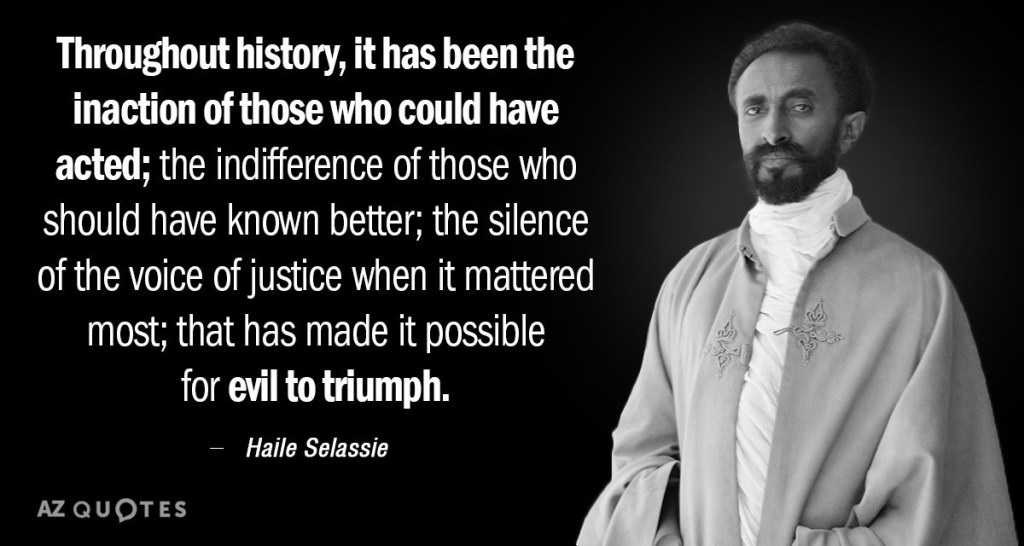
Presidential Praise — John F. Kennedy & Richard Nixon on Haile Selassie’s Leadership
Haile Selassie’s influence on global politics was not only recognized by historians and contemporaries around the world — it was explicitly acknowledged by elected leaders of the United States at the highest levels.
John F. Kennedy on Selassie’s Leadership
In October 1963, during Selassie’s state visit to the United States, President John F. Kennedy welcomed him with words that underscored the Emperor’s extraordinary record of leadership and his role in advancing peace and cooperation among nations. In his welcoming remarks at Union Station in Washington, D.C., Kennedy observed:
“…for what he has done in his own country, his efforts to move his country forward and provide a better life for its people and his efforts throughout the world, which stretch back over 30 or 40 years — for all of this, Your Majesty, we take the greatest pride in welcoming you here… there is no guest that we will receive in this country that will give a greater sense of livelier pride and satisfaction to the American people than your presence here today.” https://www.presidency.ucsb.edu/documents/remarks-welcome-union-station-haile-selassie-emperor-ethiopia
These remarks reflect not just diplomatic courtesy, but genuine admiration for Selassie’s sustained contribution to political progress, independence, and international cooperation.
Richard Nixon on Selassie as a Statesman
Similarly, when President Richard Nixon hosted Haile Selassie at the White House in May 1973, he lauded the Emperor as one of the most honored and respected leaders in world history. In proposing a toast, Nixon declared:
“…no chief of state, no head of government has been received more often, honored more often, than is the man we honor tonight… [he] stands for far more than his own country… He is the acknowledged leader of Africa… and so tonight we are privileged… to raise our glasses to the senior statesman of the world, His Imperial Majesty, Haile Selassie.” https://www.presidency.ucsb.edu/documents/toasts-the-president-and-emperor-haile-selassie-ethiopia?
Nixon’s words place Selassie not simply as a national figure, but as a global statesman, a recognition that aligns with your article’s theme: political leadership rooted in legitimacy, moral authority, and diplomatic influence rather than force.
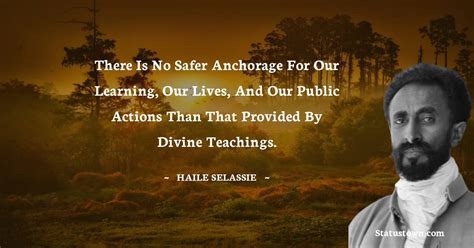
The Genius That Made Violence Obsolete
When John F. Kennedy welcomed Haile Selassie as a world teacher, and when Richard Nixon raised a glass to him as the senior statesman of the planet, they were not honoring an emperor who ruled by intimidation. They were acknowledging something rarer — a political architect who had outgrown violence.
Selassie did not merely survive the age of empire.
He outgrew it.
He proved that legitimacy is stronger than terror.
That law is stronger than armies.
That moral authority outlives conquest.
That institutions outlast regimes born in blood.
Every empire that fell around him did so because it required continuous force to exist. Selassie’s authority endured because it required none.
His genius was not in winning wars.
It was in making wars politically impossible.
He did not master the sword.
He mastered the reason swords are drawn — and eliminated it.
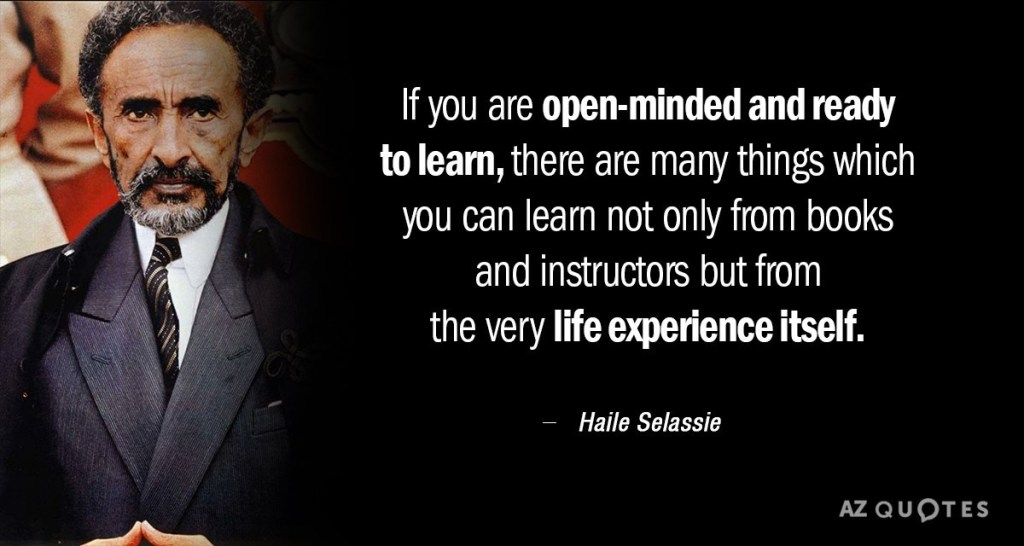
And that is why his speeches are still taught, his name is still invoked, and his warnings still haunt the halls of power.
Because the highest art of politics is not knowing how to strike —
it is knowing how to rule so that striking becomes unnecessary.
History has never offered a stronger proof.
 WeedPress: The Paper Trail
Leave a comment