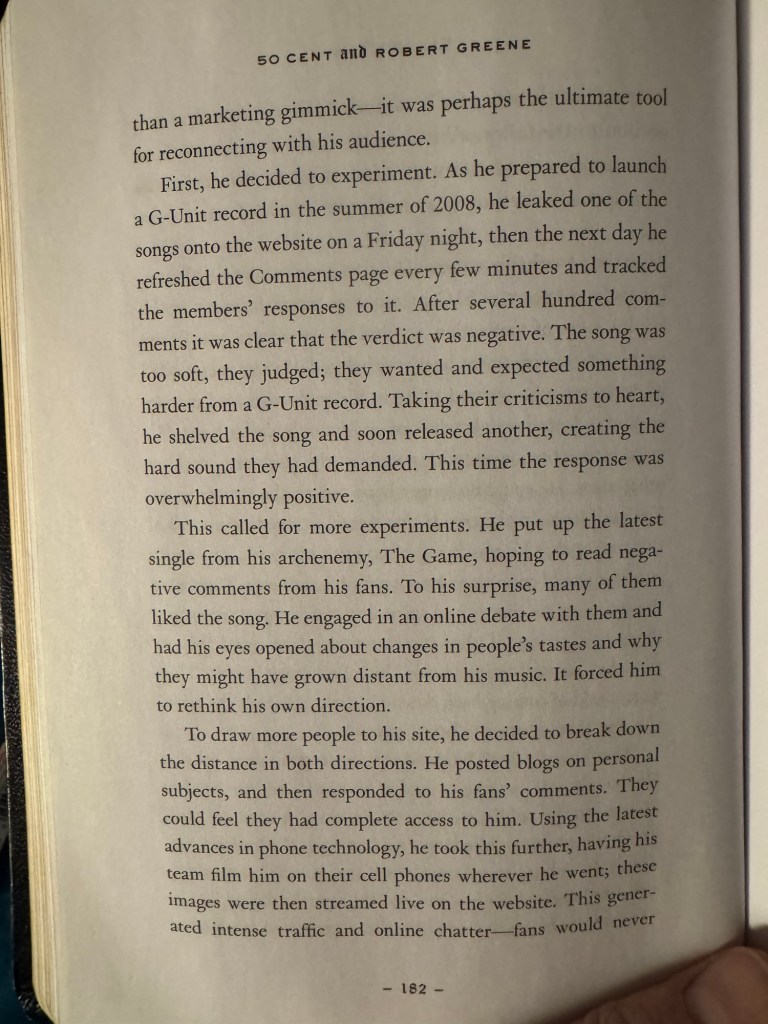
Most people think influence is about being louder, sharper, or more controversial.
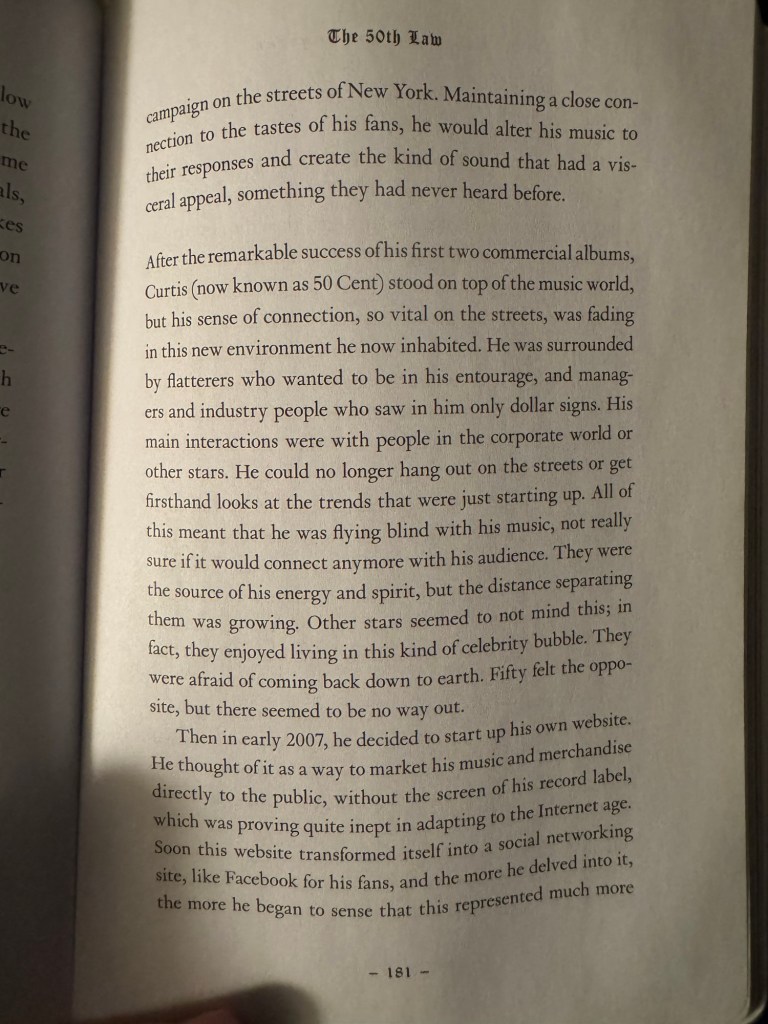
Chapter 7 of The 50th Law quietly destroys that myth.
Its central message is simple but ruthless:
Power grows when your value grows to others.
That single idea changes how we understand influence, loyalty, reputation, and even conflict.
If people don’t need what you offer, they will never truly support you—no matter how clever, moral, or “right” you think you are.
The Hidden Mistake Most Creators Make
Most communicators begin from themselves: What I believe; What I want to say; What I think people should care about; What I think is important
Chapter 7 exposes this as a losing strategy.
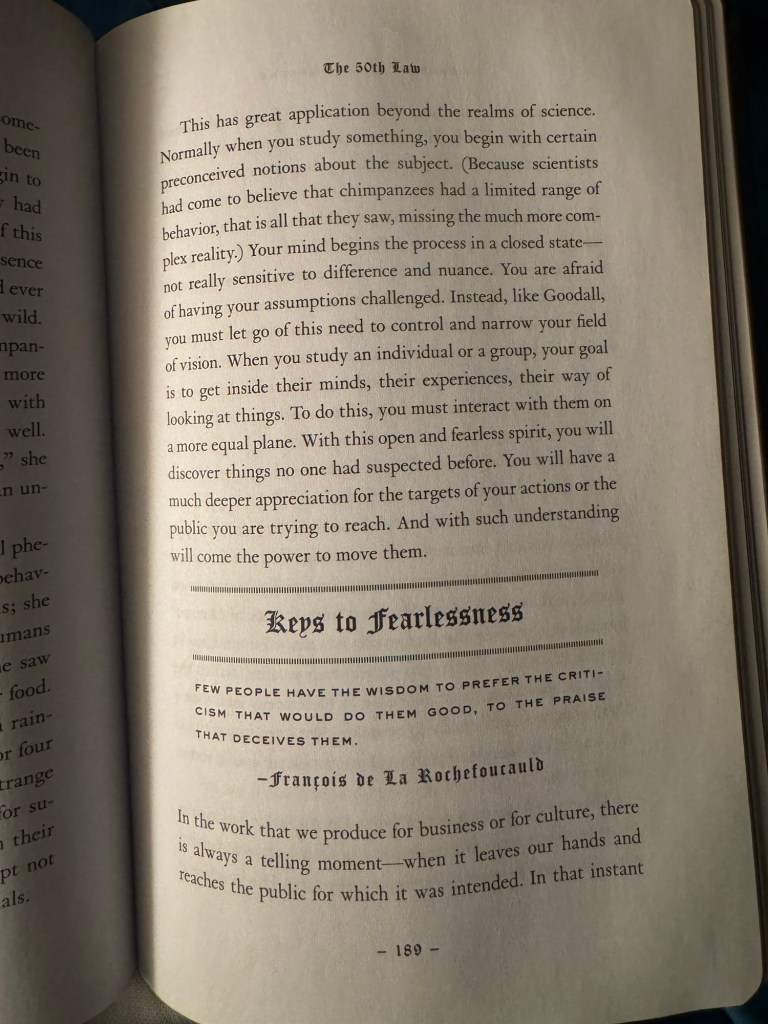
People don’t bond to your truth. They bond to their own needs being met.
The chapter emphasizes that power grows from becoming useful, not impressive.
When you make yourself indispensable, you become untouchable.
Not famous.
Not viral.
Indispensable.
Influence Is a Service Model, Not a Performance
One of the most important shifts Chapter 7 demands is this:
You are not here to express yourself. You are here to solve something real.
People are always asking silently:
Does this help me? Does this protect me? Does this save me time, money, stress, fear, confusion, or danger?
If your work doesn’t answer at least one of those questions, loyalty will never form.
You may get attention.
You will not get power.
Why “Being Right” Is Not Enough
Chapter 7 makes something painfully clear:
People don’t follow arguments. They follow relief.
You can be correct, factual, and morally pure—and still fail. Because correctness does not move people.
Relief does.
Safety does.
Clarity does.
Hope does.
Utility does.
Your message must meet people where they are, not where you want them to be.
The Law of Demand: The Invisible Rule
Every audience has a hidden demand.
They may not say it out loud, but it governs everything:
What they share; What they defend; What they fund; What they rally behind
Your power grows in direct proportion to how precisely you satisfy that demand.
If you mismatch it, you will feel ignored, resisted, or quietly undermined—even if you are telling the truth.
The Loyalty Formula
Chapter 7 gives us a brutal but effective formula:
Solve → Protect → Simplify → Empower
When people feel:
Safer – Clearer – Less alone – More capable
They will defend you without being asked.
That is the highest form of influence: Support that does not need permission.
The Real Meaning of “Give Them What They Want”
This does not mean lying.
It does not mean pandering.
It does not mean selling out.
It means understanding that:
Your success is measured by how much friction you remove from others’ lives.
When you reduce pain, confusion, fear, waste, and danger, you become necessary. And what is necessary becomes powerful.
Final Thought
Chapter 7 quietly teaches the most dangerous truth in influence:
People don’t follow you because you speak.
They follow you because you help.
When your voice becomes useful, your presence becomes permanent.
And permanence is the root of real power.
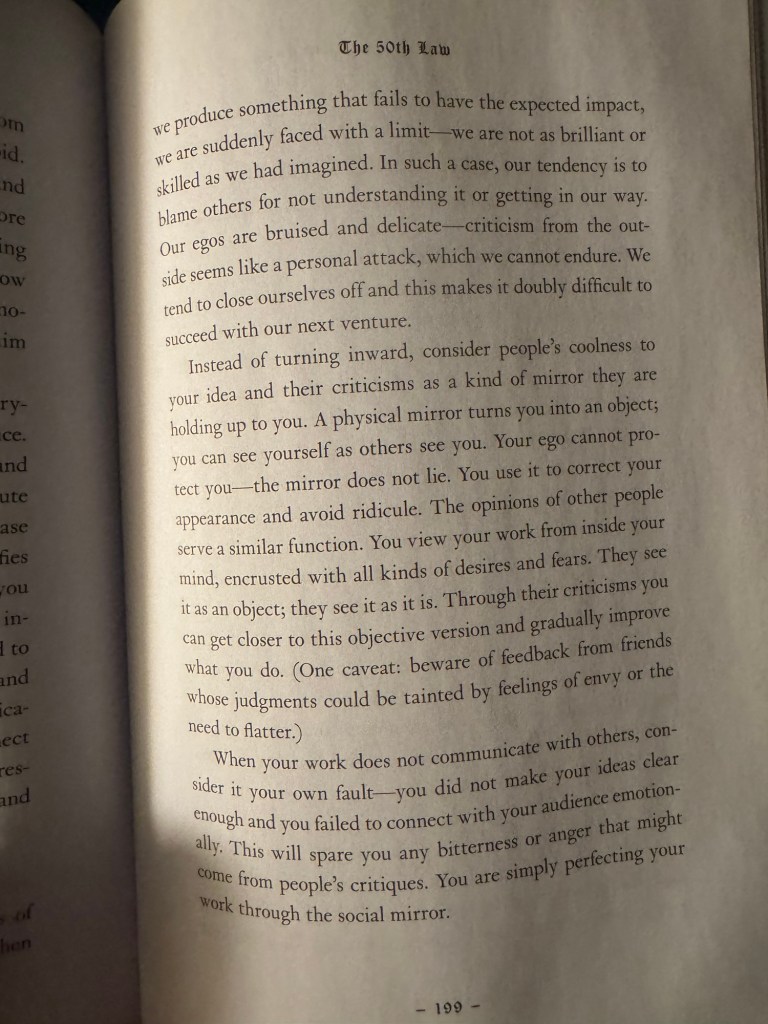
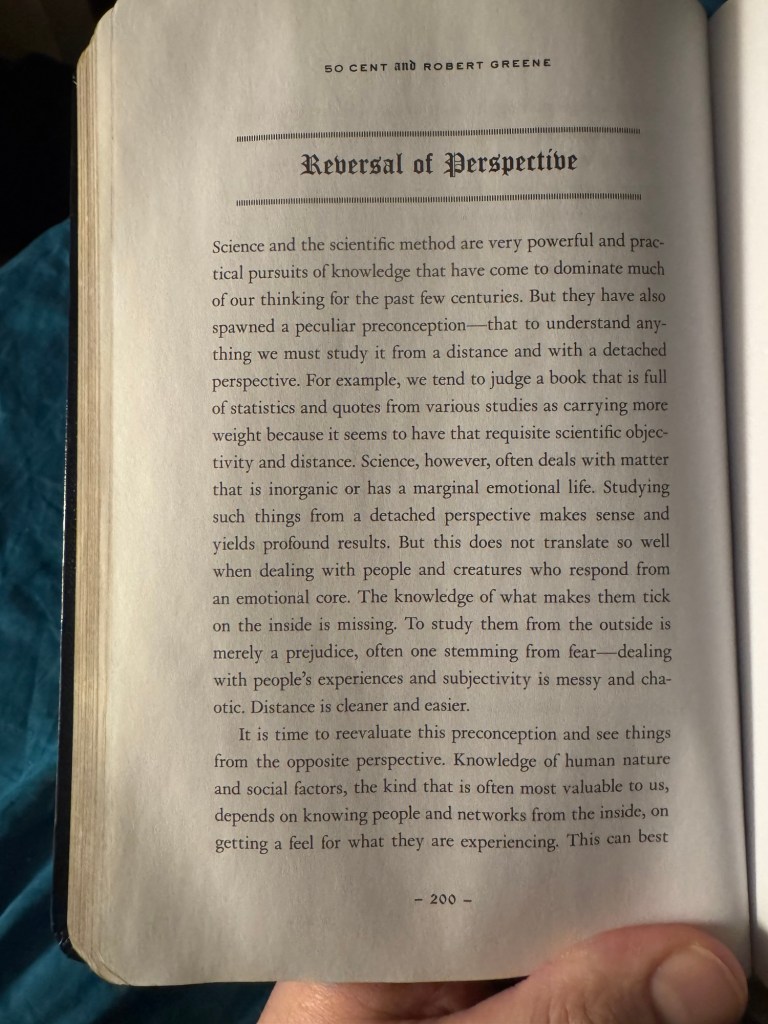
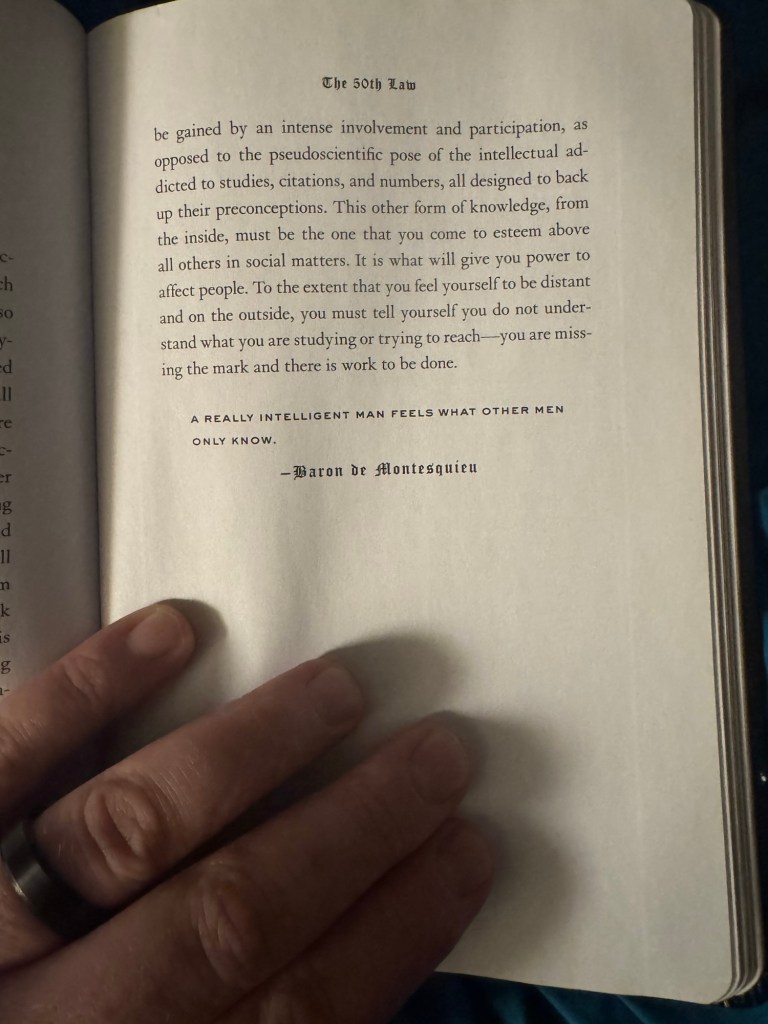
“A really intelligent man feels what others only know.”
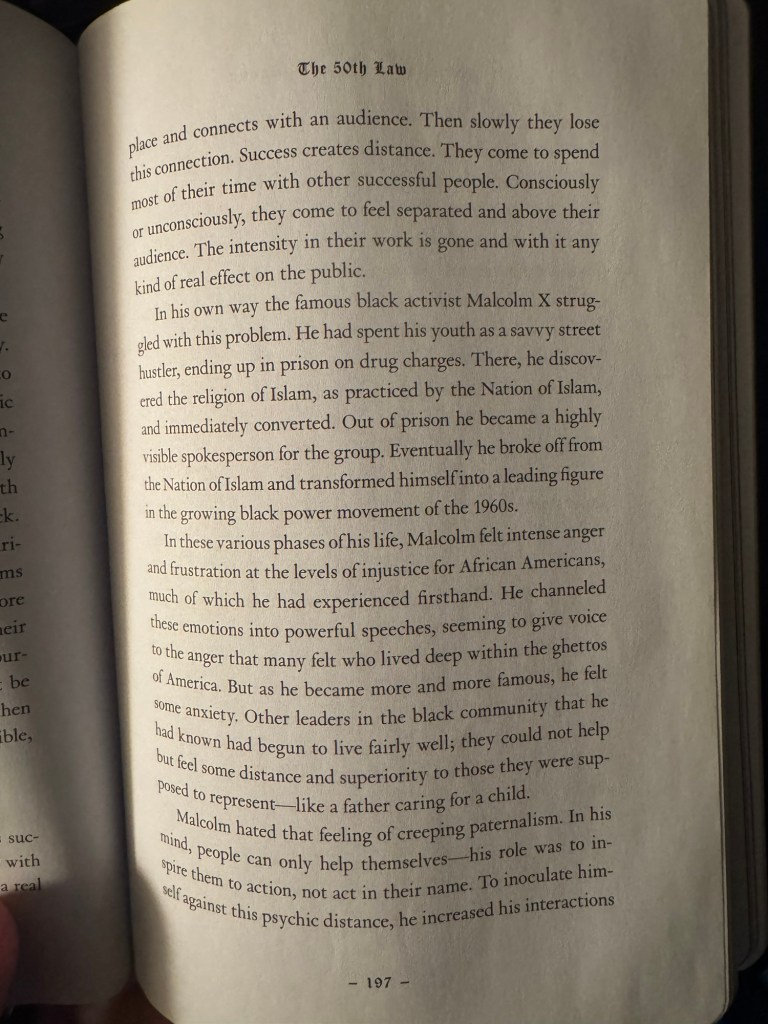
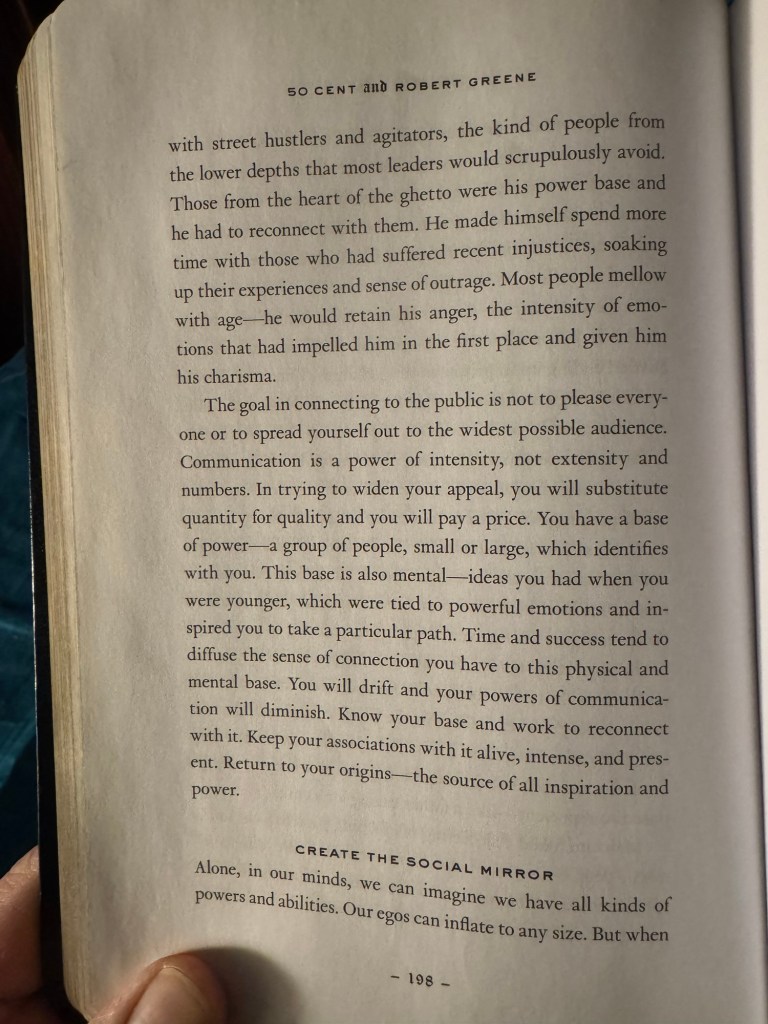
It just occurred to me that I’m the only weed activist out at reggae shows at bars over the years who also isn’t completely ignorant of policy; how the system works; and how to file paperwork. No wonder I’ve outgrown the desire to work with anyone but myself. There’s no point; they aren’t there gathering insights from the people; not meant as an insult to anyone just saying, this makes a lot more sense why there’s a disconnect…the real leaders aren’t on the news or desire to be because the weed movements people don’t have time to watch the news or follow the news as they’re too busy trying to survive and only come out to shows to escape reality not lobby to change reality…there’s a natural tendency for those needing relief the weed movement provides to never be where the weed movement influencers are at (Capitol, board meetings) so you never find me at meetings with the Iowa medical cannabis board but once every year or so when I drop in to say “hey here’s what people in prison and out finding jobs with weed felonies need from you” because those boards deal with business needs not social needs….i see better now. Late 30s really does give you what my psych class text at age 22 promised: the ability to finally look back on life patterns. I just now finally got some useful insight. Hoozah.
 WeedPress: The Paper Trail
Leave a comment