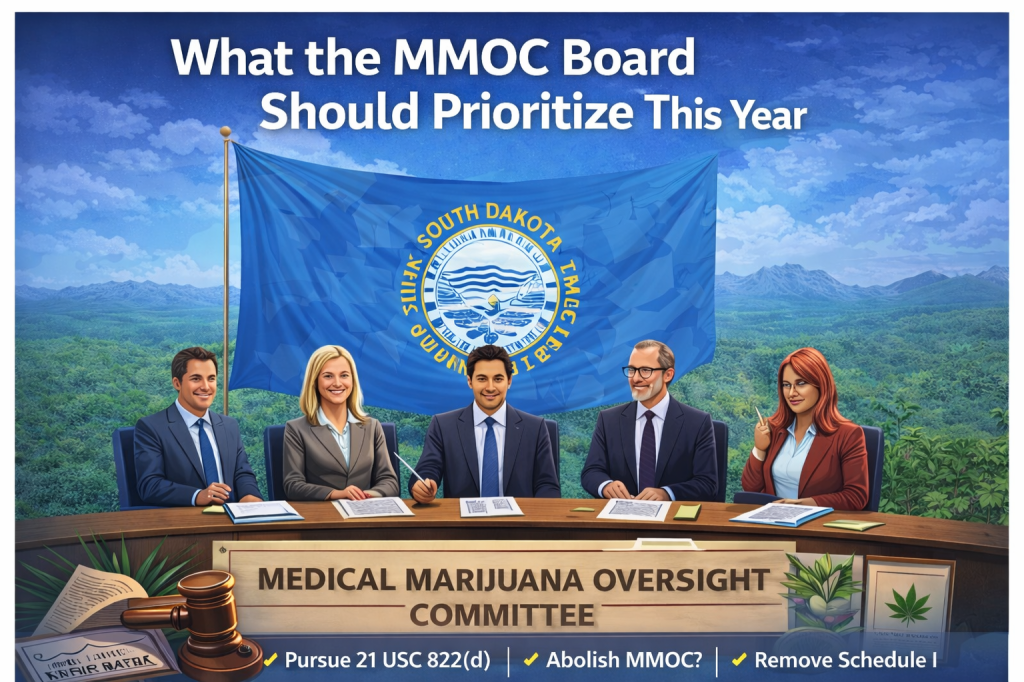
South Dakota’s Medical Marijuana Oversight Committee (MMOC) has existed for several years now. Patients, voters, and small businesses were promised a transparent, rational regulatory system. What we have instead is a board that spends too much time on political theater and too little time solving real structural problems.
If the MMOC wants to be taken seriously in 2026, it needs to stop nibbling at the edges and start addressing the foundational issues that actually matter.
1. Pursue a Federal Exemption Under 21 U.S.C. §822(d)
The single most important reform available to South Dakota right now is rarely even discussed: a federal exemption for state cannabis activity under 21 U.S.C. §822(d).
Federal law already allows the U.S. Attorney General to authorize otherwise-prohibited controlled-substance activity for “public interest” purposes. Several states have quietly explored this path. South Dakota has not.
Instead of waiting for Congress to act—or pretending the conflict between state and federal law doesn’t exist—the MMOC should formally recommend that the state seek this exemption. Doing so would provide:
Banking access Tax clarity Legal stability Protection for patients and businesses
Ignoring this option is regulatory malpractice.
2. Remove Cannabis From Schedule I at the State Level
The federal government has publicly acknowledged that cannabis no longer belongs in Schedule I and is moving it toward Schedule III.
South Dakota still pretends cannabis is on par with heroin.
This contradiction makes the entire state regulatory structure intellectually dishonest.
The MMOC should immediately recommend:
Removing cannabis from Schedule I under state law Aligning South Dakota classifications with federal reality Ending the legal fiction that medical cannabis has “no accepted medical use”
If the federal government can admit the science has changed, so can South Dakota.
3. Publish Sales and Licensing Data for Public Review
Right now, the cannabis industry in South Dakota operates in a fog.
The public deserves to know:
How much product is sold Where it is sold How many licenses exist Who benefits financially
Other states publish regular cannabis sales and licensing reports. South Dakota does not.
Transparency is not optional. These are licensed, highly regulated businesses operating under voter-approved law. Their aggregate sales figures should be public information.
Without real data, the MMOC is making policy in the dark.
4. Stop Pretending the MMOC Is Anything Other Than Political Theater
Let’s be honest: the MMOC has become a performative body.
It holds meetings, issues non-binding recommendations, and gives the appearance of oversight—while the real decisions happen elsewhere.
If the board lacks actual authority to implement change, South Dakota should consider abolishing it entirely and replacing it with a transparent administrative process inside the Department of Health.
A powerless committee is worse than no committee at all.
5. Establish Clear Standards for Who Can Serve
If South Dakota is serious about professionalism, the MMOC must adopt ethical eligibility standards.
Individuals with serious federal criminal histories should not be shaping state cannabis policy. Period.
The credibility of the regulatory system depends on the credibility of those sitting at the table. Clear disqualification rules would protect both the board and the public.
A Year for Real Reform
The MMOC can either continue as a symbolic discussion club—or it can tackle the hard structural problems South Dakota has ignored since legalization passed.
Patients and voters were promised competence, not pageantry.
It’s time for the board to act like it.
 WeedPress: The Paper Trail
Leave a comment