Why So Much Cannabis Activism Burns People Out — and Why Mine Doesn’t
By Jason Karimi | WeedPress | February 4, 2026
If this work can be energizing, why do so many advocates flame out, disappear, or turn bitter?
The answer isn’t workload.
It’s structure.
Burnout Is a Design Failure
Most activist burnout isn’t personal weakness — it’s the result of badly designed ecosystems.
Common traits of burnout-heavy cannabis activism:
• No clear goals beyond “raising awareness”
• No ownership over work product
• No feedback loop between effort and outcome
• Heavy emphasis on personalities instead of process
• Financial incentives that reward proximity to power, not truth
That combination produces anxiety, resentment, and infighting. People work harder and feel worse. Over time, they confuse exhaustion with impact.
That’s not noble. It’s inefficient.
When Incentives Are Wrong, People Turn on Each Other
In movements where access and money are scarce, incentives rot fast.
Instead of asking “Is this true?” the dominant question becomes “Will this help or hurt my position?”
Instead of building coalitions, people guard turf.
Instead of sharing credit, they hoard it.
That’s how you get:
• Public donor shaming
• Whisper campaigns
• Fake leaders and real workers at odds
• Documentarians treated as threats instead of assets
None of that advances legalization. It just accelerates collapse.
Documentation Beats Performance
One of the biggest differences in my work is that I don’t confuse activism with theater.
I’m not staging moments.
I’m not chasing headlines.
I’m not manufacturing urgency.
I document:
• What bills say
• How enforcement quietly expands
• Who benefits from ambiguity
• Who disappears when accountability shows up
That kind of work doesn’t require constant emotional output. It requires attention and discipline. And discipline, unlike outrage, compounds.
Autonomy Changes Everything
Most burned-out activists are trapped in reactive cycles:
• Responding to bad bills
• Responding to bad actors
• Responding to bad narratives
I don’t live there.
I choose when to engage. I choose what to publish. I choose restraint when restraint is strategically smarter than noise. That autonomy removes the constant cortisol drip that destroys people over time.
You don’t burn out when you’re steering.
Movements Lose When They Can’t Retain Clear Minds
South Dakota’s cannabis failures aren’t just political losses — they’re organizational ones. Every cycle burns experienced people and replaces them with louder, less prepared voices.
The result:
• Short institutional memory
• Repeated mistakes
• No durable strategy
• No long-term credibility
Sustainable movements are built by people who can stay calm, curious, and consistent over years — not election cycles.
Fun Is a Signal, Not a Flaw
If activism feels miserable, something is wrong upstream.
Fun doesn’t mean unserious. It means:
• alignment with strengths
• clarity of role
• honest incentives
• psychological safety to tell the truth
That’s why my work restores me.
And that’s why I’ll still be here documenting long after performative activism exhausts itself again.
The work doesn’t need martyrs.
It needs adults.
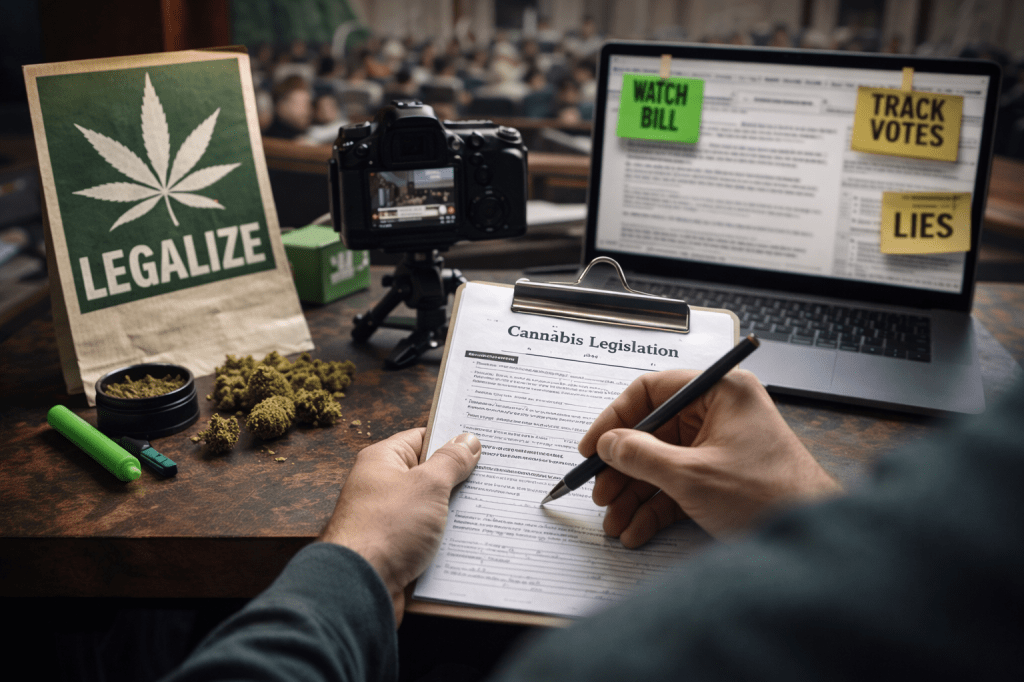
Why Restraint Is a Political Weapon
Modern politics treats constant reaction as a virtue. If you’re not responding immediately, loudly, and emotionally, you’re accused of disengagement or weakness. That assumption is wrong — and it’s costly.
Restraint isn’t passivity.
Restraint is leverage.
Noise Is Cheap. Silence Is Strategic.
Most political actors overproduce noise because noise feels like action. Statements, tweets, press hits, emergency calls, open letters — all of it creates the illusion of momentum without actually changing outcomes.
The problem is simple:
When you react to everything, you control nothing.
Restraint creates asymmetry. It forces others to reveal priorities, overextend arguments, and make mistakes while you conserve credibility and timing.
Reaction Is Predictable. Restraint Isn’t.
Political systems adapt quickly to predictable behavior. If you always respond immediately, opponents learn:
• how to bait you
• when you’ll escalate
• what language triggers you
That makes you manageable.
Restraint breaks that loop. When you don’t react on cue, uncertainty shifts outward. Others begin reacting to you — or to the vacuum you’ve created.
That’s power.

Documentation Beats Declaration
Declarations age poorly. Documentation compounds.
When you restrain yourself from premature statements and instead:
• wait for final bill text
• track amendments quietly
• observe who says what, and when
you gain a factual record that can’t be undone by spin. Later, when you speak, you speak with receipts — not vibes.
That’s especially lethal in policy spaces where ambiguity is used to avoid accountability.
Anger isn’t always wrong, but it’s rarely strategic.
Restraint lets you say harder things without being ignored.
Timing Is the Hidden Variable
Most political damage isn’t done by what is said — it’s done by when it’s said.
Speaking too early:
• alerts opposition
• hardens positions
• closes off quiet exits
Speaking too late:
• looks reactive
• forfeits narrative control
Restraint gives you control over timing. And timing, more than volume, determines impact.
Restraint Protects the Long Game
Burned-out activists mistake urgency for effectiveness. They empty the clip early and disappear when it matters most.
Restraint:
• preserves energy
• preserves optionality
• preserves credibility across cycles
Movements don’t win because they shout the loudest. They win because someone stayed coherent long enough to matter when the window opened.
Choosing When Not to Speak Is Still a Choice
Silence isn’t absence. It’s positioning.
Every time you choose not to react, not to escalate, not to publish, you’re shaping the terrain. You’re denying others the response they expect and forcing the conversation to evolve without your participation — until you decide otherwise.
That’s not weakness.
That’s command.
Final Thought
Restraint doesn’t mean disengagement.
It means discipline.
And discipline is the difference between people who briefly feel powerful and people who actually are.
Why Documentation Terrifies Power
Power is rarely afraid of criticism.
It’s afraid of records.
Anger can be dismissed.
Opinion can be spun.
But documentation fixes reality in place — and that’s dangerous to anyone relying on ambiguity, discretion, or selective memory.
Power Depends on Forgetting
Most political power doesn’t operate through outright lies. It operates through drift:
• shifting explanations
• evolving justifications
• “that’s not what we meant”
• “the language changed”
• “context matters”
All of that requires one thing: forgetting.
Documentation interrupts that process. It creates a timeline that can’t be massaged without effort. Once something is written down, timestamped, and publicly accessible, power loses its ability to pretend events were isolated or misunderstood.
Declarations Can Be Walked Back. Records Cannot.
Public statements are soft. They’re designed to be reversible.
Documentation is hard. It captures:
• bill text
• amendments
• procedural votes
• who spoke, when, and how
That’s why institutions prefer press releases to paper trails. A press release expires. A document accumulates meaning.
Documentation Removes Plausible Deniability
Most systems rely on layered distance:
• “I didn’t draft that”
• “That was staff”
• “That wasn’t the intent”
• “I wasn’t aware”
Documentation collapses those layers.
When you track who introduced language, who voted it forward, who stayed silent, and who benefited, deniability evaporates. No accusations are required. The sequence speaks for itself.
That’s deeply uncomfortable for people used to operating behind process complexity.
Accountability Without Confrontation Is the Most Dangerous Kind
Power is prepared for confrontation.
It’s not prepared for calm, factual exposure.
Documentation doesn’t argue.
It doesn’t threaten.
It doesn’t demand.
It simply exists — and waits.
That’s what makes it lethal. There’s no emotional hook to discredit. No tone to attack. No motive to smear. Just a clean record that anyone can read.
Institutions Fear Patterns More Than Scandals
Scandals burn hot and fast. Patterns burn slowly and permanently.
A single bad vote can be explained away.
A consistent trajectory across years cannot.
Documentation reveals patterns:
• enforcement expansion hidden inside “clarifications”
• repeated use of emergency framing
• the same players appearing across unrelated bills
• outcomes that contradict stated intent
Patterns imply design. And design implies responsibility.
Documentation Democratizes Power
Once something is documented clearly, anyone can understand it. That’s the real threat.
You don’t need insider access to read a bill history.
You don’t need credentials to follow a timeline.
You don’t need permission to connect dots.
Unless your marriage partner is domineering…
Documentation strips power of its gatekeeping advantage.
Why I Document Instead of Perform
I don’t need to shout to be heard.
I need to be precise.
Documentation allows restraint. It allows timing. It allows credibility to compound quietly until it matters. When the record exists, power eventually has to respond — even if it pretends not to at first.
That’s why documentation is treated as hostile, even when it’s neutral.
Final Thought
Power can survive outrage.
It can survive protest.
It can even survive temporary defeat.
What it struggles to survive is a clear, public memory.
That’s why documentation terrifies power.
And that’s why I keep doing it.
Why Power Prefers Activists Who Burn Out
Power doesn’t fear opposition.
It fears durable opposition.
That’s why systems quietly reward activism that exhausts itself. Burned-out activists are loud, predictable, and ultimately harmless. They create noise, not memory. Motion, not pressure.
Burnout Is Useful
From the perspective of power, burnout is a feature — not a failure.
Burned-out activists:
• react instead of plan
• escalate emotionally
• fracture internally
• disappear at critical moments
They spend energy without accumulating leverage. That’s ideal.
A movement that constantly burns through people never develops institutional memory, long-term strategy, or credible threat. Every cycle starts from scratch.
Exhaustion Prevents Pattern Recognition
Sustained attention is dangerous. It leads to pattern recognition — and patterns expose design.
Exhausted activists don’t have the bandwidth to:
• track timelines
• notice repetition
• compare stated intent with actual outcomes
They’re too busy surviving the moment.
Power prefers critics who are overwhelmed because overwhelmed people don’t connect dots. They fight symptoms, not systems.
Emotional Volatility Is Easy to Manage
Anger is not a problem for institutions. It’s familiar terrain.
Angry activists:
• are easy to dismiss
• easy to provoke
• easy to isolate
• easy to wait out
Their outrage peaks quickly and collapses just as fast. Institutions have calendars. They know how long outrage lasts.
What they can’t easily manage is calm persistence.
Burnout Turns Movements Inward
When external progress stalls, exhausted movements cannibalize themselves.
Burnout breeds:
• infighting
• purity tests
• donor suspicion
• leader-versus-worker resentment
Power doesn’t have to intervene. The movement implodes on its own.
That’s not accidental. Scarcity, urgency, and constant crisis framing accelerate this process.
Why Sustainable Activists Are a Problem
An activist who:
• enjoys the work
• controls their pace
• documents instead of reacts
• stays emotionally regulated
is extremely difficult to neutralize.
They don’t flame out.
They don’t lash out.
They don’t disappear.
They’re still there when the cycle turns.
Power prefers opposition that consumes itself because opposition that lasts eventually forces change — even quietly.
Burnout Is the Price of Playing on Their Terms
Most activists burn out because they accept the rules handed to them:
• respond immediately
• escalate constantly
• personalize conflict
• equate exhaustion with commitment
Those rules benefit power, not reform.
Sustainable opposition requires rejecting that frame entirely.
The Real Threat Isn’t Loudness — It’s Continuity
Institutions survive because they endure.
So does effective opposition.
What actually threatens power is someone who:
• keeps records
• shows up year after year after year after year
• remains coherent under pressure
• doesn’t need permission or adrenaline to continue
That kind of presence is unsettling. It can’t be waited out.
Final Thought
Power doesn’t need to defeat most activists.
It just needs to outlast them.
That’s why it prefers movements built on burnout.
And that’s why restraint, documentation, and sustainability are not weaknesses — they’re countermeasures.
WeedPress is a policy analysis publication focused on statutory interpretation, administrative procedure, and publicly available records. Our commentary addresses systems, laws, and institutional structures — not private individuals. WeedPress does not encourage harassment, direct contact, or targeting of any person. All analysis is intended for informational and educational purposes.
 WeedPress: The Paper Trail
Leave a comment