Table of Contents
Chapter 1 — The First Arrest
Early rupture, authority, and the beginning of resistance
Chapter 2 — Before the File Was Opened
Gifted education, faith, discipline, and early legitimacy
Chapter 3 — Becoming a Problem
Work, exhaustion, collapse, and the cost of visibility
Chapter 4 — Learning the Language of Power
Courts, probation, jail, campaigns, and proximity to decision-makers
Chapter 5 — The Apprenticeship
Training, mentorship, restraint, and learning how power actually works
Chapter 6 — Staying Power
Policy victories, documentation, long-term impact, and avoiding burnout
Chapter 7 — Why I Never Left
Containment, bad actors, ethical boundaries, and knowing when to walk away
Chapter 8 — What the Media Gets Wrong
Narratives, incentives, misinformation, and pretrial risk
Legal Note: Pretrial Publicity, Jury Pools, and Media Risk
Chapter 9 — The Record vs. the Narrative
Why documentation wins when attention fades
Chapter 10 (Epilogue): — What Remains
Author’s Note
Principles — Staying Effective Without Burning Out
Chapter 5: The Apprenticeship
The apprenticeship began at the point where I no longer believed anything would work.
By then, I had already been threatened on camera in jail—told, with a knife at my throat, to stop speaking out. When I got out, I didn’t feel brave. I felt cautious. I went to a homeless shelter not to find help, but to disappear. I decided—quietly—that being an advocate wasn’t worth the cost.
Silence seemed safer.
Then the phone rang.
A friend of mine in Minneapolis, a Rastafarian named Jamison Arend, called to tell me something that stopped me cold. While I had been in jail, he had been placed on probation. He had made the same argument I had made—religious exemption from probation drug testing—and he had won.
He told me not to write about it yet but that he wanted me to be the first to break the story. When I did I got 13,000 views in the first 12 hours before it went national, then world wide magazines picked it up.
He wanted eighteen months to pass before publication, so the state couldn’t appeal.
When the time came, I broke the story.
The article ended up on the front page of Cannabis Culture magazine’s website in Canada. It was picked up by multiple cannabis news outlets in the states. City Pages in Minneapolis ran a full cover story on Jamison’s court victory.
I hadn’t gone looking for relevance.
It came back looking for me.
Around that time, I began making weekly phone calls to Rastafarians in Minneapolis. Those calls turned into monthly visits. We discussed scripture. History. Discipline. Responsibility. Not slogans—structure.
I was formally initiated into the movement. My faith stopped being theoretical and became experiential. It wasn’t belief as identity. It was belief as practice.
At the same time, I made a decision that would shape everything that followed: I restrained my activism.
Every marijuana activist before me in Iowa had been harassed until they left the state. Loudness hadn’t worked. Burnout hadn’t worked. Martyrdom hadn’t worked.
I wanted to build something that lasted.
So I studied power instead of confronting it head-on.
That study didn’t begin in classrooms. It began in cars.
The gubernatorial candidate I had worked for during the campaign in Chapter 4 continued mentoring me afterward. He took me with him as a driver to meetings across the Midwest—quiet trips where nothing was said for long stretches and then, suddenly, everything was explained.
I sat in rooms with regional leaders. Heads of NAACP chapters. School board leaders in Omaha building coalitions and opening communication channels across ideological lines. I wasn’t introduced as important. I was introduced as present.
That was enough.
I watched how legislators actually operated—what they said publicly versus what they admitted privately. I learned which conversations mattered, which meetings were theater, and how alliances were maintained without ever being announced.
My mentor taught me to study history through a lens of power analysis. Not heroes and villains, but incentives, coalitions, and timing. He described politics as a board game—closer to Axis & Allies than a morality play—where values guide strategy but don’t replace it.
He was blunt about faith.
Politics, he said, is not a Christian endeavor. But it desperately needs Christians in it—men and women willing to carry values into spaces that won’t reward them for it. Not to dominate. Not to sanctify the process. But to keep it from becoming purely predatory.
Christian values weren’t meant to limit engagement, he said. They were meant to discipline it.
That framework stayed with me.
I began seeking mentors strategically—people who understood systems, discipline, and consequences. Not cheerleaders. Practitioners.
One of them was Phil Sinwell, a family friend and veteran soccer referee who trained and evaluated higher-level officials. Phil didn’t talk about confidence; he talked about positioning, authority, and how credibility is established before conflict ever appears.
Under his mentorship, I worked my way into the top ten referees in Iowa.
That wasn’t about athleticism. It was about judgment under pressure.
Phil helped land me a centering assignment for a Des Moines Menace semi-professional scrimmage—a game defined by thrown fists, hard fouls, and players testing whether the referee actually meant what he signaled. Turns out scrimmages are more physical since there’s no regular season sanctions to endure. They’re tougher to referee. After the match one coach quipped I didn’t earn my paycheck and I advised him I guess that meant I wouldn’t receive a Christmas card from him that year.
That Des Moines Menace match taught me something politics later confirmed: people will test boundaries violently if they think the system enforcing them is unsure of itself.
Authority isn’t volume. It’s consistency.
I carried that lesson forward.
Another lesson from the Menace match came when the Menace manager was at a reggae concert for Matisyahu. We talked about religion briefly when he asked me if I was Jewish like Matisyahu. I said no, and ended up on stage with Matisyahu during the show. A childhood friend hung out with Matisyahu after the show backstage where he complained somebody had taken his shoes when he crowd-surfed. The lesson: everyone is connected somehow. For Matisyahu, I don’t think he returned to Iowa ever again after his shoes were stolen…
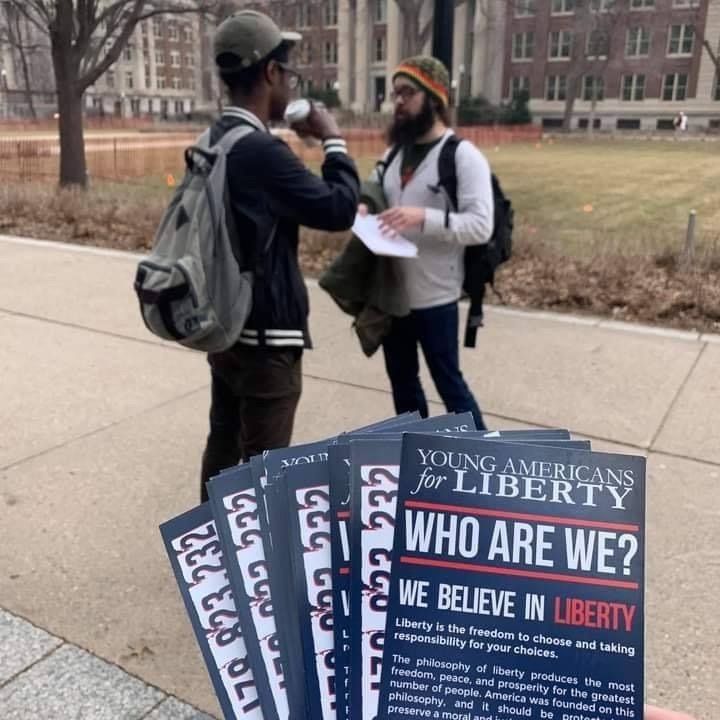
I started a chapter of Young Americans for Liberty at DMACC. They sent me to Washington, D.C. for a five-day boot camp called the Youth Leadership School, held at the Leadership Institute in Arlington, Virginia. I attended in 2011.
The schedule was relentless.
Classes from 8 a.m. to 6 p.m.
Mandatory lectures until 8 p.m.
Meet-and-greets until 10 p.m.
Homework every night—two to four hours minimum.
Five days straight. No shortcuts.
By the end of the week, roughly half the attendees had quit.
Some left quietly. Some were asked not to return. The pace filtered people more effectively than any ideological test ever could.
You didn’t survive it by being passionate. You survived it by being disciplined.
I learned how to write press releases. How to frame stories. How to photograph events so editors would actually use the images. How campaigns operate when they’re serious about winning and when they’re just pretending.
One lecture stayed with me more than any other.
It was about the price of bad political leadership. The speaker explained that if you make a real difference, power responds in stages: first they flatter you, then they try to buy you off, and when that fails, they attack you—using lies, dirty tricks, and character assassination.
At the time, it sounded abstract.
Later, it proved prophetic.
The training also included social media strategy—why Facebook, Twitter, and Instagram mattered, why you should focus on only two, how to build influence intentionally. That training eventually led to my profile being ranked in the top five percent of most influential accounts worldwide by Klout.
What most people don’t know is what happened the following year.
In 2012, Barack Obama was losing to Mitt Romney.
Internally, the Obama campaign panicked.
They suspended field operations for a full week and quietly sent their staff to receive the same Leadership Institute training I had just completed—the same methods, the same discipline, the same mechanics of persuasion and turnout.
They used it.
They returned to the field and beat Romney.
Leadership Institute still resents this. They wanted Romney to win. They trained people who didn’t.
That was my first clear lesson that power doesn’t care about ideology nearly as much as it cares about tools. Whoever understands the tools wins.
At the end of my own training, I was offered a job as campaign manager for a state house race in Virginia.
I declined.
Not because I wasn’t capable—but because I had learned something more important: opportunity without alignment becomes a trap.
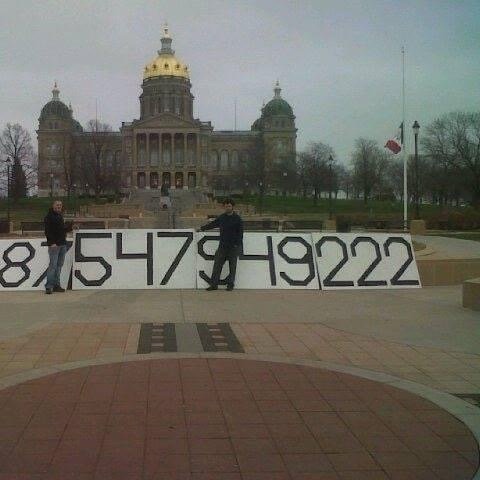
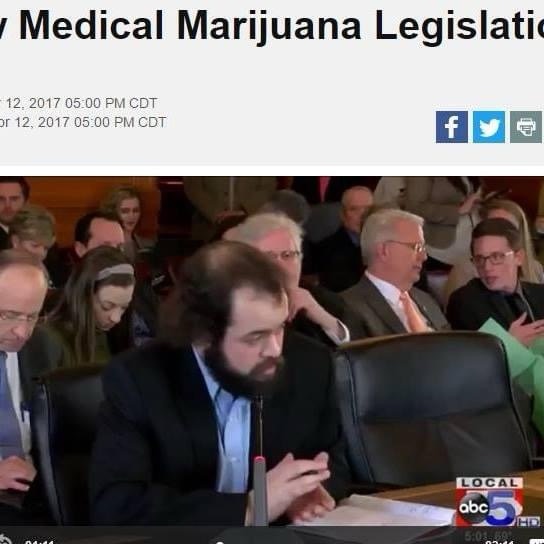
Back at DMACC, I built the YAL chapter. I recruited students. Organized events. Protested the national debt at the state capitol. Protested foreign wars. Learned economics—not the sanitized version, but Austrian economics, at the urging of Jimmy Morrison, the founder of Iowa Patients for Medical Marijuana.
Jimmy mentored me quietly and consistently. He let me solve problems my own way while keeping me from lighting myself on fire.
I helped him edit transcripts for his first documentary. My name appeared under “special thanks.” It wasn’t a credit—it was trust.
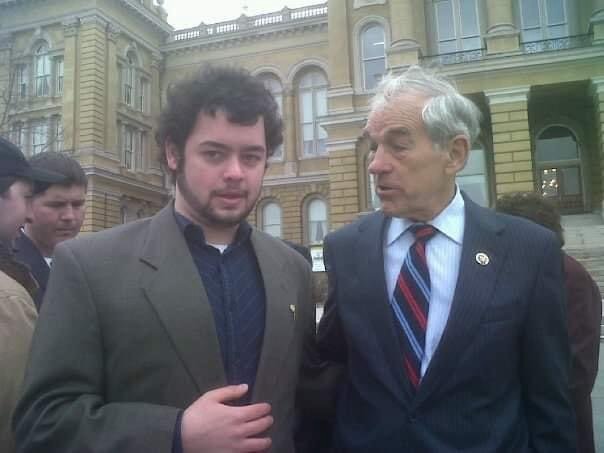
I met Ron Paul. Took photos with him in Des Moines and in D.C. I began to see how movements form, fracture, and endure.
On Mother’s Day, I told my mother I was likely to be offered a state director position with YAL.
She sneered. Said it sounded like a peon job.
That was the moment I finally stopped trying.
The apprenticeship years were not glamorous.
I became an hourly manager at McDonald’s. Learned that success is often a function of timing and opportunity, not merit. Learned that parents can be irredeemably controlling. Learned that I would have to build my own guidance system from scratch.
I decided my advocacy would never be my income.
That was non-negotiable.
I worked delivery at Jimmy John’s. Refereed soccer. Took on an electrician apprenticeship for a year and a half. Learned to study continuously—YouTube, audiobooks, podcasts on economics and law, manuals on tools and systems.
I learned how to move quietly, precisely, and legally.
The apprenticeship wasn’t about ideology.
It was about learning how power actually works—so I could survive it long enough to change it.
That came next.
 WeedPress: The Paper Trail
Leave a comment