There Is No Such Thing as “Good Trouble.” There Is Only Trouble.
By Jason Karimi | WeedPress | February 7, 2026
The phrase “good trouble” entered political vocabulary as a moral shield — a way to bless disruption in advance. It suggests that if your cause is righteous, the consequences are purified.
That framing is emotionally powerful.
It is also structurally false.
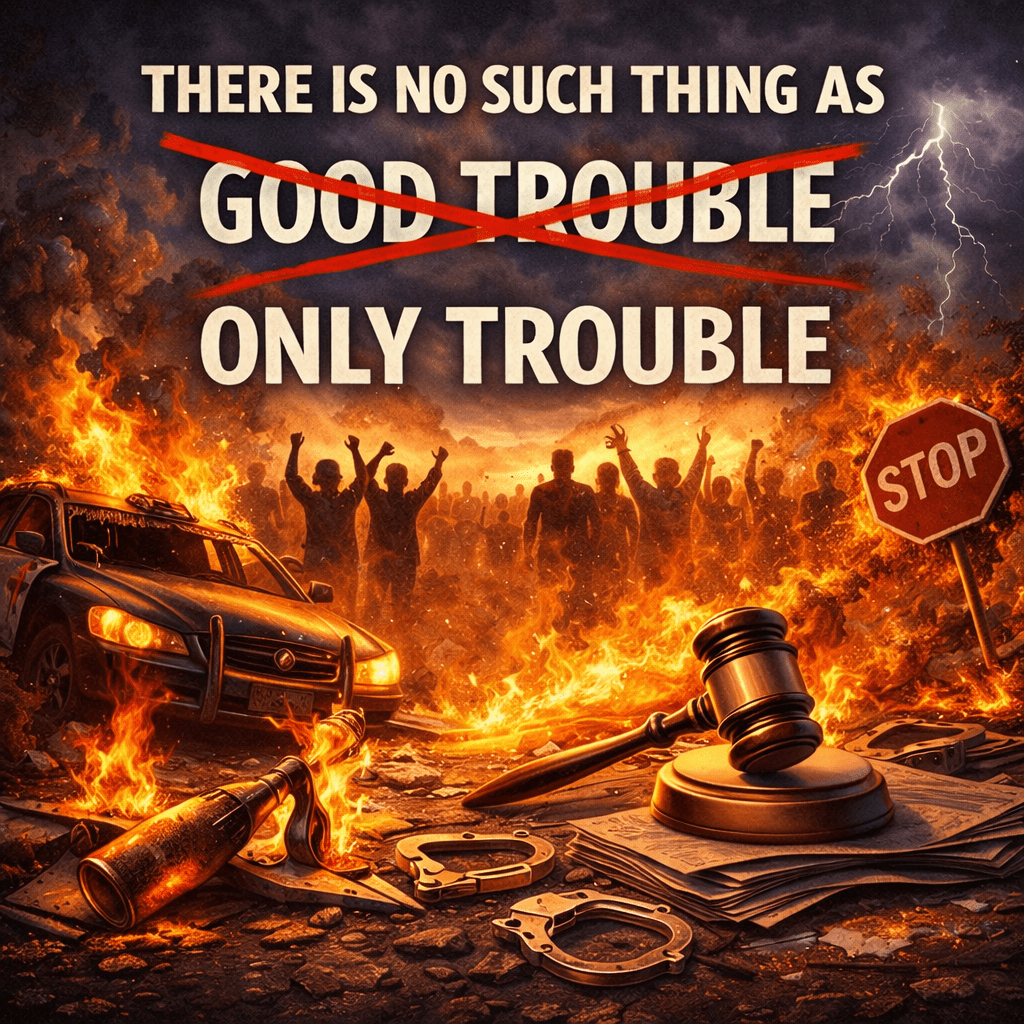
There is no such thing as good trouble.
There is only trouble — and the question is whether you survive it.
⸻
The Myth of Moral Immunity
“Good trouble” implies that intention transforms outcome. It implies that protest, agitation, defiance, or rule-breaking are insulated by virtue.
But law does not recognize virtue as a defense category.
Under the Controlled Substances Act, intent does not negate scheduling status. Under the Administrative Procedure Act, sincerity does not cure procedural defects. Under constitutional litigation, courts do not weigh your moral self-image — they weigh the record.
Systems respond to conduct, not vibes.
If you trigger enforcement, regulatory scrutiny, defamation exposure, or civil liability, the system does not pause to ask whether you believed your trouble was “good.”
It asks whether it was actionable.
⸻
History Is Not a Hallmark Card
Yes, history remembers certain actors favorably. But history edits. It compresses decades into parables.
In real time, trouble is messy:
• It costs money.
• It invites retaliation.
• It triggers discovery.
• It escalates conflict.
• It exhausts allies.
Most “good trouble” becomes simply “trouble” the moment process begins.
And process is relentless.
⸻
Activism vs. Architecture
The romantic framing of “good trouble” belongs to movement culture. It thrives on spectacle and immediacy.
But structural change — the kind that moves statutes, agencies, and federal policy — does not reward spectacle. It rewards timing, documentation, and disciplined record-building.
The federal cannabis rescheduling debate illustrates this perfectly.
The meaningful battlefield is not slogans. It is:
• Statutory interpretation under the CSA.
• Agency discretion under the APA.
• Judicial review standards.
• Federalism tension between state legalization and federal scheduling.
Those are architecture questions.
Architecture does not respond to “good trouble.”
It responds to arguments that survive scrutiny.
⸻
Trouble Is a Tool, Not a Virtue
Trouble can be strategic.
Trouble can be necessary.
Trouble can even be catalytic.
But calling it “good” confuses the analysis.
Trouble is leverage. Leverage creates pressure. Pressure produces reaction. Public pressure can function as leverage within lawful systems.
Sometimes the reaction benefits you.
Sometimes it destroys you.
The difference is not morality — it is preparation.
⸻
Why the Phrase Persists
The idea of “good trouble” comforts people who want to believe that justice guarantees protection.
It does not.
Ask anyone who has:
• Faced administrative retaliation.
• Defended against civil complaints.
• Navigated protective order hearings.
• Endured reputational campaigns.
• Watched allies disappear under pressure.
The system does not grade on righteousness.
It evaluates risk.
⸻
A Harder Truth
If you are going to create friction — politically, legally, culturally — understand this:
There is no protective aura around your intent.
There is only exposure.
You either:
1. Build your record first,
2. Control escalation,
3. Anticipate procedural response, and
4. Maintain sustainability,
—or you become another cautionary tale framed as “brave.”
⸻
What Actually Wins
Movements burn out on adrenaline. Institutions endure on documentation.
The people who mistake agitation for architecture tend to exhaust themselves.
The ones who understand that trouble is a tactical instrument — deployed at the right moment, in the right forum, with the right structural backing — are the ones who shape outcomes.
Trouble is not good.
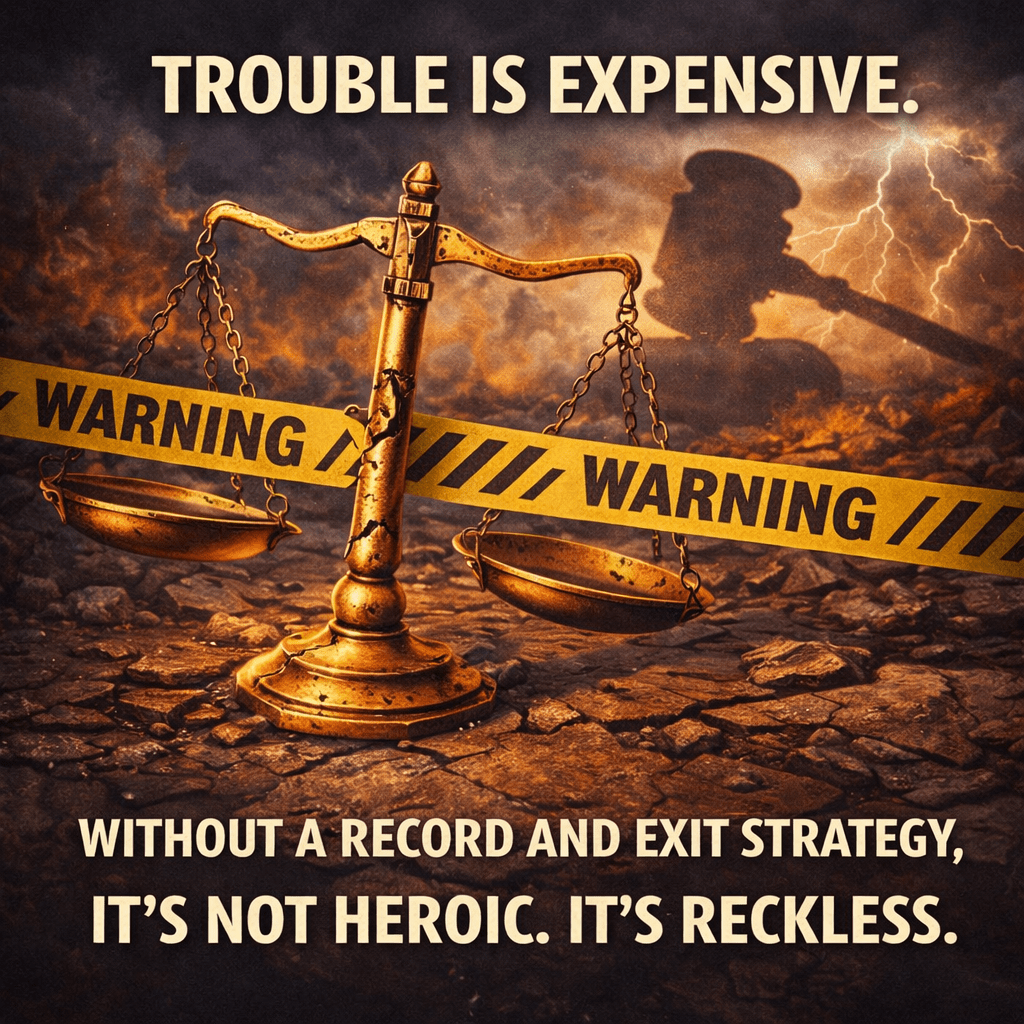
Trouble is expensive.
And unless you are prepared to manage its consequences, it is not heroic.
It is reckless.
If you are going to enter conflict, do it with:
• A record.
• A theory.
• A procedural map.
• An exit strategy.
Anything less is not “good trouble.”
——
WeedPress is a policy analysis publication focused on statutory interpretation, administrative procedure, and publicly available records. Our commentary addresses systems, laws, and institutional structures — not private individuals. WeedPress does not encourage harassment, direct contact, or targeting of any person. All analysis is intended for informational and educational purposes.
 WeedPress: The Paper Trail
Leave a comment