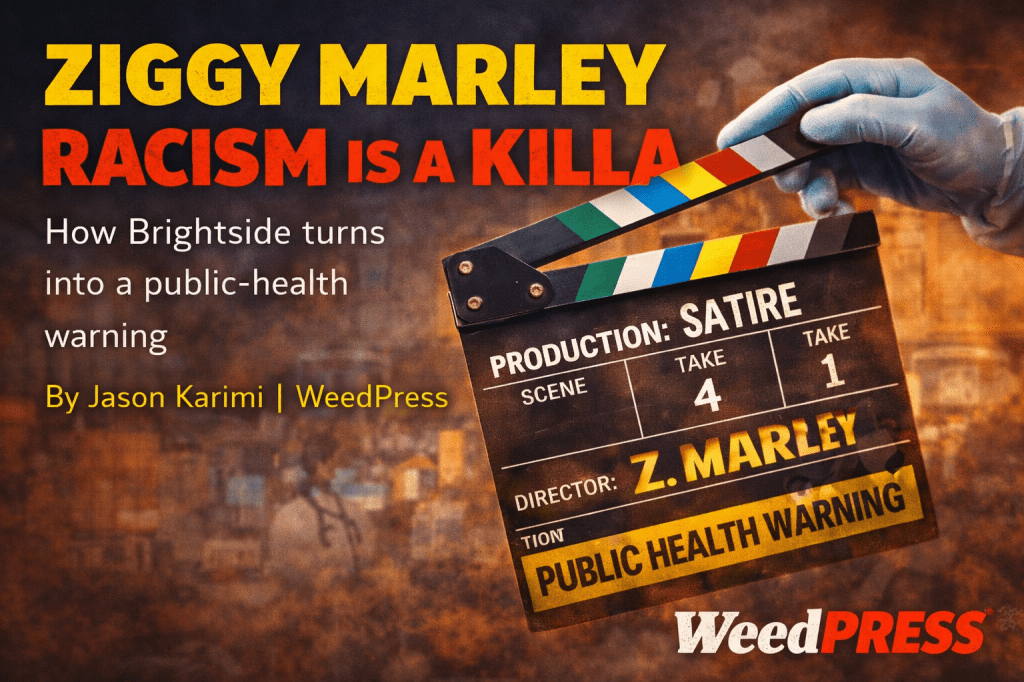
Ziggy Marley’s “Racism Is A Killa” Uses Satire as a Public-Health Warning
By Jason Karimi | WeedPress
March 26, 2027
In the video for “Racism Is A Killa,” Ziggy Marley does not treat racism as a private flaw or a bad opinion. He frames it as a social sickness, and satire is the instrument that makes that diagnosis land.
Ziggy Marley’s “Racism Is A Killa” works because it refuses to handle racism as an abstract moral talking point. The song’s title is blunt, but the video gives that bluntness a frame. Instead of offering a standard performance clip or a vague message-piece, it turns the subject into a stylized warning. That is the key to why the project stands out. It is not just protesting racism. It is presenting it as something corrosive, contagious, and deadly enough to demand public attention.
That framing matters. A lot of issue-driven songs tell listeners what to think, but fewer give the message an actual visual logic. Ziggy’s video does. The concept pushes the audience to stop seeing racism as a matter of isolated attitudes and start seeing it as a force that spreads through a culture, damages institutions, and leaves real casualties behind. Once the video adopts that public-health language, the song’s title stops sounding like rhetoric and starts sounding like a diagnosis.
The smartest choice in the visual treatment is that the video leans on satire rather than realism. That is a crucial distinction. A literal anti-racism video can easily become preachy or heavy-handed. Satire gives Ziggy another route. It lets him exaggerate the structure of the problem so the audience can see its absurdity and its danger at the same time. The point is not that racism is funny. The point is that satire is often the sharpest tool for exposing what a society has learned to normalize.
That is why the video’s imagery lands. It takes the familiar language of public warnings, treatment, and emergency response and applies it to racism. By doing that, it changes the terms of the conversation. Racism is no longer presented as something to politely disagree with or merely condemn in theory. It becomes something society has tolerated for far too long while pretending the symptoms were manageable. The satire cuts through that denial by showing how grotesque the entire arrangement looks once it is staged plainly.
There is also a deeper cultural move happening here. Marley is working inside a tradition of protest music, but he is not content to simply revive old formulas. The video feels contemporary because it understands that modern audiences are saturated with outrage. Outrage alone is cheap now. Everyone is angry. Everyone is issuing statements. What makes “Racism Is A Killa” more effective is that it builds a concept strong enough to carry the outrage somewhere. It turns condemnation into an actual visual argument.
That visual argument is simple: racism behaves less like a private opinion than like a social toxin. It infects systems, distorts judgment, and harms people far beyond the individual who carries it. Whether one takes that metaphor literally is beside the point. Artistically, it works because it expands the scale of the problem. The song is not asking whether racism is morally ugly. It is asking why society still treats something this destructive as survivable background noise.
The satirical frame also keeps the video from collapsing into despair. That matters. A piece like this could easily become joyless, especially given its subject. Instead, the concept has energy. It has style. It has a certain theatrical wit. That keeps the message from feeling like homework. The video does not soften the issue, but it understands that form matters. Serious art still has to hold attention. Ziggy seems to understand that a memorable image can sometimes do more than a lecture ever could.
There is a second reason the satire works: it exposes normalization. That may be the video’s sharpest insight. The most dangerous forms of racism are often not the loudest ones. They are the ones folded into routine, custom, indifference, and institutional inertia. A satirical treatment disrupts that comfort. It takes what people have learned to accept and makes it look intolerable again. In that sense, the video is not just criticizing racism. It is criticizing the passivity that allows racism to keep reproducing itself.
That gives the song more weight than a slogan. “Racism Is A Killa” is direct enough to be memorable, but the video prevents that directness from becoming simplistic. The satire adds dimension. It suggests that the problem is not only hatred in its obvious form, but also a culture that has become too familiar with the damage hatred causes. The warning is therefore broader than the title alone. Racism kills, yes, but so does the habit of treating racism as a manageable constant rather than a crisis.
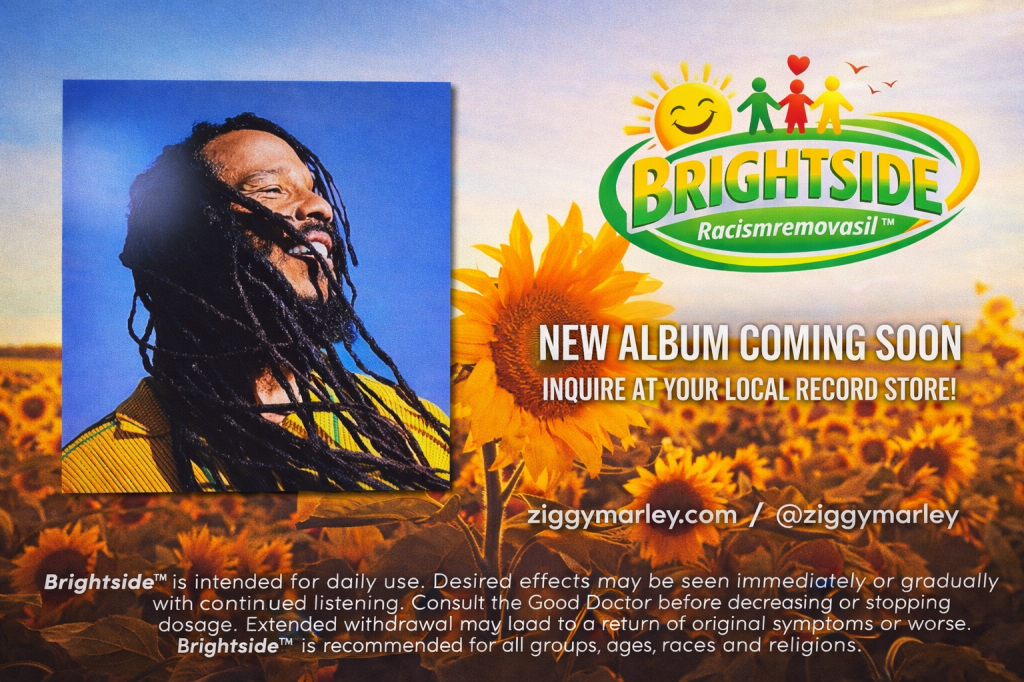
Visually and thematically, the piece fits Ziggy Marley well. He brings enough gravitas to the subject that the concept does not feel gimmicky, but the satirical edge keeps it from becoming sanctimonious. That balance is difficult to strike. Too much solemnity and the work feels stiff. Too much theatricality and it feels unserious. “Racism Is A Killa” holds the middle. It is urgent without becoming hysterical, stylized without losing its point.
That is what makes the video worth more than a casual release-day reaction. It is not just another socially conscious music video. It is a carefully chosen metaphor built around a clear artistic tool. Satire is not incidental here. It is the mechanism that drives the whole piece. The video understands that to confront a normalized evil, sometimes the most effective move is not merely to denounce it, but to stage it in a way that makes its ugliness impossible to miss.
Bottom line: Ziggy Marley’s “Racism Is A Killa” succeeds because it does more than condemn racism. It reframes it. By using satire and public-health imagery, the video turns a familiar moral statement into a sharper cultural warning. That gives the song its force, and it is what makes the piece feel like commentary with staying power rather than just another timely protest track.
By Jason Karimi | WeedPress
 WeedPress: The Paper Trail
Leave a comment