Featured Analysis
-

The Real Cost of Schedule III: What Small South Dakota Operators Are Actually Facing Right Now
For small operators trying to understand what federal changes actually mean: This piece breaks down the compliance costs and risks that are often glossed over. Knowledge is power — especially when the stakes are this high. South Dakota small cannabis operators are being told to relax. Federal rescheduling is here, the story goes, and everything…
-
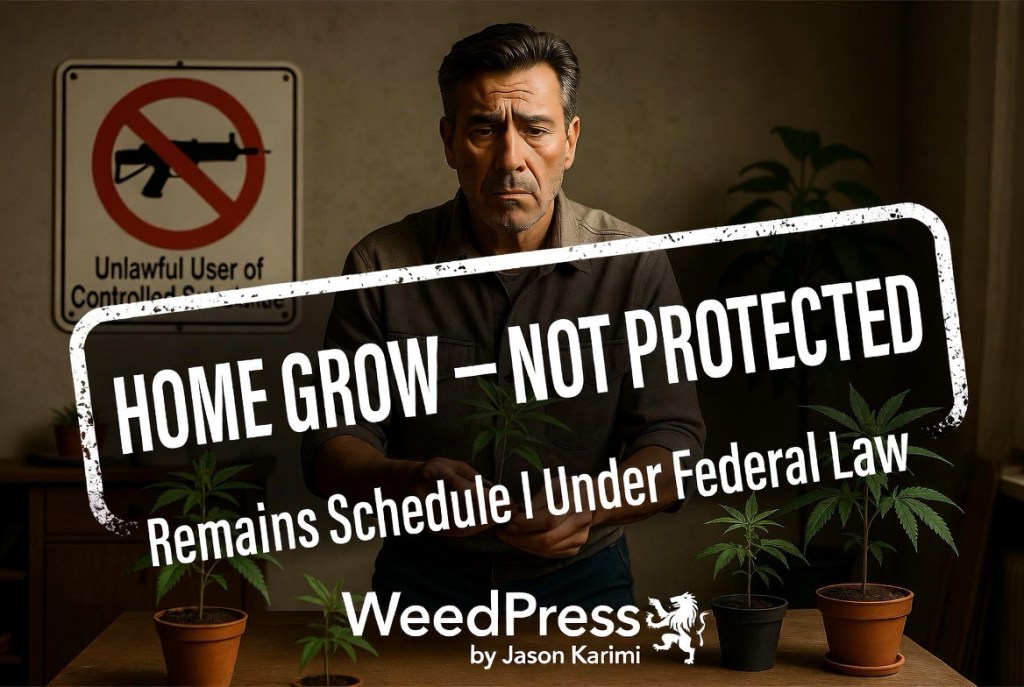
ILLEGAL: Homegrown Cannabis Remains Outside Federal Schedule III Protections — An Open Question With Real Consequences for Patients
The April 28, 2026 federal partial rescheduling order moved only two narrow categories of marijuana from Schedule I to Schedule III: certain FDA-approved products and marijuana produced under qualifying state-issued medical marijuana licenses.¹ Personal home cultivation was not included in either category. This creates a significant gap. In states that permit limited home growing for…
-

Tribal Operators Face Extra Risks Under Federal Rescheduling — And They Should Not Trust Reassuring Advice from People with Skin in the Game
Tribal operators face additional risks that many industry voices aren’t addressing. Independent analysis matters. Tribal and Indigenous cannabis operators are in a uniquely vulnerable position under the new federal Schedule III framework. They face all the same compliance burdens as other small operators — plus additional layers of jurisdictional complexity, disclosure risk, and uncertainty around…
-
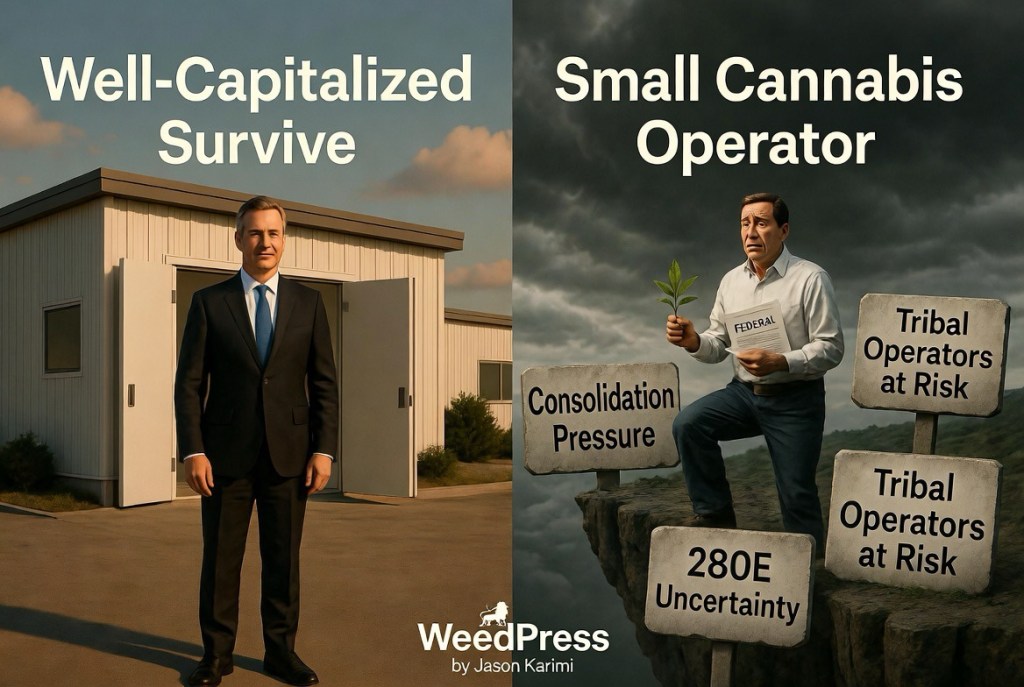
June 3: Beard Bros Webinar Warns Tribal And Small Cannabis Operators Are At Risk
Check out the warnings for small operators from this webinar: Core Warnings for Small Operators 1. Compliance Costs & DEA Registration Burdens Are Real and Disproportionate • Small operators face significant new costs for legal counsel, application preparation, security upgrades, recordkeeping systems, and compliance infrastructure that many legacy businesses were never built to handle. •…
-
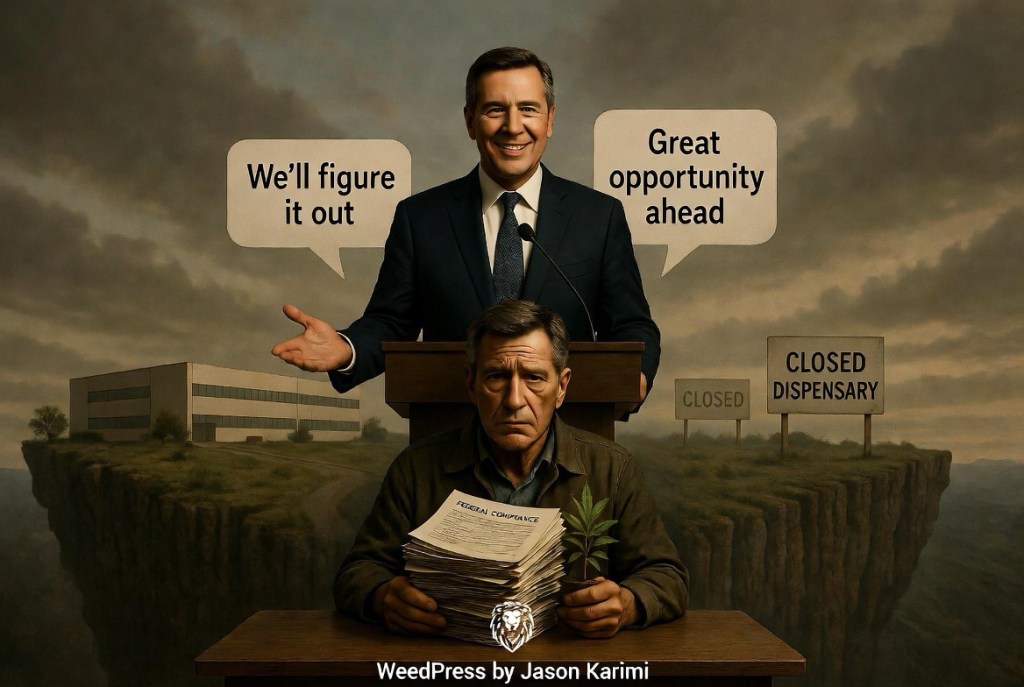
South Dakota Small Cannabis Operators Face a Compliance Cliff: Federal Rescheduling Likely to Drive More Closures and Force Consolidation
The collapse of recreational legalization efforts in South Dakota already triggered a wave of dispensary closures. At least eight licensed medical cannabis businesses shuttered in late 2024 and early 2025 amid falling cardholder numbers, intense price competition, and regulatory pressures.¹ “Then it was a race to the bottom on pricing,” one industry participant observed as…
-
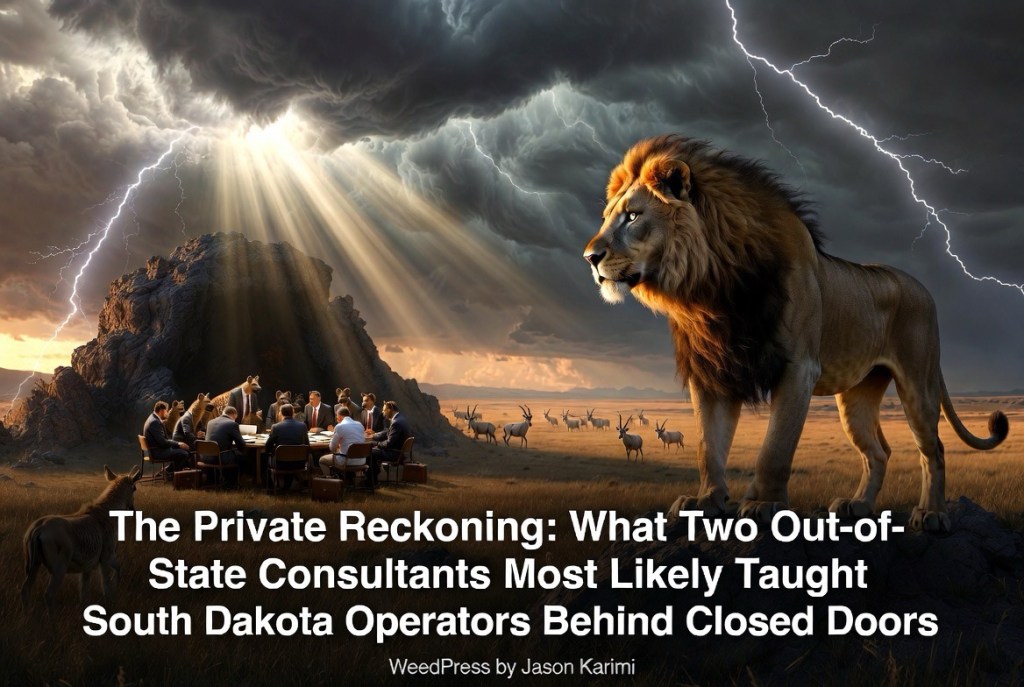
The Private Reckoning: What Two Out-of-State Consultants Most Likely Taught South Dakota Operators Behind Closed Doors
The April 28, 2026 partial Schedule III order (91 Fed. Reg. 22714) did not merely lower marijuana’s scheduling classification.¹ It imposed a new federal compliance regime that effectively ended the low-overhead, cash-only state-only model that defined South Dakota’s medical cannabis program.² Some public voices have offered vague assurances that “we’ll figure it out” for the…
Policy
-
ILLEGAL: Homegrown Cannabis Remains Outside Federal Schedule III Protections — An Open Question With Real Consequences for Patients
The April 28, 2026 federal partial rescheduling order moved only two narrow categories of marijuana from Schedule I to Schedule III: certain FDA-approved products and marijuana produced under qualifying state-issued medical marijuana licenses.¹ Personal home cultivation was not included in either category. This creates a significant gap. In states that permit limited home growing for…
-
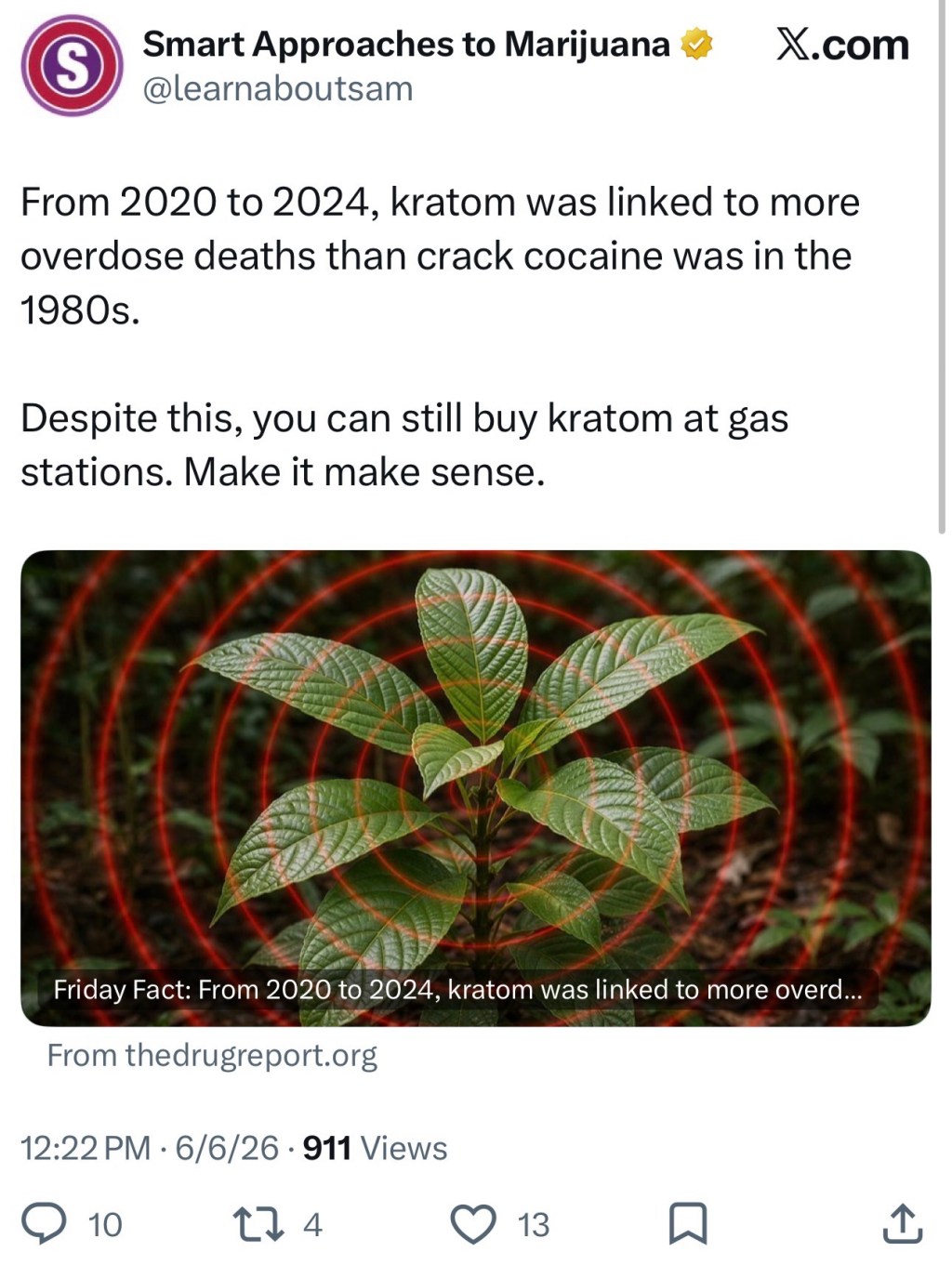
Drug Policy Liars Hurt Public Health And Safety, Kids
Hysterics and emotional performance do not help addicts. SAM made a ridiculous fallacy on twitter: Here is why this claim hurts evidence based policy decisions and damages SAM’s credibility: “Linked to” = detected on tox, not primary cause. 1980s testing was spotty. Crack epidemic brought massive violence/addiction in cities. Kratom deaths remain a tiny share…
-
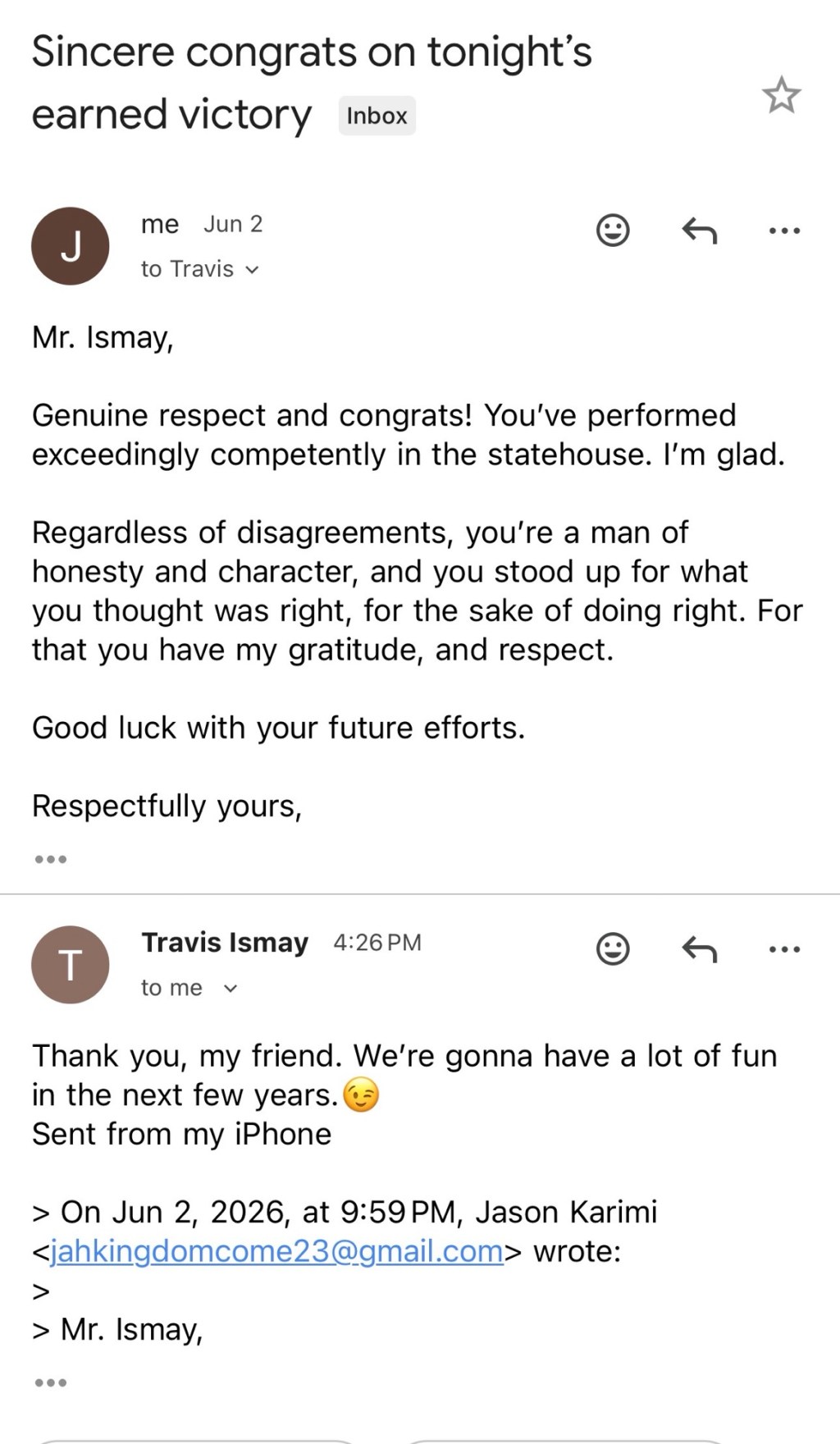
Travis Ismay Responds to My Congratulatory Email: A Small Step Toward Civil Discourse in South Dakota Politics
Yesterday, Rep. Travis Ismay (R-House District 28B) replied to the congratulatory email I sent him shortly after his decisive Republican primary victory on June 2.¹ For context, here is the full exchange: My email (June 2, 2026): For context, here is the full exchange: It’s a brief, gracious response — and one I appreciate. Background…
-
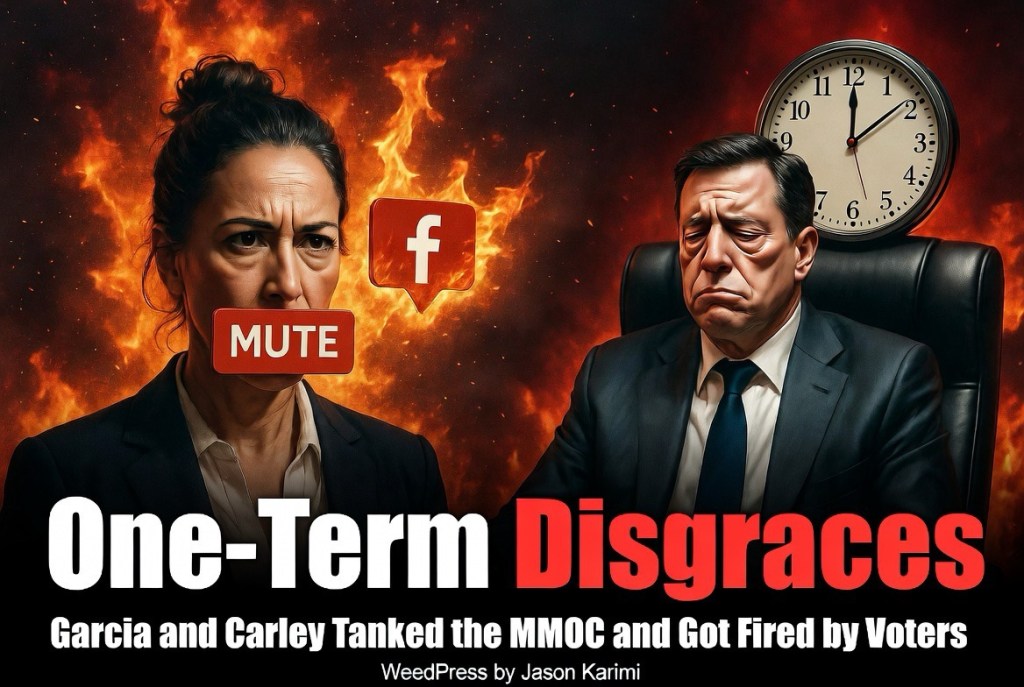
Garcia and Carley To Get the Boot from MMOC After Primary Losses; Won’t Attend Future Meetings
Josephine Garcia and John Carley are about to lose what little power they had left. Following their humiliating primary defeats on June 2, both are expected to be removed from the Medical Marijuana Oversight Committee (MMOC) in the coming weeks. This is standard procedure in South Dakota. When (shit talking) legislators lose their primaries, the…
-
One-Term Disgraces: Garcia and Carley Tanked the MMOC and Got Fired by Voters
Josephine Garcia and John Carley took office in January 2025. By June 2026, both were one-term has-beens who lost their Republican primaries in humiliating fashion. Their short tenures were marked by dysfunction on the Medical Marijuana Oversight Committee (MMOC), where Garcia served as Chair and Carley as Vice-Chair. Under their leadership, the committee became so…
-
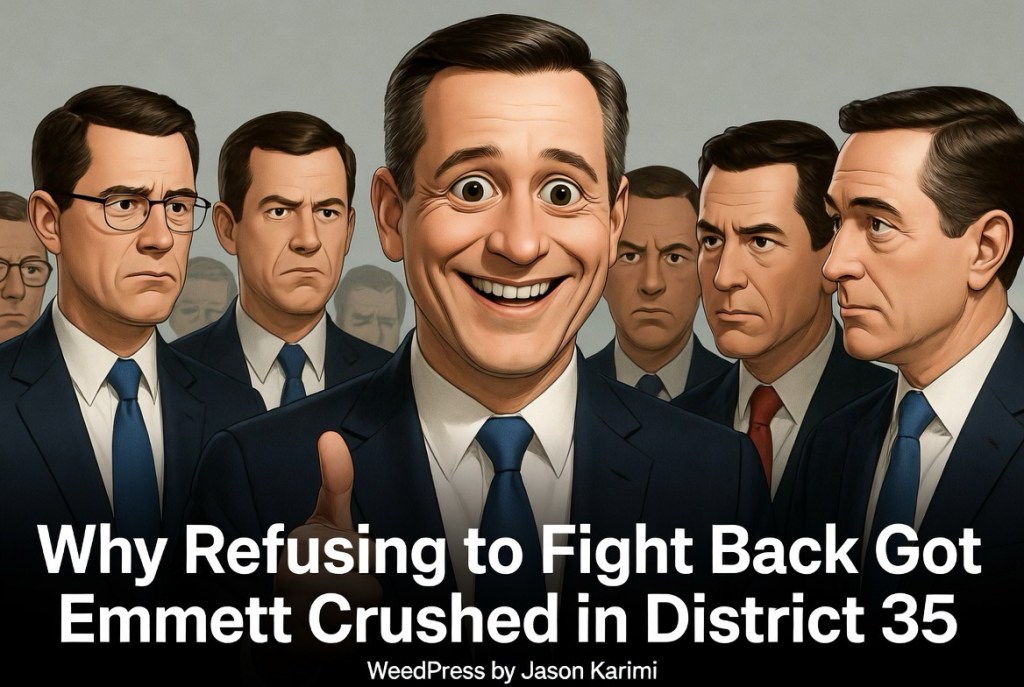
Refusing to Fight And Play On “Nice Guy” Easy Mode Got Emmett Reistroffer Crushed In The Political Arena June 2nd in SD HD-35
Emmett Reistroffer finished last in the Republican primary for House District 35 with roughly 13% of the vote. In a four-way race for two seats, he was not competitive. He was rejected by a 20 point margin. He ran the campaign many (naive) people claim is the “right” way to do it. Clean. Positive. No…
Law
-
The Real Cost of Schedule III: What Small South Dakota Operators Are Actually Facing Right Now
For small operators trying to understand what federal changes actually mean: This piece breaks down the compliance costs and risks that are often glossed over. Knowledge is power — especially when the stakes are this high. South Dakota small cannabis operators are being told to relax. Federal rescheduling is here, the story goes, and everything…
-
ILLEGAL: Homegrown Cannabis Remains Outside Federal Schedule III Protections — An Open Question With Real Consequences for Patients
The April 28, 2026 federal partial rescheduling order moved only two narrow categories of marijuana from Schedule I to Schedule III: certain FDA-approved products and marijuana produced under qualifying state-issued medical marijuana licenses.¹ Personal home cultivation was not included in either category. This creates a significant gap. In states that permit limited home growing for…
-
Tribal Operators Face Extra Risks Under Federal Rescheduling — And They Should Not Trust Reassuring Advice from People with Skin in the Game
Tribal operators face additional risks that many industry voices aren’t addressing. Independent analysis matters. Tribal and Indigenous cannabis operators are in a uniquely vulnerable position under the new federal Schedule III framework. They face all the same compliance burdens as other small operators — plus additional layers of jurisdictional complexity, disclosure risk, and uncertainty around…
-
June 3: Beard Bros Webinar Warns Tribal And Small Cannabis Operators Are At Risk
Check out the warnings for small operators from this webinar: Core Warnings for Small Operators 1. Compliance Costs & DEA Registration Burdens Are Real and Disproportionate • Small operators face significant new costs for legal counsel, application preparation, security upgrades, recordkeeping systems, and compliance infrastructure that many legacy businesses were never built to handle. •…
-
South Dakota Small Cannabis Operators Face a Compliance Cliff: Federal Rescheduling Likely to Drive More Closures and Force Consolidation
The collapse of recreational legalization efforts in South Dakota already triggered a wave of dispensary closures. At least eight licensed medical cannabis businesses shuttered in late 2024 and early 2025 amid falling cardholder numbers, intense price competition, and regulatory pressures.¹ “Then it was a race to the bottom on pricing,” one industry participant observed as…
-
The Private Reckoning: What Two Out-of-State Consultants Most Likely Taught South Dakota Operators Behind Closed Doors
The April 28, 2026 partial Schedule III order (91 Fed. Reg. 22714) did not merely lower marijuana’s scheduling classification.¹ It imposed a new federal compliance regime that effectively ended the low-overhead, cash-only state-only model that defined South Dakota’s medical cannabis program.² Some public voices have offered vague assurances that “we’ll figure it out” for the…
Science
-
Drug Policy Liars Hurt Public Health And Safety, Kids
Hysterics and emotional performance do not help addicts. SAM made a ridiculous fallacy on twitter: Here is why this claim hurts evidence based policy decisions and damages SAM’s credibility: “Linked to” = detected on tox, not primary cause. 1980s testing was spotty. Crack epidemic brought massive violence/addiction in cities. Kratom deaths remain a tiny share…
-
One-Term Disgraces: Garcia and Carley Tanked the MMOC and Got Fired by Voters
Josephine Garcia and John Carley took office in January 2025. By June 2026, both were one-term has-beens who lost their Republican primaries in humiliating fashion. Their short tenures were marked by dysfunction on the Medical Marijuana Oversight Committee (MMOC), where Garcia served as Chair and Carley as Vice-Chair. Under their leadership, the committee became so…
-
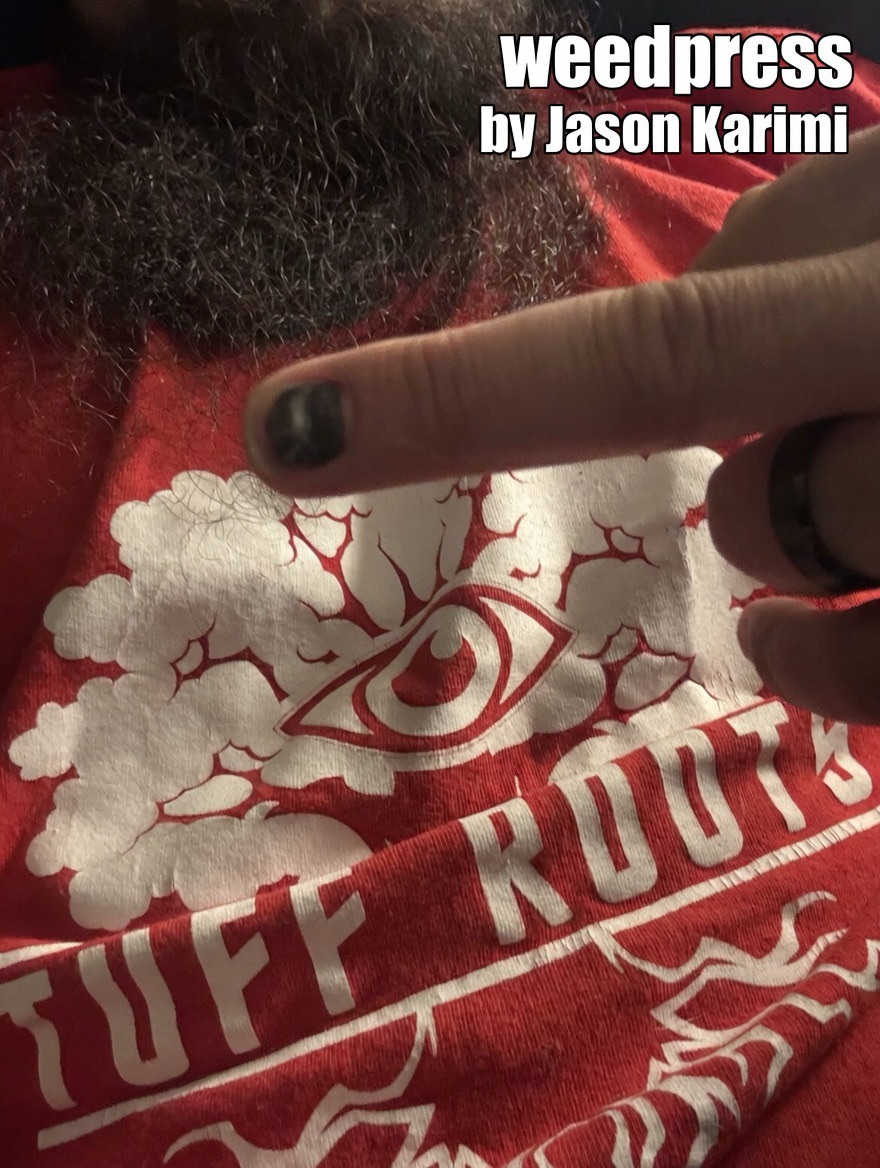
Reflections on a Bruised Nail: What My Left Middle Finger Injury Taught Me About Inner Worth and Boundaries
Two months ago, I slammed my left middle finger, resulting in a subungual hematoma—the dark pool of blood trapped beneath the nail that turned my fingertip into a visual reminder of sudden impact.¹ No longer painful, the nail still carries a mottled shadow of black and white as new growth slowly pushes the old damage…
-

Predators Don’t Debate — They Rig the Game: How Black-Market-Friendly State Cannabis Programs Created the Perfect Environment for Predators — and Why Federal Legitimacy Is Ending It
The drug laws were rigged for decades. Prohibition didn’t eliminate the black market — it protected it. Cartels and underground operators thrived while legitimate patients and small businesses were crushed. When states began legalization without federal exemption, they didn’t fix the problem. They simply moved the rigged game indoors and gave it a state license.…
-
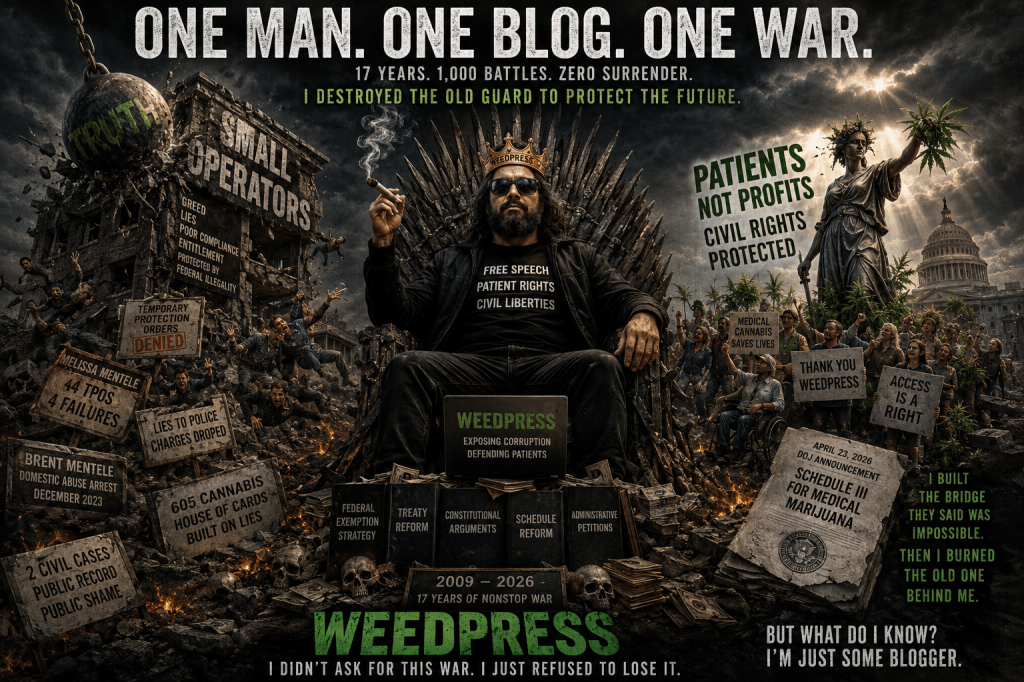
I Spent 17 Years Arguing for Federal Cannabis Legitimacy. Now Small Operators Are About to Learn What That Means.
I have spent most of my adult life arguing that state medical cannabis programs could not survive forever as legally tolerated gray markets.¹ They needed federal recognition. They needed treaty analysis. They needed administrative pathways. They needed constitutional pressure. They needed people willing to say the uncomfortable thing before the institutions were ready to admit…
-
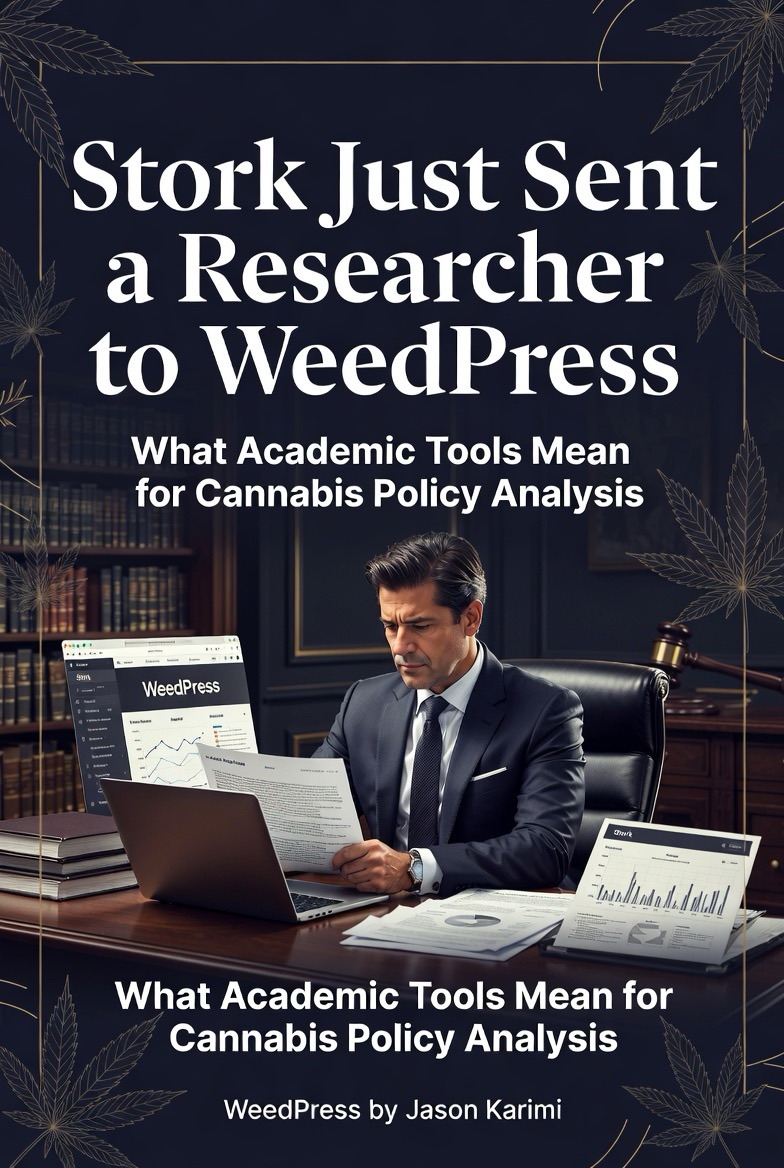
Stork Just Sent a Researcher to WeedPress: What Academic Tools Mean for Cannabis Policy Analysis
Independent statutory deep-dives are showing up alongside peer-reviewed literature in researchers’ workflows. It’s not every day your analytics dashboard lights up with a referrer you’ve never seen before. Today, May 5, 2026, WeedPress received a visit from paper-box.co — the domain tied to Stork (storkapp.me), a specialized publication-tracking and research intelligence platform used by academics,…
Current Events
-
Former Officer, Part Owner Of Medicap Pharmacies, Hammer Medical Supply Says “Marijuana Mayor” Arrest In Jamaica Shows Need To Get Rid Of Illegal Drug Trade And Remove Violent Criminals From The Marketplace
Copied in full from urgent necessity from https://www.desmoinesregister.com/story/opinion/columnists/iowa-view/2019/01/23/jamaica-arrests-show-need-legalize-recreational-marijuana-iowa/2656287002/ Jamaica, Iowa, mayor LaDonna Kennedy and her husband were busted Jan. 16 about 4:20 p.m. (no joke) on allegations of growing 18 marijuana plants inside their home. The various related charges include a Class “D” felony for the manufacture and possession with intent to deliver less than…
-
Iowa Legislature Bills On Marijuana Filed: Looks Like CBD Definition Changing As Well As Debate Over Allowing Children At School To Have Marijuana Products From MedPharm!
My soccer coach from when I was 8 will decide whether my kids can have marijuana at school or not. In before the old people hack a lung, have a heart attack, and freak out that this isn’t done like their Jesus wants it to be done. Moral majority is disgusting and I won’t beg…
-
The Cannabis Industry Knows It’s Getting Wiped Out By Magna Cum Laude Business Owners And Real Professionals Like Iowa Marijuana Licensee Investor John Boehner (And Weed Isn’t All That Hard To Figure Out)
According to one of the first industry pioneers who helped WeedMaps acquire a $4 million marijuana.com business deal, Queen Nicholas West (speech shared by DJ Nick Tanem: https://www.facebook.com/plugins/video.php?href=https%3A%2F%2Fwww.facebook.com%2Fnicholewest143%2Fvideos%2F10156395589068167%2F&show_text=0&width=267 A good overarching perspective for those who still believe they are going to remain relative after the Hindsight Election (2020).
-
Watch The 2019 Cannabis Super Bowl Ad [VIDEO] Iowa Marijuana License Holder Acreage Holdings Censored Super Bowl Ad — Seen Here Courtesy of PROHBTD
Former Speaker of the House John Boehner is on the board. Can we get this on TV John? Please?
-
Speaker John Boehner Joined An Iowa Marijuana Company And Nobody Is Talking About It
Announced on Twitter nearly a year ago yet nobody is talking about it: https://www.facebook.com/plugins/post.php?href=https%3A%2F%2Fwww.facebook.com%2FIowaPatience%2Fposts%2F10156994789461779&width=500
-
Iowa Doctors Treat Pain Patients Who Exercise Their Right To Choose Marijuana Like Dog Doo Doo, Reports Media Yet Again
From Channel 13 News: After 14 months, one of her physicians signed off and she applied for a medical cannabidiol card through the Iowa Department of Public Health and once she was approved that meant she had to go to the drivers license office to officially receive it. “Right now, at this moment, I’m in…
Legislation
-
Travis Ismay Responds to My Congratulatory Email: A Small Step Toward Civil Discourse in South Dakota Politics
Yesterday, Rep. Travis Ismay (R-House District 28B) replied to the congratulatory email I sent him shortly after his decisive Republican primary victory on June 2.¹ For context, here is the full exchange: My email (June 2, 2026): For context, here is the full exchange: It’s a brief, gracious response — and one I appreciate. Background…
-
Request for NCSL Virginia Presentation On Fed Law Impacts For State Industry and Patients
Weedpress sent the following request via https://www.ncsl.org/health/state-medical-cannabis-laws Request for NCSL Presentation Slides – Federal Marijuana & Hemp Policy Implications (June 2026) Dear NCSL Staff, My name is Jason Karimi, and I publish WeedPress, an independent policy analysis site focused on cannabis regulation, federal-state issues, and legislative oversight. I am writing to request materials from a…
-
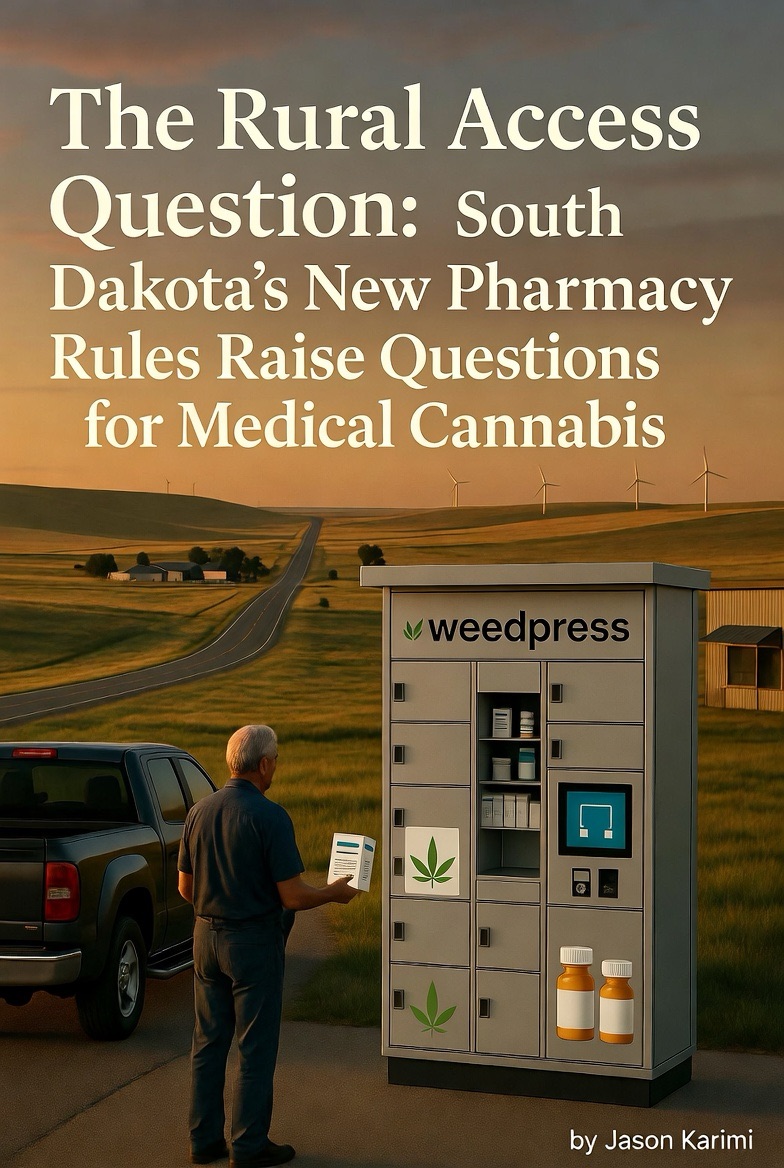
The Rural Access Question South Dakota’s New Pharmacy Rules Raise for Medical Cannabis
As regulators embrace telepharmacy and remote prescription pickup, policymakers may eventually face similar questions about medical cannabis access in rural communities. South Dakota’s Board of Pharmacy is advancing updated rules under Article 20:51 of the Administrative Rules of South Dakota (ARSD) that formalize the use of remote drop sites for prescription medications and introduce a…
-
Julian Garrett Retires: Will His Replacement Be More Pro-Marijuana in Iowa Senate District 11?
Last week, longtime Iowa State Senator Julian Garrett (R-District 11) announced he will not seek re-election due to a prostate cancer diagnosis.¹ For the first time in more than 13 years, Warren County (and part of Marion County) will have an open Senate seat in the June 2 primary and November general election. Julian Garrett…
-
I Spent 17 Years Arguing for Federal Cannabis Legitimacy. Now Small Operators Are About to Learn What That Means.
I have spent most of my adult life arguing that state medical cannabis programs could not survive forever as legally tolerated gray markets.¹ They needed federal recognition. They needed treaty analysis. They needed administrative pathways. They needed constitutional pressure. They needed people willing to say the uncomfortable thing before the institutions were ready to admit…
-
Stork Just Sent a Researcher to WeedPress: What Academic Tools Mean for Cannabis Policy Analysis
Independent statutory deep-dives are showing up alongside peer-reviewed literature in researchers’ workflows. It’s not every day your analytics dashboard lights up with a referrer you’ve never seen before. Today, May 5, 2026, WeedPress received a visit from paper-box.co — the domain tied to Stork (storkapp.me), a specialized publication-tracking and research intelligence platform used by academics,…
RFRA Updates
-

Holy Smoke: Rastafarians Toke for a Higher Power (2013 City Pages Minnesota)
Holy Smoke: Rastafarians Toke for a Higher Power By Matt Peterson October 9, 2013 Hey, pass me that lighter,” Jamison Arend says to the guy in the chair next to him, a younger man with loose dreadlocks that hang down to his waist. The two men are lounging in the living room of a modest,…
-
Wyoming Religious Cannabis Lawsuit Happening
Wyoming passed RFRA. Weedpress will provide details on a lawsuit we just found out about shortly. Stay…tuned…
-
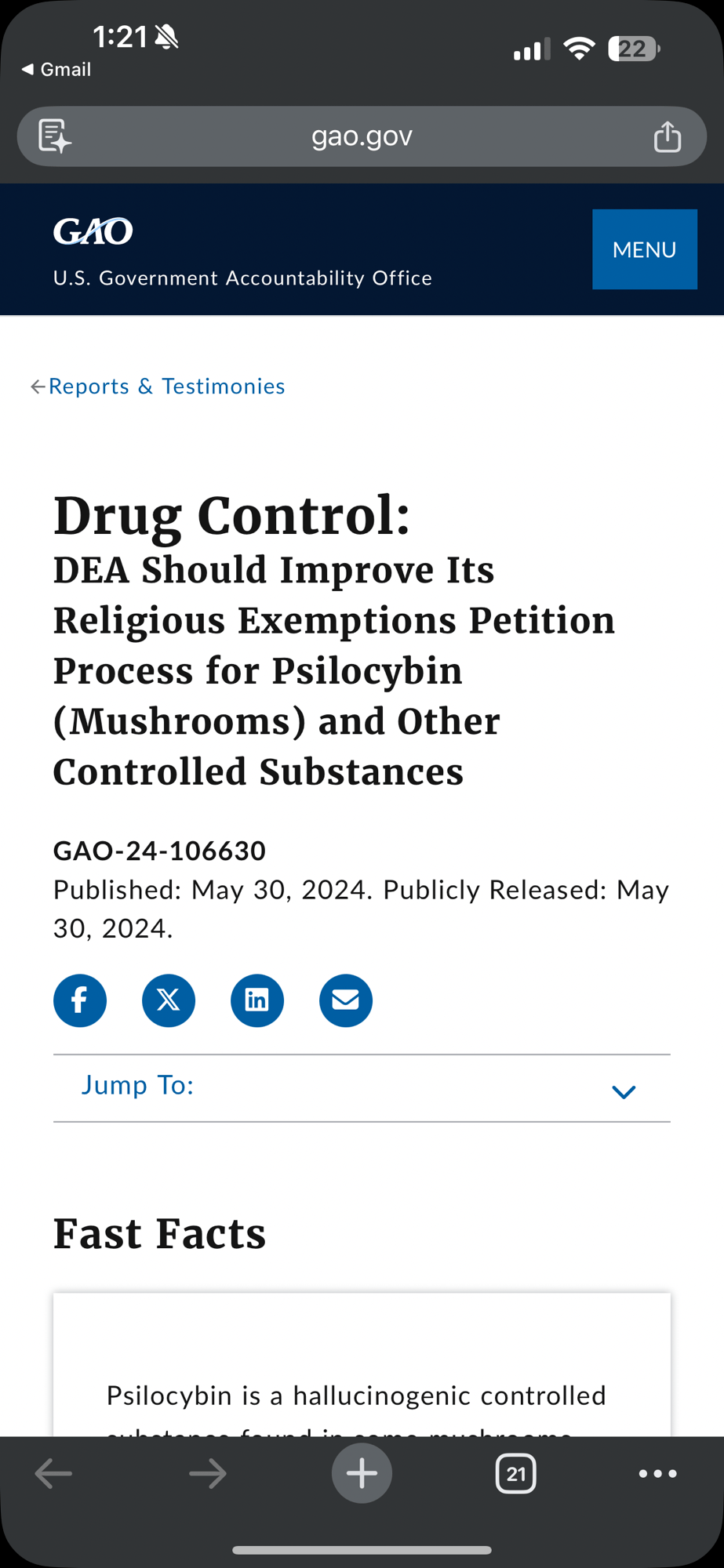
Why DEA Religious Guidance For Religious Mushrooms Was Issued
As my personal understanding currently stands, Agencies cannot consider constitutional issues so this DEA religious guidance is a moot point. It essentially says, write DEA a letter to ask for exemption. That is consistent with the process for states to apply for federal exemption for medical cannabis programs as well, so that is technically correct,…
-
-
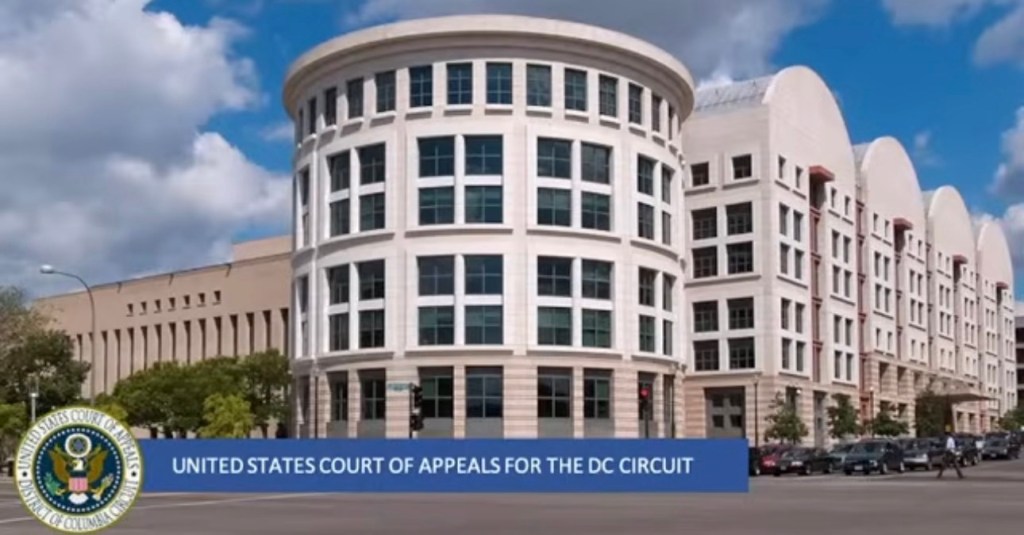
Iowaska Church Of Healing Oral Argument In DC Court
Case 2: 25-1140 In re: Iowaska Church of Healing Friday, November 14, 2025 9:30 A.M. USCA Courtroom 31 Judges Henderson, Katsas, Garcia Karen LeCraft Henderson Gregory G. Katsas Bradley N. Garcia 25-1140 In re: Iowaska Church of Healing 10 minutes per side Arguing: Simon A. Steel, Lowell V. Sturgill Jr. (DOJ)…
-
Opening Statement
Good morning your honor. Good morning counsel. The State has not met its burden of demonstrating a compelling interest in prohibiting the Petitioner’s possession of cannabis for religious use. The State has the burden under the Iowa Religious Freedom Restoration Act to show the Petitioner’s possession of cannabis for religious use is a threat to…
Upcoming Events
-
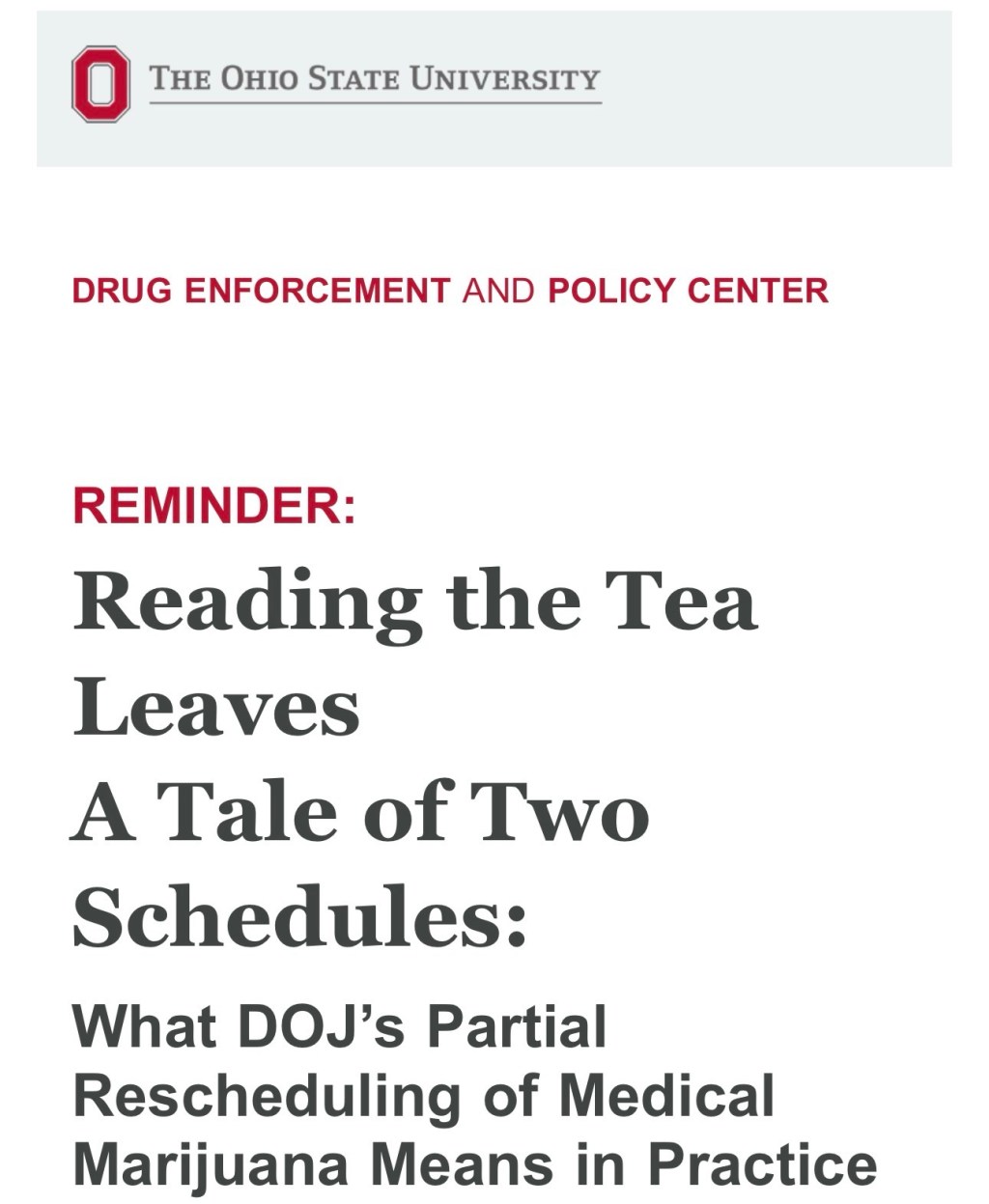
June 16 Zoom: What DOJ’s Partial Rescheduling of Medical Marijuana Means in Practice | OSU Moritz College of Law
Federal changes are real, but they are more limited and complicated than many people in the South Dakota space are claiming. Reading the Tea Leaves A Tale of Two Schedules: What DOJ’s Partial Rescheduling of Medical Marijuana Means in Practice Tuesday, June 16, 2026 noon-1:15 p.m. Zoom The recent U.S. Department of Justice’s order partially rescheduling…
-

The June 27 DEA Registration Deadline Is Coming Fast: South Dakota Operators Face a Compliance Cliff as the Safe Harbor Window Closes
With the June 27 DEA registration deadline approaching, the following analysis examines the practical timeline and compliance pressures facing South Dakota operators. South Dakota’s licensed medical cannabis operators now have roughly 29 days to secure critical federal protections before the expedited DEA registration window closes. On April 28, 2026, the Department of Justice and Drug…
-
Advance Notice to South Dakota Department of Health: Petition for Scheduling Review Will Follow Federal Rescheduling Hearings
South Dakota’s medical cannabis program stands at a critical juncture following the federal partial rescheduling of certain marijuana products to Schedule III.¹ After the DEA’s June 29, 2026 rescheduling hearing concludes, the undersigned will formally petition the South Dakota Department of Health (DOH) to review and align the state’s Schedule I classification of marijuana with…
-
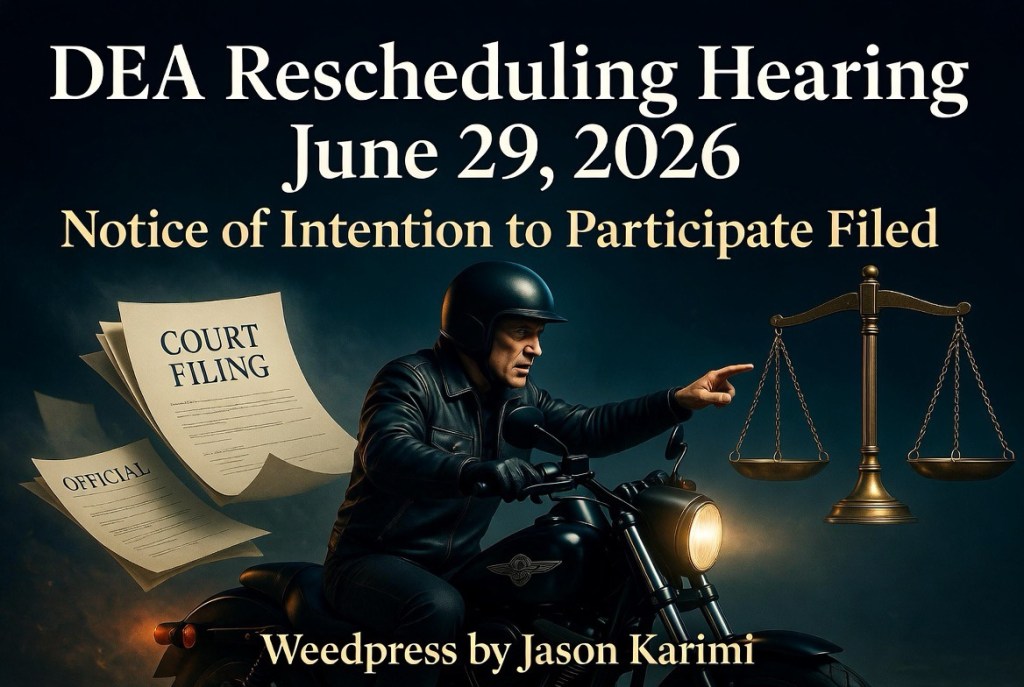
I Have Filed Notice to Participate in the DEA’s June 29 Rescheduling Hearing
Today I formally submitted my Notice of Intention to Participate in the DEA administrative hearing on the proposed rescheduling of marijuana from Schedule I to Schedule III (Docket No. DEA-1362), scheduled to begin June 29, 2026. This filing continues my 17-year record of cannabis policy advocacy and public commentary. It focuses on the interaction between…
-
I Spent 17 Years Arguing for Federal Cannabis Legitimacy. Now Small Operators Are About to Learn What That Means.
I have spent most of my adult life arguing that state medical cannabis programs could not survive forever as legally tolerated gray markets.¹ They needed federal recognition. They needed treaty analysis. They needed administrative pathways. They needed constitutional pressure. They needed people willing to say the uncomfortable thing before the institutions were ready to admit…
-
Why South Dakota’s Own Statutes Now Make Schedule I Marijuana Unlawful to Maintain
“Acting Attorney General Todd Blanche is placing both FDA-approved drug products containing marijuana, and medicinal marijuana products subject to a qualifying state-issued license in Schedule III under his authority to reschedule drugs to carry out the United States’ obligations under the Single Convention on Narcotic Drugs.”¹ South Dakota, however, is not automatically bound by that…
For The Record (2026), By Jason Karimi
-

Anonymous Speech Online: What the Law Protects — and Where It Stops
Anonymous speech has a long American pedigree, but anonymity is not the same thing as impunity. From the founding era forward, Americans have used unsigned pamphlets, pseudonymous essays, and concealed authorship to criticize power, test arguments, and protect dissenters from retaliation.² The Supreme Court has repeatedly recognized that anonymity can be part of the freedom…
-
Reflections on a Bruised Nail: What My Left Middle Finger Injury Taught Me About Inner Worth and Boundaries
Two months ago, I slammed my left middle finger, resulting in a subungual hematoma—the dark pool of blood trapped beneath the nail that turned my fingertip into a visual reminder of sudden impact.¹ No longer painful, the nail still carries a mottled shadow of black and white as new growth slowly pushes the old damage…
-
I Have Filed Notice to Participate in the DEA’s June 29 Rescheduling Hearing
Today I formally submitted my Notice of Intention to Participate in the DEA administrative hearing on the proposed rescheduling of marijuana from Schedule I to Schedule III (Docket No. DEA-1362), scheduled to begin June 29, 2026. This filing continues my 17-year record of cannabis policy advocacy and public commentary. It focuses on the interaction between…
-
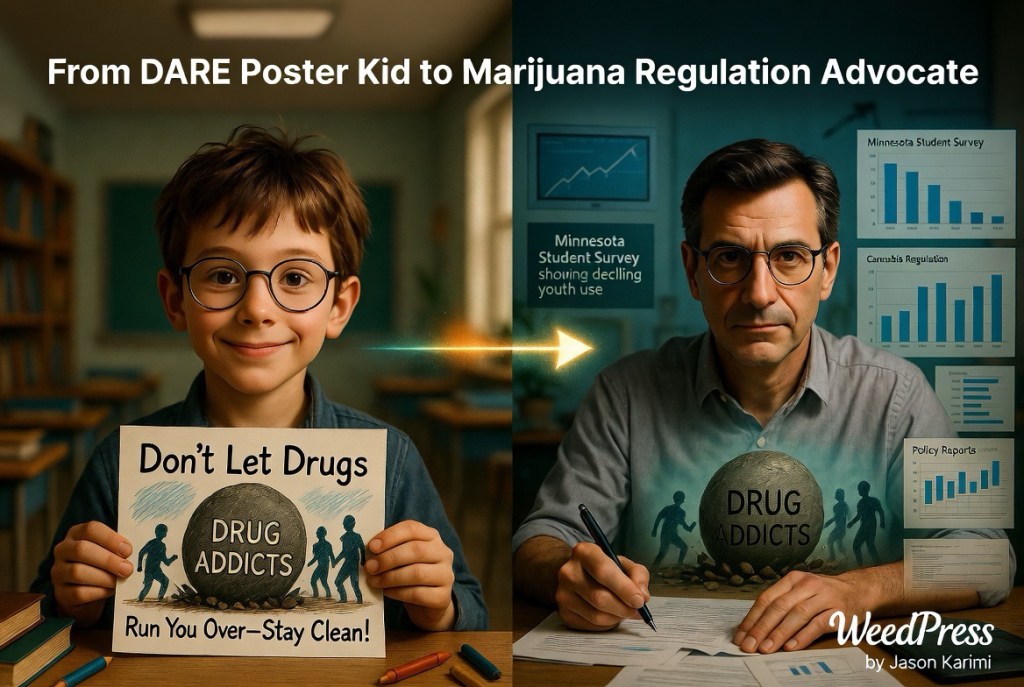
DARE Poster Kid to Marijuana Regulation Advocate: My Unchanging Fight to Protect Kids
When I was in elementary school, the DARE program left a lasting impression. Officers visited regularly, warning us about the dangers of drugs and pushing the “just say no” message. I took it seriously. So when the school announced an anti-drug poster contest open to elementary students, I threw myself into creating something impactful. My…
-

Chapter 10: What Remains
Table of Contents Preface Chapter 1 — The First ArrestEarly rupture, authority, and the beginning of resistance Chapter 2 — Before the File Was Opened Gifted education, faith, discipline, and early legitimacy Chapter 3 — Becoming a ProblemWork, exhaustion, collapse, and the cost of visibility Chapter 4 — Learning the Language of PowerCourts, probation, jail, campaigns, and proximity to decision-makers…
-

Chapter 9: The Record vs. the Narrative
Table of Contents Preface Chapter 1 — The First ArrestEarly rupture, authority, and the beginning of resistance Chapter 2 — Before the File Was Opened Gifted education, faith, discipline, and early legitimacy Chapter 3 — Becoming a ProblemWork, exhaustion, collapse, and the cost of visibility Chapter 4 — Learning the Language of PowerCourts, probation, jail, campaigns, and proximity to decision-makers…
-

Chapter 8: What the Media Gets Wrong
Table of Contents Preface Chapter 1 — The First ArrestEarly rupture, authority, and the beginning of resistance Chapter 2 — Before the File Was Opened Gifted education, faith, discipline, and early legitimacy Chapter 3 — Becoming a ProblemWork, exhaustion, collapse, and the cost of visibility Chapter 4 — Learning the Language of PowerCourts, probation, jail, campaigns, and proximity to decision-makers…
-

Chapter 7: Why I Never Left
Table of Contents Preface Chapter 1 — The First ArrestEarly rupture, authority, and the beginning of resistance Chapter 2 — Before the File Was Opened Gifted education, faith, discipline, and early legitimacy Chapter 3 — Becoming a ProblemWork, exhaustion, collapse, and the cost of visibility Chapter 4 — Learning the Language of PowerCourts, probation, jail, campaigns, and proximity to decision-makers…
-

Chapter 6: Staying Power
Table of Contents Preface Chapter 1 — The First ArrestEarly rupture, authority, and the beginning of resistance Chapter 2 — Before the File Was Opened Gifted education, faith, discipline, and early legitimacy Chapter 3 — Becoming a ProblemWork, exhaustion, collapse, and the cost of visibility Chapter 4 — Learning the Language of PowerCourts, probation, jail, campaigns, and proximity to decision-makers…
-

Chapter 5: The Apprenticeship
Table of Contents Preface Chapter 1 — The First ArrestEarly rupture, authority, and the beginning of resistance Chapter 2 — Before the File Was Opened Gifted education, faith, discipline, and early legitimacy Chapter 3 — Becoming a ProblemWork, exhaustion, collapse, and the cost of visibility Chapter 4 — Learning the Language of PowerCourts, probation, jail, campaigns, and proximity to decision-makers…
-

Chapter 4: Learning the Language of Power
Table of Contents Preface Chapter 1 — The First ArrestEarly rupture, authority, and the beginning of resistance Chapter 2 — Before the File Was Opened Gifted education, faith, discipline, and early legitimacy Chapter 3 — Becoming a ProblemWork, exhaustion, collapse, and the cost of visibility Chapter 4 — Learning the Language of PowerCourts, probation, jail, campaigns, and proximity to decision-makers…
-

Chapter 3: Becoming a Problem
Table of Contents Preface Chapter 1 — The First ArrestEarly rupture, authority, and the beginning of resistance Chapter 2 — Before the File Was Opened Gifted education, faith, discipline, and early legitimacy Chapter 3 — Becoming a ProblemWork, exhaustion, collapse, and the cost of visibility Chapter 4 — Learning the Language of PowerCourts, probation, jail, campaigns, and proximity to decision-makers…
Commentary
-
Call for Prosecutions Raises Concerns About Politicization
Call for Prosecutions Raises Concerns About Politicization When criminal law becomes a first-resort response to disagreement, institutional trust is at risk By Jason Karimi | WeedPress | January 17, 2026. In recent weeks, prominent progressive commentators have openly discussed the need for criminal accountability for political opponents. On a podcast appearance with CNN’s Jim Acosta,…
-
-
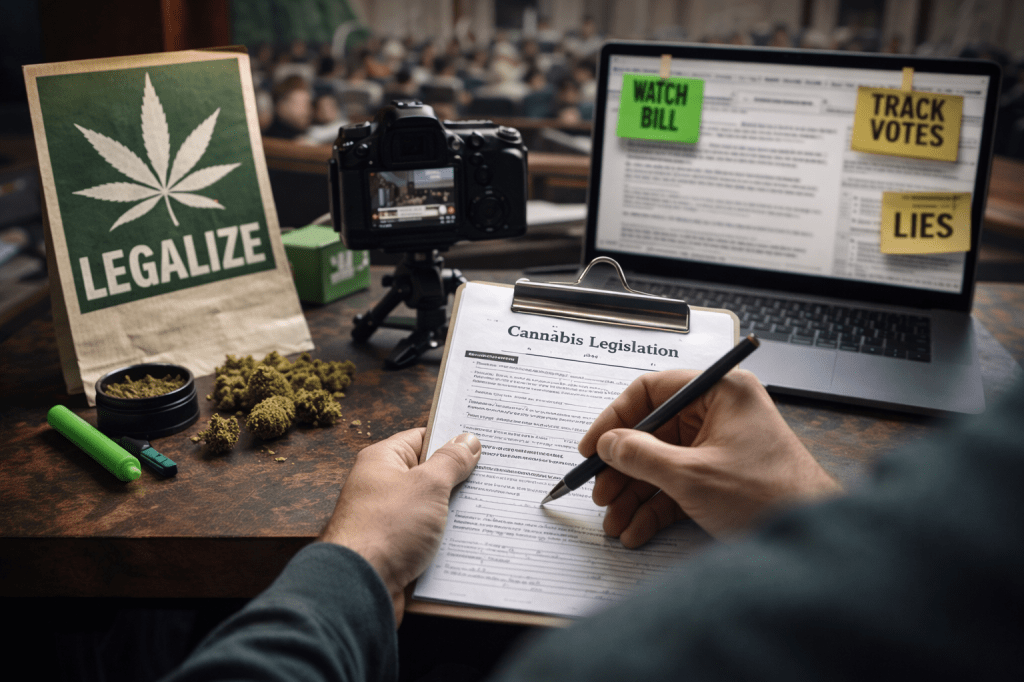
Why So Much Cannabis Activism Burns People Out — and Why Mine Doesn’t
Why So Much Cannabis Activism Burns People Out — and Why Mine Doesn’t By Jason Karimi | WeedPress | February 4, 2026 If this work can be energizing, why do so many advocates flame out, disappear, or turn bitter? The answer isn’t workload.It’s structure. Burnout Is a Design Failure Most activist burnout isn’t personal weakness…
-

Why WeedPress Exists the Way It Does: How I Learned to Navigate Hostile Systems — and Still Publish Solutions
WeedPress focuses on documented facts, public records, and procedural analysis, not personal vendettas or speculation. Why WeedPress Exists the Way It Does: How I Learned to Navigate Hostile Systems — and Still Publish Solutions By Jason Karimi | WeedPress | January 29, 2026 WeedPress wasn’t built by someone who grew up with a safety net.…
-
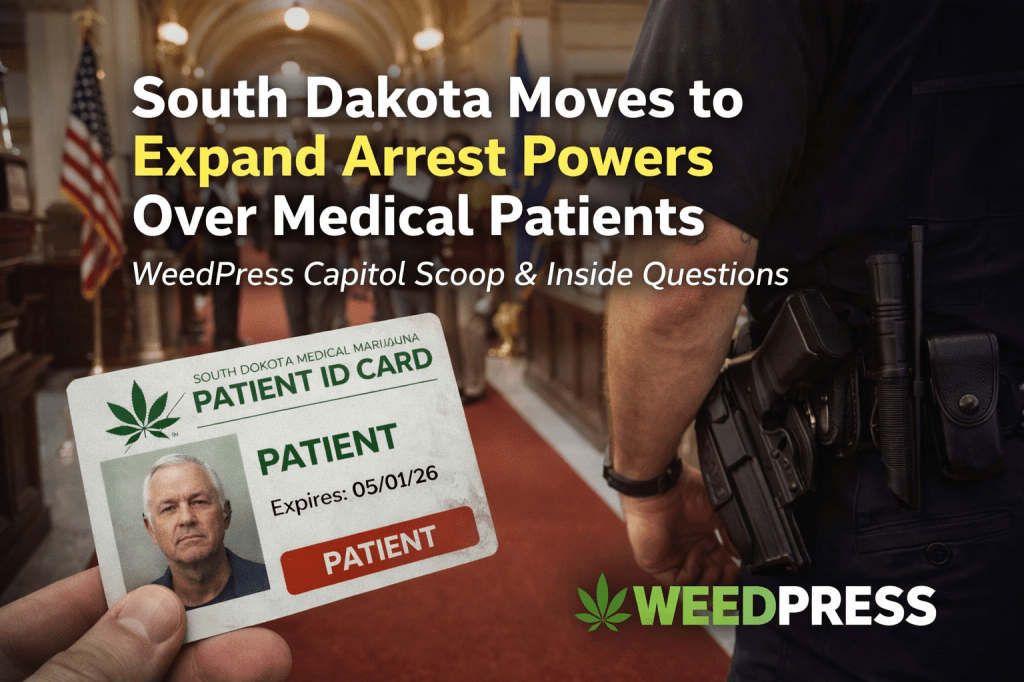
Updates From Visiting South Dakota Capitol So Far Today
From recent official remarks and events: The Supreme Court is hosting treatment court sessions at the Capitol Drug court policy and funding is a major legislative talking point Drug Court Advisory Council met Jan 27 (yesterday) This ties directly into: – Cannabis vs. criminal justice – How the state frames “treatment” vs. legalization – Budget…
-

On Independence, Accountability, and Why I Don’t Build My Work Around Approval
On Independence, Accountability, and Why I Don’t Build My Work Around Approval By Jason Karimi At 19, I ended up in a homeless shelter. Not because I committed a crime.Not because I was addicted.Not because I couldn’t work. I was there because I stood up in court for religious cannabis rights, made the front page…
-

Why WeedPress Chooses to Be a High-Heat, Contrarian Watchdog
Why WeedPress Chooses to Be a High-Heat, Contrarian Watchdog By Jason Karimi | WeedPressJanuary 24, 2026 WeedPress was not created to be polite. It was not created to echo press releases, recycle activist talking points, or play nice with institutions that have repeatedly failed cannabis patients, small operators, and civil liberties. WeedPress exists to document,…
-
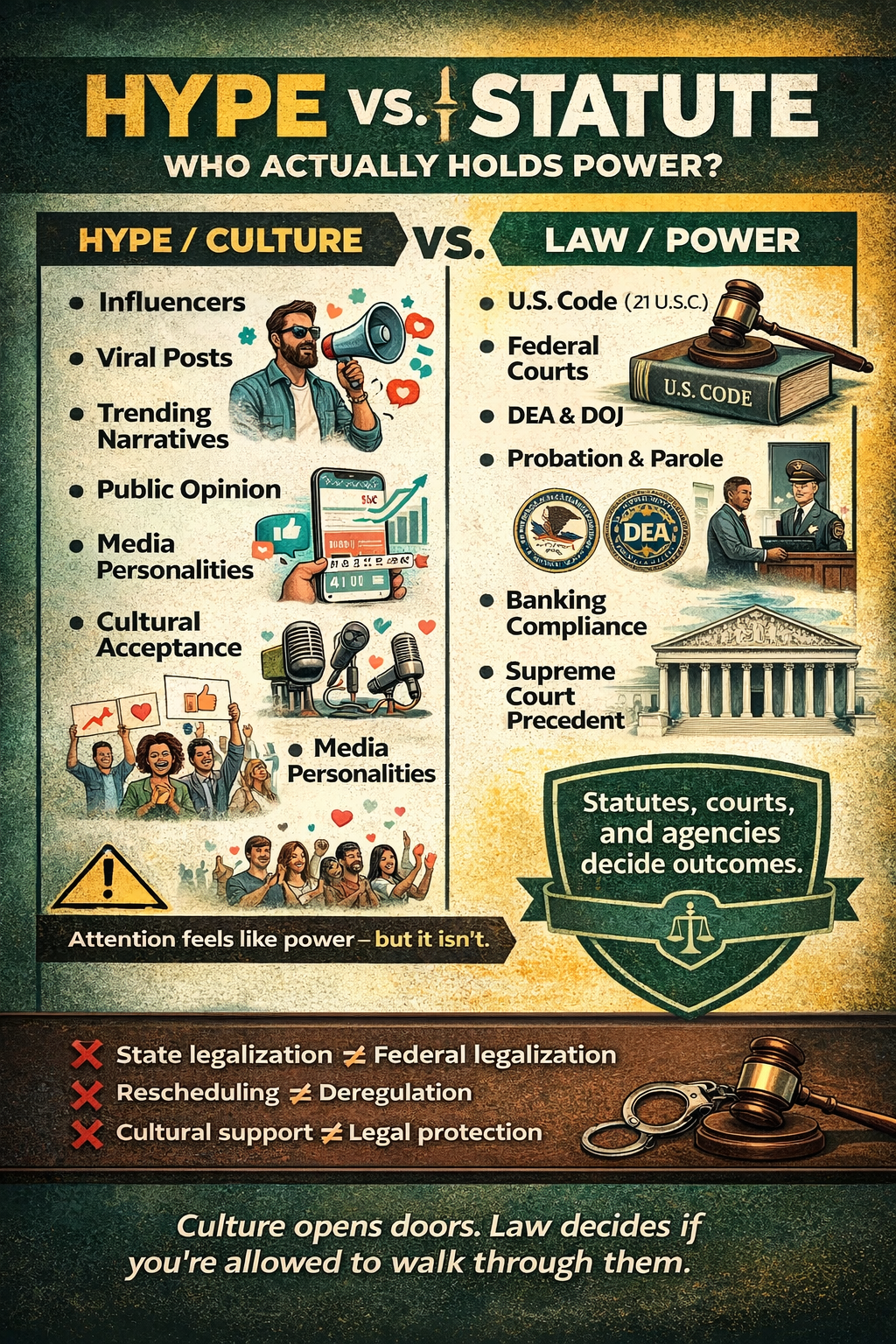
Who Actually Holds Power?
Who Actually Holds Power? Another hit master piece by Jason Karimi, WeedPress News Scroll social media for five minutes and you’ll see the same illusion repeated in different forms: whoever controls the narrative controls the system. Influencers, viral posts, cultural momentum — these are presented as the new centers of power. The message is simple:…
-
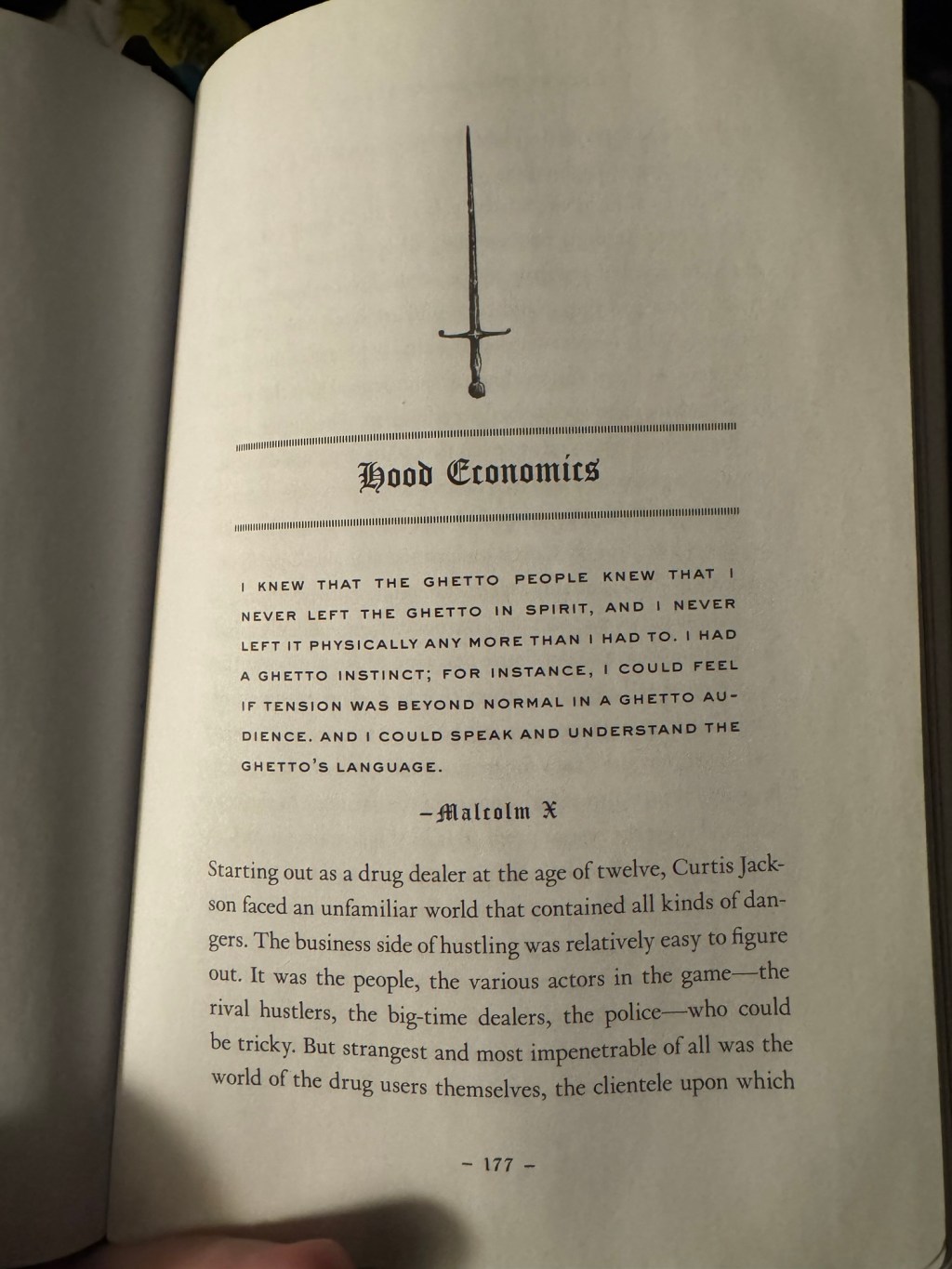
Give Them What They Want: How to Truly Connect With Your Audience
Most people think influence is about being louder, sharper, or more controversial. Chapter 7 of The 50th Law quietly destroys that myth. Its central message is simple but ruthless: Power grows when your value grows to others. That single idea changes how we understand influence, loyalty, reputation, and even conflict. If people don’t need what…
-
Truth Telling = Treason ? Thought on Fixing Propagandized Divisive Narrative Spreading
The real problem in the world today and as always is not “bad people.” It’s broken information systems. And the most effective, non-destructive way to fight that is not rage, humiliation, or ideological warfare — it’s: • calm clarity • good-faith reasoning • source literacy • pattern awareness • explaining how manipulation works • slowing…
-

How Paul Hijacked Jesus’s Message And Built Christianity
My Rasta buddy in Minneapolis used to say Paul was a test and not to fall for it…good talk from the best professor in the world.
-
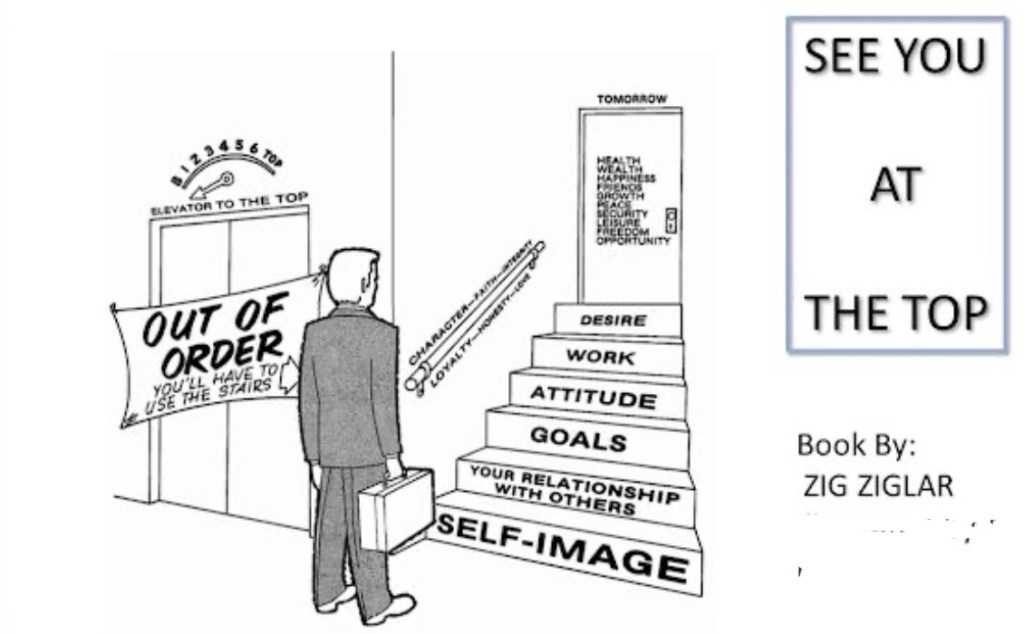
Why Success Is So Rare: Zig Ziglar’s Five Gates You Must Pass
They stab you in the backAnd they claim that you are not lookingBut Jah have them in the regionIn the valley of decision Go down back-biter, (down back-bite)Go down back-biter, (down back-bite) Now you get what you wantDo you want more? (want more)Now you get what you wantDo you want more? (want more?) – Bob…
Patient Perspectives
-
ILLEGAL: Homegrown Cannabis Remains Outside Federal Schedule III Protections — An Open Question With Real Consequences for Patients
The April 28, 2026 federal partial rescheduling order moved only two narrow categories of marijuana from Schedule I to Schedule III: certain FDA-approved products and marijuana produced under qualifying state-issued medical marijuana licenses.¹ Personal home cultivation was not included in either category. This creates a significant gap. In states that permit limited home growing for…
-
Tribal Operators Face Extra Risks Under Federal Rescheduling — And They Should Not Trust Reassuring Advice from People with Skin in the Game
Tribal operators face additional risks that many industry voices aren’t addressing. Independent analysis matters. Tribal and Indigenous cannabis operators are in a uniquely vulnerable position under the new federal Schedule III framework. They face all the same compliance burdens as other small operators — plus additional layers of jurisdictional complexity, disclosure risk, and uncertainty around…
-
June 3: Beard Bros Webinar Warns Tribal And Small Cannabis Operators Are At Risk
Check out the warnings for small operators from this webinar: Core Warnings for Small Operators 1. Compliance Costs & DEA Registration Burdens Are Real and Disproportionate • Small operators face significant new costs for legal counsel, application preparation, security upgrades, recordkeeping systems, and compliance infrastructure that many legacy businesses were never built to handle. •…
-
South Dakota Small Cannabis Operators Face a Compliance Cliff: Federal Rescheduling Likely to Drive More Closures and Force Consolidation
The collapse of recreational legalization efforts in South Dakota already triggered a wave of dispensary closures. At least eight licensed medical cannabis businesses shuttered in late 2024 and early 2025 amid falling cardholder numbers, intense price competition, and regulatory pressures.¹ “Then it was a race to the bottom on pricing,” one industry participant observed as…
-
The Private Reckoning: What Two Out-of-State Consultants Most Likely Taught South Dakota Operators Behind Closed Doors
The April 28, 2026 partial Schedule III order (91 Fed. Reg. 22714) did not merely lower marijuana’s scheduling classification.¹ It imposed a new federal compliance regime that effectively ended the low-overhead, cash-only state-only model that defined South Dakota’s medical cannabis program.² Some public voices have offered vague assurances that “we’ll figure it out” for the…
-
Anonymous Speech Online: What the Law Protects — and Where It Stops
Anonymous speech has a long American pedigree, but anonymity is not the same thing as impunity. From the founding era forward, Americans have used unsigned pamphlets, pseudonymous essays, and concealed authorship to criticize power, test arguments, and protect dissenters from retaliation.² The Supreme Court has repeatedly recognized that anonymity can be part of the freedom…
 WeedPress: The Paper Trail