Category: Law
-

Deadwood Was South Dakota’s Origin Story
Deadwood Was South Dakota’s Origin Story HBO’s western is not just about one outlaw camp. It is about the culture of theft, violated Lakota land, gold obsession, and rough power that helped shape the state By Jason Karimi | WeedPress March 26, 2026 HBO’s Deadwood is not a documentary. It is something more dangerous to…
-
Ziggy Marley’s “Racism Is A Killa” Uses Satire as a Public-Health Warning
Ziggy Marley’s “Racism Is A Killa” Uses Satire as a Public-Health Warning By Jason Karimi | WeedPress March 26, 2027 In the video for “Racism Is A Killa,” Ziggy Marley does not treat racism as a private flaw or a bad opinion. He frames it as a social sickness, and satire is the instrument that…
-
Iowa Medical Cannabis Board Hearing Friday March 27 (DETAILS)
Meeting Information: March 27, 2026 – Medical Cannabidiol Board Beginning at 10:00am on Friday, March 27 the first Medical Cannabidiol Board meeting of 2026 will be held virtually using the information below: * For those who wish to participate in the public comment period virtually, please send an email to medical.cannabis@hhs.iowa.gov expressing your interest. You will use the zoom or…
-
No. 14 – The South Dakota Controlled Substances Act: Legislative Architecture, Intent, and Institutional Design in a Potential Federal Rescheduling Context
The South Dakota Controlled Substances Act: Legislative Architecture, Intent, and Institutional Design in a Potential Federal Rescheduling Context By Jason Karimi | WeedPress Policy Series No 14 March 24, 2026 I. Introduction As previewed in WeedPress White Paper No. 1, South Dakota adopted its Controlled Substances Act (“CSA”) in 1970 as part of a broader…
-
RFRA: A Case Law Survey
These RFRA cases show the recurring doctrinal questions courts ask: substantial burden, exhaustion, factual specificity, and whether courts—not agencies alone—may recognize exceptions. Oklevueha Native Am. Church of Haw., Inc. v. Lynch, 828 F.3d 1012, 1016–17 (9th Cir. 2016) (“RFRA itself provides no explicit definition of ‘substantial burden.’ However, we have held that the meaning of…
-
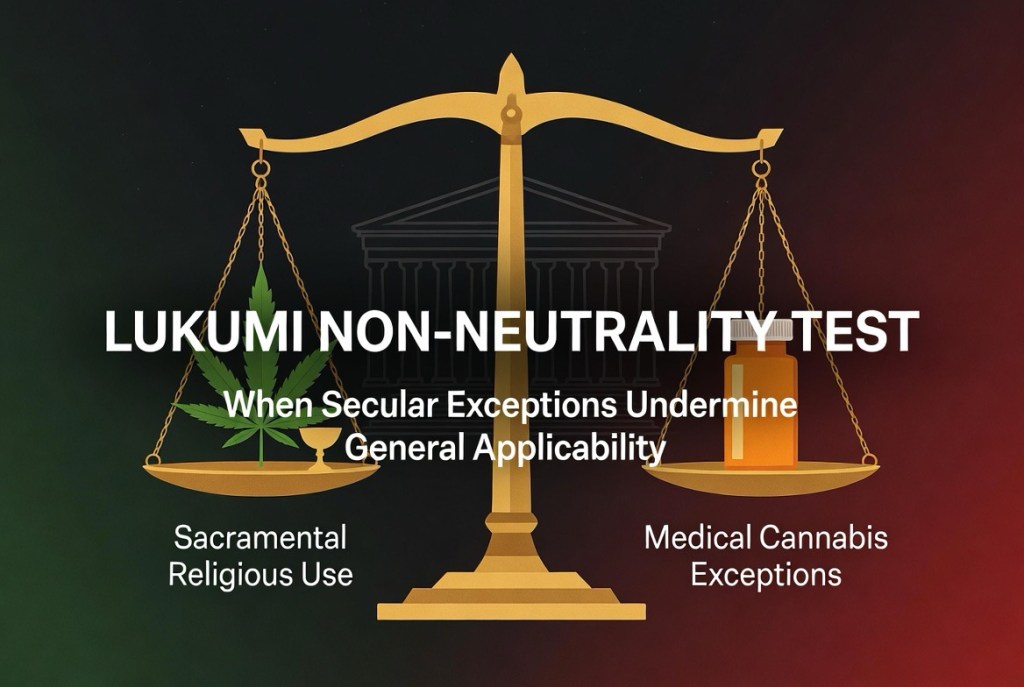
Why Medical Cannabis Programs Usually Don’t Trigger Lukumi Strict Scrutiny
Why Medical Cannabis Programs Usually Don’t Trigger Lukumi Strict Scrutiny Why take a detour to get to strict scrutiny when you don’t need to? State RFRA may be inferior to a world where Smith is overruled, but in actual cannabis litigation it is usually superior to relying on Smith exceptions alone. By Jason Karimi |…
-
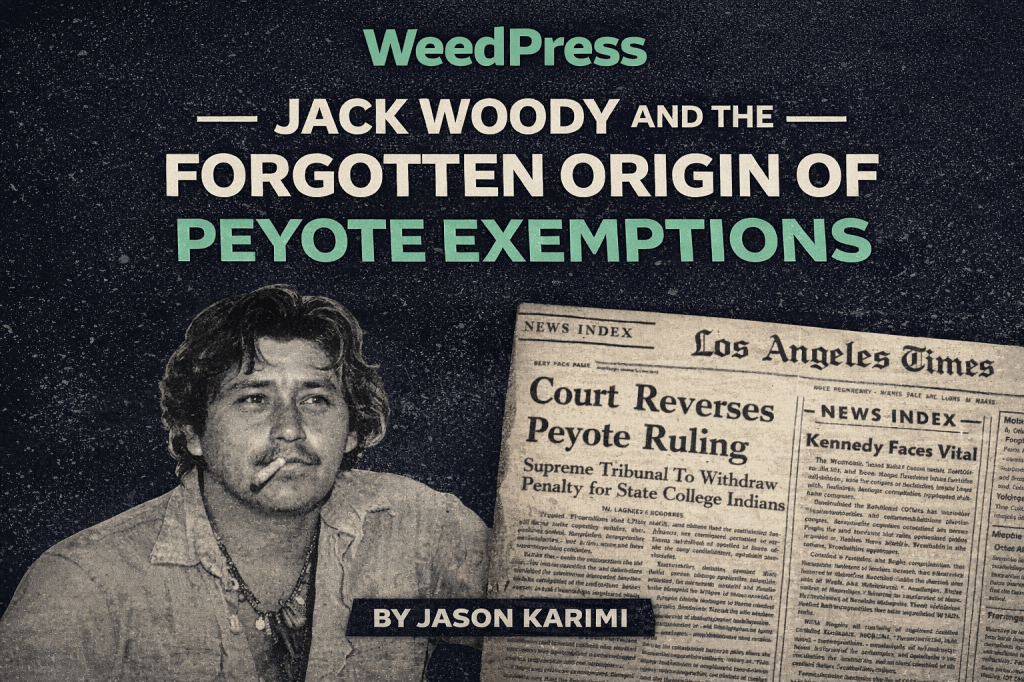
Jack Woody and the Forgotten Origin of Peyote Exemptions
Jack Woody and the Forgotten Origin of Peyote Exemptions By Jason Karimi | WeedPress March 23, 2026 Before peyote exemptions were narrowed into modern statutory categories, the issue was simpler: people were being prosecuted for practicing their religion. That is what People v. Woody was about. In 1964, the California Supreme Court reversed peyote convictions…
-
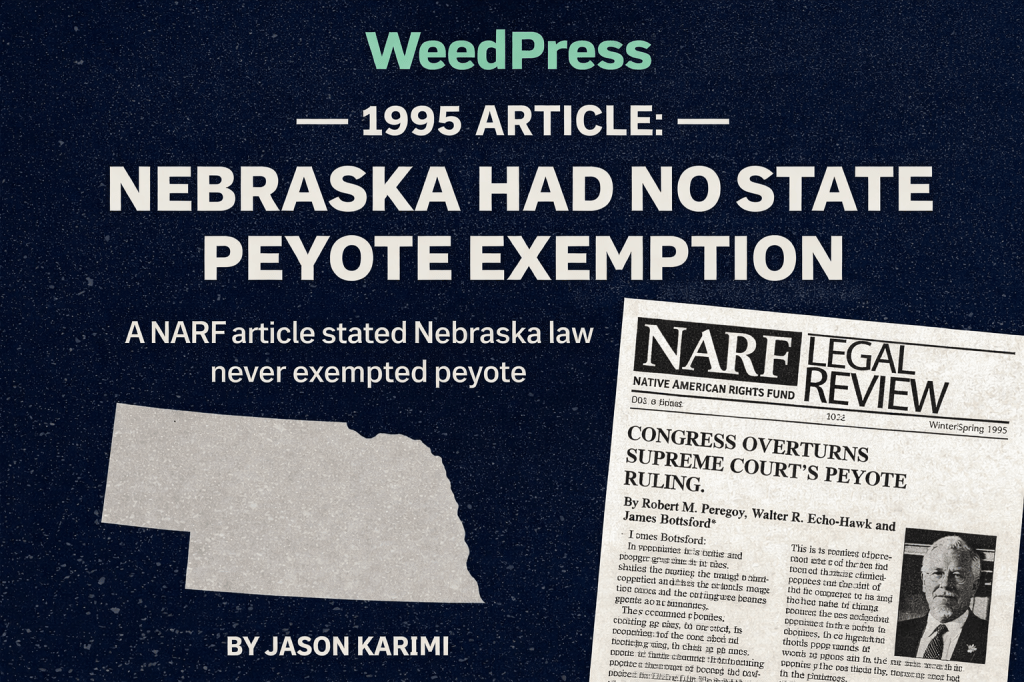
1995 Article: Nebraska Had No State Peyote Exemption
1995 Article: Nebraska Had No State Peyote Exemption By Jason Karimi | WeedPress March 23, 2026 A 1995 NARF Legal Review article states it plainly: “Nebraska state law never provided an exemption for the religious use of peyote by Indians.” The article explains that this created a practical problem in Nebraska. Native American Church members…
-
The Real Tactical Choice in Religious-Cannabis Litigation: RFRA or Section 1983?
The Real Tactical Choice in Religious-Cannabis Litigation: RFRA or Section 1983? A major strategic question is emerging in religious-cannabis litigation, and it is bigger than any one state. If a Rastafarian plaintiff is challenging marijuana restrictions as applied to religious use, what is the best vehicle: a state Religious Freedom Restoration Act, or 42 U.S.C.…
-
Today’s Probation Meeting Matters More Than It Looks
Today’s Probation Meeting Matters More Than It Looks Today’s meeting with probation may end up being one of the most important timeline entries in this entire case. At the meeting, my probation officer indicated that he had been planning to administer a UA. But once the pending religious evidentiary hearing was part of the picture,…
-
South Dakota DOH Avoids the Merits on Cannabis Scheduling, Hides Behind Procedure
South Dakota DOH Avoids the Merits on Cannabis Scheduling, Hides Behind Procedure The Department of Health did not defend cannabis Schedule I status on the merits. It said Jason Karimi used the wrong procedural vehicle, declined to resolve the statutory conflict, and left the core contradiction untouched. By Jason Karimi | WeedPress March 19, 2026…
-
Cannabis Federalism After Medical Recognition
Cannabis Federalism After Medical Recognition Administrative Record, Rational Basis, and Vertical Separation of Powers Jason KarimiWeedPress White Paper No. 1March 17 2026 ⸻ Executive Summary Federal acknowledgment that cannabis has “currently accepted medical use” under the Controlled Substances Act (“CSA”) would not merely reclassify a substance. It would recalibrate the constitutional and evidentiary framework within…
-
United States v. Valrey: Federal Probation Exemption Granted For Marijuana Use
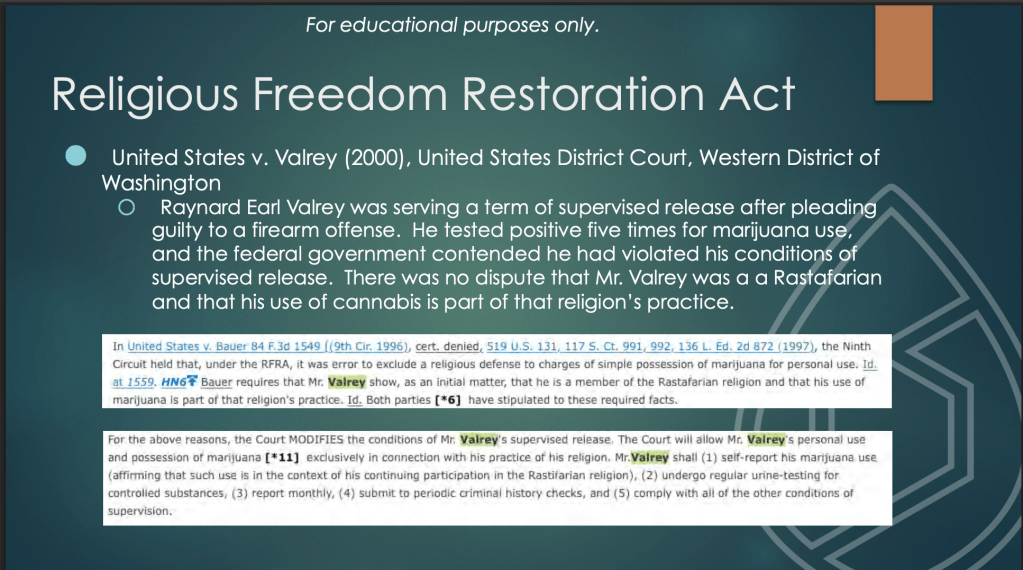
United States v. Valrey (sometimes spelled Valery or Vairey in references, but most commonly cited as Valrey), decided on February 22, 2000, by the U.S. District Court for the Western District of Washington (case number CR96-549Z or similar). It’s an unpublished district court opinion (2000 WL 692647), meaning it’s not in the official Federal Reporter…
-
Nebraska Voters Approved Medical Cannabis. Now Protect the Doctors Who Make It Possible
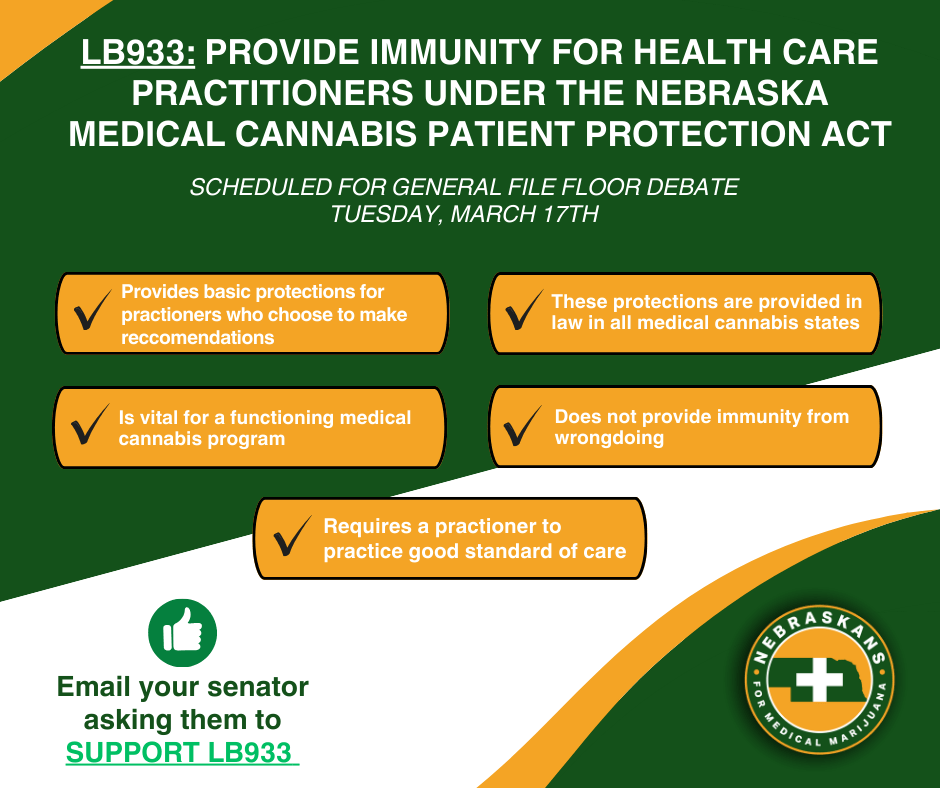
Nebraska Voters Approved Medical Cannabis. Now Protect the Doctors Who Make It Possible Nebraska voters spoke when they approved medical cannabis. But a medical program cannot exist without doctors willing to recommend it. Right now, Nebraska law does not provide basic protections for physicians who choose to recommend cannabis to their patients. That means doctors…
-
No. 13 — Criminal Prosecution After Federal Medical Recognition: Motions Practice, Rational Basis, and Schedule I Litigation Exposure
No. 13 — Criminal Prosecution After Federal Medical Recognition: Motions Practice, Rational Basis, and Schedule I Litigation Exposure By Jason Karimi | WeedPress Policy Series No. 13 | March 10, 2026 ⸻ Abstract Federal rescheduling of cannabis based on a determination of “currently accepted medical use” alters not only regulatory classifications but also the litigation…
-
Why Formal Process Matters in Cannabis Reform: My South Dakota DOH Petition
Why Formal Process Matters in Cannabis Reform: My South Dakota DOH Petition By Jason Karimi | WeedPress March 8, 2026 When I filed my petition with the South Dakota Department of Health, I already knew some people would hate it. Not because it was sloppy. Not because it was unserious. Not because it lacked legal…
-
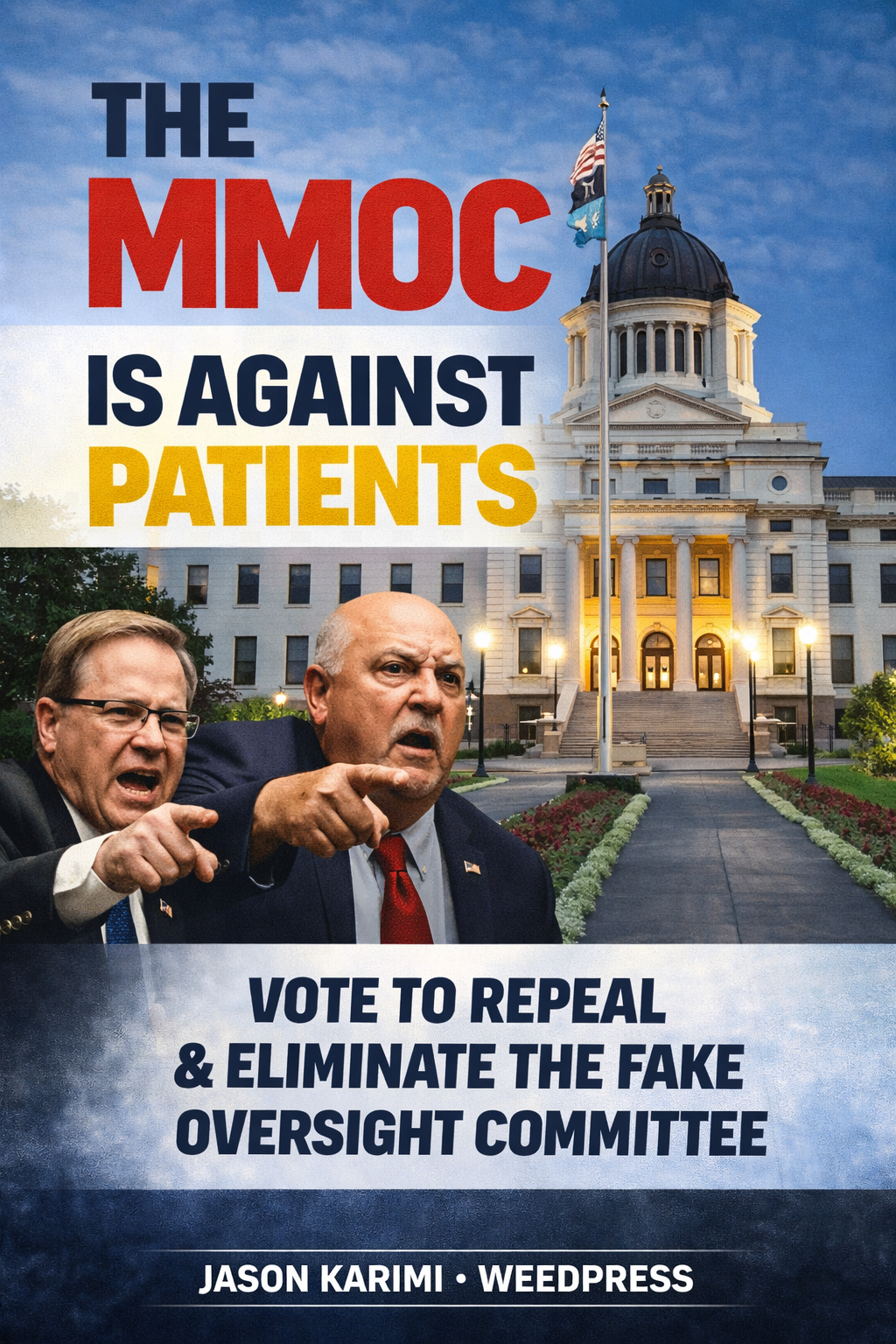
Kill the MMOC: South Dakota Should Stop Protecting a Failed Anti-Patient Committee
HB 1160 Should Pass: The MMOC Lost Any Claim to Speak for Patients By Jason Karimi | WeedPress March 7, 2026 South Dakota’s Medical Marijuana Oversight Committee should be repealed, and the Senate should stop dragging out the inevitable. HB 1160—the bill to repeal the MMOC—was smoked out of committee and forced back onto the…
-
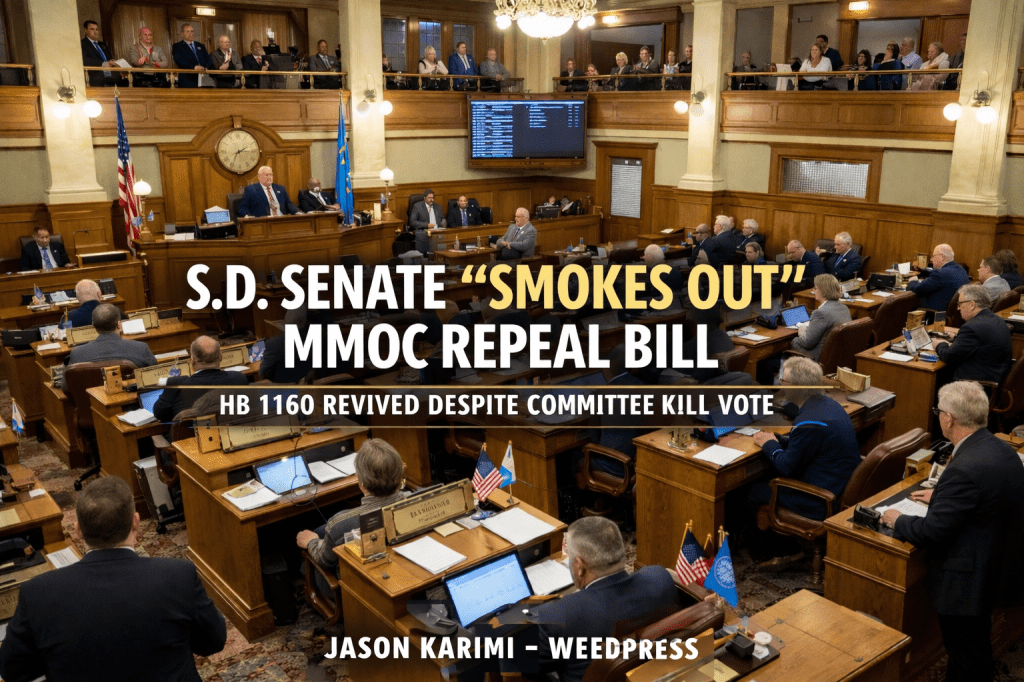
South Dakota Senate Uses “Smoke-Out” Procedure to Revive MMOC Repeal Bill
South Dakota Senate Uses “Smoke-Out” Procedure to Revive MMOC Repeal Bill By Jason Karimi | WeedPress March 6, 2026 In a procedural move that underscores how legislative strategy can override committee decisions, the South Dakota Senate has revived HB 1160, the bill that would eliminate the state’s Medical Marijuana Oversight Committee (MMOC). Just one day…
-

Iowa Moves to Give Medical Cannabis Operators State Tax Relief Under HSB 687
Iowa Moves to Give Medical Cannabis Operators State Tax Relief Under HSB 687 By Jason Karimi | WeedPress March 6, 2026 Iowa lawmakers have introduced House Study Bill 687, a tax measure that would let licensed medical cannabis manufacturers and dispensaries deduct ordinary business expenses on their Iowa tax returns even though those same deductions…
-
No. 12 – Federal Rescheduling as a Preemption Trigger — How Acknowledged Medical Use Constrains State Schedule I Enforcement
Federal Rescheduling as a Preemption Trigger — How Acknowledged Medical Use Constrains State Schedule I Enforcement By Jason Karimi | WeedPress | March 6, 2026 ⸻ Abstract Federal cannabis rescheduling premised on a finding of “currently accepted medical use” carries implications beyond regulatory reclassification. This Article argues that formal federal acknowledgment of medical legitimacy materially…
-
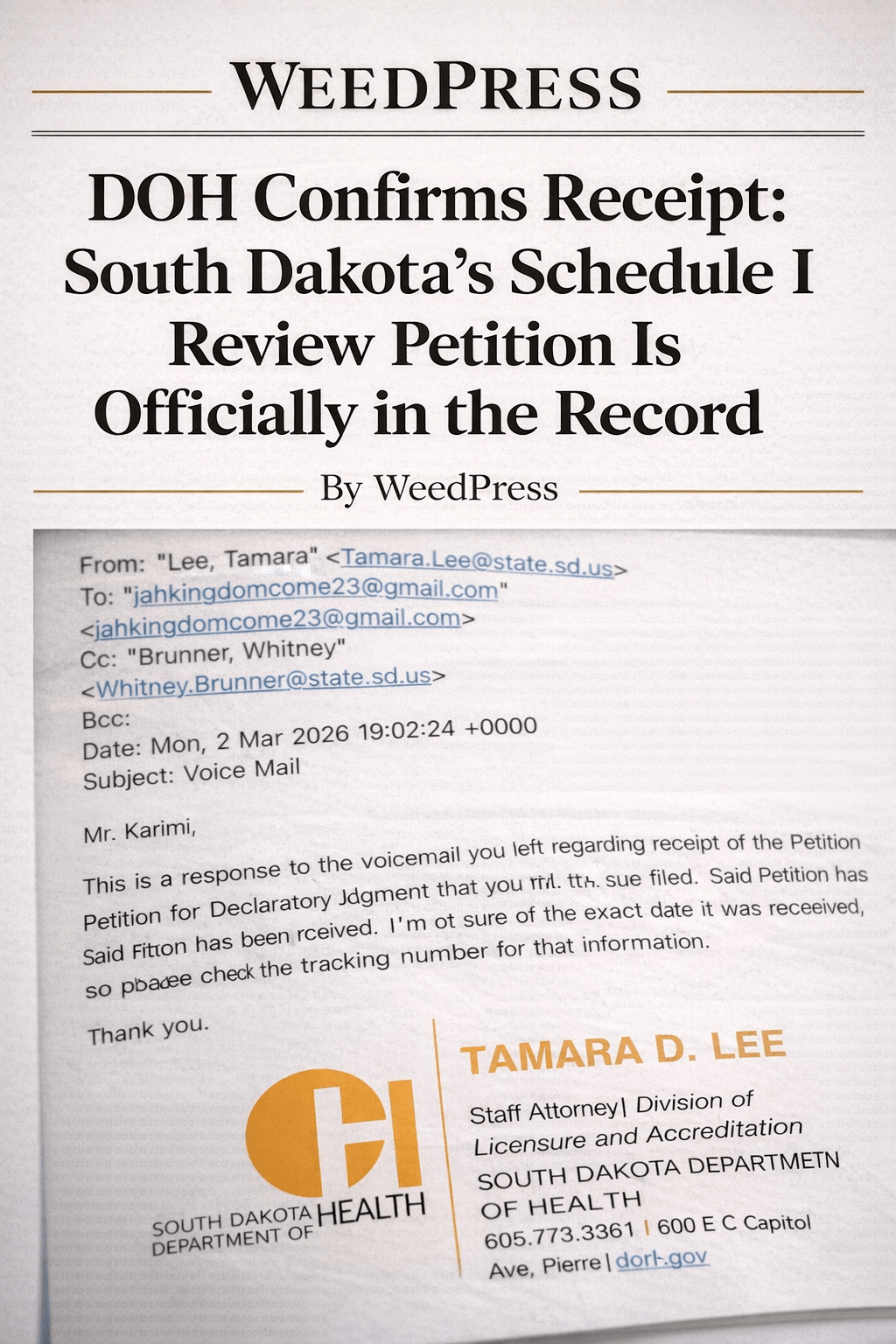
DOH Confirms Receipt: South Dakota’s Schedule I Review Petition Is Officially in the Record
DOH Confirms Receipt: South Dakota’s Schedule I Review Petition Is Officially in the Record By Jason Karimi | WeedPress March 5, 2026 Previously on WeedPress: The South Dakota Department of Health has now confirmed it received my Petition for Declaratory Judgment and Mandatory Scheduling Review of Cannabis. This matters for one reason: it removes any…
-
South Dakota Tried to Cap Cannabis Patient Care: Inside the Senate Rebuttal That Exposed SB 194
South Dakota Tried to Cap Cannabis Patient Care: Inside the Senate Rebuttal That Exposed SB 194 By Jason Karimi | WeedPress March 4, 2026 During the South Dakota Senate Health and Human Services Committee hearing on SB 194—the bill to impose THC potency caps on medical cannabis products—Sen. John Carley used an unusual rebuttal tactic:…
-
Don’t Punish Patients for Federal Uncertainty: My Testimony Opposing SB 181
Don’t Punish Patients for Federal Uncertainty: My Testimony Opposing SB 181 By Jason Karimi | WeedPress March 6, 2026 Video record: https://youtu.be/3u0VY7OIvlI South Dakota Senate Health & Human Services Committee — February 11, 2026 On February 11, 2026, I spoke twice to the South Dakota Senate Health & Human Services Committee to oppose two bills…
-
No. 11 – Equal Protection and Economic Protectionism in Cannabis Licensing: Classification, Remedial Design, and Constitutional Limits
Equal Protection and Economic Protectionism in Cannabis Licensing: Classification, Remedial Design, and Constitutional Limits By Jason Karimi | WeedPress Policy Series No. 11March 3 2026 The prior essays examined how cannabis rescheduling may trigger Dormant Commerce Clause challenges and Supremacy Clause preemption disputes. But constitutional scrutiny does not arise only from interstate commerce or federal…
-
-
Incentives, Not Intentions: How Legislative Behavior Actually Changes
Incentives, Not Intentions: How Legislative Behavior Actually Changes By Jason Karimi | WeedPress March 2, 2026 Political movements often misread opposition. They assume legislation advances because lawmakers are hostile, ideological, or morally opposed. Sometimes that is true. More often, legislative behavior is shaped by incentives — not intentions. ⸻ A thousand angry emails do not…
-
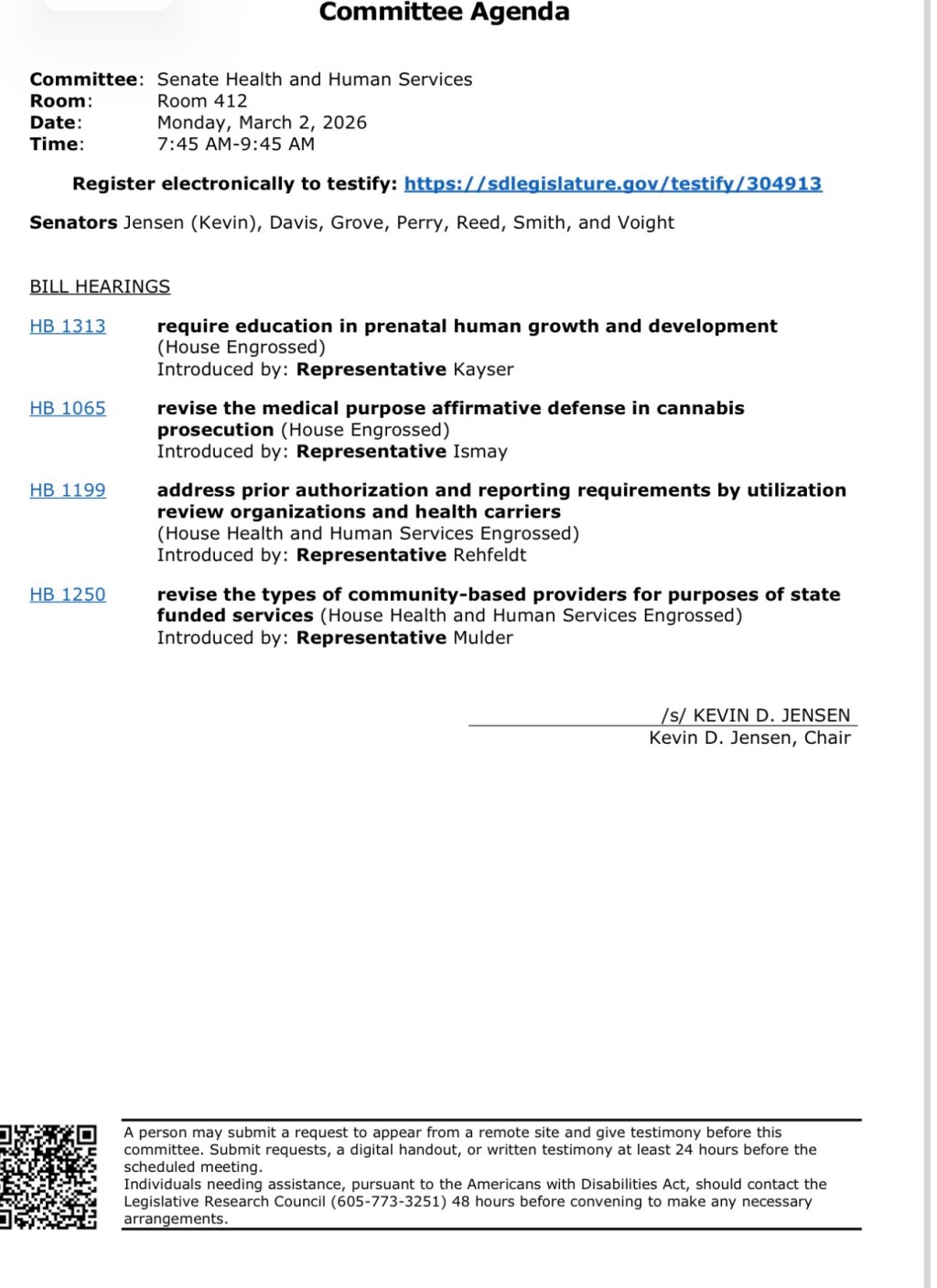
South Dakota Hearing on HB 1065: Medical Cannabis “Affirmative Defense” Change — 7:45 a.m. Monday (Capitol Room 412)
South Dakota Hearing on HB 1065: Medical Cannabis “Affirmative Defense” Change — 7:45 a.m. Monday (Capitol Room 412) By Jason Karimi | WeedPress March 2 2026 Public comment is welcome. The Senate Health & Human Services Committee meets Monday, March 2, 2026, at 7:45 a.m. in Capitol Room 412, and HB 1065 (revising the medical-purpose…
-
No. 10 — Federal Preemption After Rescheduling: Conflict, Obstacle, and Cannabis Federalism
No. 10 — Federal Preemption After Rescheduling: Conflict, Obstacle, and Cannabis Federalism If federal enforcement priorities shift while federal prohibition remains intact, courts will increasingly confront whether the CSA preempts state licensing structures that depend on continued federal forbearance. Whether state laws are argued as exemptions to new and changing federal CSA directives will likely…
-
South Dakota’s MMOC Board Is Political Theatre And Needs Disbanded
South Dakota’s MMOC Board Is Political Theatre And Needs Disbanded By Jason Karimi | WeedPress February 24, 2026 South Dakota’s Medical Marijuana Oversight Committee (MMOC) has always looked more serious on paper than it has been in practice. Now the House has voted 41–26 to move HB 1160, the bill that would repeal it, and…
-
No. 9 – Dormant Commerce Clause, Preemption, and Cannabis Rescheduling
Dormant Commerce Clause, Preemption, and Cannabis Rescheduling By Jason Karimi | WeedPress Policy Series No. 9February 2026 The prior essays examined how modern administrative law constrains federal cannabis reform through doctrines of delegation, deference, and procedural review. If marijuana is rescheduled under the Controlled Substances Act (CSA), however, a different constitutional doctrine may move to…
-
South Dakota’s Schedule I Problem Is Now in the Administrative Record
South Dakota’s Schedule I Problem Is Now in the Administrative Record By Jason Karimi | WeedPress February 23, 2026 Today, a formal Petition for Declaratory Ruling and Mandatory Scheduling Review of Cannabis was submitted to the South Dakota Department of Health under SDCL § 1-26-13, requesting review of marijuana’s continued placement in Schedule I. I…
-
South Dakota’s Cannabis Scheduling Petition Process Does Not Mirror Federal Law — But It Is Still a Formal Process
South Dakota’s Cannabis Scheduling Petition Process Does Not Mirror Federal Law — But It Is Still a Formal Process By Jason Karimi | WeedPress February 21, 2026 A common objection to South Dakota cannabis scheduling petitions is that the state controlled substances chapter does not contain a federal-style petition clause. That objection is partly correct.…
-
No. 8 – Administrative Procedure Act Vulnerabilities in DEA Rescheduling
Administrative Procedure Act Vulnerabilities in DEA Rescheduling By Jason Karimi | WeedPress Policy Series No. 8February 20 2026 The prior essays examined how the Major Questions Doctrine and the collapse of Chevron deference reshape judicial review of agency action. If the Drug Enforcement Administration (DEA) undertakes significant rescheduling under the Controlled Substances Act (CSA), the…
-
The South Dakota DOH Already Has a Declaratory Ruling Process — Here’s the Form
The DOH Already Has a Declaratory Ruling Process — Here’s the Form By Jason Karimi | WeedPress February 19, 2026 Most activists assume state agencies can ignore legal questions unless a lawsuit forces the issue. That assumption is wrong. This is a general procedural note: South Dakota’s Department of Health already has a formal, on-the-books…
-
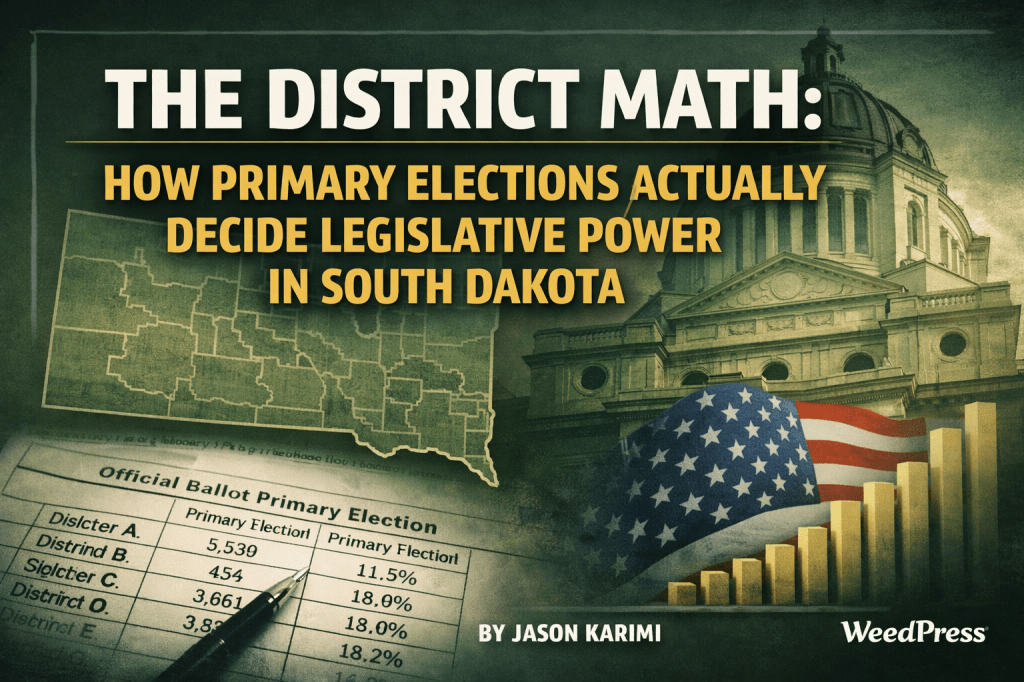
The District Math: How Primary Elections Actually Decide Legislative Power in South Dakota
The District Math: How Primary Elections Actually Decide Legislative Power in South Dakota By Jason Karimi | WeedPress February 23, 2026 If HB 1065 was a diagnostic, district math is the operating manual. Political influence in South Dakota is not determined by statewide sentiment alone. It is determined district by district — often by a…
-
Medical Cannabis in South Dakota Has Entered a Political Vulnerability Phase
Medical Cannabis in South Dakota Has Entered a Political Vulnerability Phase By Jason Karimi | WeedPress February 18, 2026 After passing the House 53–13 on February 17 and receiving its first reading in the Senate on February 18, HB 1065, which rolls back medical cannabis protections in South Dakota, has already done more than advance procedurally. It has…
-
No. 7 – Chevron’s Collapse and Cannabis Regulation: Judicial Review After Loper Bright
Chevron’s Collapse and Cannabis Regulation: Judicial Review After Loper Bright By Jason Karimi | WeedPress Policy Series No. 7February 2026 The prior essay examined how the Major Questions Doctrine shapes judicial scrutiny when agencies assert power over issues of vast economic or political significance. But another doctrinal shift may prove even more consequential for cannabis…
-
From Diagnosis to Discipline: Building Primary Leverage in South Dakota’s Medical Cannabis Politics
From Diagnosis to Discipline: Building Primary Leverage in South Dakota’s Medical Cannabis Politics By Jason Karimi | WeedPress February 16, 2026 HB 1065 advancing is a test for the medical cannabis movement in South Dakota. If a restriction bill can clear committee 8–3 and advance toward the House floor with minimal electoral anxiety, the movement…
-
The RFRA Trap: Litigation Sequencing and the Structural Limits of State Religious Freedom Claims in Drug Law
The RFRA Trap: Litigation Sequencing and the Structural Limits of State Religious Freedom Claims in Drug Law Why arguing state RFRA before federal constitutional claims can foreclose Supreme Court review — and how litigation order determines survival. By Jason Karimi | WeedPress February 15, 2026 State Religious Freedom Restoration Acts are often treated as constitutional…
-
WeedPress Is Mapping the Battlefield While Others Debate the Map
WeedPress Is Mapping the Battlefield While Others Debate the Map WeedPress Policy SeriesBy Jason Karimi ⸻ There are two kinds of publications in contentious policy environments. Some debate what the terrain should look like. Others study what the terrain actually is. WeedPress was built to do the second. While many cannabis commentators remain focused on…
-
HB 1065 Heads to the Floor: The Primary Gap in South Dakota’s Medical Cannabis Politics
HB 1065 Heads to the Floor: The Primary Gap in South Dakota’s Medical Cannabis Politics As restriction legislation advances, the absence of effectively deterrent electoral pressure reveals a leverage problem within the state’s cannabis movement. As House Bill 1065 advances to the South Dakota House floor, the moment calls for structural reflection rather than rhetorical…
-

Discipline Forged Under Scrutiny: Why the Hard Path Produces the Most Careful Lawyers
Discipline Forged Under Scrutiny: Why the Hard Path Produces the Most Careful Lawyers By Jason Karimi | WeedPress | February 14th, 2026 ⸻ Some of the most disciplined lawyers are not the ones who glide through clean transcripts and uninterrupted résumés. They are the ones who had to fight to be admitted. They understand that…
-
No. 6 – The Major Questions Doctrine and Cannabis Reform: Delegation, Scale, and Judicial Review
The Major Questions Doctrine and Cannabis Reform: Delegation, Scale, and Judicial Review By Jason Karimi | WeedPress Policy Series No. 6 February 14, 2026 The prior essays examined the Controlled Substances Act (CSA) as a regulatory architecture containing delegated exception authority and then clarified the limits of that delegation under 21 U.S.C. §…
-
No. 5 – The Limits of § 822(d): What It Does — and Does Not — Authorize
The Limits of § 822(d): What It Does — and Does Not — Authorize By Jason Karimi | WeedPress Policy Series #5 February 13, 2026 The prior essay argued that the Controlled Substances Act (CSA) is not a blunt prohibition instrument, but a regulatory architecture containing delegated exception authority. That structural claim warrants clarification. This…
-
No. 4 – The Controlled Substances Act Is Not a Blunt Instrument — It Is an Architecture of Exceptions
The Controlled Substances Act Is Not a Blunt Instrument — It Is an Architecture of Exceptions By Jason Karimi | WeedPress Policy Series #4| February 13, 2026 A recent Harvard Law Review–discussed argument (as reviewed in Drug Scheduling Is Institutional Design — And That Changes Everything) suggests the Controlled Substances Act (CSA) is structurally imperfect…
-
What Federal Cannabis Rescheduling Means for South Dakota — And the Conversation Still Ahead
What Federal Cannabis Rescheduling Means for South Dakota — And the Conversation Still Ahead By Jason Karimi | WeedPress | February 2026 Editor’s Note: WeedPress views Emmett Reistroffer as a good-faith contributor to South Dakota’s cannabis policy discussion. This article is not intended as a critique of his analysis, but as an extension of the…
-
Why I No Longer Testify at Most Hearings
Why I No Longer Testify at Most Hearings Seventeen Years, Four Bills Passed, and Managing Campaigns and Staff Have Taught Me Institutional Architecture Is Not a Two-Minute Topic By Jason Karimi | WeedPress | February 12, 2026 This week’s attempt to repeal South Dakota’s medical cannabis laws leaned on ignorance of the federal architecture and…
-
Call for Prosecutions Raises Concerns About Politicization
Call for Prosecutions Raises Concerns About Politicization When criminal law becomes a first-resort response to disagreement, institutional trust is at risk By Jason Karimi | WeedPress | January 17, 2026. In recent weeks, prominent progressive commentators have openly discussed the need for criminal accountability for political opponents. On a podcast appearance with CNN’s Jim Acosta,…
-
Drug Scheduling Is Institutional Design — And That Changes Everything
Drug Scheduling Is Institutional Design — And That Changes Everything By Jason Karimi | WeedPress | Feb 10, 2026 In Volume 139 of the Harvard Law Review (p. 849), Matthew B. Lawrence and David E. Pozen published a piece that should be required reading for anyone serious about cannabis reform: “Drug Scheduling as Institutional Design.”…
-
South Dakota Testimony in Opposition to SB 181 and SB 194: When Federal Law Is Misunderstood in State Policy
Committee AgendaCommittee: Senate Health and Human ServicesRoom: Room 412Date: Wednesday, February 11, 2026Time: 7:45 AM-9:45 AMRegister electronically to testify: https://sdlegislature.gov/testify/301839 Senators Jensen (Kevin), Davis, Grove, Perry, Reed, Smith, and Voight BILL HEARINGSSB 181 cause the repeal of the medical cannabis chapter upon the federal re-scheduling of cannabis (Introduced)Introduced by: Senator Carley SB 194 limit the…
-
When Public Criticism Is Miscast as Harassment
When Public Criticism Is Miscast as Harassment By Jason Karimi | WeedPress | February 10, 2026 Under South Dakota law, a protection order requires evidence of harassment or threats causing reasonable fear of harm — not mere criticism. Today, a South Dakota court dismissed—again—a temporary protection order petition filed against me by Melissa Mentell. It…
-
Masterpiece Cakeshop (2018): Government Hostility Toward Religion Triggers Constitutional Scrutiny
Masterpiece Cakeshop (2018): Government Hostility Toward Religion Triggers Constitutional Scrutiny Neutrality Is a Constitutional Requirement, Not a Courtesy. Masterpiece reinforces that neutrality must be operational, not just facial. By Jason Karimi | WeedPress | February 8, 2026 Key holding language from Justice Kennedy’s majority opinion: “The Commission’s hostility was inconsistent with the First Amendment’s guarantee…
-

Schedule 3 Opened. The Record Was Ready With WeedPress.
Schedule 3 Opened. The Record Was Ready With WeedPress. By Jason Karimi | WeedPress | February 7, 2026 Seventeen years of structural analysis produced elite level policy and statutory analysis in 169 published long form articles over the past 90 days when federal cannabis rescheduling reached procedural ripeness under the CSA and APA. And that…
-
No. 3 – Structural Contradictions and Prospective Litigation Risk in Post-Rescheduling Cannabis Policy
Structural Contradictions and Litigation Exposure in Post-Rescheduling Cannabis Policy By Jason Karimi | WeedPress Policy Series No. 3 February 6, 2026 ⸻ I. Executive Summary Federal rescheduling of cannabis under the Controlled Substances Act (“CSA”) alters classification but does not eliminate structural tension between federal authority and state regulatory regimes.¹ Reclassification under 21 U.S.C. §…
-
No. 2 – The Path to a Religious Cannabis Exemption: Why Medical Cannabis Systems Change the RFRA Equation
The Path to a Religious Cannabis Exemption: Why Medical Cannabis Systems Change the RFRA Equation By Jason Karimi | WeedPress Policy Series No. 2 January 27, 2026 For decades, U.S. courts have uniformly rejected claims that marijuana is protected as a religious sacrament under the First Amendment or the Religious Freedom Restoration Act (RFRA). Ethiopian…
-
No. 1 – Legal Memorandum: Common Misconceptions in Cannabis Activism Regarding Federal Drug Law
Legal Memorandum: Common Misconceptions in Cannabis Activism Regarding Federal Drug Law Jason KarimiWeedpress | January 2026 Executive Summary Public discourse surrounding cannabis reform continues to reflect widespread misunderstanding of federal drug law. In particular, cannabis advocacy frequently conflates administrative scheduling changes with legalization, underestimates the role of international treaty obligations, and overlooks existing statutory mechanisms…
-

How Federal Cannabis Rescheduling Is Being Mischaracterized in South Dakota Media Coverage
How Federal Cannabis Rescheduling Is Being Mischaracterized in South Dakota Media Coverage Federal cannabis rescheduling is not symbolism, and it does not work the way activists and local media keep claiming. South Dakota news coverage of federal cannabis rescheduling has become a feedback loop of activist talking points, repeated by reporters who never stop to…
-
A New Legal Standard Emerges: How HHS’s Two-Part Test Is Reshaping DEA Drug Scheduling
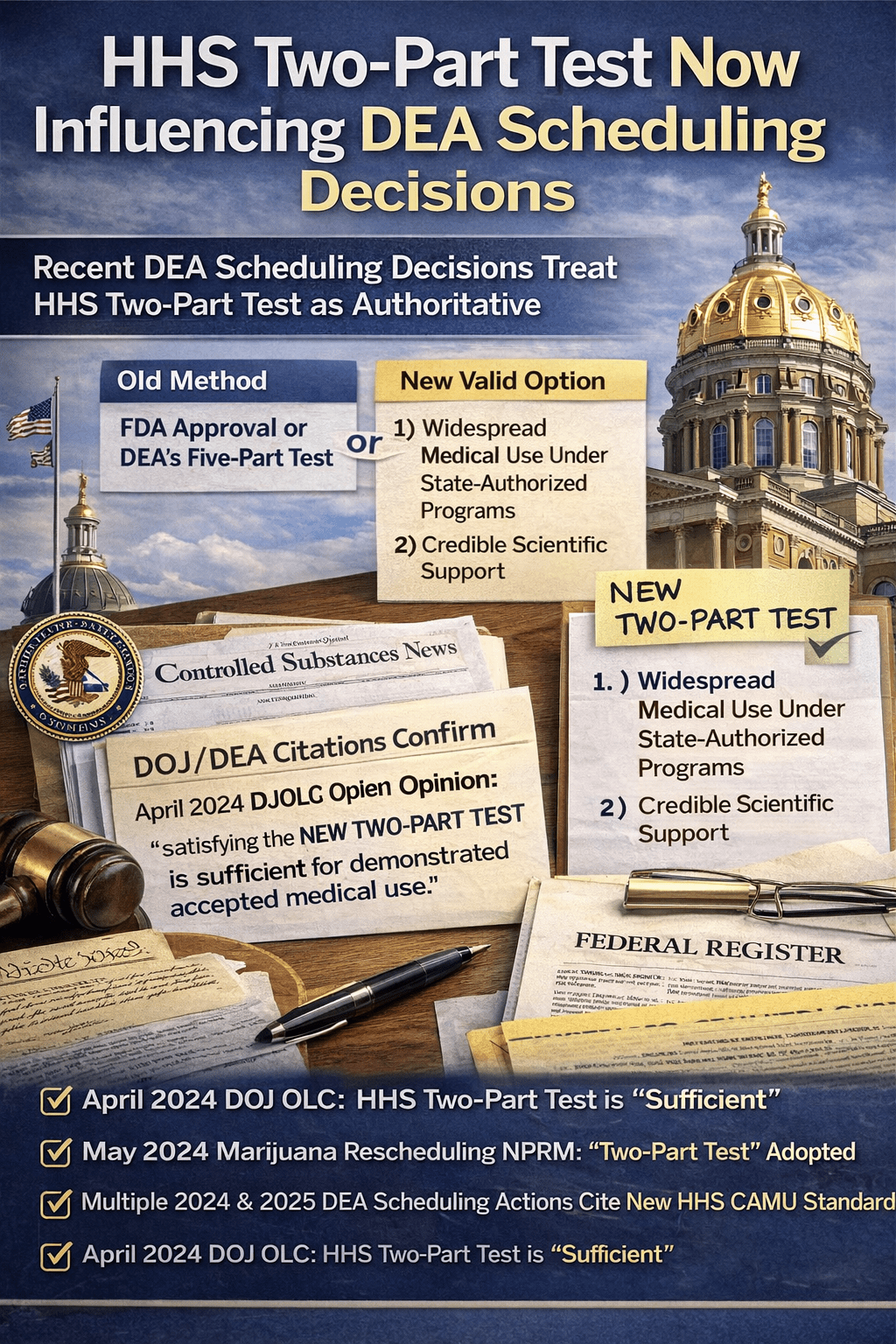
Why the HHS Two-Part Test Is Now Influencing DEA Scheduling Decisions By Jason Karimi The Controlled Substances Act (CSA) has long required that a drug must have a “currently accepted medical use in treatment in the United States” before it can be placed outside of Schedule I. For decades, that determination was interpreted by the…
-
South Dakota Leaves Medical Marijuana Patients as Federal Criminals: Lawsuit Being Filed Over Refusal to Seek Federal Exemption
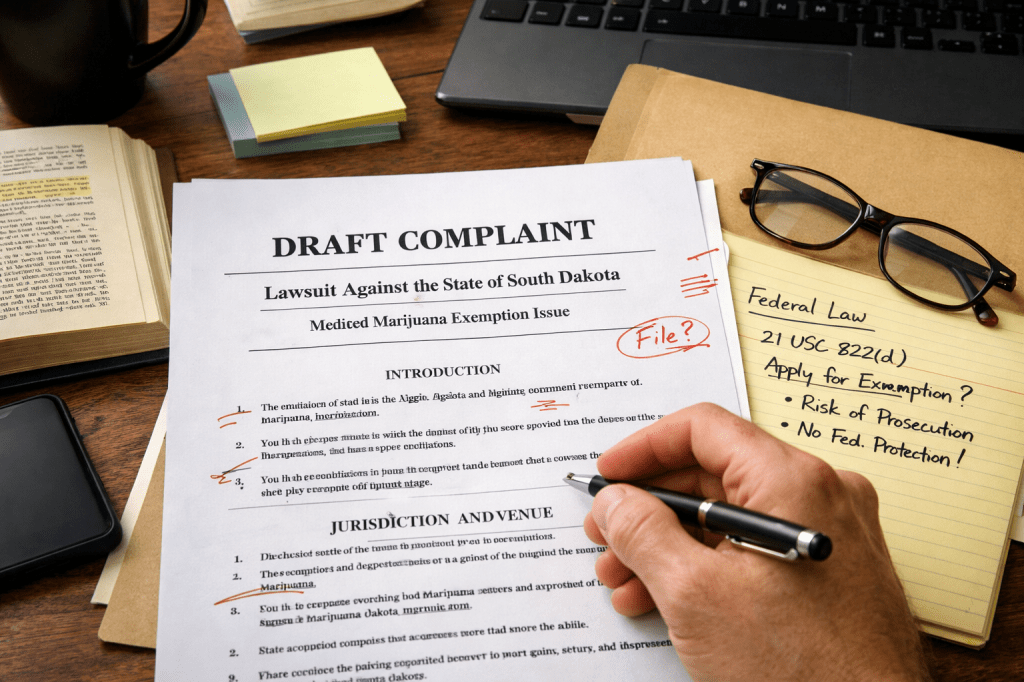
The following is a work in progress. UNITED STATES DISTRICT COURT DISTRICT OF SOUTH DAKOTA SOUTHERN DIVISION Jason Karimi, Plaintiff, v. State of South Dakota; South Dakota Department of Health; South Dakota Medical Marijuana Oversight Committee; [Director], in his/her official capacity; Defendants. Case No. ___________ COMPLAINT FOR DECLARATORY AND INJUNCTIVE RELIEF I. INTRODUCTION 1. This…
-
Petition: South Dakota Law Now Makes Schedule I Cannabis Classification Legally Impossible
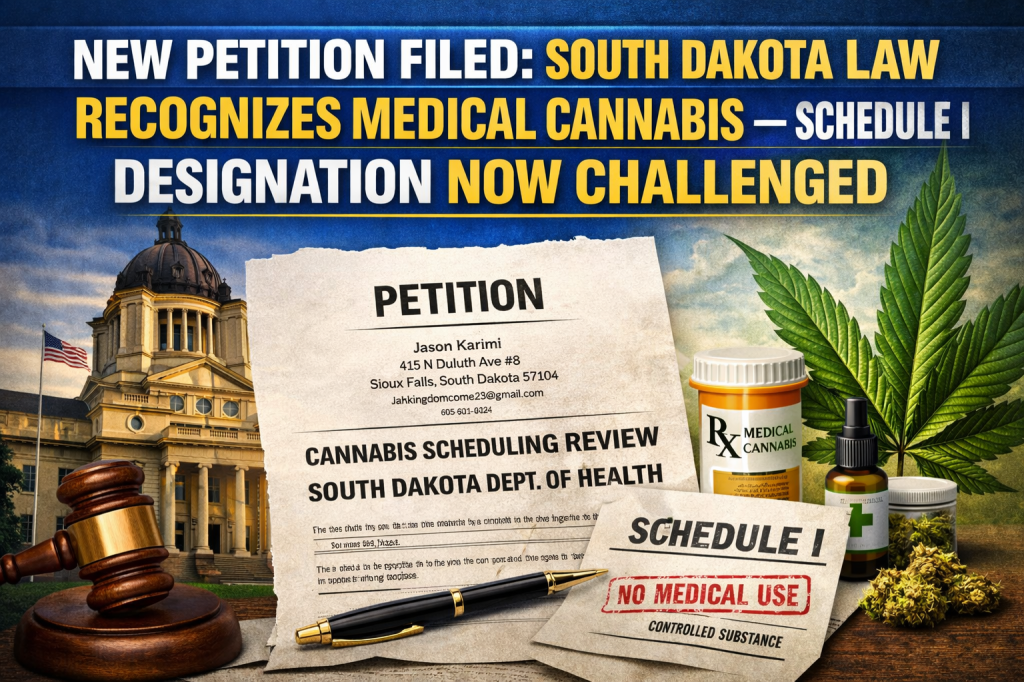
The following is a work in progress. Draft of filing that asks Department of Health to acknowledge that medical cannabis laws contradict Schedule I definition. Update 2-1: I realized I was going about this all wrong. The following isn’t per se incorrect but there’s a much simpler stronger argument the court will prefer. I will…
-
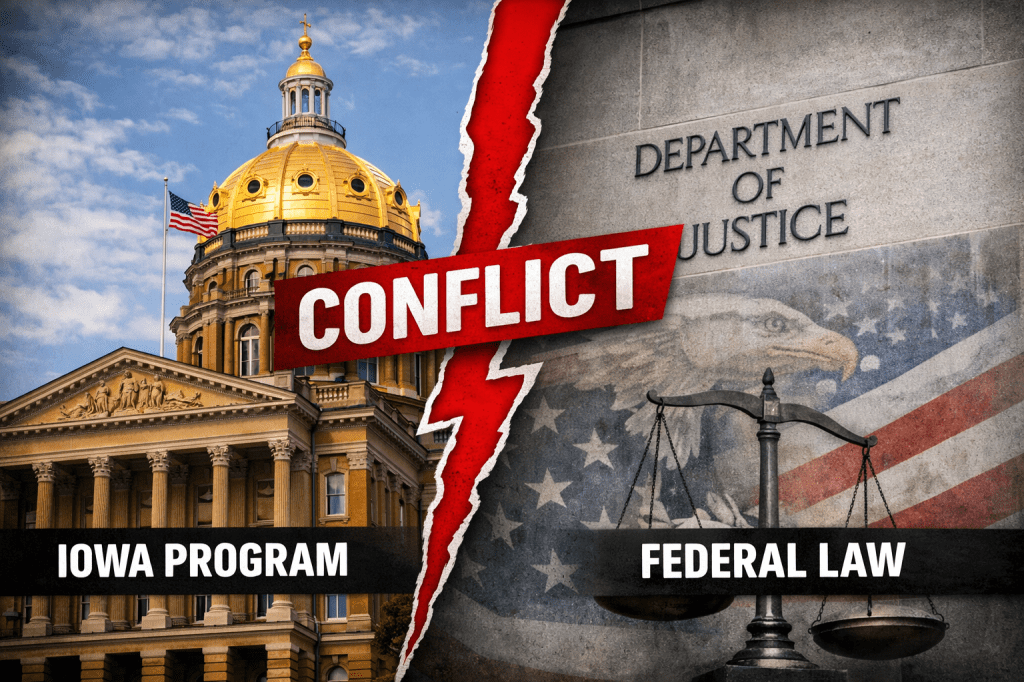
State Board Warns: Iowa Cannabis Users Break Federal Law
State Board Warns: Iowa Cannabis Users Break Federal Law Iowa’s medical cannabis program authorizes patient use at the state level but remains at odds with federal laws. Despite state authorization, Iowa’s medical cannabis program remains illegal under federal law, leading to ongoing legal risk and public safety implications — and lawmakers still haven’t acted on…
-
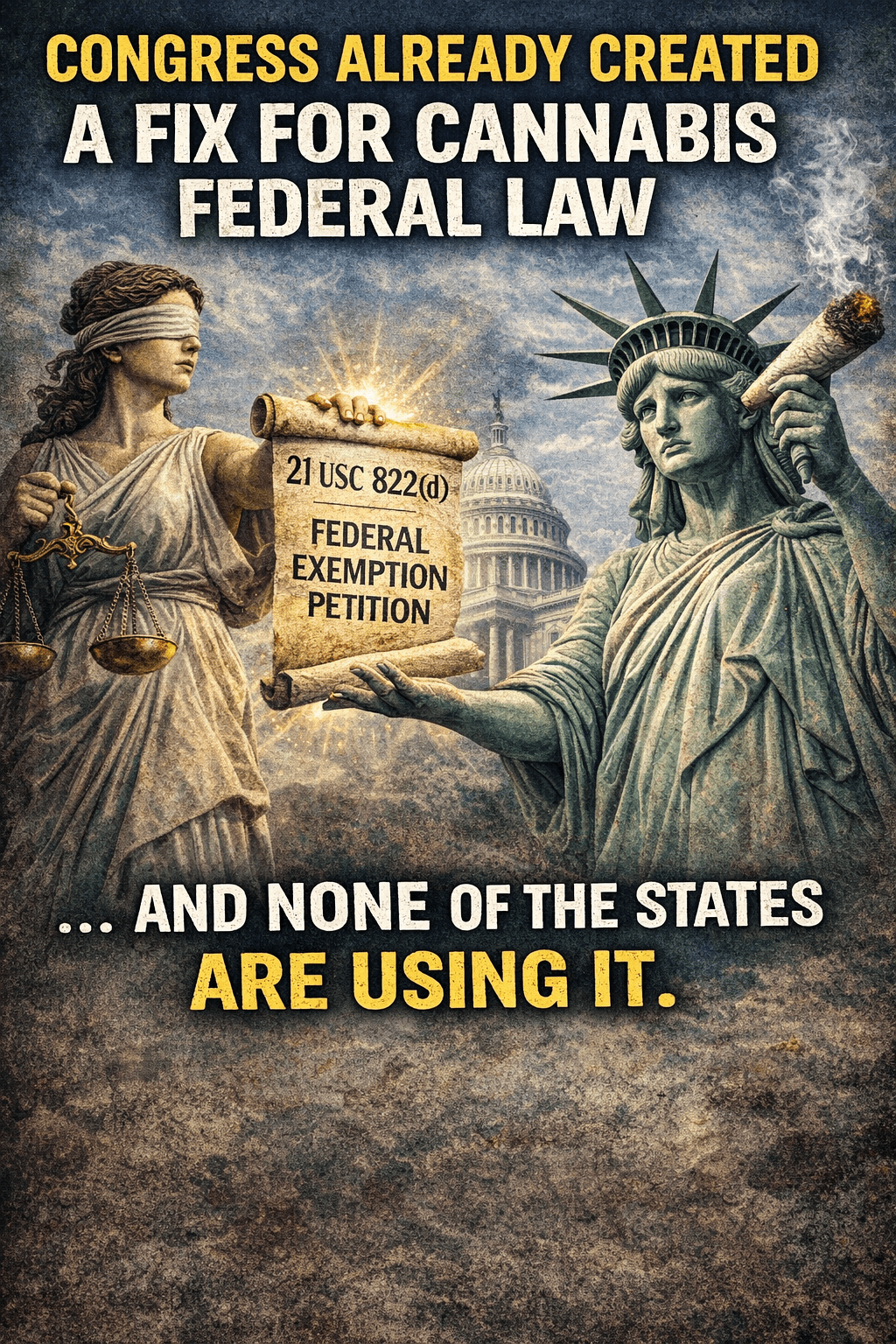
Marijuana Is Still Federally Illegal — And the Fix Already Exists in Federal Law
Executive Summary Marijuana remains illegal under the federal Controlled Substances Act. State legalization has expanded rapidly, but federal law has not changed. State cannabis systems now operate on enforcement tolerance rather than legal authorization, creating escalating compliance failures nationwide. However, Congress already created a lawful solution — and states are not using it. The Structural…
-

The Federal Marijuana Contradiction Is Now Structurally Unsustainable
For more than a decade, marijuana policy in the United States has existed in a legal twilight zone. State legalization expanded rapidly, political rhetoric normalized cannabis, and entire industries were built on the assumption that federal reform was “inevitable.” But that inevitability never arrived. Instead, federal law never moved — and now the contradiction is…
-
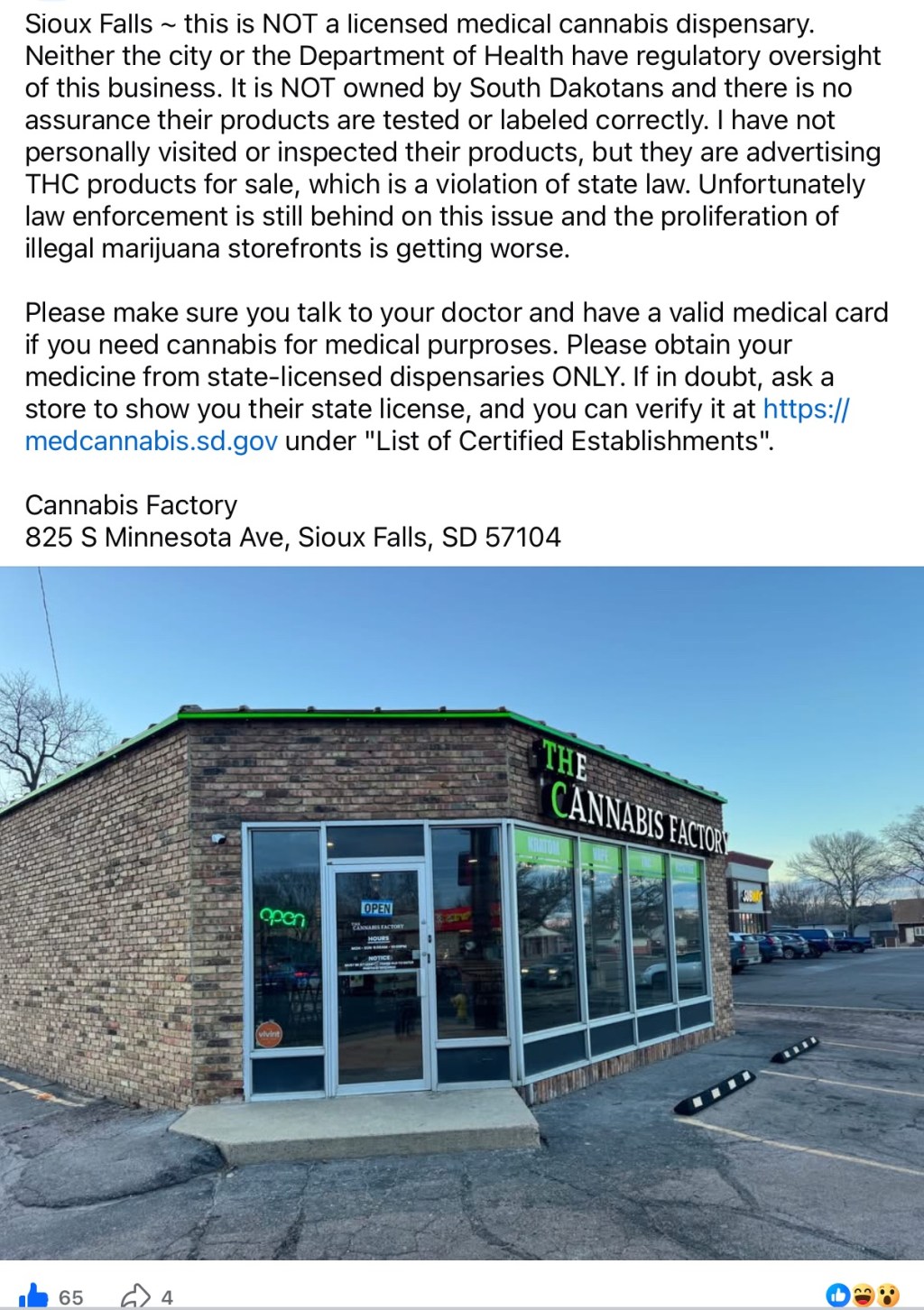
A Sioux Falls Storefront Is Selling “Cannabis” Without a South Dakota Cannabis License
By Jason Karimi – WeedPress / SD Cannabis Ledger A retail storefront operating at 825 South Minnesota Avenue in Sioux Falls presents itself to the public as a cannabis dispensary. It uses marijuana branding. It advertises cannabis. It invites walk-in customers. But it does not hold a South Dakota medical cannabis dispensary license. Which means…
-
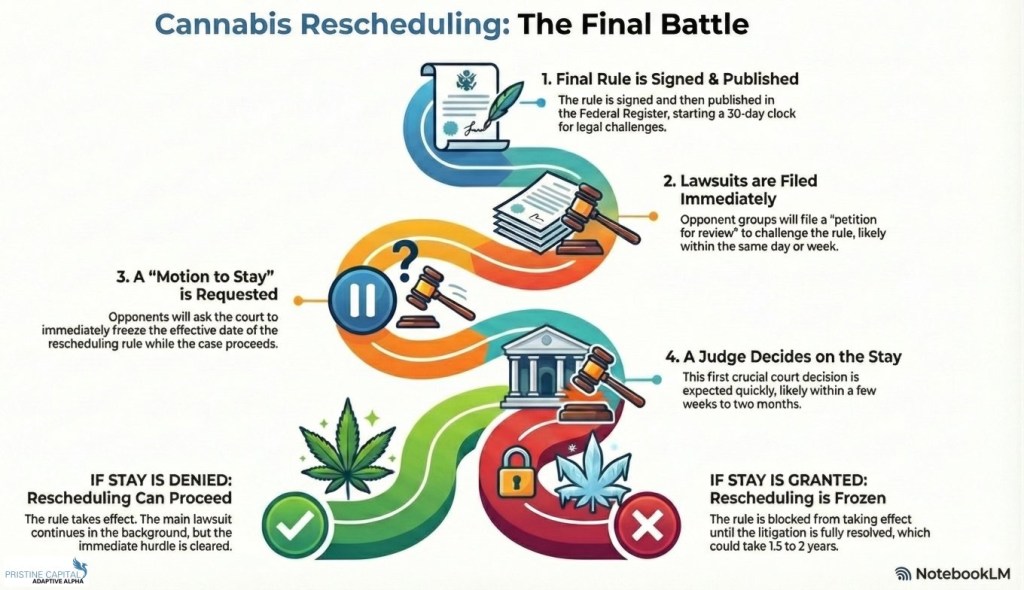
The Statutory Rescheduling Battlefield: Endgame Legal Weapons
The Statutory Rescheduling Battlefield 1. Who Is Allowed to Challenge Rescheduling? 21 U.S.C. § 811(a) Rescheduling can be initiated by: • Attorney General • Secretary of HHS • Any “interested party” • Or the UN treaty mechanism So the moment the final rule is published, the universe of potential challengers is not “any random person.”…
-
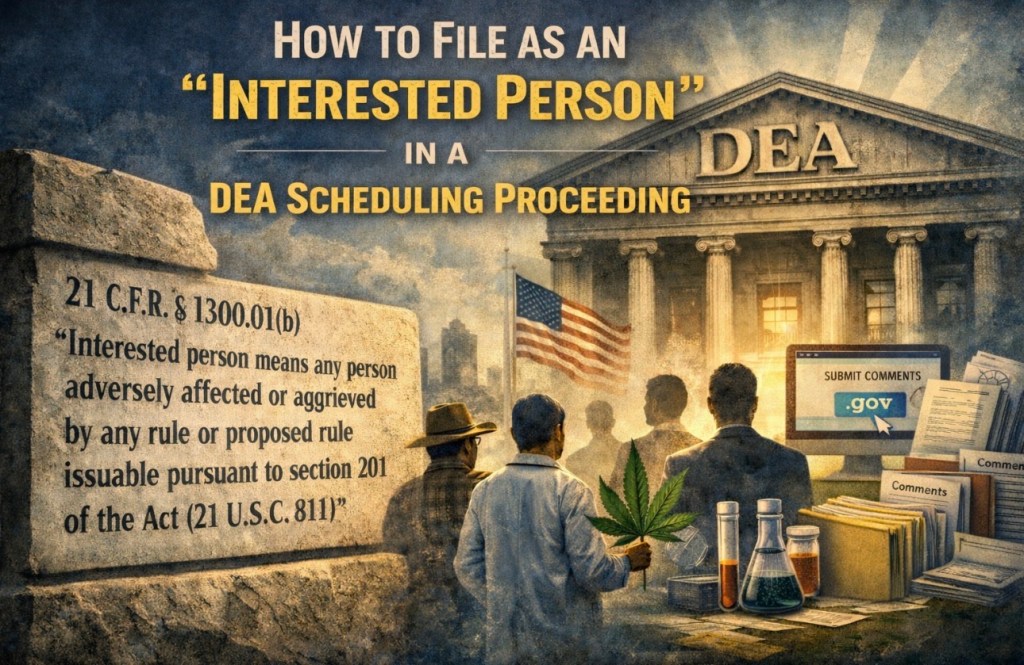
How to File as an “Interested Person” in a DEA Scheduling or Rescheduling Proceeding
See previously on WeedPress: The Master Definition That Quietly Gave The Public Standing Against the DEA The DEA does not decide who has standing in federal drug rulemaking. The regulation does. And under 21 C.F.R. § 1300.01(b), the public has a formal legal doorway into DEA scheduling proceedings: “Interested person means any person adversely affected…
-
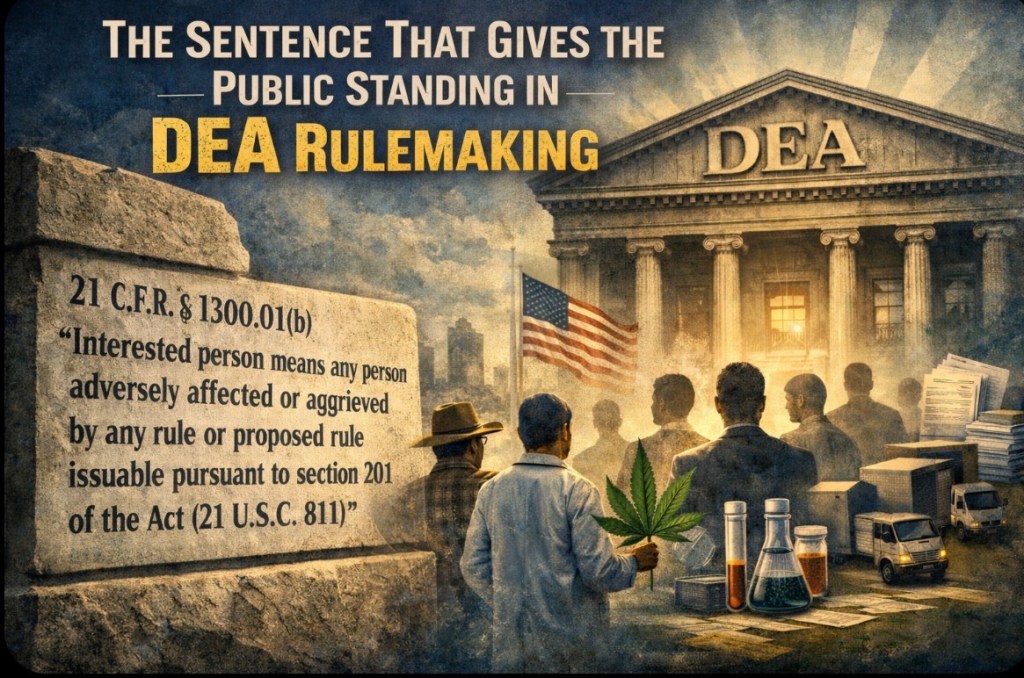
The Master Definition That Quietly Gave the Public Standing Against the DEA
There is a single sentence inside federal regulations that quietly determines who gets legal standing in DEA drug scheduling and rescheduling proceedings. It is not a press release. It is not a policy memo. It is not optional. It is binding federal law. And it decides who gets a seat at the table. The Controlling…
-

Iowa’s Chapter 204 Hemp Framework Is Headed for a Federal Collision — and the Legislature Needs to Fix It
For the last few years, Iowa has tried to thread a needle: keep “hemp” legal while cracking down on the intoxicating THC marketplace that grew out of the 2018 Farm Bill’s loopholes. That’s the basic story behind Iowa’s consumable-hemp rules (embedded in Iowa’s Chapter 204 framework and enforced through state rules and HHS registration): age…
-
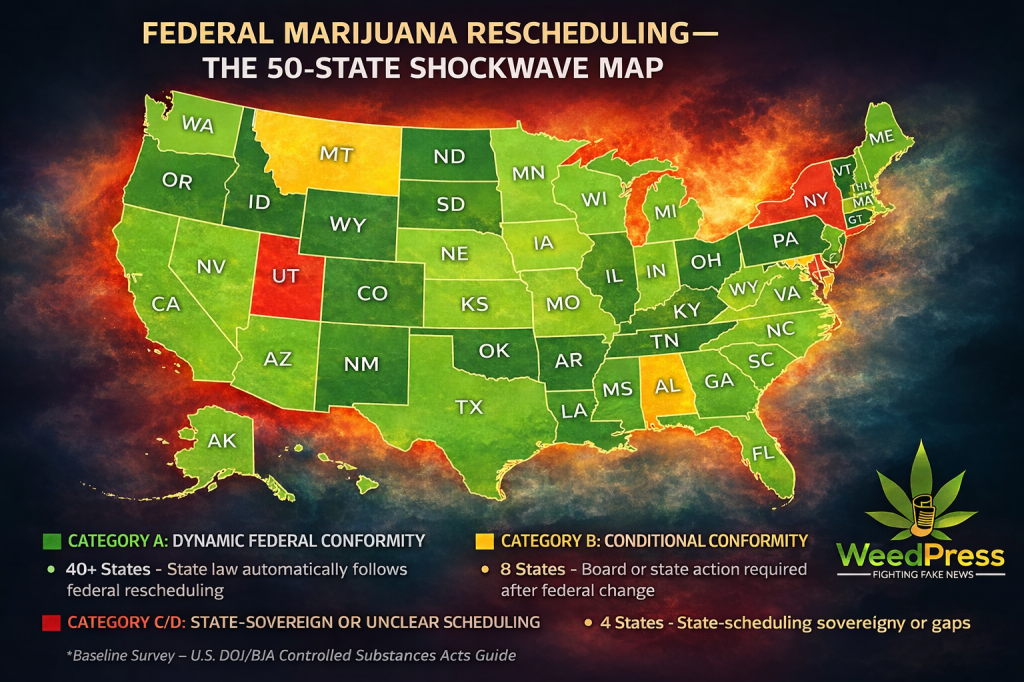
THE FEDERAL MARIJUANA RESCHEDULING SHOCKWAVE
Why Most State Drug Laws Will Collapse Without Immediate Legislative Repair A WeedPress White Paper Based on national Controlled Substances Act architecture documented by Vicente LLP Executive Summary The American drug-law system is not fifty independent sovereign criminal codes. It is a federally anchored network of derivative state statutes. Most U.S. states have written their…
-
THE 50-STATE CONTROLLED SUBSTANCES COLLAPSE MAP
THE 50-STATE CONTROLLED SUBSTANCES COLLAPSE MAP How Federal Marijuana Rescheduling Breaks State Law Every state falls into one of four legal architectures. Only ONE of them survives federal rescheduling cleanly. (Baseline – DOJ/BJA State CSA Survey) CATEGORY A – DYNAMIC FEDERAL CONFORMITY These states automatically adopt federal drug scheduling changes. Federal marijuana rescheduling rewrites their…
-

Marijuana Rescheduling: What It Really Means for South Dakotans (and Why State Law May Collapse Without Legislative Action)
https://www.dakotanewsnow.com/2025/12/23/marijuana-reclassification-what-it-means-south-dakotans/ Attorney General Marty Jackley believes the studies could finally provide evidence to the medicinal use of marijuana, other than the personal anecdotes. “South Dakota has medical marijuana statutes, but they’re not necessarily based on research because we couldn’t have the research. So the president’s desire that I share is to do more research on…
-
A federal reset on cannabis is coming. Iowa should not miss it. | Opinion
https://www.desmoinesregister.com/story/opinion/columnists/iowa-view/2025/12/28/iowa-federal-marijuana-reset/87909387007/?gnt-cfr=1&gca-cat=p&gca-uir=true&gca-epti=z116461p001150c001150d00—-v116461d–xx–b–xx–&gca-ft=141&gca-ds=sophi Response to the above was printed in the Register on Sunday December 31st and is reprinted here in full: https://carl-olsen.com/2025/12/letter-to-the-editor-december-2025 Letter to the Editor – December 2025 December 28, 2025 To the Editor: Rick Wagaman’s Guest Opinion(Des Moines Register, 12/28/25), “Iowa should be ready for reset on cannabis,” leaves out an important step Iowa should…
-
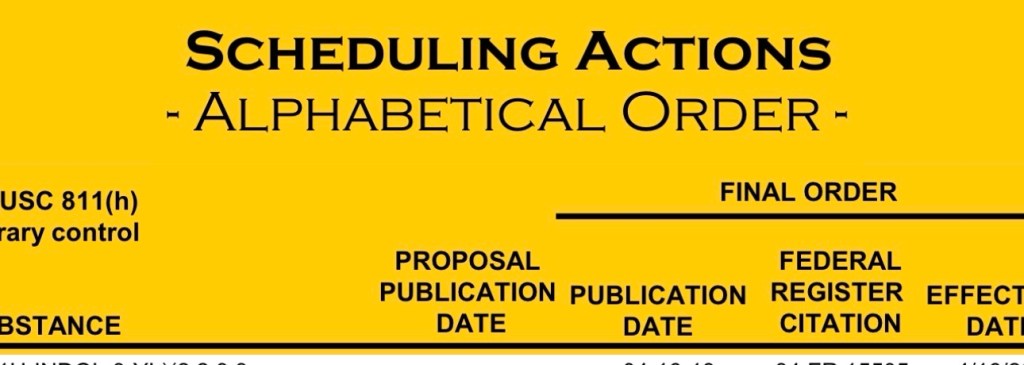
Federal Scheduling Doesn’t Require Hearings
If you want to see all the scheduling actions under CSA, look here. Then you’ll see which ones have included hearings. That will prove that a hearing isn’t required. Just an opportunity. Hearings are the exception. Orange Book – List of Controlled Substances and Regulated Chemicals https://www.deadiversion.usdoj.gov/schedules/orangebook/orangebook.pdf I know not everyone reads 128 page legal…
-

Proceeding Pro Se Quote
Because Respondent proceeds pro se, their pleadings are entitled to a liberal construction and “held to less stringent standards than formal pleadings drafted by lawyers.” Erickson v. Pardus, 551 U.S. 89, 94 (2007); Haines v. Kerner, 404 U.S. 519, 520–21 (1972). The question is not whether Respondent will ultimately prevail, but whether they are entitled to offer evidence in support of their…
-

-
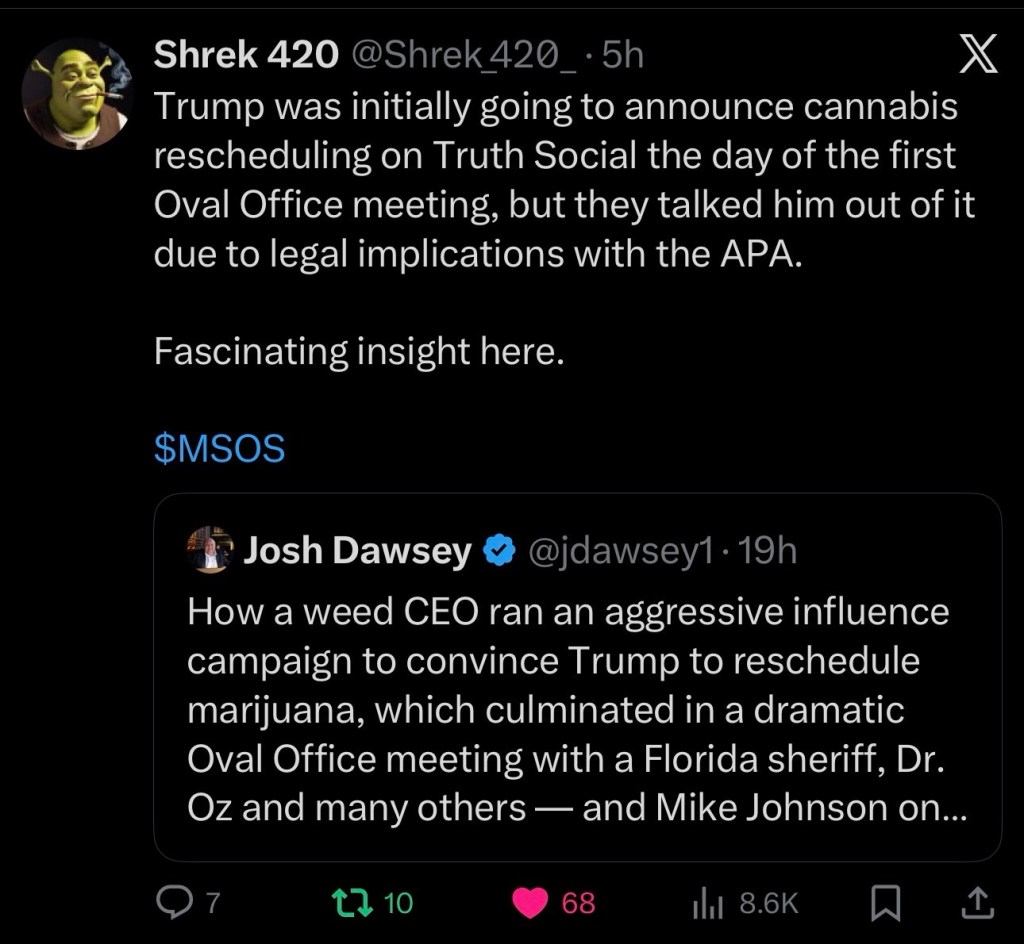
APA Concerns Delayed Rescheduling
Not surprising. Makes a lot of sense if you’ve studied administrative law for a few thousand hours.
-
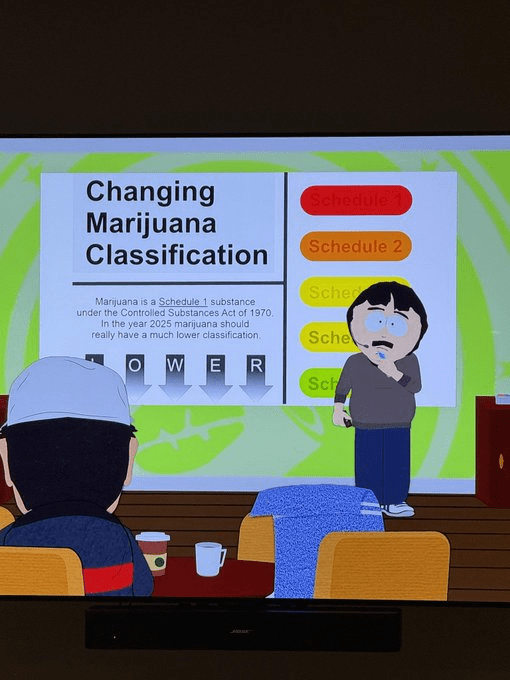
Americans for Safe Access Explain Schedule 3
https://www.safeaccessnow.org/trump_executive_order_rescheduling
-
-
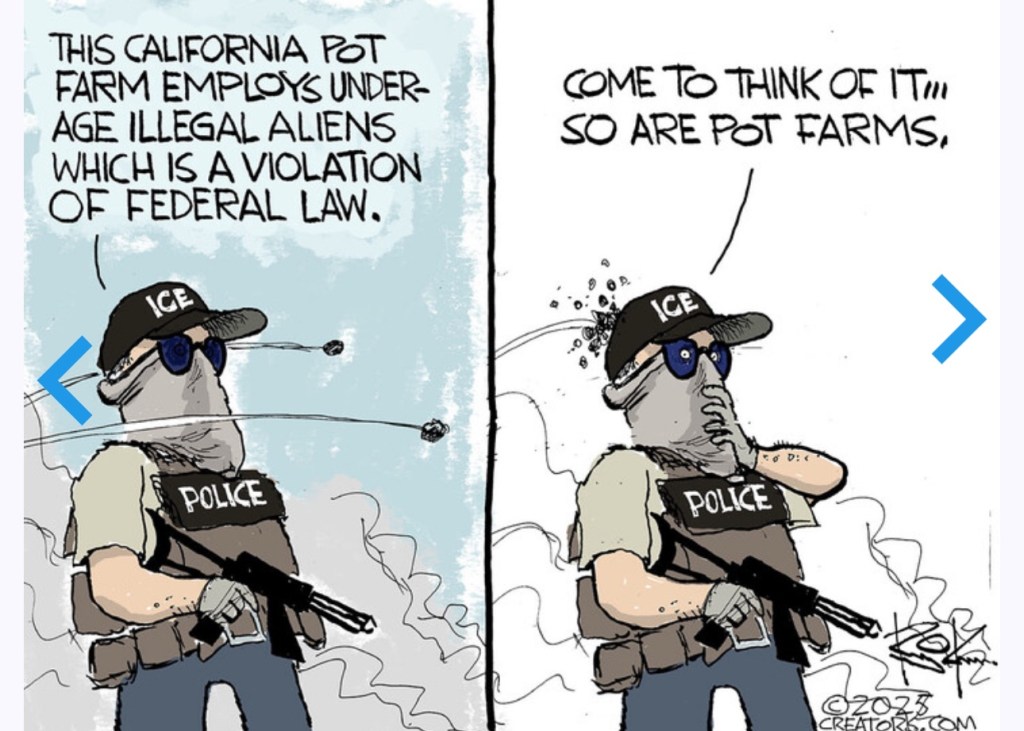
What Schedule III Means Under Federal Law
What Schedule III Means Under Federal Law Reader note: This blog post protected by the constitution’s first amendment. Schedule III substances are defined under the Controlled Substances Act as drugs with: Accepted medical use Moderate to low potential for physical dependence Potential for psychological dependence Examples currently include ketamine, anabolic steroids, and certain codeine-containing medications.…
-

Request for South Dakota to Petition U.S. Attorney General for Waiver Under 21 U.S.C. § 822(d)
South Dakota’s medical cannabis setup (under Department of Health via SDCL 34-20G) is tightly regulated, low-diversion, and focused on patients—ideal for arguing a 21 U.S.C. § 822(d) waiver to exempt state-licensed operators from DEA registration, as long as it aligns with public health/safety. No one’s filed yet (day zero), but SD could slot in after…
-
-

Gateway Drug Theory Rejected By DEA and HHS: Federal Register
81 Fed. Reg. 53767, 53784 (Aug. 12, 2016) (concluding that “research does not support a direct causal relationship between regular marijuana use and other illicit drug use” and emphasizing that “[l]ittle evidence supports the hypothesis that initiation of marijuana use leads to an abuse disorder with other illicit substances”). Full text of the decision available…
-

Truck Drivers Can Use Cannabis Under Schedule 3 Absent Policy Interventions
https://www.marijuanamoment.net/drug-testing-industry-group-is-sounding-the-alarm-about-marijuana-rescheduling-as-trump-plans-action/ I’m now a solo advocate and quit representing other people as the entire weed movement and all its groups desire criminality, rebellion, and cool kid ego games and I can’t do it any longer. When I say that, as cannabis advocates, we cannot unleash regulations that don’t respect public health and safety, or programs…
-

DEA Lawyer To Judge: 21 USC 822(d) Is Statute Governing Federal Exemption Applications
Clarity here: https://weedpress.wordpress.com/2025/11/24/iowaska-church-of-healing-oral-argument-in-dc-court/
-

RFRA Protections: Watered Down Trap Inferior To Other Protections Or Not?
Grok AI says: The most famous and direct Supreme Court statement lamenting that the Religious Freedom Restoration Act (RFRA) has been “watered down” or dramatically weakened comes from Justice Antonin Scalia’s majority opinion in Employment Division v. Smith (1990) is actually the pre-RFRA case that prompted Congress to pass RFRA in the first place. After…
-
The Federal Exemption Process Protects Pot Users Needing Organ Transplants…
Imagine a doctor denied your father life saving surgery because he’s a medical cannabis user: Pot Can Get You Kicked Off Transplant Lists — Even In States Where It’s Legal (Buzzfeed) How would you feel? Here’s how to ensure loved ones never have to again face denial of medical life saving surgeries for being cannabis…
-
Neil Rockind’s Challenge to Schedule I Status in Michigan
Neil S. Rockind, a prominent criminal defense attorney based in Bloomfield Hills, Michigan, successfully argued for the dismissal of charges in People v. Richmond (also referenced as the “Clinical Relief Dispensary Case”). This case centered on marijuana-related charges tied to the operation of a medical marijuana dispensary (Clinical Relief) in Michigan. Rockind challenged the validity…
-
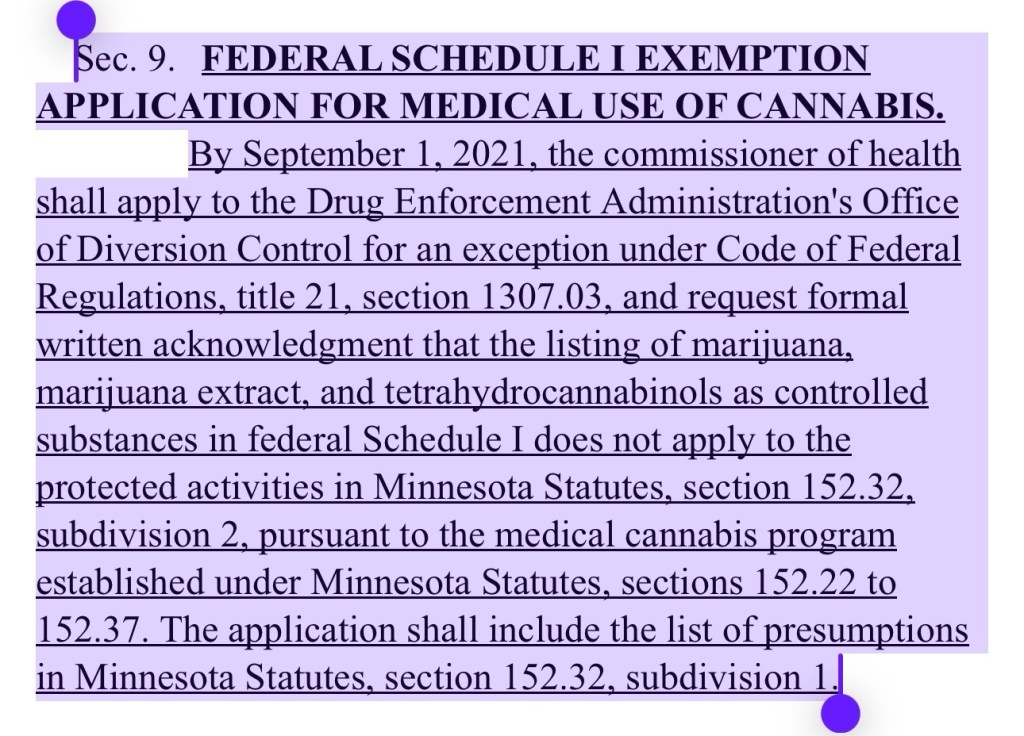
Ilhan Omar’s Office Called WeedPress For Help On Federal Exemption To State Cannabis Laws!!!!
Just a brief note, but I was asked this last week by Ilhan Omar’s Congressional office for info on a bill I wrote the bill summary for in 2021 that passed the Minnesota House. Read the bill here: House File 1023. The bill was introduced by Young Americans for Liberty endorsed House Rep Jeremy Munson.…
-
-

FDA Says Iowa’s Medical Marijuana Law Doesn’t Risk Federal Funds For Academic Institutions
POLITICS FDA Says Iowa’s Medical Marijuana Law Doesn’t Risk Federal Funds For Academic Institutions https://www.marijuanamoment.net/fda-says-iowas-medical-marijuana-law-doesnt-risk-federal-funds-for-academic-institutions/
-
-
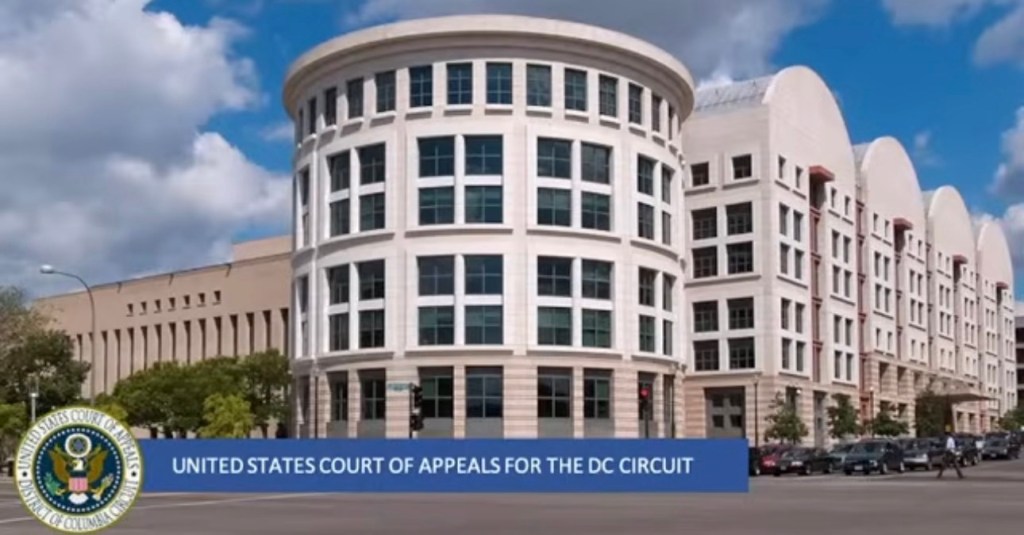
Iowaska Church Of Healing Oral Argument In DC Court
Case 2: 25-1140 In re: Iowaska Church of Healing Friday, November 14, 2025 9:30 A.M. USCA Courtroom 31 Judges Henderson, Katsas, Garcia Karen LeCraft Henderson Gregory G. Katsas Bradley N. Garcia 25-1140 In re: Iowaska Church of Healing 10 minutes per side Arguing: Simon A. Steel, Lowell V. Sturgill Jr. (DOJ)…
-
Why Ilhan Omar’s “Fed Exemption for Hemp” Has No Application Process
21 USC 822(d) has no application process. 21 USC 822(d) covers a class of activity, such as religious use of peyote. 21 USC 822(d) should be between a state and the federal administration, like it is between that church and the federal administration. There is no application, but a state attorney general…
-
Petition To South Dakota Legislature Senate And House Leadership
Copy To: President of the South Dakota Senate Copy to: Speaker of the South Dakota House This petition is submitted pursuant to: South Dakota Constitution 0N-6-4§ 4: § 4. Right of petition and peaceable assembly. The right of petition, and of the people peaceably to assemble to consult for the common good and make known their opinions, shall never be abridged.…
-

Lander Case, Certiorari Filed By National Sheriffs Association
Explains RLUIPA a bit, 1983 claims Click to access 20251001235510035_LaNsa_Amicus%20Document%20October%201%202025%20EFile.pdf The sheriffs say Landor should have used 42 U.S.C. 1983.
-
Nebraska Probationer Requests Medical Cannabis Be Allowed In Court Filing
Filing motion with district court judge here today to find out if Nebraska probation has to let medical cannabis be used which the law seems to say it does Here’s the motion below: Per Thurston County Clerk of Court direction this motion is filed via email. August 4 2025 4:20 pm Motion To…
-
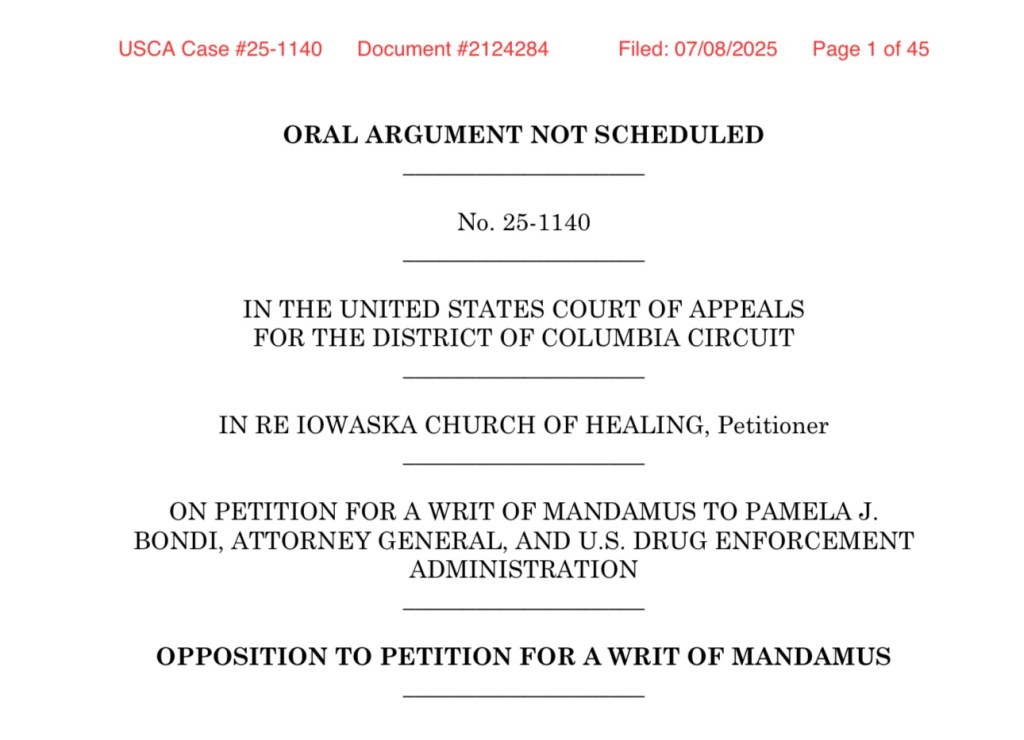
DEA Brief in Iowaska Healing Church Iowa Lawsuit July 2025
Download the DEA brief at the above link. Case concerns an ayahuasca church demanding religious exemption to use ayahuasca in ceremony as their sacrament. Interesting brief.
-
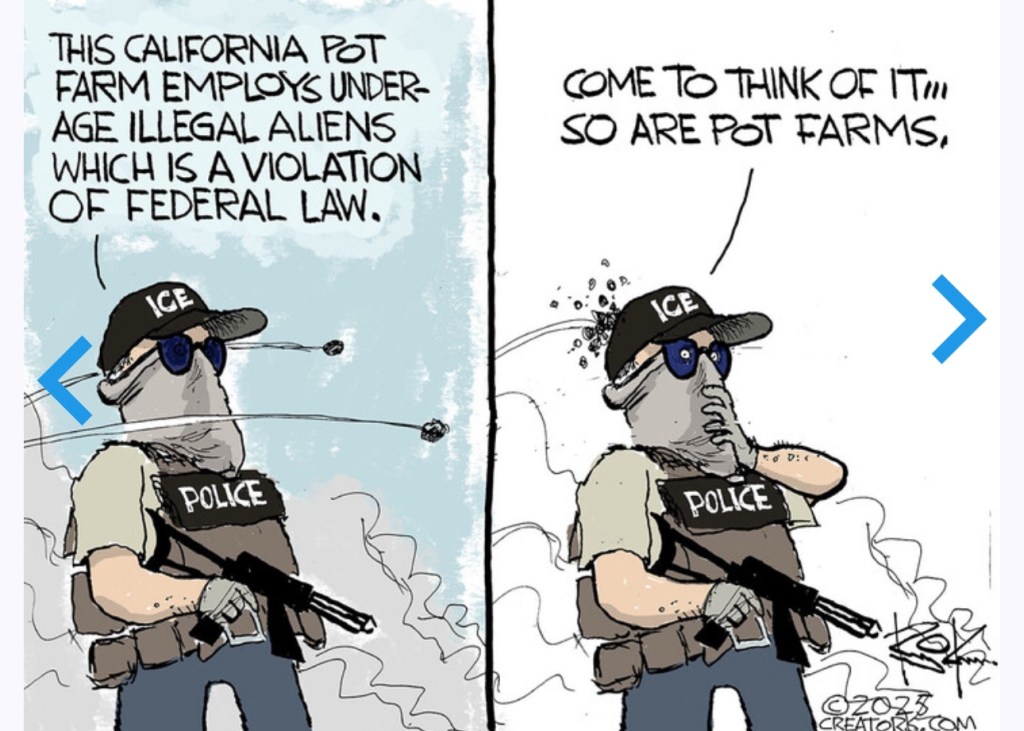
Olsen v. DEA, 878 F.2d 1458, 1461 (D.C. Cir. 1989)
The DEA’s contention that Congress directed the Administrator automatically to turn away all churches save one opens a grave constitutional question. A statutory exemption authorized for one church alone, and for which no other church may qualify, presents a “denominational preference” not easily reconciled with the establishment clause. See Larson v. Valente, 456 U.S. 228, 245,…
-
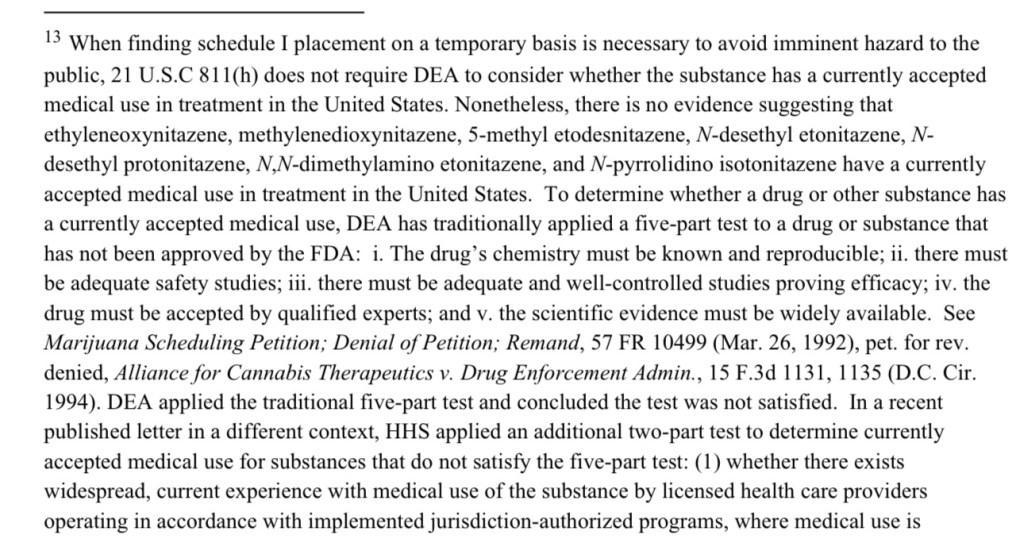
Recent DEA Footnote Acknowledges Two Part CAMU Test!
For those following mj rescheduling, pg 7 fn 13 of this DEA doc temporarily placing 3 synth opioids in schedule I may be of interest. DEA acknowledges the existence of and authority for the 2-part test for CAMU, though it also applies its own 5-part test: https://public-inspection.federalregister.gov/2025-11462.pdf?utm_campaign=pi+subscription+mailing+list&utm_medium=email&utm_source=federalregister.gov
-
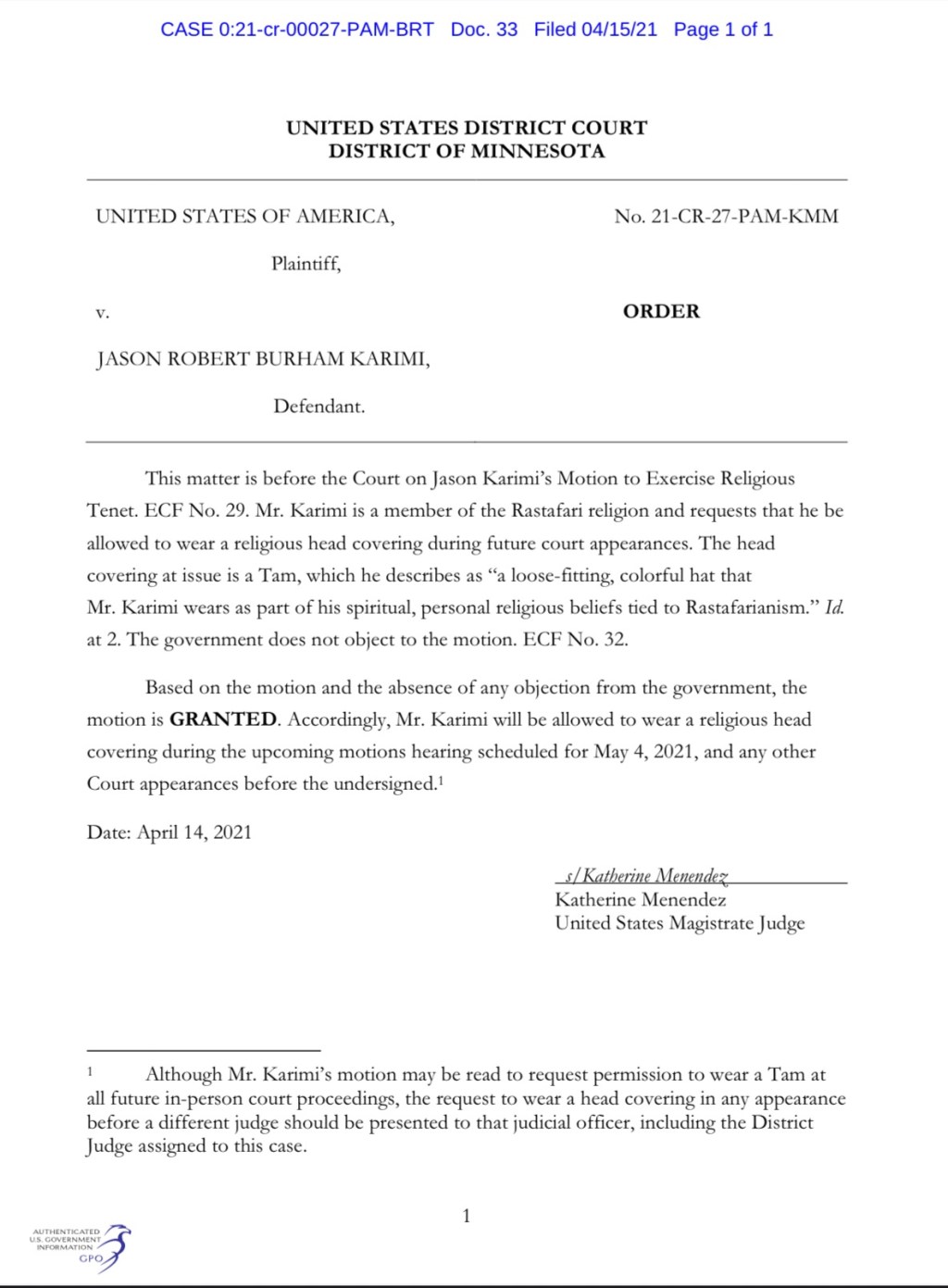
RFRA Changes The Cannabis Game; Fulfills My Prediction Religious Cannabis Constitutional Claims
Prior to RFRA state laws, I argued the first amendment right to religion would bring constitutional rulings for individuals protecting religious access to cannabis in private prayer. I think this is still the inevitable end result of cannabis litigations. There are several things to note about the RFRA.
-
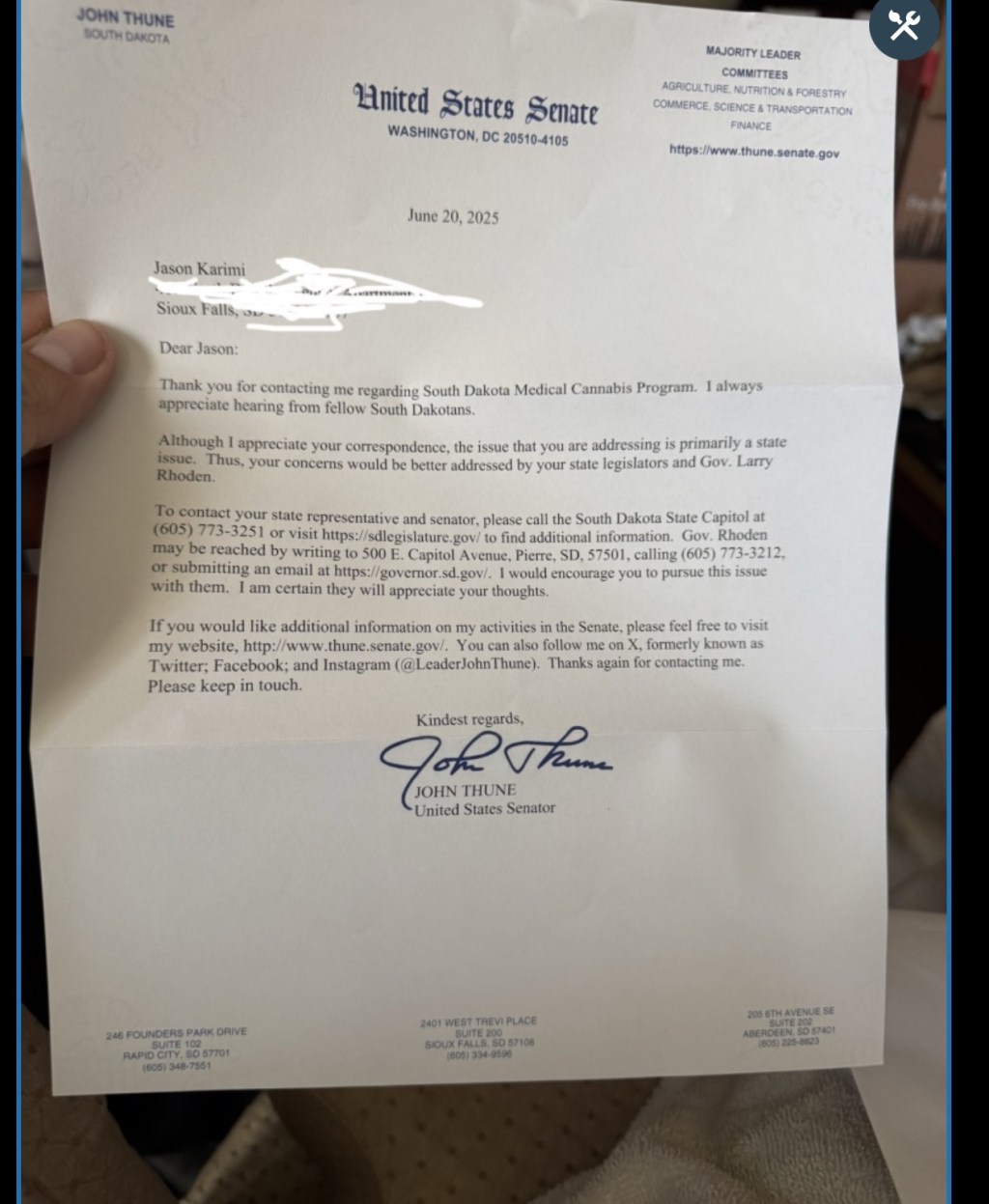
Senator John Thune: Federal Solution To State Medical Marijuana Laws In Hands Of State, Not Congress
Senator John Thune’s office had me come install a TV mount for them and while there I asked a question. I got a letter in response that wasn’t a form letter at all. Below is the recording I made of my phone call to the state Attorney Generals office. I am also contacting the governor…
-
Nebraska Judge Dismisses Kuehn Lawsuit Seeking To Block Med Cannabis
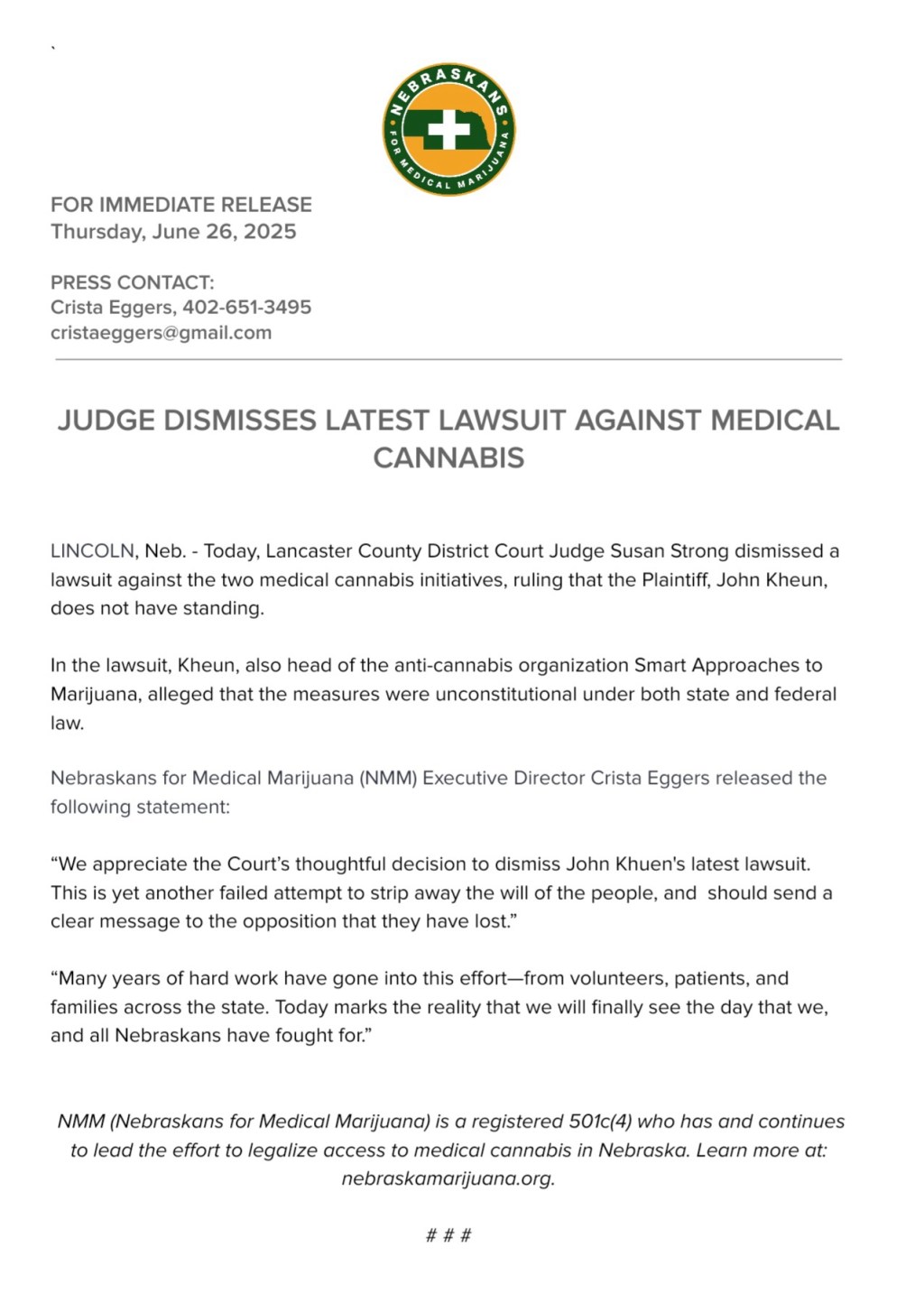
Sources tell WeedPress John Kuehn’s legal team will appeal this inevitably predictable ruling long expected. But, the lawsuit seeking to stop medical cannabis laws from being implemented has been dismissed. The merits of whether state medical cannabis programs are lawful under federal law remains to be litigated. Smart Approaches to Marijuana keeps making very not…
-
Email To Nebraska Medical Cannabis Commission About Federal Law
lcc.frontdesk@nebraska.gov The Nebraska Examiner three hours ago published an article stating public comment was being requested. See this link: https://nebraskaexaminer.com/2025/06/26/nebraska-commission-approves-emergency-medical-cannabis-regulations/ In response to the public policy making invitation for expert commentary I shared the following expertise. Dear commissioners, The Iowa medical cannabis advisory board for three years now has recommended policy makers follow federal law…
-
Model Legal Arguments & Proposed Legislative Language for Rastafarian Religious Cannabis Protections in South Dakota
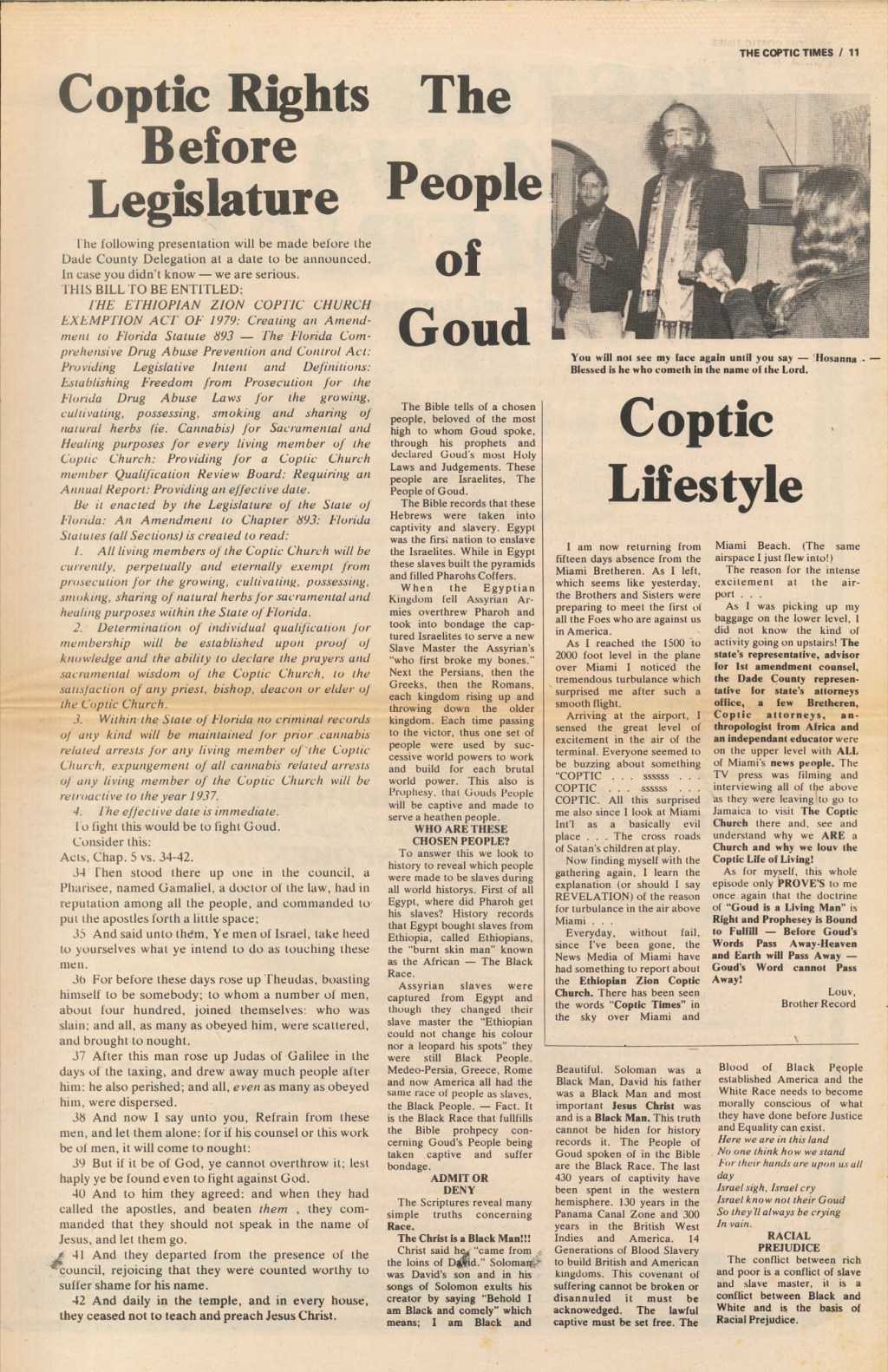
I. Model Legal Arguments for a RFRA Defense A. Establishing a Substantial Burden on Religious Exercise B. State Fails Strict Scrutiny Test C. Precedent Favoring Religious Exemptions II. Proposed Legislative Language for Religious Cannabis Protections A. Amendment to South Dakota Medical Cannabis Law (SDCL 34-20G) Add a new section: B. RFRA Clarification Amendment (SDCL 1-1-23)…
-
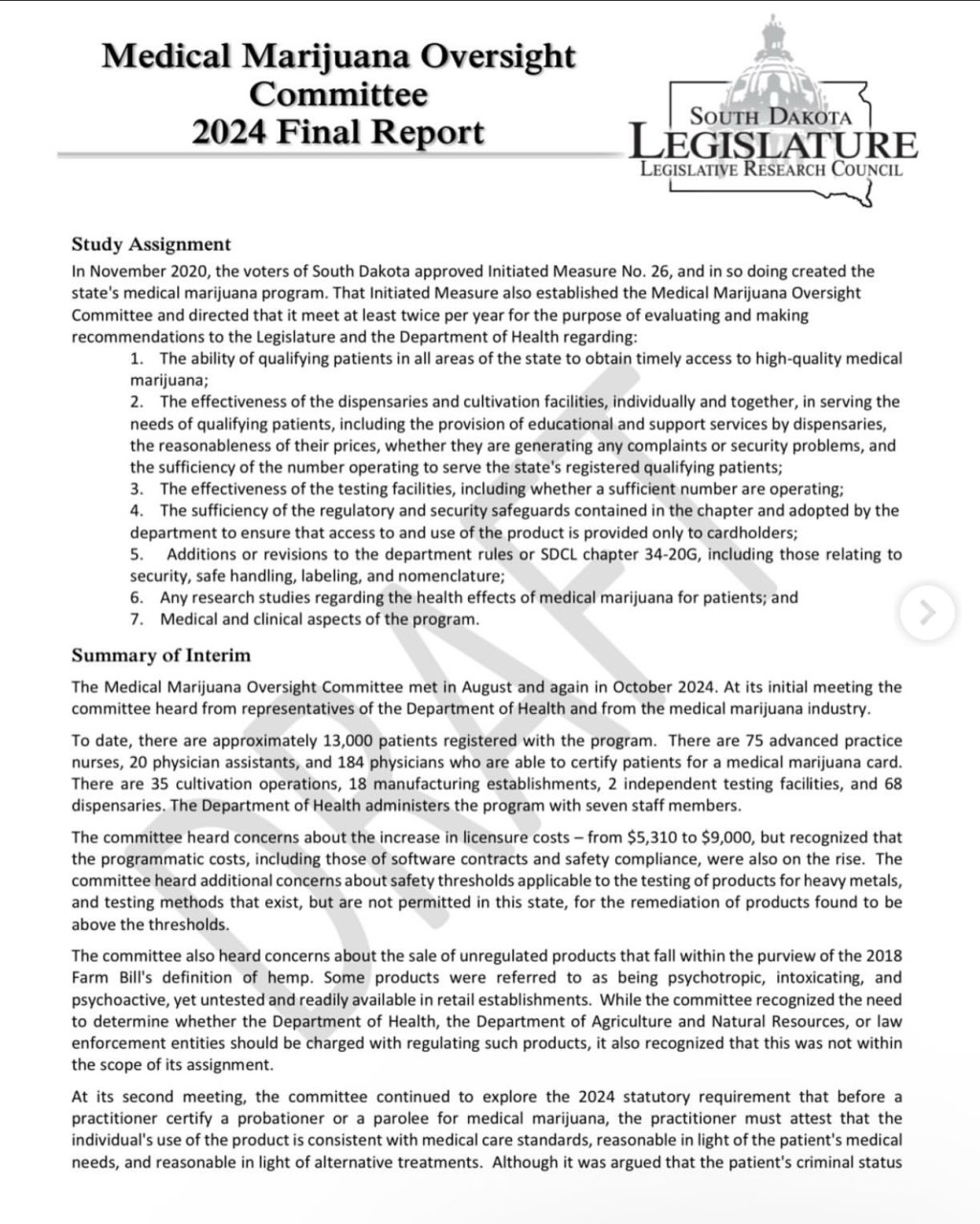
South Dakota report: allowing probationers to use medical cannabis is authorizing violations of federal law
I told you federal law matters. The solution is for South Dakota to apply for federal exemption pursuant to 21 USC 822(d).
-

Religious Cannabis Exemption Iowa Research
Government cannot favor religious activity over secular, or visa versa. The judicial cannon of constitutional avoidance means an unconstitutional statute is only unconstitutional if it is actually applied to someone in an unconstitutional way. Someone has to be injured by it, or it’s never going to be held unconstitutional. The problem with…
 WeedPress: The Paper Trail