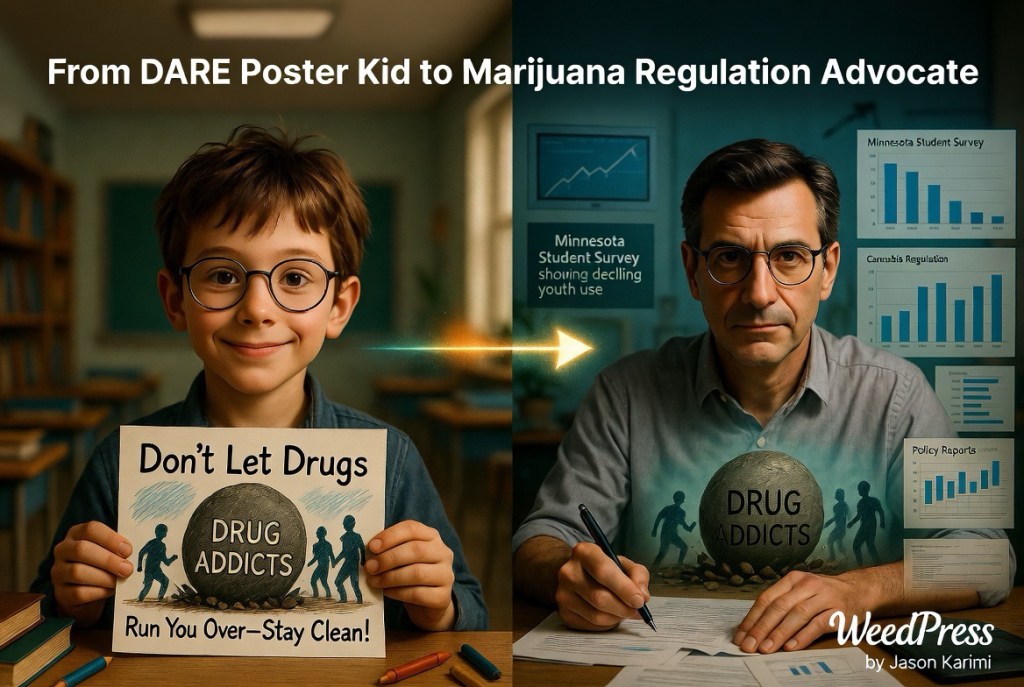
When I was in elementary school, the DARE program left a lasting impression. Officers visited regularly, warning us about the dangers of drugs and pushing the “just say no” message. I took it seriously. So when the school announced an anti-drug poster contest open to elementary students, I threw myself into creating something impactful.
My design featured a massive rolling stone—straight out of a classic “don’t get crushed” metaphor—barreling down a hill and smashing over shadowy figures labeled “DRUG ADDICTS.” Bold letters across the top declared, “Don’t Let Drugs Run You Over—Stay Clean!” It was raw, dramatic, and came straight from a kid who believed every warning he’d heard. No fancy techniques, just a clear, forceful visual of what happens when you let drugs control your life.
A few weeks later, the results were announced over the intercom: I had won. What made the victory especially meaningful was that high schoolers had voted my poster the best. Even the older kids—the ones DARE was trying hardest to reach—chose my elementary-school entry as the winner. The district loved it so much they printed copies, and for a full school year my rolling-stone poster hung in hallways throughout both the elementary school and the local high school. Kids of all ages walked past it daily. Teachers referenced it in assemblies. Parents noticed it at open houses. Seeing my work displayed so widely gave me a deep sense of pride. That poster wasn’t just art—it felt like a real contribution to steering other kids away from terrible choices.
That childhood experience stayed with me and shaped my core beliefs: kids must be protected from addiction. That conviction is exactly why, as an adult, I advocate for smart marijuana regulation.
Some people find the combination confusing—“You won a DARE contest with a rolling-stone-crushing-addicts poster that high schoolers voted best, and now you support legal weed?” But my perspective hasn’t flipped. It has simply matured with real data, real-world outcomes, and a clearer understanding of what actually safeguards children.
I am not trying to get anyone’s kids addicted to marijuana. Full stop. My support for regulation is the grown-up version of that elementary-school poster: an honest, enforceable barrier that keeps dangerous substances away from minors. Strict age limits, licensed retailers who card every buyer, mandatory product testing, child-proof packaging, and severe penalties for selling to kids are far more effective than prohibition ever was. Street dealers don’t check IDs or test purity. Regulated businesses must. Moving marijuana out of the black market and into the light reduces youth access, it doesn’t expand it.
Major media recently confirmed what I predicted in op-eds and letters to the editor back in 2009: post-legalization data shows less youth use, not more.¹
What truly angers me—and what feels like the ultimate betrayal of every DARE lesson—is the persistent dishonesty from so-called “specialists” who distort science and data to protect pharmaceutical profits. They exaggerate cannabis risks while ignoring or downplaying the well-documented addiction crisis driven by prescription opioids, benzodiazepines, and stimulants. The addiction industry doesn’t prioritize cures; it thrives on creating and retaining lifelong customers. Rehab programs and pill mills too often operate like subscription services for human suffering.
I resent every “expert” who warns that marijuana will turn kids into addicts but stays silent about the millions already hooked on doctor-prescribed medications. I resent policies that treat responsible adult cannabis use like a child-endangerment crisis while green-lighting aggressive marketing of far more dangerous pharmaceuticals. The rolling stone in my childhood poster represented inevitable destruction from drugs. Today I see that same destructive force in unregulated black-market dealers on one side and a profit-driven pharma pipeline on the other.
My poster was about stopping that momentum before it crushes people. My advocacy for regulation is the same fight—updated for reality. Legal, regulated marijuana takes power away from criminals, creates real accountability, and gives adults responsible options while maintaining strong, enforceable safeguards for kids. It replaces fear-based slogans with evidence-based protections.
That kid whose rolling-stone poster was chosen best by high schoolers is still inside me. He’s just older, better informed, and furious at the hypocrisy that keeps the real addiction machines running. My poster stayed up in those school hallways for a full year. The message it carried remains unchanged: protect the next generation from being run over by addiction.
Everything I stand for today honors that same promise—only now with truth instead of outdated propaganda.
¹ Youth cannabis use continues to decline in Minnesota after legalization, Star Trib., Apr. 20, 2026, https://www.startribune.com/youth-cannabis-use-continues-to-decline-in-minnesota-after-legalization/601782767 (reporting on the 2025 Minnesota Student Survey showing continued declines in past-year youth cannabis use, including after adult-use legalization).


Leave a Reply