ARGUMENT
I. The District Court Erred by Treating Defendant’s Personal Testimony as Effectively Indispensable to Establishing Sincerity Under the Nebraska First Freedom Act.
The district court denied Defendant’s motion on the ground that he failed to establish a “sincerely held religious belief.” The court reasoned as follows:
“There was no direct evidence of Defendant’s sincerely held religious belief. Defendant did not testify. He was not subject to cross examination. The only evidence presented on this topic was from Defendant’s sole witness, Mr. Baker… A third party’s testimony regarding Defendant’s belief is corroborative, but not on point… The Court finds that Defendant has not met his burden of proof in establishing that he maintains a ‘sincerely held religious belief’ in his Rastafari faith.” Order July 1, 2026.
The Nebraska First Freedom Act prescribes no exclusive method for proving sincerity. The Legislature specified what must be proved—that the action is motivated by a sincerely held religious belief—but it did not specify any exclusive method by which sincerity must be established. See Neb. Rev. Stat. § 20-702(1). The statutory text defines what must be established but does not prescribe any exclusive method by which that showing must be made.
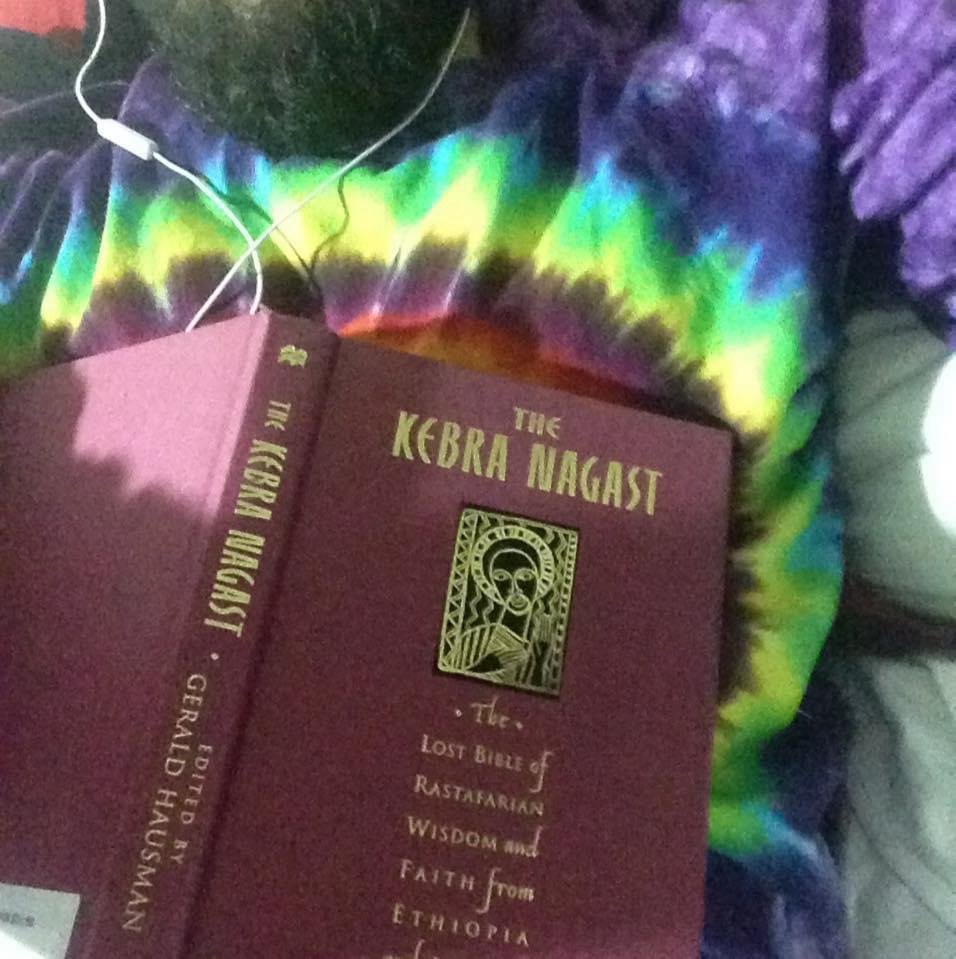
At the evidentiary hearing, Defendant presented the testimony of Reverend Brandon Baker and introduced Exhibit 2, a Certificate of Ministry issued by Universal Life Church Ministries. Order July 1, 2026. The State introduced no evidence challenging Defendant’s sincerity or suggesting bad faith.
The court did not find Reverend Brandon Baker uncredible, nor did it conclude that his testimony lacked probative value. Rather, it concluded that Reverend Baker’s testimony, while corroborative, was insufficient because it did not provide what the court viewed as direct evidence of Defendant’s own sincerely held religious belief. The district court, however, treated Defendant’s failure to personally testify as effectively indispensable to establishing sincerity. By treating Defendant’s own testimony as effectively indispensable before it would find sincerity, rather than evaluating whether the evidence admitted at the hearing was legally sufficient, the district court imposed an evidentiary requirement that does not appear in the First Freedom Act.
The district court was entitled to assess the credibility and weight of the evidence presented. The question presented on appeal, however, is whether the court applied an evidentiary requirement not found in the First Freedom Act by treating Defendant’s own testimony as effectively indispensable to establishing sincerity.
Nothing in the text of the First Freedom Act requires that sincerity be established only through direct testimony from the claimant or provides that corroborative evidence is categorically insufficient. By imposing those limitations, the district court added an evidentiary prerequisite that appears nowhere in the statutory text.
Accordingly, the issue on appeal is not whether Defendant testified, but whether the district court applied an evidentiary requirement that the Legislature did not include in the First Freedom Act.
The inquiry into sincerity is a limited one. “It is not for the courts to say what is or is not religious. The task is only to determine whether the claimant’s beliefs are sincerely held.” Yellowbear v. Lampert, 741 F.3d 48, 54 (10th Cir. 2014).
Because the district court ended its analysis at the sincerity stage based on an evidentiary requirement not found in the statute, the judgment should be reversed and the matter remanded so that the district court may determine, under the correct legal standard, whether Defendant established a sincerely held religious belief and, if so, proceed to the First Freedom Act’s compelling-interest and least-restrictive-means analysis.
CONCLUSION
For the foregoing reasons, Defendant respectfully requests that this Court reverse the district court’s July 1, 2026 Order and remand for further proceedings consistent with the proper application of the Nebraska First Freedom Act.
Respectfully submitted,
Jason Karimi
Defendant, Pro Se
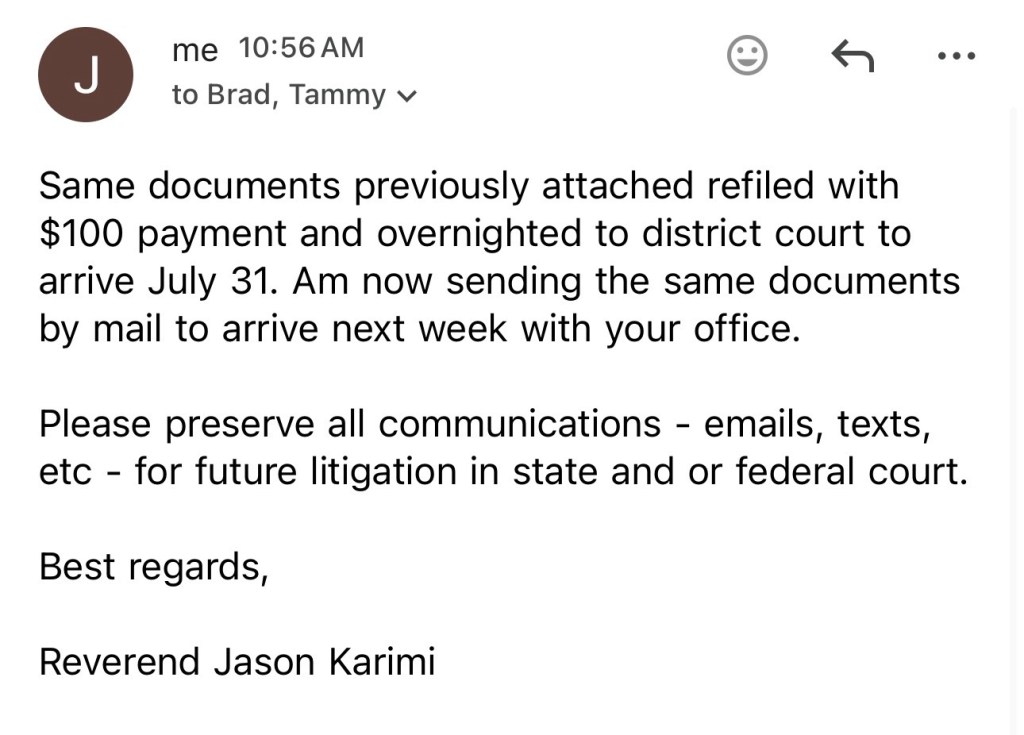
Update: refiled documents via overnight mail July 30 to arrive July 31. Sent email to the persecutors referenced as prosecutors:
 WeedPress: The Paper Trail
Leave a comment