April 24, 2026
Independent advocacy journalism rarely imagines itself entering the reference architecture of the internet. Most movement publishing assumes a shorter shelf life: intervention, argument, disappearance.
But sometimes old work lingers.
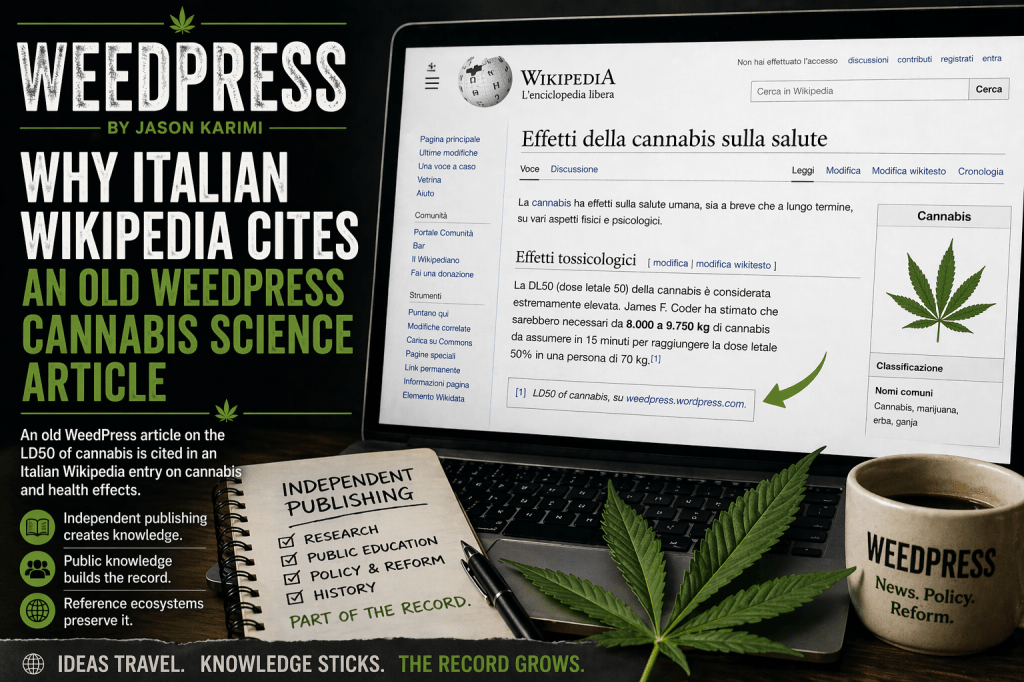
An older WeedPress article on the LD50 of cannabis—addressing the longstanding toxicology point that lethal overdose from cannabis is extraordinarily difficult to achieve—appears as a cited source in an Italian Wikipedia entry on cannabis and health effects.1
That may seem minor. In one sense, it is.
A Wikipedia citation is not peer review or institutional endorsement. But it is evidence that the article entered a public reference trail.
And that says something larger about how cannabis knowledge has often circulated.
For decades, some of the earliest serious public education on cannabis pharmacology, scheduling history, patient rights, and prohibition harms did not begin in mainstream institutions. It often emerged through activists, dissident researchers, underground publishers, legal reform organizations, and later independent digital outlets.
Only afterward did some of those arguments migrate into more formal knowledge systems.
That is what makes the citation interesting.
Cannabis reform did not move only through legislatures. It moved through pamphlets, litigation briefs, underground newspapers, NORML chapters, medical-patient newsletters, blogs, and eventually digital media.
Sometimes that infrastructure is forgotten once institutions catch up.
The old WeedPress citation is a small reminder that independent publishing can contribute to the record.
Especially in cannabis law and policy, that has often been where the record begins.
Footnote
1 Effetti della cannabis sulla salute, Italian Wikipedia (citing “LD50 of cannabis,” WeedPress), accessed Apr. 24, 2026.


Leave a Reply