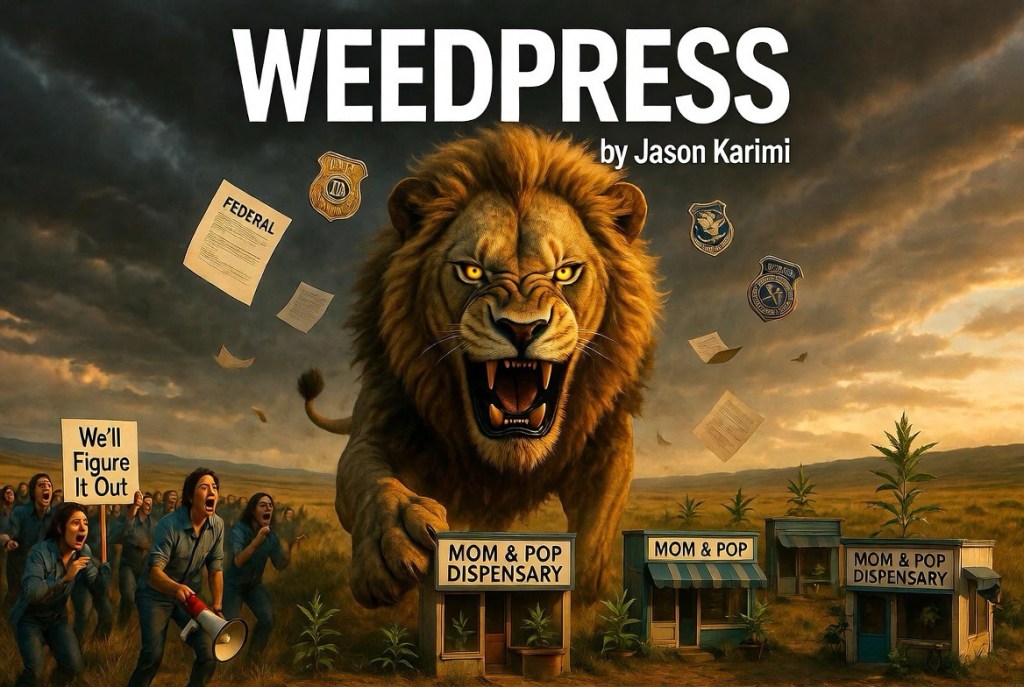
The April 28, 2026 partial Schedule III order (91 Fed. Reg. 22714) is being sold in some circles as an automatic cash-flow miracle for state-licensed medical cannabis operators. Remove 280E. Unlock billions in after-tax profits. “Figure it out” and keep operating.
That narrative is dangerously incomplete.
What the industry chatter is quietly admitting — and what many small operators are only now realizing — is that the real gatekeeper is not the tax code. It is the brutal new federal compliance wall: expedited DEA registration, cGMP standards, FDA-style dosage-form expectations, and the practical reality that most current cannabis facilities were never built for pharmaceutical-grade manufacturing and distribution.
Many consultants, law firms, and operators now warn that a substantial share of existing small cannabis businesses may be unable to comply on day one — and many may not survive the transition.¹

280E Relief Is Real — But It Is Gated Behind DEA Registration
The order removes the 280E deduction prohibition for qualifying state-licensed medical cannabis operators who obtain DEA registration.² Treasury and IRS guidance is expected soon, potentially including a 2026 transition rule and possible retrospective relief.³
Headset data, Vangst reports, and multiple CPA firms have run the numbers: compliant operators could see $268,000 to $800,000+ per dispensary in annual after-tax cash flow.⁴ Nationally, the industry windfall could reach billions.
But here is the part the optimistic “figuring it out” posts gloss over: **relief only flows to businesses that successfully navigate the new DEA registration pathway.**⁵
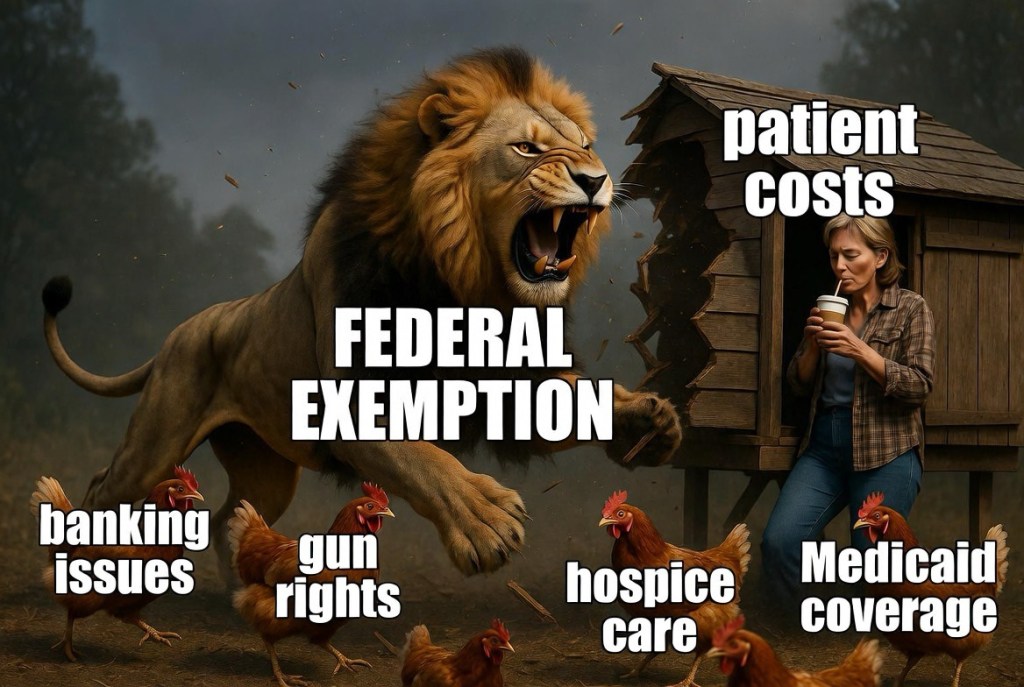
The Real Bottleneck: Pharmaceutical-Grade Compliance Most Facilities Cannot Meet
The April 28 order creates an expedited DEA registration process for manufacturing, distributing, and dispensing marijuana products under qualifying state medical licenses. Nationally over 400 businesses have already applied.⁶
Yet the standards are unforgiving:
• cGMP (current Good Manufacturing Practice) facilities;
• tighter federally supervised distribution and supply-chain requirements; and
• strict quality control, testing, and traceability protocols that many legacy cannabis operations were never designed to satisfy.⁷
Canna Business Services, one of the firms brought in by CIASD for a recent CIASD operator-only training, has highlighted an additional layer of complexity: under the current framework, the federal government (through DEA registration and controlled-substance handling rules) effectively acts as the purchaser in certain cannabis transactions before reselling products back to registered entities.⁸
Law firms (Foley & Lardner and KVK Lawyers, among others) and industry consultants are blunt: **most current cannabis operations are not built for pharmaceutical-grade QC.**⁹
Small and mid-sized operators who run cash-only, low-overhead models with basic facilities face a compliance cliff they cannot scale quickly or cheaply enough to cross.¹⁰
The Hype Gap: Tax Windfall Rhetoric from Voices Unprepared for the Reality
Listen to the current activist and operator conversation. Many posts and podcasts still celebrate the 280E relief and promise that “we’ll figure it out.” New Approach South Dakota’s only recent update (May 14) essentially kicked the detailed compliance conversation down the road to the June 29 hearing, offering little substantive guidance on the practical challenges operators now face.¹¹ Dedicated independent advocacy that prioritizes South Dakota patient interests above operator and business concerns remains limited as of 2026. Also, a Rapid City Post quoted local leaders expressing optimism about legitimacy and patient access.¹²
That optimism is not dishonest — but it is coming from voices that have not yet confronted the capital and operational reality facing smaller players. The operators who can afford rapid upgrades, outside consultants, and DEA-compliant retrofits are already moving.
The rest are quietly realizing…they may not make the cut.¹³
South Dakota’s own leadership had to bring in out-of-state experts — Canna Business Services from Pennsylvania and 420 CFO from Tennessee — to deliver practical guidance on DEA registration and compliance. This was necessary precisely because local advocacy and industry voices, despite years of warnings that federal exemption architecture would eventually become reality, failed to prepare operators for the complexity now arriving.¹⁴
And it’s not just South Dakotans whose leadership is confused by the federal acceptance of medical cannabis as new law. From Marijuana Moment May 30th, 2026:
State cannabis regulators and officials in several states, including Oklahoma, Vermont and Washington, told Stateline they are waiting for guidance from the DEA and other federal agencies before determining whether businesses will be required to register with the DEA, qualify for federal tax relief or face new compliance requirements, and whether states may need to revise their own cannabis laws.
“None of us really can effectively advise our licensees, which is just incredibly frustrating, especially with a ticking clock,” said James Pepper, the chair of the Vermont Cannabis Control Board, which regulates the state’s medical and adult-use market. – Full Marijuana Moment article here
South Dakota operators face the same federal reality. While the state Department of Health has not yet issued a hard enforcement letter like Oklahoma’s OBNDD (which explicitly warned licensees that failure to obtain DEA registration could lead to state license revocation), the federal requirements apply equally here. South Dakota dispensaries, manufacturers, and distributors handling rescheduled medical cannabis products are expected to pursue the expedited DEA registration pathway — with the same 60-day priority window (closing around June 26) for safe-harbor protection and faster review. The compliance burdens (cGMP alignment, security, traceability, and facility standards) do not disappear simply because local regulators have been quieter so far.
Industry analysts are now openly discussing a consolidation wave. MSOs and well-capitalized players with existing infrastructure or access to compliance capital are positioned to absorb market share. Smaller legacy operators who thrived in the low-competition, cash-only environment of the last decade are at genuine risk of being forced out.¹⁵
The real gatekeeper is not the tax code. It is the new federal compliance burden that comes with Schedule III status. Bloomberg Tax reported on April 28, 2026:
“The increased DEA compliance costs will partially offset the tax savings achieved by 280E’s nullification. This will increase capital and administrative expenditures, which could put smaller operators at a long-term disadvantage.” https://news.bloombergtax.com/tax-insights-and-commentary/cannabis-reschedulings-compliance-costs-will-dent-tax-savings
Patients Will Feel the Pain of This Transition
South Dakota patients already benefit from some of the best quality and most affordable medical cannabis in the country at places like Genesis Farms.¹⁶ If a substantial share of the current small operators cannot comply and are forced to close or sell, patients face the very real risk of higher prices, reduced access, and fewer local choices – especially in underserved rural areas. The people who pushed the original medical cannabis programs as patient-first initiatives now risk watching the industry consolidate into fewer, larger, more bureaucratic hands — exactly the opposite of the patient-empowered vision many sold to voters.¹⁷
The Policy Vacuum Is No Longer Theoretical
The federal government has moved. The tax relief is real. The new federal compliance framework is now in motion.
Yet the public guidance from many legacy advocacy groups remains vague (“we’ll deep-dive when there are significant changes”).¹⁸ That is not leadership during the biggest regulatory shift in 17 years. It is leaving patients and honest small operators to navigate the compliance cliff alone.
WeedPress has been mapping these federal and international signals for nearly two decades.¹⁹ The pattern is now clear: the operators who prepared for exemption architecture and federal legitimacy will adapt. Those who treated it as a distant fantasy or assumed the old rules would continue indefinitely are the ones most likely to be left behind.
The operators who will be best prepared, are reading WeedPress, while hiring law firms. And law firms also are reading WeedPress.
Luckily for patients, WeedPress (which has no business interests and never has in anything cannabis related and never once wasted time attending statehouse regulatory meetings unless federal law exemptions are being discussed) will be shortly publishing inquiries written to the South Dakota Attorney General’s office and state Department of Health for guidance and clarity on whether South Dakota dispensaries are required to comply with federal law to avoid state sanctions and revocation of licenses and permissions granted by state authorities. Lawmakers will also be sent copies of these inquiries. Current cannabis activists – or has-beens – are always encouraged to inquire with state officials and attorney generals about their private concerns regarding compliance with laws for medical cannabis interlocutors.
Tens of thousands of South Dakotans’ health and safety is on the line during this chaotic and confusing federal change in treatment, and regulation of, state cannabis actors.
Welcome, to federal compliance time. The tax windfall is real…for those who can reach it.
But for many small cannabis businesses, the brutal compliance reality may end their run before they ever see the first dollar of relief.
Patients deserve transparency, not hype. Small operators deserve honest warnings, not false assurances that “we’ll figure it out.” WeedPress is filling that vacuum for the patients, having prepared for this federal change for 17 years.
The old era of low-competition, cash-only, federally illegal, regulatory-capture models is ending. The operators who survive will be the ones who treat federal legitimacy as a serious compliance and capital challenge — which requires more than simplistic rhetoric that puts lipstick on a federal transition that carries real risk for unprepared operators and their seemingly deprioritized patients.
Welcome to the jungle.
Footnotes
¹ Synthesis of current operator, consultant, and law-firm commentary post-April 28, 2026 order.
² Schedules of Controlled Substances: Rescheduling of Food and Drug Administration Approved Products Containing Marijuana From Schedule I to Schedule III; Corresponding Change to Permit Requirements, 91 Fed. Reg. 22714 (Apr. 28, 2026) (2026-08176), https://www.federalregister.gov/documents/2026/04/28/2026-08176/schedules-of-controlled-substances-rescheduling-of-food-and-drug-administration-approved-products.
³ Treasury/IRS expected guidance referenced across multiple industry tax analyses.
⁴ Headset industry modeling reports, https://www.headset.io/; Vangst operator impact analyses, https://www.vangst.com/ (widely cited in post-order commentary).
⁵ 21 U.S.C. § 823; expedited registration pathway details in the April 28 order.
⁶ Industry application volume reported in multiple law-firm and consulting updates.
⁷ cGMP, manufacturing standards, and distribution requirements detailed in the Federal Register order and subsequent DEA guidance, https://www.federalregister.gov/documents/2026/04/28/2026-08176/schedules-of-controlled-substances-rescheduling-of-food-and-drug-administration-approved-products.
⁸ Canna Business Services client alerts on DEA registration and controlled-substance handling (noting the federal government’s role as purchaser/reseller in certain transactions before resale to registered entities), https://www.cannabusinessservices.com/. The Cannabis Industry Association of South Dakota (CIASD) is the official trade association representing licensed medical cannabis operators and businesses in South Dakota, focused on regulatory compliance training, industry advocacy, and navigating federal and state policy changes.
⁹ Foley & Lardner, “Marijuana – Some Products Reclassified to Schedule III: What It Means, What It Doesn’t, and What Comes Next” (Apr. 23, 2026), https://www.foley.com/insights/publications/2026/04/dea-issues-long-awaited-final-order-rescheduling-certain-marijuana-products-to-schedule-iii-what-it-means-what-it-doesnt-and-what-comes-next/; KVK Lawyers, “The DOJ’s Cannabis Rescheduling Order: Understanding the Next Steps for Operators” (May 1, 2026), https://www.kvklawyers.com/2026/05/01/the-dojs-cannabis-rescheduling-order-understanding-the-next-steps-for-operators/.
¹⁰ Operator forums and consultant briefings on facility retrofits.
¹¹ New Approach South Dakota Facebook post, May 14, 2026.
¹² Rapid City Post coverage, April 23, 2026. https://rapidcitypost.com/federal-marijuana-rescheduling-sparks-optimism-among-south-dakota-cannabis-leaders/
¹³ Consolidation risk analysis appearing in Vangst, Headset, and law-firm transition reports. In May 2026, the Oklahoma Bureau of Narcotics and Dangerous Drugs Control (OBNDD) notified manufacturers and distributors that they must obtain DEA registration or risk state license revocation, while offering a grace period for timely applicants.
¹⁴ Id. (noting Canna Business Services from Pennsylvania and 420 CFO/Laura Adams from Tennessee were brought in for the CIASD operator-only training).
¹⁵ Id.
¹⁶ Genesis Farms patient pricing and quality data.
¹⁷ Patient access concerns raised in multiple post-rescheduling operator and patient discussions.
¹⁸ Facebook, New Approach South Dakota update, May 14, 2026.
¹⁹ WeedPress federal exemption architecture series, 2009–2026.
 WeedPress: The Paper Trail
Leave a comment