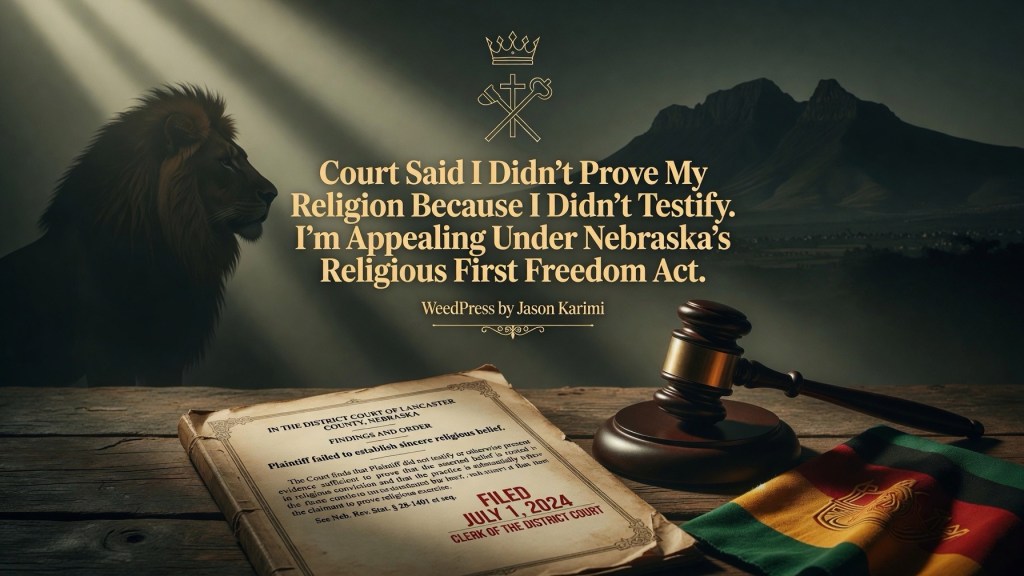
Today I filed a Notice of Appeal in Thurston County District Court challenging the July 1, 2026 Order that denied my motion to modify a probation condition under the Nebraska First Freedom Act.
The motion I filed sought a narrowly tailored religious accommodation allowing sacramental cannabis use consistent with my practice of the Rastafari faith. The district court denied the request after an evidentiary hearing held on April 8 in person in Thurston District Court. The sole basis for the denial was the court’s conclusion that I had not established a “sincerely held religious belief.”
The court reached that conclusion because I did not personally testify. Reverend Brandon Baker testified about the Rastafari faith and my participation. A Certificate of Ministry was received as evidence. The State offered no evidence disputing that Rastafari is a religion. Nevertheless, the court treated third-party testimony as merely “corroborative, but not on point” and stated that it lacked information about my personal beliefs. Because the court found the sincerity showing insufficient, it expressly declined to conduct any further analysis under the First Freedom Act.
That ruling presents a clean legal question for appellate review:
Does the Nebraska First Freedom Act require a claimant to personally testify in order to establish a sincerely held religious belief, or may a court evaluate the legal sufficiency of the evidence actually admitted at the hearing?
The Act defines the exercise of religion broadly and does not prescribe any exclusive method of proving sincerity. The question is whether the district court imposed an evidentiary requirement the statute does not contain.
I have requested the Bill of Exceptions from the April 8, 2026 hearing and the relevant pleadings so the appellate court will have a complete record. The appeal will focus on the legal standard applied to the sincerity determination and the court’s decision to end the analysis there.
This filing is about preserving the issue. The First Freedom Act was enacted to restore meaningful protection for religious exercise against government burdens. How courts apply the sincerity threshold will determine whether that protection is real or merely theoretical for people whose practices fall outside the majority tradition.
The Notice of Appeal, Request for Bill of Exceptions, and related documents have been submitted. The record will now be prepared, and the case will proceed in the ordinary course.
Jason Karimi
WeedPress
Here’s the exact checklist I followed based on Nebraska rules and the official self-help guide:
Required to Perfect the Appeal (Must be done within 30 days of order from July 1, 2026)
What Comes Later (After the appeal is perfected)
- The court reporter prepares the Bill of Exceptions
- The clerk prepares and transmits the record
- The Court of Appeals sets a briefing schedule
- Then you file the Appellant’s Brief
Bottom Line – What You Still Need to Do
- Finalize and file the Notice of Appeal
- Either pay the $100 docket fee or file a Poverty Affidavit
- File the Request for Bill of Exceptions
- (Strongly recommended) File a short request asking the clerk to prepare a transcript that includes the Motion, the July 1 Order, and related filings known as praecipe/request for transcripts
Once those are filed and the fee is paid (or waived), the appeal is perfected and you are “good to go” on the jurisdictional requirements.
I am not an attorney. This is not legal advice.
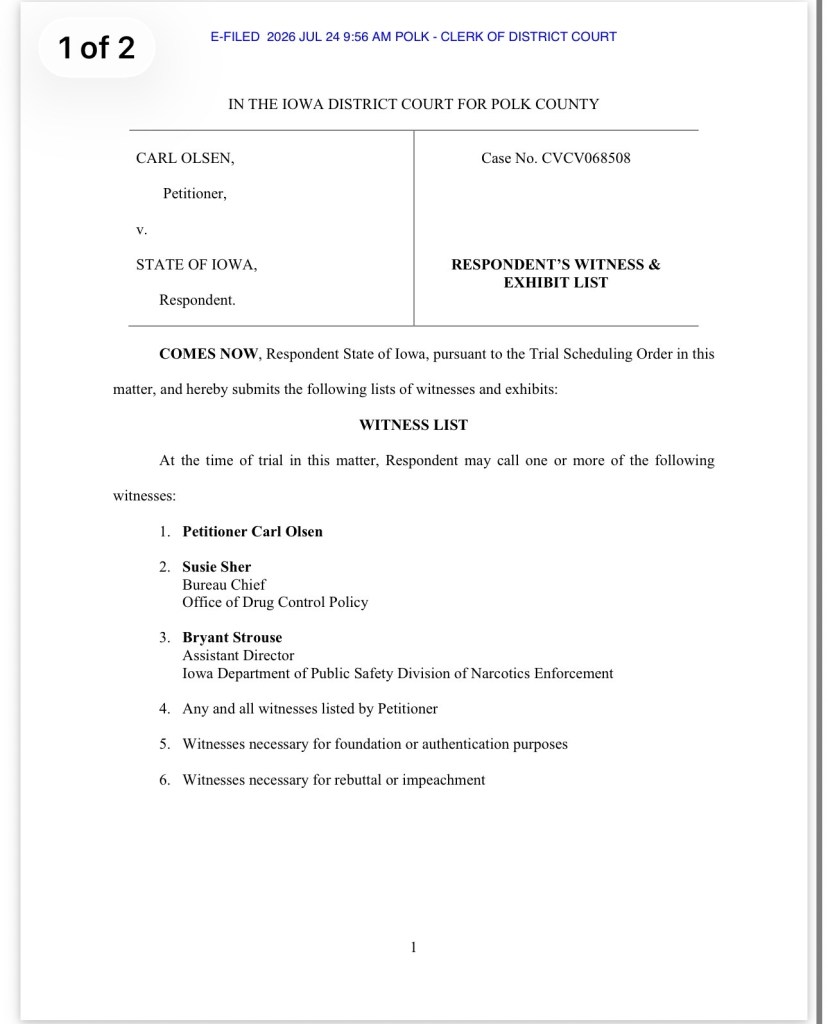
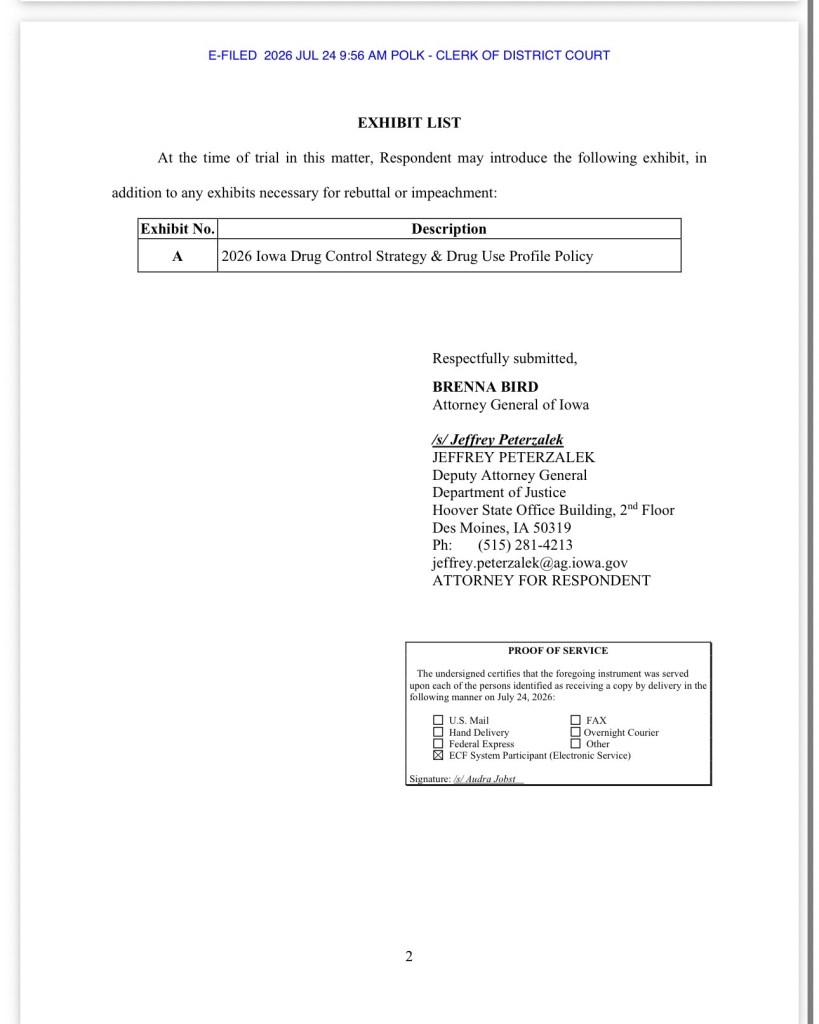
While the State didn’t call me to testify, the state of Iowa did call a religious claimant as a witness. I may submit this filing from the State of Iowa at my Nebraska appeal to show me driving 2.5 hours to court in Thurston County provided the state ample opportunity to question me but the state waived or declined the opportunity. This was noted during oral argument. I am awaiting court transcripts before writing my appeal brief.
Stay tuned for further updates on this post.
I will not stop complaining in court until the government gives me an official apology for harassing me for my religious practice. Until that happens – I will keep filing. I don’t care how long it takes. In summary – fuck you, apologize, and repair the constitutional injury.
Tyrants.
 WeedPress: The Paper Trail
Leave a comment