
Featured Analysis
-
Nebraska RFRA Religious Liberty Case Advances: Supplemental Authority Filed Citing Federal Schedule III Rescheduling
Defendant Jason Karimi has filed a Notice of Supplemental Authority in Nebraska District Court while his motion to modify probation conditions under the Nebraska First Freedom Act remains under advisement. The filing notifies the Court of the recent federal Schedule III rescheduling action and Defendant’s participation in the ongoing DEA administrative proceeding (Docket No. DEA-1362)…
-
The Refs May Be Wearing Green — Why the Cannabis Rescheduling Hearing Looks More Favorable Than It Has in Years
The June marijuana rescheduling hearing is not a guaranteed win for reform. But it is hard to deny that the current process looks more favorable to rescheduling than the federal government has looked in years. The reason is not secrecy or corruption. It is that the same administration that already moved FDA-approved marijuana products and…
-

DARE Poster Kid to Marijuana Regulation Advocate: My Unchanging Fight to Protect Kids
When I was in elementary school, the DARE program left a lasting impression. Officers visited regularly, warning us about the dangers of drugs and pushing the “just say no” message. I took it seriously. So when the school announced an anti-drug poster contest open to elementary students, I threw myself into creating something impactful. My…
-

Why Business Lawyers and Lawmakers Must Master the U.S. Reinterpretation of the Single Convention: Treaty Flexibility as the Foundation for Durable Cannabis Reform
The United States’ ongoing transformation of federal cannabis policy—from rigid Schedule I prohibition under the Controlled Substances Act (CSA) to a more nuanced regulatory framework—has long been cabined by claims of international legal constraint. For decades, the Drug Enforcement Administration (DEA) invoked the 1961 Single Convention on Narcotic Drugs as an absolute bar to any…
-
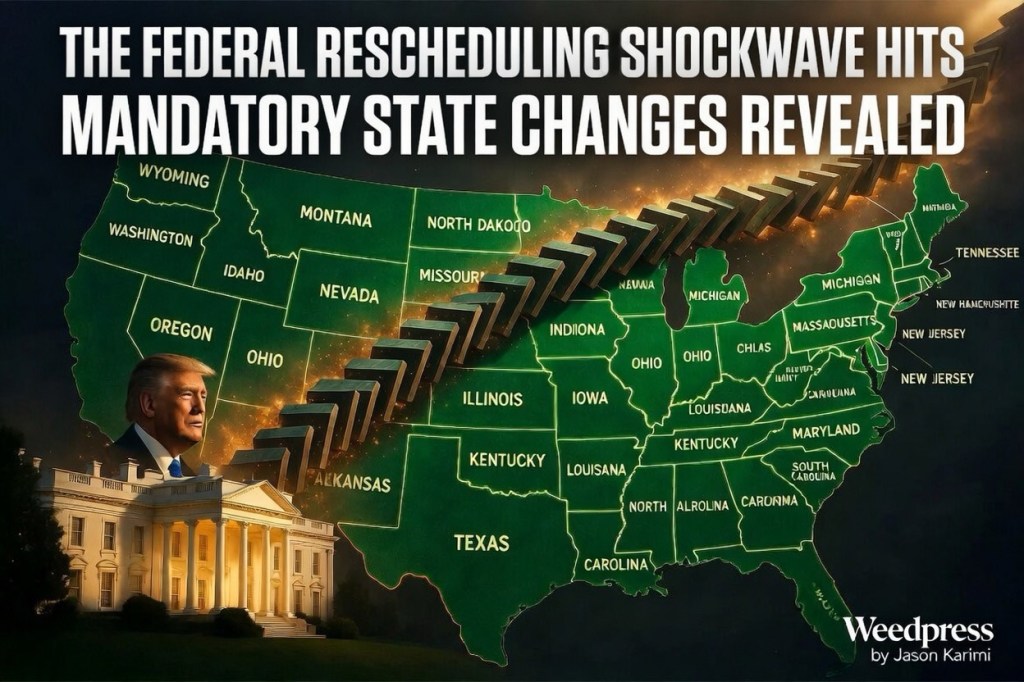
The Federal Rescheduling Shockwave Hits: South Carolina and 26 Other States Appear to Have Automatic or Mandatory Conformity Mechanisms for Federal Marijuana Scheduling Changes
Suggested citation: Karimi, Jason, The Federal Rescheduling Shockwave Hits: South Carolina and 26 Other States Appear to Have Automatic or Mandatory Conformity Mechanisms for Federal Marijuana Scheduling Changes (May 05, 2026). Available at SSRN: https://ssrn.com/abstract=6726361 In late April 2026, the Trump administration’s Department of Justice and DEA issued a final order moving FDA-approved drug products containing…
-
DEA Registration Decision Tree: 5 Questions Every Medical Operator Should Answer Before June 26
The June 26, 2026 deadline is not a suggestion. It is the cutoff for expedited DEA Schedule III registration under the new federal medical marijuana framework. File on time and you lock in six-month guaranteed processing, continued state-law operations during review, and the clearest path to improved banking and payments. Miss it and you fall…
Policy
-
MMOC Agenda For October 13 2026 Meeting Includes Federal Rescheduling Discussion By AG Office
The discussion continues. Federal and international law matters. All of us need to work together to make the state regulate and implement its own program and laws and not be lead by the Feds without state input. To register to speak during public comment, go here: Register at https://sdlegislature.gov/testify/307903. The form is on the October…
-
Authorized Partnerships: Lay Participation in Administrative Process and the South Dakota Cannabis File
A July 2026 working paper by Anthony M. Bertelli treats lay participation in administration as more than a courtesy window on a proposed rule.¹ The claim is institutional, not sentimental. Carefully designed participation, he argues, can function as an “authorized partnership”: a legally structured encounter in which ordinary people help keep public administration tied to…
-
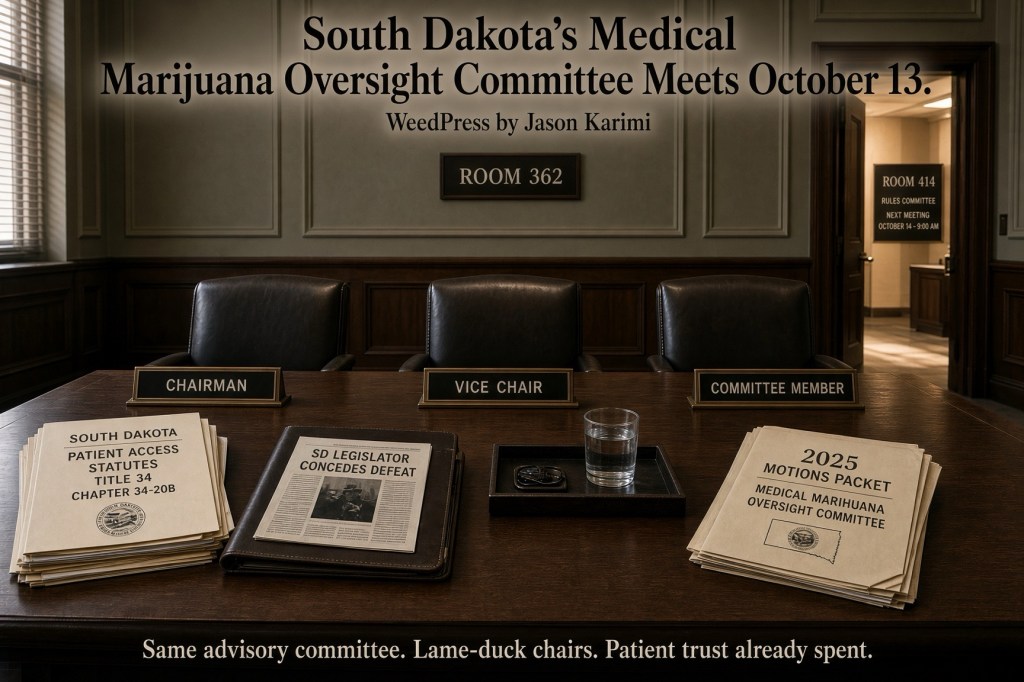
South Dakota’s Medical Marijuana Oversight Committee Meets October 13.
The South Dakota Legislature’s public schedule now lists a meeting of the Medical Marijuana Oversight Committee for Tuesday, October 13, 2026, at 11:00 a.m. in Room 362 at the State Capitol in Pierre.¹ For weeks the committee page showed the 2026 roster and the August materials and nothing else.² The date is now on the…
-
The Advantage Is Not Knowing More. It Is Knowing What to Do Next.
How mistakes, limited resources, and administrative law taught me to turn public information into decisions. There was a time when I thought the advantage was knowing something other people did not know. I do not think that anymore, after 17 obsessed years studying cannabis law and admin law as best as I can as often…
-
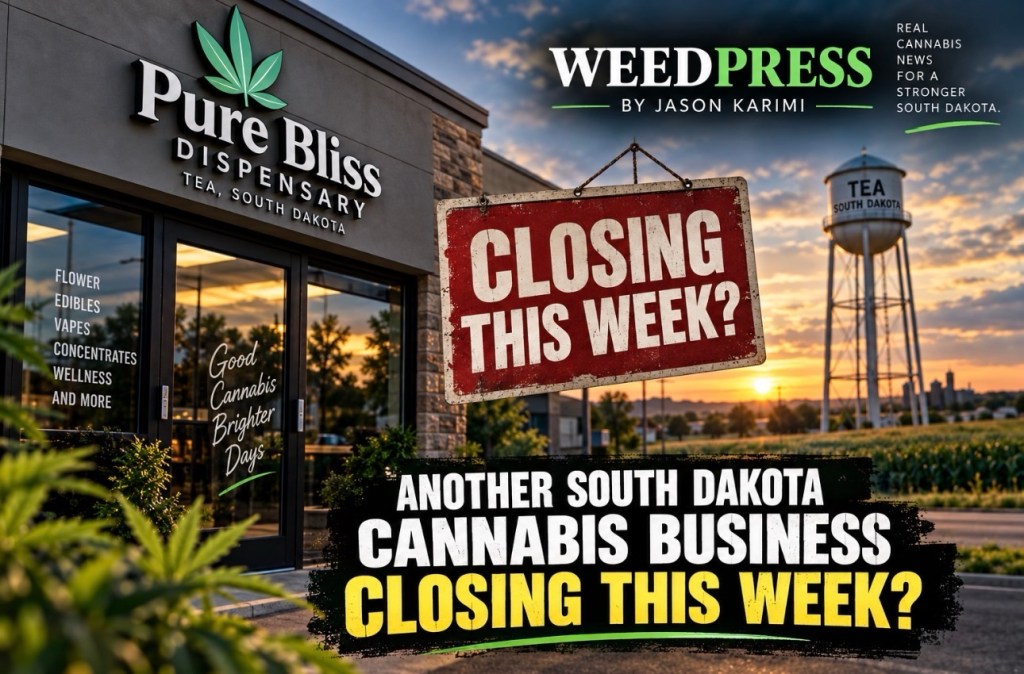
Pure Bliss Planned for Medical, Recreational and Expansion. Now Its Tea Dispensary Is Reportedly Closing.
Update 1: Pure Bliss confirmed via phone at the store on 9-27-26 is their last day and they are closing the dispensary permanently. A Reddit tip says the store will close September 27 while Pure Bliss Farms keeps growing. The closure is not yet confirmed—but the company’s original business plan raises a larger question about…
-
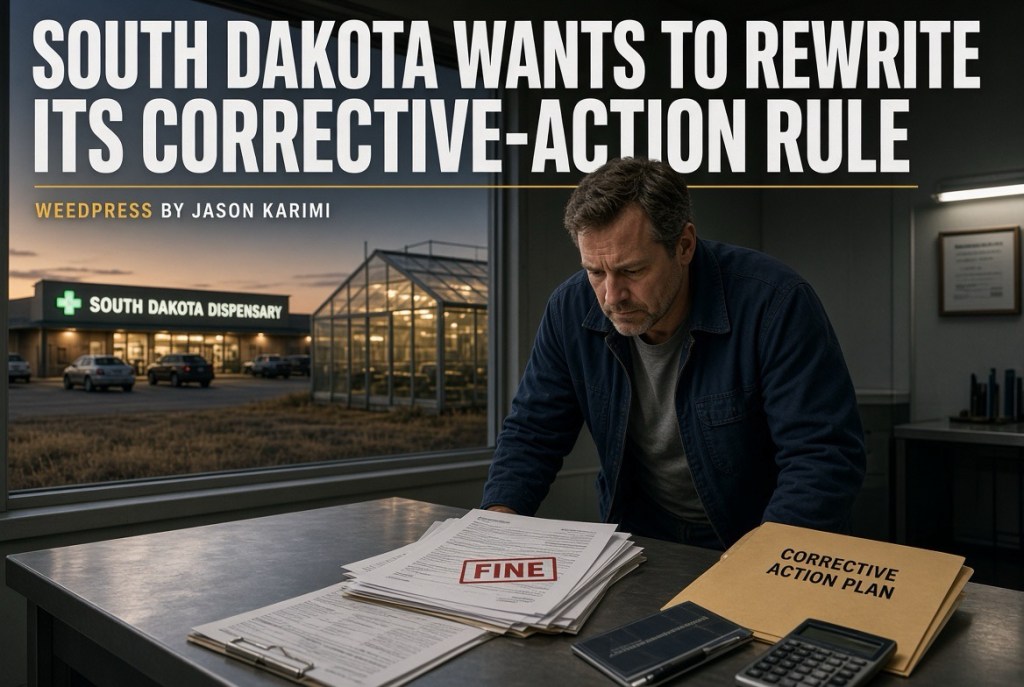
South Dakota Wants to Rewrite Its Corrective-Action Rule. The Fine Can Still Come With It.
The first article counted the amendments. This one reads the two enforcement sections together. South Dakota’s Department of Health is proposing to replace the first-offense dollar amounts for two categories of medical-cannabis violations with corrective-action plans.¹ That sounds straightforward until the Department’s proposed enforcement provisions are read together. Proposed § 44:90:12:11 says a first Category…
Law
-

605 Cannabis LLC Products Pulled From Shelves At 9 Fed Up Dispensaries In South Dakota.
Details soon. But the business arm of the far-left radical New Approach South Dakota lobbyist loser group has gotten caught being dishonest in the business world and is losing an estimated 50% of statewide product sales distribution channels. This group is too stupid to realize they’re hurting marijuana advocacy politically in South Dakota with their…
-

New Approach South Dakota Leadership Faces Down $800,000 Unpaid Rent Allegation, Foreclosure, and Domestic Assault Case
Reports state that the for-profit company associated with the far-left radicals at New Approach South Dakota is approximately $800,000 behind on rent at its cultivation facility.¹ No public court filing or Department of Health document currently confirms that amount.² What is on the public record is a set of personal legal matters involving New Approach…
-

WeedPress Requests Five Years of MMOC Communications with Outside Groups
WeedPress has submitted an open records request to the Legislative Research Council for communications and participation involving outside individuals and organizations in the Medical Marijuana Oversight Committee from October 19, 2021, through October 19, 2026.¹ The request seeks records concerning the Committee’s official business under SDCL § 34-20G-93, including emails, letters, text messages, attachments, speaker…
-
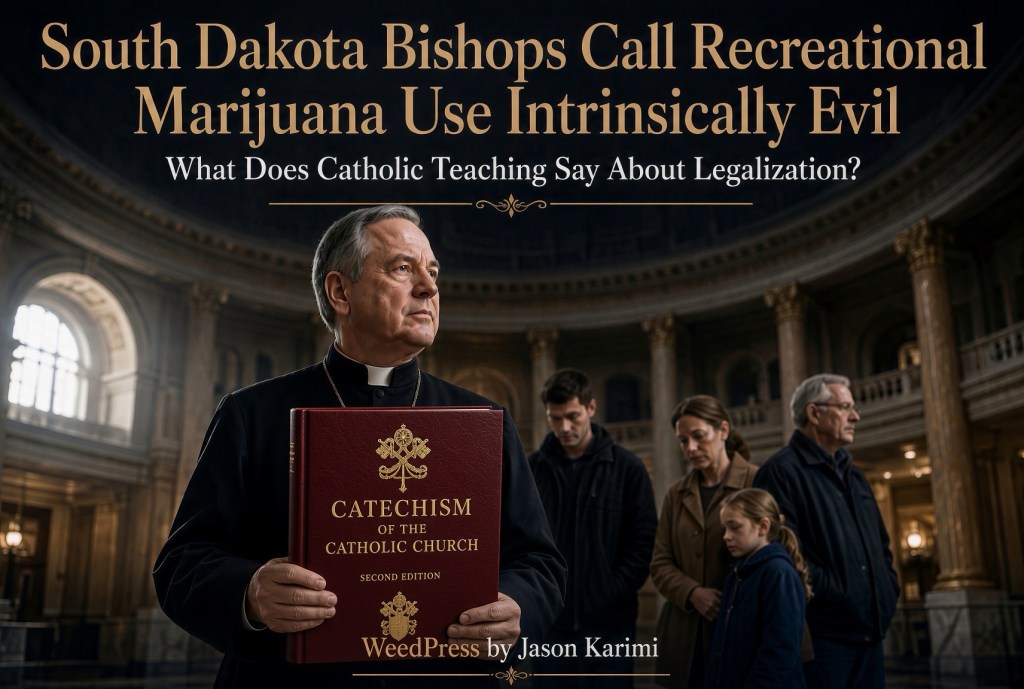
South Dakota Bishops Call Recreational Marijuana Use Intrinsically Evil. What Does Catholic Teaching Say About Legalization?
Does Catholic teaching necessarily condemn the legalization of a regulated adult-use market, or does it condemn the underlying non-therapeutic use while leaving room for different judgments about public policy? On October 16, 2026, Bishops Donald E. DeGrood of Sioux Falls and Scott E. Bullock of Rapid City issued a joint statement supporting Amendment L, a proposed…
-
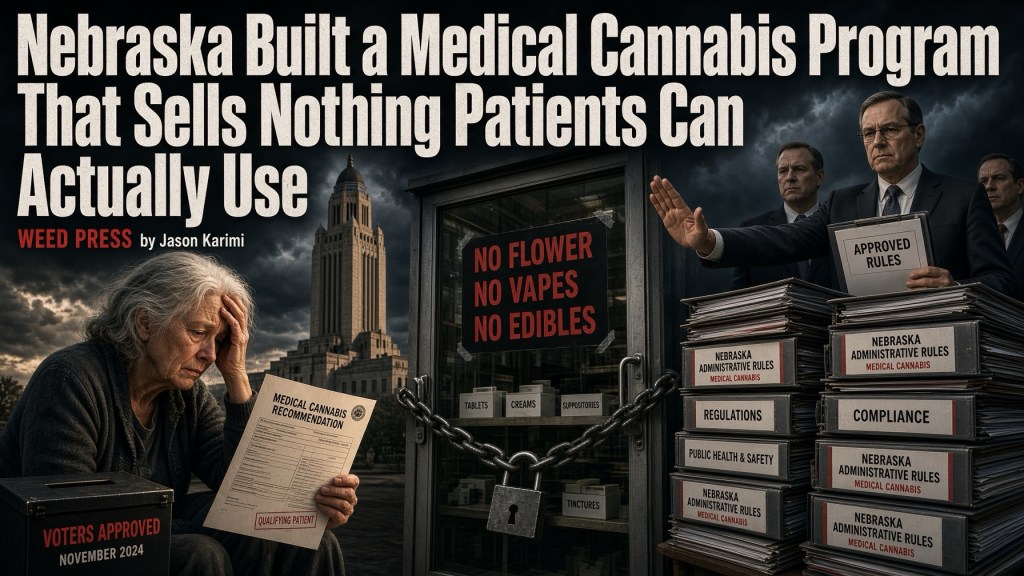
Nebraska Built a Medical Cannabis Program That Sells Nothing Patients Can Actually Use
Nebraska voters approved a medical cannabis law that lets qualified patients possess up to five ounces. The Nebraska Medical Cannabis Commission then adopted permanent rules that ban several familiar forms of medical cannabis, including flower, vaping products, and infused foods, while the regulated supply chain remains incomplete.¹ Under the permanent rules approved by the Attorney…
-
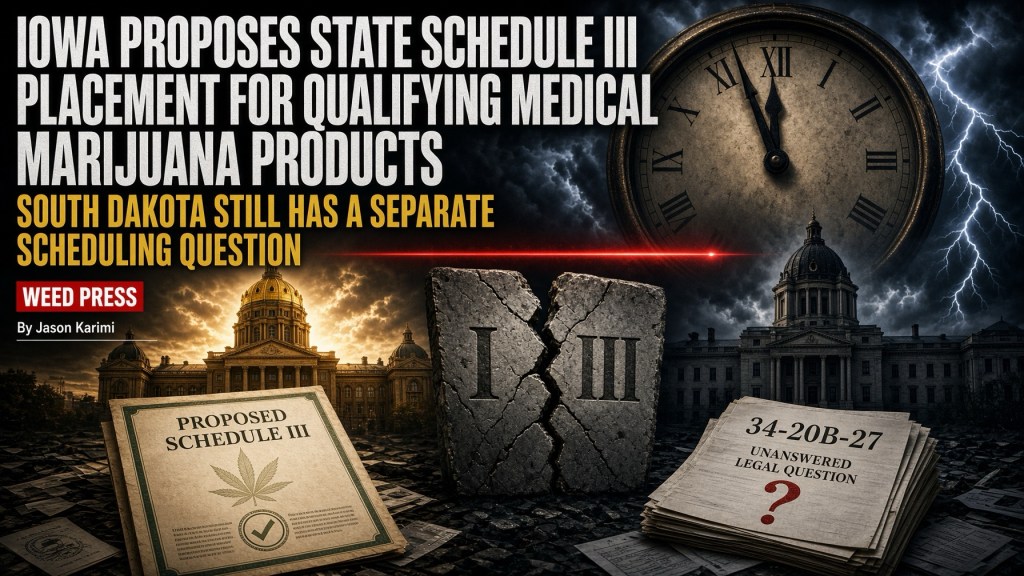
Iowa Proposes State Schedule III Placement for Qualifying Medical Marijuana Products. South Dakota Still Has a Separate Scheduling Question.
Iowa’s Board of Pharmacy is proposing to temporarily place certain medical marijuana products in Schedule III under the Iowa Controlled Substances Act, following the federal government’s April 28 rescheduling order.¹ The proposal, published September 30 as Regulatory Analysis RA 26-323, would add qualifying marijuana, marijuana extracts, and naturally derived delta-9-tetrahydrocannabinols to Iowa’s Schedule III when…
Science
-

When Public Advocates Attack Motives Instead of Answering Evidence
Public policy debates should be resolved by evidence, not by assumptions about the motives of the people participating in them. Yet it is common for substantive criticism to be met with claims that the critic is motivated by jealousy, a desire for power, or some other personal grievance rather than by the merits of the…
-
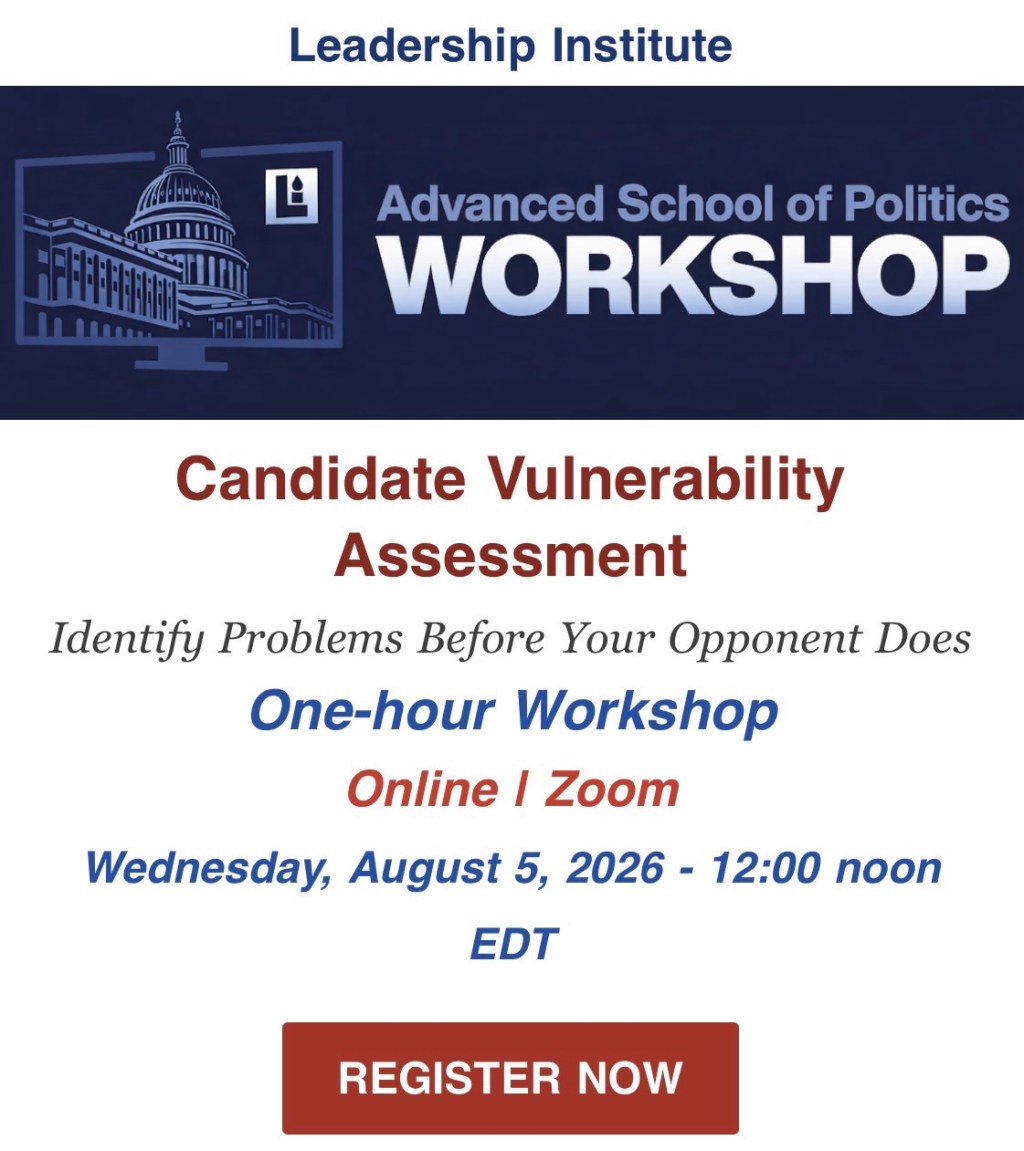
Online Workshop – Candidate Vulnerability Assessment
Every candidate enters a race with potential vulnerabilities. These may include previous statements, professional history, financial records, social media activity, personal relationships, policy positions, or inconsistencies in the candidate’s public record. https://leadershipinstitute.org/event/701VL00000xvu8MYAQ Campaigns often devote significant time and resources to researching their opponents while failing to conduct the same level of research on their own…
-
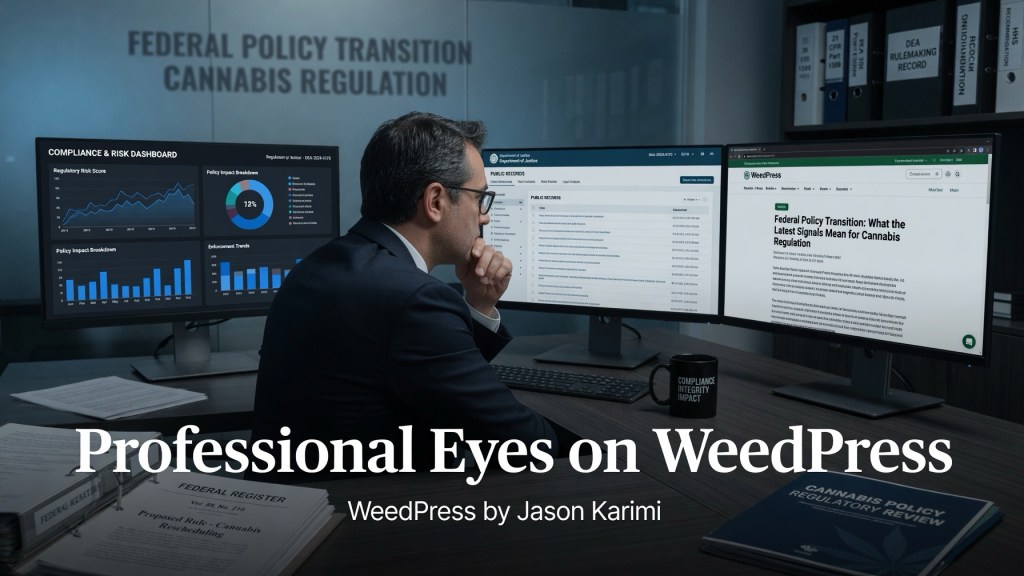
Professional Eyes on WeedPress: What an Exiger Referral Means
Analytics occasionally reveal more than pageviews. One recent referral to WeedPress came from insight.exiger.com. That domain belongs to Exiger, a global risk, compliance, and investigative intelligence firm. Their Insight platform is used by corporations, law firms, financial institutions, and investigative teams to conduct due diligence, monitor public information, and assess risk. When traffic arrives from…
-

Working in Huron’s Federal Building Today — and a Reminder of What Rounds’ Staff Said Last Summer
I’m in Huron today working at the federal building, troubleshooting and repairing an IT failure for the offices here. While on site, conversations with staff turned to cannabis policy and federal rescheduling. It brought back a discussion I had last summer while installing computers in Senator Mike Rounds’ offices in Pierre. During that work, staff…
-
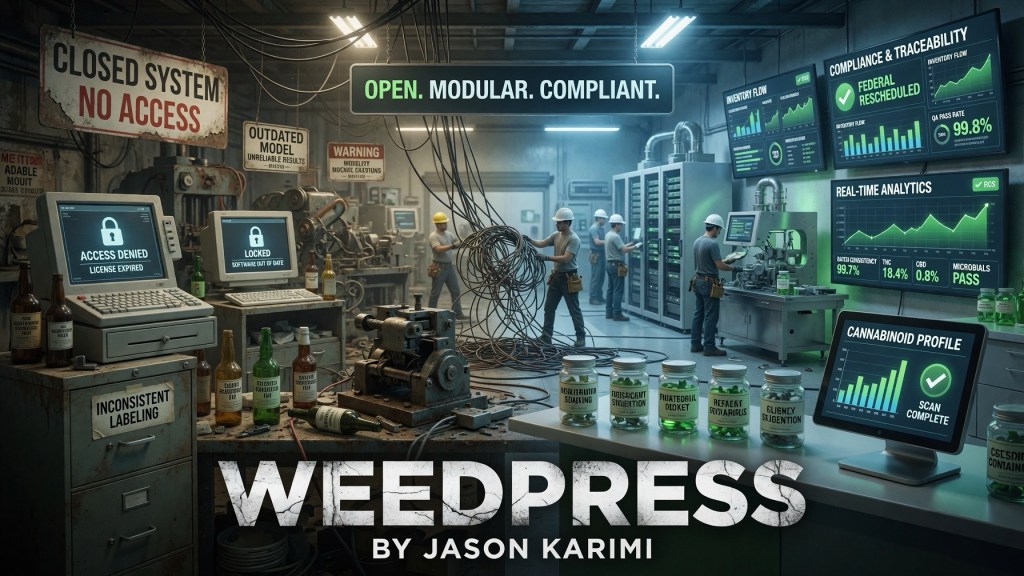
Cannabis Is Being Rebuilt From the Ground Up: Closed Technology Systems and Medical Gaps Force a New Foundation
The cannabis industry is still operating on incomplete infrastructure—both technological and scientific. That was the central message of a recent Trade to Black episode from The Dales Report, featuring Flowhub founder and CEO Kyle Sherman and Dr. Paul Shields.¹ The conversation made clear that many of the systems currently supporting cannabis retail and medical use…
-
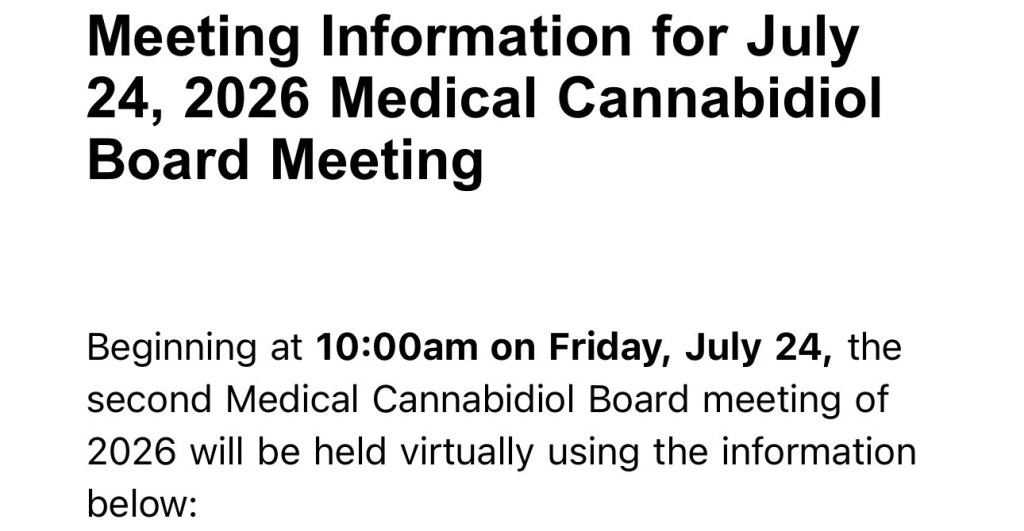
Iowa Medical Cannabis Board Public Meeting This Friday July 24 (DETAILS) (YOUTUBE)
Update: video is linked below of this meeting: Meeting Information for July 24, 2026 Medical Cannabidiol Board Meeting Beginning at 10:00am on Friday, July 24, the second Medical Cannabidiol Board meeting of 2026 will be held virtually using the information below: Zoom Link Telephone: 669-254-5252 Webinar ID: 165-677-2462 * For those who wish to participate in the public comment period…
Current Events
-
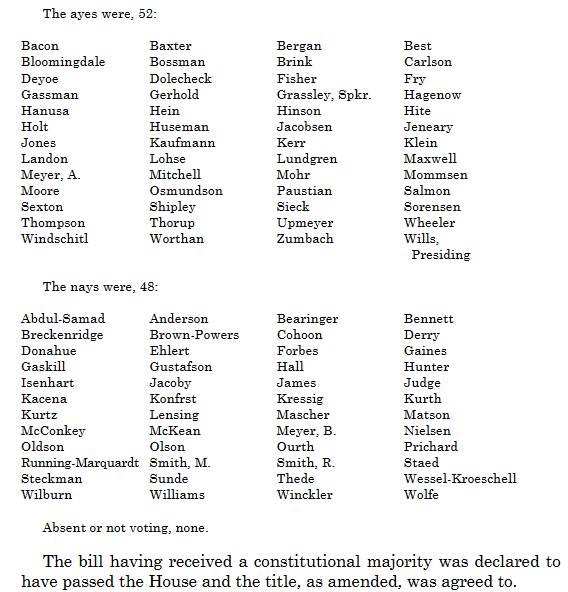
So Why Did 47 Iowa House Democrats Vote Against Expanding Iowa’s Marijuana Program In 2020?
Iowa Democrats seem to have sold out Iowa marijuana patients in 2020. Will they sell Iowa patients out again in 2021? This was the results of the House vote on a bill that added additional conditions and removed the THC cap in Iowa, House File 2589, which Republican Governor Kim Reynolds signed last year: Everyone…
-

How To Analyze Social Media Accounts To Destroy Political Opponents Effectively
I’ve decided to mirror the entire article from this website below. This adds a tremendous value to WeedPress followers in case it is ever deleted or hidden by Brandy for various reasons. Like, if Brandy ever grows something resembling a conscience, or gets some basic ethics, maybe. https://datajournalism.com/read/handbook/verification-3/investigating-actors-content/how-to-analyze-social-media-accounts This is truly fascinating stuff to be…
-
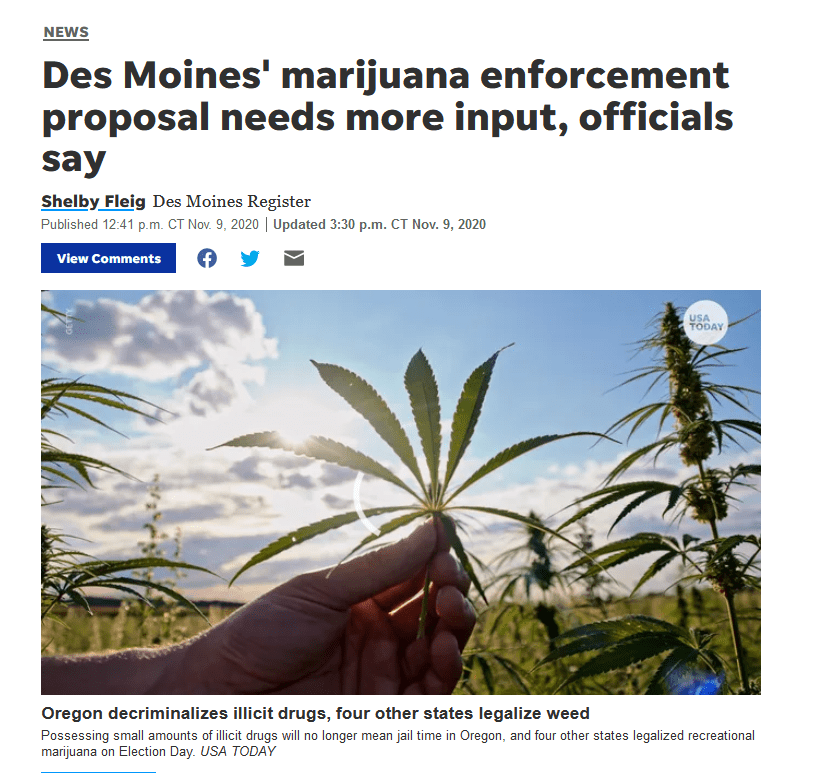
Des Moines Register: Des Moines’ marijuana enforcement proposal needs more input, officials say
This doesn’t look too good for Des Moines police public relations here. The Des Moines City manager, however, as well as lawyer Gary Dickey, are on point. From this Des Moines Register article today: The resolution forming the task force promised a Des Moines Police Department official would be made available for consultation as needed.…
-
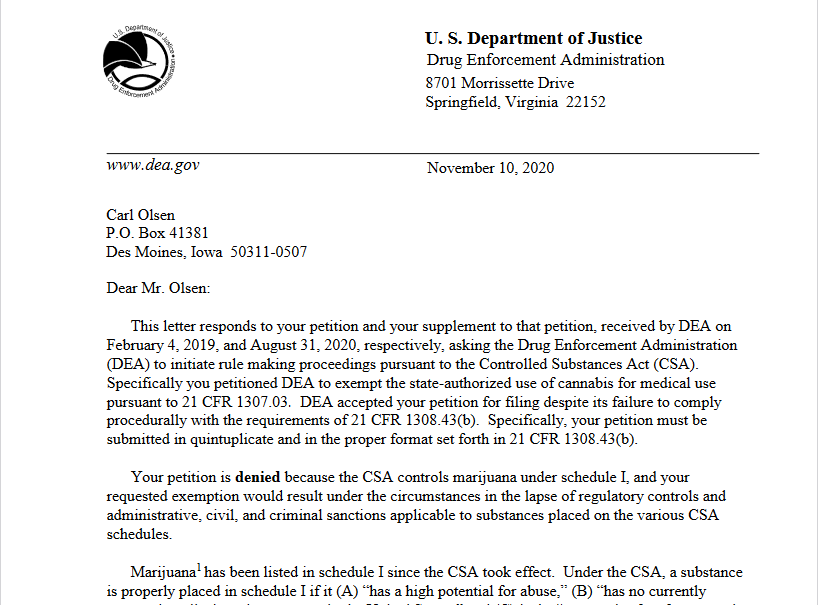
DEA Response To Iowa’s Petition To Exempt Iowa State Medical Cannabis Patients From Legal Burdens, November 10 2020
To read the letter from the Drug Enforcement Administration to Iowans for Medical Marijuana founder Carl Olsen, follow this link: https://www.iowamedicalmarijuana.org/pdfs/dea-response-2020-11-10.pdf You can also download the pdf file, mirrored here at this WeedPress link: For more Iowa breaking news on marijuana advocacy efforts, follow WeedPress on Facebook.
-

Agenda: November 13, 2020 Virtual Medical Cannabidiol Board Meeting
View the original post at https://content.govdelivery.com/accounts/IACIO/bulletins/2aae0d2 Agenda: November 13, 2020 Virtual Medical Cannabidiol Board Meeting Having trouble viewing? View this as webpage 11/9/2020 Agenda: November 13, 2020 Virtual Medical Cannabidiol Board Meeting Beginning at 10:00am on Friday, November 13, 2020, the final Medical Cannabidiol Board meeting of 2020 will be held virtually using the information below: WebEx Link (Click…
-

Received An Interview Request To Discuss Des Moines Decriminalization Efforts And Election Impact
I received the following email this week: I host a progressive podcast and am a supporter of legal marijuana. Do you have someone who could do a Zoom interview on the election and also comment on this task force? https://www.desmoinesregister.com/story/news/2020/11/06/des-moines-marijuana-enforcement-task-force-finalizes-report/5867244002/Please let me know? Thank you!All the best,George A. Clarkwww.podcastbygeorge.com George has over 200 episodes completed.…
Legislation
-
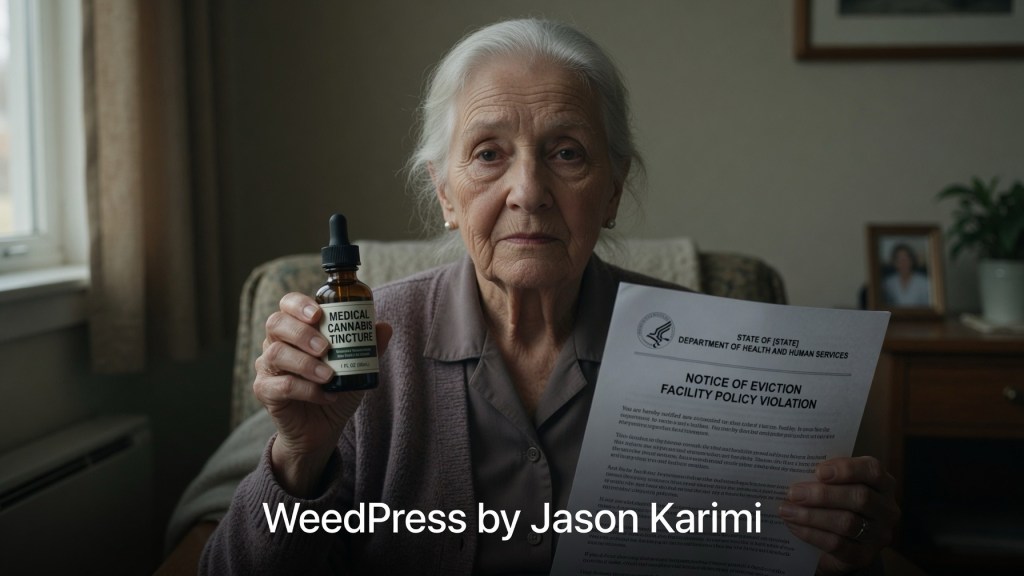
The Patients Left Behind: How South Dakota’s Medical Cannabis Law Still Punishes the Sickest Among Us
In Iowa recently, a 91-year-old woman was told she had to leave the nursing home she called home because she used medical cannabis to manage her pain and symptoms. The facility gave her an ultimatum: stop using the medicine her doctor supported, or move out. She refused. The case went to court. What should have…
-
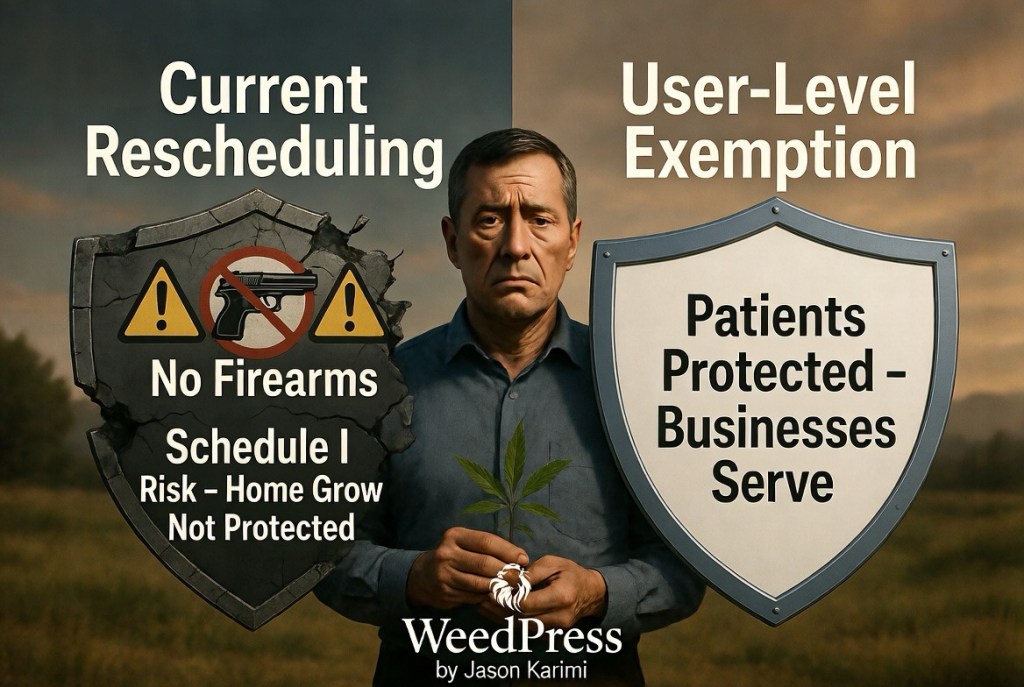
Patient Legal Risks Solved: A User-Level Exemption Model for Schedule III
The April 28, 2026 federal partial rescheduling order left a significant gap: personal home cultivation was not included in the narrow categories moved to Schedule III. Colorado attorneys Brian Vicente and Rachel Gillette have been direct about the practical consequences. Vicente noted that home grows do not qualify for the new federal registration pathway because…
-
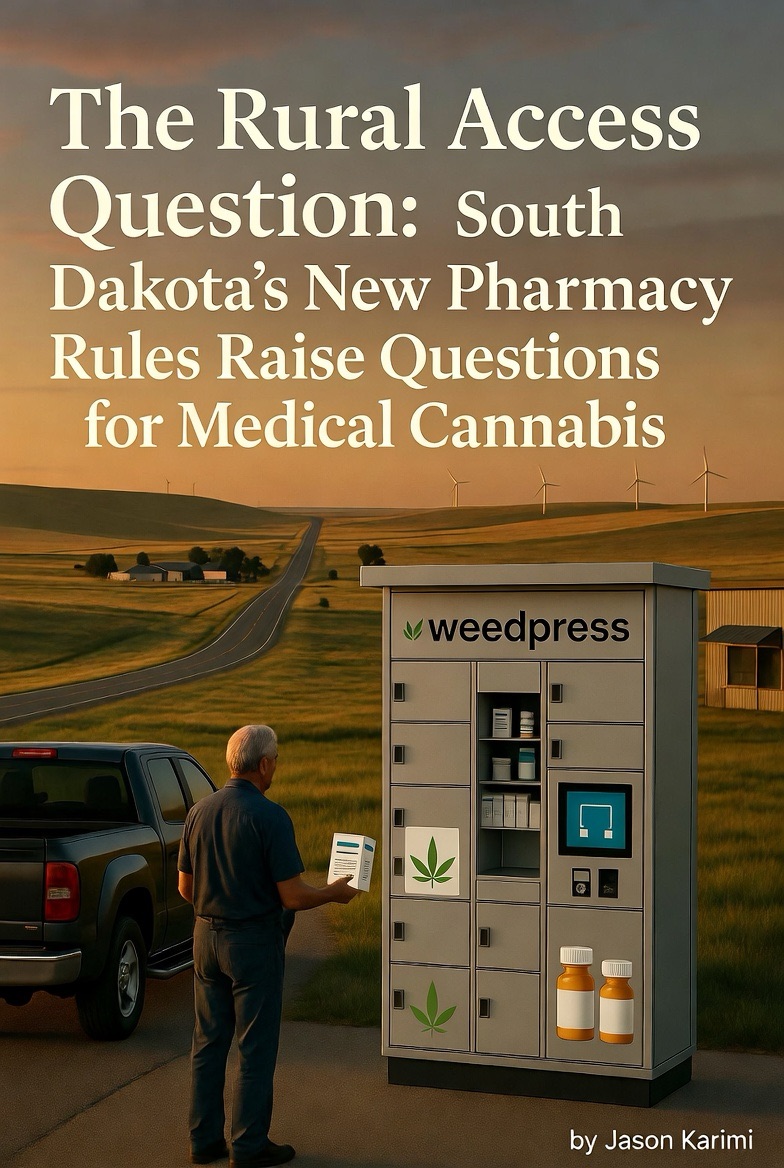
The Rural Access Question South Dakota’s New Pharmacy Rules Raise for Medical Cannabis
As regulators embrace telepharmacy and remote prescription pickup, policymakers may eventually face similar questions about medical cannabis access in rural communities. South Dakota’s Board of Pharmacy is advancing updated rules under Article 20:51 of the Administrative Rules of South Dakota (ARSD) that formalize the use of remote drop sites for prescription medications and introduce a…
-
Stork Just Sent a Researcher to WeedPress: What Academic Tools Mean for Cannabis Policy Analysis
Independent statutory deep-dives are showing up alongside peer-reviewed literature in researchers’ workflows. It’s not every day your analytics dashboard lights up with a referrer you’ve never seen before. Today, May 5, 2026, WeedPress received a visit from paper-box.co — the domain tied to Stork (storkapp.me), a specialized publication-tracking and research intelligence platform used by academics,…
-

Why Cannabis Operators Can’t Afford to Ignore the Federal Rescheduling Details — And What You Must Do Now
The federal government has split cannabis into two tracks. FDA-approved drug products containing marijuana and marijuana activity tied to a qualifying state-issued medical marijuana license under the new federal framework now occupy a different federal posture, while broader marijuana remains in Schedule I pending further proceedings.¹ That split is real, immediate, and carries tax, compliance,…
-

WeedPress Looked Deeper: Congress’ Quiet Move to Block Trump’s Cannabis Rescheduling — and Why It Threatens Operators
The quietest threat to the federal cannabis shift is not coming from DEA’s June hearing. It is coming from the House appropriations process. On May 13, 2026, the full House Appropriations Committee is scheduled to mark up the FY2027 Commerce, Justice, Science (CJS) bill after the CJS subcommittee approved its version on April 30. Buried…
RFRA Updates
-

Iowa Found a Religious Cannabis Claim Sincere — Then Denied the Injunction Because Hemp Already Sells THC
A Polk County judge found Carl Olsen’s religious cannabis claim sincere but held that Iowa’s legal hemp market meant he had not shown that marijuana enforcement substantially burdened the particular religious exercise he presented.¹ The September 10, 2026 order in Olsen v. State of Iowa is not a ruling that sacramental cannabis is unprotected. It…
-
Nebraska First Freedom Act RFRA Appeal: Notes On General Language In Judicial Opinions
Türkiye Halk Bankası / Illinois v. Lidster: general language in an opinion is about the case then in front of the Court, not every later fact pattern. He is telling you not to treat a sentence from O Centro or a church case as a machine that prints a win for a lone probationer in…
-
$150: Paying for the Record in Nebraska’s First Freedom Act Appeal
On Wednesday, August 26, 2026, I mailed a $150 cashier’s check to the Thurston County District Court at P.O. Box 216, Pender, Nebraska 68047. The check covers the estimated cost of the Bill of Exceptions for the April 8, 2026 evidentiary hearing on my request to modify a probation condition under Nebraska’s First Freedom Act.¹…
-

Court Said I Didn’t Prove My Religion Because I Didn’t Testify. I’m Appealing Under Nebraska’s Religious “First Freedom Act”
Today I filed a Notice of Appeal in Thurston County District Court challenging the July 1, 2026 Order that denied my motion to modify a probation condition under the Nebraska First Freedom Act. The motion I filed sought a narrowly tailored religious accommodation allowing sacramental cannabis use consistent with my practice of the Rastafari faith.…
-

Nebraska RFRA Appeal Argument, July 21, 2026
ARGUMENT I. The District Court Erred by Treating Defendant’s Personal Testimony as Effectively Indispensable to Establishing Sincerity Under the Nebraska First Freedom Act. The district court denied Defendant’s motion on the ground that he failed to establish a “sincerely held religious belief.” The court reasoned as follows: “There was no direct evidence of Defendant’s sincerely…
-
Clarifying the Burden of Proof on Religious Sincerity Under RFRA and the Nebraska First Freedom Act
This submission addresses the proper burden of proof regarding religious sincerity under the Religious Freedom Restoration Act (“RFRA”), 42 U.S.C. § 2000bb-1, and the Nebraska First Freedom Act, Neb. Rev. Stat. § 20-1701 et seq., in the context of a probation modification request seeking a religious exemption for the sacramental use of cannabis. Legal Standard:…
Upcoming Events
-

They Don’t Get To License The Press
Recent reporting indicates a Florida judge extended a temporary restraining order involving James O’Keefe and also ordered firearm surrender pending further proceedings. Whether that order is a pure First Amendment prior-restraint problem depends on what it actually forbids. If it regulates threats, contact, or violence, that is one thing; if it blocks publication, reporting, or…
-
Iowa Medical Cannabis Board Hearing Friday March 27 (DETAILS)
Meeting Information: March 27, 2026 – Medical Cannabidiol Board Beginning at 10:00am on Friday, March 27 the first Medical Cannabidiol Board meeting of 2026 will be held virtually using the information below: Join this meeting using the following link: Zoom Link Passcode: 770850 Telephone: 669 –254- 5252 Webinar ID: 161-650-4929 * For those who wish to participate in the public comment…
-
Nebraskans for Medical Marijuana Launches Statewide Town Hall Tour
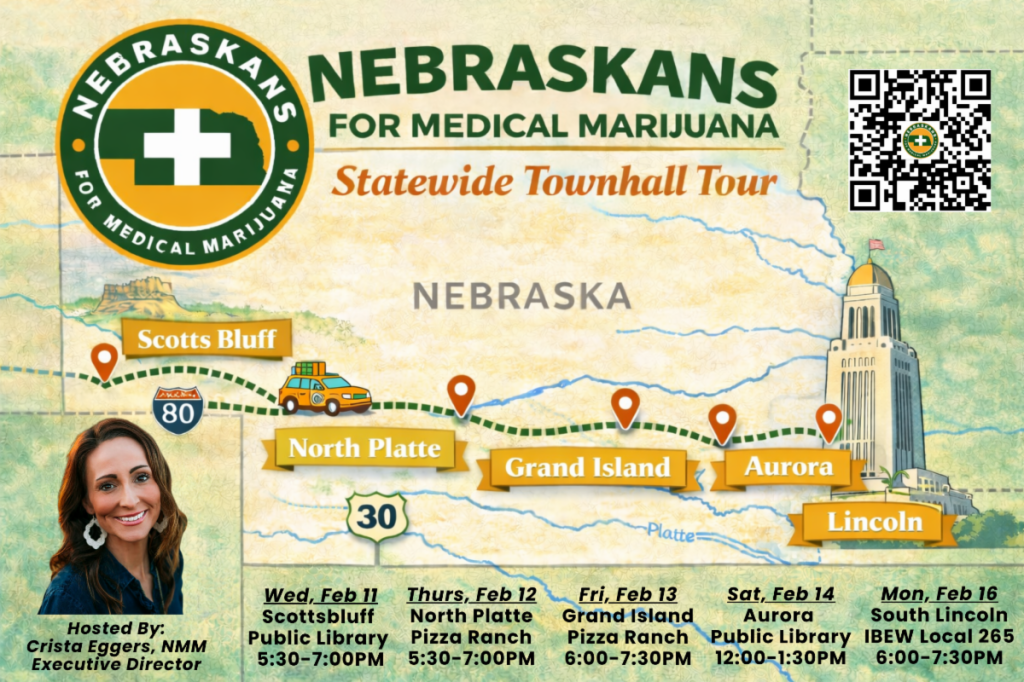
Nebraskans for Medical Marijuana Launches Statewide Town Hall Tour By Jason Karimi | WeedPress | February 7, 2026 Scottsbluff to Lincoln: Advocates Take Patient Access Conversation Across the State Nebraskans for Medical Marijuana (NMM) is hitting the road this week with a statewide town hall tour aimed at updating patients, families, and community members on…
-

Federal Public Comment Available Now (Texas Too)
Public input needed! Federal first then Texas: Federal Update: CMS & Hemp-Derived Cannabinoids On November 28, the Centers for Medicare & Medicaid Services (CMS) filed a proposed ruleto incorporate the federal definition of hemp that will take effect on November 12, 2026. This proposed rule clarifies that cannabis or hemp-derived products illegal under federal or state…
-
Tomorrow: Best Attorneys Discuss Federal Rescheduling At Noon
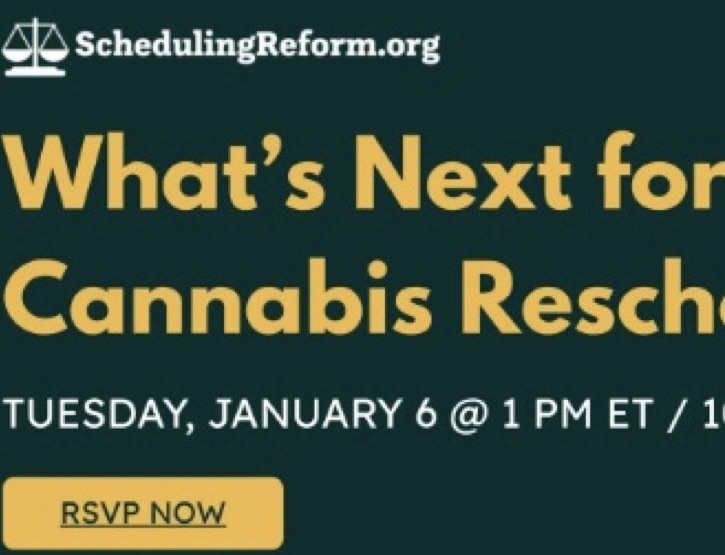
https://x.com/jamiecampbell/status/2006159843267145790?s=46 RSVP and attend at noon central/ 1 eastern 1-6-2025 Be there or be square. Link also here: https://us06web.zoom.us/webinar/register/WN_UKmdX9EBQs2HYOW7epomvA#/registration
-
Reminder: Rising to the Moment: Protecting and Advancing Cannabis Legalization in a Changing America
Rising to the Moment: Protecting and Advancing Cannabis Legalization in a Changing America Date & TimeDec 17, 2025 12:00 PM Central Time (US and Canada) Webinar ID815 7712 0875 Description BGM and Marijuana Policy Project (MPP) invite you to join us for a timely discussion on the current state of the national legalization landscape. We will…
For The Record (2026), By Jason Karimi
-
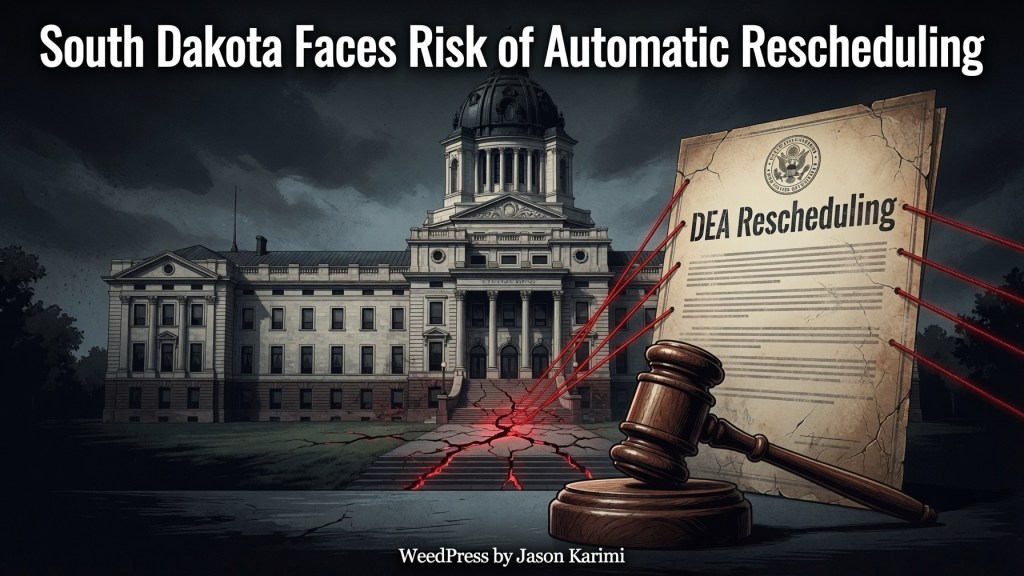
South Dakota Faces Risk of Automatic Rescheduling Under Existing Statutory Language
The recent action by Wyoming’s Attorney General demonstrates that states are increasingly recognizing the legal significance of federal marijuana rescheduling where state statutes incorporate federal scheduling decisions. South Dakota’s existing statutory language raises similar questions that should be addressed before federal reform takes effect. WeedPress has previously warned that South Dakota law contains automatic trigger…
-
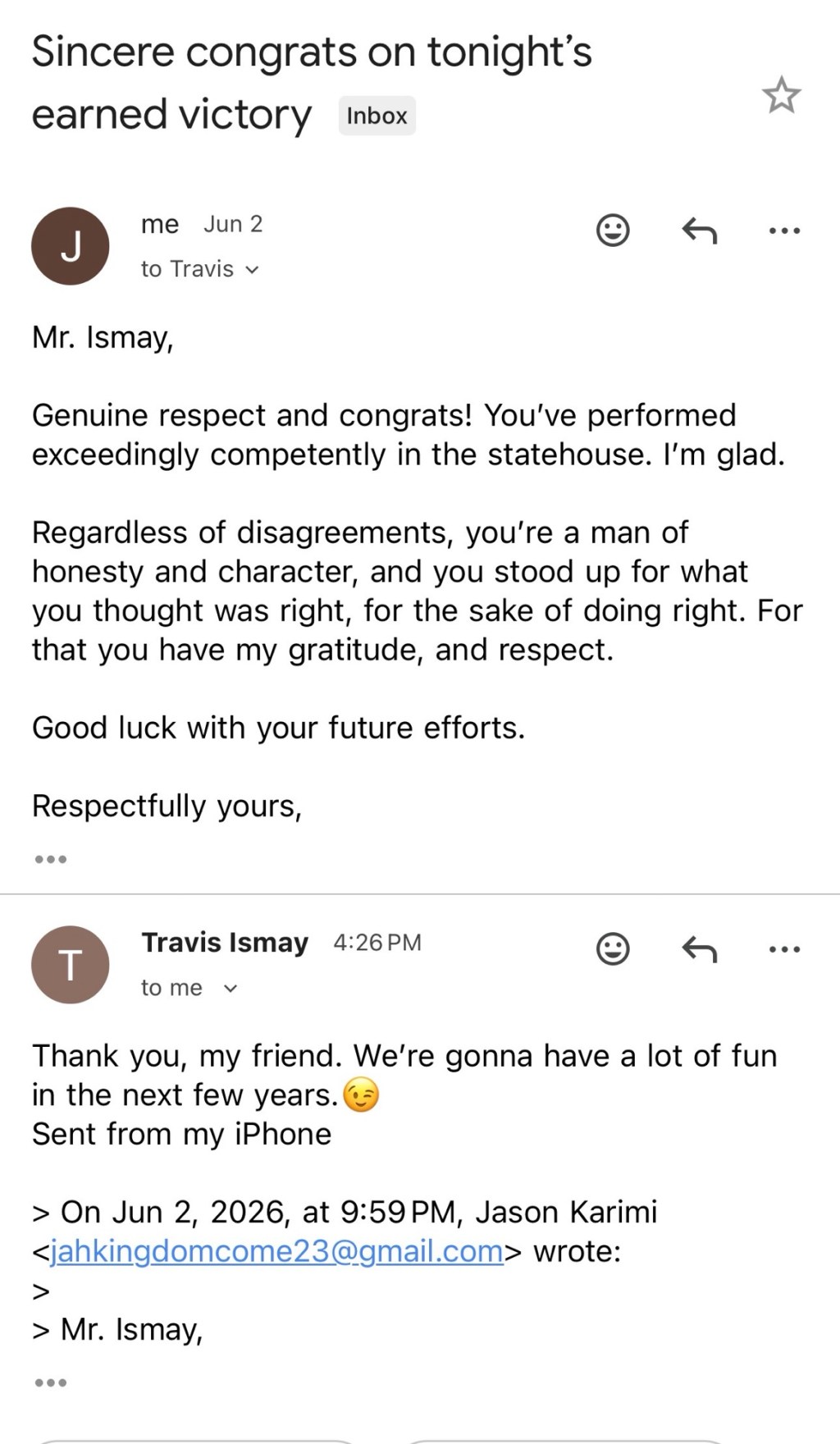
Travis Ismay Responds to My Congratulatory Email: A Small Step Toward Civil Discourse in South Dakota Politics
Yesterday, Rep. Travis Ismay (R-House District 28B) replied to the congratulatory email I sent him shortly after his decisive Republican primary victory on June 2.¹ For context, here is the full exchange: My email (June 2, 2026): For context, here is the full exchange: It’s a brief, gracious response — and one I appreciate. Background…
-
DARE Poster Kid to Marijuana Regulation Advocate: My Unchanging Fight to Protect Kids
When I was in elementary school, the DARE program left a lasting impression. Officers visited regularly, warning us about the dangers of drugs and pushing the “just say no” message. I took it seriously. So when the school announced an anti-drug poster contest open to elementary students, I threw myself into creating something impactful. My…
-

Chapter 10: What Remains
Table of Contents Preface Chapter 1 — The First ArrestEarly rupture, authority, and the beginning of resistance Chapter 2 — Before the File Was Opened Gifted education, faith, discipline, and early legitimacy Chapter 3 — Becoming a ProblemWork, exhaustion, collapse, and the cost of visibility Chapter 4 — Learning the Language of PowerCourts, probation, jail, campaigns, and proximity to decision-makers…
-

Chapter 9: The Record vs. the Narrative
Table of Contents Preface Chapter 1 — The First ArrestEarly rupture, authority, and the beginning of resistance Chapter 2 — Before the File Was Opened Gifted education, faith, discipline, and early legitimacy Chapter 3 — Becoming a ProblemWork, exhaustion, collapse, and the cost of visibility Chapter 4 — Learning the Language of PowerCourts, probation, jail, campaigns, and proximity to decision-makers…
-

Chapter 8: What the Media Gets Wrong
Table of Contents Preface Chapter 1 — The First ArrestEarly rupture, authority, and the beginning of resistance Chapter 2 — Before the File Was Opened Gifted education, faith, discipline, and early legitimacy Chapter 3 — Becoming a ProblemWork, exhaustion, collapse, and the cost of visibility Chapter 4 — Learning the Language of PowerCourts, probation, jail, campaigns, and proximity to decision-makers…
-

Chapter 7: Why I Never Left
Table of Contents Preface Chapter 1 — The First ArrestEarly rupture, authority, and the beginning of resistance Chapter 2 — Before the File Was Opened Gifted education, faith, discipline, and early legitimacy Chapter 3 — Becoming a ProblemWork, exhaustion, collapse, and the cost of visibility Chapter 4 — Learning the Language of PowerCourts, probation, jail, campaigns, and proximity to decision-makers…
-

Chapter 6: Staying Power
Table of Contents Preface Chapter 1 — The First ArrestEarly rupture, authority, and the beginning of resistance Chapter 2 — Before the File Was Opened Gifted education, faith, discipline, and early legitimacy Chapter 3 — Becoming a ProblemWork, exhaustion, collapse, and the cost of visibility Chapter 4 — Learning the Language of PowerCourts, probation, jail, campaigns, and proximity to decision-makers…
-

Chapter 5: The Apprenticeship
Table of Contents Preface Chapter 1 — The First ArrestEarly rupture, authority, and the beginning of resistance Chapter 2 — Before the File Was Opened Gifted education, faith, discipline, and early legitimacy Chapter 3 — Becoming a ProblemWork, exhaustion, collapse, and the cost of visibility Chapter 4 — Learning the Language of PowerCourts, probation, jail, campaigns, and proximity to decision-makers…
-

Chapter 4: Learning the Language of Power
Table of Contents Preface Chapter 1 — The First ArrestEarly rupture, authority, and the beginning of resistance Chapter 2 — Before the File Was Opened Gifted education, faith, discipline, and early legitimacy Chapter 3 — Becoming a ProblemWork, exhaustion, collapse, and the cost of visibility Chapter 4 — Learning the Language of PowerCourts, probation, jail, campaigns, and proximity to decision-makers…
-

Chapter 3: Becoming a Problem
Table of Contents Preface Chapter 1 — The First ArrestEarly rupture, authority, and the beginning of resistance Chapter 2 — Before the File Was Opened Gifted education, faith, discipline, and early legitimacy Chapter 3 — Becoming a ProblemWork, exhaustion, collapse, and the cost of visibility Chapter 4 — Learning the Language of PowerCourts, probation, jail, campaigns, and proximity to decision-makers…
-

Chapter 2: Before the File Was Opened
Table of Contents Preface Chapter 1 — The First ArrestEarly rupture, authority, and the beginning of resistance Chapter 2 — Before the File Was Opened Gifted education, faith, discipline, and early legitimacy Chapter 3 — Becoming a ProblemWork, exhaustion, collapse, and the cost of visibility Chapter 4 — Learning the Language of PowerCourts, probation, jail, campaigns, and proximity to decision-makers…
Commentary
-
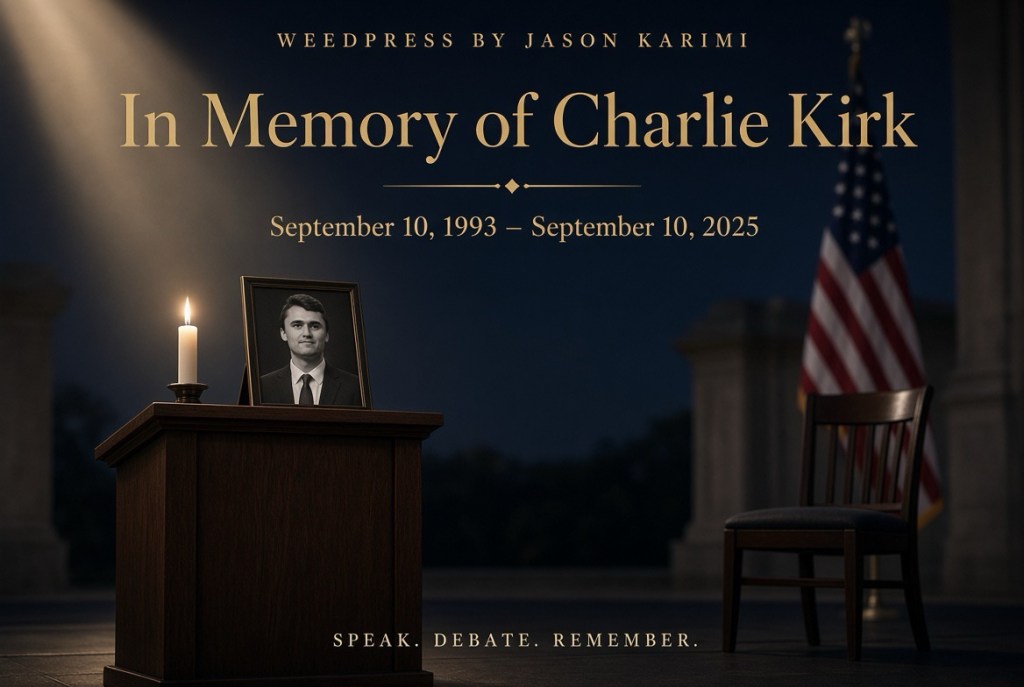
What Did Charlie Kirk Teach Americans?
On the one year anniversary when peaceful, polite, kind, remarkably respectful public dialogue assassinated Charlie Kirk’s service to humanity, a new resolve: stop explaining to an indifferent and uninterested public, and just file paperwork. Put up and shut up saves energy. Some people cannot be reasoned with. Some are emotional wack jobs. I used to…
-
The Dunning–Kruger Effect Is Not a Meme. It Is a Warning About Who Gets to Talk With Certainty
The popular version of the Dunning–Kruger effect is a punchline: stupid people are loud, smart people are humble. That is not what the research says, and it is a sloppy way to run a public argument. The actual claim is narrower and more useful. In domains that require skill, the same gaps that produce bad…
-
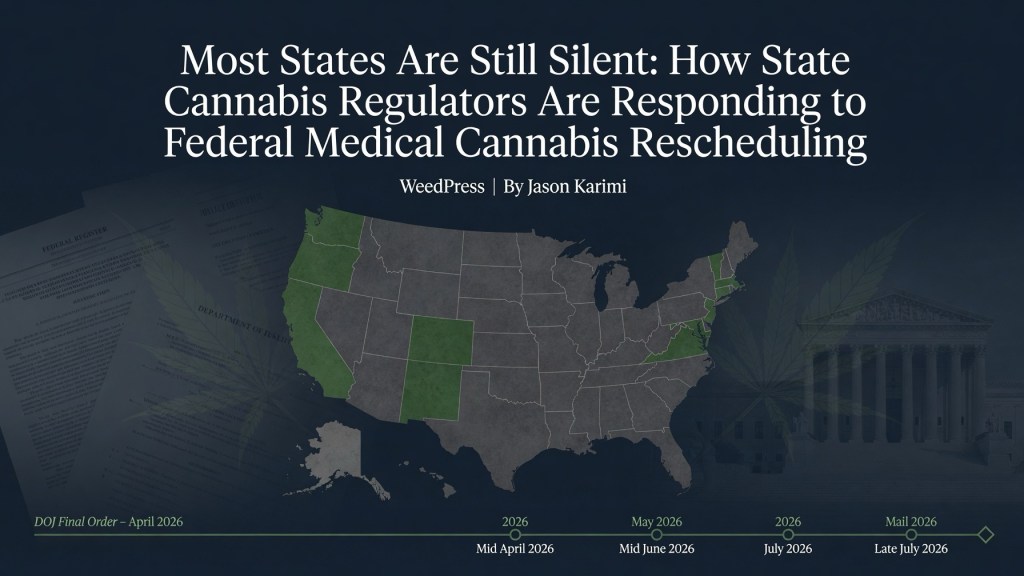
Most States Are Still Silent: How State Cannabis Regulators Are Responding to Federal Medical Cannabis Rescheduling
Three months after the Department of Justice issued its final order placing qualifying state-licensed medical cannabis into Schedule III, state cannabis regulators remain far from unified. A review of official guidance issued through late July 2026 reveals a fragmented national response: only a handful of agencies have formally interpreted the federal change, while most have…
-
Online Workshop – Candidate Vulnerability Assessment
Every candidate enters a race with potential vulnerabilities. These may include previous statements, professional history, financial records, social media activity, personal relationships, policy positions, or inconsistencies in the candidate’s public record. https://leadershipinstitute.org/event/701VL00000xvu8MYAQ Campaigns often devote significant time and resources to researching their opponents while failing to conduct the same level of research on their own…
-

The July 28 Runoff Is Small Enough for Cannabis Voters to Matter. Here’s the Math, South Dakota.
The Republican gubernatorial runoff is July 28. Toby Doeden faces incumbent Larry Rhoden. For people who care about the stability of South Dakota’s medical cannabis program, the question is straightforward: does a modest, targeted vote actually matter in this race? The numbers say yes — but only if the expectations stay realistic. What the June…
-
High-Conflict Personalities and Covert Sadism: Overlapping Patterns of Persistent Targeting
Understanding patterns of prolonged personal conflict requires more than one analytical lens. Two frameworks that frequently intersect are the high-conflict personality model and the concept of covert sadism described by former FBI agent Joe Navarro.¹ When examined side by side, these frameworks reveal significant overlap in how certain individuals escalate disputes, externalize blame, and sustain…
-
The Integrity of the Individual: Jordan Peterson’s Diagnosis of Societal Collapse and the Policy Failures That Turned a Minneapolis Arrest into Preventable Tragedy
In a lecture examining the psychology of those who embrace solitude as a forge for original thought and voluntary responsibility, Jordan B. Peterson returns to a recurring theme that cuts through every domain of human organization: “The answer to the problem of humanity is the integrity of the individual. That’s the answer. So states that…
-

Holy Shit. Was I Wrong? Homegrown May Be Federally Legal Now After All?
Just woke up to this idea: this section… …found here: https://www.ecfr.gov/current/title-21/chapter-II/part-1301/subject-group-ECFR0f5a129834f0129/section-1301.13#p-1301.13(k)(5) …may legally allow homegrown to be included under federal law after all. WeedPress previously warned homegrown may be illegal and to watch that closely: An absolute legend of the cannabis movement has filed with DEA to rule on the homegrown issue. No organization or…
-

Fixing A SD Courthouse Electrical Cabling For Gate Entrance
GSA, the General Services Administration, sent me out as an IT tech to troubleshoot a control panel issue at a gate for judges and attorneys to enter at a courthouse. Determined the electrical cable run at the gate was needing replaced. The GSA had me bend conduit and run a new cable which I didn’t…
-
Watch DEA Rescheduling Hearing Updates Here All Week
The Dales Report is covering the daily play by plays for the DEA hearings on cannabis as a valid medicine: Get the patients off the battlefield, especially those in South Dakota nursing homes being discriminated against, or those in Iowa nursing homes in court this month fighting eviction over medical cannabis use, and THEN cry…
-

The Watchman’s Hour: 1 AM Reflections on Seventeen Years of Federal Exemption Vigilance
https://iowacapitaldispatch.com/2026/06/04/nursing-home-takes-regulators-to-court-over-residents-eviction/ Lately I wake up almost every night around 1 AM and stay awake for hours. Not from anxiety or restlessness in the ordinary sense, but with a clear, alert presence. The house is quiet. The world outside is sleeping. And my mind turns, as it has for years, to the intricate architecture of federal…
-

The Beautiful Game as Peacemaker: How the World Cup Is Revealing America’s Greatness to the World
In 2014, I was in Indiana at a national recruiting tournament for U.S. Soccer. I spent the week meeting MLS coaches and refereeing some of the best young players in the country. Between games I sat in a giant, air-conditioned referee tent with catered organic food and a massive screen tuned to the World Cup.…
Patient Perspectives
-

Can You Lose Child Custody for Medical Marijuana in South Dakota? What the Law Actually Says
Can a medical marijuana card be used against you in a South Dakota child custody case? South Dakota law specifically protects medical cannabis patients—but the Legislature changed an important protection that voters originally approved. By Jason Karimi | WeedPress A South Dakota medical cannabis patient recently asked a question on Reddit that many parents may…
-
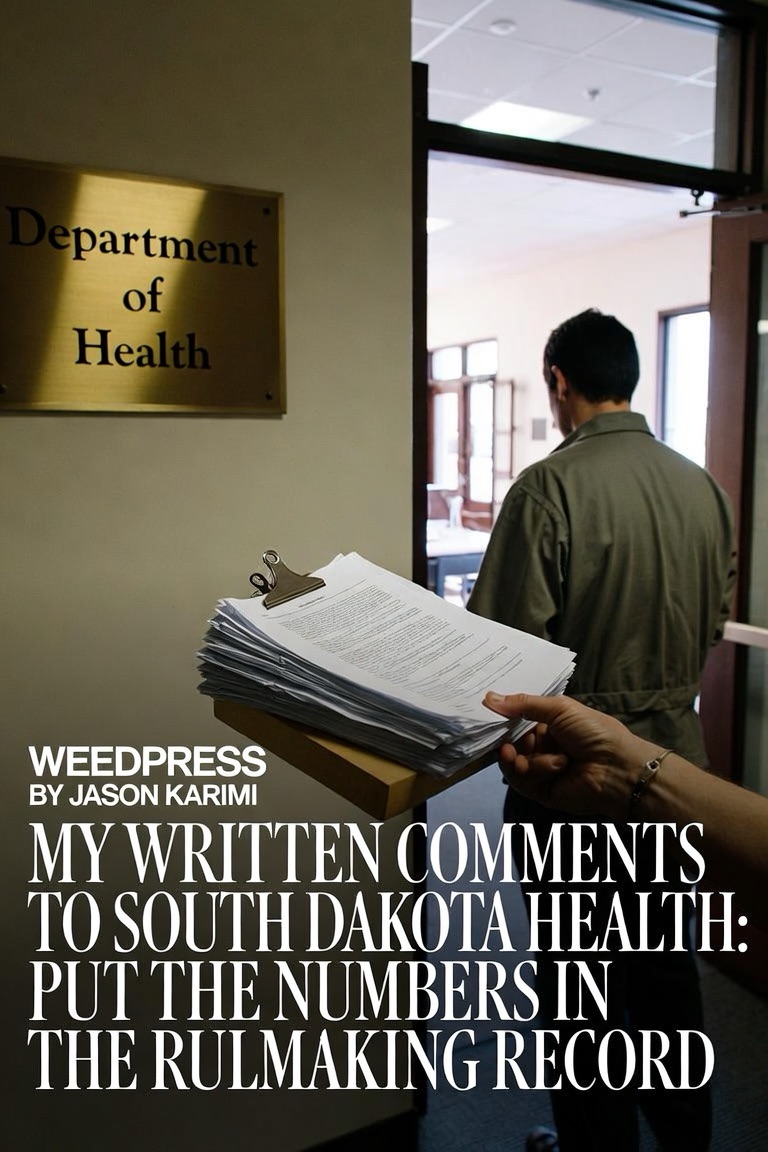
My Written Comments to South Dakota Health: Put the Numbers in the Rulemaking Record
September 10, 2026Whitney BrunnerMedical Cannabis Program AdministratorSouth Dakota Department of Health600 East Capitol AvenuePierre, SD 57501MCQuestions@state.sd.us Re: Written comments on proposed amendments to S.D. Admin. R. art. 44:90Public hearing September 23, 2026; written comments due October 3, 2026 Dear Ms. Brunner: Please place this letter and the attached exhibits in the official written-comment record for…
-
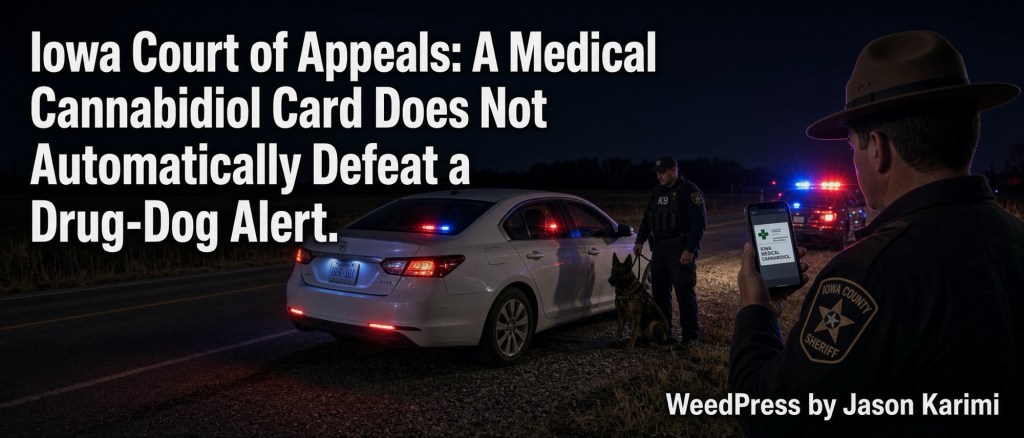
Iowa Court of Appeals: A Medical Cannabidiol Card Does Not Automatically Defeat a Drug-Dog Alert
Patients who carry a valid Iowa medical cannabidiol registration card often assume the card creates a meaningful shield during traffic stops. A new decision from the Iowa Court of Appeals shows the limits of that assumption. In State v. Leonard, the court held that officers had probable cause to search a vehicle after a drug…
-
Understanding High-Conflict Personalities: When You Become the Target of Blame
High-conflict personalities are individuals who consistently turn disagreements into prolonged, intense, and destructive battles. Unlike people who simply disagree or become emotional during conflict, high-conflict personalities tend to escalate disputes, externalize blame, and struggle to resolve conflict in a healthy or proportionate way.¹ Over the past several months, nearly a year straight now, I have…
-
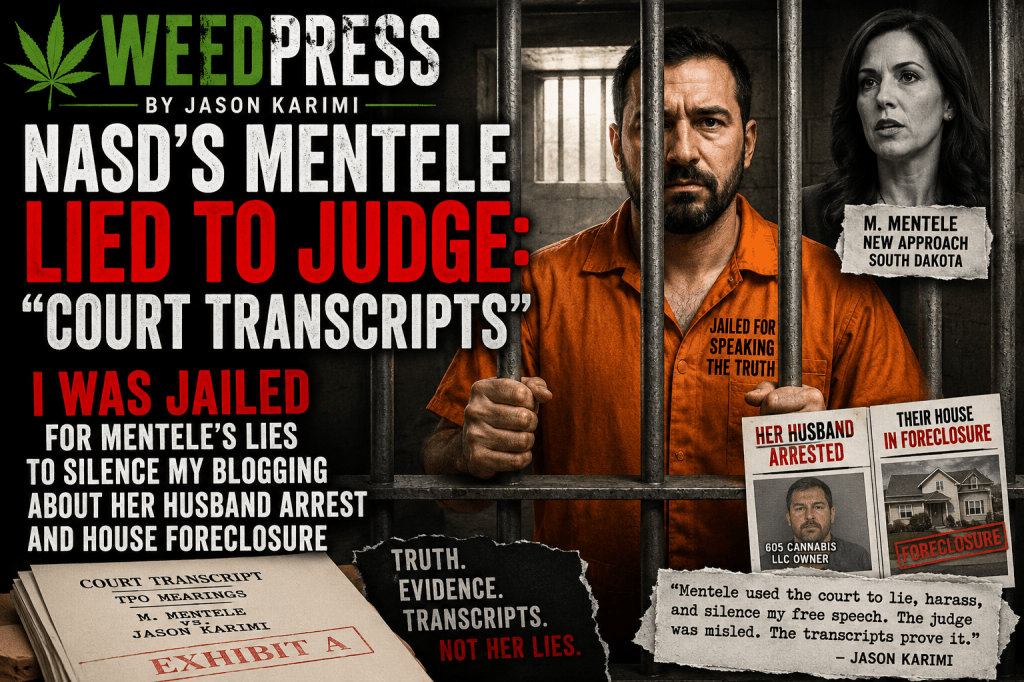
New Approach South Dakota’s Damaged Credibility, Lies To Judges To Get Political Competitor Arrested: Court Transcripts
Transcript PDF of Mentele v Karimi court hearing round 4 in full: You folks out there can do what you want. As for me, I’m going to go back to focusing on federal exemption advocacy as I have since 2009, before Mentele told me to stop and then got me arrested for continuing advocating, by…
-
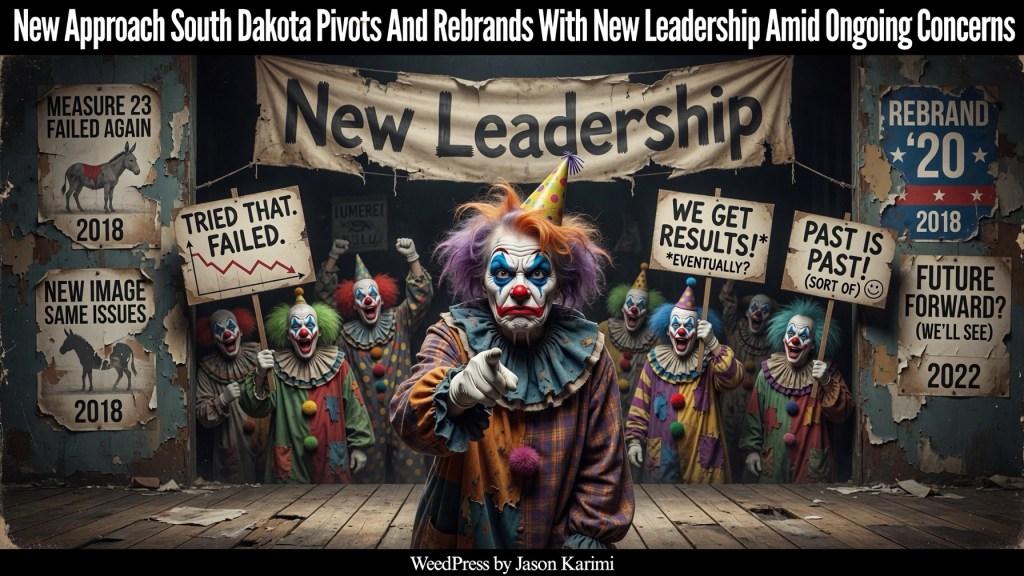
New Approach South Dakota Pivots And Rebrands With New Leadership Amid Ongoing Concerns
Following publication of this article, New Approach South Dakota publicly clarified that the anticipated leadership changes referenced in an earlier discussion concerned the Marijuana Policy Project, not New Approach South Dakota itself. New Approach states it is adding partners and expanding resources but will remain under its current leadership. Multiple conflicting statements in 2026 about…

