
Featured Analysis
-
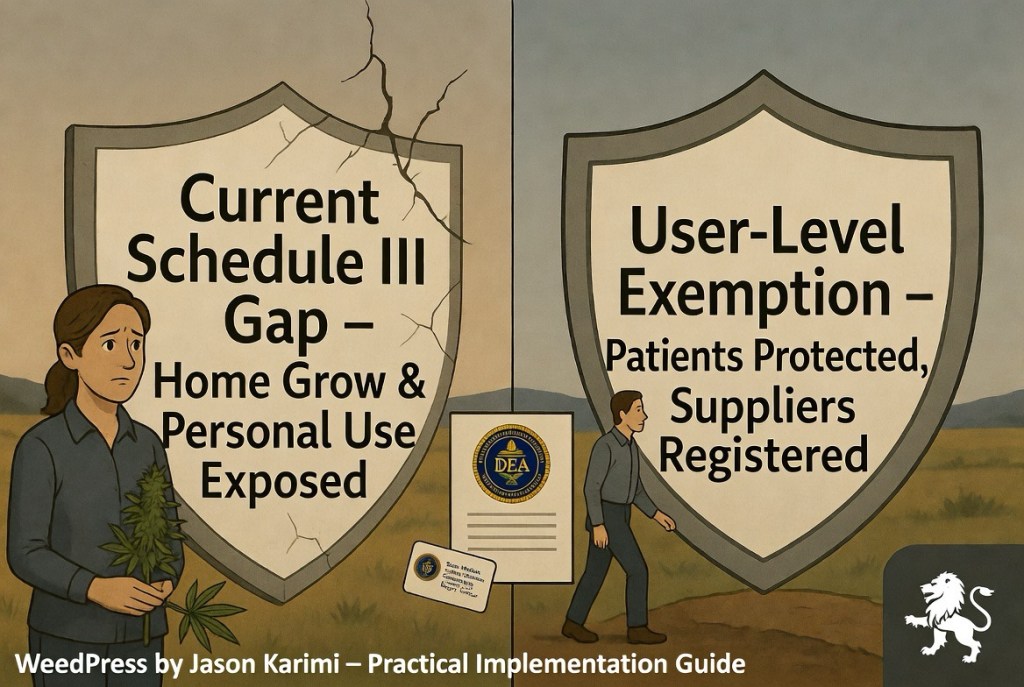
From Gap to Solution: A Step-by-Step Implementation Framework for a User-Level Medical Cannabis Exemption in South Dakota
The April 28, 2026 federal partial rescheduling order created a clear compliance burden for licensed operators while leaving patients who grow or use cannabis outside the commercial system in a federal gray area.¹ Reassuring public statements that “you’ll be fine” or that “state law is already strict enough” do not close that gap for home…
-
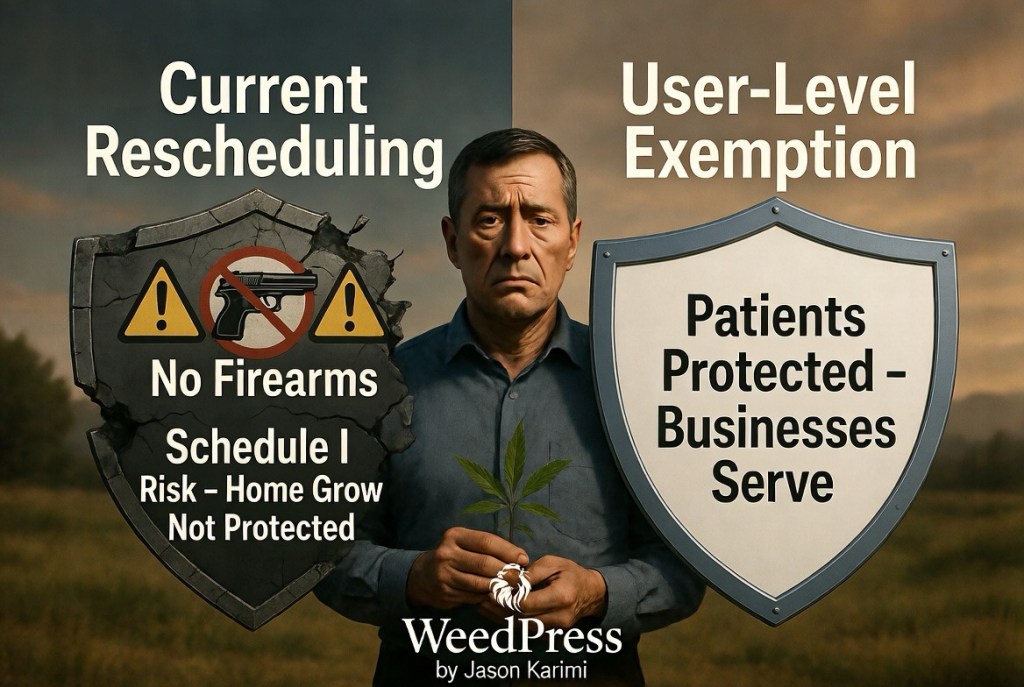
Patient Legal Risks Solved: A User-Level Exemption Model for Schedule III
The April 28, 2026 federal partial rescheduling order left a significant gap: personal home cultivation was not included in the narrow categories moved to Schedule III. Colorado attorneys Brian Vicente and Rachel Gillette have been direct about the practical consequences. Vicente noted that home grows do not qualify for the new federal registration pathway because…
-
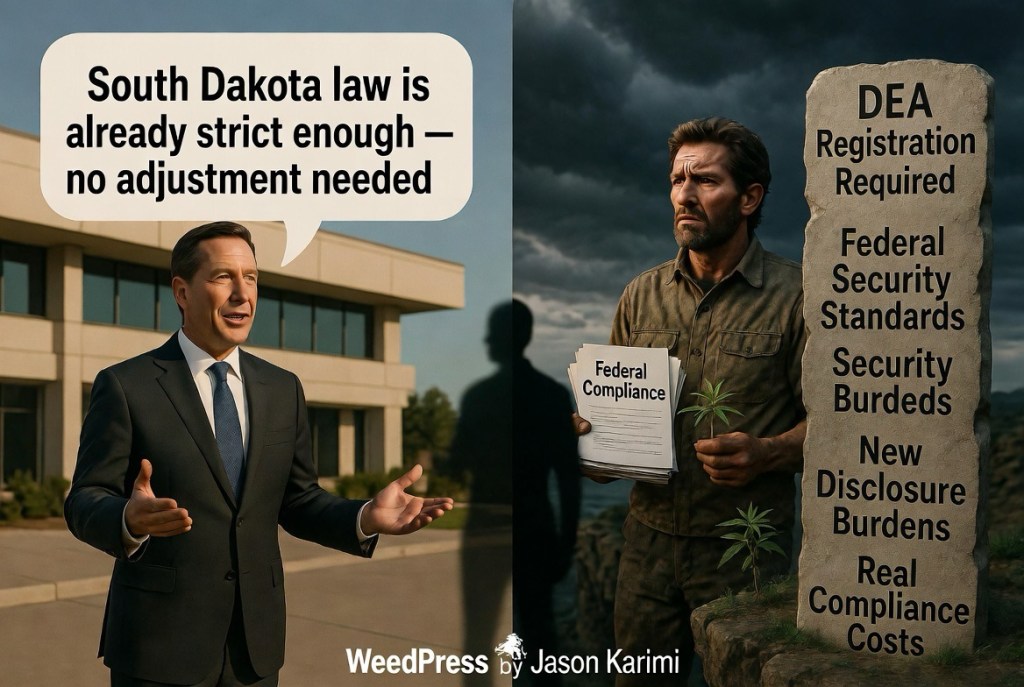
No, South Dakota’s Medical Cannabis Rules Do Not Satisfy Federal Schedule III Requirements — Operators Will Need to Make Real Adjustments
New analysis shows that South Dakota’s current licensing rules do not fully satisfy the new federal Schedule III requirements. DEA registration, security upgrades, and disclosure obligations represent real adjustments that many operators will need to make. Blanket claims that “everyone will be fine with little change” overlook these gaps. Some voices in South Dakota are…
-

The Real Cost of Schedule III: What Small South Dakota Operators Are Actually Facing Right Now
For small operators trying to understand what federal changes actually mean: This piece breaks down the compliance costs and risks that are often glossed over. Knowledge is power — especially when the stakes are this high. South Dakota small cannabis operators are being told to relax. Federal rescheduling is here, the story goes, and everything…
-
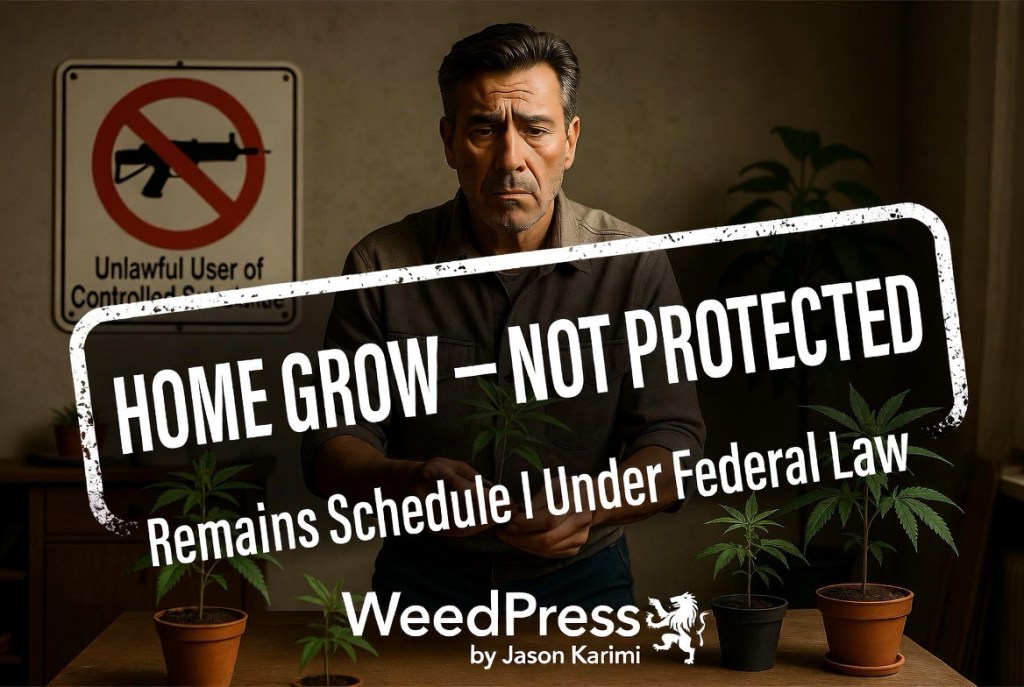
ILLEGAL: Homegrown Cannabis Remains Outside Federal Schedule III Protections — An Open Question With Real Consequences for Patients
The April 28, 2026 federal partial rescheduling order moved only two narrow categories of marijuana from Schedule I to Schedule III: certain FDA-approved products and marijuana produced under qualifying state-issued medical marijuana licenses.¹ Personal home cultivation was not included in either category. This creates a significant gap. In states that permit limited home growing for…
-

Tribal Operators Face Extra Risks Under Federal Rescheduling — And They Should Not Trust Reassuring Advice from People with Skin in the Game
Tribal operators face additional risks that many industry voices aren’t addressing. Independent analysis matters. Tribal and Indigenous cannabis operators are in a uniquely vulnerable position under the new federal Schedule III framework. They face all the same compliance burdens as other small operators — plus additional layers of jurisdictional complexity, disclosure risk, and uncertainty around…
Policy
-
No, South Dakota’s Medical Cannabis Rules Do Not Satisfy Federal Schedule III Requirements — Operators Will Need to Make Real Adjustments
New analysis shows that South Dakota’s current licensing rules do not fully satisfy the new federal Schedule III requirements. DEA registration, security upgrades, and disclosure obligations represent real adjustments that many operators will need to make. Blanket claims that “everyone will be fine with little change” overlook these gaps. Some voices in South Dakota are…
-
ILLEGAL: Homegrown Cannabis Remains Outside Federal Schedule III Protections — An Open Question With Real Consequences for Patients
The April 28, 2026 federal partial rescheduling order moved only two narrow categories of marijuana from Schedule I to Schedule III: certain FDA-approved products and marijuana produced under qualifying state-issued medical marijuana licenses.¹ Personal home cultivation was not included in either category. This creates a significant gap. In states that permit limited home growing for…
-
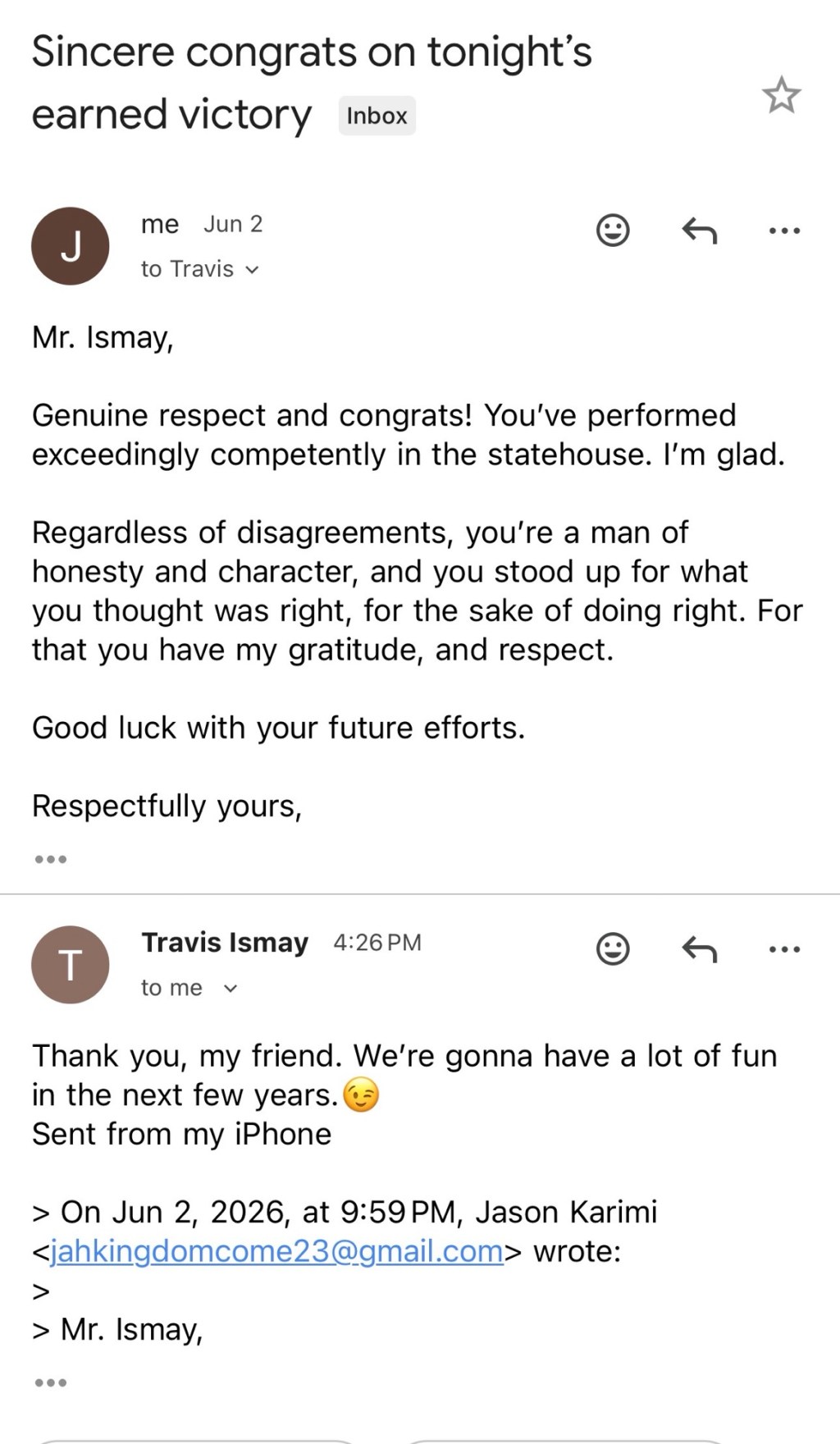
Travis Ismay Responds to My Congratulatory Email: A Small Step Toward Civil Discourse in South Dakota Politics
Yesterday, Rep. Travis Ismay (R-House District 28B) replied to the congratulatory email I sent him shortly after his decisive Republican primary victory on June 2.¹ For context, here is the full exchange: My email (June 2, 2026): For context, here is the full exchange: It’s a brief, gracious response — and one I appreciate. Background…
-
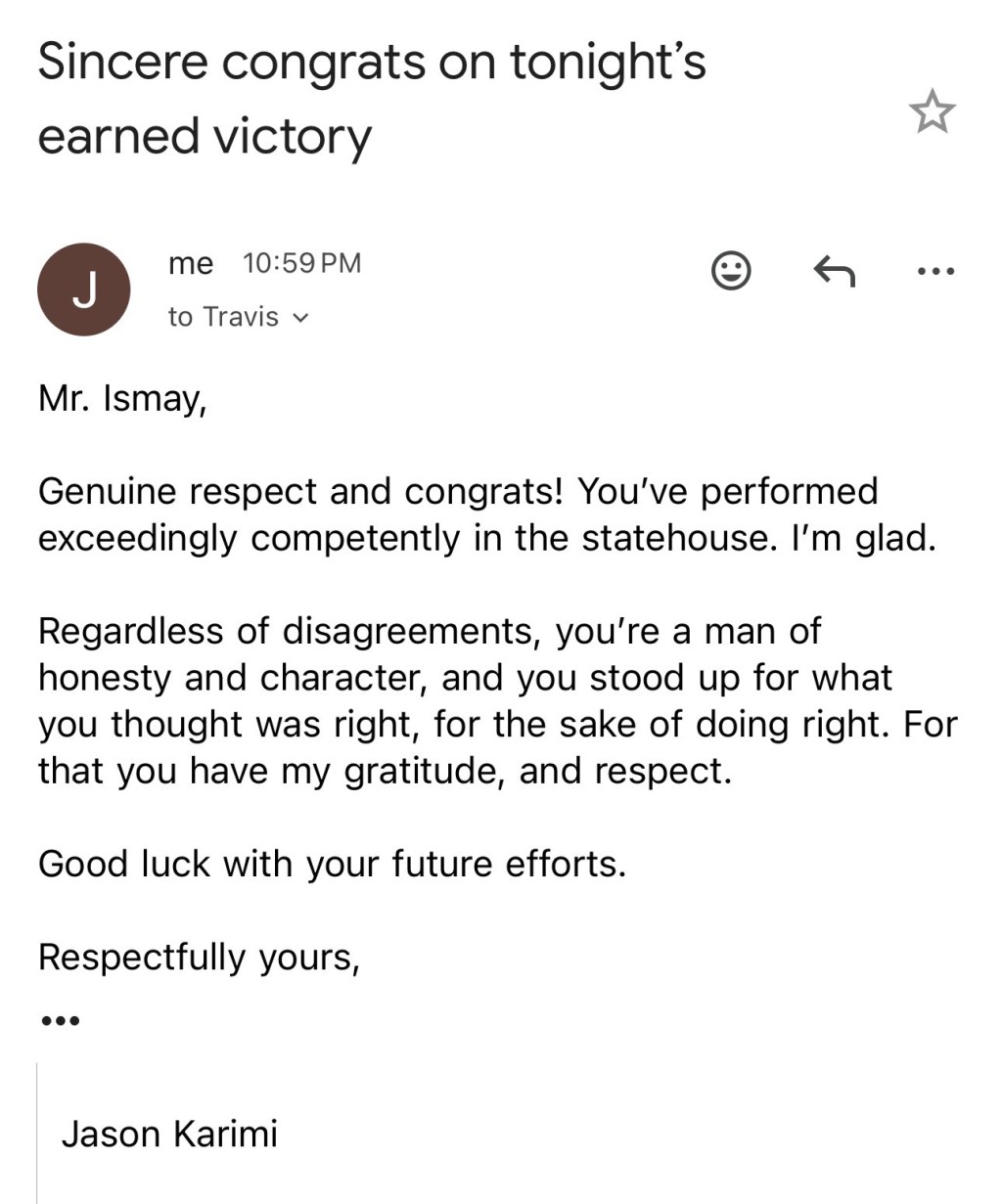
My Congratulatory Email to Rep. Travis Ismay After His Primary Win
Last night, Rep. Travis Ismay (R-House District 28B) defeated challenger Larry Schmaltz in the Republican primary, securing approximately 59% of the vote to Schmaltz’s 41%. I’ve had strong disagreements with Rep. Ismay — particularly over his sponsorship of legislation aimed at repealing South Dakota’s medical marijuana program. Those disagreements led to some heated emails in…
-

Medical Marijuana State Protections: The Full 12-Year History of the Appropriations Rider and Iowa’s Delegation Voting Record
Every year since 2014, Congress has included a critical appropriations rider — commonly known as the Rohrabacher-Farr Amendment (and its successors) — that prohibits the Department of Justice from using federal funds to interfere with states that have legalized medical marijuana. This bipartisan protection has been renewed in every major appropriations bill, ensuring that state…
-
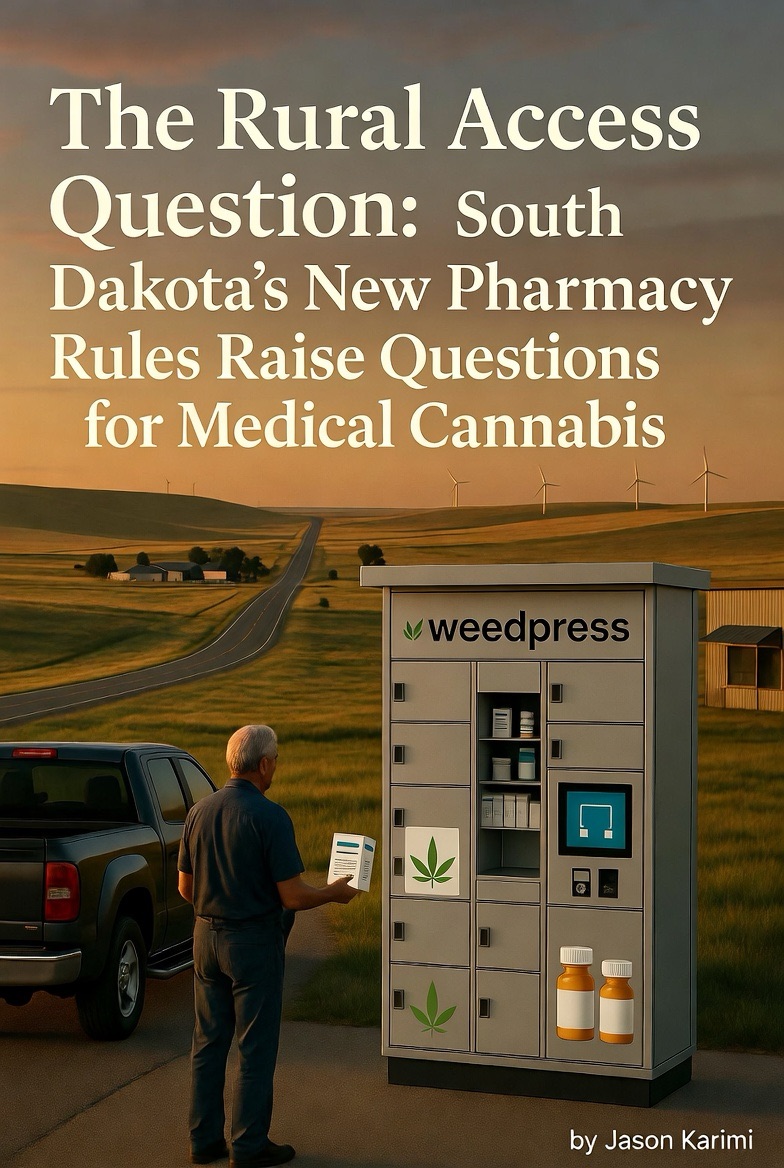
The Rural Access Question South Dakota’s New Pharmacy Rules Raise for Medical Cannabis
As regulators embrace telepharmacy and remote prescription pickup, policymakers may eventually face similar questions about medical cannabis access in rural communities. South Dakota’s Board of Pharmacy is advancing updated rules under Article 20:51 of the Administrative Rules of South Dakota (ARSD) that formalize the use of remote drop sites for prescription medications and introduce a…
Law
-
From Gap to Solution: A Step-by-Step Implementation Framework for a User-Level Medical Cannabis Exemption in South Dakota
The April 28, 2026 federal partial rescheduling order created a clear compliance burden for licensed operators while leaving patients who grow or use cannabis outside the commercial system in a federal gray area.¹ Reassuring public statements that “you’ll be fine” or that “state law is already strict enough” do not close that gap for home…
-
Patient Legal Risks Solved: A User-Level Exemption Model for Schedule III
The April 28, 2026 federal partial rescheduling order left a significant gap: personal home cultivation was not included in the narrow categories moved to Schedule III. Colorado attorneys Brian Vicente and Rachel Gillette have been direct about the practical consequences. Vicente noted that home grows do not qualify for the new federal registration pathway because…
-
No, South Dakota’s Medical Cannabis Rules Do Not Satisfy Federal Schedule III Requirements — Operators Will Need to Make Real Adjustments
New analysis shows that South Dakota’s current licensing rules do not fully satisfy the new federal Schedule III requirements. DEA registration, security upgrades, and disclosure obligations represent real adjustments that many operators will need to make. Blanket claims that “everyone will be fine with little change” overlook these gaps. Some voices in South Dakota are…
-
The Real Cost of Schedule III: What Small South Dakota Operators Are Actually Facing Right Now
For small operators trying to understand what federal changes actually mean: This piece breaks down the compliance costs and risks that are often glossed over. Knowledge is power — especially when the stakes are this high. South Dakota small cannabis operators are being told to relax. Federal rescheduling is here, the story goes, and everything…
-
ILLEGAL: Homegrown Cannabis Remains Outside Federal Schedule III Protections — An Open Question With Real Consequences for Patients
The April 28, 2026 federal partial rescheduling order moved only two narrow categories of marijuana from Schedule I to Schedule III: certain FDA-approved products and marijuana produced under qualifying state-issued medical marijuana licenses.¹ Personal home cultivation was not included in either category. This creates a significant gap. In states that permit limited home growing for…
-
Tribal Operators Face Extra Risks Under Federal Rescheduling — And They Should Not Trust Reassuring Advice from People with Skin in the Game
Tribal operators face additional risks that many industry voices aren’t addressing. Independent analysis matters. Tribal and Indigenous cannabis operators are in a uniquely vulnerable position under the new federal Schedule III framework. They face all the same compliance burdens as other small operators — plus additional layers of jurisdictional complexity, disclosure risk, and uncertainty around…
Science
-
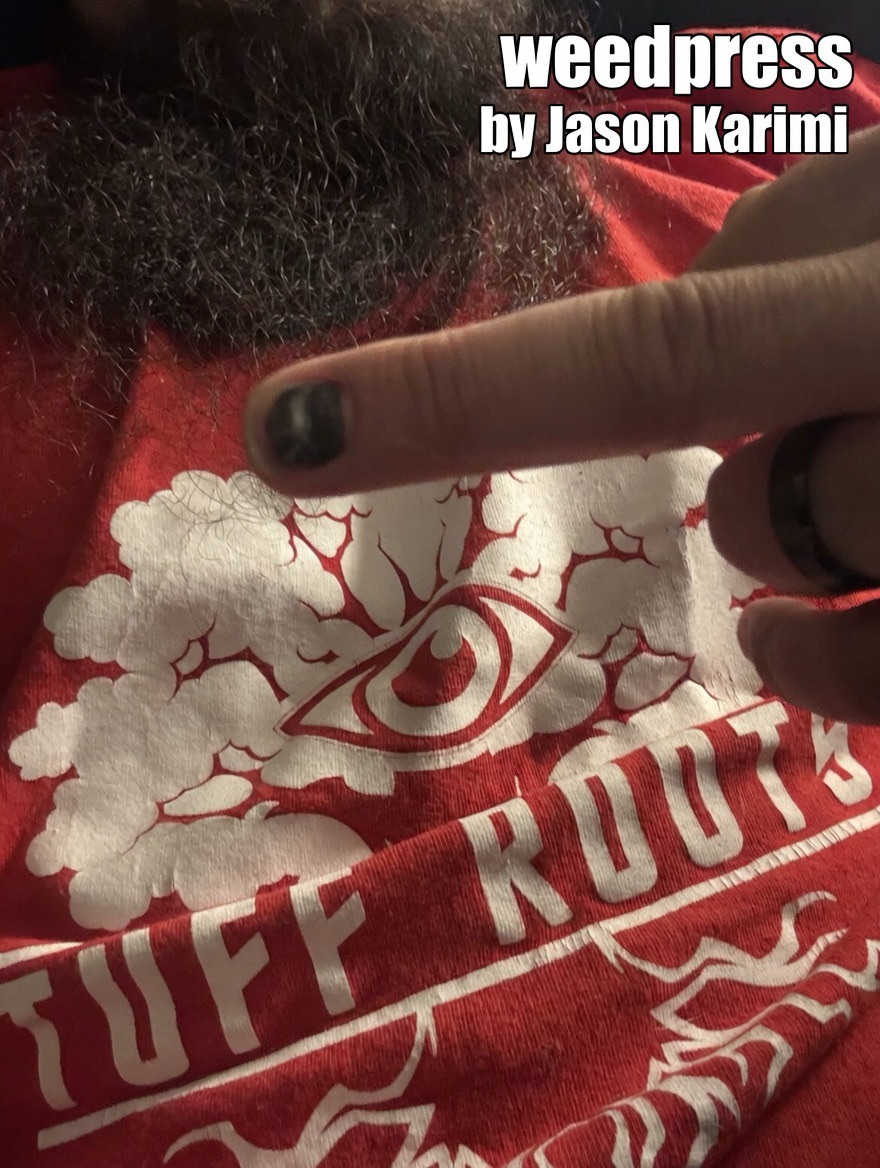
Reflections on a Bruised Nail: What My Left Middle Finger Injury Taught Me About Inner Worth and Boundaries
Two months ago, I slammed my left middle finger, resulting in a subungual hematoma—the dark pool of blood trapped beneath the nail that turned my fingertip into a visual reminder of sudden impact.¹ No longer painful, the nail still carries a mottled shadow of black and white as new growth slowly pushes the old damage…
-

Predators Don’t Debate — They Rig the Game: How Black-Market-Friendly State Cannabis Programs Created the Perfect Environment for Predators — and Why Federal Legitimacy Is Ending It
The drug laws were rigged for decades. Prohibition didn’t eliminate the black market — it protected it. Cartels and underground operators thrived while legitimate patients and small businesses were crushed. When states began legalization without federal exemption, they didn’t fix the problem. They simply moved the rigged game indoors and gave it a state license.…
-
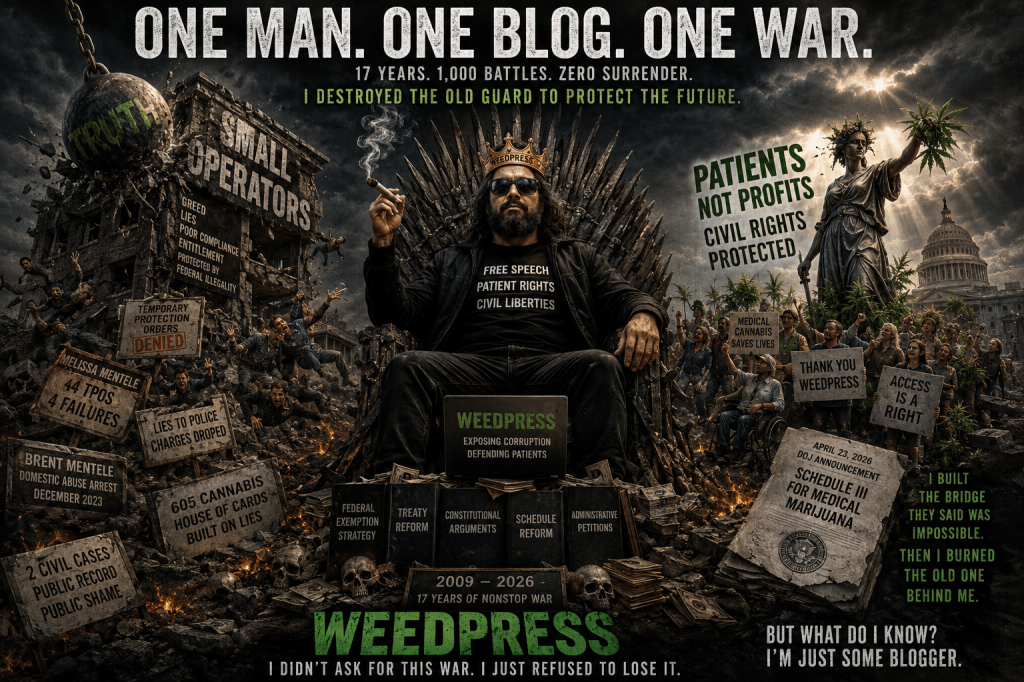
I Spent 17 Years Arguing for Federal Cannabis Legitimacy. Now Small Operators Are About to Learn What That Means.
I have spent most of my adult life arguing that state medical cannabis programs could not survive forever as legally tolerated gray markets.¹ They needed federal recognition. They needed treaty analysis. They needed administrative pathways. They needed constitutional pressure. They needed people willing to say the uncomfortable thing before the institutions were ready to admit…
-
Stork Just Sent a Researcher to WeedPress: What Academic Tools Mean for Cannabis Policy Analysis
Independent statutory deep-dives are showing up alongside peer-reviewed literature in researchers’ workflows. It’s not every day your analytics dashboard lights up with a referrer you’ve never seen before. Today, May 5, 2026, WeedPress received a visit from paper-box.co — the domain tied to Stork (storkapp.me), a specialized publication-tracking and research intelligence platform used by academics,…
-
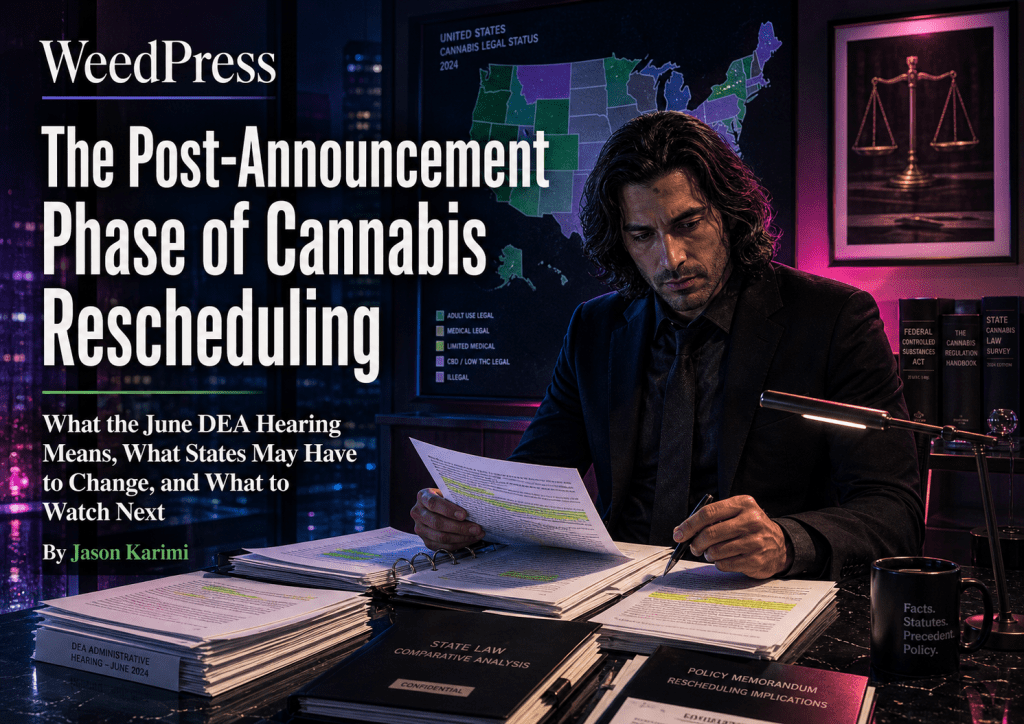
The Post-Announcement Phase of Cannabis Rescheduling: What the June DEA Hearing Means, What States May Have to Change, and What to Watch Next
The most important cannabis-law story in the country is no longer the announcement that part of the marijuana market has been moved into Schedule III. It is the implementation phase that follows. In April 2026, the Department of Justice and the Drug Enforcement Administration took the unusual step of immediately placing state-licensed medical marijuana and…
-

Why South Dakota’s Own Statutes Now Make Schedule I Marijuana Unlawful to Maintain
“Acting Attorney General Todd Blanche is placing both FDA-approved drug products containing marijuana, and medicinal marijuana products subject to a qualifying state-issued license in Schedule III under his authority to reschedule drugs to carry out the United States’ obligations under the Single Convention on Narcotic Drugs.”¹ South Dakota, however, is not automatically bound by that…
Current Events
-
Patient & Caregiver Card Applications Received For Iowa CBD Program | How To Apply For Your Iowa CBD Card
Follow WeedPress on Facebook This graph accurate as of May 1st, 2018. Source: Iowa Department of Public Health — Office of Medical Cannabidiol Apply to be a patient or caregiver at the following link: https://idph.iowa.gov/mcarcp/how-to-apply How Do I Apply for a Cannabidiol Registration card? Effective June 19, 2017, application forms for Medical Cannabidiol Cards can…
-
Certified Debilitating Medical Conditions of Patients Approved for CBD Registration Card | Source: Iowa Department of Public Health Office of Medical Cannabidiol | May 1st, 2018
Follow WeedPress on Facebook and message us if you’d like to see any other stories or info covered
-
MCAB Meeting Minutes January 19 2018 | Seven Registered Advocates Spoke Including MedPharm Iowa, Iowans for Safe Access, Iowa Patients for Medical Marijuana, Iowa Board of Pharmacy
Follow WeedPress on Facebook for more Lucas State Office Building, 321 E. 12th Street, Des Moines, IA 50319- 0075 515-281-7689 www. idph.iowa.gov DEAF RELAY (Hearing or Speech Impaired) 711 or 1- 800-735-2942 DRAFT Notes Iowa Medical Cannabidiol Advisory Board January 19, 2018 9:00 a.m. – 2:00 p.m. Iowa Laboratory Facility – DMACC…
-
This NCAA Athlete Might Be Barred From Playing At Auburn for Using CBD To Treat His Seizures
From SBNation.com: An Auburn walk-on’s family says NCAA rules make him ineligible because he uses cannabis oil to treat seizures 11 comments The player has epilepsy. By Alex Kirshner@alex_kirshner Updated May 26, 2018, 1:27pm EDT Share Christopher Hanewinckel-USA TODAY Sports C.J. Harris was slated to play this season as a preferred walk-on defensive back for…
-
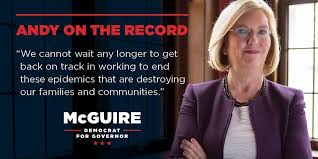
Iowa Patients for Medical Marijuana Endorses Dr. Andy McGuire for Governor
Iowa Patients for Medical Marijuana Dr. Andy McGuire Gubernatorial Campaign was endorsed by Iowa Patients for Medical Marijuana this evening via their Facebook: Iowa Patients for Medical Marijuana After careful vetting of the Democratic primary field Iowa Patients for Medical Marijuana would like to encourage voters to participate in the June 5th primary by casting…
-
Medical Cannabidiol Advisory Board Hearing Scheduled For August and November — Dates and Location Plus How To Petition For Additional Illnesses (Without Having To Spend Time Suing For Equal Protection)
https://idph.iowa.gov/mcarcp/meetings 08/03/2018 – 08-03-2018 – Iowa Medical Cannabidiol Advisory Board Meeting – Iowa Laboratory Facility – 2240 DMACC Blvd., Ankeny, IA 11/02/2018 – 11-02-2018 – Iowa Medical Cannabidiol Advisory Board Meeting – Iowa Laboratory Facility – 2240 DMACC Blvd., Ankeny, IA Here’s the link to apply for a medical card: https://idph.iowa.gov/mcarcp/applications Here’s the link to…
Legislation
-

What to Do While Being Attacked: Lessons from Nehemiah¹
In the high-stakes work of policy reform—particularly when advancing federal exemptions and compliance with evolving federal cannabis law—opposition is not just likely; it is guaranteed. Those who helped draft restrictive state laws often frame federal exemptions (and related religious or patient protections) as a “conspiracy of Big Pharma to take over the industry,” weaponizing fear…
-
Patient Legal Risks Solved: A User-Level Exemption Model for Schedule III
The April 28, 2026 federal partial rescheduling order left a significant gap: personal home cultivation was not included in the narrow categories moved to Schedule III. Colorado attorneys Brian Vicente and Rachel Gillette have been direct about the practical consequences. Vicente noted that home grows do not qualify for the new federal registration pathway because…
-
Travis Ismay Responds to My Congratulatory Email: A Small Step Toward Civil Discourse in South Dakota Politics
Yesterday, Rep. Travis Ismay (R-House District 28B) replied to the congratulatory email I sent him shortly after his decisive Republican primary victory on June 2.¹ For context, here is the full exchange: My email (June 2, 2026): For context, here is the full exchange: It’s a brief, gracious response — and one I appreciate. Background…
-
The Rural Access Question South Dakota’s New Pharmacy Rules Raise for Medical Cannabis
As regulators embrace telepharmacy and remote prescription pickup, policymakers may eventually face similar questions about medical cannabis access in rural communities. South Dakota’s Board of Pharmacy is advancing updated rules under Article 20:51 of the Administrative Rules of South Dakota (ARSD) that formalize the use of remote drop sites for prescription medications and introduce a…
-
I Spent 17 Years Arguing for Federal Cannabis Legitimacy. Now Small Operators Are About to Learn What That Means.
I have spent most of my adult life arguing that state medical cannabis programs could not survive forever as legally tolerated gray markets.¹ They needed federal recognition. They needed treaty analysis. They needed administrative pathways. They needed constitutional pressure. They needed people willing to say the uncomfortable thing before the institutions were ready to admit…
-
Stork Just Sent a Researcher to WeedPress: What Academic Tools Mean for Cannabis Policy Analysis
Independent statutory deep-dives are showing up alongside peer-reviewed literature in researchers’ workflows. It’s not every day your analytics dashboard lights up with a referrer you’ve never seen before. Today, May 5, 2026, WeedPress received a visit from paper-box.co — the domain tied to Stork (storkapp.me), a specialized publication-tracking and research intelligence platform used by academics,…
RFRA Updates
-
What to Do While Being Attacked: Lessons from Nehemiah¹
In the high-stakes work of policy reform—particularly when advancing federal exemptions and compliance with evolving federal cannabis law—opposition is not just likely; it is guaranteed. Those who helped draft restrictive state laws often frame federal exemptions (and related religious or patient protections) as a “conspiracy of Big Pharma to take over the industry,” weaponizing fear…
-

Ruling on petitioners second motion for summary judgment may 28 2026
Just gonna leave this here for the case law explanations.
-
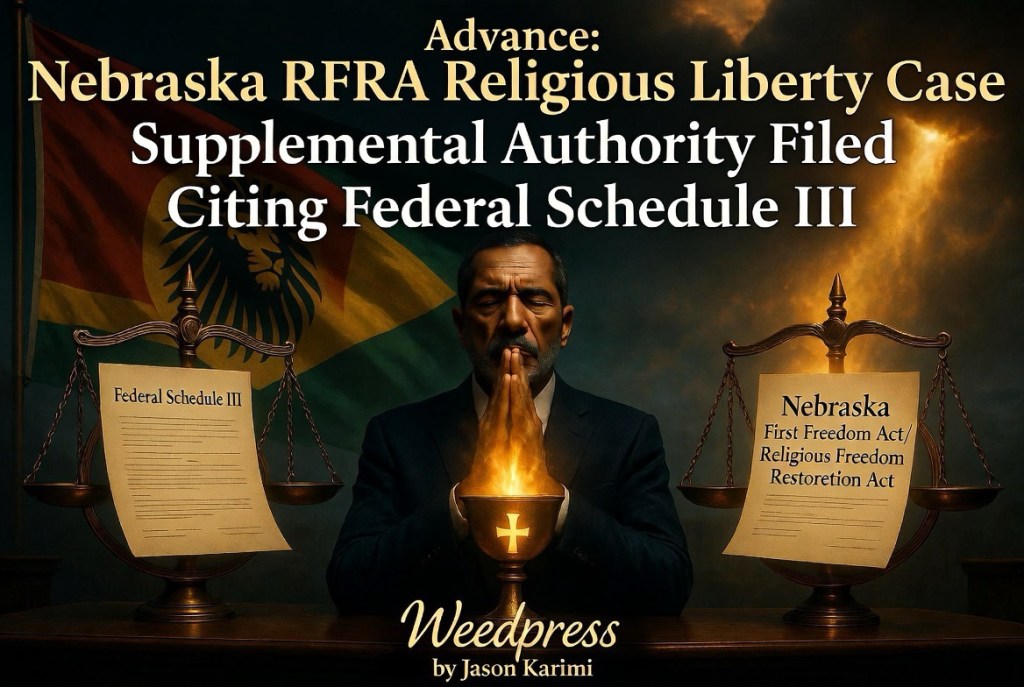
Nebraska RFRA Religious Liberty Case Advances: Supplemental Authority Filed Citing Federal Schedule III Rescheduling
Defendant Jason Karimi has filed a Notice of Supplemental Authority in Nebraska District Court while his motion to modify probation conditions under the Nebraska First Freedom Act remains under advisement. The filing notifies the Court of the recent federal Schedule III rescheduling action and Defendant’s participation in the ongoing DEA administrative proceeding (Docket No. DEA-1362)…
-
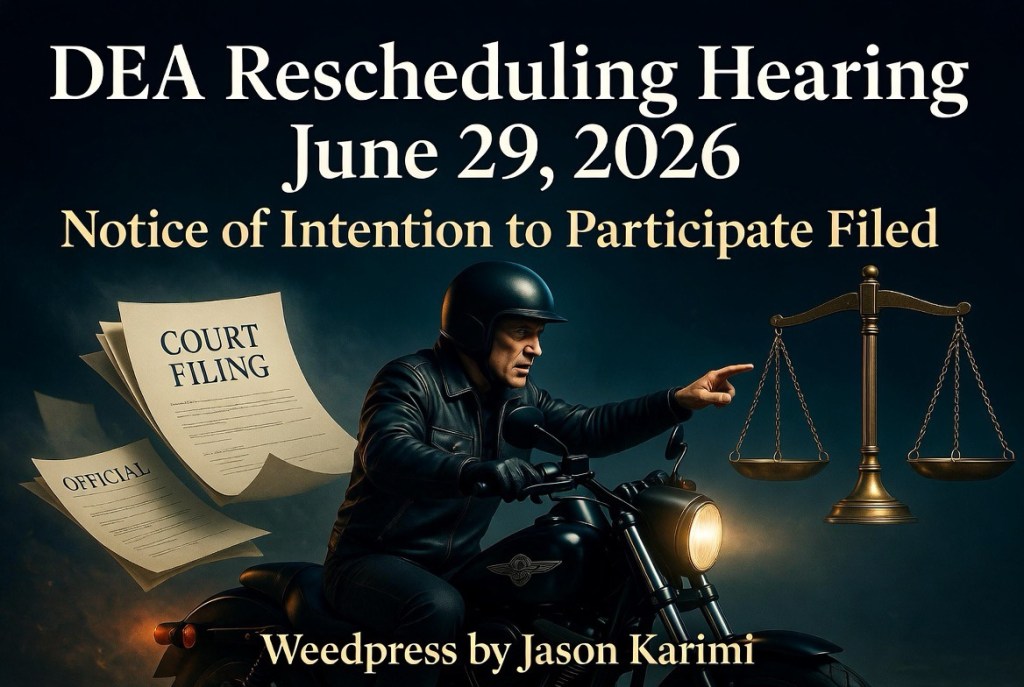
I Have Filed Notice to Participate in the DEA’s June 29 Rescheduling Hearing
Today I formally submitted my Notice of Intention to Participate in the DEA administrative hearing on the proposed rescheduling of marijuana from Schedule I to Schedule III (Docket No. DEA-1362), scheduled to begin June 29, 2026. This filing continues my 17-year record of cannabis policy advocacy and public commentary. It focuses on the interaction between…
-
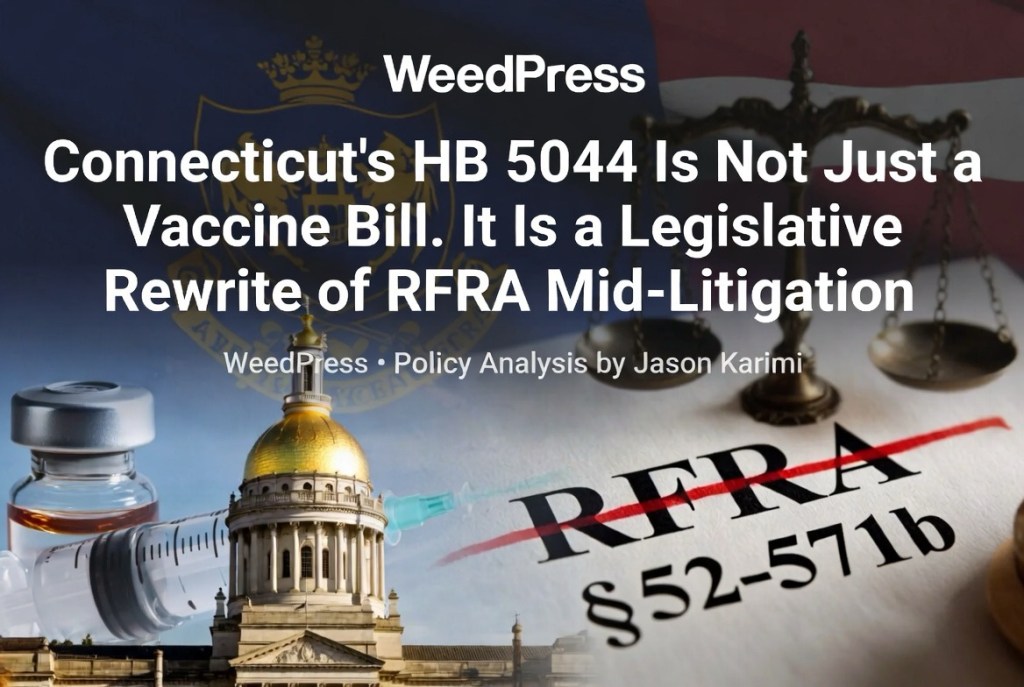
Connecticut’s HB 5044 Is Not Just a Vaccine Bill. It Is a Legislative Rewrite of RFRA Mid-Litigation.
April 24, 2026 Connecticut’s HB 5044 is being sold as a vaccine-governance bill. In one sense, that is true: the bill deals broadly with immunization standards, the Department of Public Health’s authority, insurance coverage, and related vaccine-administration issues.¹ But buried inside that larger package is the provision that matters most for religious-liberty law: HB 5044…
-
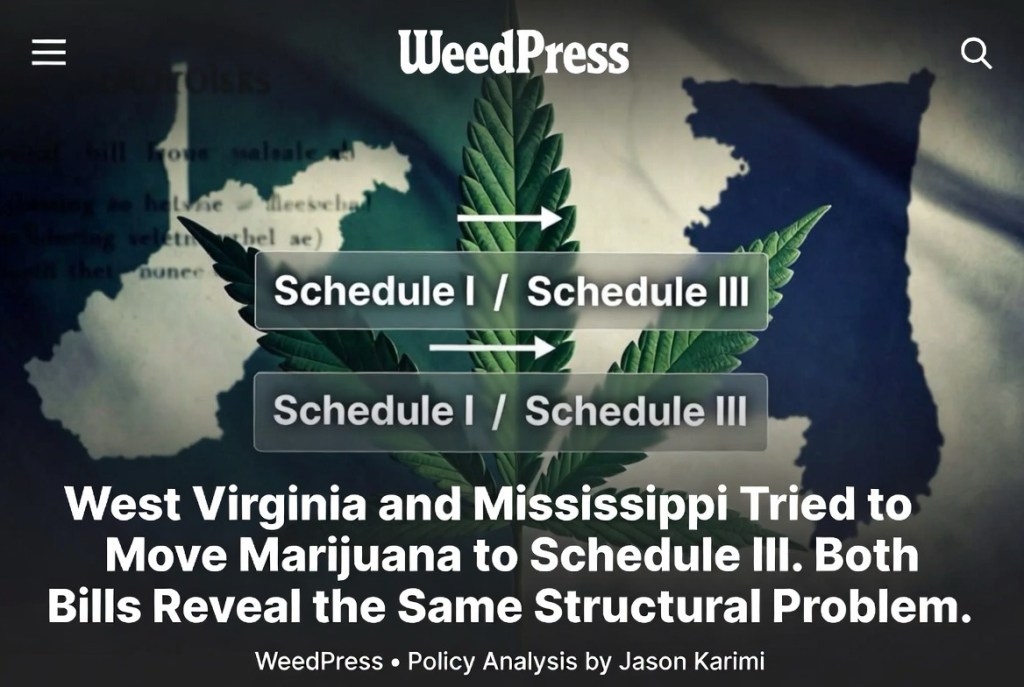
West Virginia and Mississippi Tried to Move Marijuana to Schedule III. Both Bills Reveal the Same Structural Problem.
April 24, 2026 West Virginia and Mississippi each opened the 2026 session with a bill that would have done something their existing marijuana laws still refuse to do: move cannabis from Schedule I to Schedule III under state law.¹ ² Both proposals were straightforward on paper. West Virginia’s SB 809 would amend W. Va. Code…
Upcoming Events
For The Record (2026), By Jason Karimi
-
Reflections on a Bruised Nail: What My Left Middle Finger Injury Taught Me About Inner Worth and Boundaries
Two months ago, I slammed my left middle finger, resulting in a subungual hematoma—the dark pool of blood trapped beneath the nail that turned my fingertip into a visual reminder of sudden impact.¹ No longer painful, the nail still carries a mottled shadow of black and white as new growth slowly pushes the old damage…
-
I Have Filed Notice to Participate in the DEA’s June 29 Rescheduling Hearing
Today I formally submitted my Notice of Intention to Participate in the DEA administrative hearing on the proposed rescheduling of marijuana from Schedule I to Schedule III (Docket No. DEA-1362), scheduled to begin June 29, 2026. This filing continues my 17-year record of cannabis policy advocacy and public commentary. It focuses on the interaction between…
-

DARE Poster Kid to Marijuana Regulation Advocate: My Unchanging Fight to Protect Kids
When I was in elementary school, the DARE program left a lasting impression. Officers visited regularly, warning us about the dangers of drugs and pushing the “just say no” message. I took it seriously. So when the school announced an anti-drug poster contest open to elementary students, I threw myself into creating something impactful. My…
-

Chapter 9: The Record vs. the Narrative
Table of Contents Preface Chapter 1 — The First ArrestEarly rupture, authority, and the beginning of resistance Chapter 2 — Before the File Was Opened Gifted education, faith, discipline, and early legitimacy Chapter 3 — Becoming a ProblemWork, exhaustion, collapse, and the cost of visibility Chapter 4 — Learning the Language of PowerCourts, probation, jail, campaigns, and proximity to decision-makers…
-

Chapter 10: What Remains
Table of Contents Preface Chapter 1 — The First ArrestEarly rupture, authority, and the beginning of resistance Chapter 2 — Before the File Was Opened Gifted education, faith, discipline, and early legitimacy Chapter 3 — Becoming a ProblemWork, exhaustion, collapse, and the cost of visibility Chapter 4 — Learning the Language of PowerCourts, probation, jail, campaigns, and proximity to decision-makers…
-

Chapter 8: What the Media Gets Wrong
Table of Contents Preface Chapter 1 — The First ArrestEarly rupture, authority, and the beginning of resistance Chapter 2 — Before the File Was Opened Gifted education, faith, discipline, and early legitimacy Chapter 3 — Becoming a ProblemWork, exhaustion, collapse, and the cost of visibility Chapter 4 — Learning the Language of PowerCourts, probation, jail, campaigns, and proximity to decision-makers…
-

Chapter 7: Why I Never Left
Table of Contents Preface Chapter 1 — The First ArrestEarly rupture, authority, and the beginning of resistance Chapter 2 — Before the File Was Opened Gifted education, faith, discipline, and early legitimacy Chapter 3 — Becoming a ProblemWork, exhaustion, collapse, and the cost of visibility Chapter 4 — Learning the Language of PowerCourts, probation, jail, campaigns, and proximity to decision-makers…
-

Chapter 6: Staying Power
Table of Contents Preface Chapter 1 — The First ArrestEarly rupture, authority, and the beginning of resistance Chapter 2 — Before the File Was Opened Gifted education, faith, discipline, and early legitimacy Chapter 3 — Becoming a ProblemWork, exhaustion, collapse, and the cost of visibility Chapter 4 — Learning the Language of PowerCourts, probation, jail, campaigns, and proximity to decision-makers…
-

Chapter 5: The Apprenticeship
Table of Contents Preface Chapter 1 — The First ArrestEarly rupture, authority, and the beginning of resistance Chapter 2 — Before the File Was Opened Gifted education, faith, discipline, and early legitimacy Chapter 3 — Becoming a ProblemWork, exhaustion, collapse, and the cost of visibility Chapter 4 — Learning the Language of PowerCourts, probation, jail, campaigns, and proximity to decision-makers…
-

Chapter 4: Learning the Language of Power
Table of Contents Preface Chapter 1 — The First ArrestEarly rupture, authority, and the beginning of resistance Chapter 2 — Before the File Was Opened Gifted education, faith, discipline, and early legitimacy Chapter 3 — Becoming a ProblemWork, exhaustion, collapse, and the cost of visibility Chapter 4 — Learning the Language of PowerCourts, probation, jail, campaigns, and proximity to decision-makers…
-

Chapter 3: Becoming a Problem
Table of Contents Preface Chapter 1 — The First ArrestEarly rupture, authority, and the beginning of resistance Chapter 2 — Before the File Was Opened Gifted education, faith, discipline, and early legitimacy Chapter 3 — Becoming a ProblemWork, exhaustion, collapse, and the cost of visibility Chapter 4 — Learning the Language of PowerCourts, probation, jail, campaigns, and proximity to decision-makers…
-

Chapter 2: Before the File Was Opened
Table of Contents Preface Chapter 1 — The First ArrestEarly rupture, authority, and the beginning of resistance Chapter 2 — Before the File Was Opened Gifted education, faith, discipline, and early legitimacy Chapter 3 — Becoming a ProblemWork, exhaustion, collapse, and the cost of visibility Chapter 4 — Learning the Language of PowerCourts, probation, jail, campaigns, and proximity to decision-makers…
Commentary
-
Why I No Longer Testify at Most Hearings
Why I No Longer Testify at Most Hearings Seventeen Years, Four Bills Passed, and Managing Campaigns and Staff Have Taught Me Institutional Architecture Is Not a Two-Minute Topic By Jason Karimi | WeedPress | February 12, 2026 This week’s attempt to repeal South Dakota’s medical cannabis laws leaned on ignorance of the federal architecture and…
-
Call for Prosecutions Raises Concerns About Politicization
Call for Prosecutions Raises Concerns About Politicization When criminal law becomes a first-resort response to disagreement, institutional trust is at risk By Jason Karimi | WeedPress | January 17, 2026. In recent weeks, prominent progressive commentators have openly discussed the need for criminal accountability for political opponents. On a podcast appearance with CNN’s Jim Acosta,…
-

-
Why So Much Cannabis Activism Burns People Out — and Why Mine Doesn’t
Why So Much Cannabis Activism Burns People Out — and Why Mine Doesn’t By Jason Karimi | WeedPress | February 4, 2026 If this work can be energizing, why do so many advocates flame out, disappear, or turn bitter? The answer isn’t workload.It’s structure. Burnout Is a Design Failure Most activist burnout isn’t personal weakness…
-

Why WeedPress Exists the Way It Does: How I Learned to Navigate Hostile Systems — and Still Publish Solutions
WeedPress focuses on documented facts, public records, and procedural analysis, not personal vendettas or speculation. Why WeedPress Exists the Way It Does: How I Learned to Navigate Hostile Systems — and Still Publish Solutions By Jason Karimi | WeedPress | January 29, 2026 WeedPress wasn’t built by someone who grew up with a safety net.…
-
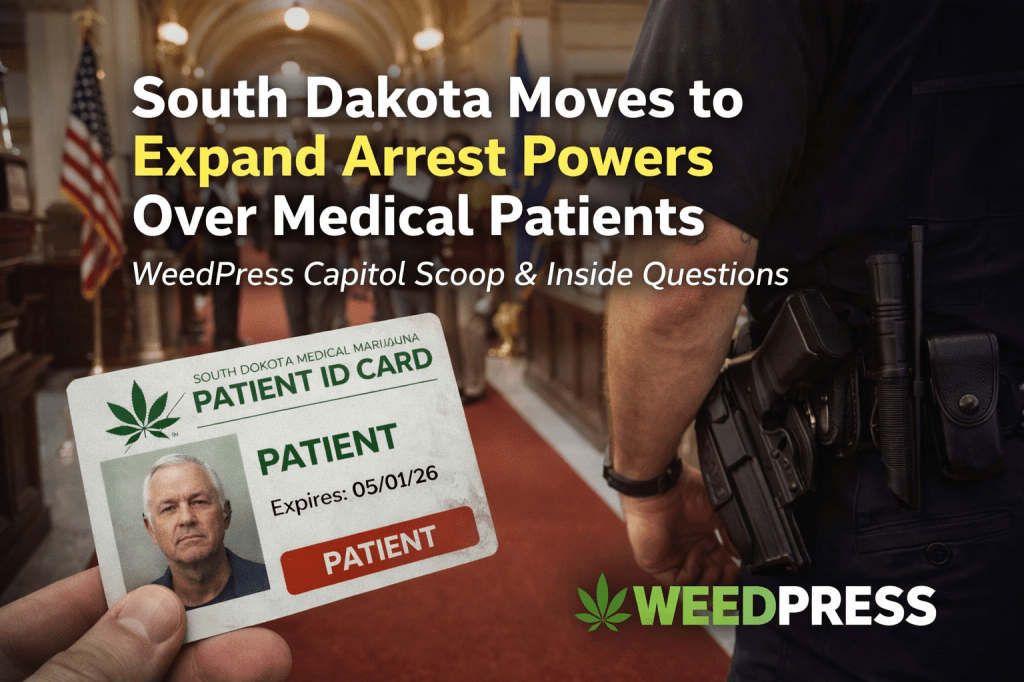
Updates From Visiting South Dakota Capitol So Far Today
From recent official remarks and events: The Supreme Court is hosting treatment court sessions at the Capitol Drug court policy and funding is a major legislative talking point Drug Court Advisory Council met Jan 27 (yesterday) This ties directly into: – Cannabis vs. criminal justice – How the state frames “treatment” vs. legalization – Budget…
-

On Independence, Accountability, and Why I Don’t Build My Work Around Approval
On Independence, Accountability, and Why I Don’t Build My Work Around Approval By Jason Karimi At 19, I ended up in a homeless shelter. Not because I committed a crime.Not because I was addicted.Not because I couldn’t work. I was there because I stood up in court for religious cannabis rights, made the front page…
-

Why WeedPress Chooses to Be a High-Heat, Contrarian Watchdog
Why WeedPress Chooses to Be a High-Heat, Contrarian Watchdog By Jason Karimi | WeedPressJanuary 24, 2026 WeedPress was not created to be polite. It was not created to echo press releases, recycle activist talking points, or play nice with institutions that have repeatedly failed cannabis patients, small operators, and civil liberties. WeedPress exists to document,…
-
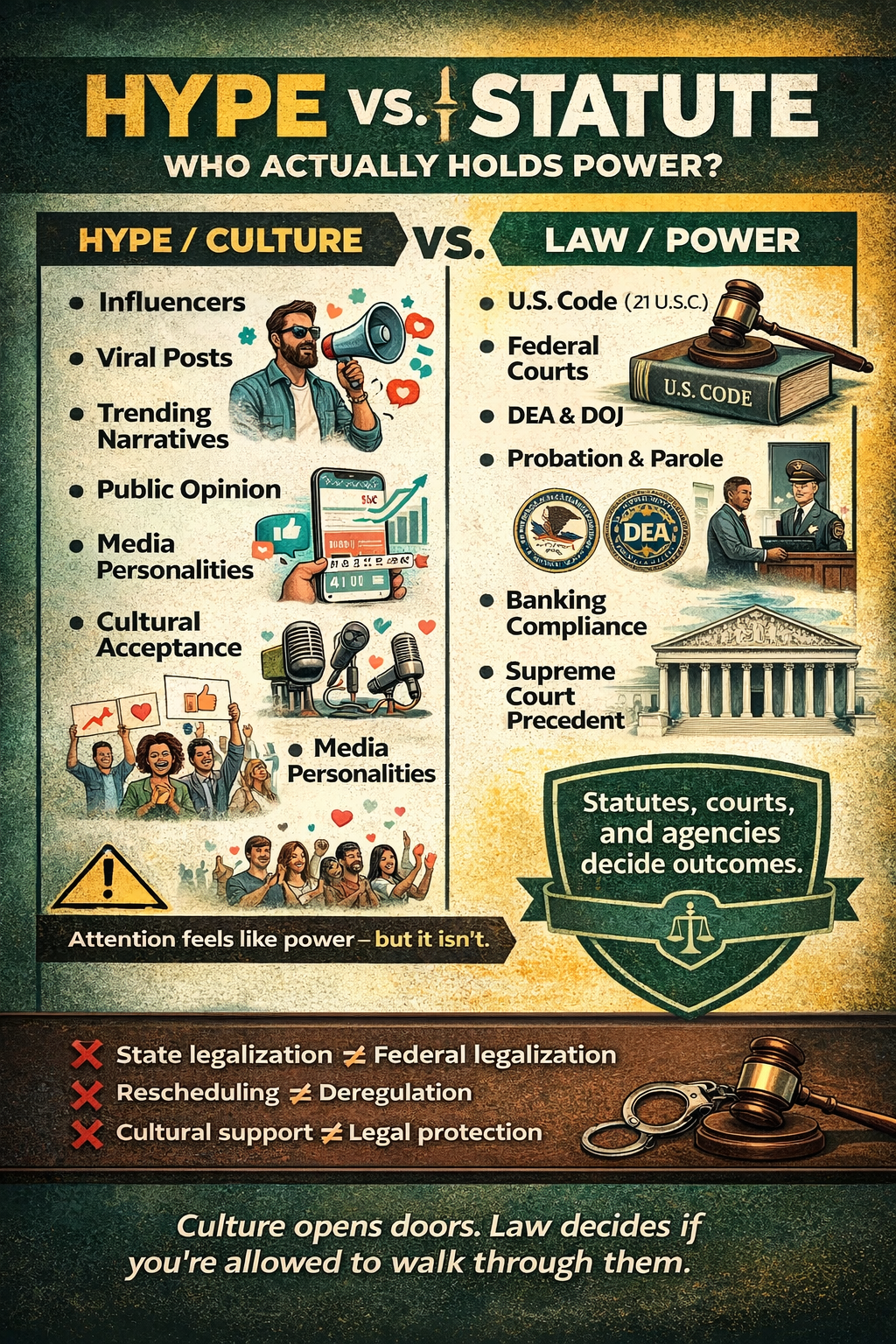
Who Actually Holds Power?
Who Actually Holds Power? Another hit master piece by Jason Karimi, WeedPress News Scroll social media for five minutes and you’ll see the same illusion repeated in different forms: whoever controls the narrative controls the system. Influencers, viral posts, cultural momentum — these are presented as the new centers of power. The message is simple:…
-
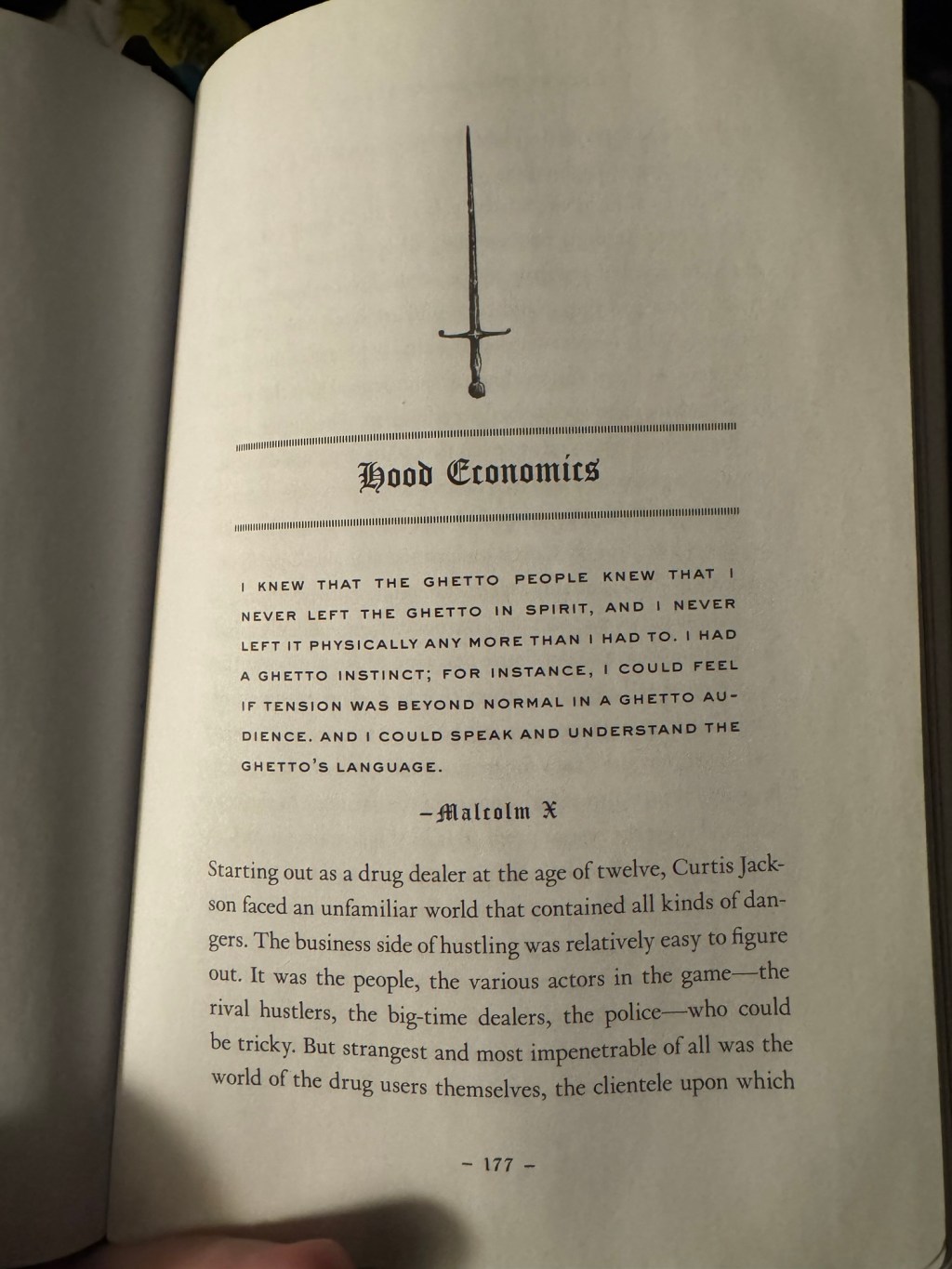
Give Them What They Want: How to Truly Connect With Your Audience
Most people think influence is about being louder, sharper, or more controversial. Chapter 7 of The 50th Law quietly destroys that myth. Its central message is simple but ruthless: Power grows when your value grows to others. That single idea changes how we understand influence, loyalty, reputation, and even conflict. If people don’t need what…
-
Truth Telling = Treason ? Thought on Fixing Propagandized Divisive Narrative Spreading
The real problem in the world today and as always is not “bad people.” It’s broken information systems. And the most effective, non-destructive way to fight that is not rage, humiliation, or ideological warfare — it’s: • calm clarity • good-faith reasoning • source literacy • pattern awareness • explaining how manipulation works • slowing…
-

How Paul Hijacked Jesus’s Message And Built Christianity
My Rasta buddy in Minneapolis used to say Paul was a test and not to fall for it…good talk from the best professor in the world.
Patient Perspectives
-
Weedpress Warned Y’all Interstate Commerce Competition Would Change Industry Standards. MPP Now Says So Too Six Months Later!
I love winning the long game that matters: federal law was always gonna turn everything inside out. I started studying how twenty years ago. So this year I wrote as boring as possible in February: Then I wrote as boring as possible in April: Then those articles got sent to some people quietly and talks…
-
From Gap to Solution: A Step-by-Step Implementation Framework for a User-Level Medical Cannabis Exemption in South Dakota
The April 28, 2026 federal partial rescheduling order created a clear compliance burden for licensed operators while leaving patients who grow or use cannabis outside the commercial system in a federal gray area.¹ Reassuring public statements that “you’ll be fine” or that “state law is already strict enough” do not close that gap for home…
-
Patient Legal Risks Solved: A User-Level Exemption Model for Schedule III
The April 28, 2026 federal partial rescheduling order left a significant gap: personal home cultivation was not included in the narrow categories moved to Schedule III. Colorado attorneys Brian Vicente and Rachel Gillette have been direct about the practical consequences. Vicente noted that home grows do not qualify for the new federal registration pathway because…
-
No, South Dakota’s Medical Cannabis Rules Do Not Satisfy Federal Schedule III Requirements — Operators Will Need to Make Real Adjustments
New analysis shows that South Dakota’s current licensing rules do not fully satisfy the new federal Schedule III requirements. DEA registration, security upgrades, and disclosure obligations represent real adjustments that many operators will need to make. Blanket claims that “everyone will be fine with little change” overlook these gaps. Some voices in South Dakota are…
-
ILLEGAL: Homegrown Cannabis Remains Outside Federal Schedule III Protections — An Open Question With Real Consequences for Patients
The April 28, 2026 federal partial rescheduling order moved only two narrow categories of marijuana from Schedule I to Schedule III: certain FDA-approved products and marijuana produced under qualifying state-issued medical marijuana licenses.¹ Personal home cultivation was not included in either category. This creates a significant gap. In states that permit limited home growing for…
-
Tribal Operators Face Extra Risks Under Federal Rescheduling — And They Should Not Trust Reassuring Advice from People with Skin in the Game
Tribal operators face additional risks that many industry voices aren’t addressing. Independent analysis matters. Tribal and Indigenous cannabis operators are in a uniquely vulnerable position under the new federal Schedule III framework. They face all the same compliance burdens as other small operators — plus additional layers of jurisdictional complexity, disclosure risk, and uncertainty around…
 WeedPress: The Paper Trail