Featured Analysis
-
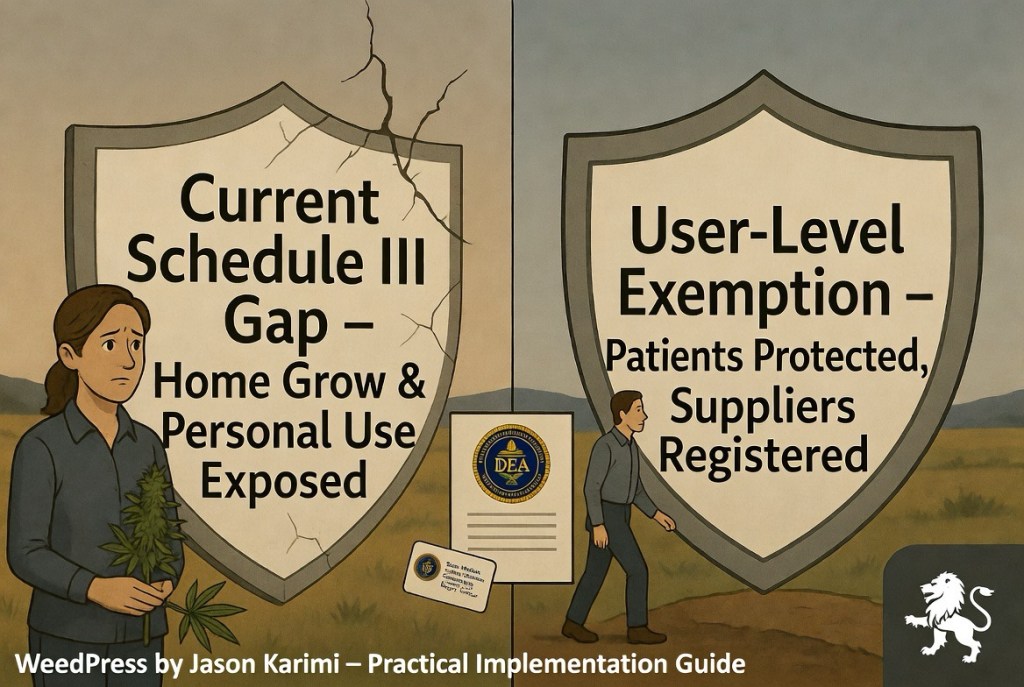
From Gap to Solution: A Step-by-Step Implementation Framework for a User-Level Medical Cannabis Exemption in South Dakota
The April 28, 2026 federal partial rescheduling order created a clear compliance burden for licensed operators while leaving patients who grow or use cannabis outside the commercial system in a federal gray area.¹ Reassuring public statements that “you’ll be fine” or that “state law is already strict enough” do not close that gap for home…
-
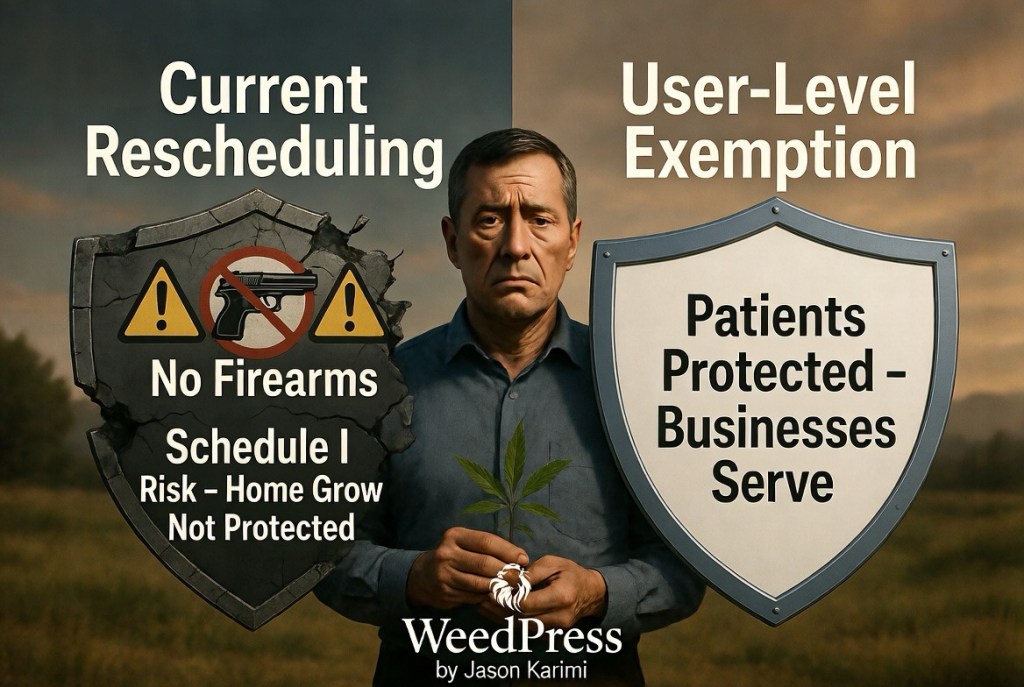
Patient Legal Risks Solved: A User-Level Exemption Model for Schedule III
The April 28, 2026 federal partial rescheduling order left a significant gap: personal home cultivation was not included in the narrow categories moved to Schedule III. Colorado attorneys Brian Vicente and Rachel Gillette have been direct about the practical consequences. Vicente noted that home grows do not qualify for the new federal registration pathway because…
-
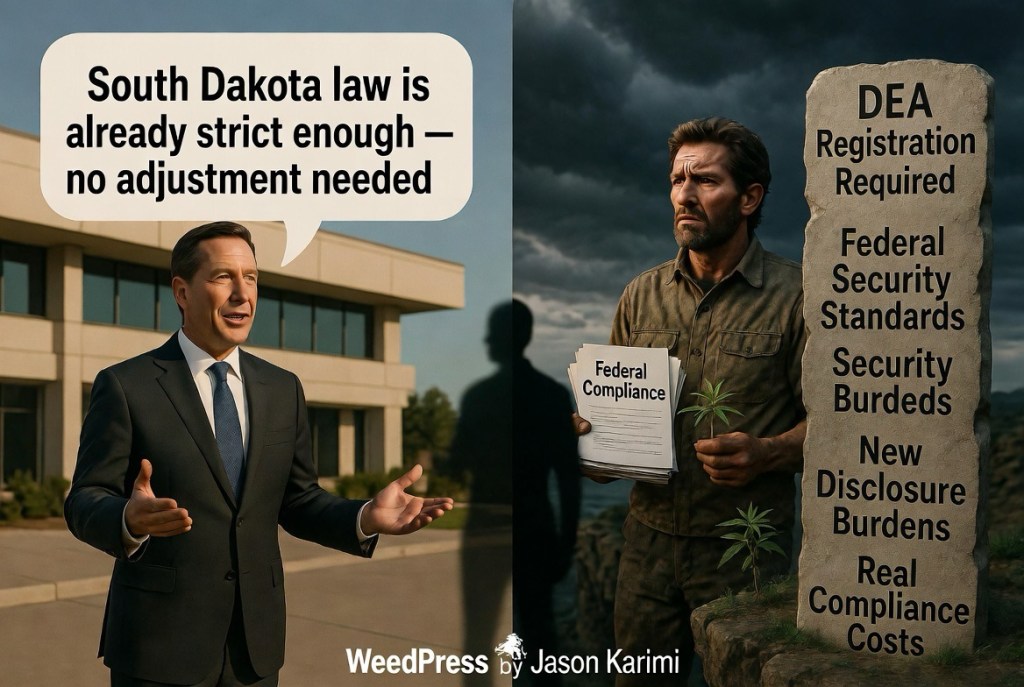
No, South Dakota’s Medical Cannabis Rules Do Not Satisfy Federal Schedule III Requirements — Operators Will Need to Make Real Adjustments
New analysis shows that South Dakota’s current licensing rules do not fully satisfy the new federal Schedule III requirements. DEA registration, security upgrades, and disclosure obligations represent real adjustments that many operators will need to make. Blanket claims that “everyone will be fine with little change” overlook these gaps. Some voices in South Dakota are…
-

The Real Cost of Schedule III: What Small South Dakota Operators Are Actually Facing Right Now
For small operators trying to understand what federal changes actually mean: This piece breaks down the compliance costs and risks that are often glossed over. Knowledge is power — especially when the stakes are this high. South Dakota small cannabis operators are being told to relax. Federal rescheduling is here, the story goes, and everything…
-
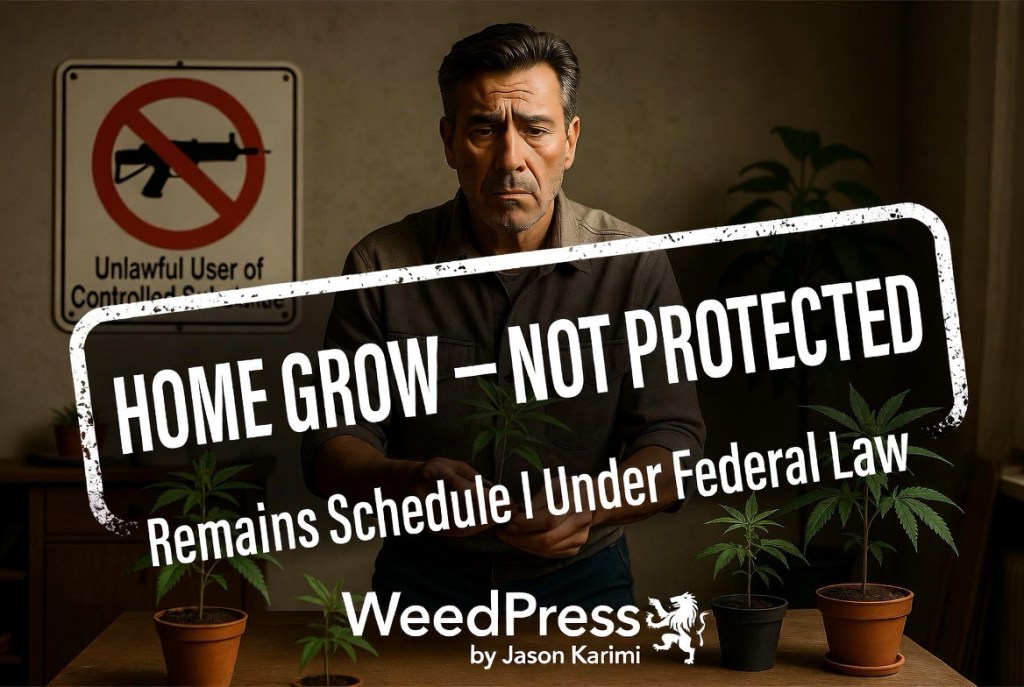
ILLEGAL: Homegrown Cannabis Remains Outside Federal Schedule III Protections — An Open Question With Real Consequences for Patients
The April 28, 2026 federal partial rescheduling order moved only two narrow categories of marijuana from Schedule I to Schedule III: certain FDA-approved products and marijuana produced under qualifying state-issued medical marijuana licenses.¹ Personal home cultivation was not included in either category. This creates a significant gap. In states that permit limited home growing for…
-

Tribal Operators Face Extra Risks Under Federal Rescheduling — And They Should Not Trust Reassuring Advice from People with Skin in the Game
Tribal operators face additional risks that many industry voices aren’t addressing. Independent analysis matters. Tribal and Indigenous cannabis operators are in a uniquely vulnerable position under the new federal Schedule III framework. They face all the same compliance burdens as other small operators — plus additional layers of jurisdictional complexity, disclosure risk, and uncertainty around…
Policy
-
No, South Dakota’s Medical Cannabis Rules Do Not Satisfy Federal Schedule III Requirements — Operators Will Need to Make Real Adjustments
New analysis shows that South Dakota’s current licensing rules do not fully satisfy the new federal Schedule III requirements. DEA registration, security upgrades, and disclosure obligations represent real adjustments that many operators will need to make. Blanket claims that “everyone will be fine with little change” overlook these gaps. Some voices in South Dakota are…
-
ILLEGAL: Homegrown Cannabis Remains Outside Federal Schedule III Protections — An Open Question With Real Consequences for Patients
The April 28, 2026 federal partial rescheduling order moved only two narrow categories of marijuana from Schedule I to Schedule III: certain FDA-approved products and marijuana produced under qualifying state-issued medical marijuana licenses.¹ Personal home cultivation was not included in either category. This creates a significant gap. In states that permit limited home growing for…
-
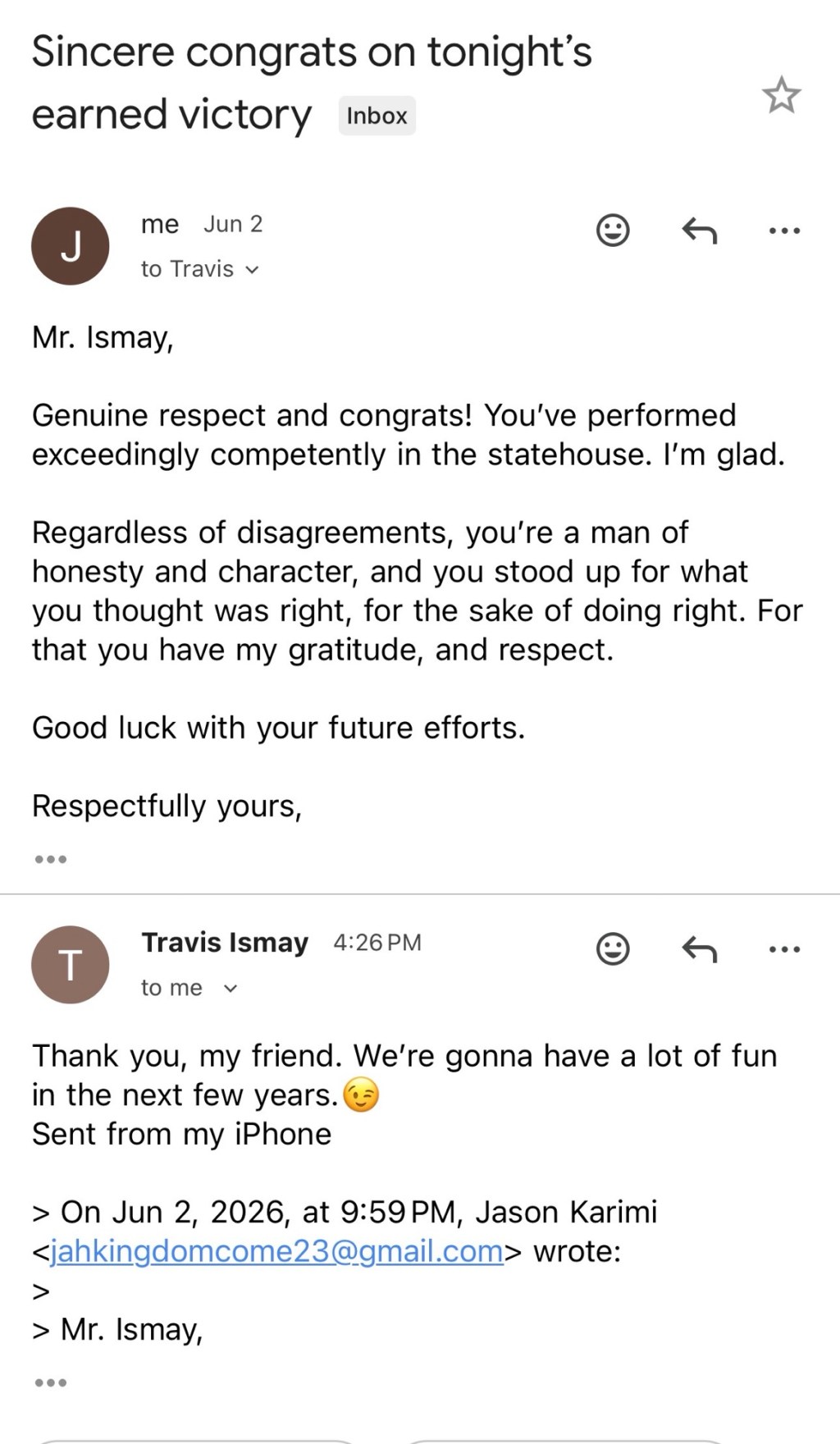
Travis Ismay Responds to My Congratulatory Email: A Small Step Toward Civil Discourse in South Dakota Politics
Yesterday, Rep. Travis Ismay (R-House District 28B) replied to the congratulatory email I sent him shortly after his decisive Republican primary victory on June 2.¹ For context, here is the full exchange: My email (June 2, 2026): For context, here is the full exchange: It’s a brief, gracious response — and one I appreciate. Background…
-
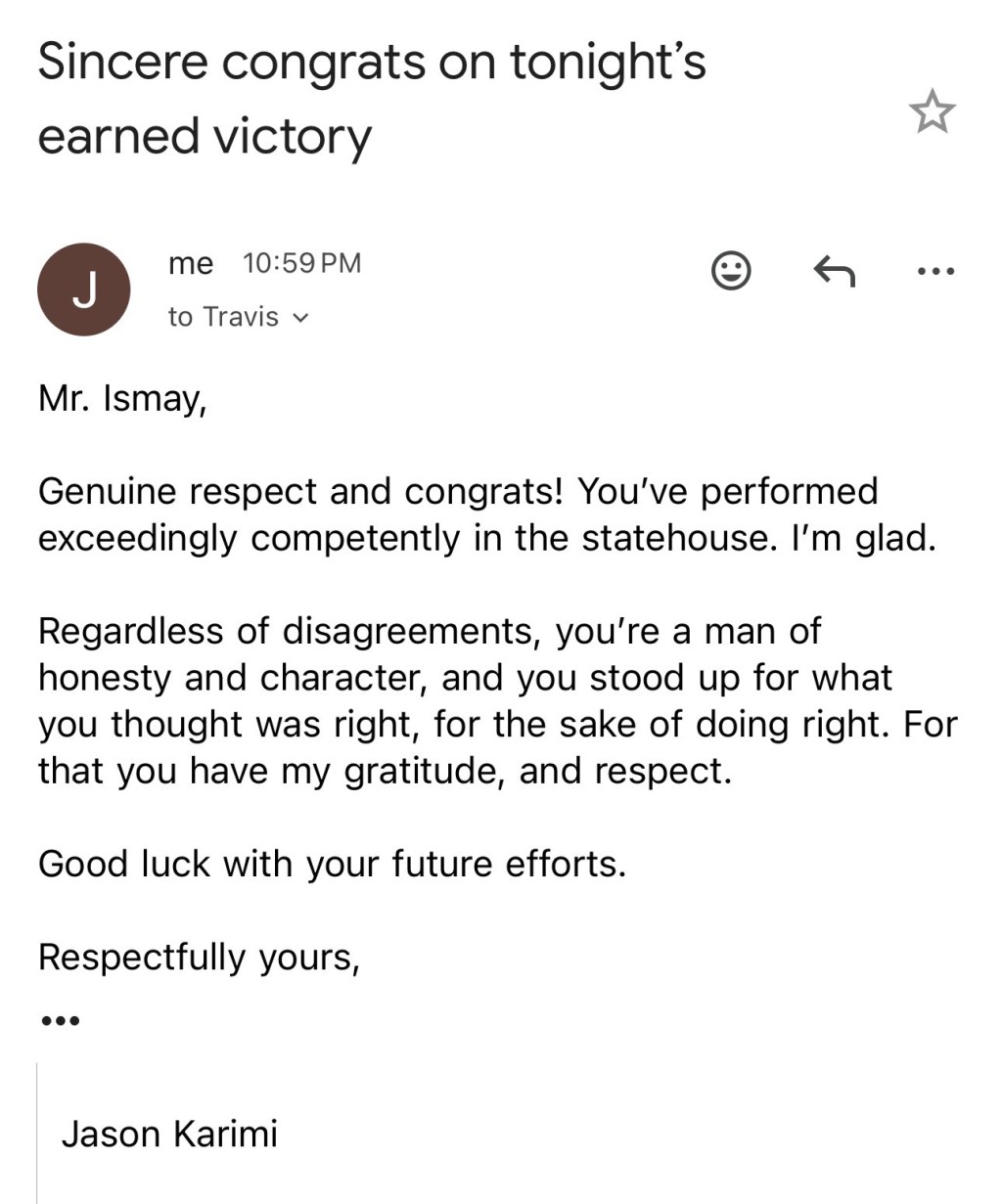
My Congratulatory Email to Rep. Travis Ismay After His Primary Win
Last night, Rep. Travis Ismay (R-House District 28B) defeated challenger Larry Schmaltz in the Republican primary, securing approximately 59% of the vote to Schmaltz’s 41%. I’ve had strong disagreements with Rep. Ismay — particularly over his sponsorship of legislation aimed at repealing South Dakota’s medical marijuana program. Those disagreements led to some heated emails in…
-

Medical Marijuana State Protections: The Full 12-Year History of the Appropriations Rider and Iowa’s Delegation Voting Record
Every year since 2014, Congress has included a critical appropriations rider — commonly known as the Rohrabacher-Farr Amendment (and its successors) — that prohibits the Department of Justice from using federal funds to interfere with states that have legalized medical marijuana. This bipartisan protection has been renewed in every major appropriations bill, ensuring that state…
-
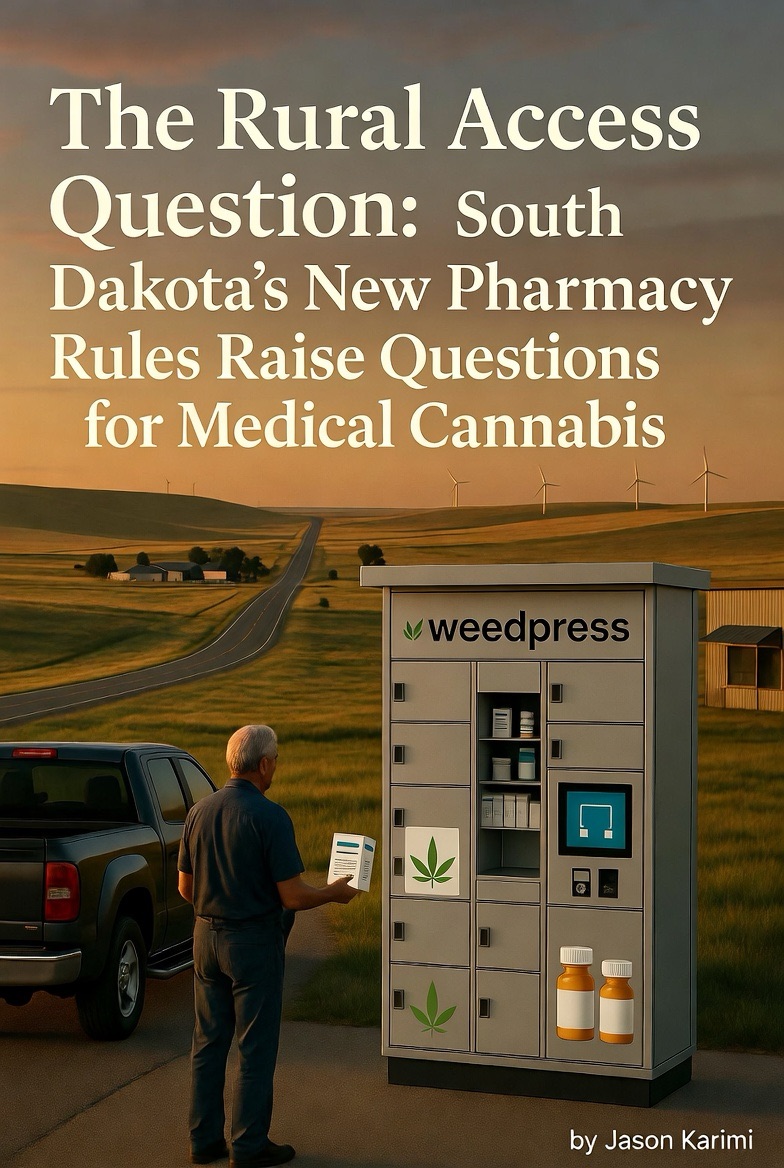
The Rural Access Question South Dakota’s New Pharmacy Rules Raise for Medical Cannabis
As regulators embrace telepharmacy and remote prescription pickup, policymakers may eventually face similar questions about medical cannabis access in rural communities. South Dakota’s Board of Pharmacy is advancing updated rules under Article 20:51 of the Administrative Rules of South Dakota (ARSD) that formalize the use of remote drop sites for prescription medications and introduce a…
Law
-
From Gap to Solution: A Step-by-Step Implementation Framework for a User-Level Medical Cannabis Exemption in South Dakota
The April 28, 2026 federal partial rescheduling order created a clear compliance burden for licensed operators while leaving patients who grow or use cannabis outside the commercial system in a federal gray area.¹ Reassuring public statements that “you’ll be fine” or that “state law is already strict enough” do not close that gap for home…
-
Patient Legal Risks Solved: A User-Level Exemption Model for Schedule III
The April 28, 2026 federal partial rescheduling order left a significant gap: personal home cultivation was not included in the narrow categories moved to Schedule III. Colorado attorneys Brian Vicente and Rachel Gillette have been direct about the practical consequences. Vicente noted that home grows do not qualify for the new federal registration pathway because…
-
No, South Dakota’s Medical Cannabis Rules Do Not Satisfy Federal Schedule III Requirements — Operators Will Need to Make Real Adjustments
New analysis shows that South Dakota’s current licensing rules do not fully satisfy the new federal Schedule III requirements. DEA registration, security upgrades, and disclosure obligations represent real adjustments that many operators will need to make. Blanket claims that “everyone will be fine with little change” overlook these gaps. Some voices in South Dakota are…
-
The Real Cost of Schedule III: What Small South Dakota Operators Are Actually Facing Right Now
For small operators trying to understand what federal changes actually mean: This piece breaks down the compliance costs and risks that are often glossed over. Knowledge is power — especially when the stakes are this high. South Dakota small cannabis operators are being told to relax. Federal rescheduling is here, the story goes, and everything…
-
ILLEGAL: Homegrown Cannabis Remains Outside Federal Schedule III Protections — An Open Question With Real Consequences for Patients
The April 28, 2026 federal partial rescheduling order moved only two narrow categories of marijuana from Schedule I to Schedule III: certain FDA-approved products and marijuana produced under qualifying state-issued medical marijuana licenses.¹ Personal home cultivation was not included in either category. This creates a significant gap. In states that permit limited home growing for…
-
Tribal Operators Face Extra Risks Under Federal Rescheduling — And They Should Not Trust Reassuring Advice from People with Skin in the Game
Tribal operators face additional risks that many industry voices aren’t addressing. Independent analysis matters. Tribal and Indigenous cannabis operators are in a uniquely vulnerable position under the new federal Schedule III framework. They face all the same compliance burdens as other small operators — plus additional layers of jurisdictional complexity, disclosure risk, and uncertainty around…
Science
-
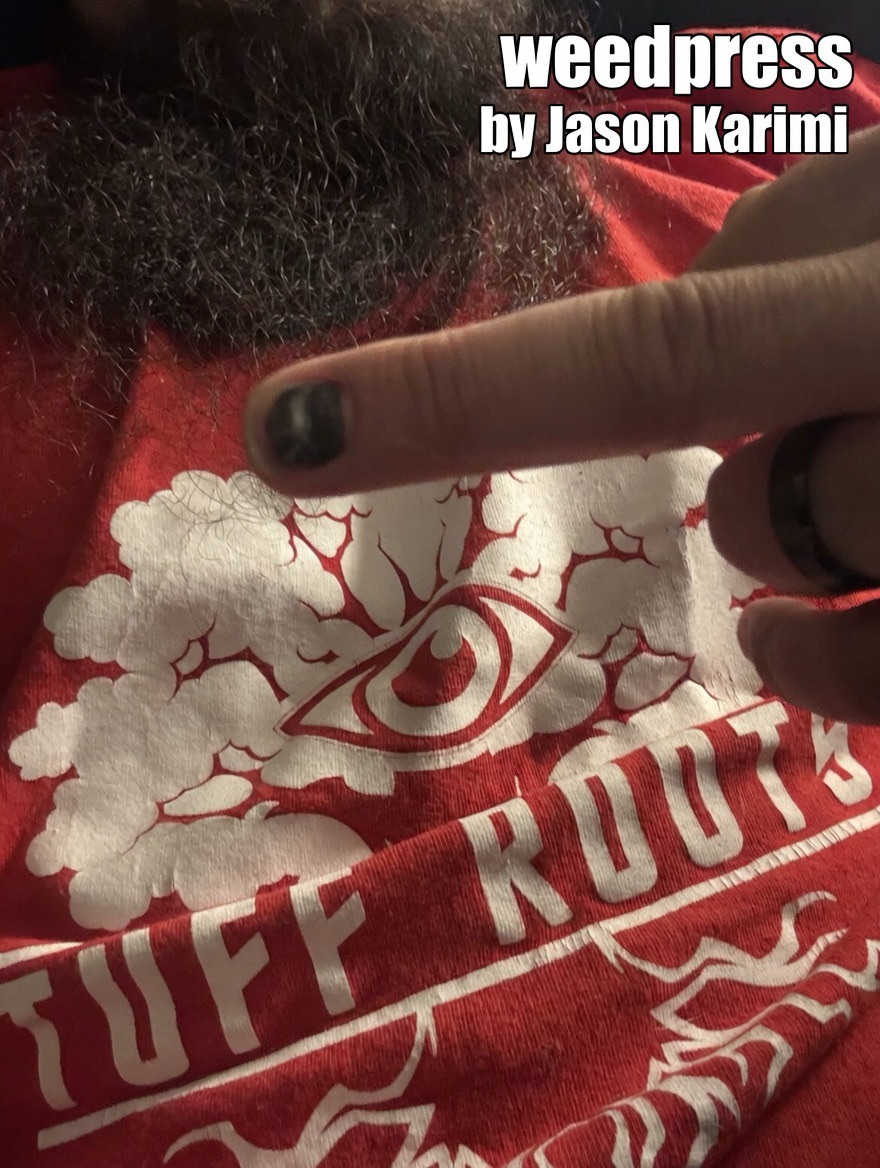
Reflections on a Bruised Nail: What My Left Middle Finger Injury Taught Me About Inner Worth and Boundaries
Two months ago, I slammed my left middle finger, resulting in a subungual hematoma—the dark pool of blood trapped beneath the nail that turned my fingertip into a visual reminder of sudden impact.¹ No longer painful, the nail still carries a mottled shadow of black and white as new growth slowly pushes the old damage…
-

Predators Don’t Debate — They Rig the Game: How Black-Market-Friendly State Cannabis Programs Created the Perfect Environment for Predators — and Why Federal Legitimacy Is Ending It
The drug laws were rigged for decades. Prohibition didn’t eliminate the black market — it protected it. Cartels and underground operators thrived while legitimate patients and small businesses were crushed. When states began legalization without federal exemption, they didn’t fix the problem. They simply moved the rigged game indoors and gave it a state license.…
-
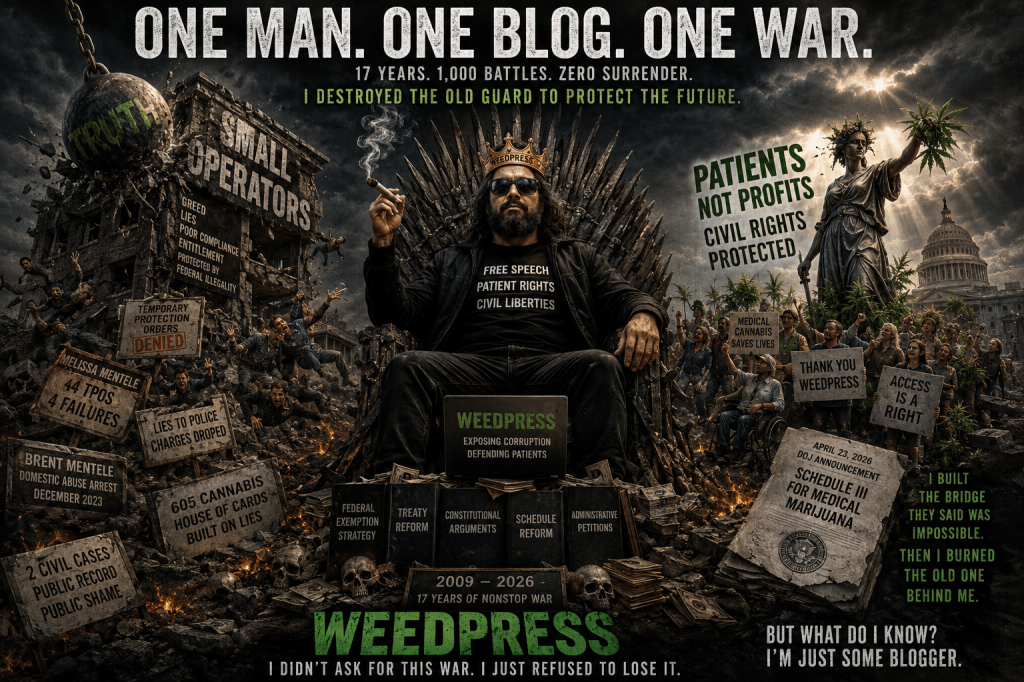
I Spent 17 Years Arguing for Federal Cannabis Legitimacy. Now Small Operators Are About to Learn What That Means.
I have spent most of my adult life arguing that state medical cannabis programs could not survive forever as legally tolerated gray markets.¹ They needed federal recognition. They needed treaty analysis. They needed administrative pathways. They needed constitutional pressure. They needed people willing to say the uncomfortable thing before the institutions were ready to admit…
-
Stork Just Sent a Researcher to WeedPress: What Academic Tools Mean for Cannabis Policy Analysis
Independent statutory deep-dives are showing up alongside peer-reviewed literature in researchers’ workflows. It’s not every day your analytics dashboard lights up with a referrer you’ve never seen before. Today, May 5, 2026, WeedPress received a visit from paper-box.co — the domain tied to Stork (storkapp.me), a specialized publication-tracking and research intelligence platform used by academics,…
-
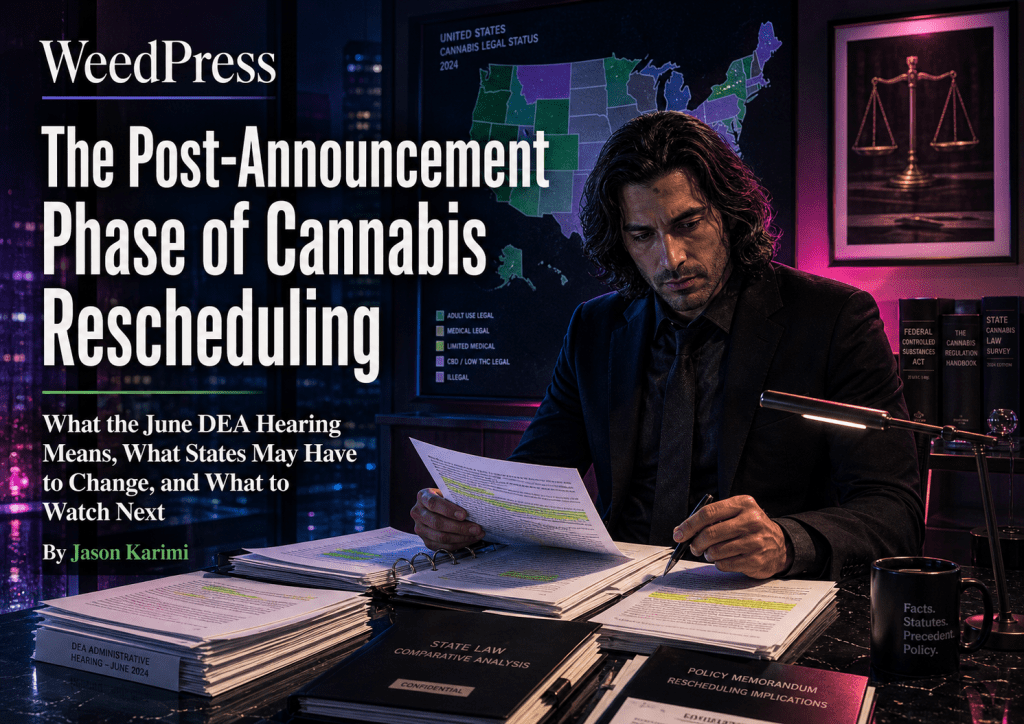
The Post-Announcement Phase of Cannabis Rescheduling: What the June DEA Hearing Means, What States May Have to Change, and What to Watch Next
The most important cannabis-law story in the country is no longer the announcement that part of the marijuana market has been moved into Schedule III. It is the implementation phase that follows. In April 2026, the Department of Justice and the Drug Enforcement Administration took the unusual step of immediately placing state-licensed medical marijuana and…
-
Why South Dakota’s Own Statutes Now Make Schedule I Marijuana Unlawful to Maintain
“Acting Attorney General Todd Blanche is placing both FDA-approved drug products containing marijuana, and medicinal marijuana products subject to a qualifying state-issued license in Schedule III under his authority to reschedule drugs to carry out the United States’ obligations under the Single Convention on Narcotic Drugs.”¹ South Dakota, however, is not automatically bound by that…
Current Events
-
Leonard Read on Violence, Liberty, and Love
Timely article here at Mises.org. Writes Pepperdine University’s Gary Galles, “Virtue is widely preached and admired. Most consider themselves virtuous. Yet in our society, virtue is being progressively crowded out by coercion.” “In Students of Liberty, Leonard Read drew out the superiority of a society whose organizing principle is virtue—love voluntarily acted out in practical…
-
Small Business Administration Refuses Cannabis Businesses Corona Disaster Relief Business Loans
The reason? Federal prohibition not exempting state laws (yet). State legal businesses cannot get federal access to business relief funding due to federal prohibition. This article from Tom Angell’s excellent as always Marijuana Moment has the details, and is yet another reason why the state’s failure to protect their state legal industries by ducking the…
-
[VIDEO] March 10th 2020 Iowa House Debate Over Medical Cannabis, Vote
Jarad Klein appears to volunteer for the head horse’s ass in a room full of federal criminals. Watch:
-

Action Happening Now: Eight Amendments Filed, House Debate Calendar Schedule Show Cannabis Bill On Deck
Here is my summary of the eight amendments filed this morning. The House is currently debating medical cannabis bills. You can find your representative to contact and urge a yes vote on whatever Kim Reynolds dictator like statehouse claims is morally correct here this year. These amendments are for House File 2589. The following…
-
Developing: Senator Miller-Meeks, Others, Discuss Medical Cannabis At Yesterday’s Ottumwa League of Women Voter’s Forum
Ottumwa, Iowa Senator Miller-Meeks and other state actors discussed concerns about lack of federal influence on fixing outdated marijuana laws at a League of Women Voter’s forum in Ottumwa Saturday morning. See below for video from an Iowa patient discussing concerns with limitations being placed on Iowa’s medical cannabis program as well as a major…
-
The Real Nature of Politics and Politicians
The Real Nature of Politics and Politicians or America’s System Works, But Not the Way You Think! By Mike Rothfeld (Editor’s Note: I met Mike at the Campaign For Liberty convention in Atlanta in January 2010. This guy is a take-no-prisoners guerrilla fighter. If you see Mike in person giving a speech, you’ll either love him…
Legislation
-
Patient Legal Risks Solved: A User-Level Exemption Model for Schedule III
The April 28, 2026 federal partial rescheduling order left a significant gap: personal home cultivation was not included in the narrow categories moved to Schedule III. Colorado attorneys Brian Vicente and Rachel Gillette have been direct about the practical consequences. Vicente noted that home grows do not qualify for the new federal registration pathway because…
-
Travis Ismay Responds to My Congratulatory Email: A Small Step Toward Civil Discourse in South Dakota Politics
Yesterday, Rep. Travis Ismay (R-House District 28B) replied to the congratulatory email I sent him shortly after his decisive Republican primary victory on June 2.¹ For context, here is the full exchange: My email (June 2, 2026): For context, here is the full exchange: It’s a brief, gracious response — and one I appreciate. Background…
-
The Rural Access Question South Dakota’s New Pharmacy Rules Raise for Medical Cannabis
As regulators embrace telepharmacy and remote prescription pickup, policymakers may eventually face similar questions about medical cannabis access in rural communities. South Dakota’s Board of Pharmacy is advancing updated rules under Article 20:51 of the Administrative Rules of South Dakota (ARSD) that formalize the use of remote drop sites for prescription medications and introduce a…
-
I Spent 17 Years Arguing for Federal Cannabis Legitimacy. Now Small Operators Are About to Learn What That Means.
I have spent most of my adult life arguing that state medical cannabis programs could not survive forever as legally tolerated gray markets.¹ They needed federal recognition. They needed treaty analysis. They needed administrative pathways. They needed constitutional pressure. They needed people willing to say the uncomfortable thing before the institutions were ready to admit…
-
Stork Just Sent a Researcher to WeedPress: What Academic Tools Mean for Cannabis Policy Analysis
Independent statutory deep-dives are showing up alongside peer-reviewed literature in researchers’ workflows. It’s not every day your analytics dashboard lights up with a referrer you’ve never seen before. Today, May 5, 2026, WeedPress received a visit from paper-box.co — the domain tied to Stork (storkapp.me), a specialized publication-tracking and research intelligence platform used by academics,…
-
Why Cannabis Operators Can’t Afford to Ignore the Federal Rescheduling Details — And What You Must Do Now
The federal government has split cannabis into two tracks. FDA-approved drug products containing marijuana and marijuana activity tied to a qualifying state-issued medical marijuana license under the new federal framework now occupy a different federal posture, while broader marijuana remains in Schedule I pending further proceedings.¹ That split is real, immediate, and carries tax, compliance,…
RFRA Updates
-
Nebraska RFRA Religious Liberty Case Advances: Supplemental Authority Filed Citing Federal Schedule III Rescheduling
Defendant Jason Karimi has filed a Notice of Supplemental Authority in Nebraska District Court while his motion to modify probation conditions under the Nebraska First Freedom Act remains under advisement. The filing notifies the Court of the recent federal Schedule III rescheduling action and Defendant’s participation in the ongoing DEA administrative proceeding (Docket No. DEA-1362)…
-
I Have Filed Notice to Participate in the DEA’s June 29 Rescheduling Hearing
Today I formally submitted my Notice of Intention to Participate in the DEA administrative hearing on the proposed rescheduling of marijuana from Schedule I to Schedule III (Docket No. DEA-1362), scheduled to begin June 29, 2026. This filing continues my 17-year record of cannabis policy advocacy and public commentary. It focuses on the interaction between…
-
Connecticut’s HB 5044 Is Not Just a Vaccine Bill. It Is a Legislative Rewrite of RFRA Mid-Litigation.
April 24, 2026 Connecticut’s HB 5044 is being sold as a vaccine-governance bill. In one sense, that is true: the bill deals broadly with immunization standards, the Department of Public Health’s authority, insurance coverage, and related vaccine-administration issues.¹ But buried inside that larger package is the provision that matters most for religious-liberty law: HB 5044…
-
West Virginia and Mississippi Tried to Move Marijuana to Schedule III. Both Bills Reveal the Same Structural Problem.
April 24, 2026 West Virginia and Mississippi each opened the 2026 session with a bill that would have done something their existing marijuana laws still refuse to do: move cannabis from Schedule I to Schedule III under state law.¹ ² Both proposals were straightforward on paper. West Virginia’s SB 809 would amend W. Va. Code…
-
The State of Religious Freedom in America in 2026: Strong but Uneven Protection Across the States
April 21, 2026 State-level protection for religious exercise in 2026 is both stronger and less uniform than many summary accounts suggest. Roughly thirty states are commonly identified as having enacted statutory Religious Freedom Restoration Acts (“RFRAs”), while a smaller additional set is often described as providing RFRA-like protection through state constitutional doctrine. The trend is…
-
No. 19 — Religious Accommodation in Medical-Only Cannabis States
No. 19 — Religious Accommodation in Medical-Only Cannabis States: Structural Litigation Risk and Legislative Design By Jason Karimi | WeedPress Policy Series No. 19April 20, 2026 ⸻ I. Introduction: The Unaddressed Gap Medical-only cannabis states operate within a tightly regulated framework. Cultivation is limited. Home grows require registration. Plant counts are capped. Inspections are authorized.…
Upcoming Events
For The Record (2026), By Jason Karimi
-
Reflections on a Bruised Nail: What My Left Middle Finger Injury Taught Me About Inner Worth and Boundaries
Two months ago, I slammed my left middle finger, resulting in a subungual hematoma—the dark pool of blood trapped beneath the nail that turned my fingertip into a visual reminder of sudden impact.¹ No longer painful, the nail still carries a mottled shadow of black and white as new growth slowly pushes the old damage…
-
I Have Filed Notice to Participate in the DEA’s June 29 Rescheduling Hearing
Today I formally submitted my Notice of Intention to Participate in the DEA administrative hearing on the proposed rescheduling of marijuana from Schedule I to Schedule III (Docket No. DEA-1362), scheduled to begin June 29, 2026. This filing continues my 17-year record of cannabis policy advocacy and public commentary. It focuses on the interaction between…
-
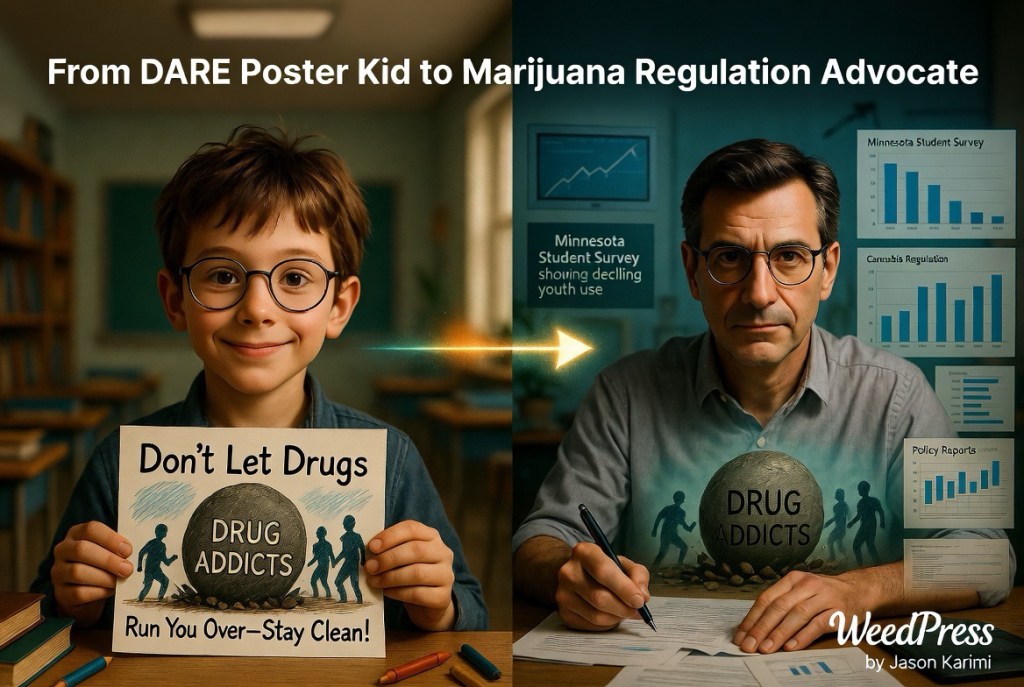
DARE Poster Kid to Marijuana Regulation Advocate: My Unchanging Fight to Protect Kids
When I was in elementary school, the DARE program left a lasting impression. Officers visited regularly, warning us about the dangers of drugs and pushing the “just say no” message. I took it seriously. So when the school announced an anti-drug poster contest open to elementary students, I threw myself into creating something impactful. My…
-

Chapter 9: The Record vs. the Narrative
Table of Contents Preface Chapter 1 — The First ArrestEarly rupture, authority, and the beginning of resistance Chapter 2 — Before the File Was Opened Gifted education, faith, discipline, and early legitimacy Chapter 3 — Becoming a ProblemWork, exhaustion, collapse, and the cost of visibility Chapter 4 — Learning the Language of PowerCourts, probation, jail, campaigns, and proximity to decision-makers…
-

Chapter 10: What Remains
Table of Contents Preface Chapter 1 — The First ArrestEarly rupture, authority, and the beginning of resistance Chapter 2 — Before the File Was Opened Gifted education, faith, discipline, and early legitimacy Chapter 3 — Becoming a ProblemWork, exhaustion, collapse, and the cost of visibility Chapter 4 — Learning the Language of PowerCourts, probation, jail, campaigns, and proximity to decision-makers…
-

Chapter 8: What the Media Gets Wrong
Table of Contents Preface Chapter 1 — The First ArrestEarly rupture, authority, and the beginning of resistance Chapter 2 — Before the File Was Opened Gifted education, faith, discipline, and early legitimacy Chapter 3 — Becoming a ProblemWork, exhaustion, collapse, and the cost of visibility Chapter 4 — Learning the Language of PowerCourts, probation, jail, campaigns, and proximity to decision-makers…
-

Chapter 7: Why I Never Left
Table of Contents Preface Chapter 1 — The First ArrestEarly rupture, authority, and the beginning of resistance Chapter 2 — Before the File Was Opened Gifted education, faith, discipline, and early legitimacy Chapter 3 — Becoming a ProblemWork, exhaustion, collapse, and the cost of visibility Chapter 4 — Learning the Language of PowerCourts, probation, jail, campaigns, and proximity to decision-makers…
-

Chapter 6: Staying Power
Table of Contents Preface Chapter 1 — The First ArrestEarly rupture, authority, and the beginning of resistance Chapter 2 — Before the File Was Opened Gifted education, faith, discipline, and early legitimacy Chapter 3 — Becoming a ProblemWork, exhaustion, collapse, and the cost of visibility Chapter 4 — Learning the Language of PowerCourts, probation, jail, campaigns, and proximity to decision-makers…
-

Chapter 5: The Apprenticeship
Table of Contents Preface Chapter 1 — The First ArrestEarly rupture, authority, and the beginning of resistance Chapter 2 — Before the File Was Opened Gifted education, faith, discipline, and early legitimacy Chapter 3 — Becoming a ProblemWork, exhaustion, collapse, and the cost of visibility Chapter 4 — Learning the Language of PowerCourts, probation, jail, campaigns, and proximity to decision-makers…
-

Chapter 4: Learning the Language of Power
Table of Contents Preface Chapter 1 — The First ArrestEarly rupture, authority, and the beginning of resistance Chapter 2 — Before the File Was Opened Gifted education, faith, discipline, and early legitimacy Chapter 3 — Becoming a ProblemWork, exhaustion, collapse, and the cost of visibility Chapter 4 — Learning the Language of PowerCourts, probation, jail, campaigns, and proximity to decision-makers…
-

Chapter 3: Becoming a Problem
Table of Contents Preface Chapter 1 — The First ArrestEarly rupture, authority, and the beginning of resistance Chapter 2 — Before the File Was Opened Gifted education, faith, discipline, and early legitimacy Chapter 3 — Becoming a ProblemWork, exhaustion, collapse, and the cost of visibility Chapter 4 — Learning the Language of PowerCourts, probation, jail, campaigns, and proximity to decision-makers…
-

Chapter 2: Before the File Was Opened
Table of Contents Preface Chapter 1 — The First ArrestEarly rupture, authority, and the beginning of resistance Chapter 2 — Before the File Was Opened Gifted education, faith, discipline, and early legitimacy Chapter 3 — Becoming a ProblemWork, exhaustion, collapse, and the cost of visibility Chapter 4 — Learning the Language of PowerCourts, probation, jail, campaigns, and proximity to decision-makers…
Commentary
-
Dead Sea Scrolls Prove Book of Enoch Was Canonical During Jesus Time
The Dead Sea Scroll Proof Between 1947–1956, the Dead Sea Scrolls were discovered at Qumran. Among them were at least 11 distinct Enoch manuscripts — more copies than many Old Testament books. That tells us something critical: Enoch was not fringe. It was core scripture for major Jewish communities before Jesus. What the Scrolls show:…
-
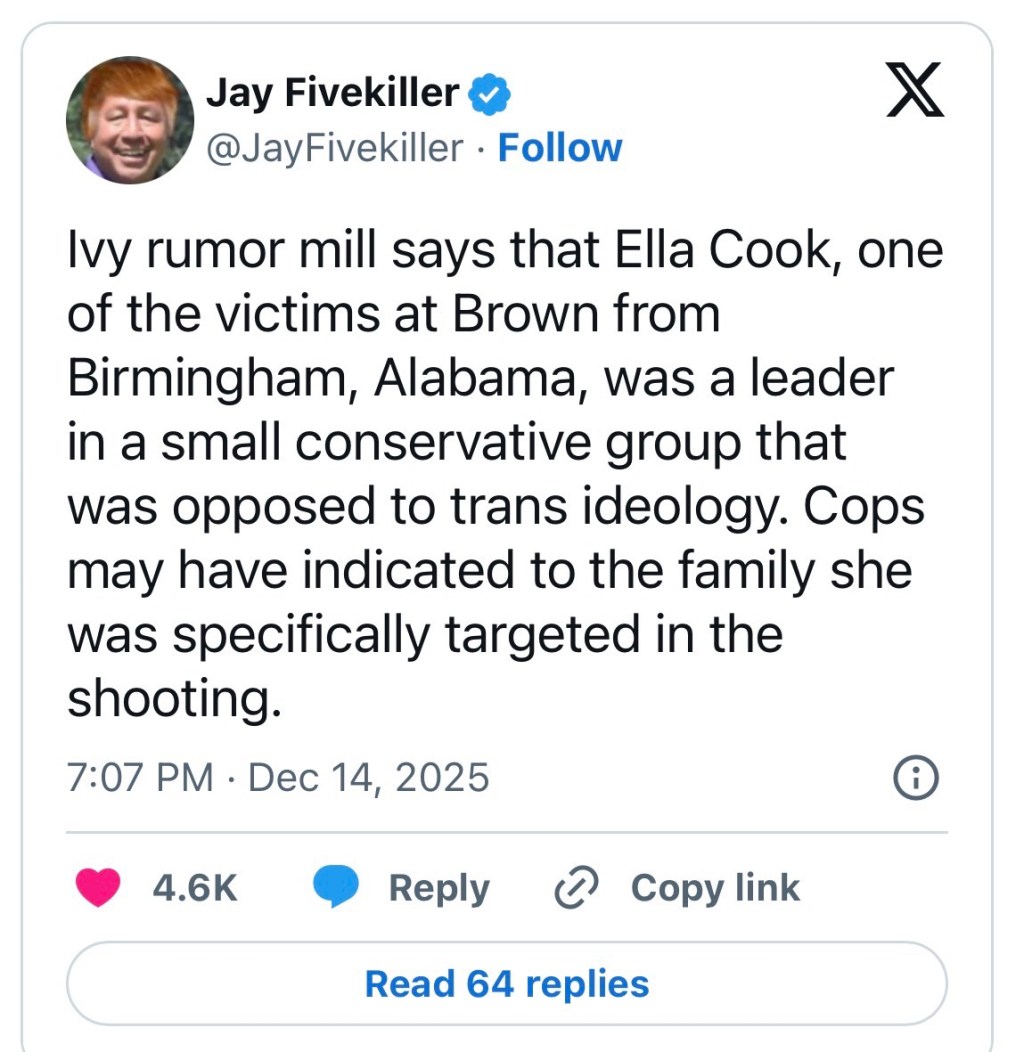
WeedPress Warned Political Violence Was Increasing And Now A 19 Year Old Was Assassinated
I met with Governor Kim Reynolds with the head of the Iowa College Republicans and other leaders in 2017 to warn political violence with my college activist group was on the rise. My colleague at Iowa State, Ryan Hurley, former President of Young Americans for Liberty at Iowa State, testified to the Governor he was…
-
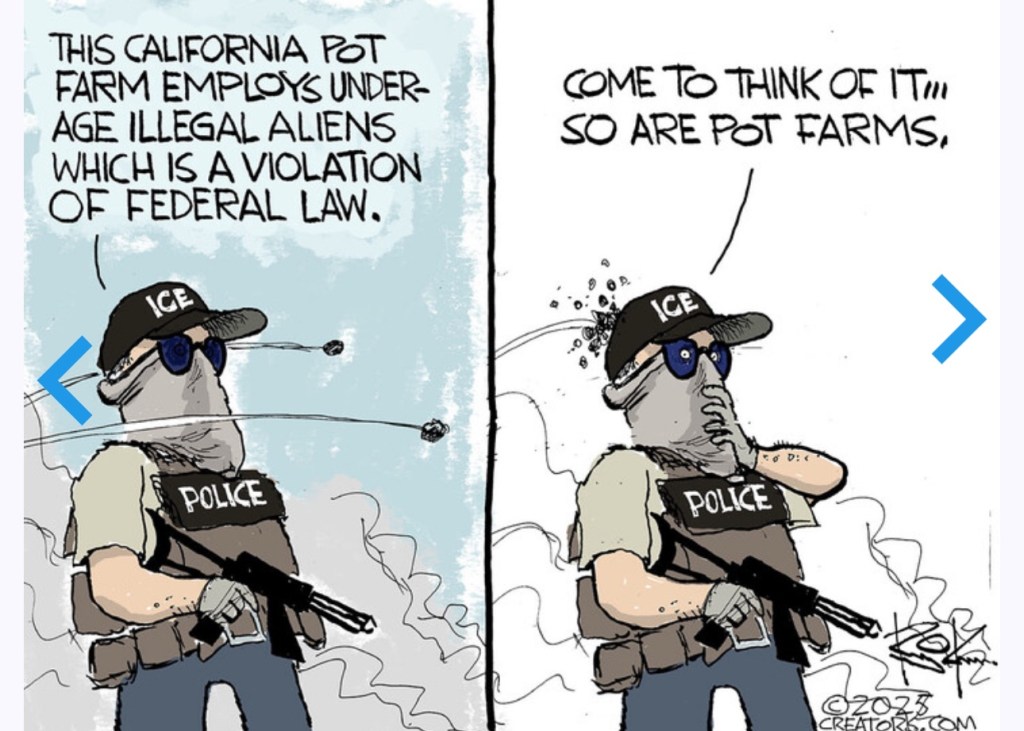
“Unlocked Potential: Small Businesses in the Cannabis Industry”
In 2019, senior legal fellow Paul J. Larkin Jr. provided testimony titled “Unlocked Potential: Small Businesses in the Cannabis Industry” before the U.S. House Small Business Committee. Key Points on Business Impacts and Policy Recommendations • Differential Impacts: The testimony acknowledges that federal prohibition creates barriers for all cannabis businesses but notes that small operators…
-
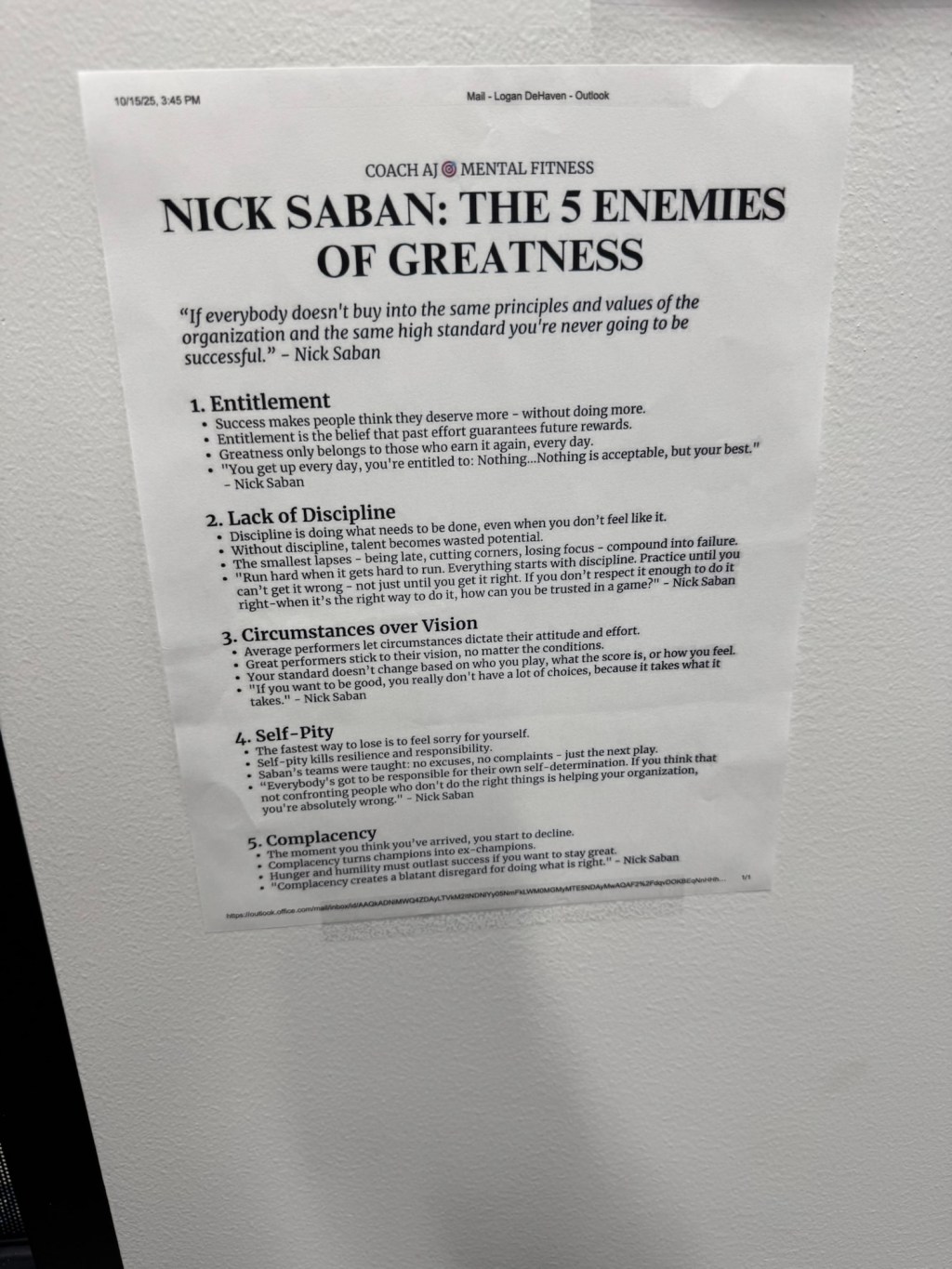
The Five Enemies Of Greatness
Spotted at a Sioux Falls Vern Eide dealership fix it ticket for camera security today.
-
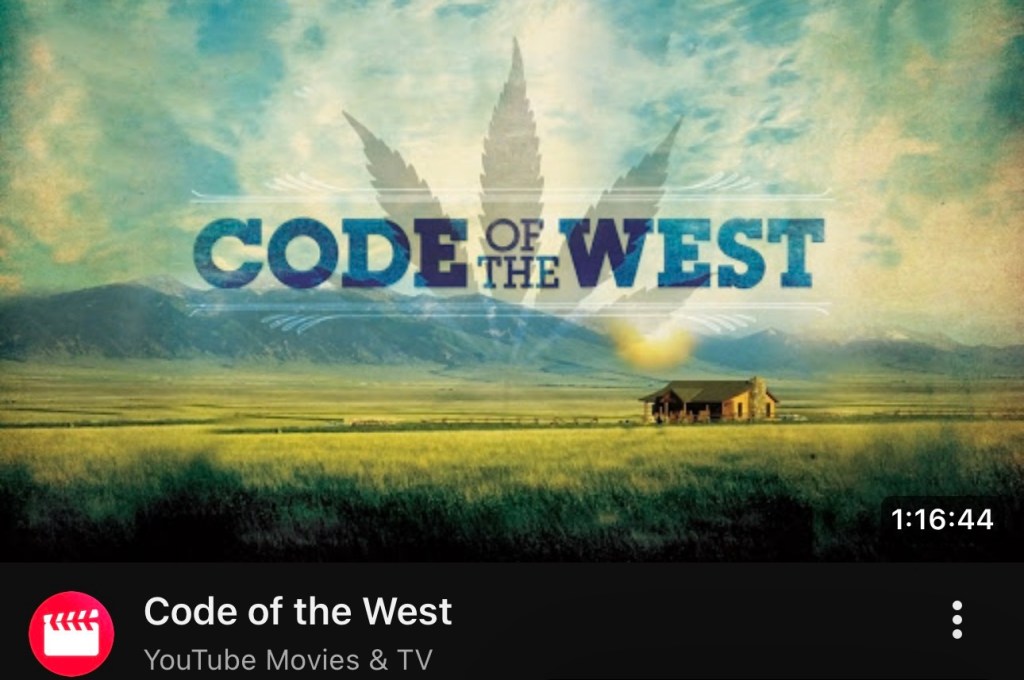
“Code of the West” Covers Montana’s Failed Effort To Repeal Marijuana Laws
Year: 2012 At a time when the world is rethinking its drug policies large and small, one state rises to the forefront. Once a pioneer in legalizing medical marijuana, the state of Montana may now become the first to repeal its medical marijuana law. Set against the sweeping vistas of the Rockies, the steamy lamplight…
-
How Kim Reynolds Bullied Iowa City Council Members Out of Decriminalizing Marijuana
Iowa city council members who wished to decriminalize marijuana tell Iowa cannabis activists Kim Reynolds threatened to take away city funds from the state if the city council pursues marijuana decriminalization. As of today Kim Reynolds is the most unpopular governor in the country. Republicans stifling debate on a winning political issue using threats to…
-
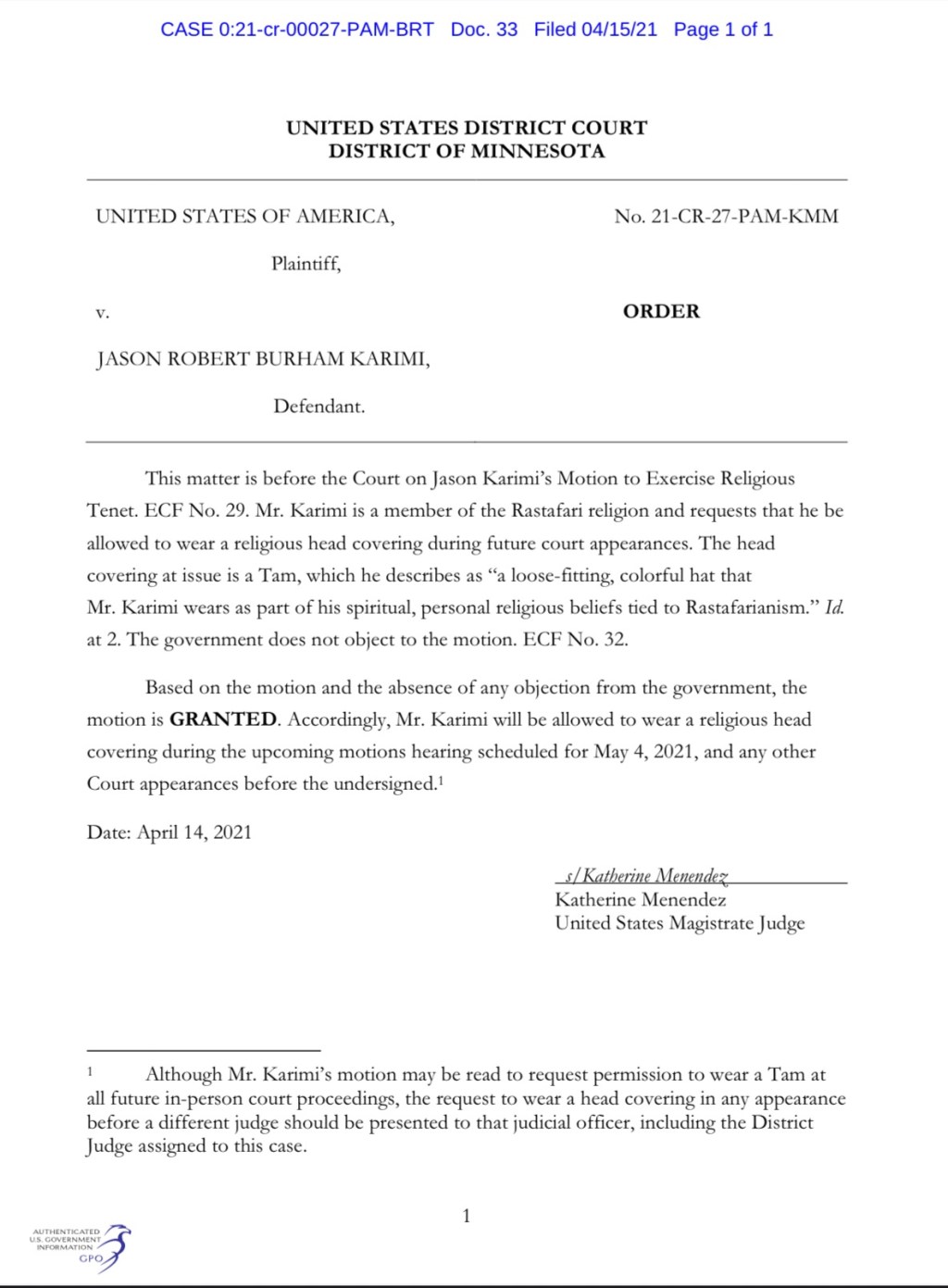
RFRA Changes The Cannabis Game; Fulfills My Prediction Religious Cannabis Constitutional Claims
Prior to RFRA state laws, I argued the first amendment right to religion would bring constitutional rulings for individuals protecting religious access to cannabis in private prayer. I think this is still the inevitable end result of cannabis litigations. There are several things to note about the RFRA.
-

Patient Perspectives
-
Weedpress Warned Y’all Interstate Commerce Competition Would Change Industry Standards. MPP Now Says So Too Six Months Later!
I love winning the long game that matters: federal law was always gonna turn everything inside out. I started studying how twenty years ago. So this year I wrote as boring as possible in February: Then I wrote as boring as possible in April: Then those articles got sent to some people quietly and talks…
-
From Gap to Solution: A Step-by-Step Implementation Framework for a User-Level Medical Cannabis Exemption in South Dakota
The April 28, 2026 federal partial rescheduling order created a clear compliance burden for licensed operators while leaving patients who grow or use cannabis outside the commercial system in a federal gray area.¹ Reassuring public statements that “you’ll be fine” or that “state law is already strict enough” do not close that gap for home…
-
Patient Legal Risks Solved: A User-Level Exemption Model for Schedule III
The April 28, 2026 federal partial rescheduling order left a significant gap: personal home cultivation was not included in the narrow categories moved to Schedule III. Colorado attorneys Brian Vicente and Rachel Gillette have been direct about the practical consequences. Vicente noted that home grows do not qualify for the new federal registration pathway because…
-
No, South Dakota’s Medical Cannabis Rules Do Not Satisfy Federal Schedule III Requirements — Operators Will Need to Make Real Adjustments
New analysis shows that South Dakota’s current licensing rules do not fully satisfy the new federal Schedule III requirements. DEA registration, security upgrades, and disclosure obligations represent real adjustments that many operators will need to make. Blanket claims that “everyone will be fine with little change” overlook these gaps. Some voices in South Dakota are…
-
ILLEGAL: Homegrown Cannabis Remains Outside Federal Schedule III Protections — An Open Question With Real Consequences for Patients
The April 28, 2026 federal partial rescheduling order moved only two narrow categories of marijuana from Schedule I to Schedule III: certain FDA-approved products and marijuana produced under qualifying state-issued medical marijuana licenses.¹ Personal home cultivation was not included in either category. This creates a significant gap. In states that permit limited home growing for…
-
Tribal Operators Face Extra Risks Under Federal Rescheduling — And They Should Not Trust Reassuring Advice from People with Skin in the Game
Tribal operators face additional risks that many industry voices aren’t addressing. Independent analysis matters. Tribal and Indigenous cannabis operators are in a uniquely vulnerable position under the new federal Schedule III framework. They face all the same compliance burdens as other small operators — plus additional layers of jurisdictional complexity, disclosure risk, and uncertainty around…
 WeedPress: The Paper Trail