
Featured Analysis
-
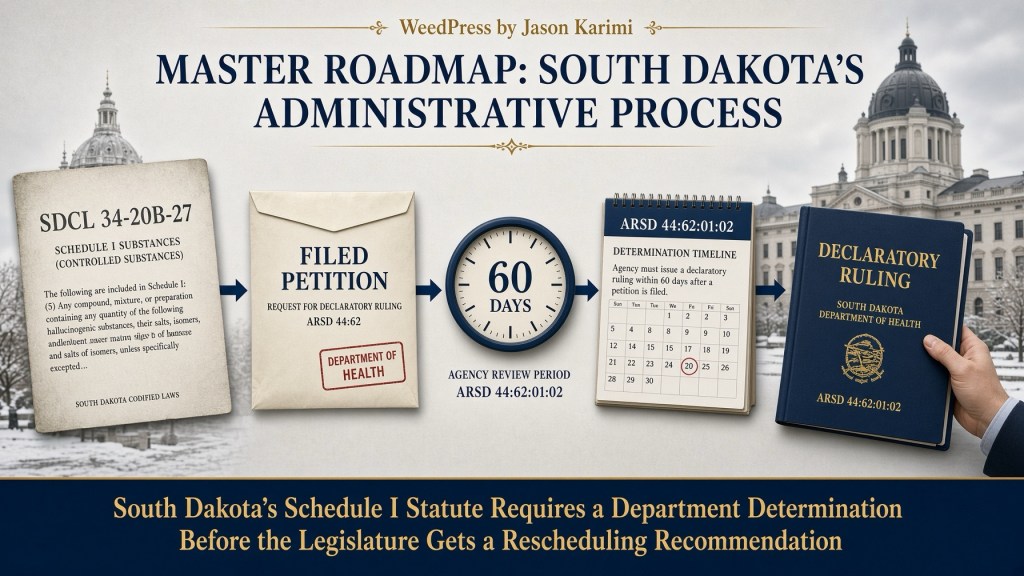
South Dakota’s Schedule I Statute Requires a Department Determination Before the Legislature Gets a Rescheduling Recommendation
SDCL 34-20B-27 does not amend the schedules by itself. It tells the Department of Health when a determination triggers a mandatory recommendation to the Legislature.¹ After the April 28, 2026 federal order placing certain state-licensed medical marijuana products in Schedule III, the unanswered Pierre question is not whether marijuana is still listed in chapter 34-20B.…
-
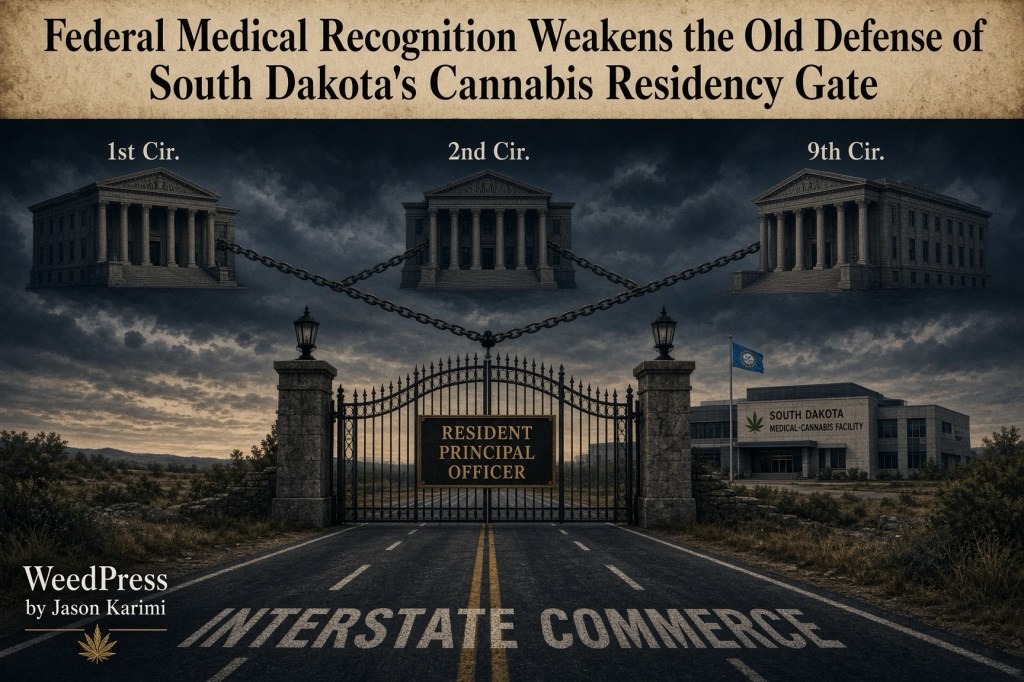
Federal Medical Recognition Weakens the Old Defense of South Dakota’s Cannabis Residency Gate
A federal shift in how medical marijuana is regulated is forcing states to confront an old constitutional question: can they still reserve cannabis licensing opportunities for residents when federal law no longer treats qualifying medical marijuana as entirely illicit? A Congressional Research Service legal sidebar issued September 3, 2026 maps a live circuit split over…
-
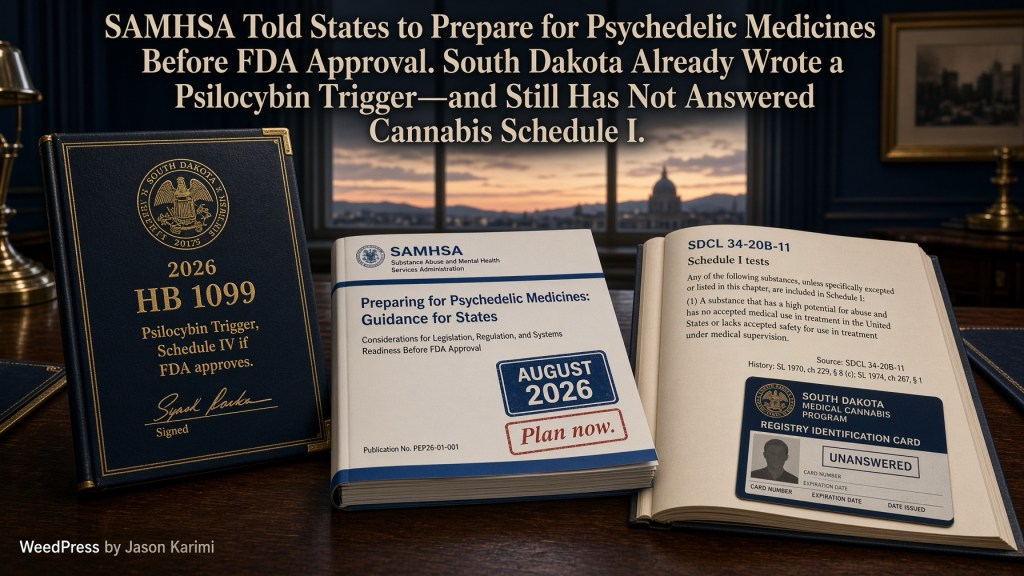
SAMHSA Told States to Prepare for Psychedelic Medicines Before FDA Approval. South Dakota Already Wrote a Psilocybin Trigger—and Still Has Not Answered Federal Cannabis Schedule III.
In August 2026, the Substance Abuse and Mental Health Services Administration published a policy paper telling state and territorial mental-health systems to start planning now for the fiscal, legal, and operational consequences of possible FDA-approved psychedelic therapies.¹ The paper is not a regulation. It does not approve psilocybin, MDMA, or LSD. It tells states to…
-
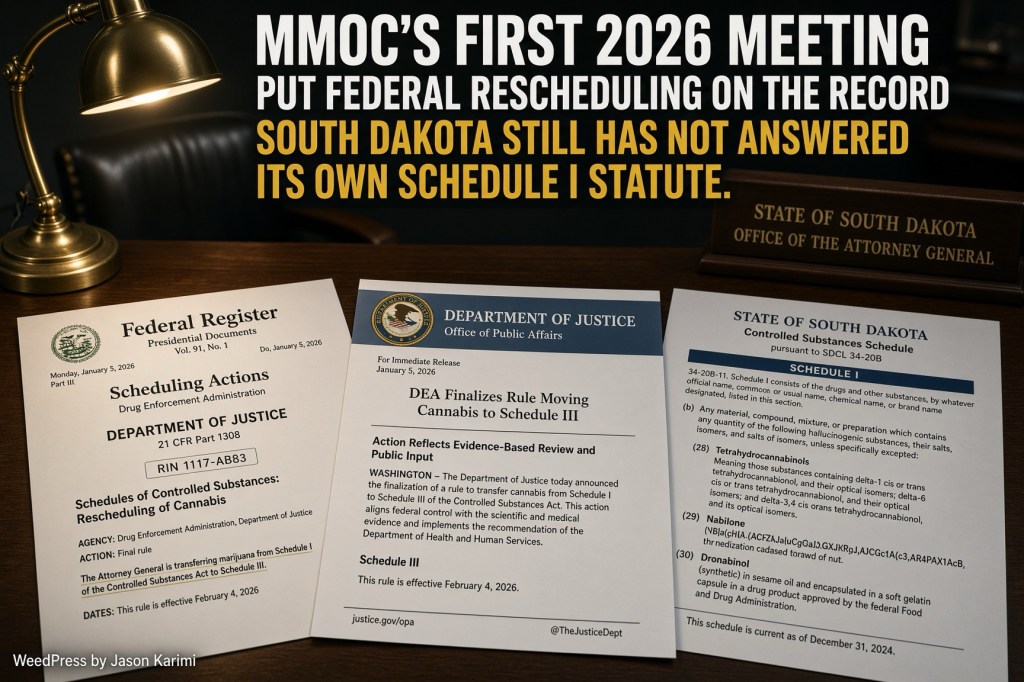
MMOC’s First 2026 Meeting Put Federal Rescheduling on the Record. South Dakota Still Has Not Answered Its Own Schedule I Statute.
The Medical Marijuana Oversight Committee’s first 2026 interim meeting did not decide whether cannabis still belongs in Schedule I under South Dakota law. It did something more limited, and more useful: it put federal classification, program scale, and the absence of a state legal answer onto the official packet.¹ That is not a committee endorsement…
-

Four Pot Shops Five Minutes Over the Iowa Line Sell the Flower Iowa Still Won’t License
North Sioux City, South Dakota, is a town of a few thousand people on the Missouri River. Sioux City, Iowa, is across the water. Between them is a five-minute drive and a statutory mismatch Iowa has never closed.¹ South Dakota’s Department of Health currently lists four licensed medical cannabis dispensaries in North Sioux City: Dakota…
-
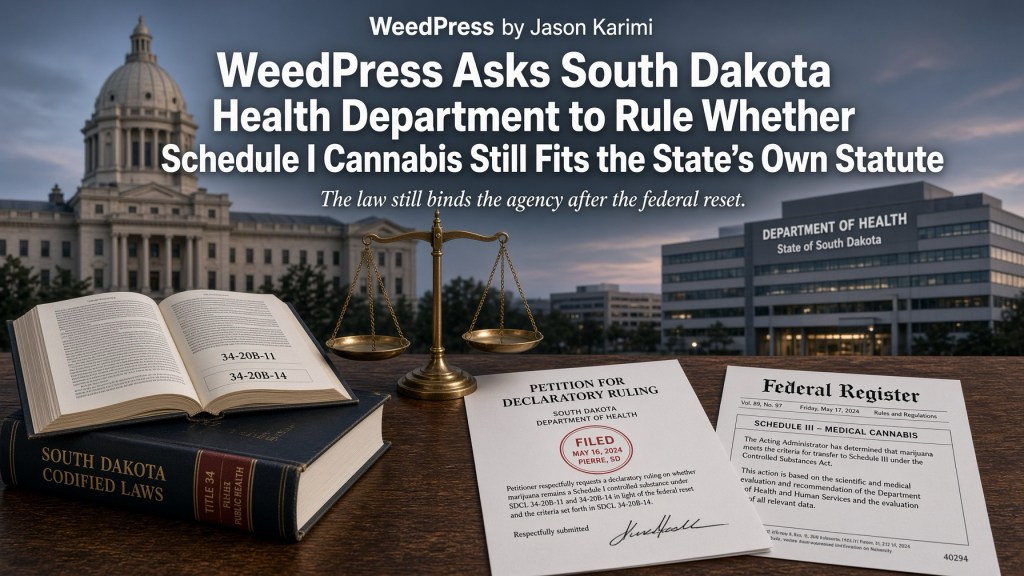
WeedPress Asks South Dakota Health Department to Rule Whether Schedule I Cannabis Still Fits the State’s Own Statute
Update 1: Delivered in person and received and stamped by Department as of 3:33 pm: South Dakota still lists tetrahydrocannabinol in Schedule I. The same Department of Health that runs the medical cannabis program is also charged with applying the Schedule I test in SDCL 34-20B-11. That test requires, among other things, “no accepted medical…
Policy
-
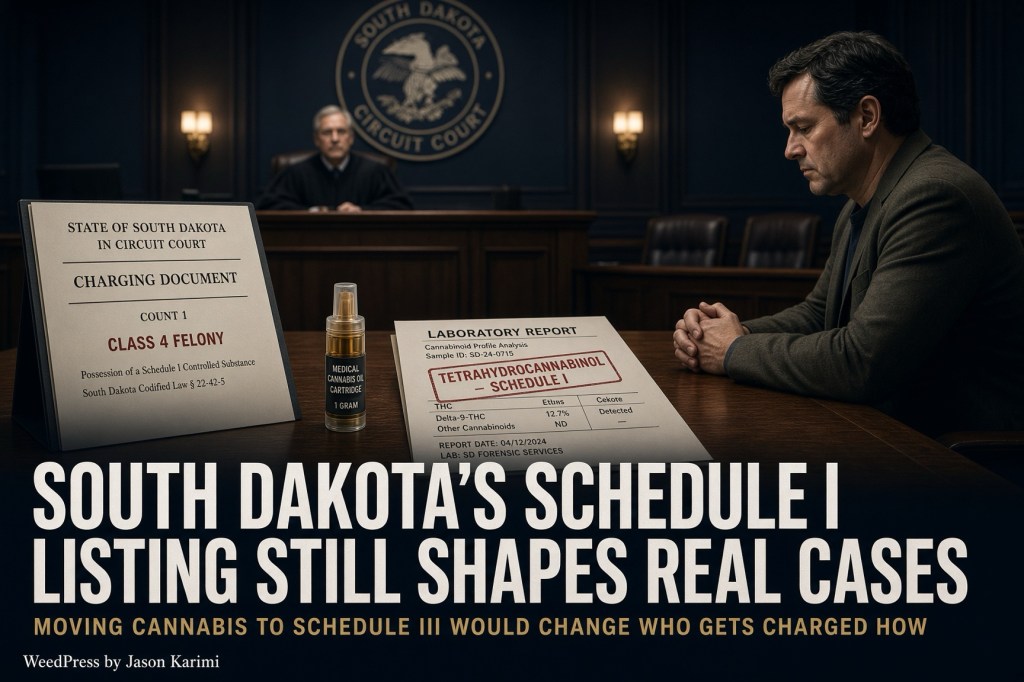
South Dakota’s Schedule I Listing Still Shapes Real Cases. Moving Cannabis to Schedule III Would Change Who Gets Charged How.
South Dakota already runs a medical cannabis program. It also still lists hashish, hash oil, and tetrahydrocannabinols in Schedule I. Those two facts sit in different titles of the code, and they do not cancel each other out. The medical statutes create a permission structure for qualifying patients and licensees. The Schedule I listing still…
-

Health Department Tells Lawmakers South Dakota’s $20 Home-Grow Law Is Too Thin to Police — and Tightening It Raises Safety Questions
The Department of Health did not need a ballot fight to put a warning on the medical cannabis statute. It used the August Medical Marijuana Oversight Committee.¹ Program administrator Whitney Brunner told the committee that licensed home cultivators rose from 61 in fiscal year 2022 to 715 in fiscal year 2026 — a 1,072 percent…
-

Michigan Promised Further Guidance On Federal Law. Months Later, Where Is It?
When the Department of Justice announced its historic federal medical cannabis rescheduling order on April 23, 2026, state cannabis regulators immediately faced a common challenge: determining how the new federal framework would affect their own licensing systems, regulatory programs, and compliance expectations. Michigan’s Cannabis Regulatory Agency (CRA) responded the same day with a measured and…
-
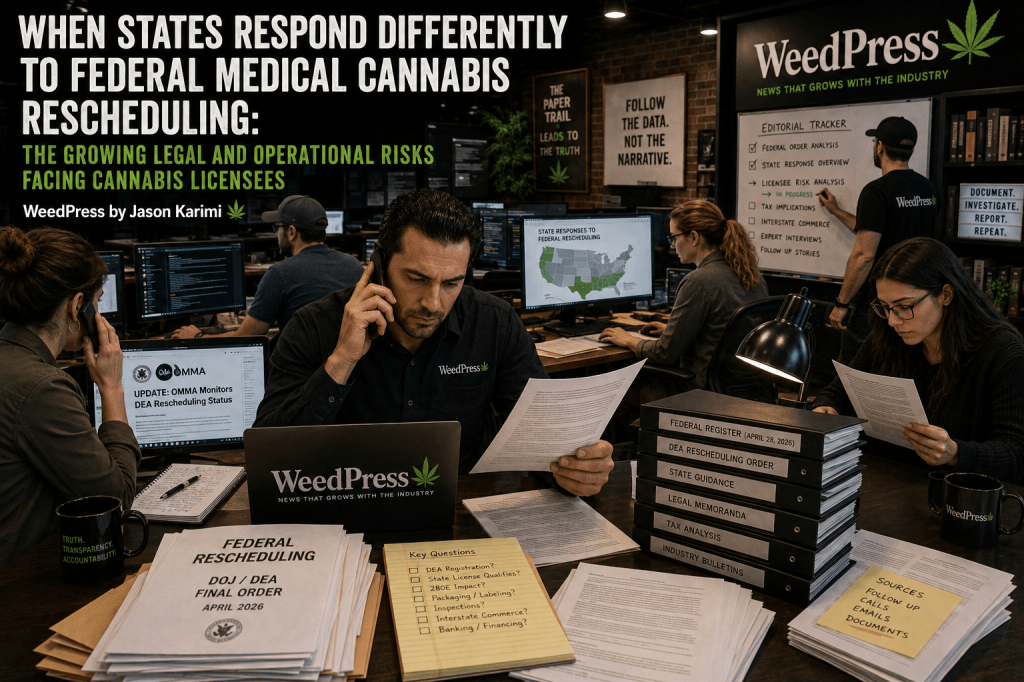
When States Respond Differently to Federal Medical Cannabis Rescheduling: The Growing Legal and Operational Risks Facing Cannabis Licensees
The Department of Justice’s April 2026 final order placing qualifying state-licensed medical cannabis into Schedule III of the federal Controlled Substances Act represented the most significant federal regulatory development affecting state medical cannabis programs since Congress first enacted the Controlled Substances Act in 1970.¹ Although the order did not legalize adult-use marijuana, nor eliminate federal…
-
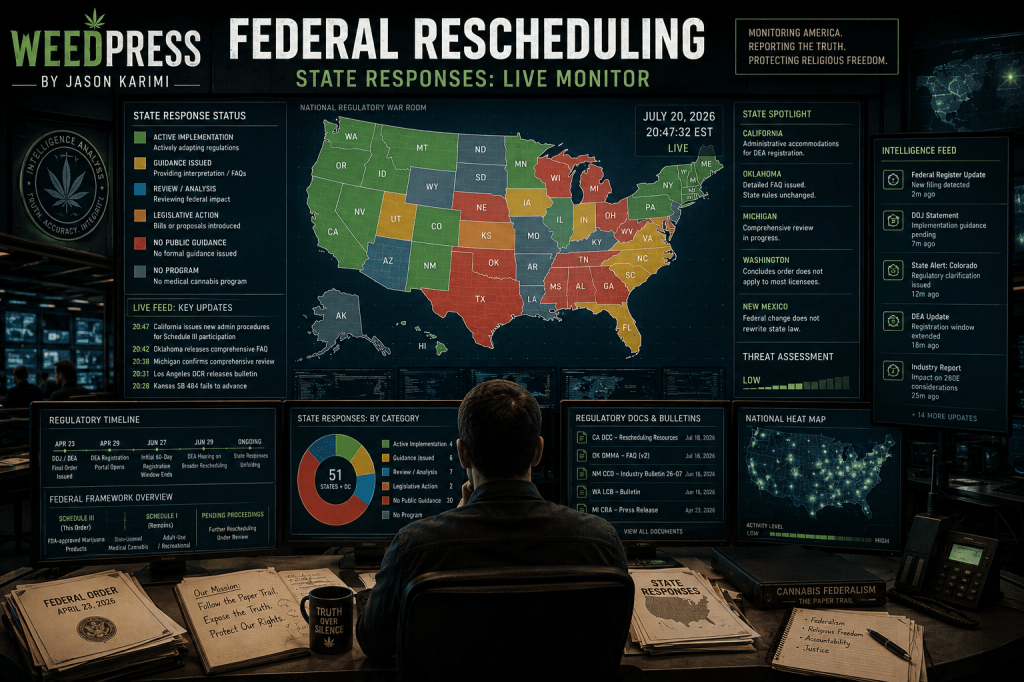
Federal Medical Cannabis Rescheduling Has Produced Four Distinct State Responses—But Most States Still Have Not Chosen One
On April 23, 2026, the United States Department of Justice and the Drug Enforcement Administration fundamentally changed federal cannabis policy by issuing a final order placing FDA-approved marijuana products and marijuana distributed pursuant to qualifying state medical marijuana licenses into Schedule III of the Controlled Substances Act while simultaneously initiating broader administrative proceedings regarding additional…
-

South Dakota Reports Fewer Cannabis Businesses—but Not Why Their Licenses Disappeared
Welcome back to WeedPress, South Dakota’s only source for transparency and open public debate. South Dakota’s medical cannabis industry has lost 34 certified establishments since reaching its reported peak in state fiscal year 2023. The Department of Health reported 139 registered establishments in SFY 2023. That total fell to 124 in SFY 2024, 118 in…
Law
-
South Dakota’s Schedule I Statute Requires a Department Determination Before the Legislature Gets a Rescheduling Recommendation
SDCL 34-20B-27 does not amend the schedules by itself. It tells the Department of Health when a determination triggers a mandatory recommendation to the Legislature.¹ After the April 28, 2026 federal order placing certain state-licensed medical marijuana products in Schedule III, the unanswered Pierre question is not whether marijuana is still listed in chapter 34-20B.…
-
Federal Medical Recognition Weakens the Old Defense of South Dakota’s Cannabis Residency Gate
A federal shift in how medical marijuana is regulated is forcing states to confront an old constitutional question: can they still reserve cannabis licensing opportunities for residents when federal law no longer treats qualifying medical marijuana as entirely illicit? A Congressional Research Service legal sidebar issued September 3, 2026 maps a live circuit split over…
-
SAMHSA Told States to Prepare for Psychedelic Medicines Before FDA Approval. South Dakota Already Wrote a Psilocybin Trigger—and Still Has Not Answered Federal Cannabis Schedule III.
In August 2026, the Substance Abuse and Mental Health Services Administration published a policy paper telling state and territorial mental-health systems to start planning now for the fiscal, legal, and operational consequences of possible FDA-approved psychedelic therapies.¹ The paper is not a regulation. It does not approve psilocybin, MDMA, or LSD. It tells states to…
-
MMOC’s First 2026 Meeting Put Federal Rescheduling on the Record. South Dakota Still Has Not Answered Its Own Schedule I Statute.
The Medical Marijuana Oversight Committee’s first 2026 interim meeting did not decide whether cannabis still belongs in Schedule I under South Dakota law. It did something more limited, and more useful: it put federal classification, program scale, and the absence of a state legal answer onto the official packet.¹ That is not a committee endorsement…
-
Four Pot Shops Five Minutes Over the Iowa Line Sell the Flower Iowa Still Won’t License
North Sioux City, South Dakota, is a town of a few thousand people on the Missouri River. Sioux City, Iowa, is across the water. Between them is a five-minute drive and a statutory mismatch Iowa has never closed.¹ South Dakota’s Department of Health currently lists four licensed medical cannabis dispensaries in North Sioux City: Dakota…
-
WeedPress Asks South Dakota Health Department to Rule Whether Schedule I Cannabis Still Fits the State’s Own Statute
Update 1: Delivered in person and received and stamped by Department as of 3:33 pm: South Dakota still lists tetrahydrocannabinol in Schedule I. The same Department of Health that runs the medical cannabis program is also charged with applying the Schedule I test in SDCL 34-20B-11. That test requires, among other things, “no accepted medical…
Science
-
-

Curaleaf’s Spain Registration and Cannara Supply Deal Mark Shift Toward Pharmaceutical-Grade Medical Cannabis
In July 2026, Curaleaf Holdings, Inc. (TSX: CURA; OTCQX: CURLF) announced two developments that reflect the cannabis industry’s ongoing transition toward a more regulated, pharmaceutical-oriented model. The company announced that it had become the first company registered in Spain to supply standardized THC-dominant and CBD-dominant cannabis preparations for hospital-dispensed medical use.¹ At the same time,…
-
Can Repeated Protection-Order Filings Become a SLAPP? A First Amendment Question
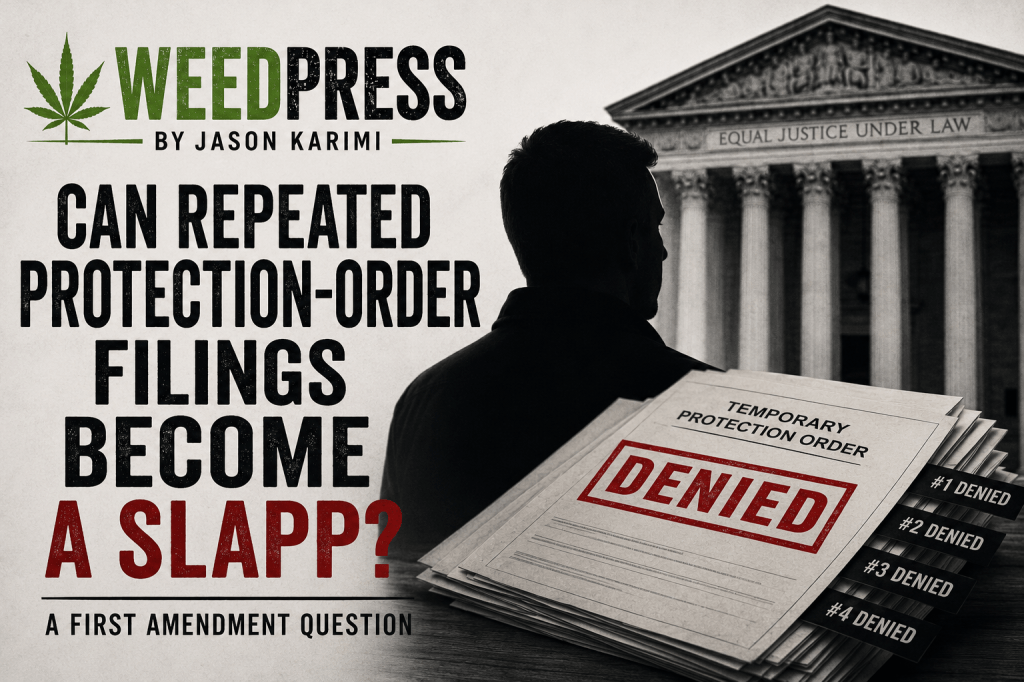
Repetitive protection-order filings can become speech pressure when they are aimed at a critic publishing on public issues. WeedPress has faced four TPO-related filings in 2026 in two counties filed unsuccessfully by New Approach South Dakota leadership, and each time, publication was delayed, narrowed, or withheld rather than escalated. Most recently, on May 12, 2026,…
-
Red States Were Sold Tainted Weed By Slapping Hemp Labels On Poison Products
This video is worth watching. In one minute, it explains the rise of ER visits for tainted and unregulated cannabis products sold by bad actors taking advantage of openings in prohibition. This is why the government must comprehensively regulate cannabis. Half ass federal gray areas leave too many consumers victims of profit seeking drug pushers…
-

Dark Night Of The Soul – Tricycle Day Newsletter
Click here to subscribe to Tricycle Day From today’s Tricycle Day Newsletter: Welcome to Tricycle Day. We’re the psychedelics newsletter that’s not obsessed. Not at all. We’re just moderation-challenged. 🙃 Roman Palitsky was told studying mysticism was career suicide. (Reader, he did it anyway.) Now he leads spiritual and existential research at Emory’s psychedelic center, where the work…
-

New York Launches Program to Educate Doctors About Cannabis
“The University at Albany and Albany Medical Center are supporting the initiative. SUNY Upstate Medical University, Stony Brook Medicine, University of Rochester Medical Center, New York Institute of Technology College of Osteopathic Medicine, CUNY School of Public Health, and New York State Office of Mental Health are also involved in the center.” Read: https://ganjapreneur.com/new-york-launches-program-to-educate-doctors-about-cannabis/
Current Events
-

Benton Mackenzie trial postponed. Notes from court this morning:
9:19 am: All rise. 9:20 am: Courtroom #4 is packed to the brim. Courtroom #3 is where County Attorney’s office told me to go. Judge: Asks if defense attorney would like to address court. DA: Says Mackenzie is hallucinating, unable to sit in chair, medication on way, phone call to Charles Mackenzie has medicine on…
-

MUST SEE: West Des Moines Mayor, Republican Steve Gaer, on Iowa Public Television: “Don’t deny us something we know has helped other people”
West Des Moines Mayor Steve Gaer (R) and Senator Joe Bolkcom discussed medical cannabis on Iowa Public Television’s Iowa Press. Joining Bolkco and Gaer at the Iowa Press table were moderator Dean Borg; Kay Henderson, news director for Radio Iowa; and James Lynch, political reporter for The Gazette. Click here to watch the full video…
-

Iowa Senate Resolution Calls for Legislative Study on Medical Cannabis — Not To Be Completed Until After November Elections?
From today’s Des Moines Register: “Five Republicans and five Democrats co-signed Senate Resolution 112, which seeks an examination on establishing a medical use of cannabis program in Iowa. “I am optimistic that this study will be approved. I think there is support for it in both the House and the Senate,” said Sen. Joe Bolkcom,…
-

Steve Gaer, Republican Mayor of West Des Moines, Featured on ABC 5 Last Night in Fight to Legalize Medical Cannabis
Steve Gaer was featured last night on Channel 5 News. It was the top story of the evening — 81% of Iowans supporting medical cannabis, as well as the medical experts in the state, still doesn’t seem enough to convince the Legislature. Click here to watch the story, “Iowans Polled.” If Legislators don’t fix this,…
-

Christian Talk Show Hosts Discuss Medical Cannabis in Iowa on “View From a Pew,” 99.3 FM Boone, Iowa
View From a Pew is talking about medical cannabis again! Video is below. Follow WeedPress on Facebook for more. See also: Iowa Christian Talk Show Host Prays For Medical Cannabis — Urges Iowa Legislature, Christian Leaders to “Do your research.” God made cannabis for a reason, and science shows the recently discovered endocannabinoid system to…
-
![[VIDEO] Heated Discussion on Floor of Iowa Senate Last Tuesday: A Glimmer of Hope for Medical Cannabis?](https://weedpress.org/wp-content/uploads/2014/02/partisan-poiltics.jpg?w=308)
[VIDEO] Heated Discussion on Floor of Iowa Senate Last Tuesday: A Glimmer of Hope for Medical Cannabis?
Last Tuesday, multiple Senators from both sides of the aisle got into a quibble on the floor of the Iowa Senate. Click here to view the video in the Iowa Senate archives. Discussion begins at 27:35 of the video. Republicans accused Senator Bolkcom of being disingenuous with his leadership on this issue, while Senator Bolkcom…
Legislation
-
The Patients Left Behind: How South Dakota’s Medical Cannabis Law Still Punishes the Sickest Among Us
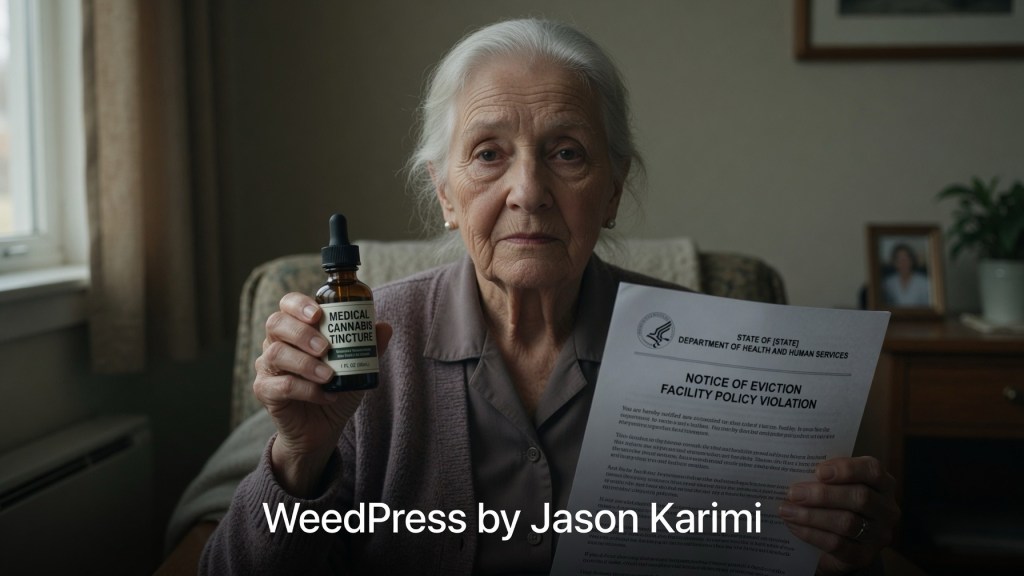
In Iowa recently, a 91-year-old woman was told she had to leave the nursing home she called home because she used medical cannabis to manage her pain and symptoms. The facility gave her an ultimatum: stop using the medicine her doctor supported, or move out. She refused. The case went to court. What should have…
-
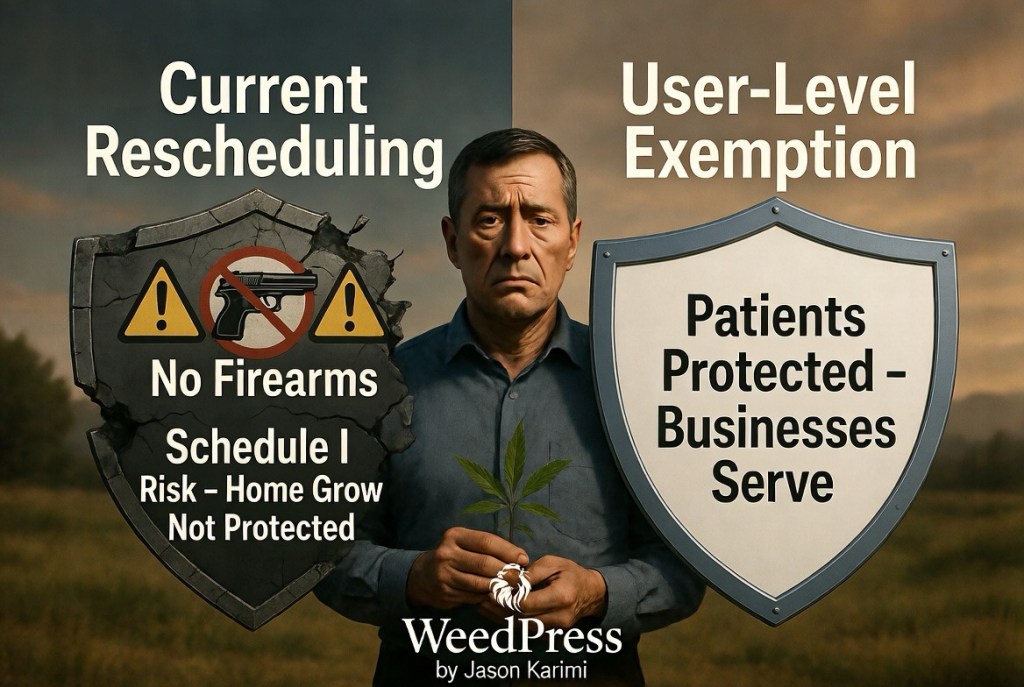
Patient Legal Risks Solved: A User-Level Exemption Model for Schedule III
The April 28, 2026 federal partial rescheduling order left a significant gap: personal home cultivation was not included in the narrow categories moved to Schedule III. Colorado attorneys Brian Vicente and Rachel Gillette have been direct about the practical consequences. Vicente noted that home grows do not qualify for the new federal registration pathway because…
-
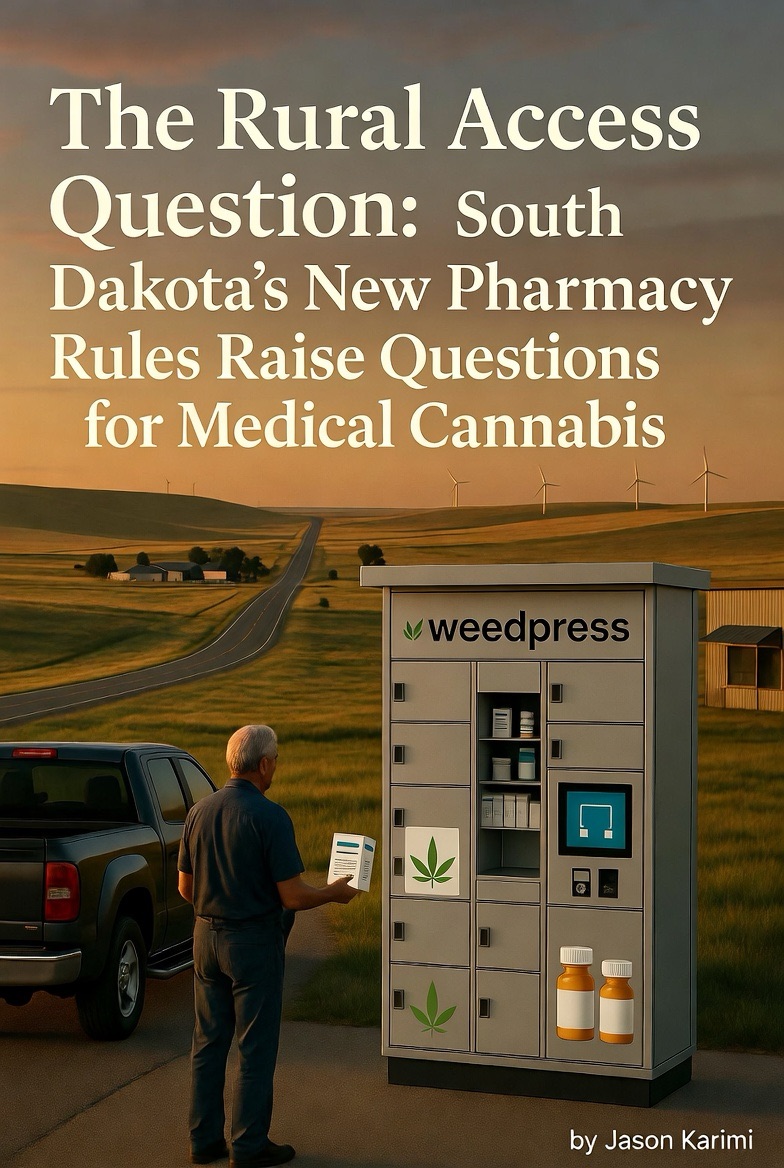
The Rural Access Question South Dakota’s New Pharmacy Rules Raise for Medical Cannabis
As regulators embrace telepharmacy and remote prescription pickup, policymakers may eventually face similar questions about medical cannabis access in rural communities. South Dakota’s Board of Pharmacy is advancing updated rules under Article 20:51 of the Administrative Rules of South Dakota (ARSD) that formalize the use of remote drop sites for prescription medications and introduce a…
-
Stork Just Sent a Researcher to WeedPress: What Academic Tools Mean for Cannabis Policy Analysis
Independent statutory deep-dives are showing up alongside peer-reviewed literature in researchers’ workflows. It’s not every day your analytics dashboard lights up with a referrer you’ve never seen before. Today, May 5, 2026, WeedPress received a visit from paper-box.co — the domain tied to Stork (storkapp.me), a specialized publication-tracking and research intelligence platform used by academics,…
-

Why Cannabis Operators Can’t Afford to Ignore the Federal Rescheduling Details — And What You Must Do Now
The federal government has split cannabis into two tracks. FDA-approved drug products containing marijuana and marijuana activity tied to a qualifying state-issued medical marijuana license under the new federal framework now occupy a different federal posture, while broader marijuana remains in Schedule I pending further proceedings.¹ That split is real, immediate, and carries tax, compliance,…
-

WeedPress Looked Deeper: Congress’ Quiet Move to Block Trump’s Cannabis Rescheduling — and Why It Threatens Operators
The quietest threat to the federal cannabis shift is not coming from DEA’s June hearing. It is coming from the House appropriations process. On May 13, 2026, the full House Appropriations Committee is scheduled to mark up the FY2027 Commerce, Justice, Science (CJS) bill after the CJS subcommittee approved its version on April 30. Buried…
RFRA Updates
-

Nebraska First Freedom Act RFRA Appeal: Notes On General Language In Judicial Opinions
Türkiye Halk Bankası / Illinois v. Lidster: general language in an opinion is about the case then in front of the Court, not every later fact pattern. He is telling you not to treat a sentence from O Centro or a church case as a machine that prints a win for a lone probationer in…
-
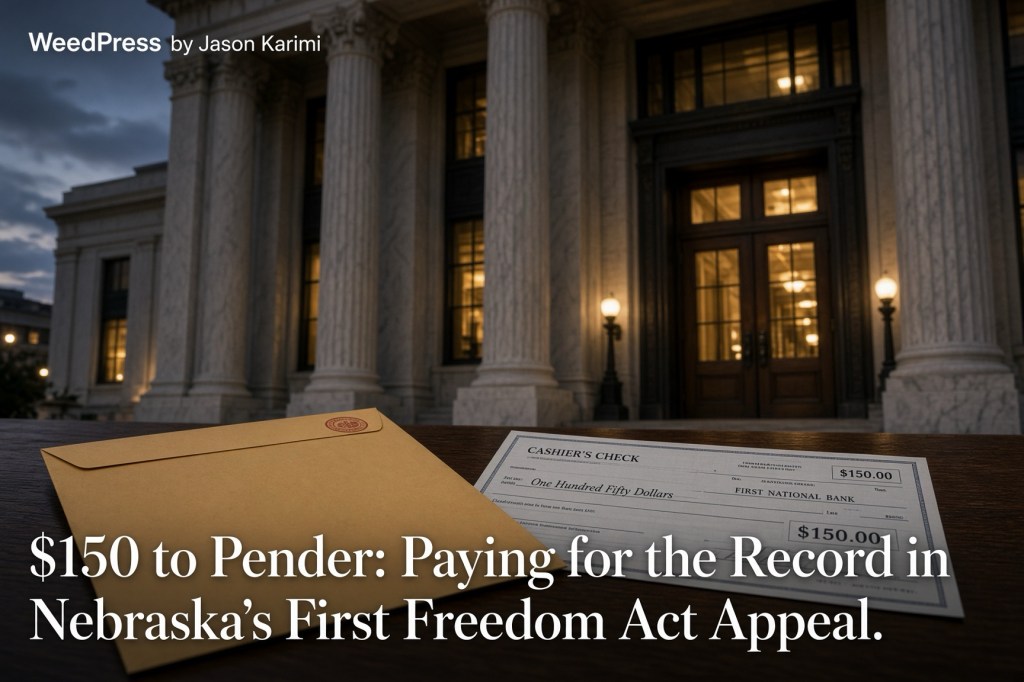
$150: Paying for the Record in Nebraska’s First Freedom Act Appeal
On Wednesday, August 26, 2026, I mailed a $150 cashier’s check to the Thurston County District Court at P.O. Box 216, Pender, Nebraska 68047. The check covers the estimated cost of the Bill of Exceptions for the April 8, 2026 evidentiary hearing on my request to modify a probation condition under Nebraska’s First Freedom Act.¹…
-

Court Said I Didn’t Prove My Religion Because I Didn’t Testify. I’m Appealing Under Nebraska’s Religious “First Freedom Act”
Today I filed a Notice of Appeal in Thurston County District Court challenging the July 1, 2026 Order that denied my motion to modify a probation condition under the Nebraska First Freedom Act. The motion I filed sought a narrowly tailored religious accommodation allowing sacramental cannabis use consistent with my practice of the Rastafari faith.…
-

Nebraska RFRA Appeal Argument, July 21, 2026
ARGUMENT I. The District Court Erred by Treating Defendant’s Personal Testimony as Effectively Indispensable to Establishing Sincerity Under the Nebraska First Freedom Act. The district court denied Defendant’s motion on the ground that he failed to establish a “sincerely held religious belief.” The court reasoned as follows: “There was no direct evidence of Defendant’s sincerely…
-
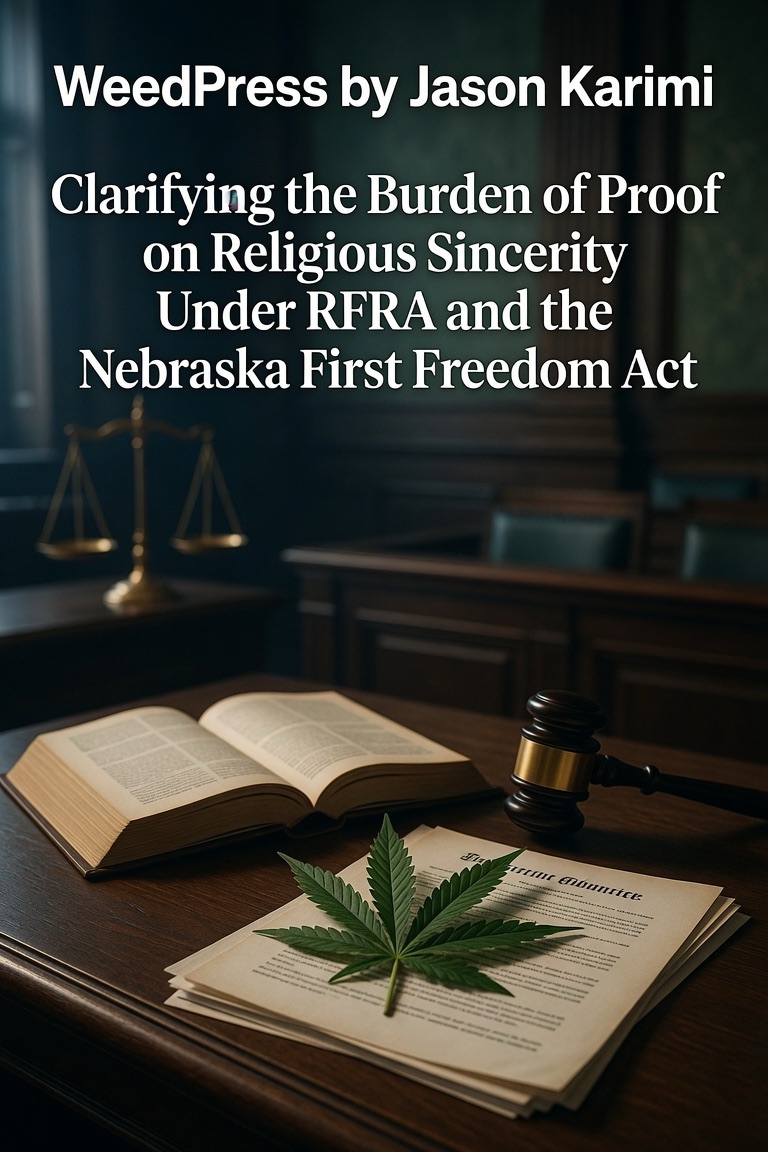
Clarifying the Burden of Proof on Religious Sincerity Under RFRA and the Nebraska First Freedom Act
This submission addresses the proper burden of proof regarding religious sincerity under the Religious Freedom Restoration Act (“RFRA”), 42 U.S.C. § 2000bb-1, and the Nebraska First Freedom Act, Neb. Rev. Stat. § 20-1701 et seq., in the context of a probation modification request seeking a religious exemption for the sacramental use of cannabis. Legal Standard:…
-

“Exorcism:” Why Spiritually Attuned Paths Reject Fear-Based Rituals of Casting Out
This article examines why exorcism, as commonly understood and practiced across traditions, often represents a spiritually mistaken approach. It externalizes power that belongs to the individual’s divine spark, frequently misattributes psychological or energetic imbalances, and can reinforce fear-based dualism instead of the living reality of “I and I”—the recognition that the Divine dwells within and…
Upcoming Events
-
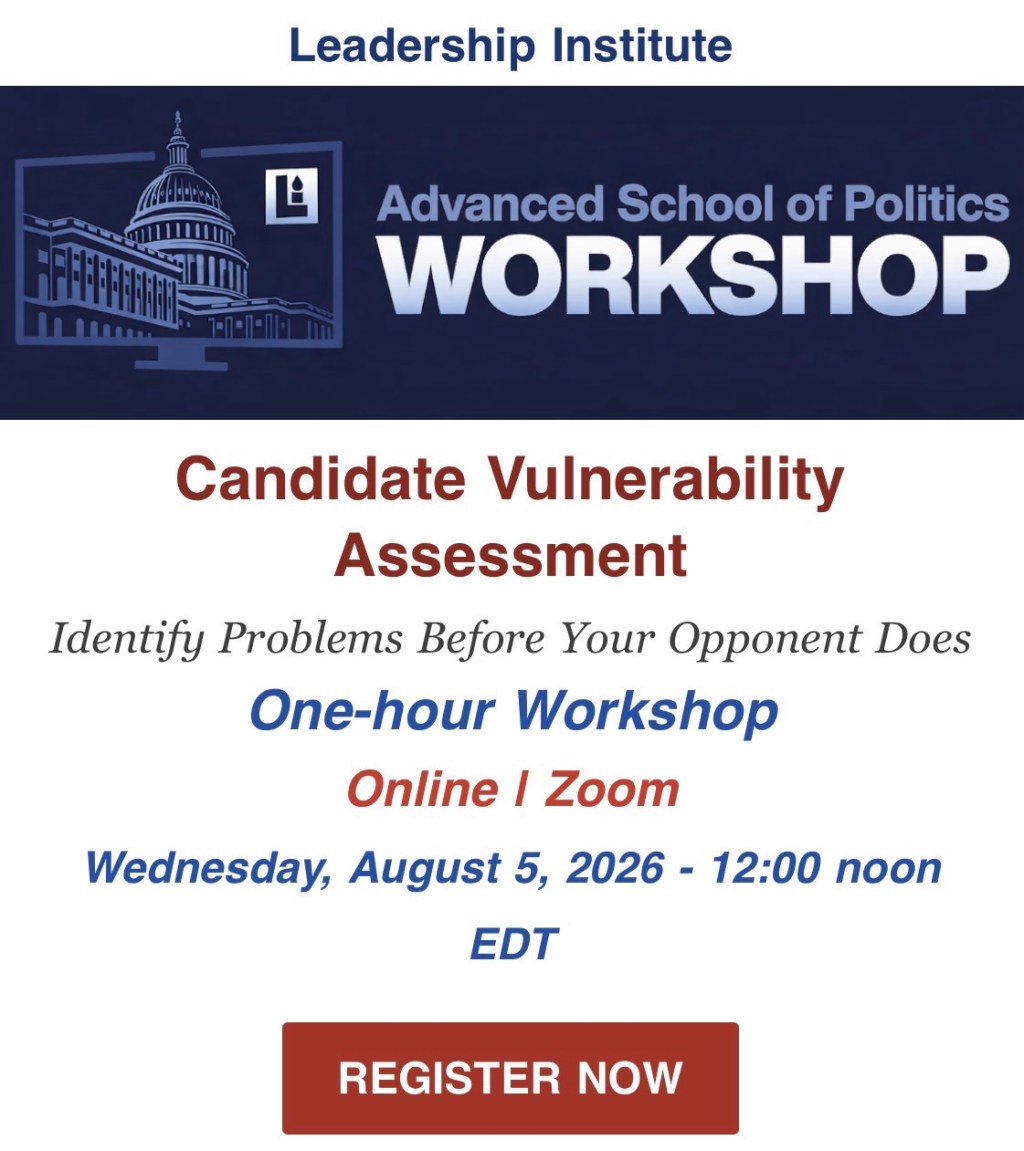
Online Workshop – Candidate Vulnerability Assessment
Every candidate enters a race with potential vulnerabilities. These may include previous statements, professional history, financial records, social media activity, personal relationships, policy positions, or inconsistencies in the candidate’s public record. https://leadershipinstitute.org/event/701VL00000xvu8MYAQ Campaigns often devote significant time and resources to researching their opponents while failing to conduct the same level of research on their own…
-

Indigenous Women’s Medicine Wheel Ride – August 9 Sturgis (Sign Up Here)
I’ll be on this ride at Sturgis this year on the marijuana Harley ultra glide. Go to the guy with the reggae blasting to link. Prayer at 8:30. Bring your safety gear as well. $60 registration. Follow Doodle On A Motorcycle on YouTube for updates. Ride starts at Outlaw Square. Register here: https://www.medicinewheelride.org/ Who We…
-

The June 27 DEA Registration Deadline Is Coming Fast: South Dakota Operators Face a Compliance Cliff as the Safe Harbor Window Closes
With the June 27 DEA registration deadline approaching, the following analysis examines the practical timeline and compliance pressures facing South Dakota operators. South Dakota’s licensed medical cannabis operators now have roughly 29 days to secure critical federal protections before the expedited DEA registration window closes. On April 28, 2026, the Department of Justice and Drug…
-

Advance Notice to South Dakota Department of Health: Petition for Scheduling Review Will Follow Federal Rescheduling Hearings
South Dakota’s medical cannabis program stands at a critical juncture following the federal partial rescheduling of certain marijuana products to Schedule III.¹ After the DEA’s June 29, 2026 rescheduling hearing concludes, the undersigned will formally petition the South Dakota Department of Health (DOH) to review and align the state’s Schedule I classification of marijuana with…
-

Why South Dakota’s Own Statutes Now Make Schedule I Marijuana Unlawful to Maintain
“Acting Attorney General Todd Blanche is placing both FDA-approved drug products containing marijuana, and medicinal marijuana products subject to a qualifying state-issued license in Schedule III under his authority to reschedule drugs to carry out the United States’ obligations under the Single Convention on Narcotic Drugs.”¹ South Dakota, however, is not automatically bound by that…
-

South Dakota’s Schedule I Marijuana Prohibition Heads to Court This Summer: Lawsuit Will Seek Declaration That State Law No Longer Satisfies Its Own Criteria
This summer I intend to file a civil action against the State of South Dakota seeking a judicial declaration that the state’s Schedule I classification of marijuana no longer satisfies the statutory criteria required for Schedule I placement under South Dakota law.¹ The claim is straightforward: once the factual predicate of “no accepted medical use”…
For The Record (2026), By Jason Karimi
-
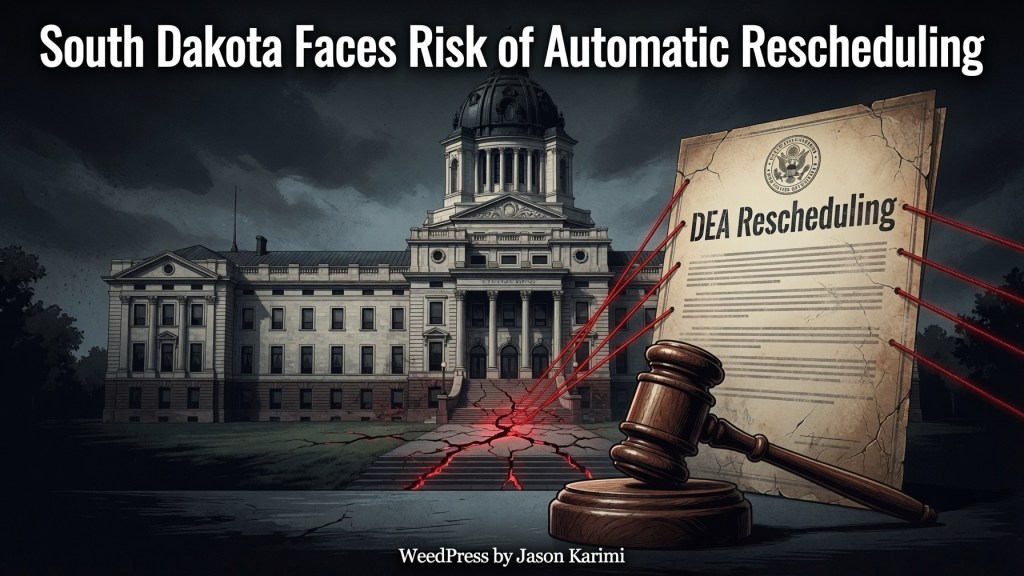
South Dakota Faces Risk of Automatic Rescheduling Under Existing Statutory Language
The recent action by Wyoming’s Attorney General demonstrates that states are increasingly recognizing the legal significance of federal marijuana rescheduling where state statutes incorporate federal scheduling decisions. South Dakota’s existing statutory language raises similar questions that should be addressed before federal reform takes effect. WeedPress has previously warned that South Dakota law contains automatic trigger…
-
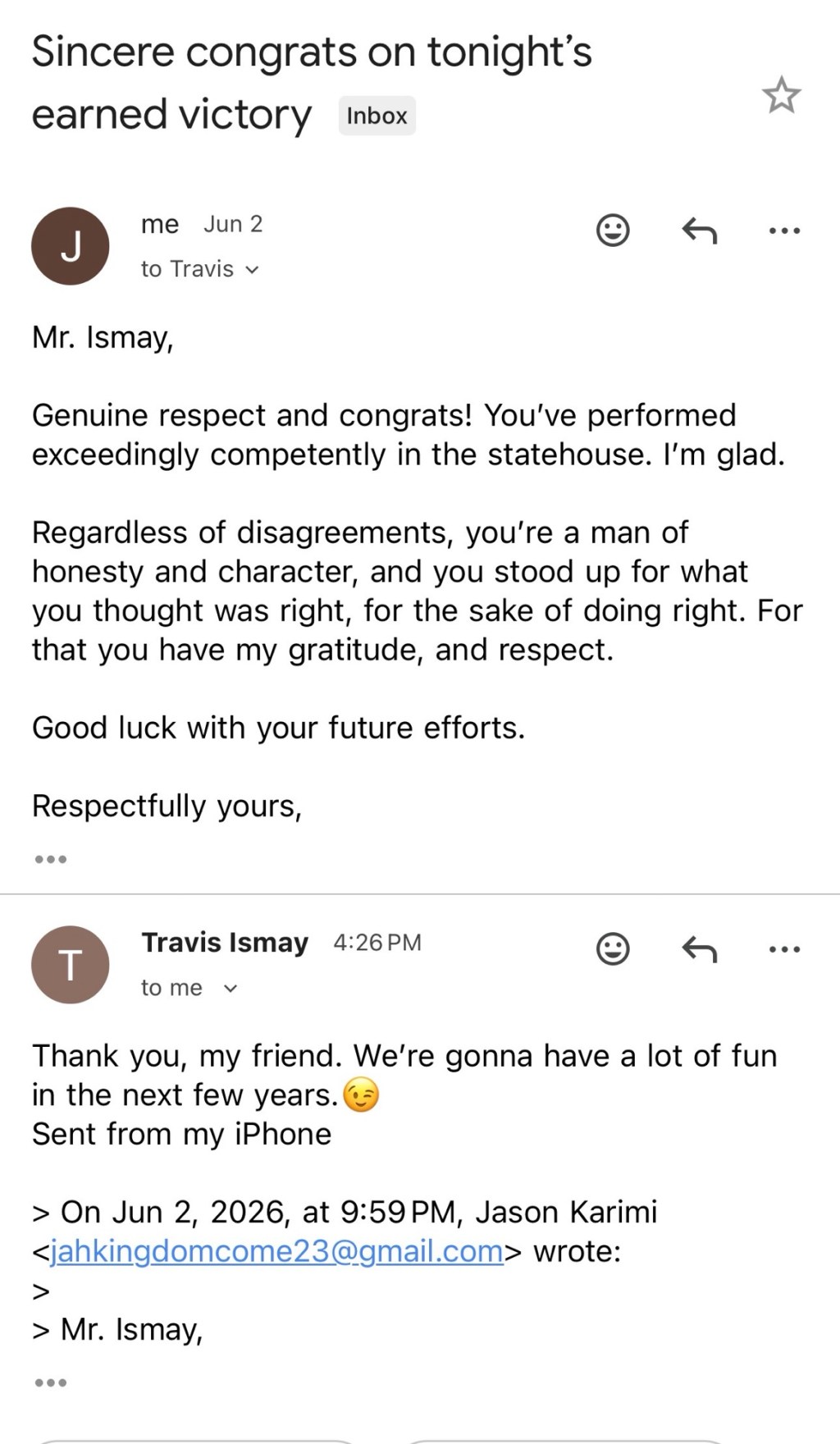
Travis Ismay Responds to My Congratulatory Email: A Small Step Toward Civil Discourse in South Dakota Politics
Yesterday, Rep. Travis Ismay (R-House District 28B) replied to the congratulatory email I sent him shortly after his decisive Republican primary victory on June 2.¹ For context, here is the full exchange: My email (June 2, 2026): For context, here is the full exchange: It’s a brief, gracious response — and one I appreciate. Background…
-

DARE Poster Kid to Marijuana Regulation Advocate: My Unchanging Fight to Protect Kids
When I was in elementary school, the DARE program left a lasting impression. Officers visited regularly, warning us about the dangers of drugs and pushing the “just say no” message. I took it seriously. So when the school announced an anti-drug poster contest open to elementary students, I threw myself into creating something impactful. My…
-

Chapter 10: What Remains
Table of Contents Preface Chapter 1 — The First ArrestEarly rupture, authority, and the beginning of resistance Chapter 2 — Before the File Was Opened Gifted education, faith, discipline, and early legitimacy Chapter 3 — Becoming a ProblemWork, exhaustion, collapse, and the cost of visibility Chapter 4 — Learning the Language of PowerCourts, probation, jail, campaigns, and proximity to decision-makers…
-

Chapter 9: The Record vs. the Narrative
Table of Contents Preface Chapter 1 — The First ArrestEarly rupture, authority, and the beginning of resistance Chapter 2 — Before the File Was Opened Gifted education, faith, discipline, and early legitimacy Chapter 3 — Becoming a ProblemWork, exhaustion, collapse, and the cost of visibility Chapter 4 — Learning the Language of PowerCourts, probation, jail, campaigns, and proximity to decision-makers…
-

Chapter 8: What the Media Gets Wrong
Table of Contents Preface Chapter 1 — The First ArrestEarly rupture, authority, and the beginning of resistance Chapter 2 — Before the File Was Opened Gifted education, faith, discipline, and early legitimacy Chapter 3 — Becoming a ProblemWork, exhaustion, collapse, and the cost of visibility Chapter 4 — Learning the Language of PowerCourts, probation, jail, campaigns, and proximity to decision-makers…
-

Chapter 7: Why I Never Left
Table of Contents Preface Chapter 1 — The First ArrestEarly rupture, authority, and the beginning of resistance Chapter 2 — Before the File Was Opened Gifted education, faith, discipline, and early legitimacy Chapter 3 — Becoming a ProblemWork, exhaustion, collapse, and the cost of visibility Chapter 4 — Learning the Language of PowerCourts, probation, jail, campaigns, and proximity to decision-makers…
-

Chapter 6: Staying Power
Table of Contents Preface Chapter 1 — The First ArrestEarly rupture, authority, and the beginning of resistance Chapter 2 — Before the File Was Opened Gifted education, faith, discipline, and early legitimacy Chapter 3 — Becoming a ProblemWork, exhaustion, collapse, and the cost of visibility Chapter 4 — Learning the Language of PowerCourts, probation, jail, campaigns, and proximity to decision-makers…
-

Chapter 5: The Apprenticeship
Table of Contents Preface Chapter 1 — The First ArrestEarly rupture, authority, and the beginning of resistance Chapter 2 — Before the File Was Opened Gifted education, faith, discipline, and early legitimacy Chapter 3 — Becoming a ProblemWork, exhaustion, collapse, and the cost of visibility Chapter 4 — Learning the Language of PowerCourts, probation, jail, campaigns, and proximity to decision-makers…
-

Chapter 4: Learning the Language of Power
Table of Contents Preface Chapter 1 — The First ArrestEarly rupture, authority, and the beginning of resistance Chapter 2 — Before the File Was Opened Gifted education, faith, discipline, and early legitimacy Chapter 3 — Becoming a ProblemWork, exhaustion, collapse, and the cost of visibility Chapter 4 — Learning the Language of PowerCourts, probation, jail, campaigns, and proximity to decision-makers…
-

Chapter 3: Becoming a Problem
Table of Contents Preface Chapter 1 — The First ArrestEarly rupture, authority, and the beginning of resistance Chapter 2 — Before the File Was Opened Gifted education, faith, discipline, and early legitimacy Chapter 3 — Becoming a ProblemWork, exhaustion, collapse, and the cost of visibility Chapter 4 — Learning the Language of PowerCourts, probation, jail, campaigns, and proximity to decision-makers…
-

Chapter 2: Before the File Was Opened
Table of Contents Preface Chapter 1 — The First ArrestEarly rupture, authority, and the beginning of resistance Chapter 2 — Before the File Was Opened Gifted education, faith, discipline, and early legitimacy Chapter 3 — Becoming a ProblemWork, exhaustion, collapse, and the cost of visibility Chapter 4 — Learning the Language of PowerCourts, probation, jail, campaigns, and proximity to decision-makers…
Commentary
-

Leadership Matters: Strategy Failure — Not the Supreme Court — Doomed Legalization in South Dakota
Editors note: This piece analyzes past campaign strategy using publicly available court records and election results. When South Dakota voters approved Constitutional Amendment A in November 2020 to legalize, regulate, and tax marijuana, many supporters saw it as a historic victory for reform. But what followed — a legal challenge and a ruling from the…
-

Deadwood Was South Dakota’s Origin Story
Deadwood Was South Dakota’s Origin Story HBO’s western is not just about one outlaw camp. It is about the culture of theft, violated Lakota land, gold obsession, and rough power that helped shape the state By Jason Karimi | WeedPress March 26, 2026 HBO’s Deadwood is not a documentary. It is something more dangerous to…
-
The District Math: How Primary Elections Actually Decide Legislative Power in South Dakota
The District Math: How Primary Elections Actually Decide Legislative Power in South Dakota By Jason Karimi | WeedPress February 23, 2026 If HB 1065 was a diagnostic, district math is the operating manual. Political influence in South Dakota is not determined by statewide sentiment alone. It is determined district by district — often by a…
-
From Diagnosis to Discipline: Building Primary Leverage in South Dakota’s Medical Cannabis Politics
From Diagnosis to Discipline: Building Primary Leverage in South Dakota’s Medical Cannabis Politics By Jason Karimi | WeedPress February 16, 2026 HB 1065 advancing is a test for the medical cannabis movement in South Dakota. If a restriction bill can clear committee 8–3 and advance toward the House floor with minimal electoral anxiety, the movement…
-
WeedPress Is Mapping the Battlefield While Others Debate the Map
WeedPress Is Mapping the Battlefield While Others Debate the Map WeedPress Policy SeriesBy Jason Karimi ⸻ There are two kinds of publications in contentious policy environments. Some debate what the terrain should look like. Others study what the terrain actually is. WeedPress was built to do the second. While many cannabis commentators remain focused on…
-
HB 1065 Heads to the Floor: The Primary Gap in South Dakota’s Medical Cannabis Politics
HB 1065 Heads to the Floor: The Primary Gap in South Dakota’s Medical Cannabis Politics As restriction legislation advances, the absence of effectively deterrent electoral pressure reveals a leverage problem within the state’s cannabis movement. As House Bill 1065 advances to the South Dakota House floor, the moment calls for structural reflection rather than rhetorical…
-

Discipline Forged Under Scrutiny: Why the Hard Path Produces the Most Careful Lawyers
Discipline Forged Under Scrutiny: Why the Hard Path Produces the Most Careful LawyersBy Jason Karimi | WeedPress | February 14th, 2026 ⸻ Some of the most disciplined lawyers are not the ones who glide through clean transcripts and uninterrupted résumés. They are the ones who had to fight to be admitted. They understand that the…
-
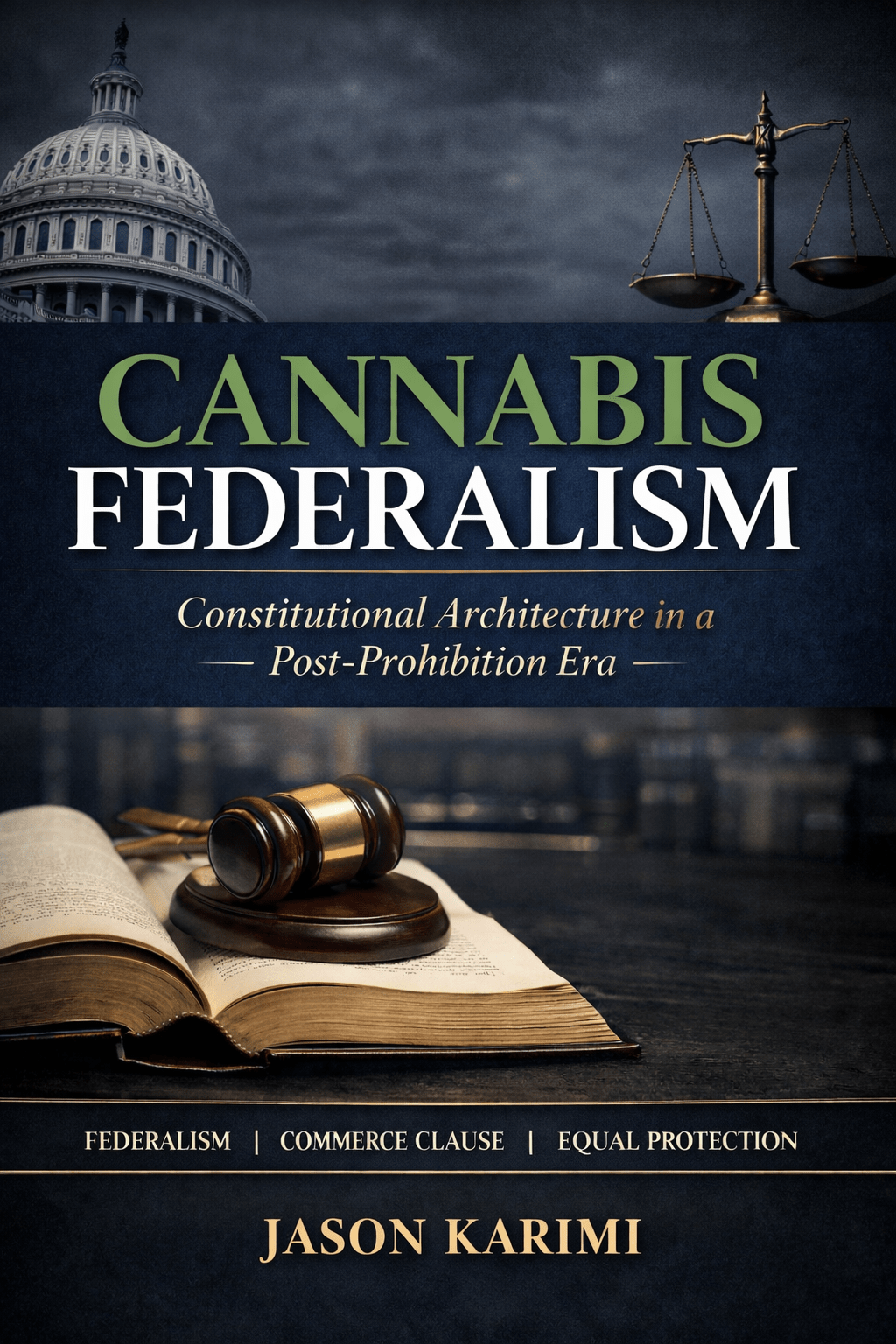
Outline of Cannabis Federalism: Constitutional Architecture in a Post-Prohibition Era
New book in monograph form incoming. Estimated release date: July 4, 2026 Cannabis Federalism: Constitutional Architecture in a Post-Prohibition Era Subtitle: A Structural Analysis of Vertical Preemption, Horizontal Protectionism, and Patient-Centered Regulatory Design By Jason Karimi Proposed Table of Contents Preface From Conflict to Architecture Brief, measured acknowledgment of the volatility of the cannabis policy…
-

The “Lazy but Ambitious” Minority: Why 15–20% of People Are Wired Differently — and How That Can Be a Strength
The “Lazy but Ambitious” Minority: Why 15–20% of People Are Wired Differently — and How That Can Be a Strength By Jason Karimi A growing body of productivity and behavioral-psychology content points to a counterintuitive personality pattern: a significant minority of people — often estimated informally at 15–20% of the population in coaching and productivity…
-
Why I No Longer Testify at Most Hearings
Why I No Longer Testify at Most Hearings Seventeen Years, Four Bills Passed, and Managing Campaigns and Staff Have Taught Me Institutional Architecture Is Not a Two-Minute Topic By Jason Karimi | WeedPress | February 12, 2026 This week’s attempt to repeal South Dakota’s medical cannabis laws leaned on ignorance of the federal architecture and…
-

Call for Prosecutions Raises Concerns About Politicization
Call for Prosecutions Raises Concerns About Politicization When criminal law becomes a first-resort response to disagreement, institutional trust is at risk By Jason Karimi | WeedPress | January 17, 2026. In recent weeks, prominent progressive commentators have openly discussed the need for criminal accountability for political opponents. On a podcast appearance with CNN’s Jim Acosta,…
-

Patient Perspectives
-
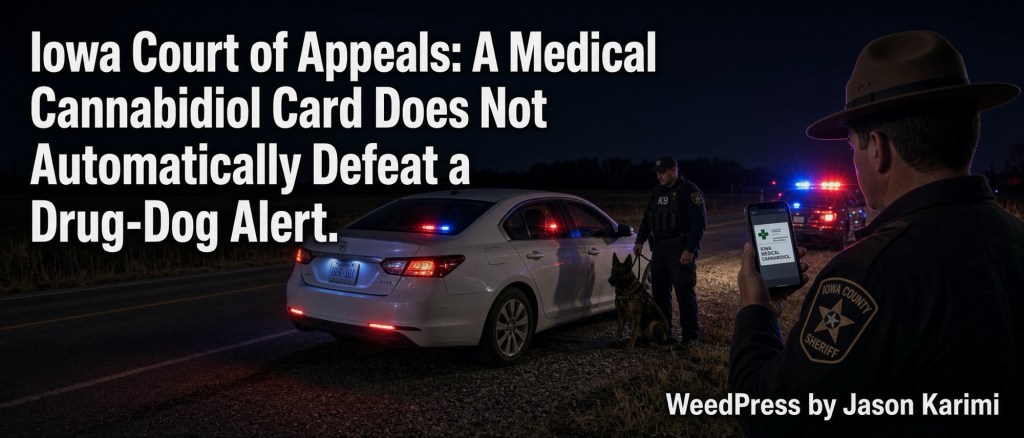
Iowa Court of Appeals: A Medical Cannabidiol Card Does Not Automatically Defeat a Drug-Dog Alert
Patients who carry a valid Iowa medical cannabidiol registration card often assume the card creates a meaningful shield during traffic stops. A new decision from the Iowa Court of Appeals shows the limits of that assumption. In State v. Leonard, the court held that officers had probable cause to search a vehicle after a drug…
-
Understanding High-Conflict Personalities: When You Become the Target of Blame
High-conflict personalities are individuals who consistently turn disagreements into prolonged, intense, and destructive battles. Unlike people who simply disagree or become emotional during conflict, high-conflict personalities tend to escalate disputes, externalize blame, and struggle to resolve conflict in a healthy or proportionate way.¹ Over the past several months, nearly a year straight now, I have…
-

New Approach South Dakota’s Damaged Credibility, Lies To Judges To Get Political Competitor Arrested: Court Transcripts
Transcript PDF of Mentele v Karimi court hearing round 4 in full: You folks out there can do what you want. As for me, I’m going to go back to focusing on federal exemption advocacy as I have since 2009, before Mentele told me to stop and then got me arrested for continuing advocating, by…
-

New Approach South Dakota Pivots And Rebrands With New Leadership Amid Ongoing Concerns
Following publication of this article, New Approach South Dakota publicly clarified that the anticipated leadership changes referenced in an earlier discussion concerned the Marijuana Policy Project, not New Approach South Dakota itself. New Approach states it is adding partners and expanding resources but will remain under its current leadership. Multiple conflicting statements in 2026 about…
-

Fixing A SD Courthouse Electrical Cabling For Gate Entrance
GSA, the General Services Administration, sent me out as an IT tech to troubleshoot a control panel issue at a gate for judges and attorneys to enter at a courthouse. Determined the electrical cable run at the gate was needing replaced. The GSA had me bend conduit and run a new cable which I didn’t…
-
New York Launches Program to Educate Doctors About Cannabis
“The University at Albany and Albany Medical Center are supporting the initiative. SUNY Upstate Medical University, Stony Brook Medicine, University of Rochester Medical Center, New York Institute of Technology College of Osteopathic Medicine, CUNY School of Public Health, and New York State Office of Mental Health are also involved in the center.” Read: https://ganjapreneur.com/new-york-launches-program-to-educate-doctors-about-cannabis/
 WeedPress: The Paper Trail