
Featured Analysis
-
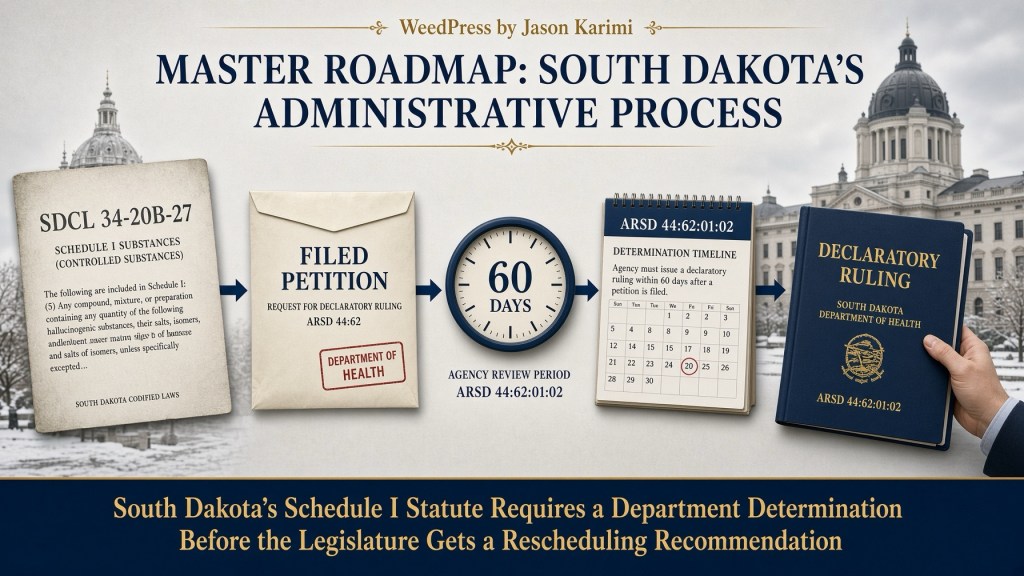
South Dakota’s Schedule I Statute Requires a Department Determination Before the Legislature Gets a Rescheduling Recommendation
SDCL 34-20B-27 does not amend the schedules by itself. It tells the Department of Health when a determination triggers a mandatory recommendation to the Legislature.¹ After the April 28, 2026 federal order placing certain state-licensed medical marijuana products in Schedule III, the unanswered Pierre question is not whether marijuana is still listed in chapter 34-20B.…
-
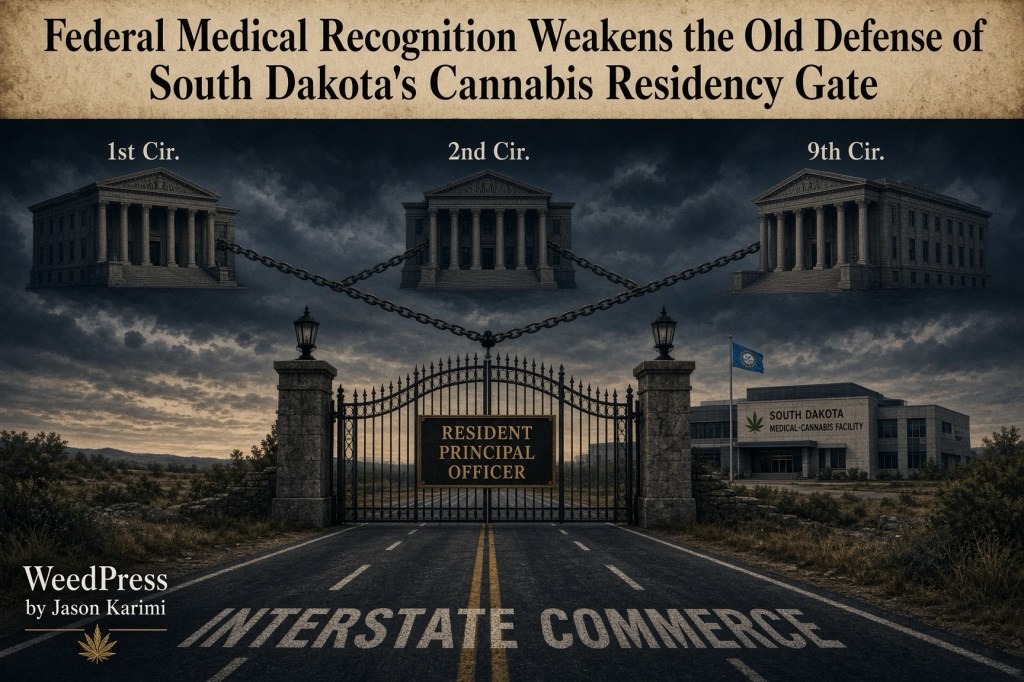
Federal Medical Recognition Weakens the Old Defense of South Dakota’s Cannabis Residency Gate
A federal shift in how medical marijuana is regulated is forcing states to confront an old constitutional question: can they still reserve cannabis licensing opportunities for residents when federal law no longer treats qualifying medical marijuana as entirely illicit? A Congressional Research Service legal sidebar issued September 3, 2026 maps a live circuit split over…
-
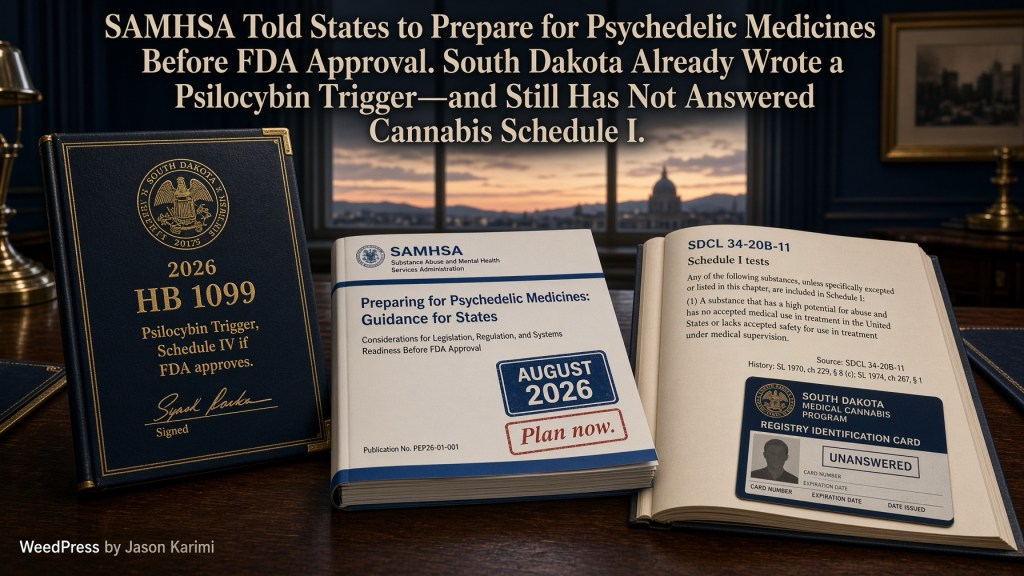
SAMHSA Told States to Prepare for Psychedelic Medicines Before FDA Approval. South Dakota Already Wrote a Psilocybin Trigger—and Still Has Not Answered Federal Cannabis Schedule III.
In August 2026, the Substance Abuse and Mental Health Services Administration published a policy paper telling state and territorial mental-health systems to start planning now for the fiscal, legal, and operational consequences of possible FDA-approved psychedelic therapies.¹ The paper is not a regulation. It does not approve psilocybin, MDMA, or LSD. It tells states to…
-
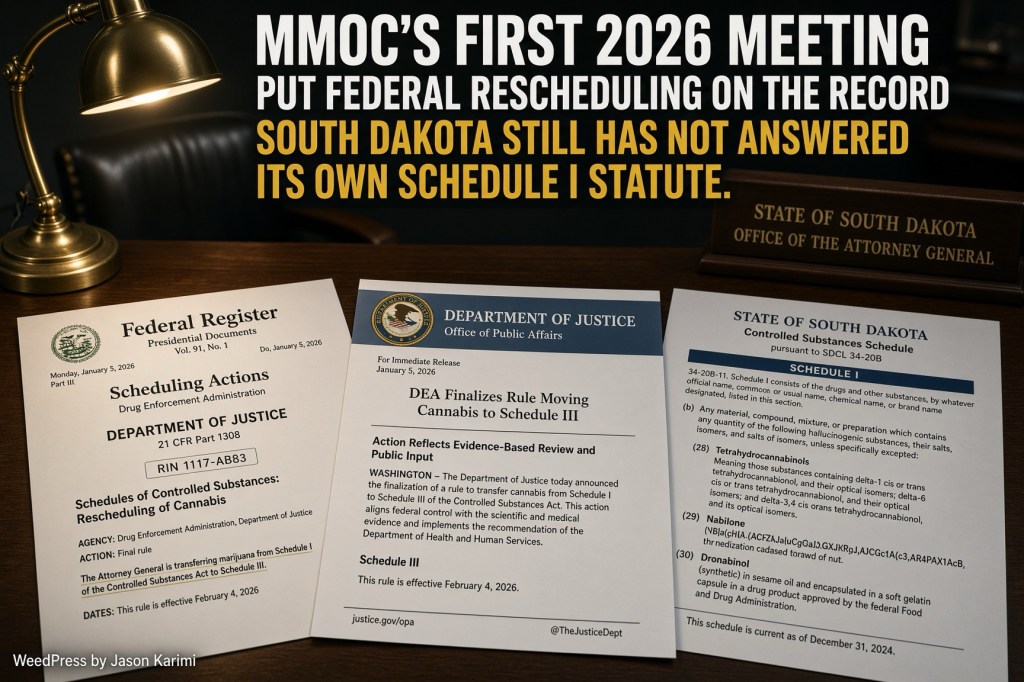
MMOC’s First 2026 Meeting Put Federal Rescheduling on the Record. South Dakota Still Has Not Answered Its Own Schedule I Statute.
The Medical Marijuana Oversight Committee’s first 2026 interim meeting did not decide whether cannabis still belongs in Schedule I under South Dakota law. It did something more limited, and more useful: it put federal classification, program scale, and the absence of a state legal answer onto the official packet.¹ That is not a committee endorsement…
-

Four Pot Shops Five Minutes Over the Iowa Line Sell the Flower Iowa Still Won’t License
North Sioux City, South Dakota, is a town of a few thousand people on the Missouri River. Sioux City, Iowa, is across the water. Between them is a five-minute drive and a statutory mismatch Iowa has never closed.¹ South Dakota’s Department of Health currently lists four licensed medical cannabis dispensaries in North Sioux City: Dakota…
-
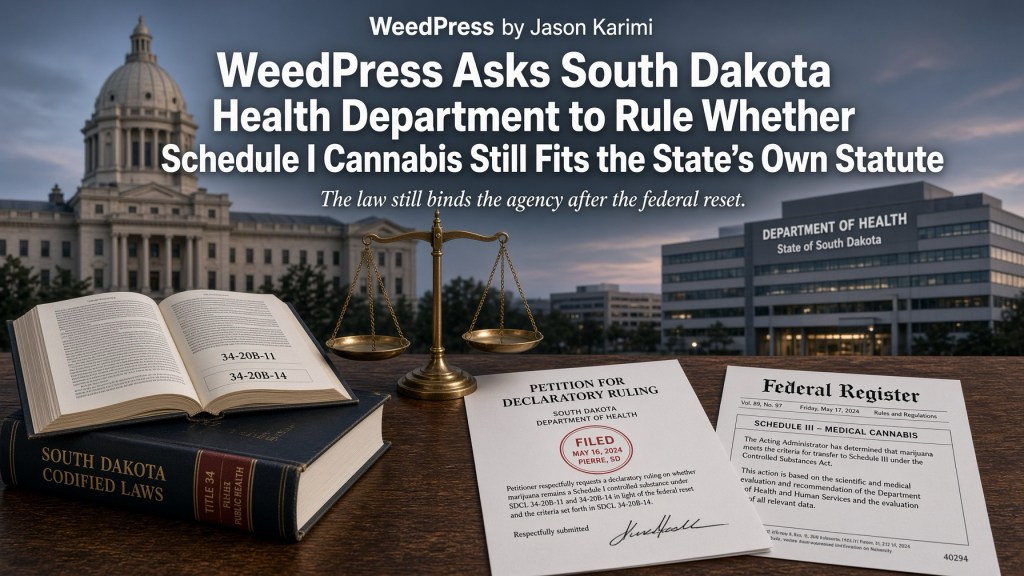
WeedPress Asks South Dakota Health Department to Rule Whether Schedule I Cannabis Still Fits the State’s Own Statute
Update 1: Delivered in person and received and stamped by Department as of 3:33 pm: South Dakota still lists tetrahydrocannabinol in Schedule I. The same Department of Health that runs the medical cannabis program is also charged with applying the Schedule I test in SDCL 34-20B-11. That test requires, among other things, “no accepted medical…
Policy
-
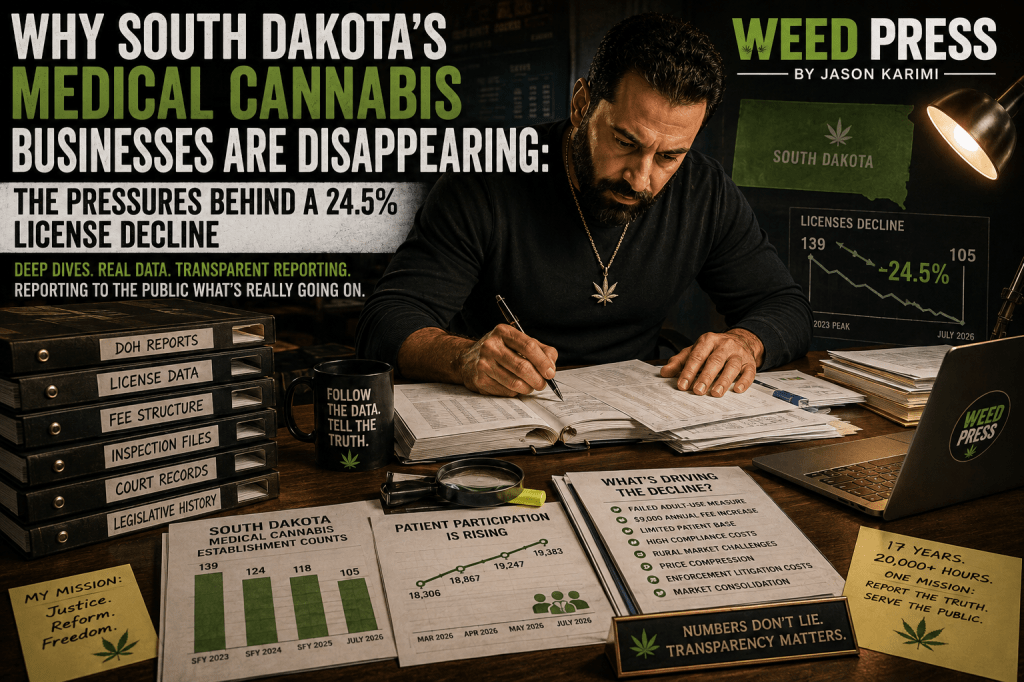
Why South Dakota’s Medical Cannabis Businesses Are Disappearing: The Pressures Behind a 24.5% License Decline
South Dakota’s medical cannabis industry has lost nearly one-quarter of its licensed establishments since reaching its high point three years ago. The state reported 139 certified medical cannabis establishments in state fiscal year 2023, including 79 dispensaries. By July 14, 2026, only 105 establishments remained: 60 dispensaries, 30 cultivation facilities, 14 manufacturing facilities, and one…
-
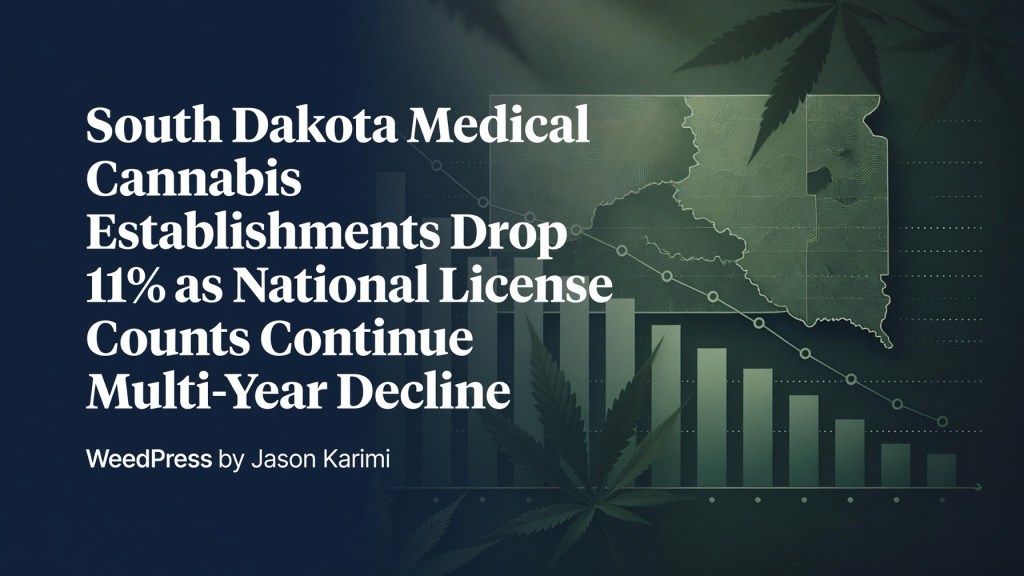
South Dakota Medical Cannabis Establishments Drop 11% as National License Counts Continue Multi-Year Decline
South Dakota’s medical cannabis industry continues to contract, extending a multi-year decline in licensed establishments. Official Department of Health figures show the total number of certified establishments fell from 118 in FY 2025 to 105 as of the July 14, 2026, public list—a decline of 11.0%, from 118 establishments to 105.¹ Measured from the SFY…
-
New Mexico Draws a Clear Line: Federal Rescheduling Does Not Rewrite State Cannabis Rules
While some states have challenged, delayed, or insulated themselves from the federal marijuana rescheduling order, New Mexico has chosen a different approach. In Industry Bulletin 26-07, issued June 16, 2026, the Cannabis Control Division made clear that the federal Schedule III order does not automatically alter New Mexico’s cannabis laws or the obligations of state…
-
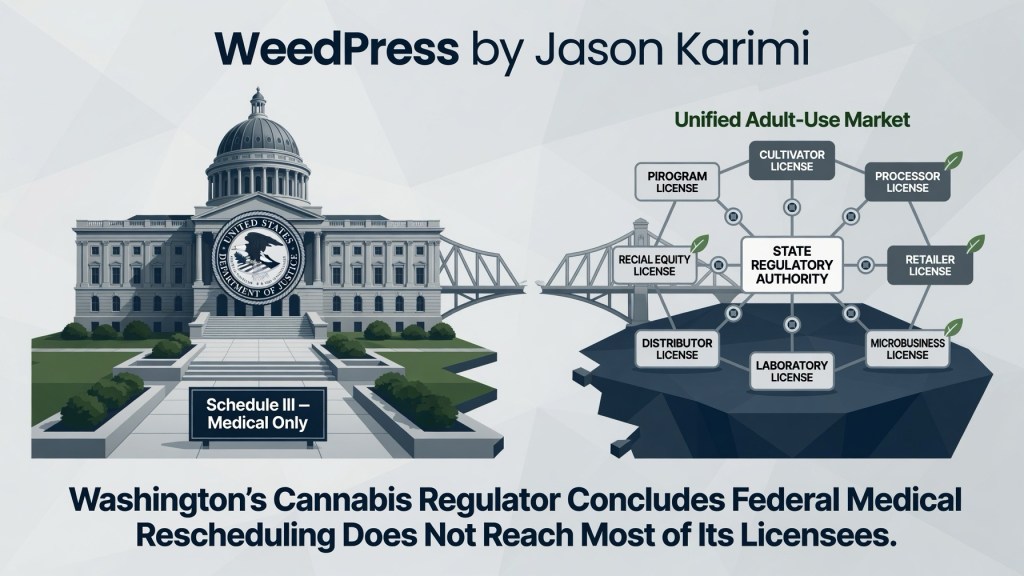
Washington’s Cannabis Regulator Concludes Federal Medical Rescheduling Does Not Reach Most of Its Licensees
Washington’s cannabis regulator became one of the first state agencies to publicly conclude that the federal medical marijuana rescheduling order does not appear to extend to most of its licensed cannabis businesses.¹ In a June 2026 bulletin, the Washington State Liquor and Cannabis Board stated that federal rescheduling “does not appear to apply” to the…
-
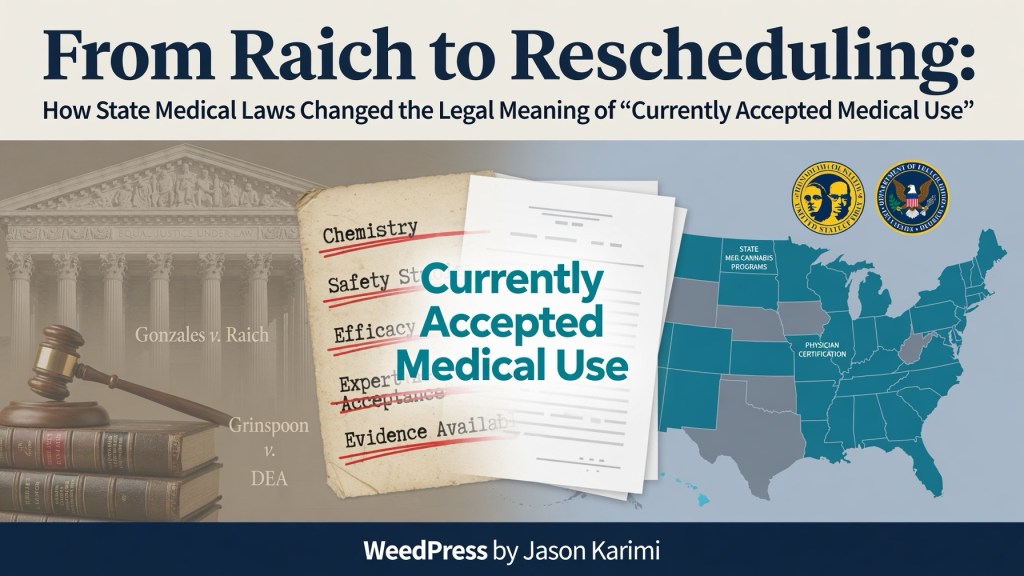
From Raich to Rescheduling: How State Medical Laws Changed the Legal Meaning of “Currently Accepted Medical Use”
In Gonzales v. Raich, the Supreme Court upheld federal power to prohibit intrastate medical cannabis even where state law authorized it.¹ Although Raich did not prescribe a particular avenue for reform, its decision left intact Congress’s administrative scheduling framework under the Controlled Substances Act. As a practical matter, the ruling shifted reform efforts toward Congress…
-
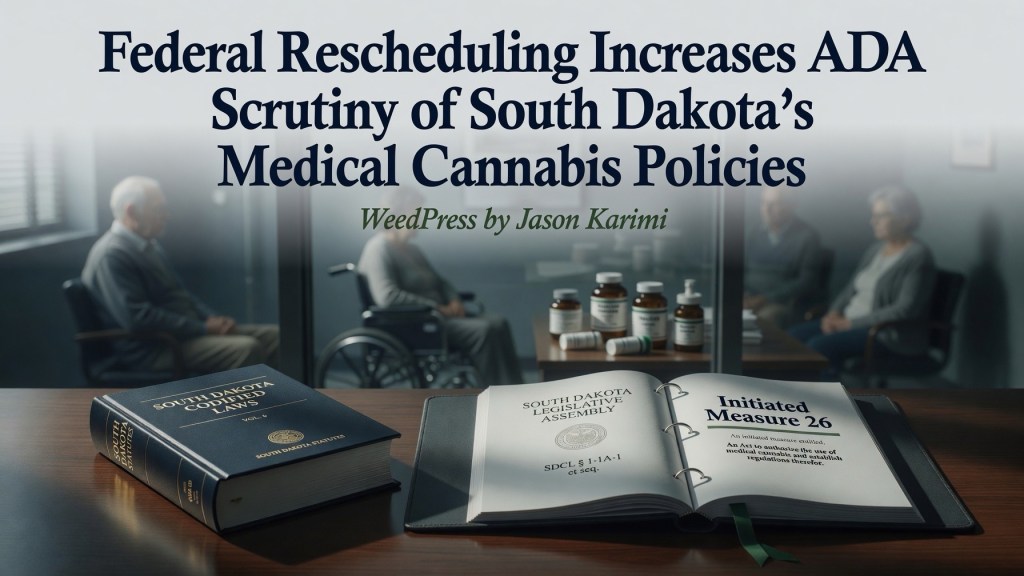
Federal Rescheduling Increases ADA Scrutiny of South Dakota’s Medical Cannabis Policies
Federal rescheduling creates substantial new ADA questions for South Dakota policies that restrict medical cannabis use in nursing facilities and publicly supported recovery housing. Federal rescheduling of marijuana to Schedule III has changed the legal landscape. South Dakota officials and publicly funded providers should update their policies accordingly instead of continuing to treat state-registered medical…
Law
-
South Dakota’s Schedule I Statute Requires a Department Determination Before the Legislature Gets a Rescheduling Recommendation
SDCL 34-20B-27 does not amend the schedules by itself. It tells the Department of Health when a determination triggers a mandatory recommendation to the Legislature.¹ After the April 28, 2026 federal order placing certain state-licensed medical marijuana products in Schedule III, the unanswered Pierre question is not whether marijuana is still listed in chapter 34-20B.…
-
Federal Medical Recognition Weakens the Old Defense of South Dakota’s Cannabis Residency Gate
A federal shift in how medical marijuana is regulated is forcing states to confront an old constitutional question: can they still reserve cannabis licensing opportunities for residents when federal law no longer treats qualifying medical marijuana as entirely illicit? A Congressional Research Service legal sidebar issued September 3, 2026 maps a live circuit split over…
-
SAMHSA Told States to Prepare for Psychedelic Medicines Before FDA Approval. South Dakota Already Wrote a Psilocybin Trigger—and Still Has Not Answered Federal Cannabis Schedule III.
In August 2026, the Substance Abuse and Mental Health Services Administration published a policy paper telling state and territorial mental-health systems to start planning now for the fiscal, legal, and operational consequences of possible FDA-approved psychedelic therapies.¹ The paper is not a regulation. It does not approve psilocybin, MDMA, or LSD. It tells states to…
-
MMOC’s First 2026 Meeting Put Federal Rescheduling on the Record. South Dakota Still Has Not Answered Its Own Schedule I Statute.
The Medical Marijuana Oversight Committee’s first 2026 interim meeting did not decide whether cannabis still belongs in Schedule I under South Dakota law. It did something more limited, and more useful: it put federal classification, program scale, and the absence of a state legal answer onto the official packet.¹ That is not a committee endorsement…
-
Four Pot Shops Five Minutes Over the Iowa Line Sell the Flower Iowa Still Won’t License
North Sioux City, South Dakota, is a town of a few thousand people on the Missouri River. Sioux City, Iowa, is across the water. Between them is a five-minute drive and a statutory mismatch Iowa has never closed.¹ South Dakota’s Department of Health currently lists four licensed medical cannabis dispensaries in North Sioux City: Dakota…
-
WeedPress Asks South Dakota Health Department to Rule Whether Schedule I Cannabis Still Fits the State’s Own Statute
Update 1: Delivered in person and received and stamped by Department as of 3:33 pm: South Dakota still lists tetrahydrocannabinol in Schedule I. The same Department of Health that runs the medical cannabis program is also charged with applying the Schedule I test in SDCL 34-20B-11. That test requires, among other things, “no accepted medical…
Science
-

New Technology Impacting Marijuana Industry Likely: Making CBD From Yeast, Not Marijuana Plants?
Head over to MuggleHead.com for the latest
-
Advocates At Sensible Change Minnesota Asks Governor To Add Opiate Replacement Therapy To Medical Program
EMAIL GOVERNOR WALZ and tell him to put #PatientsFirst and address affordability and accessibility of medical cannabis by publicly supporting the following, urgent measures: 1) Add the vaporization of raw cannabis. 2) Add chronic pain and opiate replacement as qualifying conditions. “Governor Walz, my name is [name] and I am from [city]. I am asking…
-
Update On The Drug Overdose Crisis: Meth Is Back With A Vengeance As Of March 2019
A 550% increase in meth-related deaths from 2010-2017 according to this article by Zero Hedge is real cause for concern. From ZeroHedge.com: The Wall Street Journal is reporting that opioid-related deaths are starting to plateau, officials fret a surge in methamphetamine-related deaths could contribute to the next leg up in the American drug…
-

Here’s Video of MedPharm’s Latest Marijuana Education Seminar in Des Moines
The Des Moines area dispensary hosted an educational event about cannabis with a good Q & A at the end on March 7th of 2019 and I thought we’d share video over here for those who could not attend. It is well worth the watch. — Jason
-
HEMP LAW SIGNED BY WYOMING GOVERNOR | Facebook Statement Quoted By Media Captures Complexities Of This Moment In Time
Sometimes the media catches moments in time that are deeply personal and also, ironic and/or amusing. While the Governor signed the hemp bill into law, the Governor’s chief of staff reportedly received this gift from a leading marijuana minister: “I just gave the Governor’s chief of staff a hemp gift bag with a hemp…
-
Upcoming Senate Judiciary & Public Safety Meeting To Discuss Cannabis consumption, use, and possession authorization
Minnesotans will have the opportunity to testify on a marijuana regulation bill seeking to remove total prohibition from the market. From Sensible Change Minnesota: Monday 11 March 2019 from 1 pm Central to 3:15 pm Central 1100 Senate Office Building Details Hearing on SF 619 (Franzen) ; Cannabis cultivation, consumption, use and possession authorization,…
Current Events
-
Legislative Session Underway: Top Cannabis Stories Around the State
I haven’t posted in over a week now as I’ve been spending most of my time on the phone or computer talking with people. This activism thing is a full time job these days, with no pay, little to no thanks, and a lot of headaches. I love this job. Here’s some of my favorite…
-
Army Veteran with PTSD Steps Forward: “The people of Iowa are speaking up”
Follow WeedPress on Facebook. If you’d like your story heard by legislators this next session, email me at jkarimi2007@hotmail.com, or write to me on the Iowa Patients for Medical Marijuana Facebook page. You can remain anonymous if you’d like. I’ll publish your story here on WeedPress and make sure politicians see it next year. Here’s…
-
Iowa family member: “If medical cannabis were on option for either of these people so dear to me, it could very well increase the quality of both of their lives”
Here’s another testimonial from an Iowan who wishes to remain anonymous. Follow WeedPress on Facebook. If you’d like your story heard by legislators this next session, email me at jkarimi2007@hotmail.com, or write to me on the Iowa Patients for Medical Marijuana Facebook page. You can remain anonymous if you’d like. I’ll publish your story here…
-
Iowa Mother wants cannabis for 12 year old son’s Asperbergers, seizures
Here’s another testimonial from an Iowan who wishes to remain anonymous. Follow WeedPress on Facebook. If you’d like your story heard by legislators this next session, email me at jkarimi2007@hotmail.com, or write to me on the Iowa Patients for Medical Marijuana Facebook page. You can remain anonymous if you’d like. I’ll publish your story here…
-
43 Year Old Iowan with Crohns, Fibromyalgia: “There is little doctors can do for my pain”
Here’s another testimonial from an Iowan who wishes to remain anonymous. Follow WeedPress on Facebook. If you’d like your story heard by legislators this next session, email me at jkarimi2007@hotmail.com, or write to me on the Iowa Patients for Medical Marijuana Facebook page. You can remain anonymous if you’d like. I’ll publish your story here…
-
![[VIDEO] Des Moines Public Library, “A Sensible Conversation about Medical Cannabis in Iowa,” December 2nd 2013](https://weedpress.org/wp-content/uploads/2013/11/joe-bolkcom.jpg?w=300)
[VIDEO] Des Moines Public Library, “A Sensible Conversation about Medical Cannabis in Iowa,” December 2nd 2013
Senator Joe Bolkcom has uploaded these videos to his YouTube channel for anyone who couldn’t attend the December 2nd discussion on medical cannabis at the Des Moines Public Library. You can also see video of the Iowa City hearing here courtesy of Iowa City Cable TV. Legislators in attendance at this event: Representative Bruce Hunter…
Legislation
-
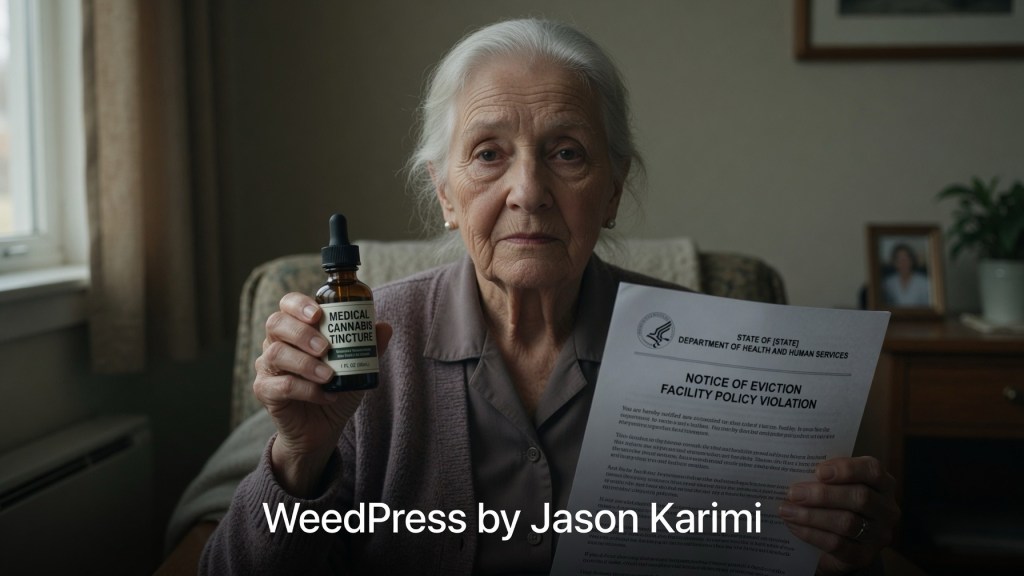
The Patients Left Behind: How South Dakota’s Medical Cannabis Law Still Punishes the Sickest Among Us
In Iowa recently, a 91-year-old woman was told she had to leave the nursing home she called home because she used medical cannabis to manage her pain and symptoms. The facility gave her an ultimatum: stop using the medicine her doctor supported, or move out. She refused. The case went to court. What should have…
-
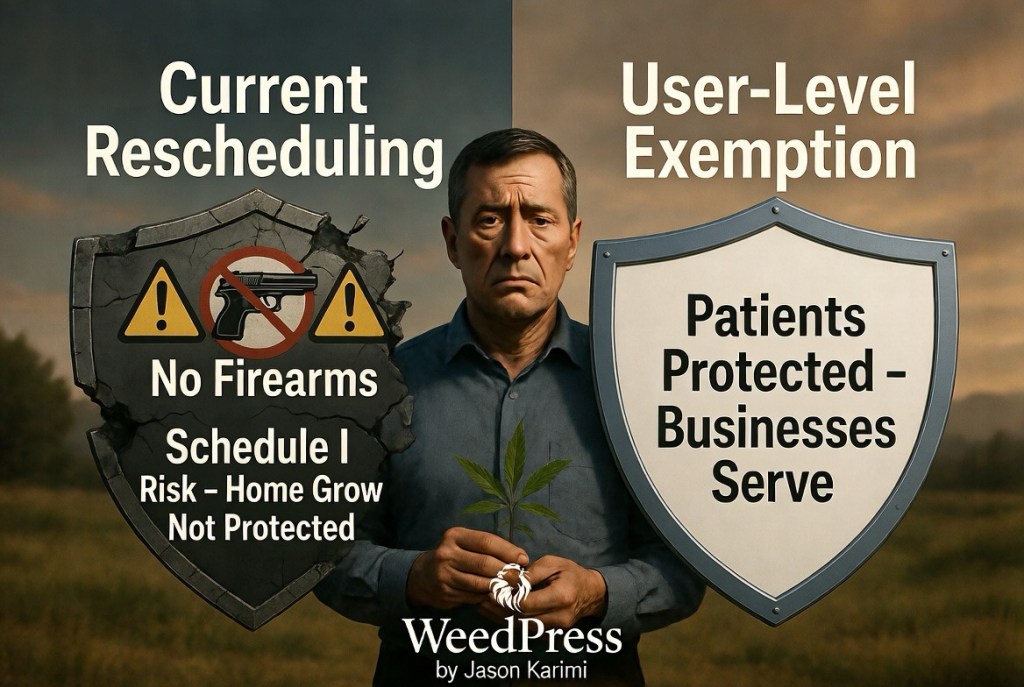
Patient Legal Risks Solved: A User-Level Exemption Model for Schedule III
The April 28, 2026 federal partial rescheduling order left a significant gap: personal home cultivation was not included in the narrow categories moved to Schedule III. Colorado attorneys Brian Vicente and Rachel Gillette have been direct about the practical consequences. Vicente noted that home grows do not qualify for the new federal registration pathway because…
-
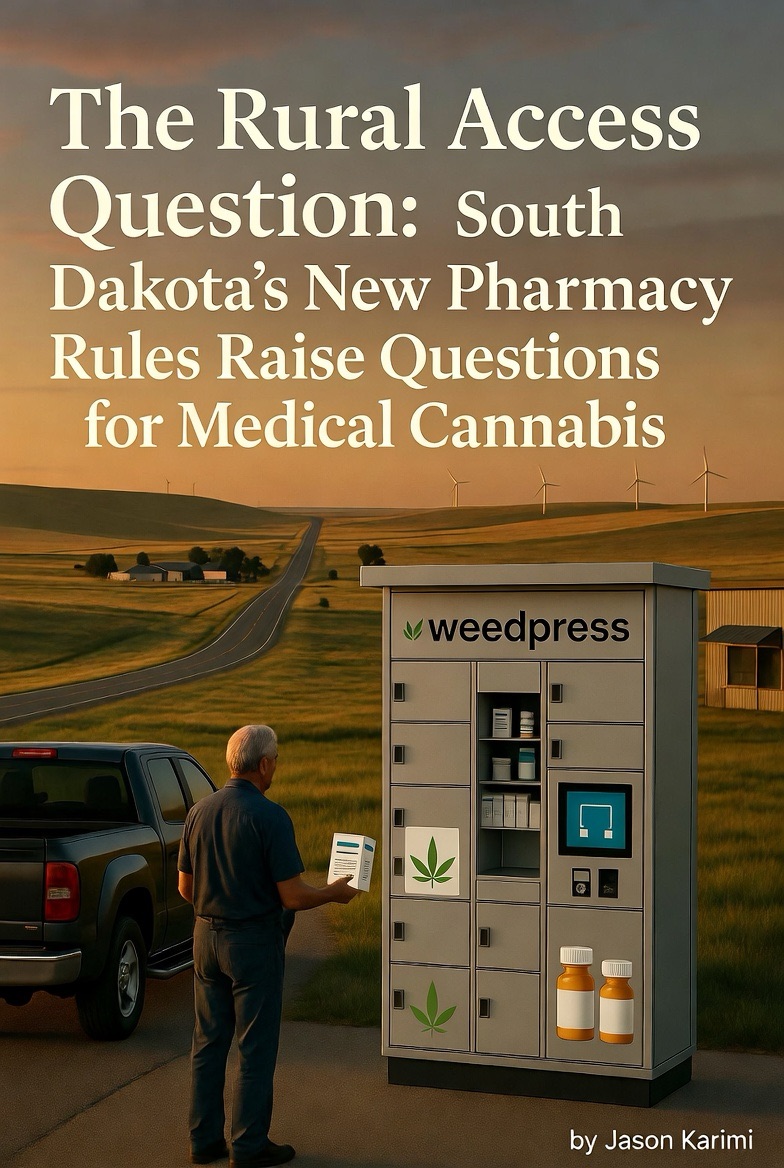
The Rural Access Question South Dakota’s New Pharmacy Rules Raise for Medical Cannabis
As regulators embrace telepharmacy and remote prescription pickup, policymakers may eventually face similar questions about medical cannabis access in rural communities. South Dakota’s Board of Pharmacy is advancing updated rules under Article 20:51 of the Administrative Rules of South Dakota (ARSD) that formalize the use of remote drop sites for prescription medications and introduce a…
-
Stork Just Sent a Researcher to WeedPress: What Academic Tools Mean for Cannabis Policy Analysis
Independent statutory deep-dives are showing up alongside peer-reviewed literature in researchers’ workflows. It’s not every day your analytics dashboard lights up with a referrer you’ve never seen before. Today, May 5, 2026, WeedPress received a visit from paper-box.co — the domain tied to Stork (storkapp.me), a specialized publication-tracking and research intelligence platform used by academics,…
-

Why Cannabis Operators Can’t Afford to Ignore the Federal Rescheduling Details — And What You Must Do Now
The federal government has split cannabis into two tracks. FDA-approved drug products containing marijuana and marijuana activity tied to a qualifying state-issued medical marijuana license under the new federal framework now occupy a different federal posture, while broader marijuana remains in Schedule I pending further proceedings.¹ That split is real, immediate, and carries tax, compliance,…
-

WeedPress Looked Deeper: Congress’ Quiet Move to Block Trump’s Cannabis Rescheduling — and Why It Threatens Operators
The quietest threat to the federal cannabis shift is not coming from DEA’s June hearing. It is coming from the House appropriations process. On May 13, 2026, the full House Appropriations Committee is scheduled to mark up the FY2027 Commerce, Justice, Science (CJS) bill after the CJS subcommittee approved its version on April 30. Buried…
RFRA Updates
-

Nebraska First Freedom Act RFRA Appeal: Notes On General Language In Judicial Opinions
Türkiye Halk Bankası / Illinois v. Lidster: general language in an opinion is about the case then in front of the Court, not every later fact pattern. He is telling you not to treat a sentence from O Centro or a church case as a machine that prints a win for a lone probationer in…
-
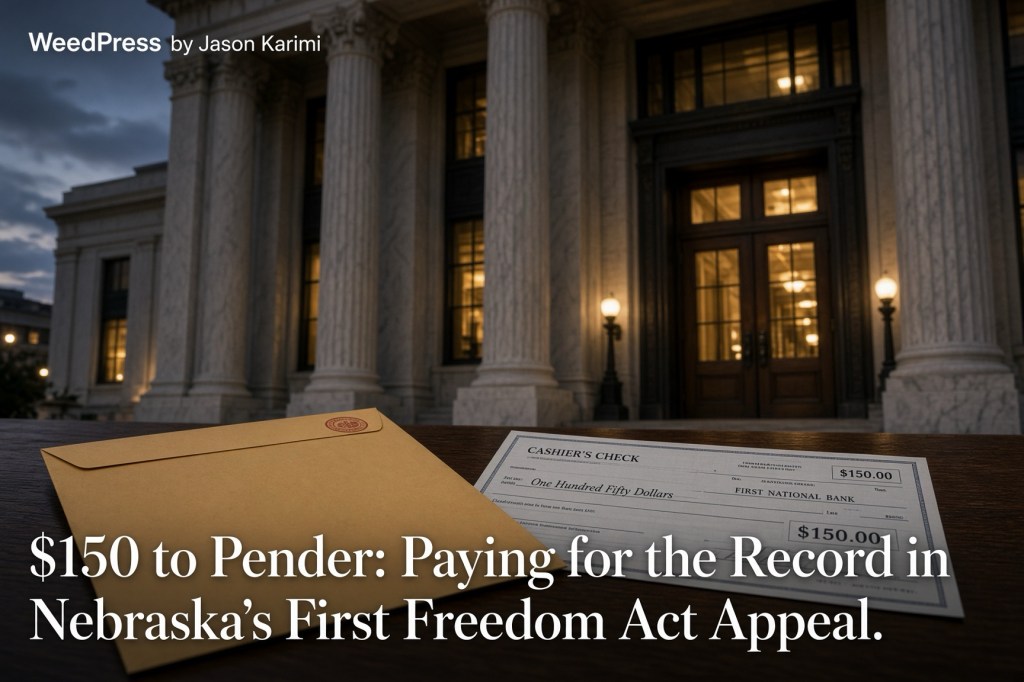
$150: Paying for the Record in Nebraska’s First Freedom Act Appeal
On Wednesday, August 26, 2026, I mailed a $150 cashier’s check to the Thurston County District Court at P.O. Box 216, Pender, Nebraska 68047. The check covers the estimated cost of the Bill of Exceptions for the April 8, 2026 evidentiary hearing on my request to modify a probation condition under Nebraska’s First Freedom Act.¹…
-

Court Said I Didn’t Prove My Religion Because I Didn’t Testify. I’m Appealing Under Nebraska’s Religious “First Freedom Act”
Today I filed a Notice of Appeal in Thurston County District Court challenging the July 1, 2026 Order that denied my motion to modify a probation condition under the Nebraska First Freedom Act. The motion I filed sought a narrowly tailored religious accommodation allowing sacramental cannabis use consistent with my practice of the Rastafari faith.…
-

Nebraska RFRA Appeal Argument, July 21, 2026
ARGUMENT I. The District Court Erred by Treating Defendant’s Personal Testimony as Effectively Indispensable to Establishing Sincerity Under the Nebraska First Freedom Act. The district court denied Defendant’s motion on the ground that he failed to establish a “sincerely held religious belief.” The court reasoned as follows: “There was no direct evidence of Defendant’s sincerely…
-
Clarifying the Burden of Proof on Religious Sincerity Under RFRA and the Nebraska First Freedom Act
This submission addresses the proper burden of proof regarding religious sincerity under the Religious Freedom Restoration Act (“RFRA”), 42 U.S.C. § 2000bb-1, and the Nebraska First Freedom Act, Neb. Rev. Stat. § 20-1701 et seq., in the context of a probation modification request seeking a religious exemption for the sacramental use of cannabis. Legal Standard:…
-

“Exorcism:” Why Spiritually Attuned Paths Reject Fear-Based Rituals of Casting Out
This article examines why exorcism, as commonly understood and practiced across traditions, often represents a spiritually mistaken approach. It externalizes power that belongs to the individual’s divine spark, frequently misattributes psychological or energetic imbalances, and can reinforce fear-based dualism instead of the living reality of “I and I”—the recognition that the Divine dwells within and…
Upcoming Events
-
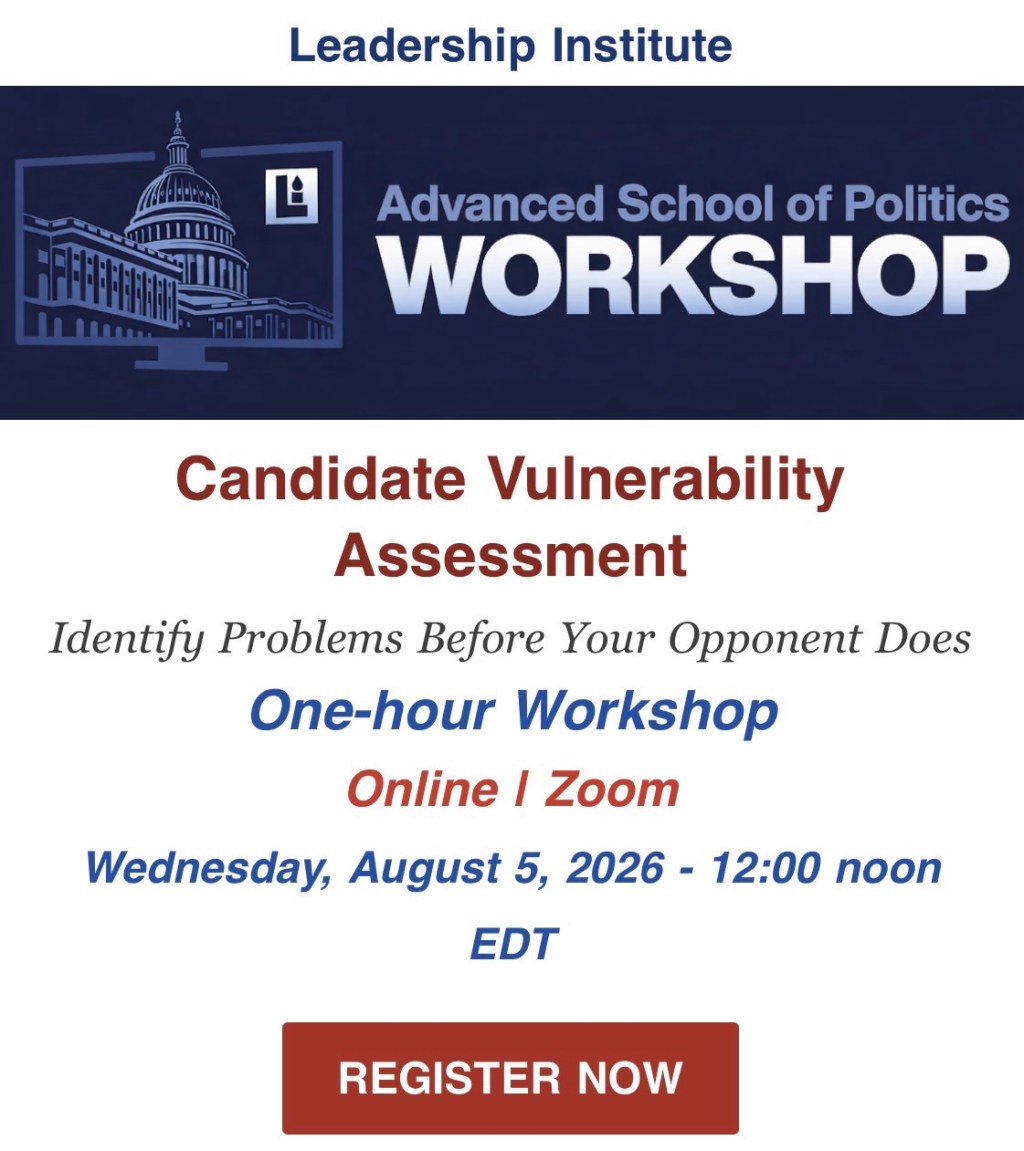
Online Workshop – Candidate Vulnerability Assessment
Every candidate enters a race with potential vulnerabilities. These may include previous statements, professional history, financial records, social media activity, personal relationships, policy positions, or inconsistencies in the candidate’s public record. https://leadershipinstitute.org/event/701VL00000xvu8MYAQ Campaigns often devote significant time and resources to researching their opponents while failing to conduct the same level of research on their own…
-

Indigenous Women’s Medicine Wheel Ride – August 9 Sturgis (Sign Up Here)
I’ll be on this ride at Sturgis this year on the marijuana Harley ultra glide. Go to the guy with the reggae blasting to link. Prayer at 8:30. Bring your safety gear as well. $60 registration. Follow Doodle On A Motorcycle on YouTube for updates. Ride starts at Outlaw Square. Register here: https://www.medicinewheelride.org/ Who We…
-

The June 27 DEA Registration Deadline Is Coming Fast: South Dakota Operators Face a Compliance Cliff as the Safe Harbor Window Closes
With the June 27 DEA registration deadline approaching, the following analysis examines the practical timeline and compliance pressures facing South Dakota operators. South Dakota’s licensed medical cannabis operators now have roughly 29 days to secure critical federal protections before the expedited DEA registration window closes. On April 28, 2026, the Department of Justice and Drug…
-

Advance Notice to South Dakota Department of Health: Petition for Scheduling Review Will Follow Federal Rescheduling Hearings
South Dakota’s medical cannabis program stands at a critical juncture following the federal partial rescheduling of certain marijuana products to Schedule III.¹ After the DEA’s June 29, 2026 rescheduling hearing concludes, the undersigned will formally petition the South Dakota Department of Health (DOH) to review and align the state’s Schedule I classification of marijuana with…
-

Why South Dakota’s Own Statutes Now Make Schedule I Marijuana Unlawful to Maintain
“Acting Attorney General Todd Blanche is placing both FDA-approved drug products containing marijuana, and medicinal marijuana products subject to a qualifying state-issued license in Schedule III under his authority to reschedule drugs to carry out the United States’ obligations under the Single Convention on Narcotic Drugs.”¹ South Dakota, however, is not automatically bound by that…
-

South Dakota’s Schedule I Marijuana Prohibition Heads to Court This Summer: Lawsuit Will Seek Declaration That State Law No Longer Satisfies Its Own Criteria
This summer I intend to file a civil action against the State of South Dakota seeking a judicial declaration that the state’s Schedule I classification of marijuana no longer satisfies the statutory criteria required for Schedule I placement under South Dakota law.¹ The claim is straightforward: once the factual predicate of “no accepted medical use”…
For The Record (2026), By Jason Karimi
-
South Dakota Faces Risk of Automatic Rescheduling Under Existing Statutory Language
The recent action by Wyoming’s Attorney General demonstrates that states are increasingly recognizing the legal significance of federal marijuana rescheduling where state statutes incorporate federal scheduling decisions. South Dakota’s existing statutory language raises similar questions that should be addressed before federal reform takes effect. WeedPress has previously warned that South Dakota law contains automatic trigger…
-
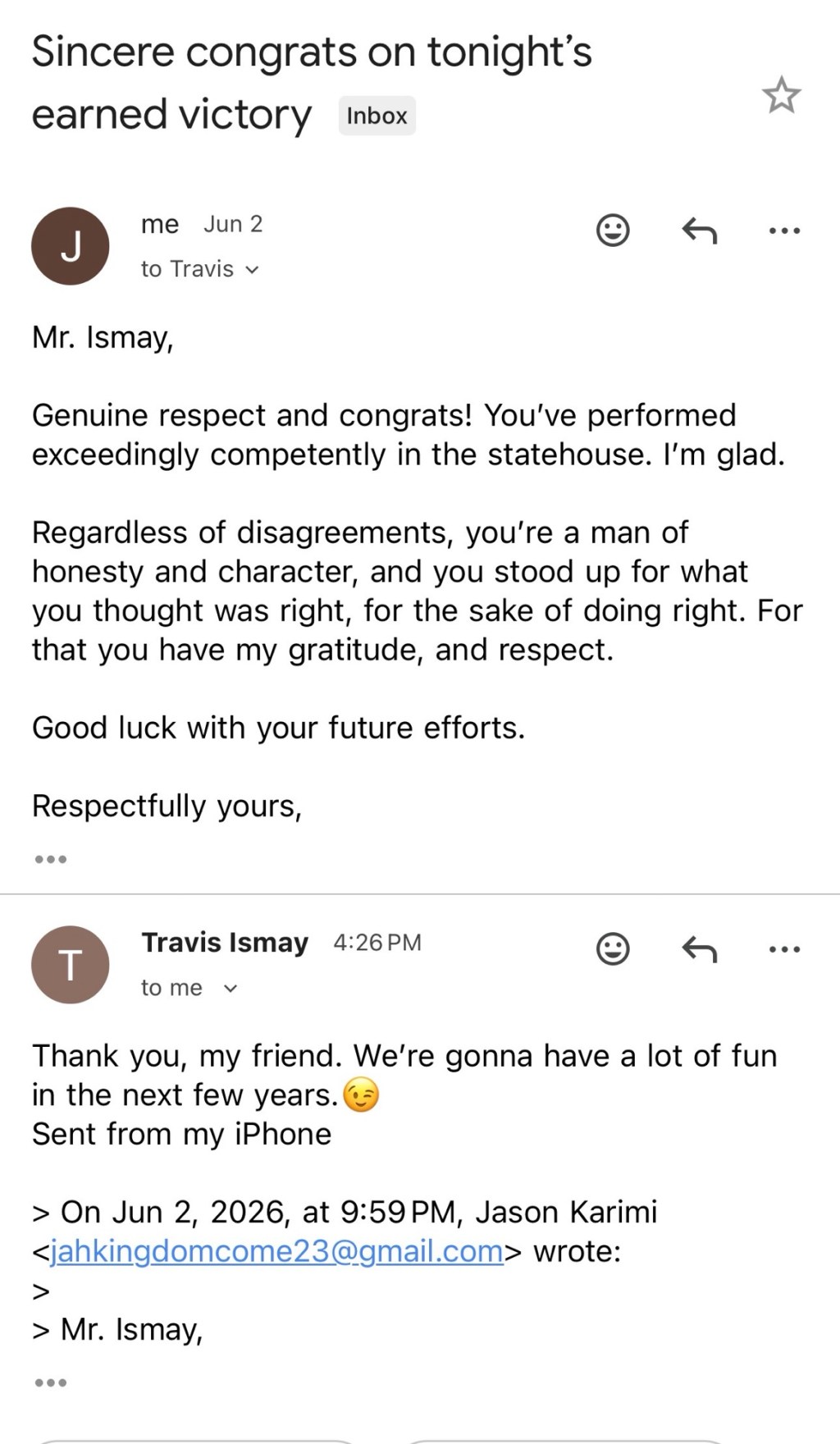
Travis Ismay Responds to My Congratulatory Email: A Small Step Toward Civil Discourse in South Dakota Politics
Yesterday, Rep. Travis Ismay (R-House District 28B) replied to the congratulatory email I sent him shortly after his decisive Republican primary victory on June 2.¹ For context, here is the full exchange: My email (June 2, 2026): For context, here is the full exchange: It’s a brief, gracious response — and one I appreciate. Background…
-

DARE Poster Kid to Marijuana Regulation Advocate: My Unchanging Fight to Protect Kids
When I was in elementary school, the DARE program left a lasting impression. Officers visited regularly, warning us about the dangers of drugs and pushing the “just say no” message. I took it seriously. So when the school announced an anti-drug poster contest open to elementary students, I threw myself into creating something impactful. My…
-

Chapter 10: What Remains
Table of Contents Preface Chapter 1 — The First ArrestEarly rupture, authority, and the beginning of resistance Chapter 2 — Before the File Was Opened Gifted education, faith, discipline, and early legitimacy Chapter 3 — Becoming a ProblemWork, exhaustion, collapse, and the cost of visibility Chapter 4 — Learning the Language of PowerCourts, probation, jail, campaigns, and proximity to decision-makers…
-

Chapter 9: The Record vs. the Narrative
Table of Contents Preface Chapter 1 — The First ArrestEarly rupture, authority, and the beginning of resistance Chapter 2 — Before the File Was Opened Gifted education, faith, discipline, and early legitimacy Chapter 3 — Becoming a ProblemWork, exhaustion, collapse, and the cost of visibility Chapter 4 — Learning the Language of PowerCourts, probation, jail, campaigns, and proximity to decision-makers…
-

Chapter 8: What the Media Gets Wrong
Table of Contents Preface Chapter 1 — The First ArrestEarly rupture, authority, and the beginning of resistance Chapter 2 — Before the File Was Opened Gifted education, faith, discipline, and early legitimacy Chapter 3 — Becoming a ProblemWork, exhaustion, collapse, and the cost of visibility Chapter 4 — Learning the Language of PowerCourts, probation, jail, campaigns, and proximity to decision-makers…
-

Chapter 7: Why I Never Left
Table of Contents Preface Chapter 1 — The First ArrestEarly rupture, authority, and the beginning of resistance Chapter 2 — Before the File Was Opened Gifted education, faith, discipline, and early legitimacy Chapter 3 — Becoming a ProblemWork, exhaustion, collapse, and the cost of visibility Chapter 4 — Learning the Language of PowerCourts, probation, jail, campaigns, and proximity to decision-makers…
-

Chapter 6: Staying Power
Table of Contents Preface Chapter 1 — The First ArrestEarly rupture, authority, and the beginning of resistance Chapter 2 — Before the File Was Opened Gifted education, faith, discipline, and early legitimacy Chapter 3 — Becoming a ProblemWork, exhaustion, collapse, and the cost of visibility Chapter 4 — Learning the Language of PowerCourts, probation, jail, campaigns, and proximity to decision-makers…
-

Chapter 5: The Apprenticeship
Table of Contents Preface Chapter 1 — The First ArrestEarly rupture, authority, and the beginning of resistance Chapter 2 — Before the File Was Opened Gifted education, faith, discipline, and early legitimacy Chapter 3 — Becoming a ProblemWork, exhaustion, collapse, and the cost of visibility Chapter 4 — Learning the Language of PowerCourts, probation, jail, campaigns, and proximity to decision-makers…
-

Chapter 4: Learning the Language of Power
Table of Contents Preface Chapter 1 — The First ArrestEarly rupture, authority, and the beginning of resistance Chapter 2 — Before the File Was Opened Gifted education, faith, discipline, and early legitimacy Chapter 3 — Becoming a ProblemWork, exhaustion, collapse, and the cost of visibility Chapter 4 — Learning the Language of PowerCourts, probation, jail, campaigns, and proximity to decision-makers…
-

Chapter 3: Becoming a Problem
Table of Contents Preface Chapter 1 — The First ArrestEarly rupture, authority, and the beginning of resistance Chapter 2 — Before the File Was Opened Gifted education, faith, discipline, and early legitimacy Chapter 3 — Becoming a ProblemWork, exhaustion, collapse, and the cost of visibility Chapter 4 — Learning the Language of PowerCourts, probation, jail, campaigns, and proximity to decision-makers…
-

Chapter 2: Before the File Was Opened
Table of Contents Preface Chapter 1 — The First ArrestEarly rupture, authority, and the beginning of resistance Chapter 2 — Before the File Was Opened Gifted education, faith, discipline, and early legitimacy Chapter 3 — Becoming a ProblemWork, exhaustion, collapse, and the cost of visibility Chapter 4 — Learning the Language of PowerCourts, probation, jail, campaigns, and proximity to decision-makers…
Commentary
-
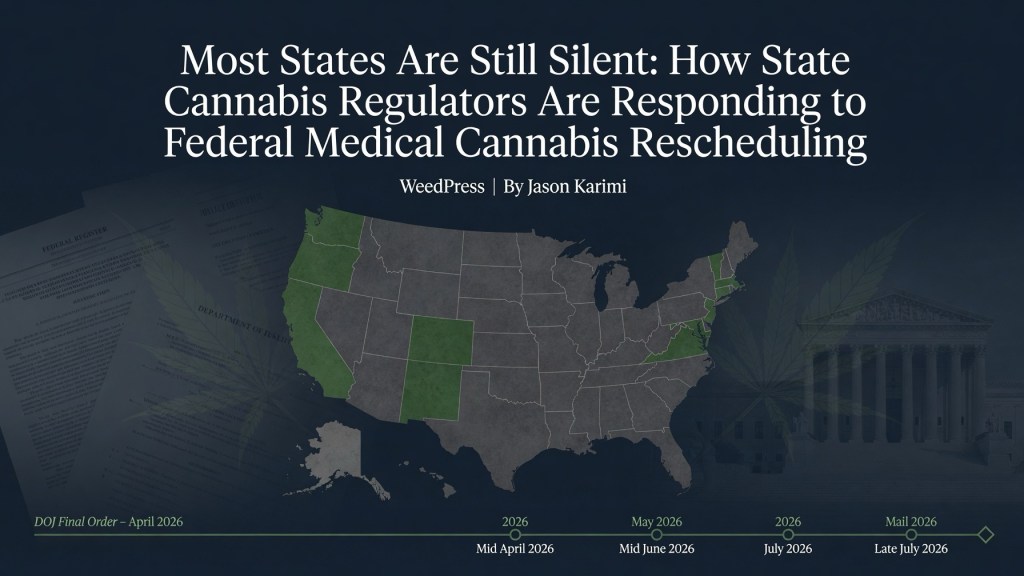
Most States Are Still Silent: How State Cannabis Regulators Are Responding to Federal Medical Cannabis Rescheduling
Three months after the Department of Justice issued its final order placing qualifying state-licensed medical cannabis into Schedule III, state cannabis regulators remain far from unified. A review of official guidance issued through late July 2026 reveals a fragmented national response: only a handful of agencies have formally interpreted the federal change, while most have…
-
Online Workshop – Candidate Vulnerability Assessment
Every candidate enters a race with potential vulnerabilities. These may include previous statements, professional history, financial records, social media activity, personal relationships, policy positions, or inconsistencies in the candidate’s public record. https://leadershipinstitute.org/event/701VL00000xvu8MYAQ Campaigns often devote significant time and resources to researching their opponents while failing to conduct the same level of research on their own…
-

The July 28 Runoff Is Small Enough for Cannabis Voters to Matter. Here’s the Math, South Dakota.
The Republican gubernatorial runoff is July 28. Toby Doeden faces incumbent Larry Rhoden. For people who care about the stability of South Dakota’s medical cannabis program, the question is straightforward: does a modest, targeted vote actually matter in this race? The numbers say yes — but only if the expectations stay realistic. What the June…
-
High-Conflict Personalities and Covert Sadism: Overlapping Patterns of Persistent Targeting
Understanding patterns of prolonged personal conflict requires more than one analytical lens. Two frameworks that frequently intersect are the high-conflict personality model and the concept of covert sadism described by former FBI agent Joe Navarro.¹ When examined side by side, these frameworks reveal significant overlap in how certain individuals escalate disputes, externalize blame, and sustain…
-
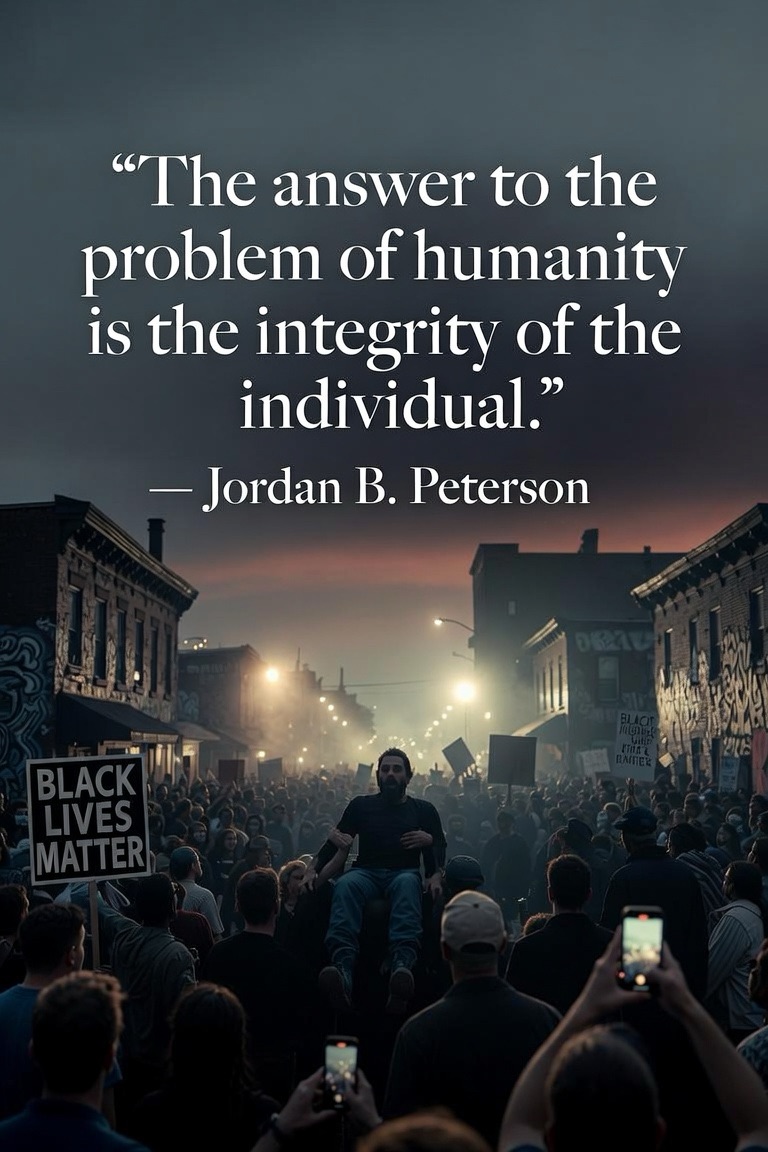
The Integrity of the Individual: Jordan Peterson’s Diagnosis of Societal Collapse and the Policy Failures That Turned a Minneapolis Arrest into Preventable Tragedy
In a lecture examining the psychology of those who embrace solitude as a forge for original thought and voluntary responsibility, Jordan B. Peterson returns to a recurring theme that cuts through every domain of human organization: “The answer to the problem of humanity is the integrity of the individual. That’s the answer. So states that…
-

Holy Shit. Was I Wrong? Homegrown May Be Federally Legal Now After All?
Just woke up to this idea: this section… …found here: https://www.ecfr.gov/current/title-21/chapter-II/part-1301/subject-group-ECFR0f5a129834f0129/section-1301.13#p-1301.13(k)(5) …may legally allow homegrown to be included under federal law after all. WeedPress previously warned homegrown may be illegal and to watch that closely: An absolute legend of the cannabis movement has filed with DEA to rule on the homegrown issue. No organization or…
-

Fixing A SD Courthouse Electrical Cabling For Gate Entrance
GSA, the General Services Administration, sent me out as an IT tech to troubleshoot a control panel issue at a gate for judges and attorneys to enter at a courthouse. Determined the electrical cable run at the gate was needing replaced. The GSA had me bend conduit and run a new cable which I didn’t…
-
Watch DEA Rescheduling Hearing Updates Here All Week
The Dales Report is covering the daily play by plays for the DEA hearings on cannabis as a valid medicine: Get the patients off the battlefield, especially those in South Dakota nursing homes being discriminated against, or those in Iowa nursing homes in court this month fighting eviction over medical cannabis use, and THEN cry…
-

The Watchman’s Hour: 1 AM Reflections on Seventeen Years of Federal Exemption Vigilance
https://iowacapitaldispatch.com/2026/06/04/nursing-home-takes-regulators-to-court-over-residents-eviction/ Lately I wake up almost every night around 1 AM and stay awake for hours. Not from anxiety or restlessness in the ordinary sense, but with a clear, alert presence. The house is quiet. The world outside is sleeping. And my mind turns, as it has for years, to the intricate architecture of federal…
-

The Beautiful Game as Peacemaker: How the World Cup Is Revealing America’s Greatness to the World
In 2014, I was in Indiana at a national recruiting tournament for U.S. Soccer. I spent the week meeting MLS coaches and refereeing some of the best young players in the country. Between games I sat in a giant, air-conditioned referee tent with catered organic food and a massive screen tuned to the World Cup.…
-
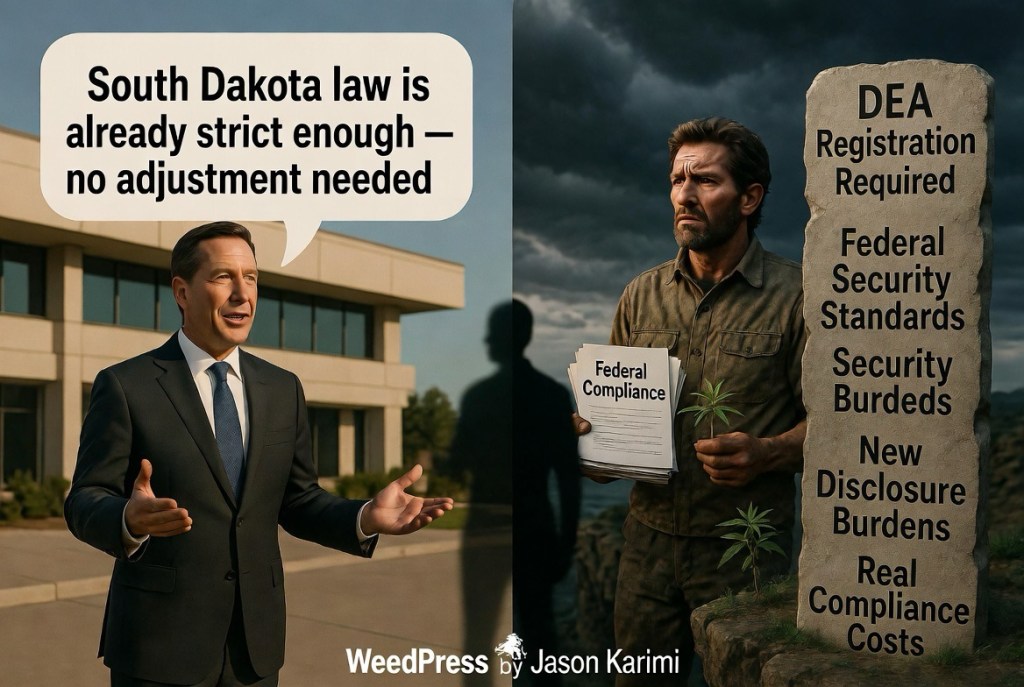
No, South Dakota’s Medical Cannabis Rules Do Not Satisfy Federal Schedule III Requirements — Operators Will Need to Make Real Adjustments
New analysis shows that South Dakota’s current licensing rules do not fully satisfy the new federal Schedule III requirements. DEA registration, security upgrades, and disclosure obligations represent real adjustments that many operators will need to make. Blanket claims that “everyone will be fine with little change” overlook these gaps. Some voices in South Dakota are…
-
Reflections on a Bruised Nail: What My Left Middle Finger Injury Taught Me About Inner Worth and Boundaries
Two months ago, I slammed my left middle finger, resulting in a subungual hematoma—the dark pool of blood trapped beneath the nail that turned my fingertip into a visual reminder of sudden impact.¹ No longer painful, the nail still carries a mottled shadow of black and white as new growth slowly pushes the old damage…
Patient Perspectives
-
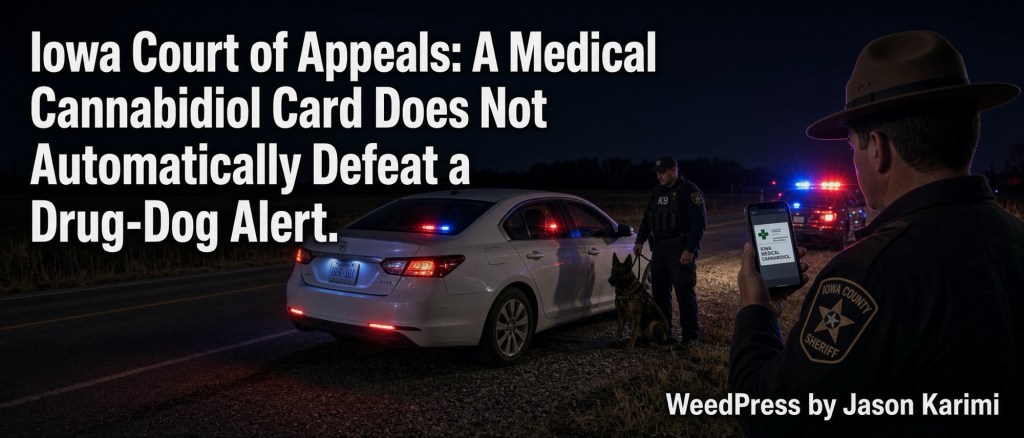
Iowa Court of Appeals: A Medical Cannabidiol Card Does Not Automatically Defeat a Drug-Dog Alert
Patients who carry a valid Iowa medical cannabidiol registration card often assume the card creates a meaningful shield during traffic stops. A new decision from the Iowa Court of Appeals shows the limits of that assumption. In State v. Leonard, the court held that officers had probable cause to search a vehicle after a drug…
-
Understanding High-Conflict Personalities: When You Become the Target of Blame
High-conflict personalities are individuals who consistently turn disagreements into prolonged, intense, and destructive battles. Unlike people who simply disagree or become emotional during conflict, high-conflict personalities tend to escalate disputes, externalize blame, and struggle to resolve conflict in a healthy or proportionate way.¹ Over the past several months, nearly a year straight now, I have…
-
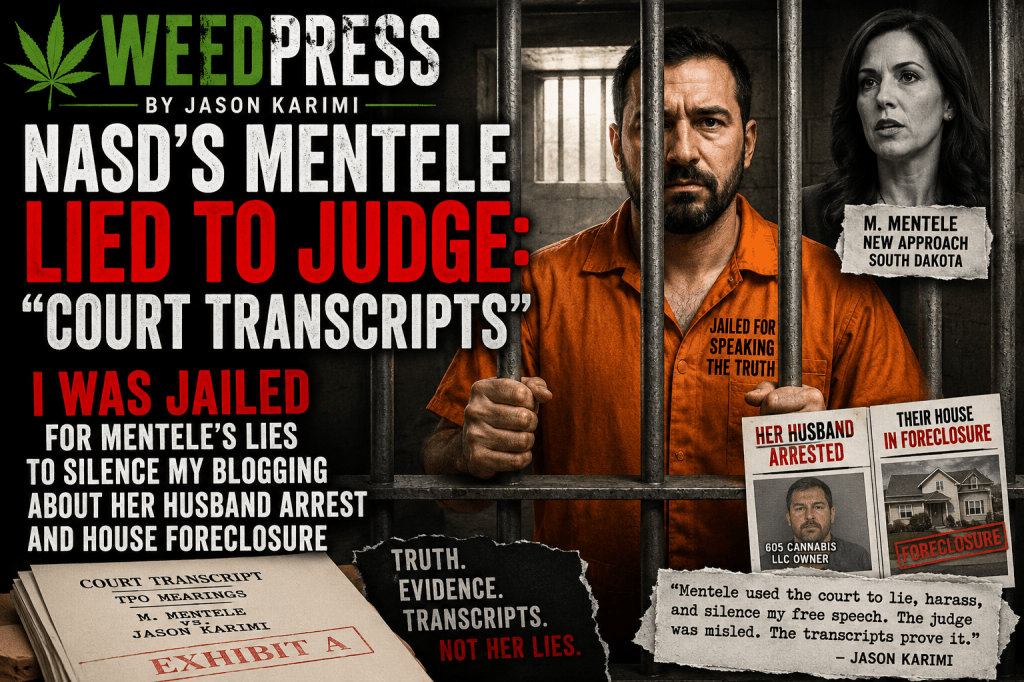
New Approach South Dakota’s Damaged Credibility, Lies To Judges To Get Political Competitor Arrested: Court Transcripts
Transcript PDF of Mentele v Karimi court hearing round 4 in full: You folks out there can do what you want. As for me, I’m going to go back to focusing on federal exemption advocacy as I have since 2009, before Mentele told me to stop and then got me arrested for continuing advocating, by…
-

New Approach South Dakota Pivots And Rebrands With New Leadership Amid Ongoing Concerns
Following publication of this article, New Approach South Dakota publicly clarified that the anticipated leadership changes referenced in an earlier discussion concerned the Marijuana Policy Project, not New Approach South Dakota itself. New Approach states it is adding partners and expanding resources but will remain under its current leadership. Multiple conflicting statements in 2026 about…
-
Fixing A SD Courthouse Electrical Cabling For Gate Entrance
GSA, the General Services Administration, sent me out as an IT tech to troubleshoot a control panel issue at a gate for judges and attorneys to enter at a courthouse. Determined the electrical cable run at the gate was needing replaced. The GSA had me bend conduit and run a new cable which I didn’t…
-

New York Launches Program to Educate Doctors About Cannabis
“The University at Albany and Albany Medical Center are supporting the initiative. SUNY Upstate Medical University, Stony Brook Medicine, University of Rochester Medical Center, New York Institute of Technology College of Osteopathic Medicine, CUNY School of Public Health, and New York State Office of Mental Health are also involved in the center.” Read: https://ganjapreneur.com/new-york-launches-program-to-educate-doctors-about-cannabis/
 WeedPress: The Paper Trail